Archive for the ‘Saintly People’ Category

Witnessing to Christ

January 13, 2024

2nd Sunday in Ordinary Time
By Fr. Victor Feltes

St. John the Baptist once saw Jesus coming toward him and declared, “Behold, the Lamb of God, who takes away the sin of the world! He is the one of whom I said, ‘A man is coming after me who ranks ahead of me because he existed before me.’ …I saw the Spirit come down like a dove from the sky and remain upon him. …The one who sent me to baptize with water told me, ‘On whomever you see the Spirit come down and remain, he is the one who will baptize with the Holy Spirit.’ Now I have seen and testified that he is the Son of God.

John was not afraid to acknowledge Jesus Christ before others. John said, ‘I am not the Messiah, I am not Elijah, and I am not the prophet of whom Moses spoke.’ But he affirmed, “I am ‘the voice of one crying out in the desert, “Make straight the way of the Lord!”’ And John proclaimed Jesus as one far greater than himself, acknowledging him as the Son of God. St. Vincent de Paul observed, “Humility is nothing but truth, and pride is nothing but lying.” John the Baptist is humble because he maintains the truth about himself and acknowledges the truth about Jesus.

John is humble and, standing in the truth, is willing to fraternally correct others. He admonishes those in the crowds, Pharisees and Sadducees, tax collectors, soldiers, and even King Herod, saying, “Repent, for the Kingdom of Heaven is at hand!” He corrects them because he loves them. If John had hated them he would have turned his back on them like Jonah did the Ninevites, hoping to see them destroyed. If we love someone, we will warn them of grave dangers to their body or soul.

Sometimes John the Baptist, when witnessing to others, shared his own spiritual experiences. John’s ministry and message were not his own inventions. He speaks of how he received his mission to baptize from heaven and testifies to what he beheld when he baptized Jesus. God still gives us signs and messages and works new miracles among us today.

Later, as John the Baptist was standing with two of his disciples, he watched Jesus walking by and said again, “Behold, the Lamb of God.” In the Old Covenant, lambs were sacrificed to atone for sins and to celebrate communion with God. John calls Jesus the Lamb of God who will take away the sins of the world. So those two listening disciples (that is, Andrew and likely John the son of Zebedee) follow Jesus, who turns and asks, “What are you looking for?” They reply, “Rabbi, (teacher), where are you staying?” And Jesus welcomes them, “Come, and you will see.”

So they went and stayed with him that day, and came away convinced that Jesus is the Christ. Andrew went to his brother Simon saying “we have found the Messiah” and brought him to Jesus. The next day, Jesus found Philip and said, “Follow me.” Philip then went to his friend Nathanael (also known as Bartholomew) and persuaded him to “come and see” Jesus of Nazareth too. When his future apostles encountered Christ they happily invited their friends and family members to come and know him better.

So what lessons have we received from St. John the Baptist and Jesus’ first disciples? To humbly acknowledge that Jesus is Lord and the great things he has done in you and for you. To be unashamed to acknowledge Christ before others. That if you love a person, to tactfully alert them to grave dangers to their soul. (They might not listen to your loving appeal, but it is better to warn someone unfruitfully than to regret never making the attempt.) To share your own spiritual experiences, visions, and miracles, showing others that God is personally active in our world today. And to invite your family members and friends to come and see Jesus, encountering him in private prayer and the Gospels, and most especially with us here in his Church.

Lessons from the Magi

January 7, 2024

Feast of the Epiphany
By Fr. Victor Feltes

The city of Bethlehem was the birthplace and hometown of King David, the place where the sheep offered at the Temple were raised, a place whose name means “House of Bread.” There is where the Magi found Jesus Christ, the Son of David, the Lamb of God, and the Bread that came down from heaven. The Magi came from the east, perhaps responding to some sign the Prophet Daniel had foretold centuries before during his Babylonian Captivity. They arrived in Jerusalem saying, “Where is the newborn king of the Jews? We saw his star at its rising and have come to do him homage.”

King Herod and all of Jerusalem heard about this and Herod took the rumor seriously. He asked the chief priests and the scribes where the Christ (or Messiah) would be born. They answered with the prophesy of Micah: “in Bethlehem of Judea.” So King Herod sent the Magi to search there, using them as his unwitting spies. The Magi found the home of the Holy Family and showed homage to Jesus with his mother Mary, presenting gifts of gold, frankincense, and myrrh; gold for our King, frankincense for our Priest and God, and myrrh, an ancient-world embalming resin, for him who would die and rise again.

Now the town of Bethlehem is only a two hour walk from Jerusalem, but there is no record of any others who heard the rumor going there in search of the infant Christ. If they had gone and asked around, some locals would likely know the shepherds who had joyfully proclaimed the birth of the Messiah on Christmas night. “All who heard it were amazed by what had been told them by the shepherds,” so it would have left an impression. With a little grace, an encounter with Jesus and his Holy Family would have been found by anyone who had bothered to look. The Magi traveled hundreds of miles to find him yet many priests and scribes neglected to go a mere six miles. In your life, beware of practicing your Christian faith so feebly that you forego making the simplest sacrifices in service of Christ. Consider what simple steps—in prayer or with the sacraments, in penance or in study—you could take in this new year to draw closer to Jesus Christ.

Matthew’s gospel tells us that “having been warned in a dream not to return to Herod, [the Magi] departed for their country by another way.” Recall again how Bethlehem was not far at all from Jerusalem or from Herod’s nearby palaces, so it seems the Magi had this dream before departing from the Holy Family. If the Magi had sensed that the Holy Family were in danger they would have warned them before embarking for home. The Magi either informed them, or — not sensing danger — did not.

Maybe they did warn the Holy Family of possible danger but Joseph and Mary simply did not know what to do next. Sometimes, even when trying our best, we won’t know what to do. Trust the Lord to guide your way. If the path you choose is important in God’s plan he will help you go in the right direction. Previously, when Joseph had been about to make a mistake by separating himself from Mary, God sent him an angelic message in a dream. Here again, “when [the Magi] had departed, behold, the angel of the Lord appeared to Joseph in a dream and said, ‘Rise, take the child and his mother, [and] flee to Egypt…’” God is supremely brilliant and resourceful. He can send you signs if you need them but, to receive God’s promptings, cultivating a heart which is open to God’s will (like St. Joseph’s was) is essential.

What if the Magi were told in the dream not to return to Herod, and perhaps even mentioned this to the Holy Family, without anyone perceiving the active threat which Herod posed? That too would contain a valuable lesson for us. If the Magi obeyed God before fully understanding his purposes, through trusting him and following his instructions their lives were saved from Herod’s sword and the Holy Family had time to escape.

Jesus Christ and his Church teach us many things about what we must or must not do, or what we should or should not do. People can be challenged by and may not yet fully understand Catholic teachings about the Sacraments, human sexuality, the beginning and end of human life, social justice, or other topics. There are good reasons behind all these teachings and it is good to explore them by researching and asking questions to understand them better, but there will be times in your life when you are called to be faithfully obedient even before you fully understand. The obedience of the Magi served Christ and likely saved their lives. Your obedience to God will bless you as well, and more than you may realize.

Let Us Be Like the Magi

January 6, 2024

Feast of the Epiphany
By Fr. Chinnappan Pelavendran

Today we celebrate the feast of Epiphany. The word epiphany means revelation or manifestation. This feast is the revelation of God’s love for his people in the birth of Jesus Christ, who is Emmanuel: God is with us. For centuries, the prophets had proclaimed God’s love for his people, and now that love has been revealed to his people. God himself has been born into the world as a human child. He is with us, close to us in each moment, sharing his life with us. Jesus came into our human condition to seek out what was lost, and to bring us back into union with God and to himself. This is the good news for everyone: no one is excluded. Today’s psalm makes this clear. “Lord, every nation on earth will adore you.

In the gospel, we see two kinds of people. On the one hand, the Gentile ‘Magi from the East’ seek out the newborn king of the Jews to do him homage. On the other hand, Herod and his court seek the Messiah not to do him homage but to destroy him. Let us focus our attention on the Magi; the actions of the Magi in the presence of Jesus give us a beautiful example of divine worship. The Gospel tells us: “They prostrated themselves and did him homage. Then they opened their treasures and offered him gifts of gold, frankincense, and myrrh.”

Their first gift was gold. Among ancient people, gold was regarded as the king of metals. It was therefore the ideal gift for a king. The Magi gave Jesus all their love as pure, solid, lasting, and purified from selfish motives. They wanted to love Jesus with all their heart and mind. Their love was sincere. The second gift was frankincense. Ancient people used incense in their religious worship. The aroma and smoke, spiraling upward to heaven, spoke to them of gods and divinity. The gift of incense, therefore, is a symbol of the divinity of Jesus. It tells us that Jesus always had the nature of God but became a man and appeared in human likeness. The magi adored Jesus as God. Even today, we use incense in the liturgy as a sign of worship. We incense the gospel in which Jesus is present, the altar representing Christ, and the gifts of bread and wine on the altar, which will become the Body and Blood of Christ. The third gift was myrrh. Myrrh was used to prepare the dead for burial. Later in the Gospel, we see that the women brought myrrh to the tomb of Jesus. This gift of the Magi made an ideal symbol of human vulnerability and foreshadowed the Lord’s death. Jesus experienced sorrows, joys, fears, frustrations, loneliness, and all human emotions. He was like us in all things but sin.

The Magi also teach us how to proceed on our journey. They do not return the way they came, which would have taken them back to Herod. Their experience of being with Jesus has enlightened them. They have an inner light, a new gift of discernment and wisdom. When we meet Jesus and worship him, we do not have to return to Herod, back to the darkness, fear, and selfishness of our past and our sinful nature. The Lord gives us the grace to walk a new way. It is the way that is love: love of God and love of our neighbor.

Just as the Magi did, let us prostrate ourselves before the Lord, offering him our love, praise, and gratitude. Our “gold” is everything we have, all that we possess, and all that we consider most precious; we offer it all to him. Our “frankincense” is our prayer, devotion, zeal, contrition, thanksgiving, and all our petitions. Our “myrrh” is our sacrifices and sufferings which we offer in union with Jesus’ Passion, for the glory of God and the salvation of souls. We know our gifts are imperfect and they certainly seem meager as we set them before him. However, his humility as he reveals himself before us as a poor, helpless infant strengthens our humility, and therefore makes us bold enough to give whatever we have, knowing that our every gift comes from his generosity to us.

The Divine Master Plan

December 23, 2023

4th Sunday of Advent
Fr. Chinnappan Pelavendran

On this last Sunday before Christmas, the Liturgical readings speak about the preparations that God made for His Son to be born among us, and one of us. We wait for his coming into the world and into our lives. During this advent, we have been thinking of Mary bearing Jesus in her womb. We remember Jesus growing silently and invisibly in Mary’s womb.

The first reading from the second Samuel, speaks of King David, the peace and comfort he had found in Jerusalem, and how he wanted to build a temple for the Ark of God. The Lord spoke to Nathan the prophet and told him that David did not need to be in charge of everything, but was reminded that God himself had been with him every step of the way to peace. God himself will take care of his house, like everything else that David had succeeded in doing. We too, are not in charge of our successes, we should let the Lord lead us and prepare us for the work in his house.

In the Second reading, St. Paul reminds us that each one of us is the temple of God. Through his teaching, God makes known to us His mysteries. God spiritually prepares the minds of the believers who hear the proclamation of Jesus. It is Jesus who revealed God’s mystery that was kept secret for centuries and which has now been revealed to His people.

In the Gospel, Mother Mary is described as “full of grace,” filled with God’s favor and graciousness, something which she has in no way earned. God prepared her to be a worthy dwelling place for His Son. At the same time, Mary exercises her right to freedom of choice. A request was made of her and she freely responded with a wholehearted “Yes!” “I am the handmaid of the Lord, let what you have said be done to me.” Mother Mary’s “Yes” changed the world. Her obedience to God’s call changed the lives of all of us.

Obedience is not popular in today’s world. When people want to be independent, obedience is understood wrongly: the word obedience is associated with weakness. True obedience requires courage because it can involve going against social expectations. When Mary said yes and desired that God’s will be fulfilled in her, a great event took place in history. The Son of God took human nature in the womb of the Blessed Virgin. The Angel had told her that it would be the savior of the world. He would be the King but the nature of kingship was not clear to her. However, she understood one thing clearly: the person whom she would carry in her womb would change the world.

With courage and generosity, we need to say “yes” to God. True obedience comes from the choice we make to follow God’s will. We need the courage to be obedient because sometimes it can go against social expectations. True obedience also aims at putting oneself in the service of God.

We need to learn God’s plan for our lives. The Good News in today’s Scripture message is not only that God is making provision for the salvation of His people, but also that He has a plan for each person. In many cases, our work for God seems rather ordinary, but each ordinary task that we carry out fits into God’s plan in a way that we cannot yet understand. God desires not only the skill of our hands and talents but also the love of our hearts. The Babe in the Manger reminds us of what God has done and is still doing for us. What are we doing for Him in return? Let us show our gratitude to God by living as true followers of Christ.

Repentance & Humility

December 10, 2023

2nd Sunday of Advent
By Fr. Chinnappan Pelavendran

The season of Advent is a time of grace for us. It is a time of grace given to us to prepare our hearts so that we are ready to receive Christ at Christmas. Advent is a time of grace to remind us that Jesus is the reason for Christmas. We have just heard the beginning of the Gospel of Mark, which reminded us of the prophecy of Isaiah fulfilled in John the Baptist. “Behold I am sending my messenger ahead of you; he will prepare your way. The voice of one crying out in the desert. Prepare the way of the Lord make straight his paths.” (Mark 1:2-3)

The call to prepare the way for the coming of the Lord is urgent and strong. The voice of the prophets calls out to us today; make straight in the wasteland a highway for our God. We tend to avoid the message and the urgency of the prophets. For thousands of years, people have been saying that the Lord will come, but it has not happened. Why should I bother about his coming? St. Peter tells us why in our second reading today. What looks to us like “delay” is divine patience; He “delays” only because he sees our need for repentance. For Him, a thousand years are like one day. Whether He comes in one day or a thousand years, the prophetic message remains the same.

John the Baptist gives us two essential elements of our Advent preparation: repentance and humility. When he appears in the desert, his main message is the proclamation of “a baptism of repentance for the forgiveness of sins”. This shows us that sin is the main obstacle to a proper welcoming of the Lord. We cannot, on our own, do anything about the problem of sin, but when we repent, we deliberately turn away from sin and express our sorrow. This opens the way for the Lord to restore us. The great sacrament of repentance is Confession. In the season of Advent, we should prepare the way by making a thorough, thoughtful, prayerful examination of conscience and then make a worthy Confession.

Humility is the other lesson we learn from John the Baptist. A powerful preacher and forceful witness, he is at the same time an extraordinarily humble man, well aware that he was not worthy even to stoop before the Messiah and loosen the thongs of his sandals. We are even less worthy than John the Baptist and are called to humble ourselves before the Lord. When we do, we welcome the voice of the prophets who call us to repentance, and we open our hearts to the Lord’s power to heal us and care for us. When we acknowledge our dependence on God and dedicate time to be alone with him in prayer, He can speak to our hearts and change them from rough and rugged to smooth and open. As we continue to prepare for the Christmas festivities, let us prepare space in our hearts for the birth of our Savior by taking time in prayer and by repenting of our sins.

Since we are blessed with this Advent time of mercy, we should want to receive as much grace as we can from God. The Lord has no limits on what He can grant to us; it is we who put limits on what he wants to give us. The Lord is waiting to receive you in the Sacrament of Reconciliation, to take you in his arms and hold you close to his heart.

Christmas will lack its full meaning if we do not prepare in our hearts a way for the Lord. It is in our hearts that we need to make a straight highway for God. It is the valleys of sin in our hearts that are to be filled with God’s mercy and healing, and the mountains and hills of pride in our hearts that are to become low.

A Little Time Remains

December 10, 2023

2nd Sunday of Advent
By Fr. Victor Feltes

Unlike the Gospels of Matthew and Luke, Mark’s Gospel does not start with stories of Christ’s Nativity. This gospel begins with the ministry of St. John the Baptist. John’s mission was to “prepare the way of the Lord (and) make straight his paths.” In ancient times, before a king or emperor would journey to a region, his heralds or messengers would be sent out ahead of him to announce how people were to prepare for his coming. One practical part of these preparations was to improve and repair the roads; filling in the potholes and smoothing the ruts, clearing branches and removing rocks. Isaiah the Prophet speaks of a herald crying out in the wilderness:

“Prepare the way of the Lord! Make straight in the wasteland a highway for our God! Every valley shall be filled in, every mountain and hill shall be made low; the rugged land shall be made a plain, the rough country, a broad valley. Then the glory of the Lord shall be revealed, and all people shall see it together…”

Of course, this readying of the way for the Lord is not done with shovels and wheelbarrows on country roads. St. John the Baptist, the “voice of one crying out in the desert,” preaches conversion and washes people with a baptism of repentance as they confess and renounce their sins. The way of the Lord we must prepare passes through ourselves.

This Advent is a season to prepare for the God, but time is running short. Christmas is coming. Because December 25th falls on a Monday, this year’s Advent is the shortest-possible length of days. The good news is that now is not too late. An unfaithful life can still be reformed. A sacramental Confession can still be arranged. Delayed good deeds can still be done. A life of daily prayer can begin today. There is still some time remaining for you; before Christmas, before Christ’s Second Coming, and before the end of your earthly life.

This world and its people are broken and we can see many sins and evils. Imagine how much better our world would be if everyone sincerely turned to Jesus. Wouldn’t that be wonderful? I doubt that everyone will do so, but the ongoing conversions of you and me to Christ can bless our families, friends, and neighbors, joyfully transforming the world around us for the better.

And here is some more good news… Even if not everyone turns to Christ, just as this Christmas, December 25th, is coming no matter what we do, the Second Coming of Jesus Christ cannot be stopped. St. Peter writes of how our Lord’s patience, his wish that none should parish but all come to repentance, has permitted the world to continue to our day. God does not tire of waiting; since for him “a thousand years is like one day.” “But the day of the Lord will come like a thief… and the earth and everything done on it will be found out.

We are encouraged to do our part to prepare a highway for God, lowering mountains and hills, smoothing rough lands and valleys, within ourselves and in our society. But Scriptures declare how at his coming “the mountains melt like wax before the Lord, before the Lord of all the earth.” (Psalm 97:5) “The eternal mountains are shattered, the age-old hills bow low, along his ancient ways.” (Habakkuk 3:6) “The mountains melt under him… like wax before the fire, like water poured down a slope.” (Micah 1:4) “The earth melts when he lifts his voice.” (Psalm 46:6)

Our returning Lord will not allow the sins of the world to go on forever. When his Kingdom fully comes, God’s will shall be fully done, on earth as it is in Heaven. So when you witness the many evils caused by misused human freedom, do not grieve as those who have no hope. (1 Thessalonians 4:13) Mourn as the blessed, whom Jesus promises will be consoled. (Matthew 5:4) “According to his promise, we await new heavens and a new earth in which righteousness dwells. Therefore, beloved, since you await these things, be eager to be found without spot or blemish before him, (and always be) at peace.”

The Fearfulness & Faithfulness of Mary & Joseph

December 8, 2023

Solemnity of the Immaculate Conception
By Fr. Victor Feltes

After our first parents ate the forbidden fruit, when they heard the sound of God walking about in the Garden of Eden, they hid themselves among the trees. The Lord God called to Adam and asked him, “Where are you?” He answered, “I heard you in the garden; but I was afraid, because I was naked, so I hid myself.” Did Blessed Mary the New Eve or St. Joseph her husband ever feel afraid? Indeed, Scripture records several such occasions.

In today’s gospel, at the Annunciation the Archangel Gabriel comes to Mary saying, “Hail, full of grace! The Lord is with you!” “But she was greatly troubled at what was said…” Then the angel said to her, “Do not be afraid, Mary, for you have found favor with God.’”

Later, when Joseph learned of Mary’s unprecedented pregnancy, he either suspected her and feared she was unworthy of him, or he believed her and feared he himself was unworthy of her and this holy child. “Since (Joseph) was a righteous man and not wanting to expose her to shame, (he) decided to divorce her quietly.” Such was his intention when an angel appeared to him in a dream and said, “Joseph, son of David, do not be afraid to take Mary your wife into your home.”

After the birth of Christ and the visit of the magi, Joseph was told by God’s angel in dream to flee with Mary and Jesus into Egypt. Once the murderous King Herod had died, the angel told Joseph in another dream to return to the land of Israel. “But when he heard that Archelaus was ruling over Judea in place of his father Herod, he was afraid to go back there. And because he had been warned in a dream, he departed for the region of Galilee” and resettled his Holy Family in the town of Nazareth.

In another episode from the Gospels, when Jesus was 12 years old Mary and Joseph lost track of him during their family pilgrimage to Jerusalem for Passover. They found him on the third day engaging with the religious teachers at the temple. When his parents saw him, they were astonished, and his mother said to him, “Son, why have you done this to us? Your father and I have been looking for you with great anxiety.

That’s four incidents of fearfulness in Mary, Joseph, or both, which are clearly referenced in the Gospels. What are we to make of this?

Jesus Christ had holy parents on earth. At this Mass we celebrate how Mary was sinless from the moment of her Immaculate Conception and full of grace throughout her life. Joseph her husband was a righteous and virtuous man. However, both Mary and Joseph sometimes experienced fear. This shows us that feeling fear is not the same as sin or lacking in faith.

Realize and remember that faith is not primarily a feeling. Though it is nice when our feelings line up with our beliefs, sometimes they won’t match. You can believe one thing while feeling something else and still choose to act faithfully. For example, you can believe that commercial air travel is safe. Perhaps you have seen the data showing that flying compared to other modes of ground-based travel is, mile-for-mile, safer by far. When the moment comes for you to board your important flight, you might feel natural anxiety. But if you get on that airplane anyway, your faith in flight is on display. You trust in the pilots, in the aircraft, and in what you know, and this trusting faith enables you to reach your good destination.

Mary had such trusting, loving faith in Joseph. One night, her husband woke from sleep and told her he had received another message from God’s angel in a dream; they were in danger from King Herod and must quickly escape to Egypt. Mary had not beheld Joseph’s dream, but whatever she was feeling she trusted him and took the flight with him into Egypt, and her acceptance of this hard thing enabled their salvation.

Mary also had trusting, loving faith in God. St. Elizabeth praises her faith at the Visitation. Filled with the Holy Spirit, Elizabeth cries out, “Most blessed are you among women… Blessed are you who believed that what was spoken to you by the Lord would be fulfilled!” Years later, during Jesus’ public ministry, a woman in a crowd called out to him, “Blessed is the womb that carried you and the breasts at which you nursed!” Jesus replied, “Rather, blessed are those who hear the word of God and observe it.” The Blessed Virgin Mary can be called “most blessed among women” because of her enduring faithfulness — she hears God’s word and keeps it.

It is essential that we not only hear God’s word but also faithfully obey it. Jesus declares, “Not everyone who says to me, ‘Lord, Lord,’ will enter the Kingdom of Heaven, but only the one who does the will of my Father in Heaven.”

Mary and Joseph loved and trusted God and each other, and God loved and trusted them to raise our Lord. Their faithfulness on earth is now rewarded with heavenly glory. God has entrusted them with shares in the spiritual care of his people on earth today. St. Joseph is the patron and protector of the entire Church, and St. Mary is the spiritual mother of every Christian. Ask Mary and Joseph to pray for you and ask Jesus to give you his grace to be always faithful despite whatever you might feel. For faith in Christ is not so much about feelings but about loving and trusting Jesus enough to be faithful to him.

The Angels & The Shepherds

December 6, 2023

By Fr. Chinnappan Pelavendran

(Luke 2:8) Now there were in the same country shepherds living out in the fields, keeping watch over their flock by night. These shepherds were watching Passover lambs, which would be sacrificed later that year. So it is appropriate that they are about to go look at another Passover Lamb who will also be sacrificed later in His life.

(Luke 2:9) And behold, an angel of the Lord stood before them, the glory of the Lord shone around them, and they were greatly afraid. (Luke 2:10-12) Then the angel said to them, “Do not be afraid, for behold, I bring you good tidings of great joy which will be to all people. For there is born to you this day in the city of David a Savior, who is Christ the Lord. And this will be the sign to you: You will find a Babe wrapped in swaddling clothes, lying in a manger.

The angel tells the shepherds about the birth of Christ, that He will be the Savior of the world. “Glory to God in the highest, and on earth peace, goodwill toward men!” The angels proclaim Christ will bring peace. Peace does not come through money and power of the Emperor, but through humility and service. Moreover, the all-important peace with God comes only to those who believe in Jesus for eternal life. Only through Christ can you have true and lasting peace. That is the message the angels proclaim. You see, in Isaiah 48:22, God says that there is no peace for the wicked. We live in a wicked, sinful world. Those who live in wickedness and sin will never have peace. If, however, you are one of those who have come to know Jesus Christ as your Savior by believing in Him alone for eternal life, then you can know this peace the angels proclaim. Romans 5:1 states, “Therefore, being justified by faith, we have peace with God through our Lord Jesus Christ.”

Peace is available to you today if you are a person of God’s will. What is God’s will? To believe in Jesus Christ for eternal life. In John chapter 6, some people come to Jesus and ask him, “What must we do to do the works of God? What is His will?” Moreover, Jesus said, “This is the will of my Father, that you believe on Him whom the Father has sent.” (John 6:28-29) That is it. Believe in Jesus for eternal life. Do you want to have the peace the angels proclaim here? You need to be a man or a woman of God’s will; you need to do God’s will, which is to believe in Jesus for eternal life. However, if you reject Him, you also reject peace. There can be no peace in this world without Him.

(Luke 2:15-16) So it was when the angels had gone away from them into heaven that the shepherds said to one another, “Let us now go to Bethlehem and see this thing that has come to pass, which the Lord has made known to us.” And they came with haste and found Mary and Joseph, and the Babe lying in a manger.

It says they came with haste. This was the first Christmas rush, but certainly different from the Christmas rush we are familiar with. They were rushing to see Jesus. I wish we all were more like these shepherds. They heard the Word of God spoken here by angels, and they immediately acted upon it. They did not wait around until it was morning. They did not ask for better directions. They received by faith the message God sent to them and then responded with immediate obedience. I am sure they knew where all the stables were, so they just checked around until they found the one Mary, Joseph and Jesus were in.

We should also note that the angels did not appear to kings. They did not appear to the mayor of Bethlehem. They did not appear to the religious leaders in Bethlehem. They appeared to be shepherds. Just humble shepherds out in the field. Shepherds were outcasts in Israel. Mary’s song pointed out back in Luke 1:51-53 that this would be a pattern in the life of Christ, and it has already begun here. (1 Cor. 1:26-29) It seems that the poor and the people who are nobodies are often the ones whom God gives special attention to.

(Luke 2:17) Now when they had seen Him, they made widely known the saying which was told them concerning this Child. The shepherds became the first Christian evangelists. The first witnesses to spread the good news of the Messiah. When they saw Jesus Christ, they could not help but keep silent about Him. They told everyone they met. Again, they are a lesson for us. Not only did they obey God’s Word immediately, but they also went beyond that and told others about Jesus. Once you have seen Jesus, it is a privilege, it is an honor, it is a necessity to tell others about Him. Once you have seen Jesus, you can’t keep from talking about Him even if you tried. The shepherds were so excited about what they had seen and heard, they just had to tell everybody.

(Luke 2:18) And all those who heard it marveled at those things which were told them by the shepherds. This is a key idea after all that we have seen today. Things did not go as planned for Mary and Joseph. They had experienced more trouble than they should have. And rather than complain, rather than criticize, they quietly accepted what God was doing. Joseph could have blown his own horn and demanded he get what he deserved as a descendant of King David. But he didn’t. Mary could have gone around bragging that she was carrying the promised Messiah and as a result, she could have demanded that she be given the best room in the inn – for free, and the innkeeper should kick out whoever was there. But she didn’t.

Mary and Joseph chose to humbly accept the trials and troubles that God sent their way, and as a result, God lifted them up. He raised them up. He sent angels to blow the trumpet for them, and shepherds to pass the word for them about who they were, and what kind of child they had been blessed with. Mary and Joseph chose not to blow their own horn. Instead, they let God do it for them. When credit comes to you for the ministry and talents and abilities you have, let it be God and others who bring it rather than yourself.

(Luke 2:19-20) But Mary kept all these things and pondered them in her heart. Then the shepherds returned, glorifying and praising God for all the things that they had heard and seen, as it was told them. Mary was not the one to go around and tell people about how great she was, and how much God had blessed her. Instead, she just kept all these things and pondered them in her heart. God used the shepherds to tell the world about Mary and her newborn baby. Instead, like Mary and Joseph, quietly and humbly accept whatever position and privilege God has placed you in, and as you prove yourself faithful with a little, He will give you more. Don’t blow your own horn. Let God blow it for you in his perfect timing.

All of us need to learn from Mary and Joseph that our sufferings, our troubles, and our trials in life are tools in the hand of God to mold us shape us, and make us into something beyond our imagination. When trials and troubles come into your life, God is making you into something great. In whatever trials you are facing, ask God these kinds of questions: Say, “Father, what are you trying to teach me in this situation? How can this trial make me more like Jesus Christ?” God wants to change your troubles into trumpets if you will only let him perform His work in you.

God brought the first message of the birth of Jesus to ordinary people rather than to princes and kings. God spoke through His holy angel to the shepherds who were keeping sheep in the fields. This was a lowly occupation, so shepherds were not well educated. But Mary tells us the true story: “He has put down the mighty from their thrones; and exalted the lowly. He has filled the hungry with good things, and the rich He has sent away, empty.” (Luke 1:52–53)

What was the message of the angel to the shepherds? First, he told them not to be afraid. Repeatedly, the presence of angels was frightening to those to whom they came. However, unless they came in judgment, the angels spoke a word of reassurance. They calmed the people to whom they came.

Behold, I bring you good tidings of great joy which will be to all people. For there is born to you this day in the city of David a Savior, who is Christ the Lord.” (Luke 2:10-11) The good tidings were that the Savior had come. The people needed somebody who could bring them back into fellowship with God because the blood sacrifices could not do this in any permanent way. The Lord had visited His people with salvation.

Another lesson we can learn from the shepherds at Jesus’ birth is that ordinary people can tell others about the Savior. Once the shepherds made it to Bethlehem and saw the Savior, “they spread the word concerning what had been told them this child. And all who heard it were amazed at what the shepherds said to them.” In their joy and praise, they could not refrain from telling others about their experience.

These ordinary shepherds, who were outcasts among their people, were the first to hear of Jesus’ birth and to spread that news. They did not wait until they had extensive theological training to tell others. Instead, they went out and told people about their experience of hearing the message of the angel and seeing the Savior. We can do the same.

Many of us will think that we need more effective in sharing the gospel once we have read a book or the Holy bible or taken a course on the bible. Books and courses are helpful resources, but all believers can tell others about how Jesus saved them. We do not have to wait until we feel qualified enough, because we can all testify about Christ’s saving work in our lives.

If the shepherds, who were outcasts in society, could spread the good news about Jesus’ birth, then we can certainly tell others about how Jesus saved us. The shepherds also remind us of the need to listen to the Lord and obey Him, that ordinary people can spread the good news of Jesus, and that worship should be our response to Jesus’ saving work.

The Magi & King Herod

December 6, 2023

By Fr. Victor Feltes

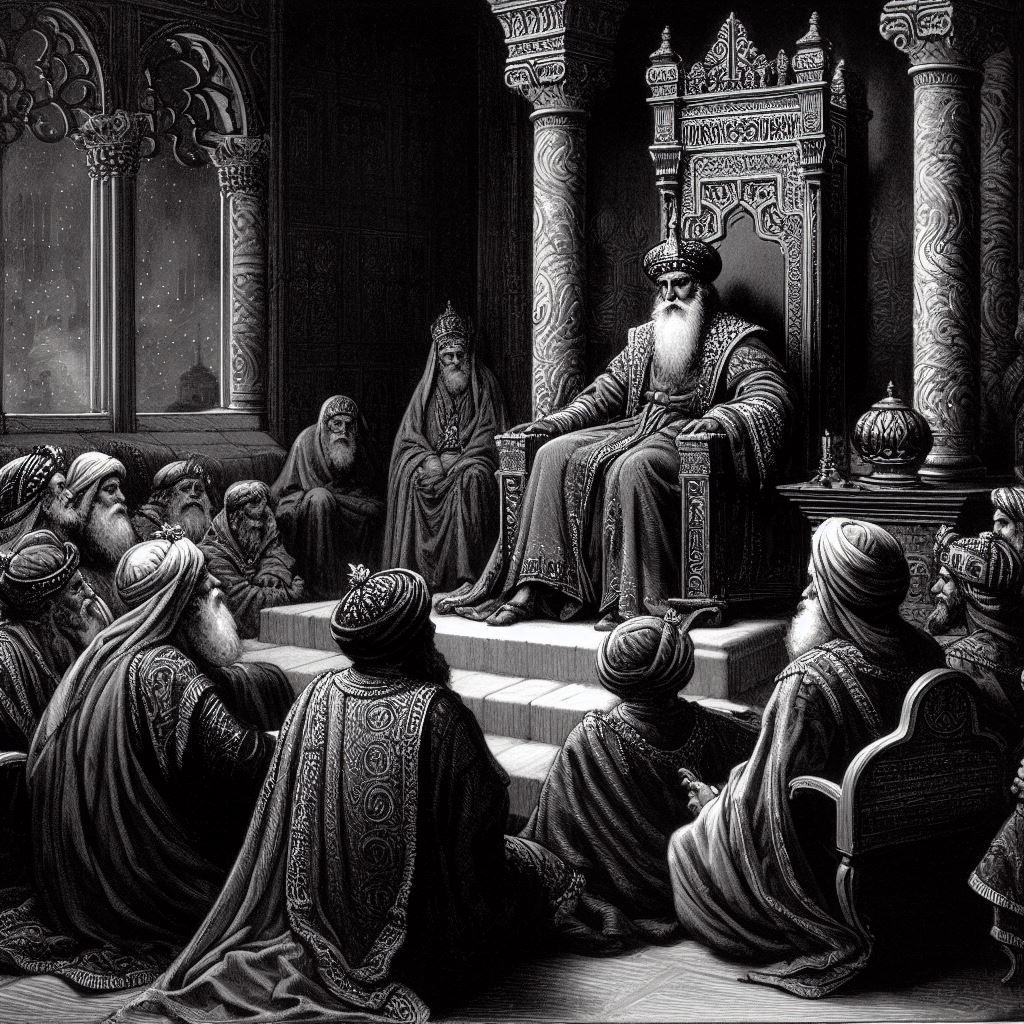
When Jesus was born in Bethlehem of Judea, in the days of King Herod, behold, Magi from the east arrived in Jerusalem, saying, “Where is the newborn king of the Jews? We saw his star at its rising and have come to do him homage.”

This is how the second chapter of St. Matthew’s Gospel introduces us to the noble Magi and the infamous King Herod. Their good and bad examples in the story of Christmas present much for us to learn from and reflect on.

The gospel tells us the Magi were astrologers from the East who saw a celestial sign which firmly convinced them the heir to the Jewish throne was born. The Magi were so convinced by this sign that they packed up valuable gifts and traveled far from their home to honor this newborn king. What are magi? “Magus” is the title which ancient civilizations east of Israel, such as the Persians and the Babylonians (or Chaldeans), bestowed upon their individual men of wisdom. These experts, their various teachers, priests, physicians, astrologers, soothsayers, Magicians, or interpreters of dreams, were collectively called magi.

How did the Magi who journeyed to Herod know how to recognize Heaven’s sign? In the 6th century before Christ., King Nebuchadnezzar of Babylon came and laid siege to Jerusalem. In response to his people’s unfaithfulness, God permitted them to be conquered and many Jews were taken east into Babylonian Captivity. The Babylonians reasoned that conquered peoples were more productive alive than dead and less likely to stage a successful rebellion when resettled outside of their homeland. Thus the Jews’ relocation deeper into the Babylonian Empire.

At that time, King Nebuchadnezzar told his chief chamberlain to bring in some of the Israelites of the royal line and of the nobility. He said, “They should be young men without any defect, handsome, proficient in wisdom, well informed, and insightful, such as could take their place in the king’s palace.” He was to teach them the language and literature of the Chaldeans. Among these chosen young men was the Prophet Daniel, who would go on to give prophesies about the coming of Christ recorded in the Old Testament book which bears his name.

Impressed by Daniel’s wisdom, Babylonian King Nebuchadnezzar “advanced Daniel to a high post… made him ruler of the whole province of Babylon and chief prefect over all the wise men of Babylon.” Perhaps Daniel’s prophetic wisdom, handed down for centuries, enabled these wise Magi from the East to recognize the significance of the starry sign and inspired them to journey to Jerusalem. The Bible does not record the Magi’s names, but a tradition hands down their names to us as Caspar, Melchior, and Balthasar.

Behold, Magi from the east arrived in Jerusalem, saying, “Where is the newborn king of the Jews? We saw his star at its rising and have come to do him homage.” When King Herod heard this, he was greatly troubled, and all Jerusalem with him.

More than thirty years prior to the arrival of the Magi, the pagan Roman Senate had appointed Herod as the region’s king. He is known as “Herod the Great” because of his vast territories and many building projects, including new cities, massive fortresses, and a complete renovation of the Jewish temple in Jerusalem. Herod heightened the architectural beauty of the temple to such greatness like it had in the days of King Solomon. However, Herod was not greatly loved.

He imposed extremely harsh taxes for the ancient world and ruled ruthlessly, executing many of his political opponents and family relatives, including three of his sons and at least one of his ten wives. No one ever mistook him for being the Messiah; besides being more of a pagan king than a Jewish one, Herod was not a descendant of Kind David like Scripture said the Christ would be. So when foreign Magi came to Jerusalem seeking the Messiah, word got around and King Herod became greatly troubled and all Jerusalem with him.

Why were the whole of Jerusalem troubled (that is, “stirred or agitated as in roiling water”) along with King Herod by this news of Christ’s possible coming? Because they knew Herod better than the foreign Magi did. The Magi had swooped in as innocent doves, but Herod was a cunning serpent. The Jews of Jerusalem realized King Herod was not eager to freely hand over power. Even if the Messiah had indeed been born, violence or a civil war would likely follow.

Assembling all the chief priests and the scribes of the people, [King Herod] inquired of them where the Messiah was to be born. They said to him, “In Bethlehem of Judea, for thus it has been written through the prophet: ‘And you, Bethlehem, land of Judah, are by no means least among the rulers of Judah; since from you shall come a ruler, who is to shepherd my people Israel.’”

There is a Jewish joke that two rabbis together produces three opinions, but here all of the priests and scribes assembled by King Herod cite the Old Testament Prophet Micah to identify Bethlehem as the promised Messiah’s birthplace. Maybe Herod asked them subtly amongst many other questions, inquiring about the Messiah’s birth in such a way that they did not suspect his motives. But if they grasped what Herod was after and why, then this was the first time Jewish religious leaders betrayed the Christ. Perhaps they reasoned that if God’s Anointed One had indeed been born in Bethlehem, then God would protect him, “For if the righteous one is the son of God, God will help him and deliver him from the hand of his foes.” God did protect the Infant Jesus, but Herod ended the precious lives of innocents in the little town of Bethlehem.

Our God will win in the end, all evil will ultimately be defeated, but we must not go along to get along in this world by cravenly cooperating with evil. Imagine if those religious leaders had refused to tell wicked Herod where the Messiah would be born; then they might now be celebrated throughout Heaven and earth as men who defended and died for Christ, instead of Bethlehem’s baby boys. We are all called to practice courage as Catholic Christians. Remember that it is better to innocently suffer or even die for Christ than to die as one of his enemies or betrayers.

I do not know whether the chief priests and scribes of the people knowingly betrayed the infant Christ, but there is no record in the Gospels of any of them going in search of the child. The Magi traveled hundreds of miles to find him, but it appears the priests and scribes never went the six miles from Jerusalem to Bethlehem in search of him. Beware of practicing your faith so feebly that you forego making the simplest sacrifices in service of Christ.

Then Herod called the Magi secretly and ascertained from them the time of the star’s appearance.

What was the star which the Magi saw? There are several interesting theories. It may have been one of the planets in a meaningful position, or perhaps a pair of planets combining their light. This is a possibility since the ancients deemed the other planets in our Solar System to be ‘wandering stars.’ Our word “planet” comes from the Greek word for “wanderer,” because the planets wander across the constellations. Some have suggested the Christmas star was a comet or a star’s supernova, but whatever the star was it was something too subtle for Herod to recall. In the ancient world, comets were regarded as foreboding omens and some supernovas have been notably bright to eye at night in recorded human history; however, the star which arose at Jesus’ birth was not of particular note to Herod and his royal counselors. This is why Herod must ascertain from the Magi the time of the star’s appearance.

As God once said, “As the heavens are higher than the earth, so are my ways higher than your ways and my thoughts than your thoughts.” This world and worldly people miss what is important, and what the world pays attention to are often fleeting things. So many things talked about today will be forgotten by next week, discarded like last week’s newspaper. Sports, movies, music, TV, social media, advertising, celebrities, politicians, and even much of the 24-hour news cycle will not show you what really matters. God tells us through St. Paul, “Do not conform yourselves to this age, but be transformed by the renewal of your mind, that you may discern what is the will of God, what is good and pleasing and perfect.” If you follow the nightly news you might naturally conclude that nothing good is happening anywhere, but remember that God is always quietly at work. I believe that many of the most important things which happened in the world today are good things, and things which the world will not notice, like the appearance of the star which announced our Savior’s birth, or a caravan of Magi beginning a journey west to meet God.

Herod called the Magi secretly and ascertained from them the time of the star’s appearance. He sent them to Bethlehem and said, “Go and search diligently for the child. When you have found him, bring me word, that I too may go and do him homage.”

Though their meeting was secret, Jesus says “nothing is concealed that will not be revealed, nor secret that will not be known.” Looking back, we can see that the Magi were sincere and faithful and sought to honor the Christ Child, while Herod was a cynical liar who sought to destroy him. No good or bad secret, of yours or mine or others’, will not be revealed in the end. St. Peter writes that “the day of the Lord will come like a thief… and the earth and everything done on it will be found out. Since everything is to be dissolved in this way, what sort of persons ought you to be? Conducting yourselves in holiness and devotion.” At the Presentation in the Temple, Simeon had told Mary that through her Son ‘the thoughts of many hearts would be revealed.’ That was true in the lives of King Herod and the Magi. In your personal response to Jesus Christ, your own heart is revealed, too.

After their audience with the king [the Magi] set out. And behold, the star that they had seen at its rising preceded them, until it came and stopped over the place where the child was. They were overjoyed at seeing the star, and on entering the house they saw the child with Mary his mother.

Notice that the Holy Family is no longer dwelling in a cave or a barn, but inside a house. This was not Christmas night but at least forty days later. We know this because when Joseph and Mary came to present Jesus at the temple, to offer a sacrifice God’s law required following the birth of a firstborn son, they could not afford a yearling lamb, so they offered “a pair of turtledoves or two young pigeons” instead, as the law of God permitted. And their humble gift pleased God. If the Magi had already visited them and provided their gift of gold, the Holy Family would have had the ability to purchase the more expensive lamb instead. The Magi arrived in Bethlehem between forty days and two years after Christmas. We know that upper bound from the cruel command which Herod issues later in hopes of destroying the Christ Child, targeting baby boys “two years old and under, in accordance with the time he had ascertained from the Magi.”

Upon entering the house the Magi unsurprisingly find the child with Mary his mother. She is the Lord’s new ark, his throne, the seat of Wisdom Incarnate. Sadly, some Christians consider her a harmful distraction from Jesus. However, the mother of the Christ is no hindrance to Jesus, for when you meet Mary she will joyfully show her Son to you.

[The Magi] prostrated themselves and did him homage. Then they opened their treasures and offered him gifts of gold, frankincense, and myrrh.

Unlike Herod, who grasps and clutches what he has, the Magi freely give gifts to Jesus. Three gifts of the Magi are mentioned by St. Matthew since they reveal who Jesus is; gold for a king, frankincense for a high priest and the true God, and myrrh resin used for external embalming, for one who has come to die. But the Magi’s best gift was the gift of themselves. What Christmas gift will you prepare for Jesus this Advent?

The Magi prostrated themselves, laying down on the floor with their faces towards the ground before Little Jesus in homage. Did they feel embarrassed to be bowing down to a baby, a child of poor parents in a humble house, far from the trappings of obvious power and glory? The Magi had deep faith in who Jesus was and faith in his future glory so they did not refuse to be seen paying him respect and honor. Do you feel embarrassed to be seen praying or honoring Jesus? Jesus says, “Everyone who acknowledges me before others I will acknowledge before my heavenly Father. But whoever denies me before others, I will deny before my heavenly Father.” Let us not be ashamed to acknowledge Jesus in others’ presence.

Having been warned in a dream not to return to Herod, [the Magi] departed for their country by another way.

These Magi took signs seriously. They previously followed such one sign hundreds of miles from home and it led them to the Christ Child. So they heed this message and bypass Herod on their trip back home. In that dream, the Magi might not have been warned that the Christ Child was in danger. Recall how Bethlehem is only six miles away from Jerusalem, just a two or three hour walk. If the Magi had sensed that Jesus was in danger, wouldn’t they have warned the Holy Family before they departed to caravan back east? Perhaps they did warn the Holy Family of possible danger, but Joseph and Mary simply did not know what to do next. But if this inspired dream told the Magi not to return to Herod without revealing the reason why, the Magi’s obedience provides a beautiful lesson for us.

Jesus and his Church teach us many precepts about what we must or must not do, what we should or should not do. There are good reasons behind these commands, and it is good to explore these teachings and ask questions to better understand them, but there will be times in your life when you are called to be faithfully obedient even before you fully understand. The Magi’s obedience served Jesus and likely saved the Magi’s lives. Your obedience to God will bless you, and more than you may realize.

[The Magi] departed for their country by another way.

They came to Jesus from one direction, but they departed for their country by another way. Servant of God Bishop Fulton Sheen makes a famous observation about this fact. He writes that it is fitting that the Magi left this way, since “no one who ever meets Christ with a good will returns the same way as he came.

When Herod realized that he had been deceived by the Magi, he became furious. He ordered the massacre of all the boys in Bethlehem and its vicinity two years old and under, in accordance with the time he had ascertained from the Magi.

Did Herod actually believe that the Christ Child has been born in Bethlehem? Probably not, but he was afraid that other people would believe it, rally around this child, and attempt to overthrow him. He reasoned that, ‘If all the baby boys in Bethlehem are dead, none of them can rise up against me as a rival.’

His calculation is like that of Pharaoh’s at the start of the Book of Exodus. Pharaoh said to his people in Egypt, “See! The Israelite people have multiplied and become more numerous than we are! Come, let us deal shrewdly with them to stop their increase; otherwise, in time of war they too may join our enemies to fight against us….” After enslaving the Hebrews, Pharaoh commanded all his people to “throw into the Nile every boy that is born, but you may let all the girls live.” Both Herod and Pharaoh aimed to prevent a future rebellion through the murder of baby boys. As ancient Machiavellians, they were willing to do great evils in hope of gaining good outcomes.

To the Romans, St. Paul records that ‘we are accused and some claim we say that we should do evil that good may come of it.’ Denying their false charge, he says, “Their penalty is what they deserve.” Remember that Christians are never allowed to do evil or sin in the hopes that good things will result. Good ends do not justify sinful means. Beware of how readily any evil deed can and will be justified with practical arguments.

When [the Magi] had departed, behold, the angel of the Lord appeared to Joseph in a dream and said, “Rise, take the child and his mother, flee to Egypt, and stay there until I tell you. Herod is going to search for the child to destroy him.” Joseph rose and took the child and his mother by night and departed for Egypt. He stayed there until the death of Herod, that what the Lord had said through the prophets might be fulfilled, “Out of Egypt I called my son.”

The Holy Family remained in Egypt until Herod’s death. Then Herod’s kingdom was divided among three of his sons: Archelaus who ruled Samaria and Judaea, Philip who ruled the Golan Heights, and Herod Antipas who ruled Galilee and the east bank of the Jordan River. This Herod Antipas is the Herod who would go on to murder St. John the Baptist and meet Jesus during the Passion, mocking him, dressing him in a splendid robe, and sending him back to Pilate. Fathers are important. I like to believe the sons of the Magi went on to find saving faith in Jesus Christ, then these sons would have born fruit following the example modeled by their fathers.

In conclusion, I invite you to take one or two of these ideas to contemplate and pray with. “Do not conform yourselves to this age, but be transformed by the renewal of your mind, that you may discern what is the will of God, what is good and pleasing and perfect.” What worldly things do you need to pay less attention to? What heavenly things do you need to pay more attention to? “The day of the Lord will come like a thief… and the earth and everything done on it will be found out.” So “what sort of persons ought you to be? Do not do evils in the hope that goods will follow. Do not justify your sins with rationalizations like Herod. Anyone searching for excuses can easily find them forever. Remember how simple obedience saved and blessed the Magi. We are called to be courageous and go extra miles for Christ. How can you better acknowledge him before others? In your personal response to Jesus, your heart will be revealed. Ask Mary’s help in this, for believers draw closer to her Son with her. What Christmas gift will you prepare for Jesus this Advent? Remember that the greatest gift to him is yourself. Embrace this Advent season with our Lord, for “no one who ever meets Christ with a good will returns the same way as he came.”


Give Others The Royal Treatment

November 25, 2023

Solemnity of Christ the King
By Fr. Victor Feltes

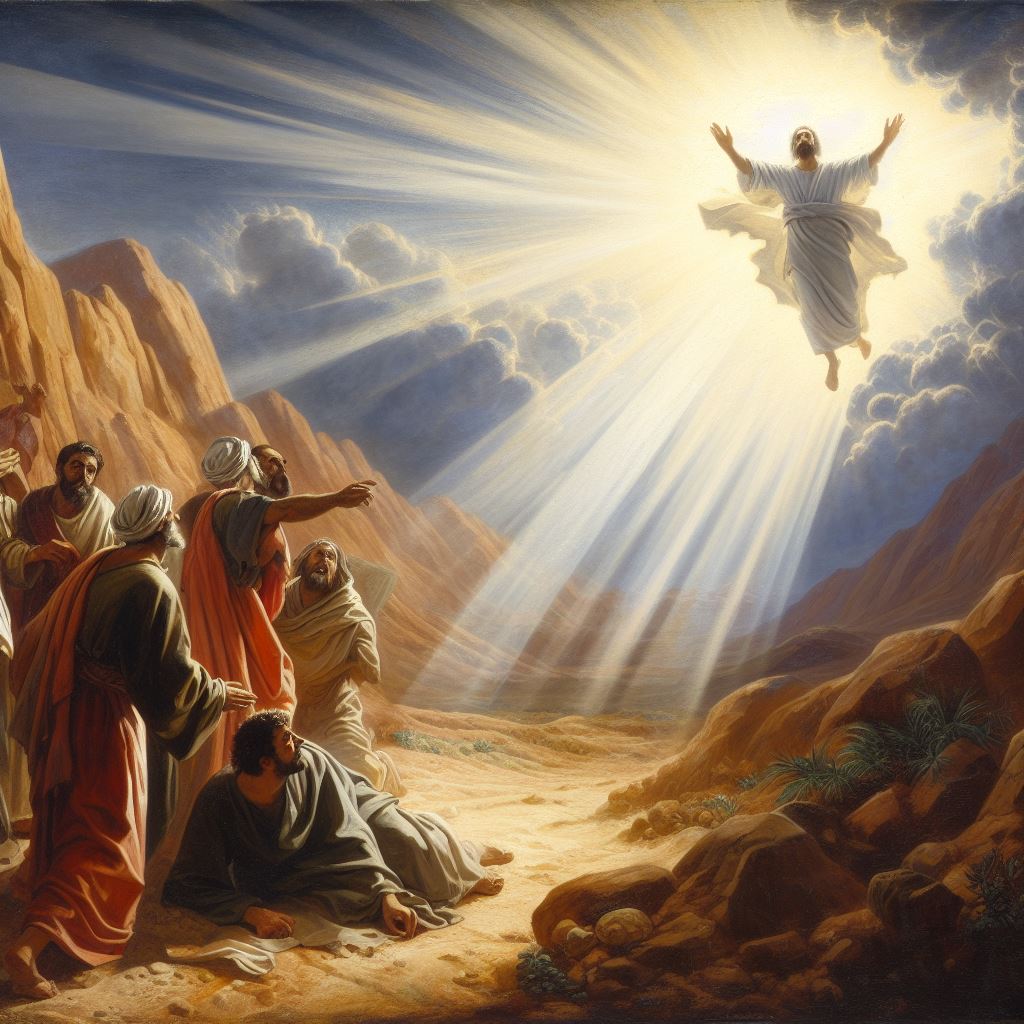
After having supported the murder of St. Stephen the Martyr, Saul of Tarsus was trying to destroy the early Church. He entered house after house, dragging out Christian men and women and handing them over for imprisonment. Still breathing murderous threats against the disciples of the Lord, Saul went to the high priest and obtained official authorization to arrest any Christians he might find in Damascus and bring them back to Jerusalem in chains. But on his way to Damascus, this future saint saw the light.

Light from the sky suddenly flashed around him. He fell to the ground and heard a voice ask him, “Saul, Saul, why are you persecuting me?” “Who are you, sir,” Saul replied. “I am Jesus, whom you are persecuting.” Notice how Jesus did not ask “why are you persecuting my people” or “why are you persecuting my Church,” though both of these descriptions would have been accurate. Jesus asks, “Why are you persecuting me? … I am…whom you are persecuting.”

Imagine if you and I are standing side-by-side in a buffet line and I willfully knock your hand out of the way as we both reach for the delicious deviled eggs. Will your feelings of offense be any less if I reply, “Oh, I didn’t hit you—I merely slapped away your hand”? No, every part of your body is one with you. If I mistreat one of your members, I am mistreating you.

St. Paul and the Holy Spirit teach us in the New Testament: “You are now Christ’s body, and individually parts of it… He is the head of the body, the Church, … [and] we, though many, are one body in Christ.” Jesus himself teaches, “Whoever eats my flesh and drinks my blood remains in me and I in him.” This is why he will declare at the Last Judgment “what you did not do for one of these least ones, you did not do for me” and “whatever you did for one of the least brothers of mine, you did for me.” Our mystical union with Jesus Christ is more intimate than we realize and this has important implications.

The 1st Letter of St. John tells us, “If anyone says, ‘I love God,’ but hates his brother, he is a liar; for whoever does not love a brother whom he has seen cannot love God whom he has not seen. This is the commandment we have from him: whoever loves God must also love his brother.” Now man does not live by bread alone, but we are called to practice Corporal (that is, bodily or material) Works of Mercy. St. James writes, “If a brother or sister has nothing to wear and has no food for the day, and one of you says to them, ‘Go in peace, keep warm, and eat well,’ but you do not give them the necessities of the body, what good is that?” Jesus is hungry and thirsty, ill-clothed and a stranger, sick and imprisoned in his brothers and sisters, and our love for him is reflected in our care for them.

Yet do not fall for the demons’ trap; their persistent accusations which sound like: “You could be doing more; you should always be doing more!” They seek to rob you of your peace and lead you to ultimately give up the good things you are doing because of discouragement. God our Maker knows that our time, talents, and treasure are finite; resources spent on one holy effort cannot be spent on another. Nevertheless, it is important for us to be self-reflective and truly generous with ourselves and what we have.

When you see others or interact with people, try to remember the One whom you mystically encounter. Give them the royal treatment. Notice how both the saved and the damned will someday ask our King, ‘When did we see you hungry or thirsty or a stranger or naked or ill or in prison?’ He will reply, ‘Indeed, whatever you did for one of the least of mine, you did for me.’ It is a truer reality than we realize and all too easily forgotten, yet valuable for us to remember always.

Invest Yourself in Heaven’s Reward

November 19, 2023

33rd Sunday in Ordinary Time
By Fr. Victor Feltes

As Jesus traveled from place to place he preached parables to different people. He told stories, for instance, featuring fields, fish, and flocks to teach farmers, fishermen, and shepherds about the Kingdom of God. It makes sense that Jesus would tell the same stories more than once, for different crowds to hear them for the first time and for his apostles to hear them repeatedly. But the gospels suggest Jesus sometimes changed his parables’ details to highlight different truths. What Jesus says in his Sermon on the Plain is similar but not identical to his Sermon on the Mount. As the Church journeys through our three-year cycle of Sunday readings we hear some parables retold by more than one gospel. And each fall, as we near the end of the Church year, our readings reflect upon the Four Last Things. Today, we have another such parable, about death and judgment, Heaven and Hell, Jesus Christ and us.

Christ is our Lord, our journeying master who shall return. We are his servants to whom he has entrusted our fortunes. And each of us one day will stand before him to give an account of our faithful or unfaithful service, with generous rewards or just punishments to follow. In Jesus’ telling through St. Matthew’s Gospel, the master entrusts weighty slabs of precious metal (called talents) in varying numbers to his servants, each according to their abilities. Upon his return, his faithful servants have doubled what they were given and receive the same words of praise: “Well done, my good and faithful servant! Since you were faithful in small matters, I will give you great responsibilities. Come, share your master’s joy!” One servant, however, who buried his talent and returned it ungrown, receives his master’s condemnation and is tossed into the darkness outside.

When Jesus retells his parable in St. Luke’s Gospel, the master is a nobleman who goes off to claim his kingdom, entrusting to ten servants one gold coin each. Upon his return, his faithful servants reveal their various positive returns on his investment. One has earned ten more gold coins and his king declares, “Well done, good servant! You have been faithful in this very small matter; take charge of ten cities.” Another servant has earned five more coins and the king decrees, “You, take charge of five cities.” One servant, however, hid his coin in a napkin and returned it unmultiplied. The king condemns that servant and orders all of his enemies who did not want him as their king to be slain.

The differences between these two parables highlight different truths about Heaven. In the first parable, the master speaks the same blessing to each faithful one: “Well done, good servant! … Come, share your master’s joy!” But in the other parable, the king gives his servant with ten additional coins ten cities and gives his servant with five additional coins five cities. So is Heaven’s reward the same for all the saints or can one’s reward be greater than another’s? One parable suggests their reward is the same, while the other suggests their rewards vary. On one hand, the reward of every saint is the same: they experience God’s unveiled glory forever in happy, loving communion with him and all who are in Christ. On the other hand, a great saint’s capacity for love and joy and glory may be greater than another’s.

Doctor of the Church St. Therese of Lisieux recounts in her great autobiography (“Story of a Soul”) how this idea once troubled her as a child: “One day, I expressed surprise that God does not give an equal amount of glory to all the elect in Heaven—I was afraid that they would not all be quite happy. [My older sister Pauline] sent me to fetch Papa’s big tumbler and put it beside my tiny thimble, then, filling both with water, she asked me which seemed the fuller. I replied that one was as full as the other—it was impossible to pour more water into either of them, for they could not hold it. In this way [she] made it clear to me that in Heaven the least of the Blessed does not envy the happiness of the greatest…

Notice how in both forms of Jesus’ parable all the faithful servants are entrusted with greater responsibilities. The saints in Heaven are likewise given higher roles as our intercessors now and in the family and household of God forever. Consider how many churches, religious communities, and cities around the world are dedicated to St. Paul. They are blessed to have him as a loving patron praying for them. And consider how the Blessed Virgin Mary shall always hold a privileged place in Heaven as the spiritual mother of every Christian.

St. Paul says, “Consider this: whoever sows sparingly will also reap sparingly, and whoever sows bountifully will also reap bountifully.” The generosity of our loving gifts to Christ, the additional sacrifices we make and good deeds we do, will surely not go unrewarded. Jesus tells us, “Give, and it will be given to you. Good measure, pressed down, shaken together, running over, will be put into your lap. For the measure with which you measure will be measured out to you.” Our individual hustle, cooperating with Christ’s grace, can win us greater glory, therefore “run so as to win!

We should not fear that we lack sufficient talents or gifts to produce good fruits for glory. In the first parable, every faithful servant was able to double his money and won his master’s praise. The issue with that unfruitful, condemned servant is that he never tried. His master calls him “wicked” and “lazy” because that servant did not make even the most minimal effort to grow his gift. “Should you not then have put my money in the bank so that I could have got it back with interest on my return?” That servant did not love his lord but rather resented his lordship over him. Which is easier: to digging a hole or visiting the bank? He did not want to be his master’s servant, he did not want him as his king, and so he finds himself condemned and cast out forever. But if we love our Lord we will produce fruit, just as “every good tree bears good fruit.” As Jesus declares, “Whoever remains in me and I in him will bear much fruit.”

What is something more that you will do with the talents and gifts our Lord has lent you? It could be something large or small, in private or with others. You could be a more-focused prayer warrior, or offer secret penances for the salvation of souls. You could start a Catholic book or movie club at your home, or organize a regular Bible study that discusses the upcoming Sunday readings. You could visit shut-ins as an extraordinary Eucharistic minister, or invite somebody new each week to come with you to Mass. There are many good things you could do and I urge you to consider and answer this call, for Jesus Christ will honor your faithful, loving efforts with glorious rewards.

Our Friends Who Have Gone Before Us

November 2, 2023

All Souls’ Day
By Fr. Victor Feltes

Yesterday, we celebrated all of the saints in Heaven. The saints in Heaven now enjoy supreme, definitive, enduring happiness. They are in the glorious presence of God, the Father, Son, and Holy Spirit, with all the holy angels. There, the saints’ deepest human longings are fulfilled without end. The Church’s recognized saints, beatified saints, and canonized saints, are Christianity’s hall of famers. We celebrate these saints on their feast days throughout the year. However, there are also many, many unknown saints in Heaven. How do I know that? Because of what St. John describes in the Book of Revelation.

In the Book of Revelation, when John describes his vision of Heaven, he says: “I had a vision of a great multitude, which no one could count, from every nation, race, people, and tongue.” Thirteen years ago, I printed out this list of recognized saints. It is eighty-one pages long and lists more than 13,000 names. But the number of those in Heaven is “a great multitude which no one could count.” I could count beyond 13,000 in less than a day, so there must be many more saints in Heaven than these.

Something I think many Christians do not realize is that if your relative, or friend, or neighbor who passed away is now in Heaven, yesterday was their feast day. We celebrated them on All Saints’ Day. Today, is All Souls’ Day. So what is the difference? Today, we remember and pray for those who have died as friends of God but are still on their way to Heaven.

Why are there any Christians who have died but are not yet in the full glory of Heaven? Well, what if we die as friends of God but we are not yet fully perfect? The Book of Revelation says “nothing unclean will enter [God’s holy, heavenly city].” What if we die still loving some of our sins? What if we die still a slave to certain vices? What if we die carrying hatred or unforgiveness towards others in our hearts? Psalm 24 asks, “Who can ascend the mountain of the Lord? Or who may stand in his holy place?” Then it tells us, “One whose hands are sinless, whose heart is clean, who desires not what is vain.” And Jesus tells us in the Beatitudes, “Blessed are the clean of heart, for they will see God.”

Jesus tells us in our gospel, “Everything that the Father gives me will come to me, and I will not reject anyone who comes to me.” But what if we die as his friends but with unclean hearts, not yet ready to stand before and behold God’s all-holy, fully-unveiled presence? Happily, God provides a way to perfect, to heal, to sanctify his friends (if, and as needed) after death. This purifying process is called Purgatory, and everyone who enters it will surely reach Heaven. Yet we know from lived experience that personal change is difficult, so we should help the souls of people in Purgatory with our prayers.

One spiritual problem in our culture these days is the idea that every Christian who dies is immediately in Heaven. We can hope for our loved one’s quick entry into Heaven, but an ordinary funeral Mass is not a canonization Mass. If I die and need the cleansing work of Purgatory, I hope that people will be praying for my soul instead of assuming that I’m already all the way home to Heaven. We can and should pray for the dead. We who are united in the Body of Christ, even if temporarily separated by death, remain joined in love. We on earth do not know with certainty whether our loved ones have reached Heaven yet, until the Church beatifies or canonizes them, or unless we receive some private revelation from God. But whether they are with the saints in Heaven or with the souls in Purgatory, they can still pray for us!

St. James writes in his New Testament letter that, “The prayers of a righteous person are very powerful.” We ask people on earth to pray for us, especially if someone is holy, and we are eager for the help of their prayers to God. How mighty are the prayers of those holy ones who began journeying closer to God before us? “The prayers of a righteous person are very powerful.

Here’s some homework for today: first, I invite you to think of the most loving, devout, holy people you know who have passed away and pray for them in case they need it. (No loving prayers are ever wasted.) Next, thank God for the great gift those people were and are. Finally, ask these holy souls to pray for you. They will be happy to help you.

“I believe no happiness can be found worthy to be compared with that of a soul in Purgatory except that of the saints in Paradise; and day by day this happiness grows as God flows into these souls, more and more, as the hindrance to His entrance is consumed.”

~St. Catherine of Genoa, Treatise on Purgatory

Miracles Opened his Mind

October 14, 2023

By Fr. Victor Feltes

I love Catholic conversion stories because they always have happy endings. Toby, a friendly acquaintance of mine, recently shared with me this great story of how he became Catholic. He is a 42-year-old, married father of three in Colorado who entered the Church at the Easter Vigil of 2006:

“I was fairly young when my parents stopped taking me to the Dutch Reformed church (my uncle is a pastor in one). So I had mostly no religion, but a little. In high school, I suffered terrible migraines that would make me vomit. One day, in the middle of upchucking, I prayed to ‘the God of Abraham, Isaac, and Jacob’ to make it stop and if he did I would worship him. I have not had a migraine since—not even a little one. But a lot of people claim this God as theirs, so I had to figure out how to worship him.

So, every Sunday through high school, I went by myself to the closest church, a Calvary Chapel. In college, I tried other churches to see what seemed right, but nothing did. I ruled out Islam (since they do not claim all three patriarchs) and Catholicism because of my Protestant biases. So I looked at Judaism. I did a lot of research about the existence of Jesus and was convinced to try Messianic Judaism because I was convinced he was the Messiah. However, that also seemed empty. So I gave up. I lived a hedonistic life deciding that, though I believe, I would never know how this God really wanted to be worshiped.

Now midway through graduate school, I bought saint candles simply for décor (and because they are so cheap). One day, returning from vacation, I put a stone turtle souvenir I had just bought on my desk next to it, and took a shower. Coming back the turtle was in pieces on my desk. I looked up the saint, and the first webpage I found said Saint Jude was known for was casting demons out of statues and causing them to crumble. So I lifted my bias against Catholicism and attended RCIA (classes for joining the Catholic Church) and it fit. Things made sense in a way they didn’t elsewhere.

So, it took years and multiple miracles, but here I am. The Lord had to drag me to our Faith in a way that I could investigate the claims with an open mind, and not with the biases I had built up. It required a lot of changed views, but my journey left me docile. Two miracles and learning my own discernment was terrible can do that!”

The Parable of Two Sons, Jesus Christ & Us

September 30, 2023

26th Sunday in Ordinary Time
By Fr. Victor Feltes

The father in Jesus’ parable has two sons. He tells the first, “Son, go out and work in the vineyard today.” That son refuses but later changes his mind and goes. The father comes to the other son and gives the same command. That son replies, “Yes, sir,” but does not go. When Jesus asks the chief priests and elders which son did the father’s will, they answer, “The first.” Were those Jewish leaders correct? Yes and no.

Yes, it is true that it is better to do the right thing than to merely say the right thing. Nevertheless, it is a father’s will that all his children would do both, obeying in word and deed. In Jesus’ parable, neither son did the father’s will perfectly. Jesus Christ, on the other hand, is perfectly faithful to our Father. “However many are the promises of God,” the Letter to the Hebrews tells us, “their ‘Yes’ is in him.

Jesus enters our world saying, “Behold, I come to do your will, O God.” Though he was in the form of God, he emptied himself and humbly took the form of a servant, assuming our human nature to his Divine Person. He was perfectly obedient to the point of death, even a death by crucifixion. Through Jesus’ obedient, faithful, loving response to his Father’s will, God has exulted him highest among us. We too have said yes to God’s will and given him our word, but we have not been obedient to that same degree.

Many here have vowed before God, ‘I, take you, to be my spouse. I promise to be true to you in good times and in bad, in sickness and in health. I will love you and honor you all the days of my life.’ I pledged a similar self-gift on my deaconate and priestly ordination days. And any Catholics who are not in either of these sacramental vocations promise and pledge a gift of themselves when receiving Jesus in the Eucharist. At the turn of the fifth century, St. Augustine noted that when you approach to receive the Holy Eucharist at Mass “you hear the words, ‘The body of Christ’ and you reply ‘Amen’. Be then a member of Christ’s body, so that your ‘Amen’ may accord with the truth… Be then what you see, and receive what you are.” Our Heavenly Father has called to do works of love in our various states of life and we have said, “Yes, sir,” but we have not always done it. Yet there is encouragement for us in today’s gospel.

Jesus notes how tax collectors and prostitutes had not done the will of God preceding the preaching St. John the Baptist. They had disobeyed God’s commands but, through believing, changed their ways and were now entering the Kingdom. Through believing in Christ we also can change. We cannot do it alone, but we were never expected to. Consistently invite Jesus Christ to live his perfect obedience, his intense love, his holy life in you. Then, becoming more like him, you will share more greatly in his exulted glory.

Jesus’ Praising & Rebuking of Simon Peter

September 3, 2023

22nd Sunday in Ordinary Time
By Fr. Victor Feltes

When Jesus asked his disciples, “Who do you say that I am,” Simon answered, “You are the Christ, the Son of the living God.” And Jesus replied, “Blessed are you, Simon son of Jonah. For flesh and blood has not revealed this to you, but my heavenly Father. And so I say to you, you are Peter, and upon this rock I will build my Church.” Jesus changed Simon son of Jonah’s name to “Rock,” or “Petros” in Greek, which we render as “Peter.” In the entire Old Testament, God changed the names of only three people: Abram to Abraham, Abram’s wife Sarai to Sarah, and Jacob to Israel, so the changing of Simon’s name is a big deal in salvation history. Jesus then declared to Peter, “I will give you the keys to the Kingdom of Heaven. Whatever you bind on earth shall be bound in Heaven; and whatever you loose on earth shall be loosed in Heaven.”

In last Sunday’s readings we heard of how in the days of the Prophet Isaiah the Lord chose “Eliakim son of Hilkiah” to become chief steward of the royal house, that is, prime minister for the reigning Davidic king. The Lord declared, “I will place the key of the House of David on Eliakim’s shoulder; when he opens, no one shall shut, when he shuts, no one shall open.” The holder of that office possessed plenary power under the king throughout the kingdom and reportedly carried a visible key indicating this authority that he would pass on to his successors.

The great Doctor of the Church, St. Augustine of Hippo, taught that the New Testament is concealed in the Old and that the Old Testament is revealed in the New. In the Old Testament, the Lord gave Eliakim “the key of the House of David” and authority to open and close. Likewise, Jesus Christ the new Davidic king gave Peter “the keys to the Kingdom of Heaven” and authority to bind and loose. Eliakim’s authority extended throughout an earthly kingdom, but Jesus promised Peter that his earthly decrees for the Church would also be confirmed in Heaven. Eliakim would become, in the words of the Lord through Isaiah, “a father to the inhabitants of Jerusalem and to the house of Judah.” St. Peter became the Church’s first “pope,” a title which comes from the Greek word for a “papa” and an office held today by Peter’s successor, our Holy Father Pope Francis. Jesus foresaw that without a visible shepherd his Christian flock would inevitably scatter. Like Moses for the Hebrews in the desert, or like King David for God’s people in Israel, Christ established a chief shepherd for his Church on earth through his popes, beginning with St. Peter.

That highlight moment for Simon Peter is followed this Sunday in St. Matthew’s Gospel by a very humbling event. Jesus begins revealing to his disciples that he must suffer greatly from the Jewish leaders, be killed, and be raised on the third day. So Peter takes Jesus aside and starts rebuking him, “God forbid, Lord! No such thing shall ever happen to you!” Jesus turns and says to Peter, “Get behind me, Satan! (That is, “Get behind me, Adversary!”) You are (being) an obstacle to me. You are thinking not as God does but as human beings do.” Notice how Jesus here reproaches Peter differently than how he once rebuked Satan in the desert, to whom he said, “Get away, Satan!” Jesus does not cast Peter away but tells him to “get behind me,” that is, “Follow me again.” Whenever you or I go wrong, Jesus calls us to follow him anew. Satan wants you to fall and stay down, but Jesus wants you to rise again.

Why was Simon Peter praised last week and why was he corrected today? First, Jesus tells him, “Blessed are you, Simon…. Flesh and blood has not revealed this to you but my heavenly Father.” Now, Jesus reproves him, “You are thinking not as God does but as human beings do.” Peter was praised for accepting the truth God had revealed and rebuked for trying to substitute his own ideas for God’s will. In today’s second reading, St. Paul urges us:

Do not conform yourselves to this age
but be transformed by the renewal of your mind,
that you may discern what is the will of God,
what is good and pleasing and perfect.”

Who in this age could correctly discover these things in our world apart from Christ’s one Church built on rock? Our Catholic Faith is a religion revealed by God with infallible teachings about what is true and how we are to live. Being faithful can be a cross, but our Lord always sees us, and he will repay each person according to our deeds with punishments or rewards. Jesus tells us, “Whoever wishes to come after me must deny himself, take up his cross, and follow me.” To get fully behind Christ and receive his endless blessings, receive everything that God has revealed to us through his Holy Catholic Church.