Archive for the ‘Saintly People’ Category

The Magi & King Herod

December 6, 2023

By Fr. Victor Feltes

When Jesus was born in Bethlehem of Judea, in the days of King Herod, behold, Magi from the east arrived in Jerusalem, saying, “Where is the newborn king of the Jews? We saw his star at its rising and have come to do him homage.”

This is how the second chapter of St. Matthew’s Gospel introduces us to the noble Magi and the infamous King Herod. Their good and bad examples in the story of Christmas present much for us to learn from and reflect on.

The gospel tells us the Magi were astrologers from the East who saw a celestial sign which firmly convinced them the heir to the Jewish throne was born. The Magi were so convinced by this sign that they packed up valuable gifts and traveled far from their home to honor this newborn king. What are magi? “Magus” is the title which ancient civilizations east of Israel, such as the Persians and the Babylonians (or Chaldeans), bestowed upon their individual men of wisdom. These experts, their various teachers, priests, physicians, astrologers, soothsayers, Magicians, or interpreters of dreams, were collectively called magi.

How did the Magi who journeyed to Herod know how to recognize Heaven’s sign? In the 6th century before Christ., King Nebuchadnezzar of Babylon came and laid siege to Jerusalem. In response to his people’s unfaithfulness, God permitted them to be conquered and many Jews were taken east into Babylonian Captivity. The Babylonians reasoned that conquered peoples were more productive alive than dead and less likely to stage a successful rebellion when resettled outside of their homeland. Thus the Jews’ relocation deeper into the Babylonian Empire.

At that time, King Nebuchadnezzar told his chief chamberlain to bring in some of the Israelites of the royal line and of the nobility. He said, “They should be young men without any defect, handsome, proficient in wisdom, well informed, and insightful, such as could take their place in the king’s palace.” He was to teach them the language and literature of the Chaldeans. Among these chosen young men was the Prophet Daniel, who would go on to give prophesies about the coming of Christ recorded in the Old Testament book which bears his name.

Impressed by Daniel’s wisdom, Babylonian King Nebuchadnezzar “advanced Daniel to a high post… made him ruler of the whole province of Babylon and chief prefect over all the wise men of Babylon.” Perhaps Daniel’s prophetic wisdom, handed down for centuries, enabled these wise Magi from the East to recognize the significance of the starry sign and inspired them to journey to Jerusalem. The Bible does not record the Magi’s names, but a tradition hands down their names to us as Caspar, Melchior, and Balthasar.

Behold, Magi from the east arrived in Jerusalem, saying, “Where is the newborn king of the Jews? We saw his star at its rising and have come to do him homage.” When King Herod heard this, he was greatly troubled, and all Jerusalem with him.

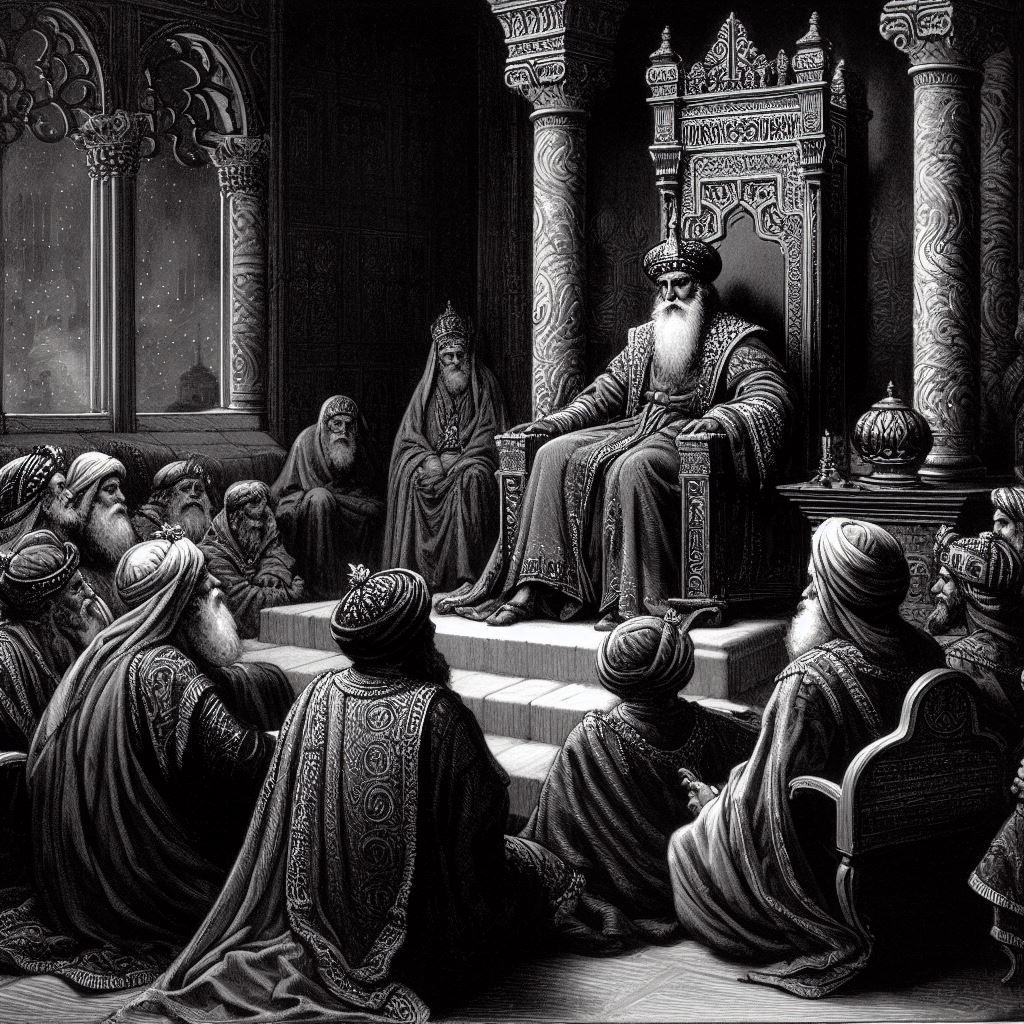
More than thirty years prior to the arrival of the Magi, the pagan Roman Senate had appointed Herod as the region’s king. He is known as “Herod the Great” because of his vast territories and many building projects, including new cities, massive fortresses, and a complete renovation of the Jewish temple in Jerusalem. Herod heightened the architectural beauty of the temple to such greatness like it had in the days of King Solomon. However, Herod was not greatly loved.

He imposed extremely harsh taxes for the ancient world and ruled ruthlessly, executing many of his political opponents and family relatives, including three of his sons and at least one of his ten wives. No one ever mistook him for being the Messiah; besides being more of a pagan king than a Jewish one, Herod was not a descendant of Kind David like Scripture said the Christ would be. So when foreign Magi came to Jerusalem seeking the Messiah, word got around and King Herod became greatly troubled and all Jerusalem with him.

Why were the whole of Jerusalem troubled (that is, “stirred or agitated as in roiling water”) along with King Herod by this news of Christ’s possible coming? Because they knew Herod better than the foreign Magi did. The Magi had swooped in as innocent doves, but Herod was a cunning serpent. The Jews of Jerusalem realized King Herod was not eager to freely hand over power. Even if the Messiah had indeed been born, violence or a civil war would likely follow.

Assembling all the chief priests and the scribes of the people, [King Herod] inquired of them where the Messiah was to be born. They said to him, “In Bethlehem of Judea, for thus it has been written through the prophet: ‘And you, Bethlehem, land of Judah, are by no means least among the rulers of Judah; since from you shall come a ruler, who is to shepherd my people Israel.’”

There is a Jewish joke that two rabbis together produces three opinions, but here all of the priests and scribes assembled by King Herod cite the Old Testament Prophet Micah to identify Bethlehem as the promised Messiah’s birthplace. Maybe Herod asked them subtly amongst many other questions, inquiring about the Messiah’s birth in such a way that they did not suspect his motives. But if they grasped what Herod was after and why, then this was the first time Jewish religious leaders betrayed the Christ. Perhaps they reasoned that if God’s Anointed One had indeed been born in Bethlehem, then God would protect him, “For if the righteous one is the son of God, God will help him and deliver him from the hand of his foes.” God did protect the Infant Jesus, but Herod ended the precious lives of innocents in the little town of Bethlehem.

Our God will win in the end, all evil will ultimately be defeated, but we must not go along to get along in this world by cravenly cooperating with evil. Imagine if those religious leaders had refused to tell wicked Herod where the Messiah would be born; then they might now be celebrated throughout Heaven and earth as men who defended and died for Christ, instead of Bethlehem’s baby boys. We are all called to practice courage as Catholic Christians. Remember that it is better to innocently suffer or even die for Christ than to die as one of his enemies or betrayers.

I do not know whether the chief priests and scribes of the people knowingly betrayed the infant Christ, but there is no record in the Gospels of any of them going in search of the child. The Magi traveled hundreds of miles to find him, but it appears the priests and scribes never went the six miles from Jerusalem to Bethlehem in search of him. Beware of practicing your faith so feebly that you forego making the simplest sacrifices in service of Christ.

Then Herod called the Magi secretly and ascertained from them the time of the star’s appearance.

What was the star which the Magi saw? There are several interesting theories. It may have been one of the planets in a meaningful position, or perhaps a pair of planets combining their light. This is a possibility since the ancients deemed the other planets in our Solar System to be ‘wandering stars.’ Our word “planet” comes from the Greek word for “wanderer,” because the planets wander across the constellations. Some have suggested the Christmas star was a comet or a star’s supernova, but whatever the star was it was something too subtle for Herod to recall. In the ancient world, comets were regarded as foreboding omens and some supernovas have been notably bright to eye at night in recorded human history; however, the star which arose at Jesus’ birth was not of particular note to Herod and his royal counselors. This is why Herod must ascertain from the Magi the time of the star’s appearance.

As God once said, “As the heavens are higher than the earth, so are my ways higher than your ways and my thoughts than your thoughts.” This world and worldly people miss what is important, and what the world pays attention to are often fleeting things. So many things talked about today will be forgotten by next week, discarded like last week’s newspaper. Sports, movies, music, TV, social media, advertising, celebrities, politicians, and even much of the 24-hour news cycle will not show you what really matters. God tells us through St. Paul, “Do not conform yourselves to this age, but be transformed by the renewal of your mind, that you may discern what is the will of God, what is good and pleasing and perfect.” If you follow the nightly news you might naturally conclude that nothing good is happening anywhere, but remember that God is always quietly at work. I believe that many of the most important things which happened in the world today are good things, and things which the world will not notice, like the appearance of the star which announced our Savior’s birth, or a caravan of Magi beginning a journey west to meet God.

Herod called the Magi secretly and ascertained from them the time of the star’s appearance. He sent them to Bethlehem and said, “Go and search diligently for the child. When you have found him, bring me word, that I too may go and do him homage.”

Though their meeting was secret, Jesus says “nothing is concealed that will not be revealed, nor secret that will not be known.” Looking back, we can see that the Magi were sincere and faithful and sought to honor the Christ Child, while Herod was a cynical liar who sought to destroy him. No good or bad secret, of yours or mine or others’, will not be revealed in the end. St. Peter writes that “the day of the Lord will come like a thief… and the earth and everything done on it will be found out. Since everything is to be dissolved in this way, what sort of persons ought you to be? Conducting yourselves in holiness and devotion.” At the Presentation in the Temple, Simeon had told Mary that through her Son ‘the thoughts of many hearts would be revealed.’ That was true in the lives of King Herod and the Magi. In your personal response to Jesus Christ, your own heart is revealed, too.

After their audience with the king [the Magi] set out. And behold, the star that they had seen at its rising preceded them, until it came and stopped over the place where the child was. They were overjoyed at seeing the star, and on entering the house they saw the child with Mary his mother.

Notice that the Holy Family is no longer dwelling in a cave or a barn, but inside a house. This was not Christmas night but at least forty days later. We know this because when Joseph and Mary came to present Jesus at the temple, to offer a sacrifice God’s law required following the birth of a firstborn son, they could not afford a yearling lamb, so they offered “a pair of turtledoves or two young pigeons” instead, as the law of God permitted. And their humble gift pleased God. If the Magi had already visited them and provided their gift of gold, the Holy Family would have had the ability to purchase the more expensive lamb instead. The Magi arrived in Bethlehem between forty days and two years after Christmas. We know that upper bound from the cruel command which Herod issues later in hopes of destroying the Christ Child, targeting baby boys “two years old and under, in accordance with the time he had ascertained from the Magi.”

Upon entering the house the Magi unsurprisingly find the child with Mary his mother. She is the Lord’s new ark, his throne, the seat of Wisdom Incarnate. Sadly, some Christians consider her a harmful distraction from Jesus. However, the mother of the Christ is no hindrance to Jesus, for when you meet Mary she will joyfully show her Son to you.

[The Magi] prostrated themselves and did him homage. Then they opened their treasures and offered him gifts of gold, frankincense, and myrrh.

Unlike Herod, who grasps and clutches what he has, the Magi freely give gifts to Jesus. Three gifts of the Magi are mentioned by St. Matthew since they reveal who Jesus is; gold for a king, frankincense for a high priest and the true God, and myrrh resin used for external embalming, for one who has come to die. But the Magi’s best gift was the gift of themselves. What Christmas gift will you prepare for Jesus this Advent?

The Magi prostrated themselves, laying down on the floor with their faces towards the ground before Little Jesus in homage. Did they feel embarrassed to be bowing down to a baby, a child of poor parents in a humble house, far from the trappings of obvious power and glory? The Magi had deep faith in who Jesus was and faith in his future glory so they did not refuse to be seen paying him respect and honor. Do you feel embarrassed to be seen praying or honoring Jesus? Jesus says, “Everyone who acknowledges me before others I will acknowledge before my heavenly Father. But whoever denies me before others, I will deny before my heavenly Father.” Let us not be ashamed to acknowledge Jesus in others’ presence.

Having been warned in a dream not to return to Herod, [the Magi] departed for their country by another way.

These Magi took signs seriously. They previously followed such one sign hundreds of miles from home and it led them to the Christ Child. So they heed this message and bypass Herod on their trip back home. In that dream, the Magi might not have been warned that the Christ Child was in danger. Recall how Bethlehem is only six miles away from Jerusalem, just a two or three hour walk. If the Magi had sensed that Jesus was in danger, wouldn’t they have warned the Holy Family before they departed to caravan back east? Perhaps they did warn the Holy Family of possible danger, but Joseph and Mary simply did not know what to do next. But if this inspired dream told the Magi not to return to Herod without revealing the reason why, the Magi’s obedience provides a beautiful lesson for us.

Jesus and his Church teach us many precepts about what we must or must not do, what we should or should not do. There are good reasons behind these commands, and it is good to explore these teachings and ask questions to better understand them, but there will be times in your life when you are called to be faithfully obedient even before you fully understand. The Magi’s obedience served Jesus and likely saved the Magi’s lives. Your obedience to God will bless you, and more than you may realize.

[The Magi] departed for their country by another way.

They came to Jesus from one direction, but they departed for their country by another way. Servant of God Bishop Fulton Sheen makes a famous observation about this fact. He writes that it is fitting that the Magi left this way, since “no one who ever meets Christ with a good will returns the same way as he came.

When Herod realized that he had been deceived by the Magi, he became furious. He ordered the massacre of all the boys in Bethlehem and its vicinity two years old and under, in accordance with the time he had ascertained from the Magi.

Did Herod actually believe that the Christ Child has been born in Bethlehem? Probably not, but he was afraid that other people would believe it, rally around this child, and attempt to overthrow him. He reasoned that, ‘If all the baby boys in Bethlehem are dead, none of them can rise up against me as a rival.’

His calculation is like that of Pharaoh’s at the start of the Book of Exodus. Pharaoh said to his people in Egypt, “See! The Israelite people have multiplied and become more numerous than we are! Come, let us deal shrewdly with them to stop their increase; otherwise, in time of war they too may join our enemies to fight against us….” After enslaving the Hebrews, Pharaoh commanded all his people to “throw into the Nile every boy that is born, but you may let all the girls live.” Both Herod and Pharaoh aimed to prevent a future rebellion through the murder of baby boys. As ancient Machiavellians, they were willing to do great evils in hope of gaining good outcomes.

To the Romans, St. Paul records that ‘we are accused and some claim we say that we should do evil that good may come of it.’ Denying their false charge, he says, “Their penalty is what they deserve.” Remember that Christians are never allowed to do evil or sin in the hopes that good things will result. Good ends do not justify sinful means. Beware of how readily any evil deed can and will be justified with practical arguments.

When [the Magi] had departed, behold, the angel of the Lord appeared to Joseph in a dream and said, “Rise, take the child and his mother, flee to Egypt, and stay there until I tell you. Herod is going to search for the child to destroy him.” Joseph rose and took the child and his mother by night and departed for Egypt. He stayed there until the death of Herod, that what the Lord had said through the prophets might be fulfilled, “Out of Egypt I called my son.”

The Holy Family remained in Egypt until Herod’s death. Then Herod’s kingdom was divided among three of his sons: Archelaus who ruled Samaria and Judaea, Philip who ruled the Golan Heights, and Herod Antipas who ruled Galilee and the east bank of the Jordan River. This Herod Antipas is the Herod who would go on to murder St. John the Baptist and meet Jesus during the Passion, mocking him, dressing him in a splendid robe, and sending him back to Pilate. Fathers are important. I like to believe the sons of the Magi went on to find saving faith in Jesus Christ, then these sons would have born fruit following the example modeled by their fathers.

In conclusion, I invite you to take one or two of these ideas to contemplate and pray with. “Do not conform yourselves to this age, but be transformed by the renewal of your mind, that you may discern what is the will of God, what is good and pleasing and perfect.” What worldly things do you need to pay less attention to? What heavenly things do you need to pay more attention to? “The day of the Lord will come like a thief… and the earth and everything done on it will be found out.” So “what sort of persons ought you to be? Do not do evils in the hope that goods will follow. Do not justify your sins with rationalizations like Herod. Anyone searching for excuses can easily find them forever. Remember how simple obedience saved and blessed the Magi. We are called to be courageous and go extra miles for Christ. How can you better acknowledge him before others? In your personal response to Jesus, your heart will be revealed. Ask Mary’s help in this, for believers draw closer to her Son with her. What Christmas gift will you prepare for Jesus this Advent? Remember that the greatest gift to him is yourself. Embrace this Advent season with our Lord, for “no one who ever meets Christ with a good will returns the same way as he came.”

Give Others The Royal Treatment

November 25, 2023

Solemnity of Christ the King
By Fr. Victor Feltes

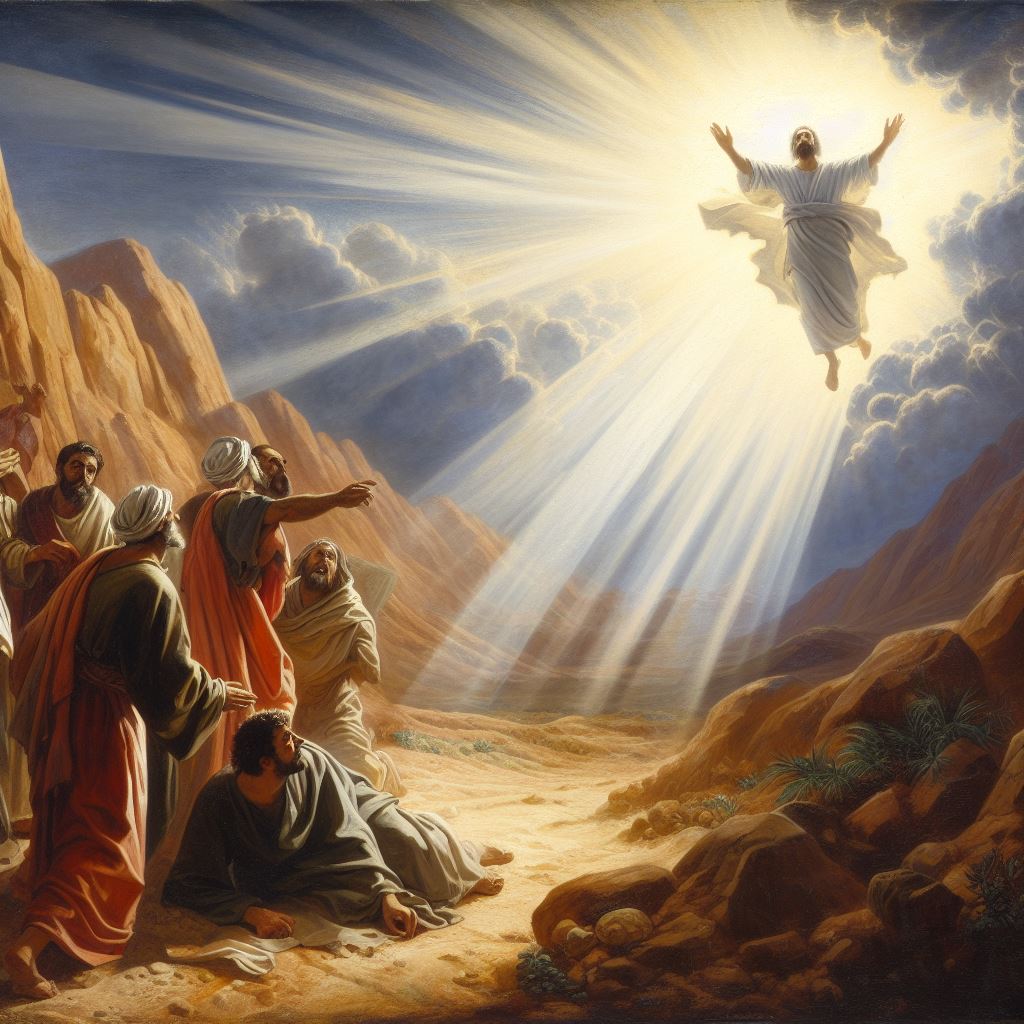
After having supported the murder of St. Stephen the Martyr, Saul of Tarsus was trying to destroy the early Church. He entered house after house, dragging out Christian men and women and handing them over for imprisonment. Still breathing murderous threats against the disciples of the Lord, Saul went to the high priest and obtained official authorization to arrest any Christians he might find in Damascus and bring them back to Jerusalem in chains. But on his way to Damascus, this future saint saw the light.

Light from the sky suddenly flashed around him. He fell to the ground and heard a voice ask him, “Saul, Saul, why are you persecuting me?” “Who are you, sir,” Saul replied. “I am Jesus, whom you are persecuting.” Notice how Jesus did not ask “why are you persecuting my people” or “why are you persecuting my Church,” though both of these descriptions would have been accurate. Jesus asks, “Why are you persecuting me? … I am…whom you are persecuting.”

Imagine if you and I are standing side-by-side in a buffet line and I willfully knock your hand out of the way as we both reach for the delicious deviled eggs. Will your feelings of offense be any less if I reply, “Oh, I didn’t hit you—I merely slapped away your hand”? No, every part of your body is one with you. If I mistreat one of your members, I am mistreating you.

St. Paul and the Holy Spirit teach us in the New Testament: “You are now Christ’s body, and individually parts of it… He is the head of the body, the Church, … [and] we, though many, are one body in Christ.” Jesus himself teaches, “Whoever eats my flesh and drinks my blood remains in me and I in him.” This is why he will declare at the Last Judgment “what you did not do for one of these least ones, you did not do for me” and “whatever you did for one of the least brothers of mine, you did for me.” Our mystical union with Jesus Christ is more intimate than we realize and this has important implications.

The 1st Letter of St. John tells us, “If anyone says, ‘I love God,’ but hates his brother, he is a liar; for whoever does not love a brother whom he has seen cannot love God whom he has not seen. This is the commandment we have from him: whoever loves God must also love his brother.” Now man does not live by bread alone, but we are called to practice Corporal (that is, bodily or material) Works of Mercy. St. James writes, “If a brother or sister has nothing to wear and has no food for the day, and one of you says to them, ‘Go in peace, keep warm, and eat well,’ but you do not give them the necessities of the body, what good is that?” Jesus is hungry and thirsty, ill-clothed and a stranger, sick and imprisoned in his brothers and sisters, and our love for him is reflected in our care for them.

Yet do not fall for the demons’ trap; their persistent accusations which sound like: “You could be doing more; you should always be doing more!” They seek to rob you of your peace and lead you to ultimately give up the good things you are doing because of discouragement. God our Maker knows that our time, talents, and treasure are finite; resources spent on one holy effort cannot be spent on another. Nevertheless, it is important for us to be self-reflective and truly generous with ourselves and what we have.

When you see others or interact with people, try to remember the One whom you mystically encounter. Give them the royal treatment. Notice how both the saved and the damned will someday ask our King, ‘When did we see you hungry or thirsty or a stranger or naked or ill or in prison?’ He will reply, ‘Indeed, whatever you did for one of the least of mine, you did for me.’ It is a truer reality than we realize and all too easily forgotten, yet valuable for us to remember always.

Invest Yourself in Heaven’s Reward

November 19, 2023

33rd Sunday in Ordinary Time
By Fr. Victor Feltes

As Jesus traveled from place to place he preached parables to different people. He told stories, for instance, featuring fields, fish, and flocks to teach farmers, fishermen, and shepherds about the Kingdom of God. It makes sense that Jesus would tell the same stories more than once, for different crowds to hear them for the first time and for his apostles to hear them repeatedly. But the gospels suggest Jesus sometimes changed his parables’ details to highlight different truths. What Jesus says in his Sermon on the Plain is similar but not identical to his Sermon on the Mount. As the Church journeys through our three-year cycle of Sunday readings we hear some parables retold by more than one gospel. And each fall, as we near the end of the Church year, our readings reflect upon the Four Last Things. Today, we have another such parable, about death and judgment, Heaven and Hell, Jesus Christ and us.

Christ is our Lord, our journeying master who shall return. We are his servants to whom he has entrusted our fortunes. And each of us one day will stand before him to give an account of our faithful or unfaithful service, with generous rewards or just punishments to follow. In Jesus’ telling through St. Matthew’s Gospel, the master entrusts weighty slabs of precious metal (called talents) in varying numbers to his servants, each according to their abilities. Upon his return, his faithful servants have doubled what they were given and receive the same words of praise: “Well done, my good and faithful servant! Since you were faithful in small matters, I will give you great responsibilities. Come, share your master’s joy!” One servant, however, who buried his talent and returned it ungrown, receives his master’s condemnation and is tossed into the darkness outside.

When Jesus retells his parable in St. Luke’s Gospel, the master is a nobleman who goes off to claim his kingdom, entrusting to ten servants one gold coin each. Upon his return, his faithful servants reveal their various positive returns on his investment. One has earned ten more gold coins and his king declares, “Well done, good servant! You have been faithful in this very small matter; take charge of ten cities.” Another servant has earned five more coins and the king decrees, “You, take charge of five cities.” One servant, however, hid his coin in a napkin and returned it unmultiplied. The king condemns that servant and orders all of his enemies who did not want him as their king to be slain.

The differences between these two parables highlight different truths about Heaven. In the first parable, the master speaks the same blessing to each faithful one: “Well done, good servant! … Come, share your master’s joy!” But in the other parable, the king gives his servant with ten additional coins ten cities and gives his servant with five additional coins five cities. So is Heaven’s reward the same for all the saints or can one’s reward be greater than another’s? One parable suggests their reward is the same, while the other suggests their rewards vary. On one hand, the reward of every saint is the same: they experience God’s unveiled glory forever in happy, loving communion with him and all who are in Christ. On the other hand, a great saint’s capacity for love and joy and glory may be greater than another’s.

Doctor of the Church St. Therese of Lisieux recounts in her great autobiography (“Story of a Soul”) how this idea once troubled her as a child: “One day, I expressed surprise that God does not give an equal amount of glory to all the elect in Heaven—I was afraid that they would not all be quite happy. [My older sister Pauline] sent me to fetch Papa’s big tumbler and put it beside my tiny thimble, then, filling both with water, she asked me which seemed the fuller. I replied that one was as full as the other—it was impossible to pour more water into either of them, for they could not hold it. In this way [she] made it clear to me that in Heaven the least of the Blessed does not envy the happiness of the greatest…

Notice how in both forms of Jesus’ parable all the faithful servants are entrusted with greater responsibilities. The saints in Heaven are likewise given higher roles as our intercessors now and in the family and household of God forever. Consider how many churches, religious communities, and cities around the world are dedicated to St. Paul. They are blessed to have him as a loving patron praying for them. And consider how the Blessed Virgin Mary shall always hold a privileged place in Heaven as the spiritual mother of every Christian.

St. Paul says, “Consider this: whoever sows sparingly will also reap sparingly, and whoever sows bountifully will also reap bountifully.” The generosity of our loving gifts to Christ, the additional sacrifices we make and good deeds we do, will surely not go unrewarded. Jesus tells us, “Give, and it will be given to you. Good measure, pressed down, shaken together, running over, will be put into your lap. For the measure with which you measure will be measured out to you.” Our individual hustle, cooperating with Christ’s grace, can win us greater glory, therefore “run so as to win!

We should not fear that we lack sufficient talents or gifts to produce good fruits for glory. In the first parable, every faithful servant was able to double his money and won his master’s praise. The issue with that unfruitful, condemned servant is that he never tried. His master calls him “wicked” and “lazy” because that servant did not make even the most minimal effort to grow his gift. “Should you not then have put my money in the bank so that I could have got it back with interest on my return?” That servant did not love his lord but rather resented his lordship over him. Which is easier: to digging a hole or visiting the bank? He did not want to be his master’s servant, he did not want him as his king, and so he finds himself condemned and cast out forever. But if we love our Lord we will produce fruit, just as “every good tree bears good fruit.” As Jesus declares, “Whoever remains in me and I in him will bear much fruit.”

What is something more that you will do with the talents and gifts our Lord has lent you? It could be something large or small, in private or with others. You could be a more-focused prayer warrior, or offer secret penances for the salvation of souls. You could start a Catholic book or movie club at your home, or organize a regular Bible study that discusses the upcoming Sunday readings. You could visit shut-ins as an extraordinary Eucharistic minister, or invite somebody new each week to come with you to Mass. There are many good things you could do and I urge you to consider and answer this call, for Jesus Christ will honor your faithful, loving efforts with glorious rewards.

Our Friends Who Have Gone Before Us

November 2, 2023

All Souls’ Day
By Fr. Victor Feltes

Yesterday, we celebrated all of the saints in Heaven. The saints in Heaven now enjoy supreme, definitive, enduring happiness. They are in the glorious presence of God, the Father, Son, and Holy Spirit, with all the holy angels. There, the saints’ deepest human longings are fulfilled without end. The Church’s recognized saints, beatified saints, and canonized saints, are Christianity’s hall of famers. We celebrate these saints on their feast days throughout the year. However, there are also many, many unknown saints in Heaven. How do I know that? Because of what St. John describes in the Book of Revelation.

In the Book of Revelation, when John describes his vision of Heaven, he says: “I had a vision of a great multitude, which no one could count, from every nation, race, people, and tongue.” Thirteen years ago, I printed out this list of recognized saints. It is eighty-one pages long and lists more than 13,000 names. But the number of those in Heaven is “a great multitude which no one could count.” I could count beyond 13,000 in less than a day, so there must be many more saints in Heaven than these.

Something I think many Christians do not realize is that if your relative, or friend, or neighbor who passed away is now in Heaven, yesterday was their feast day. We celebrated them on All Saints’ Day. Today, is All Souls’ Day. So what is the difference? Today, we remember and pray for those who have died as friends of God but are still on their way to Heaven.

Why are there any Christians who have died but are not yet in the full glory of Heaven? Well, what if we die as friends of God but we are not yet fully perfect? The Book of Revelation says “nothing unclean will enter [God’s holy, heavenly city].” What if we die still loving some of our sins? What if we die still a slave to certain vices? What if we die carrying hatred or unforgiveness towards others in our hearts? Psalm 24 asks, “Who can ascend the mountain of the Lord? Or who may stand in his holy place?” Then it tells us, “One whose hands are sinless, whose heart is clean, who desires not what is vain.” And Jesus tells us in the Beatitudes, “Blessed are the clean of heart, for they will see God.”

Jesus tells us in our gospel, “Everything that the Father gives me will come to me, and I will not reject anyone who comes to me.” But what if we die as his friends but with unclean hearts, not yet ready to stand before and behold God’s all-holy, fully-unveiled presence? Happily, God provides a way to perfect, to heal, to sanctify his friends (if, and as needed) after death. This purifying process is called Purgatory, and everyone who enters it will surely reach Heaven. Yet we know from lived experience that personal change is difficult, so we should help the souls of people in Purgatory with our prayers.

One spiritual problem in our culture these days is the idea that every Christian who dies is immediately in Heaven. We can hope for our loved one’s quick entry into Heaven, but an ordinary funeral Mass is not a canonization Mass. If I die and need the cleansing work of Purgatory, I hope that people will be praying for my soul instead of assuming that I’m already all the way home to Heaven. We can and should pray for the dead. We who are united in the Body of Christ, even if temporarily separated by death, remain joined in love. We on earth do not know with certainty whether our loved ones have reached Heaven yet, until the Church beatifies or canonizes them, or unless we receive some private revelation from God. But whether they are with the saints in Heaven or with the souls in Purgatory, they can still pray for us!

St. James writes in his New Testament letter that, “The prayers of a righteous person are very powerful.” We ask people on earth to pray for us, especially if someone is holy, and we are eager for the help of their prayers to God. How mighty are the prayers of those holy ones who began journeying closer to God before us? “The prayers of a righteous person are very powerful.

Here’s some homework for today: first, I invite you to think of the most loving, devout, holy people you know who have passed away and pray for them in case they need it. (No loving prayers are ever wasted.) Next, thank God for the great gift those people were and are. Finally, ask these holy souls to pray for you. They will be happy to help you.

“I believe no happiness can be found worthy to be compared with that of a soul in Purgatory except that of the saints in Paradise; and day by day this happiness grows as God flows into these souls, more and more, as the hindrance to His entrance is consumed.”

~St. Catherine of Genoa, Treatise on Purgatory

Miracles Opened his Mind

October 14, 2023

By Fr. Victor Feltes

I love Catholic conversion stories because they always have happy endings. Toby, a friendly acquaintance of mine, recently shared with me this great story of how he became Catholic. He is a 42-year-old, married father of three in Colorado who entered the Church at the Easter Vigil of 2006:

“I was fairly young when my parents stopped taking me to the Dutch Reformed church (my uncle is a pastor in one). So I had mostly no religion, but a little. In high school, I suffered terrible migraines that would make me vomit. One day, in the middle of upchucking, I prayed to ‘the God of Abraham, Isaac, and Jacob’ to make it stop and if he did I would worship him. I have not had a migraine since—not even a little one. But a lot of people claim this God as theirs, so I had to figure out how to worship him.

So, every Sunday through high school, I went by myself to the closest church, a Calvary Chapel. In college, I tried other churches to see what seemed right, but nothing did. I ruled out Islam (since they do not claim all three patriarchs) and Catholicism because of my Protestant biases. So I looked at Judaism. I did a lot of research about the existence of Jesus and was convinced to try Messianic Judaism because I was convinced he was the Messiah. However, that also seemed empty. So I gave up. I lived a hedonistic life deciding that, though I believe, I would never know how this God really wanted to be worshiped.

Now midway through graduate school, I bought saint candles simply for décor (and because they are so cheap). One day, returning from vacation, I put a stone turtle souvenir I had just bought on my desk next to it, and took a shower. Coming back the turtle was in pieces on my desk. I looked up the saint, and the first webpage I found said Saint Jude was known for was casting demons out of statues and causing them to crumble. So I lifted my bias against Catholicism and attended RCIA (classes for joining the Catholic Church) and it fit. Things made sense in a way they didn’t elsewhere.

So, it took years and multiple miracles, but here I am. The Lord had to drag me to our Faith in a way that I could investigate the claims with an open mind, and not with the biases I had built up. It required a lot of changed views, but my journey left me docile. Two miracles and learning my own discernment was terrible can do that!”

The Parable of Two Sons, Jesus Christ & Us

September 30, 2023

26th Sunday in Ordinary Time
By Fr. Victor Feltes

The father in Jesus’ parable has two sons. He tells the first, “Son, go out and work in the vineyard today.” That son refuses but later changes his mind and goes. The father comes to the other son and gives the same command. That son replies, “Yes, sir,” but does not go. When Jesus asks the chief priests and elders which son did the father’s will, they answer, “The first.” Were those Jewish leaders correct? Yes and no.

Yes, it is true that it is better to do the right thing than to merely say the right thing. Nevertheless, it is a father’s will that all his children would do both, obeying in word and deed. In Jesus’ parable, neither son did the father’s will perfectly. Jesus Christ, on the other hand, is perfectly faithful to our Father. “However many are the promises of God,” the Letter to the Hebrews tells us, “their ‘Yes’ is in him.

Jesus enters our world saying, “Behold, I come to do your will, O God.” Though he was in the form of God, he emptied himself and humbly took the form of a servant, assuming our human nature to his Divine Person. He was perfectly obedient to the point of death, even a death by crucifixion. Through Jesus’ obedient, faithful, loving response to his Father’s will, God has exulted him highest among us. We too have said yes to God’s will and given him our word, but we have not been obedient to that same degree.

Many here have vowed before God, ‘I, take you, to be my spouse. I promise to be true to you in good times and in bad, in sickness and in health. I will love you and honor you all the days of my life.’ I pledged a similar self-gift on my deaconate and priestly ordination days. And any Catholics who are not in either of these sacramental vocations promise and pledge a gift of themselves when receiving Jesus in the Eucharist. At the turn of the fifth century, St. Augustine noted that when you approach to receive the Holy Eucharist at Mass “you hear the words, ‘The body of Christ’ and you reply ‘Amen’. Be then a member of Christ’s body, so that your ‘Amen’ may accord with the truth… Be then what you see, and receive what you are.” Our Heavenly Father has called to do works of love in our various states of life and we have said, “Yes, sir,” but we have not always done it. Yet there is encouragement for us in today’s gospel.

Jesus notes how tax collectors and prostitutes had not done the will of God preceding the preaching St. John the Baptist. They had disobeyed God’s commands but, through believing, changed their ways and were now entering the Kingdom. Through believing in Christ we also can change. We cannot do it alone, but we were never expected to. Consistently invite Jesus Christ to live his perfect obedience, his intense love, his holy life in you. Then, becoming more like him, you will share more greatly in his exulted glory.

Jesus’ Praising & Rebuking of Simon Peter

September 3, 2023

22nd Sunday in Ordinary Time
By Fr. Victor Feltes

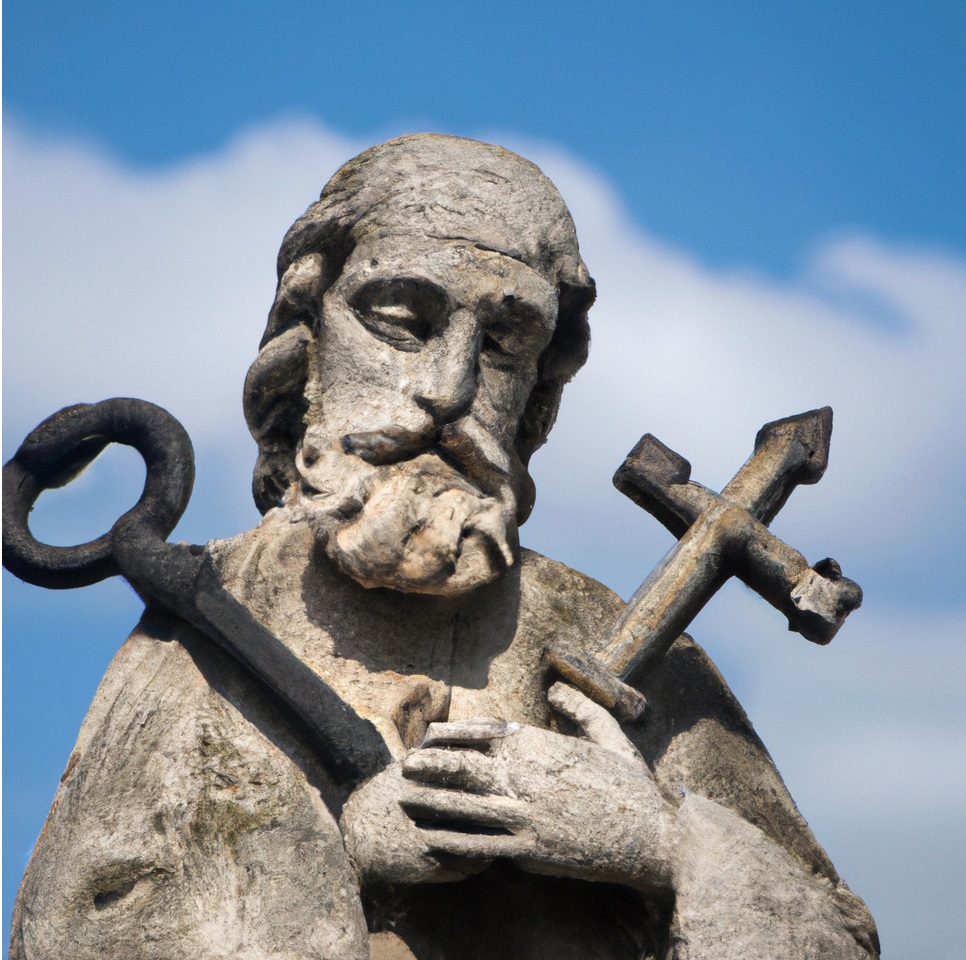
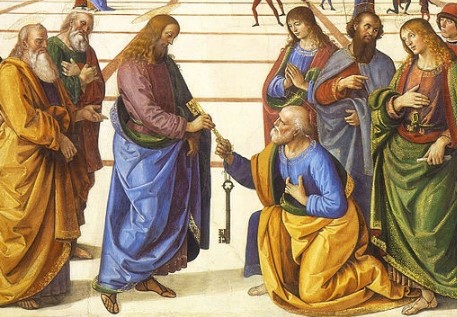
When Jesus asked his disciples, “Who do you say that I am,” Simon answered, “You are the Christ, the Son of the living God.” And Jesus replied, “Blessed are you, Simon son of Jonah. For flesh and blood has not revealed this to you, but my heavenly Father. And so I say to you, you are Peter, and upon this rock I will build my Church.” Jesus changed Simon son of Jonah’s name to “Rock,” or “Petros” in Greek, which we render as “Peter.” In the entire Old Testament, God changed the names of only three people: Abram to Abraham, Abram’s wife Sarai to Sarah, and Jacob to Israel, so the changing of Simon’s name is a big deal in salvation history. Jesus then declared to Peter, “I will give you the keys to the Kingdom of Heaven. Whatever you bind on earth shall be bound in Heaven; and whatever you loose on earth shall be loosed in Heaven.”

In last Sunday’s readings we heard of how in the days of the Prophet Isaiah the Lord chose “Eliakim son of Hilkiah” to become chief steward of the royal house, that is, prime minister for the reigning Davidic king. The Lord declared, “I will place the key of the House of David on Eliakim’s shoulder; when he opens, no one shall shut, when he shuts, no one shall open.” The holder of that office possessed plenary power under the king throughout the kingdom and reportedly carried a visible key indicating this authority that he would pass on to his successors.

The great Doctor of the Church, St. Augustine of Hippo, taught that the New Testament is concealed in the Old and that the Old Testament is revealed in the New. In the Old Testament, the Lord gave Eliakim “the key of the House of David” and authority to open and close. Likewise, Jesus Christ the new Davidic king gave Peter “the keys to the Kingdom of Heaven” and authority to bind and loose. Eliakim’s authority extended throughout an earthly kingdom, but Jesus promised Peter that his earthly decrees for the Church would also be confirmed in Heaven. Eliakim would become, in the words of the Lord through Isaiah, “a father to the inhabitants of Jerusalem and to the house of Judah.” St. Peter became the Church’s first “pope,” a title which comes from the Greek word for a “papa” and an office held today by Peter’s successor, our Holy Father Pope Francis. Jesus foresaw that without a visible shepherd his Christian flock would inevitably scatter. Like Moses for the Hebrews in the desert, or like King David for God’s people in Israel, Christ established a chief shepherd for his Church on earth through his popes, beginning with St. Peter.

That highlight moment for Simon Peter is followed this Sunday in St. Matthew’s Gospel by a very humbling event. Jesus begins revealing to his disciples that he must suffer greatly from the Jewish leaders, be killed, and be raised on the third day. So Peter takes Jesus aside and starts rebuking him, “God forbid, Lord! No such thing shall ever happen to you!” Jesus turns and says to Peter, “Get behind me, Satan! (That is, “Get behind me, Adversary!”) You are (being) an obstacle to me. You are thinking not as God does but as human beings do.” Notice how Jesus here reproaches Peter differently than how he once rebuked Satan in the desert, to whom he said, “Get away, Satan!” Jesus does not cast Peter away but tells him to “get behind me,” that is, “Follow me again.” Whenever you or I go wrong, Jesus calls us to follow him anew. Satan wants you to fall and stay down, but Jesus wants you to rise again.

Why was Simon Peter praised last week and why was he corrected today? First, Jesus tells him, “Blessed are you, Simon…. Flesh and blood has not revealed this to you but my heavenly Father.” Now, Jesus reproves him, “You are thinking not as God does but as human beings do.” Peter was praised for accepting the truth God had revealed and rebuked for trying to substitute his own ideas for God’s will. In today’s second reading, St. Paul urges us:

Do not conform yourselves to this age
but be transformed by the renewal of your mind,
that you may discern what is the will of God,
what is good and pleasing and perfect.”

Who in this age could correctly discover these things in our world apart from Christ’s one Church built on rock? Our Catholic Faith is a religion revealed by God with infallible teachings about what is true and how we are to live. Being faithful can be a cross, but our Lord always sees us, and he will repay each person according to our deeds with punishments or rewards. Jesus tells us, “Whoever wishes to come after me must deny himself, take up his cross, and follow me.” To get fully behind Christ and receive his endless blessings, receive everything that God has revealed to us through his Holy Catholic Church.

Christ Chooses to Make us Great

August 27, 2023

21st Sunday in Ordinary Time
By Fr. Chinnappan Pelavendran

God has all power and authority over earth and heaven. He is the source of all that lives and moves in this world and the next world. Authority for civil and religious leaders comes from God, so that they might govern His people and take care of the spiritual and material welfare of His children. The Lord could have found many different ways to establish His church. He could have entrusted it to the angels. Instead, the Lord puts the church in the hands of the faithful. Though He is all-powerful and has authority over everything, He needs to appoint a faithful person to work in His name.

In the first reading, God sent the prophet Isaiah to tell Shebna that the keys of authority would be taken away from him because he was not faithful to the Lord and His teaching. In his place, God exalted the humble and faithful Eliakim. The Lord demands faithfulness to His ways and His word.

In the responsorial Psalm, King David thanks God for having raised him from lowly origins and given him authority as a King over the people of Israel. In the second reading, St. Paul points out that God is the Source of all authority on earth and in Heaven. Again, St. Paul invites us to discipline ourselves because bad things still happen to good people.

In today’s Gospel, we have Peter’s confession about Jesus. “You are the Christ, the Son of the living God.” Peter was the first one to recognize Jesus as the Messiah, the Christ who came to save all his people. Jesus was pleased with Peter’s answer and said to Peter, “Blessed are you, Simon son of John.” Again, Jesus explained to His disciples that He was not a political Messiah. Rather, He is a Messiah who must suffer, die, and be raised to life again.

St. Peter was a man who grew in his faith. He was a fisherman. He was neither wealthy nor educated. When Jesus called Peter and his brother Andrew, they left everything and followed Him. Throughout Peter’s three-year journey with Jesus, He had moments of faith and doubts. When Jesus appeared to the disciples, walking on the water, Peter had enough faith to get out of the boat and come to Jesus. However, once he started having doubts, his faith began to shake and he began to sink. Immediately, Jesus stretched out his hand and saved him.

On the night of Jesus’ crucifixion, Peter denied Jesus not once but three times. Prior to this denial, Peter claimed that he would never deny Jesus and that he would even die for him. Even during Christ’s darkest hour, when he was dying on the cross, Peter was nowhere to be seen. He and most of the apostles had abandoned Jesus when he needed them the most.

Despite all of Peter’s shortcomings and failures, Jesus saw the best in him. Jesus saw so much potential in Peter that He made him the first leader and ‘Rock of His Church.’ If God used a man like him, it causes us to think that God can use our lives for greatness, too.

Eliakim in the first reading and St. Peter in the Gospel reading are prime examples of someone who was considered inadequate or not worthy enough to serve God. Jesus did not look at Peter’s inadequacy, he looked at His heart. When we feel inadequate or unworthy of Christ’s love, we can look at St. Peter. God looks at our hearts and invites us to be faithful to Him.

The Keys to the Kingdom

August 26, 2023

21st Sunday in Ordinary Time
By Fr. Victor Feltes

The great doctor of the Church St. Augustine of Hippo taught that the New Testament is concealed in the Old and that the Old Testament is revealed in the New. We see an example of this in our readings. In the days of the Prophet Isaiah, the Lord chose “Eliakim son of Hilkiah” to become chief steward of the royal house, that is, prime minister for the reigning Davidic king. The Lord declared, “I will place the key of the House of David on Eliakim’s shoulder; when he opens, no one shall shut, when he shuts, no one shall open.” The holder of this office possessed plenary power under the king throughout the kingdom. He reportedly carried a visible key indicating this authority that he would pass on to his successors.

In our gospel today, when Jesus asks his disciples, “Who do you say that I am,” Simon answers, “You are the Christ, the Son of the living God.” And Jesus replies, “Blessed are you, Simon son of Jonah. For flesh and blood has not revealed this to you, but my heavenly Father. And so I say to you, you are Peter, and upon this rock I will build my Church.” Jesus changes Simon son of Jonah’s name to “Rock,” or “Petros” in Greek, which we render as “Peter.” In the entire Old Testament, God only changed the names of three people: Abram to Abraham, Abram’s wife Sarai to Sarah, and Jacob to Israel, so the changing of Simon’s name is a big deal in salvation history.

Jesus then declares to Peter, “I will give you the keys to the Kingdom of Heaven. Whatever you bind on earth shall be bound in Heaven; and whatever you loose on earth shall be loosed in Heaven.” In the Old Testament, the Lord gave Eliakim “the key of the House of David” and authority to open and close. Likewise here, Jesus Christ the new Davidic king gives Peter “the keys to the Kingdom of Heaven” and authority to bind and loose. Eliakim’s power extended throughout an earthly kingdom, but the Lord promises Peter that his earthly decrees for the Church will also be confirmed in heaven. Eliakim would become, in the words of the Lord through the Prophet Isaiah, “a father to the inhabitants of Jerusalem and to the house of Judah.” St. Peter became the Church’s first “pope,” a title that comes from the Greek word for a “papa” and an office held today by Peter’s successor, our Holy Father Pope Francis. Jesus knew that without a visible shepherd his Christian flock would inevitably scatter. Like Moses for the Hebrews in the desert, or like King David for God’s people in Israel, Christ establishes a chief shepherd for his Church on earth through his popes, beginning with St. Peter.

Yet, this highlight moment in Simon Peter’s life is immediately followed by a humbling event in St. Matthew’s Gospel, which will be our gospel reading next Sunday. Jesus starts revealing to his disciples that he must suffer greatly from the Jewish leaders, be killed, and be raised on the third day. So Peter takes Jesus aside and begins to rebuke him, saying, “God forbid, Lord! No such thing shall ever happen to you!” Jesus turns and says to Peter, “Get behind me, Satan! (That is, “Get behind me, Adversary!”) You are (being) an obstacle to me. You are thinking not as God does, but as human beings do.” Notice how Jesus here reproaches Peter differently than how he rebuked Satan in the desert, to whom he said, “Get away, Satan!” Jesus does not cast Peter away. He tells him to “get behind me,” that is, ‘Follow me again.” Whenever you or I go wrong, Jesus calls us to follow him anew.

For what was Peter praised by Jesus and for what was he corrected? First Jesus tells him, “Blessed are you, Simon…. For flesh and blood has not revealed this to you, but my heavenly Father.” But later Jesus reproves him, “You are thinking not as God does, but as human beings do.” Peter was praised for accepting the truth God had revealed and rebuked for trying to substitute his own ideas for God’s will. In today’s second reading, St. Paul reflects, “Oh, the depth of the riches and wisdom and knowledge of God! How inscrutable are his judgments and how unsearchable his ways! For who has known the mind of the Lord or who has been his counselor?” Our Catholic Faith is a revealed religion with infallible teachings about what is true and how we are to live. Who could discover all of these things correctly apart from Christ’s one Church built on rock? Jesus says, “Whoever wishes to come after me must deny himself… and follow me.” To get fully behind Jesus Christ, always accept what God has revealed to us through his Holy Catholic Church.

Glimpses of our Future Glory

August 17, 2023

Solemnity of the Assumption
By Fr. Victor Feltes

The Church of Jesus Christ celebrates our Blessed Mother Mary. For instance, we mark her conception, her birth, and today the beginning of her life in glory. It is fitting the Church does this since her Lord commands us: “Honor your Father and mother.” And when the people we love have birthdays or anniversaries, we love to celebrate with them. Today we celebrate how the Virgin Mother of God was assumed body and soul into heaven.

She is the icon of the Church, the beginning and image of the Church’s coming to perfection. We are happy for Mary, but what we see in her is good news for us too. She is a sign of sure hope and comfort for our future, for what awaits for us in our resurrection to glory. To unpack what I mean, consider what the Blessed Virgin Mary has been up to in the centuries since her Assumption.

Enthroned beside her Son in a place of close intimacy and high honor, she is an intercessor for us, her spiritual children. How many children does Mary have? The Book of Revelation says “her offspring [are] those who keep God’s commandments and bear witness to Jesus.” Therefore, she has many, many millions of children. And how many “Hail Marys” and other prayers are sent her way every minute? Yet we believe that she hears us without becoming overwhelmed and that she knows each of us personally, as a mother knows her children. We also have reason to think that Mary has not merely remained in heaven for nearly 2,000 years, but has been active here below.

Though we are not obliged to hold belief any particular Marian apparition (since none of these later events belong to the ancient Deposit of the Faith) the Church has judged many proclaimed appearances of Mary to be credible, or “worthy of belief.” These apparitions offer us clues about Mary’s life now and what life will be like for us in resurrected glory.

In her Church-approved apparitions, the Blessed Virgin Mary comes in varying appearances. For example, in her appearances to St. Juan Diego in 1531, Our Lady of Guadalupe in Mexico had darker skin and black hair and wore traditional clothing indicating she was with child. In her appearances to the Belgian immigrant Adele Brise in 1859 near Green Bay, Wisconsin, Our Lady of Good Help had white skin and blonde hair in different apparel.

In Mary’s Church-approved apparitions she also speaks in varied languages. For instance, to St. Bernadette Soubirous at Lourdes, or the three shepherd children at Fatima, she did not speak ancient Aramaic, Hebrew, Greek, or Latin. She spoke to them in their local dialects. Mary resembles her seers and speaks their mother tongues because she is the mother of each of them.

Mary’s apparitions suggest a saint in his or her glorified body will have the power to change its age or appearance. Mary remains a woman, but race presents no barrier and different languages are no hindrance to communication. And if our glorified consciousness will become like hers, it will be no strain to know and be close friends with more than a billion people at once. Won’t that be wonderful?

Another detail that seers of Mary’s apparitions agree on is that she is now exceedingly beautiful. During the years of her life on earth, Mary may have looked quite ordinary. We do not imagine that Jesus Christ had to be the tallest, most muscular, or handsomest man who ever lived, so Mary need not have been the most beautiful woman alive either. In this fallen world, the holy can look ugly while the wicked can look very attractive. But now there appears to be no mismatch between Mary’s inner and outer beauty. This interior beauty is called holiness.

After our resurrection, the abundance (or lack) of holiness we have cultivated with God within us will be seen in our endless beauty (or ugliness) forever. The glory we are called to in Christ is like Mary’s and that gives us reason to rejoice with her today all the more.

The Voice & the Noise

August 13, 2023

19th Sunday of Ordinary Time
By Fr. Victor Feltes

When God visits the Prophet Elijah at Mt. Horeb the Divine Presence is preceded by powerful winds, quaking earth, and raging fire. Yet the Lord is not in the wind, nor the earthquake, nor the fire. Then there is a tiny whispering sound. Hearing this, Elijah goes forth to speak with God. In today’s gospel, Jesus calls Peter to “Come” forth to him out of the boat. Peter begins walking on the water, but seeing how strong the wind is he becomes frightened, begins sinking, and shouts “Lord, save me!” Jesus immediately stretches out his hand, lifts him up, and speaks to him. There is a common theme in these two episodes. In these encounters with God, Elijah and Peter must distinguish the Divine Voice from the noise. God is speaking to us, or he would like to. How can we listen without getting distracted or misled?

What do the demons want? They want the worst for us. They don’t want us listening to the Lord. They want us fully preoccupied with less important things. They want us too afraid or too discouraged to take good steps forward. How much time do we waste obsessing on things that don’t matter? How often do we worry about things that won’t happen? And how easily do we accept the lie that life cannot be better, that there’s nothing we can do? When our eyes and ears drift away from Jesus we sink. He chides us, ‘O you of little faith, of small trust in me, why do you doubt?’ Today I wish to share three great mens’ true discernment stories.

My first story is one about the 19th century saint, John Vianney, the patron saint of parish priests. His humble holiness and miraculous ability to read souls made crowds flock to his small French town for confessions, which he would hear for hours on end. His faithful fruitfulness made him a target of demonic harassment. Apparently, typical temptations were ineffective against him, so sometimes they would assault him as he tried to sleep at night, but Fr. John would take this as a good sign. It usually meant some “great sinner” was coming to town the next day to be reconciled to God in the confessional.

I have encountered people whose emotions very much did not want to go to confession or attend a spiritual retreat yet they could think of an actual good reason not to go. So they come, and experience God’s grace, and it’s more wonderful than they imagined! Who do you think was influencing their feelings in hopes they would not come encounter and listen to God? Emotions can be helpful and powerful fuel in your gas tank, but let your informed conscience and sound reason hold your steering wheel.

My second discernment story is about our former bishop, Cardinal Raymond Burke. He saw a need for a richer devotional culture in our diocese and felt peace and joy in the thought of establishing a pilgrimage shrine. He has a personal devotion to Our Lady of Fatima and initially pursued a shrine dedicated to her 1917 Portuguese apparitions, but nothing was coming together. So he revised the plan, opting to create a Marian shrine dedicated to Our Lady of Guadalupe and her Mexican apparitions in 1531. With that adjustment, everything began falling into place; a donation of beautiful land and financial contributions resulting in the shrine we know today. So not all obstacles come from the enemy. Some hindrances can be God’s providence to channel us into doing his will.

Midway through my time in seminary, I really believed for good reasons that priesthood was my calling, yet I still could easily question my vocation. (How could I be sure?) I would go in circles doubting myself with no greater clarity or benefit. So I decided to say to God, “Lord, this is my fair warning and my RSVP: I intend to continue towards ordination, but if that’s not what you want please make it obvious or impossible for me. If it’s not your will, I don’t want it to happen.” I left it to him, and after that I felt much more peace, and here I am now. Peace is a strong sign that you’re doing the will of God.

My third discernment story is about of St. Joseph. You will recall that when he learned that Mary was with child (either because he doubted her and thought her unworthy of him, or else because he believed her and thought himself unworthy or her and her holy child) Joseph concluded he should not be Mary’s husband. However, it only took an angel’s visit in one night’s dream to get Joseph back on the right track. This is because Joseph was a just man who wanted to do whatever God willed. God is supremely intelligent, powerful, and creative; so he can provide a clear sign if he needs to. However, having a heart and mind open to doing God’s will is a necessity.

You cannot see God’s signs with your eyes closed shut. You cannot hear him if you refuse to listen. God prefers to speak to us with a tiny whispering Voice, but if we ignore him he may allow some disruption in our lives. Those figurative winds, earthquakes, and fires are supposed to get our attention so that we will heed him and listen to his Voice. Our psalmist says, “I will hear what God proclaims; the Lord — for he proclaims peace. Near indeed is his salvation to those who fear him…” Fearing God is not about terror, but regarding and respecting him. Those who do, seek God’s will. They hear his Voice and listen, and thereby gain his blessings.

Jesus Saves Us From Sinking

August 12, 2023

19th Sunday in Ordinary Time
By Fr. Chinnappan Pelavendran

God’s presence is usually felt in tiny and small ways. He comes to us in gentle, little ways, and He will be with us when we need him the most. Jesus expects from us the openness to call on him for help and he will be there to support us and guide us. He wants us to be aware of his voice in our life, which often goes unnoticed. Jesus is always there with his guiding and supporting hands.

The background of the first reading is that, after the death of Solomon, the northern tribes broke away from the tribe of Judah and from its priests. They formed an independent country called Israel. As the years passed, many of the Jews in this country lost their Faith in Yahweh. Their seventh king, Ahab, married Jezebel, the daughter of a pagan king. He allowed her to build a temple for her god Baal and then she encouraged him to take part in idol worship and immorality. During this time, the prophet Elijah was sent by God to Israel to bring His people back to true worship. Having faith and confidence in Yahweh, he defeated and killed the 450 pagan priests of Baal on Mount Carmel.

For this reason, Queen Jezebel sent murderers to kill the prophet Elijah. However, God saved him from the dangers and gave him food through an angel. He fled for forty days and forty nights to Mount Horeb. Once there, he realized that the presence of God was not in the thunder, earthquake, or fire but in a tiny “whispering sound.” Elijah acknowledged God’s presence by covering his face and coming out of the cave where he had taken shelter. The first reading remains us that we have to experience God’s presence in our lives. We must listen carefully to everything going on around us because we encounter God in all the small events of our life. Failure, as well as success, offers us the opportunity to feel the presence of God, who saved the Prophet Elijah’s life.

In today’s Gospel, Jesus approaches his disciples walking on the water. The disciples are terrified by seeing someone walking on the water so they cried out in fear. Jesus reveals himself to them, saying “Courage, it is I. Do not be afraid.” Encouraged by the words of Jesus, Peter is the first to respond. At his invitation, he walks towards Jesus across the water, but his courage fails and begins to sink. Jesus reaches out his hand to him and saves him. The Gospel ends with Jesus calming the storm and being acknowledged as the Son of God by the disciples.

Courage! It is I Do not be afraid.” Jesus speaks these same words to us every day in our life. The gospel invites us to deepen our faith and maintain our focus on Jesus. We need to fix our eyes on Jesus.

We need to realize that the presence of Jesus is always with us. He gives us peace even in the storms of life. The storms of anxiety and worries about the future, storms of sorrow, storms of doubt, storms of tension, storms of anger and despair, storms of temptations, and storms in family relationships. So, try to feel the presence of God always in your life.

We need to imitate the short prayer of sinking Peter, “Lord, save me,” or the prayer of the mother of the possessed girl, “Lord, help me,” or the blind man’s prayer, “Son of David, have mercy on me,” or the repentant sinner’s prayer, “Lord have mercy on me a sinner.” We must begin every day by offering all our day’s activities to God and asking for His grace to do His will. Then we must conclude every day before we go to sleep by asking God’s pardon and forgiveness for our sins.

Fruitful Love Despite Our Flaws — The Justin Wachtendonk & Brenna Werner Wedding

July 8, 2023

By Fr. Victor Feltes

Justin and Brenna, you have chosen beautiful readings for your wedding Mass. Including your second reading, the most popular of all wedding reading options: St. Paul’s famous poetic hymn about love. In the 13th chapter of his 1st Letter to the Corinthians, St. Paul teaches what love does and does not do. These words contain blessed lessons for us all. Today, I wish to highlight the rarely-considered context of those passages to help married couples and people within Christ’s Church of our day.

When we think of the early Church, we tend to picture it as a golden age. The apostles were still alive on earth preaching the Gospel, performing miracles, and founding Christian communities. Divinely inspired books were still being written for what would become the New Testament of the Bible. The Church’s membership was growing widely and rapidly, while producing great saints and martyrs. But this does not mean that everything was perfect. Far from it!

You can see this in St. Paul’s 1st Letter to the Corinthians. He writes them to address the many things that were going wrong at the Church in Corinth. For instance, Paul corrects the Corinthian Christians’ bitter internal rivalries and factionalism. He notes the external scandal caused by them suing each other in secular courts. He critiques the Corinthians’ inflated pride. He excommunicates a certain man for his unrepentant sexual sins. He condemns the Church at Corinth’s liturgical abuses (against the Real Presence of Jesus and one another) at their celebrations of the Holy Eucharist. And St. Paul cites still more controversies than these. So things in the early Church were not so idyllic as we might imagine. And that can be a great encouragement for us today!

The early Church, despite the many flaws of her members, produced good, much good, world-transforming good and the salvation of many souls, in those days and thereafter. The Church today, despite the many flaws of her members, still produces much good, world-transforming good and the salvation of many souls. His Church build upon a rock is, as Jesus says in our Gospel, “a city set on a mountain which cannot be hidden.” She remains, “the salt of the earth” and “the light of the world” — purifying, enlightening, enhancing, and saving.

Whatever goodness is found in Christ’s Bride, the Church, is like the worthy wife the Book of Proverbs describes in our first reading. As the pearl of great price, “her value is far beyond pearls.” “Her husband, entrusting his heart to her, has an unfailing prize. She brings him good, and not evil, all the days of her life.” She labors alongside him, “reaches out her hands to the poor,” and he will “give her a reward of her labors, and let her works praise her.” This is a great encouragement for us in his Church, but also a great encouragement for all Christian married couples here.

Justin and Brenna, you are about to enter a new covenant with Christ. In your sacramental marriage, you will encounter each other’s flaws and experience trials, as every married couple will. Do not be surprised when not everything is perfect and do not be alarmed. Maintain your peace. With a love that is patient, a love that is kind, a love that most importantly has its origin and strength in Christ, you will ‘bear all things and endure all things.’ His “love never fails.” Like his Church, which despite the imperfections of her members produces much good fruit, your marriage — if united to Christ — will never fail.

Great Rewards From Small Deeds

July 2, 2023

13th Sunday in Ordinary Time
By Fr. Victor Feltes

The Old Testament Prophet Elisha was the immediate successor to the Prophet Elijah, ministering as a traveling prophet and wonderworker in the 800’s BC. One day, he came to a town of northern Israel called Shunem in which lived a “woman of influence.” Other Bible translations of this same text describe her as “prominent, influential, and wealthy”—“a great lady.” Curiously, she along with her husband go unnamed in the text. Perhaps, as with “the beloved disciple” in the Gospel of John, this is intended by providence to encourage us to envision ourselves in her place.

This great lady urges the prophet to dine with her. He accepts, and thereafter, whenever passing through that town, he would visit to eat there. So she says to her husband, “I know that Elisha is a holy man of God. Since he visits us often, let’s arrange a little room on the roof and furnish it for him with a bed, table, chair, and lamp, so that when he comes to us he can stay there.” Her husband apparently agreed, because sometime later Elisha lodges in that new room overnight. They may have been simple accommodations but Elisha really appreciated them.

While staying there, Elisha asks his servant to call the woman. Once she stands before him Elisha asks his servant to say to her (apparently in her own language): “You have troubled yourself greatly for us; what can we do for you? Can we say a good word for you to the king or to the commander of the army?’” She replies, “I am living among my own people.” By this response, she is expressing that she lives contently and secure, far removed from the royal court and its concerns. Her needs are satisfied. She has not shown Elisha hospitality to win favors from him. She receives him because he is a prophet. She receives him because he is a righteous man. She serves him because she knows he is a holy man of God.

Later Elisha asks, “Can something be done for her?” His servant, with great confidence in the prophet, replies, “Yes! She has no son, and her husband is getting on in years.” So Elisha has her called again and once she stands at the door, Elisha promises, “This time next year, you will be fondling a baby son.” She replies, “My lord, you are a man of God; do not deceive your servant.” Yet, the woman would conceive, and by that time the following year she had joyfully given birth to a son as promised. From God, she receives the prophet’s great reward.

Jesus says, “Whoever receives a prophet because he is a prophet will receive a prophet’s reward, and whoever receives a righteous man because he is a righteous man will receive a righteous man’s reward.” And what of goodness shown toward those of lesser stature? “Whoever gives but a cup of cold water to one of these little ones to drink because the little one is my disciple—amen, I say to you, he will surely not lose his reward.”

Sometimes, Catholics look at our great saints and imagine we must do extraordinary things to be holy and greatly blessed. Thinking that such great deeds are beyond them, they despair of ever becoming saints themselves. In the late 1800’s, young St. Therese of Lisieux felt that way too, but then she found her “Little Way” to holiness. Her little way to great holiness was to do many little things for the right reason, with the right heart, that is, with great love.

In her highly recommended autobiography “Story of a Soul”, she writes:

Miss no single opportunity of making some small sacrifice, here by a smiling look, there by a kindly word; always doing the smallest right and doing it all for love.” “You know well enough that our Lord does not look so much at the greatness of our actions, nor even at their difficulty, but at the love with which we do them.” “Without love, deeds, even the most brilliant, count as nothing.” “To pick up a pin for love can convert a soul.

Like the great lady of Shunem and St. Therese of Lisieux, realize and remember that doing many little things for the right reason, with the right heart, out of love, will surely not lose its reward.

A Mother’s Love — Memorial Mass Homily for Georgetta Thibeau, 94

May 15, 2023

By Fr. Victor Feltes

Georgetta was born here in Bloomer in 1928. She grew up in this parish, attending our St. Paul’s School. Her funeral Mass was offered in Racine after she passed away this January. And following this morning’s Mass, her remains will be laid to rest in our South Catholic Cemetery.

In the gospel for today, Jesus says, “Love one another as I love you. No one has greater love than this, to lay down one’s life for one’s friends.” So I asked Georgetta’s daughter, Sue, whether her mother had laid down her life for her friends. She replied, “No,” — her mother laid down her life for her family.

Georgetta raised her six children all by herself in Racine for most of their youth. Her two boys and four girls knew it was not easy for her and helped out as they could. In an era with much less government support, Georgetta worked night shifts to provide for her family. But she lovingly provided them more than just food and shelter. She also gave them the example of her Catholic Faith.

Georgetta, it is said, was never without a rosary in her hands, day or night. Whenever she came across a rosary she would pick it up and place it into her prayer rotation. But there was one rosary in particular about which she gave her children special instructions. On more than one occasion, she told them to take the rosary she kept on her headboard and place it into the urn (this urn) with her ashes when she died. Why? “Because that one glows in the dark.”

The Holy Rosary and our Blessed Mother Mary were always near to her heart. And the Blessed Mother she loved leads me to a final reflection. Jesus Christ perfected his mother in love to love like himself. Jesus said, “Love one another as I love you.” Who besides the Lord has loved with a greater love than her? Jesus said, “No one has greater love than this, to lay down one’s life for one’s friends.” Yet this presents a puzzle, since the Virgin Mary never died a martyr’s bloody death.

From Mother Mary we discover that a person can lay down one’s life with the greatest love as a loving offering for others even without dying a red martyrdom. And these others (these “friends” one loves and lays down one’s life for) can be one’s own sons and daughters, since Mary is our spiritual mother and we are her dearly beloved sons and daughters. Mother Mary learned how to love like Jesus loves us, and Georgetta learned how to love like Mary loves us. That is why, even in death, Georgetta remains in the light.