Archive for the ‘Salvation History’ Category

Our Crucified King

November 23, 2025

Solemnity of Christ the King
By Fr. Victor Feltes

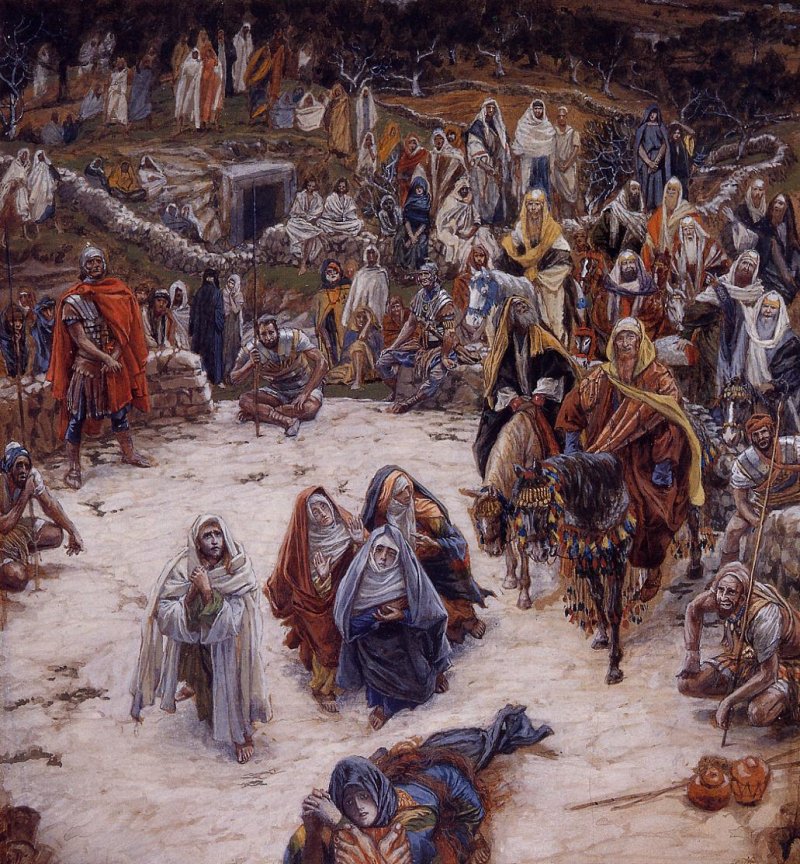
Our English word “Excruciating” comes from the Latin words for “Cross” and “Torment.” The Romans did not invent crucifixion, the Persians and the Greeks practiced it first, but the Romans more widely used the method. It was an easy way to execute people very visibly, horrifically, and slowly as a warning example to others. Typically, when the Romans crucified someone, they would place a sign above the condemned person’s head to indicate why they were being killed. St. John’s Gospel records that Governor Pilate put a sign on Jesus’ Cross written in Hebrew, Latin, and Greek. You sometimes see the initials “INRI” atop crucifixes. This represents the Latin phrase “Iesus Nazarenus Rex Iudaeorum,” the charge against our Lord. That is, “Jesus the Nazorean, the King of the Jews.” He was killed because of who he was and who he is: Jesus the Christ and the King of the universe.

Of course, the people who killed him did not believe this. They thought he was deluded or a fraud. Hence, the triple call for him to save himself and prove them wrong. The Jewish rulers sneered and said, “Let him save himself if he is the chosen one, the Christ of God.” The Roman soldiers jeered and called out, “If you are King of the Jews, save yourself.” And one of the criminals reviled him by saying, “Are you not the Christ? Save yourself and us.” Could Jesus have saved himself from his crucifixion?

St. John’s Gospel quotes Jesus before his Passion saying, “No one takes (my life) from me, but I lay it down on my own. I have power to lay it down, and power to take it up again. This command I have received from my Father.” And St. Matthew quotes Jesus later declaring in the Garden of Gethsemane, “Do you think that I cannot call upon my Father and he will not provide me at this moment with more than twelve legions of angels? But then how would the Scriptures be fulfilled which say that it must come to pass in this way?” So Jesus possessed the power to escape the Cross, but that was not the will or plan of God, which the Eternal Son was party to from the beginning. Jesus assumes “our bone and our flesh” to achieve our reconciliation as a descendant of David, “making peace by the blood of his Cross.” Perhaps the Holy Trinity could have inspired less painful prophecies to achieve our redemption and forgiveness of our sins, but Christ’s crucifixion is what they chose. They chose this path to win our love.

Matthew and Mark’s Gospels suggests that the Penitent Thief (traditionally known as St. Dismas) had derided Jesus, too, at first. But seeing the extraordinary way Jesus acted, hearing the things he said, all while crucified, won over that man’s mind and heart. ‘This man has done nothing criminal and this is how he dies? He truly knows my suffering and this is how he lives. This is the Christ I want to be allied with.’ St. And Luke quotes him saying, “Jesus, remember me when you come into your Kingdom.”

That movement saved the man’s soul, and we enjoy the benefit of understanding Jesus Christ even better than him. St. Paul writes that God “proves his love for us in that while we were still sinners Christ died for us.” Be moved by this manifestation of God’s great love. Submit to Jesus Christ as your King so that he may be your Savior and one day we may all be with him in Paradise.

The River From The Temple

November 9, 2025

Feast of the Dedication of the Lateran Basilica
By Fr. Victor Feltes

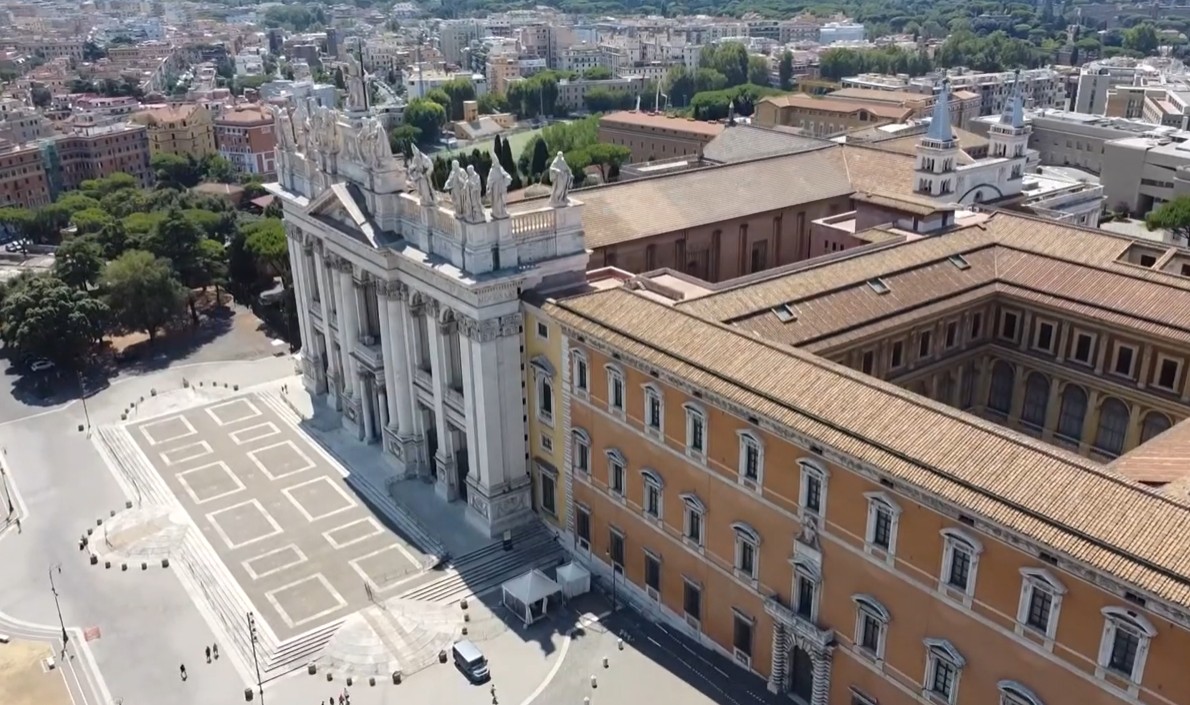
This Sunday, the Church throughout the world celebrates the dedication of the Lateran Basilica in Rome, which turns 1,701 years old this year. While St. Peter’s Basilica in Vatican City is more famous, the Lateran Basilica is the pope’s cathedral, the cathedral of the Archdiocese of Rome. This is why the Lateran Basilica is called “the mother and head” of the hundreds of thousands of Catholic churches around the world. Even if we had to go forward without any of these beautiful buildings, we could still practice our Catholic Faith through celebrating the Sacraments and offering our lives and prayers to God. But for Jews during much of the Old Testament, only one building was their place for sacrificial worship and considered God’s holy dwelling place on earth. In today’s first reading, the Prophet Ezekiel is taken by an angel to that Jewish temple in Jerusalem.

Of this vision, Ezekiel writes: “I saw water flowing out from beneath the threshold of the temple toward the east, for the façade of the temple was toward the east; the water flowed down from the southern side of the temple, south of the altar.” Ezekiel records that trickling water flowing through the gates of the temple and out of the city into the east, somehow becoming a river. The angel declares, “This water flows… and empties into the sea, the salt waters [of the Dead Sea], which it makes fresh. Wherever the river flows, every sort of living creature that can multiply shall live, and there shall be abundant fish, for wherever this water comes the sea shall be made fresh. Along both banks of the river, fruit trees of every kind shall grow; their leaves shall not fade, nor their fruit fail. Every month they shall bear fresh fruit, for they shall be watered by the flow from the sanctuary. Their fruit shall serve for food, and their leaves for medicine.” Ezekiel’s mysterious vision of this miraculous river which purifies and renews, producing abundant life, is a prophesy which finds its fulfillment in Jesus Christ and his Church.
In today’s Gospel, when Jesus forcefully clears out the animal sellers and money-changers from the temple area, the Jews ask him, “What sign can you show us for doing this?” And Jesus answers, “Destroy this temple and in three days I will raise it up.” The Jews were incredulous at hearing this and said, “This temple has been under construction for forty-six years and you will raise it up in three days!?” But, as St. John the Gospel writer notes in the text, Jesus “was speaking about the temple of his Body.” After Jesus had risen from the dead, his disciples remembered that Christ had said this and understood its significance.

On Good Friday, when the soldiers saw that Jesus was already dead on the Cross, one of them “thrust his lance into his side, and immediately blood and water flowed out.” Today, physicians affirm that the traumas of Jesus’ Passion and death could cause red and clear fluids to build up in his chest around his heart, resulting in “blood and water” flowing out when the spear was withdrawn, just as St. John witnessed. Do we know into which side of Jesus’ body the spear entered — was it Jesus’ left side or his right side?

Recall how Ezekiel saw the water flowing out in his vision: “The façade of the temple was toward the east” and “the water flowed down from the southern side of the temple, south of the altar.” If Jesus on the Cross faces “east” like the front-face of the Jewish temple, then water coming down from the “south side of the temple (of his Body)” would be flowing from Christ’s right side. And 2,000-year-old forensic evidence may actually confirm this detail. The Shroud of Turin, which appears more likely than not to be an authentic image of Jesus’ body in the tomb, after accounting for the image’s mirror-reflective nature, shows a wound in Christ’s right side. St. Augustine and other Church Fathers recognize flowing from Christ’s side the water of baptism and the blood of the Eucharist. In the beginning, Adam was put into a deep sleep and God fashioned a bride for him from the rib of his side. Jesus Christ on the Cross, asleep in death, has his Bride the Church fashioned from his side through his Holy Sacraments. And when the nations are one day assembled before Christ the King, for the Final Judgment described in Matthew 25, it is the sheep gathered to his right side who will be saved.

Now that trickle from Christ’s side is become a mighty river of grace; purifying and renewing, generating abundant new life in whomever and wherever it flows. Faithful Christian people and places which grow close to that river and are fed by its waters shall endure and produce good growth, healing, and nourishment. We are blessed to enjoy this beautiful church, but wherever we worship our true temple and center of grace prepared for us by divine providence across millennia is our Lord and Savior, Jesus Christ. So with awe, reverence, gratitude, and love, let us turn to him and draw near to his Eucharistic sacrifice.

Lifted Up & Exalted

September 13, 2025

Feast of the Exultation of the Holy Cross
By Fr. Victor Feltes

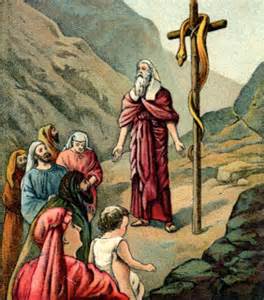
During their long Exodus journey, the Hebrews once again began rebelling, despising God and his servant Moses. They even sinfully complained about the Manna bread God was providing for their survival in the desert saying, “We are disgusted with this wretched food!” So God sent venomous serpents—or perhaps he merely lifted his shield of protection around their camp—resulting in many getting snakebitten and dying. So the people repented and pleaded with Moses, who prayed to the Lord. The Lord then commanded Moses to fashion a bronze serpent and affix it to a pole so that whoever looked at it would live. Moses and the Hebrews did not realize this at the time, but that bronze serpent on a wooden pole was a symbol pointing ahead to Jesus Christ who would die for our sins on his wooden Cross so that we may live.

In today’s Gospel, Jesus says: “Just as Moses lifted up the serpent in the desert, so must the Son of Man be lifted up, so that everyone who believes in him may have eternal life.” Later in John’s Gospel, Jesus uses the same Greek verb to declare, “When I am lifted up from the earth, I will draw everyone to myself.” And the inspired author notes, “[Jesus] said this indicating the kind of death he would die.” But this same Greek word for “lifted up” or “exulted” appears again later to recount Jesus’ Ascension and heavenly enthronement. The Book of Acts says, “God exulted/lifted up [Jesus] to his right hand as leader and savior to grant repentance to Israel and forgiveness of sins.” “Jesus, exulted/lifted up to God’s right hand, received the promise of the Holy Spirit from the Father and poured it forth….” This is what I want to highlight: how the first lifting up of Jesus leads to the second; his exultation on the Cross leads to his exultation in heaven.

Christ Jesus, though he was in the form of God, endured our human suffering and death, even death on a cross. And because of this, God greatly exalted him, and bestowed on him a heavenly glory above any other glory. The early Christians fully believed in Jesus’ death by crucifixion, but they did not depict Jesus on the Cross in sacred art for several centuries. This was partly due to persecution but also because crucifixion still remained so scandalous, horrific, and shameful in their culture. This Sunday, we celebrate the Exultation of the Holy Cross and I want you to behold Christ crucified. Too many are turned away from him—the God who suffered, died, and rose for them—and we see where their dark paths lead. But the message I feel moved to preach to you who have kept your eyes on Jesus and walked with him for years is to understand that our crosses lead to glory.

Each of us is going to suffer in this world and—unless Jesus Christ comes back first—each of us will taste death. But just because you suffer greatly does not necessarily mean you are being punished for doing something wrong like the Hebrews in the desert were. And suffering does not mean that you are not loved by God. (Jesus Christ was perfectly good yet God’s Beloved Son was murdered.) And when you suffer, no matter how incomprehensible or unjust the pain, realize where you are: on your Cross with Jesus Christ. Whatever you endure with him advances his mission of salvation in this world and increases your heavenly glory, for it conforms you to himself. St. Peter wrote, “Beloved, do not be surprised that a trial by fire is occurring among you, as if something strange were happening to you. But rejoice to the extent that you share in the sufferings of Christ, so that when his glory is revealed you may also rejoice exultantly.” Whatever may happen, let nothing deprive you of your Christian peace or purpose and never forget the incredible love that our God has for you and everyone.

Greet Him At His House

August 9, 2025

19th Sunday in Ordinary Time
By Fr. Victor Feltes

Today’s Gospel is first and foremost about the Second Coming of Christ and our judgment on the Last Day. Jesus Christ, who called himself the Son of Man, said that in the End Times “the sign of the Son of Man will appear in heaven, and all the tribes of the earth will mourn, and they will see the Son of Man coming upon the clouds of heaven with power and great glory.” The Book of Revelation agrees: “Behold, [Jesus Christ] is coming amid the clouds, and every eye will see him, even those who pierced him… ‘Behold, I am coming soon. I bring with me the recompense I will give to each according to his deeds.’” “But of [the timing of] that day and hour,” Jesus says, “no one knows, neither the angels of heaven, nor the Son, but the Father alone.” (The Son of God is divine and therefore knows everything, but in his humanity Jesus apparently did not know the date or was not supposed to reveal it.) Could Jesus Christ return during our lifetime? Of course. But even if Christ returns a thousand years from now we should still heed his warning to be prepared today, for we do not know the day and hour of our deaths when he will judge our souls and deeds.

Jesus’ parable about the returning master and his servants suggests another secondary interpretation. Consider the story’s details. The master has come from a wedding. He comes to his own house. He wants his servants to be there, ready to greet him. And in response he will “have the servants recline at table and proceed to wait on them.” And “should he come in the second or third watch” (when it is darkest and most inconvenient) and find them present, attentive, and well-prepared, those servants will be greatly blessed. So where is the Lord Jesus’ house to which he returns? Where does he want his servants to be present and pleased to see him? Where would he have his faithful servants rest, partake in a meal served by him, and receive his blessed rewards? This church is his house. We are his servants. And Jesus wants us to meet him here for a meal. Our Lord arrives here joyfully from a wedding. He wedded the Church to himself two thousand years ago. And the Holy Mass extends that mystery throughout time and space to here and now. Indeed, ‘blessed are those called to the wedding supper of the Lamb’ and who are here and ready to greet him.

Yet, for too many people, the precious time of Sunday Mass is an hour when they do not expect the Son of Man to come. Despite our many scheduled weekend Masses, they still do not attend. Others show up out of obligation or custom or habit, but fail to be attentive. Perhaps they do not yet believe—despite Scripture, ancient teaching, and centuries of miracles—that Jesus Christ is truly present in the Holy Eucharist. Or perhaps they do not yet realize that they are not mere spectators at Holy Mass but offering a sacrifice with the priest and the whole community, the eternal offering of the Son to the Father, through which everything united to Christ is raised up to heaven and grace and blessings are poured down to earth in return.

Be present and be vigilant. Distractions will come to anyone who is committed to regular Massgoing and daily prayer, but do not be discouraged by the times your thoughts accidentally wander. Every decision to turn your attention back to the Lord is another act of love and devotion. Sometimes those so-called distractions are actually things the Lord wants you to pray about or offer up to him. Ask the Holy Spirit and he will help you to pray as you ought, to gird your loins with reverence and light your lamps with faith and be like servants who are glad and blessed upon their master’s return from a wedding.

Heavenly Feasts — Funeral Homily for Angeline “Angie” Rihn, 98

July 1, 2025

By Fr. Victor Feltes

One theme in Angie’s earthly life, from the stories her family shares about her, is meals: the meals she prepared and the meals she shared. The meals on the farm with Herman and their children always began with a prayer, thanking the Lord and asking for his blessings. And her spouse would always praise her cooking with compliments, like calling it “A meal fit for a king!” On the farm, with the animals they raised and the produce they grew and often canned, there was never a need to buy any food. For holidays such as Christmas and Thanksgiving, Angie would cook for days. Three rooms of their farmhouse a couple miles out of town would be filled with tables and chairs for guests. Angie would always have guests over for a meal. For example, her beloved grandkids could show up anytime to enjoy sharing a meal with her. As a leader in the parish Altar-Rosary Society, she headed the organizing of funeral luncheons. And with unfaltering faith, she never skipped our Lord’s feast of the Holy Mass.

Scripture often speaks of our God preparing feasts. The Prophet Isaiah foretells that the Lord God on his holy mountain will “provide a feast for all peoples of rich food and choice wines, of juicy, rich food and pure, choice wines.” King David pens the 23rd Psalm saying of the Lord, “You spread the table before me in the sight of my foes. You anoint my head with oil; my cup overflows.” Jesus declares to his apostles, “I confer a Kingdom on you, just as my Father has conferred one on me, that you may eat and drink at my table in my Kingdom….” And Jesus announces “many will come from the east and the west, and will recline with Abraham, Isaac, and Jacob at the banquet in the Kingdom of Heaven….” During the heavenly visions of the Book of Revelation, an angel tells St. John “Write this: Blessed are those who have been called to the wedding feast of the Lamb,” adding, “These words are true; they come from God.”

Are these prophesies about eating and drinking in the Kingdom of Heaven literally true? Jesus says in his Sermon on the Mount: “Blessed are they who hunger and thirst for righteousness, for they shall be satisfied,” but that is metaphorical language. And how could we eat foods or drink drinks after death separates our souls from our bodies? But we must remember that our well-founded Christian hope is not only for an eternal afterlife for our souls but also a physical resurrection of our bodies one day. Recall how St. Luke reports that the Resurrected Jesus in the Upper Room on Easter Sunday asked, “‘Have you anything here to eat?’ They gave him a piece of baked fish; he took it and ate it in front of them.” Why does Jesus eat with his resurrected body? It was not because of hunger, for his glorified body has no need of such nourishment. He ate as a demonstration for the apostles and us that he is not a ghost or mirage but truly risen again. But then why does Jesus eat again later, as recorded by St. John, when he had breakfast with seven disciples along the Sea of Galilee? Since the fact of his resurrection was already firmly established, it appears it simply pleased him to share a meal with them. So ‘feasting in God’s Kingdom’ appears to be more than merely a metaphor.

After the Resurrection of the dead, once our souls reunite with our bodies, many will come from east and west and recline with Abraham, Isaac, and Jacob for the Lord’s promised feast. A supper not of necessity but of joy, with delights not merely from fine food and drink but from sharing the fond table fellowship of God and his friends. Angie’s delight in preparing meals reflected our Lord’s delight in preparing meals for us: at every Mass and in the world to come. Angie rejoiced to have family and friends flock to her feast like our Lord longs for us to join him for his feast, too. So pray for Angie’s soul, that she may be perfectly purified, and let us live our lives faithfully so as to be well-prepared to one day take our places at the banquet in the Kingdom of God.

Love & Eight — The Jacob Pake & Kayla Bowen Wedding

June 22, 2025

By Fr. Victor Feltes

We read in the Genesis Creation account that it was not good for mankind to live in solitude, so God made a suitable partner for the man. “That is why a man leaves his father and mother and clings to his wife, and the two become one body, one flesh.” Man and woman were made for each other. Psalm 128 notes how marriage, that first blessing from the original Garden, remains visible in the world even after the Fall: “Your wife like a fruitful vine in the heart of your house; your children like shoots of the olive around your table.” However, after the Fall, we are wounded by sin and drawn by temptation. Humanity commonly does not do as we should.

That is why St. Paul’s exhortation to the Corinthians reminds their divided and squabbling community what love is and what it is not. He lists eight things that love “is” or does alongside eight things love “is not.” Love is not jealous, not pompous, not inflated, not rude, not self-seeking, not quick-tempered, not brooding over injury, not rejoicing over wrongdoing. But love is patient, love is kind, it rejoices in the truth, bears all things, believes all things, hopes all things, endures all things, and love never fails. These groupings of eight are interesting because Jesus in his Sermon on the Mount lists eight beatitudes. (Some may count nine beatitudes, but the Greek indicates that the final “blessed” is an expansion on the eighth one.) These beatitudes describe Christian saints, but first and foremost they describe Christ himself.

So eight, eight, and eight — What does this have to do with how we are to love today? In Genesis, God begins creating on the first day of the week, which is Sunday. He works six days and then rests on the seventh day. That is why the Jewish Sabbath, their holy day of rest, was Saturday. Jesus Christ, who on Good Friday worked his perfect Sacrifice, whose lifeless body on Holy Saturday kept a day of perfect rest, rose again on Easter Sunday. Christians beginning in the 1st or 2nd century called that Sunday “the eighth day,” the eighth day of Creation on which Jesus Christ transforms humanity and our lives in this world. Now we have hope beyond this life, hope for blessed endless life with God. And the Passion, Death, and Resurrection of Jesus have opened access to grace, the help of God, enabling us to live and love like him.

How can we achieve and preserve true unity and harmony among us in our homes and community? This is not possible merely on our own. We must let God give us his grace which allows us to live and love like him. This is why daily prayer, weekly worship, and consistent devotion to the Lord must be top priorities for any Christian. Jacob and Kayla, draw near to him and remain with him, so that you both may live and love like him and be blessed together. Like the psalmist said, ‘Blessed are all who fear, who reverence, the Lord and walk in his ways. You will be blessed and prosper. May you see your children’s children. May the Lord bless you all the days of your life.’

Fly High — Funeral Homily for Elle Jo Kramschuster, 24

June 5, 2025

By Fr. Victor Feltes

Elle’s loved ones will remember many beautiful things about her. In her, seemingly contradictory personality traits are joined. Young but old-souled. A center of attention not looking for attention. Initially the quietest person in a room but who, once comfortable, becomes its biggest presence. Never an early-riser, except to see the sunrise. A world-traveler who loves being back home with family and friends the most. Elle took some twenty-two jet flights, mostly in the last five years, to places like Colorado, Texas, Dubai, or Sri Lanka. She would say, “Happiness is a flight away.” But her favorite thing was being home, having everyone together. For instance, at the annual family rendezvous in Hayward her favorite thing was waking up and everyone being there. Today, we are all gathered here to mourn Elle’s passing and pray for her soul.

Last week, Christ’s Church around the world celebrated the Ascension of Jesus into Heaven. Many places marked this event last Thursday, while others transferred the celebration to Sunday. It is a bittersweet feast day. After spending forty days with Jesus after his Easter Resurrection, his disciples watch him fly into the sky until a cloud takes him from their sight, symbolizing his entry into Heaven. Jesus tells his disciples it is better that he goes. They are given assurances that he will visibly return again someday. And Jesus promises them, “Behold, I am with you always, until the end of the age.” Yet this time of visible separation is still a sad thing.

Jesus understands this. He knows our human loves, joys, and sorrows, for he is not only truly God but truly man. As Pope Francis wrote, “The eternal Son of God, in his utter transcendence, chose to love each of us with a human heart.” Jesus possesses “genuine human emotions and feelings like ourselves, albeit fully transformed by his divine love. … Entering into the heart of Christ, we feel loved by a human heart filled with affections and emotions like our own.” As much as you love Elle, realize that our Good Lord Jesus Christ loves her even more.

“Do not let your hearts be troubled,” he says. ‘Have faith in God; have faith in me.’ Christ is our Good Shepherd. Sweet Elle’s passing from this world is not the end of her story, any more than Jesus’ bodily Ascension was the end of his. Though she has a beautiful soul, earnestly pray for Elle, that the Lord may purify whatever remains imperfect in her so that she may ascend to glory, too. One day, the friends of God will awaken to a new and endless day, rising again in joy at having all of us together. Elle, you are loved, both on earth and in Heaven, where God’s family gathers. Happiness is a flight away. Fly high, Elle.

A Christian Philosopher–Engineer — Funeral Homily for William “Bill” Hable, 87

June 5, 2025

By Fr. Aro (Arockiaraj Paristham)

There is a time for everything. A time to be born, and a time to die. A time to weep, and a time to laugh. A time to mourn, and a time to dance.” This is the time to celebrate the death of our beloved William, who is known as Bill. A man who lived a full life, pleasing God and people.

Dear brothers and sisters, we have gathered together today to say goodbye to our brother Bill, whose life has touched us all in profound ways. It is said that he was an engineer who rooted in science but he saw himself as a philosopher first. If you asked him what the time is, he would tell you how a clock worked. As we reflect on his journey, it is comforting to turn to the words of Jesus in the Sermon on the Mount, particularly the Beatitudes in the gospel. These words offer hope in times of sorrow, pointing us toward the deep truths of God’s love and the promise of eternal life. Jesus says, “Blessed are those who mourn, for they will be comforted.” (Matthew 5:4) In this moment of loss, we are mourning the passing of Bill, someone who meant so much to all of us especially the family members. Bill cherished spending time with his loved ones and instilled a strong sense of self-reliance in his family. Mourning is a natural response to love, when we lose someone dear, we feel the deep void their absence creates. But Jesus promises us comfort. He assures us that in our grief, God is close to us, offering His presence, His peace, and His comfort. As we mourn, we can hold on to the promise that God sees our tears and walks with us in our sorrow.

Jesus also says, “Blessed are the poor in spirit, for theirs is the Kingdom of Heaven.” (Matthew 5:3) This verse reminds us that humility and dependence on God bring us closer to His Kingdom. Bill in his lifetime was simple and humble person. He always admitted his mistakes. One of his favorite quotes was “show me a person who has not made a mistake and I’ll show you a person who has not done much.” Bill may have shown us what it means to be poor in spirit, whether through acts of kindness, quiet strength, or a deep faith in God. When we are humble, we recognize our need for God, and He promises to meet us with His grace. Today, we remember that Bill now rests in the presence of God, in the Kingdom of heaven, where there is no more pain or suffering.

Jesus also says, ‘Blessed are the pure in heart, for they will see God.’ (Matthew 5:8) Purity of heart is a quality of those who seek God with sincerity, love others selflessly, and live with integrity. As we reflect on Bill’s life, we may see the ways in which he lived with a pure heart, perhaps through his love for family. Bill was known for his quiet sensitivity and steadfast loyalty, always offering support to those around him. He was a loving husband to his wife, Judy, for many joyful years. Because of his pure heart and compassion for others, and unwavering faith, now, Bill has seen God face-to-face, and he dwells in the fullness of God’s glory.

Jesus says, “Blessed are the peacemakers, for they will be called children of God.” (Matthew 5:9) Peacemaking is more than the absence of conflict; it is the active pursuit of reconciliation, love, and unity. Bill was a problem solver and he wanted his children to be problem solvers like himself. If Bill was someone who brought people together, mended relationships, or simply offered a calming presence in times of difficulty, we honor that legacy today. In the Kingdom of God, they are now embraced as a beloved child of God, resting in perfect peace. Bill will be remembered for his unwavering love and dedication to family and friends.

Let us be grateful to God for him in our lives as family or relative or a friend. Let us try to follow one of the good values that we learned from our beloved Bill which touched our lives and carry it over. Let us continue our prayer for his soul rest in peace and for the family to have comfort and hope and faith.

A Leader Like Us

May 31, 2025

Solemnity of the Ascension
By Fr. Victor Feltes

As a child in CCD class, I remember being told that a pope from the United States would never happen in our lifetimes. The common view was that having the earthly leader of the Catholic Church come from the world’s strongest superpower was something most cardinals would want to avoid. So it was quite surprising when the 69-year-old, Chicago-born Cardinal Robert Prevost was introduced to the world as Pope Leo XIV. But that concern about coming off as “America’s Pope” is probably why he only spoke Italian, Spanish, and Latin during his first public appearance.

If you’re like me, it’s surreal having so much in common with the pope. Like all of us here, he’s a Midwesterner. He speaks English without a foreign accent. He has consumed our movies, TV shows, and music and been active on social media. He has enjoyed American sports, like when he attended a White Sox World Series game. He has voted in our U.S. elections and attended the March for Life in Washington, D.C. He ministered in Peru for many years but we have something in common there too. Our diocese has supported Servant of God Fr. Joe Walijewski’s Casa Hogar orphanage in Lima for several decades. Like me, the new pope has a mathematics degree. My parents and relatives come from the Chicagoland area too. And we both picked the name “Leo XIV” — this new pope was literally named after my 12-year-old cat. He has a friendly smile and a sense of humor, he’s easygoing but takes Catholic teaching and worship seriously, he sings well, and writes out homilies to help him preach clearly. You probably have personal connections to our new pope yourself, like belonging to the same American Baby Boom generation.

Of course, the pontificate of Pope Leo XIV is still very young and its substantial fruits have yet to unfold. In the first week following his election, a reporter shook Pope Leo’s hand as he passed by and asked, “Holy Father… any message for the United States?” The pope smiled, lifted his hands, and replied, “Many! May God bless you all!” It’s exciting to have a pope who probably understands us, our country and our culture, both the good and the bad, better than any pope before him. So what does any of this have to do with the Solemnity of the Ascension we celebrate today? Much! And it relates to our June celebration of the Sacred Heart as well.

The Ascension marks the definitive entrance of Jesus Christ’s human nature into heaven. His humanity enters everlasting divine glory, symbolized by the cloud and sky. And from heaven, seated at God’s right hand, he constantly intercedes for us before the Father. Jesus Christ, being true God and true man, has a human intellect and will perfectly attuned to his divine intellect and will, knowing us and loving us all with a human heart. As Pope Francis wrote about the Sacred Heart last year, “The eternal Son of God, in his utter transcendence, chose to love each of us with a human heart.” Jesus possesses “genuine human emotions and feelings like ourselves, albeit fully transformed by his divine love. … Entering into the heart of Christ, we feel loved by a human heart filled with affections and emotions like our own.” Divine knowledge and love are eternal and we have had popes before. But the Ascension and Sacred Heart of Jesus are significant. Like a pope who intimately understands us, because he is one of us, we can rejoice that we now have a Lord in heaven, Jesus Christ, who knows us and loves us with a human heart like ours.

Jesus’ Love Succeeds

April 18, 2025

Good Friday
By Fr. Victor Feltes

The story of Christ’s Passion is a chronicle of human failures. Simon Peter, chief of his disciples, denies being his friend three times. Caiaphas and Annas, the highest Jewish leaders, reject, condemn, and hand over their Messiah. Pilate and Herod, representing the world’s political powers, tolerate injustice, persecute, and execute the Innocent One. The mob of humanity chooses the violent rebel, Barabbas (whose name means “Son of the Father”) instead of God’s Son, the peaceful Savior.

It is poignant and fitting how our liturgy has us speak the mob’s words, “Crucify him! Crucify him! …Take him away! Crucify him!” since it was our sins too which sent Jesus to the Cross. And yet, even as we are humbled and convicted at Jesus being crucified because of us, remember that Jesus accepted humiliation, pain, and death because of his love of us.

Though we may fail, Jesus’ love succeeds. He said, “When I am lifted up from the earth I will draw everyone to myself.” He stretches out his arms between heaven and earth as the everlasting sign of his New Covenant to invite and embrace us. And from the Cross, he says, “I thirst,” because his love thirsts for you and me.

Half-Measures Or Full Devotion?

April 18, 2025

Easter Sunday
By Fr. Victor Feltes

St. Peter the Apostle proclaimed: “We are witnesses of all that [Jesus] did… They put him to death by hanging him on a tree. This man God raised on the third day and granted that he be visible…to us, who ate and drank with him after he rose from the dead.” Jesus went to his Passion and Cross after the Last Supper, and from death and his tomb to the Resurrection. His apostles witnessed these events and were willing to die to testify to them, and nobody ever dies for what he knows to be a lie. The first Christians had full devotion because Christ did not go halfway in his saving mission.

But what if our Lord, instead of enduring pain and death, had chosen to spare and save himself? Jesus had told the apostles he “must suffer many things and be rejected by the elders, the chief priests and the teachers of the law, and that he must be killed and after three days rise again.” He said he had come “to give his life as a ransom for many,” shedding his blood “for the forgiveness of sins.” How could we ever find forgiveness of our sins in Christian faith and the sacraments, like Baptism and Confession, if Jesus never suffered and died?

Or imagine if Jesus had just gone halfway with the Last Supper, which was the first Holy Mass. What if he had taken the bread and given it to his disciples saying, “This is like my Body. Do this with a thought of me”? Jesus said, “Amen, amen, I say to you, unless you eat the flesh of the Son of Man and drink his blood, you do not have life within you. Whoever eats my flesh and drinks my blood has eternal life, and I will raise him on the last day. … Whoever eats my flesh and drinks my blood remains in me and I in him.” What would become of us if we could not receive Jesus in the Eucharist?

Or what if instead of Easter, Jesus Christ had merely suffered and died and never rose again? St. Paul’s answer is emphatic: “If Christ has not been raised, your faith is vain; you are still in your sins. Then those who have fallen asleep in Christ have perished. If for this life only we have hoped in Christ,” Paul says “we are the most pitiable people of all!” Therefore, if Jesus had stopped at half-measures in his mission, we would not be saved!

At the beginning of Easter Sunday Mass we sang “Jesus Christ is risen today!” We celebrate him risen not like some celebrate the Easter Bunny hiding eggs or Santa Claus bringing gifts for Christmas. A savior of merely “once upon a time” cannot save us. We celebrate Jesus Christ who was truly risen on Easter morning in 33 AD, but who is also risen, living and active, in our world today. And in the face of sin of death, he is our only hope.

This is the day the Lord has made; let us rejoice and be glad!” Embrace today’s good news, the joy of the Gospel, firmly resolved to go forward in such a way that you may be saved. Realize that you cannot safely clear a six-foot chasm by only taking three-foot hops. Half-measures are not enough.

In his suffering, in his sacraments, in his dying and his rising, Jesus shows us how far he goes in love to reach and save us. So in your daily prayers and weekly worship, in virtue and noble service, in Christian faith and fellowship, by your gratitude and love, walk with our Lord Jesus Christ with your full measure of devotion.

Consolations In The Passion

April 12, 2025

Palm Sunday
By Fr. Victor Feltes

We rightly recall Christ’s sufferings during his Passion but have you ever meditated upon his consolations?

When Jesus went out to pray and await his betrayal at the Mount of Olives, his disciples followed him. Their flesh was weak but their spirits were willing, and in that dark hour he was glad not to be alone. Jesus also had constant recourse to his Father. Though not all of his prayers were immediately granted, he knew his Father always heard him.

When Pilate condemned Jesus, they led him away but made Simon of Cyrene help carry his Cross. That was a welcome relief in his weakened condition. A large crowd followed Jesus, including many women who mourned and cried for him. Those women felt powerless, but their expressions of devotion strengthened him.

Once they had crucified Jesus, one of the condemned men mocked him but the other honored Christ, expressing saving faith in him. Jesus could behold his sacrifice already bearing fruit. Standing by his Cross were his mother and his beloved disciple, and “all his acquaintances stood at a distance, including the women who had followed him from Galilee” witnessing these events. And he saw them there for love of him, and it consoled him.

Therefore, if Jesus during his greatest suffering received some consolations, then in our trials we should not be ashamed to ask for help and comforts too. Jesus’ disciples were not perfect and they sometimes let him down, but the presence and support of his friends helped him to press on. So pray to God for consolation, invest in your personal relationships, and stay close to your Christian community. If you are going to pick up your cross daily and follow Christ in his sufferings you must also share in his consolations.

The Deaths of Lazarus

April 6, 2025

5th Sunday of Lent
By Fr. Victor Feltes

God does not do bad things, for “God is not subject to temptation to evil” and “what he hates he does not do.” However, God is all-knowing and all-powerful. There is nothing knowable that God does not know, and nothing good and doable that he cannot do. Therefore, when a bad thing happens, God has allowed that to happen. Yet we also “know that God causes all things to work together for the good of those who love him.” We see these truths reflected in today’s Gospel reading.

God clearly permitted Lazarus to fall ill. And when Jesus received the urgent message from Martha and Mary that their brother was sick, he remained in the place where he was and allowed Lazarus to die. “Now Jesus loved Martha and her sister and Lazarus.” So why did Jesus not come earlier, when he was told “the one you love is ill.” Or why did Jesus not heal his friend Lazarus’ sickness from a distance, like he cured the centurion’s servant or the royal official’s son? Jesus says the dying and rising of Lazarus was “for the glory of God, that the Son of God may be glorified through it,” and “that you may believe.”

Earlier in his public ministry, Jesus had raised Jairus’ daughter from the dead, having told mourners that the little girl was “asleep.” But that resurrection miracle was performed privately, shortly after death, and with strict orders to its witnesses that no one should know of it. By publicly raising Lazarus from the tomb in the presence of a crowd, Jesus manifests his power not only to heal the sick but to restore the dead to life.

Picture this: One moment, Lazarus was ailing and fading out of consciousness on his deathbed. The next thing he knows, he wakes up wrapped in bandages inside of a cave, and comes out toward the light at the sound of his friend Jesus’ call. His sisters would have filled him in on what he missed when he was dead.

The Gospels tell us Lazarus later attended a dinner with Jesus the day before Palm Sunday at the house of Simon the Leper. Martha served the meal while Mary took costly perfumed oil and poured it on Jesus’ head as he reclining at table. “A large crowd of the Jews found out that he was there and came, not only because of Jesus, but also to see Lazarus… And the chief priests plotted to kill Lazarus too, because many of the Jews were turning away and believing in Jesus because of him.” After Holy Week, the New Testament tells us no more of what happened to Lazarus. But we can imagine what it was like, years after Easter Sunday, when Lazarus died again.

Knowing that Jesus died and was risen, and having personally experienced death and resurrection himself, must have given Lazarus great peace even during his final passion. Consider Martha or Mary watching their brother die once more; having to burying him again. There would naturally still be sadness and ache in that parting, but I imagine the sisters would feel different this time: ‘We know he will rise in the Resurrection on the Last Day. Jesus Christ is the resurrection and the life who has come into the world, and whoever believes in him, even if they die, will live.’ Our brother Jesus died and has risen from the dead “for the glory of God” and “that you may believe.” Knowing and embracing this reality changes our life and how we face death. Do you believe this?

Last week, April 2nd, marked the twentieth anniversary of the passing of Pope St. John Paul the Great. And if you are like me, having witnessed how he lived and died, is inspiring. Pope John Paul’s famous motto was “Be not afraid!” In this, of course, he was quoting Christ who frequently said, “Be not afraid!” “Be not afraid,” Jesus tells us, “If you believe you will see the glory of God.”

The Living Water Jesus Gives

March 23, 2025

3rd Sunday of Lent
By Fr. Victor Feltes

Jesus tells the woman at the well, “Everyone who drinks this water will be thirsty again; but whoever drinks the water I shall give will never thirst; the water I shall give will become in him a spring of water welling up to eternal life.” What is this water he speaks of? The Samaritan woman, initially either humoring him, mocking him, or believing him, replies to Jesus, “Sir, give me this water, so that I may not be thirsty or have to keep coming here to draw water.” She seems to be imagining literal, physical water. The disciples likewise thought Jesus spoke of literal food when they returned from town and heard him say, “I have food to eat of which you do not know.” They asked one another, “Could someone have brought him something to eat?” But Jesus clarified, “My food is to do the will of the one who sent me and to finish his work.” So what is the “living water” Jesus wants to give?

Later in John’s Gospel, he gives us another clue. Jesus stands up in the temple area and exclaims, “Let anyone who thirsts come to me and drink. Whoever believes in me, as scripture says: ‘Rivers of living water will flow from within him.’” Jesus announces this during the last and greatest day of the Jewish Feast of Tabernacles, a celebration of God’s forty years of care for his people during the Exodus. And that context is significant. When the Hebrews entered the Sinai Desert, they were thirsty and cried out for water. So the Lord commanded Moses to strike a rock with his staff, miraculously causing water to flow for the people to drink and live. St. Paul the Apostle would later reflect that the Hebrews “all drank the same spiritual drink, for they drank from a spiritual rock that followed them, and the rock was the Christ.” Jesus Christ is our source of life. He pours out his living water so we may spiritually survive our pilgrimage through the desert of this world and happily enter the Promised Land of the life to come. Where do we find this living water with Jesus? Three places come to mind and the three are intertwined.

Christ’s water of life first comes to us in baptism. The Catechism of the Catholic Church teaches that “Holy Baptism is the basis of the whole Christian life, the gateway to life in the Spirit, and the door which gives access to the other sacraments. Through Baptism we are freed from sin and reborn as sons of God; we become members of Christ, are incorporated into the Church and made sharers in her mission….” This sacrament is called “‘the washing of regeneration and renewal by the Holy Spirit,’ for it signifies and actually brings about the birth of water and the Spirit without which no one can enter the Kingdom of God.” St. Paul teaches that we who were baptized into Jesus Christ were baptized into his death. He writes, “We were indeed buried with him through baptism into death, so that, just as Christ was raised from the dead by the glory of the Father, we too might live in newness of life.” Baptism connects us to Jesus’ Passion, Death, and Resurrection. We also encounter the water of Christ from the Cross.

On Good Friday, when the Roman soldiers “came to Jesus and saw that he was already dead, they did not break his legs, but one soldier thrust his spear into his side, and immediately blood and water flowed out.” Jesus nourishes us with himself in his Eucharist so that he remains in us and we remain in him as constant companions. Knowing of his sacrifice nourishes our souls as well when we consider how Jesus does these things for love of us; both dying for us once on the Cross and then giving us himself from this altar today. We encounter the living water of Christ in baptism and from the Cross, but John’s Gospel tells us of a third way.

When Jesus stood up in the temple area and exclaimed, “Let anyone who thirsts come to me and drink,” St. John’s Gospel notes Christ “said this in reference to the Spirit that those who came to believe in him were to receive,” adding “There was, of course, no Spirit yet, because Jesus had not yet been glorified.” To be clear, the Holy Spirit is an eternally existing divine Person and St. Luke’s Gospel shows us that the Holy Spirit was active in the world even before the birth of Christ, yet through Jesus’ victory every Christian is now made into a temple—an enduring dwelling place—for the Holy Spirit within them. Jesus said, “Whoever believes in me, as scripture says: ‘Rivers of living water will flow from within him.’” He said this in reference to the life-giving and refreshing Holy Spirit that those who came to believe in him were to receive.

Sharing in Christian Baptism, Confirmation, Holy Eucharist, and the Holy Spirit who guided Jesus, we drink of the living waters of Christ. A person who drinks natural water will be thirsty again, but Jesus says whoever drinks the water he gives will never thirst. With Jesus, on our pilgrimage through the deserts and trials of this world, our hearts can be refreshed and satisfied through the gift of God.

Difficult Decisions? Look to the Star

March 15, 2025

2nd Sunday of Lent
By Deacon Dick Kostner

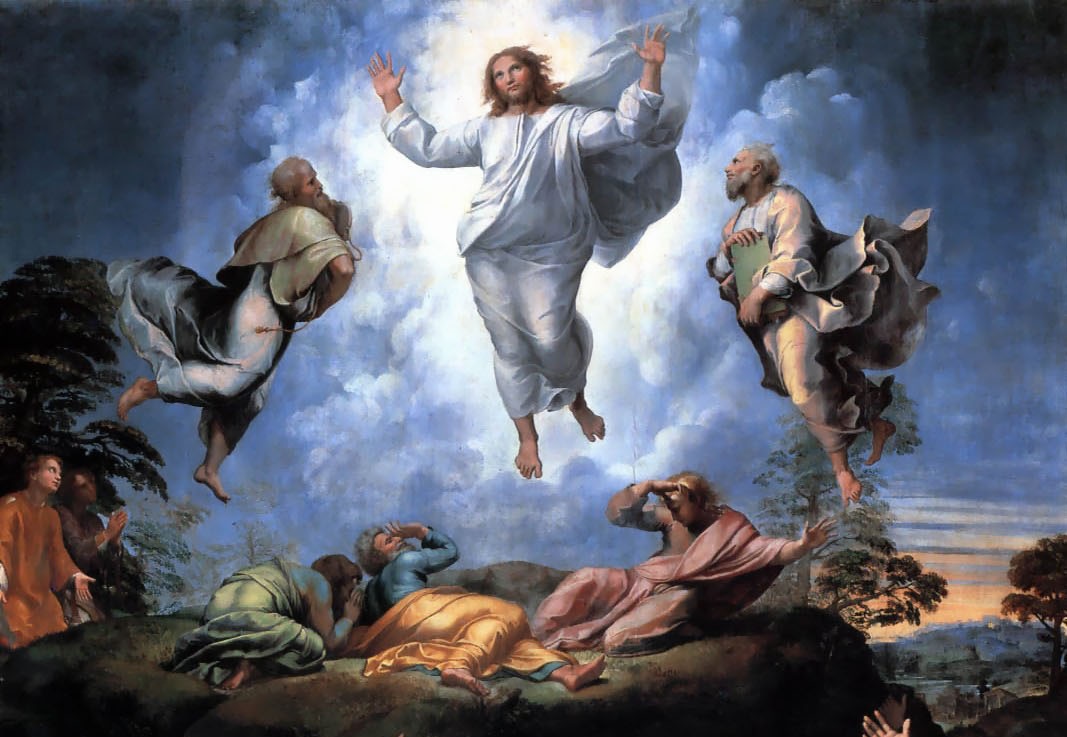
Our gospel this weekend tells of another Epiphany, the “Light of Christ.” Jesus has just disclosed to his disciples that his death is near. He needs to get away from the World and so he invites some of his friends Peter, James and John, to take some time off and follow him to the top of a mountain and pray for support from the Father for him to conclude his ministry vocation as savior of those he loves. His friends do not yet understand that he must die and rise from the dead to complete his assignment. But Jesus gifts them with a look at who he really is. They witness him talking to two Saints Moses and Elijah two Old Testament heroes. Showing them that he is the fulfillment of the Torah. Then they witness his glorified body turning into the bright Light of Christ and they begin to realize that he is not just their fisherman friend but also hear the Father call him his son who commands them to “listen to him.

Jesus is the great teacher and we, like the disciples are called to “listen to him,” and to follow his directions, actions, and words, and to teach the same to the children of God. Jesus gives us directions today on how we can be successful and fruitful disciples. First, we need to pray for help. Prayers seem to be more successful if we pray on “Holy Ground.” Where do we find that? Some, find it on a mountain like Jesus found it. Some find it in a Church where the Blessed Sacrament resides. But for many it lies where ever you go to when you need help and direction from God through prayer. For me that is usually near my garden or a place that I can witness the Father’s creatures and creations. A place of reverence and quiet wonder of creation. Sometimes it is my chair where I write my homilies and reflect on Scripture writings. Bottom line is the whole world can and is “Holy” if you find yourself thanking God for where you can find peace to talk to Him.

Next, Jesus tells us to invite family and friends to join you and maybe provide some help and support from them when you are confused or suffering through an event you need to get through. My favorite place to view this is at a funeral liturgy. Remember Jesus works through and with his followers, who he calls His earth Body, His Church.

Finally, remember that Jesus has respect for suffering, and in this life, it is a very important element of faith, for it requires us to admit we need his supernatural strength to overcome and turn suffering into redemptive faith in and through his power to bring about an end to suffering through Easter Sunday and bring about our glorified eternal life with him in heaven.

Transfiguration can happen to us when we are called by God to commit to a vocation call from Him. At RCIA/OCIA class we talked about special events we have experienced in our lives and I shared with the class one of my special and fearful events that occurred to me when we were asked to purchase for ourselves an alb, a white vestment which I believe is related to our baptismal vow to be priest, prophet and king,.  It was to be used by us for leading parish  prayer events after we had completed our two years Lay Minister class some twenty-nine years ago. Barb, had me trying on several albs at a store in La Crosse and after she found one that she thought looked best on me she told me to go over to the mirror to get my take on the one she had picked. I walked over to the mirror glanced at the alb ,which I thought was fine, and then I looked up and fear overtook me. The face I saw in the reflection was not some one that I knew. I said to myself “who is this person?” This is not the person I grew up with. I did not share this with Barb until a week or so later. A few days after the happening while having a beer with my best friend I confessed my experience to my best friend telling him that I think God has something planned for me that I have not yet thought about. I asked him what he thought about the event and where I should go from here with this new person I had met in the mirror. He grinned at me and said, “I think you should get to know this new person and that you should go for it!” You all know the ending.

P.S.: The guy I grew up with is still with me, and the new guy and him are now good friends.