Archive for the ‘Salvation History’ Category

Love & Eight — The Jacob Pake & Kayla Bowen Wedding

June 22, 2025

By Fr. Victor Feltes

We read in the Genesis Creation account that it was not good for mankind to live in solitude, so God made a suitable partner for the man. “That is why a man leaves his father and mother and clings to his wife, and the two become one body, one flesh.” Man and woman were made for each other. Psalm 128 notes how marriage, that first blessing from the original Garden, remains visible in the world even after the Fall: “Your wife like a fruitful vine in the heart of your house; your children like shoots of the olive around your table.” However, after the Fall, we are wounded by sin and drawn by temptation. Humanity commonly does not do as we should.

That is why St. Paul’s exhortation to the Corinthians reminds their divided and squabbling community what love is and what it is not. He lists eight things that love “is” or does alongside eight things love “is not.” Love is not jealous, not pompous, not inflated, not rude, not self-seeking, not quick-tempered, not brooding over injury, not rejoicing over wrongdoing. But love is patient, love is kind, it rejoices in the truth, bears all things, believes all things, hopes all things, endures all things, and love never fails. These groupings of eight are interesting because Jesus in his Sermon on the Mount lists eight beatitudes. (Some may count nine beatitudes, but the Greek indicates that the final “blessed” is an expansion on the eighth one.) These beatitudes describe Christian saints, but first and foremost they describe Christ himself.

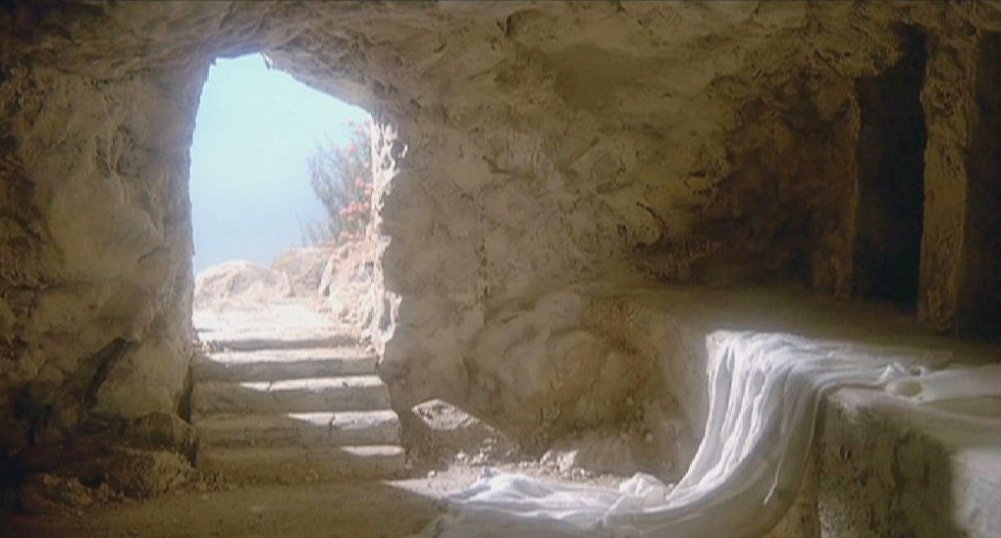
So eight, eight, and eight — What does this have to do with how we are to love today? In Genesis, God begins creating on the first day of the week, which is Sunday. He works six days and then rests on the seventh day. That is why the Jewish Sabbath, their holy day of rest, was Saturday. Jesus Christ, who on Good Friday worked his perfect Sacrifice, whose lifeless body on Holy Saturday kept a day of perfect rest, rose again on Easter Sunday. Christians beginning in the 1st or 2nd century called that Sunday “the eighth day,” the eighth day of Creation on which Jesus Christ transforms humanity and our lives in this world. Now we have hope beyond this life, hope for blessed endless life with God. And the Passion, Death, and Resurrection of Jesus have opened access to grace, the help of God, enabling us to live and love like him.

How can we achieve and preserve true unity and harmony among us in our homes and community? This is not possible merely on our own. We must let God give us his grace which allows us to live and love like him. This is why daily prayer, weekly worship, and consistent devotion to the Lord must be top priorities for any Christian. Jacob and Kayla, draw near to him and remain with him, so that you both may live and love like him and be blessed together. Like the psalmist said, ‘Blessed are all who fear, who reverence, the Lord and walk in his ways. You will be blessed and prosper. May you see your children’s children. May the Lord bless you all the days of your life.’

Fly High — Funeral Homily for Elle Jo Kramschuster, 24

June 5, 2025

By Fr. Victor Feltes

Elle’s loved ones will remember many beautiful things about her. In her, seemingly contradictory personality traits are joined. Young but old-souled. A center of attention not looking for attention. Initially the quietest person in a room but who, once comfortable, becomes its biggest presence. Never an early-riser, except to see the sunrise. A world-traveler who loves being back home with family and friends the most. Elle took some twenty-two jet flights, mostly in the last five years, to places like Colorado, Texas, Dubai, or Sri Lanka. She would say, “Happiness is a flight away.” But her favorite thing was being home, having everyone together. For instance, at the annual family rendezvous in Hayward her favorite thing was waking up and everyone being there. Today, we are all gathered here to mourn Elle’s passing and pray for her soul.

Last week, Christ’s Church around the world celebrated the Ascension of Jesus into Heaven. Many places marked this event last Thursday, while others transferred the celebration to Sunday. It is a bittersweet feast day. After spending forty days with Jesus after his Easter Resurrection, his disciples watch him fly into the sky until a cloud takes him from their sight, symbolizing his entry into Heaven. Jesus tells his disciples it is better that he goes. They are given assurances that he will visibly return again someday. And Jesus promises them, “Behold, I am with you always, until the end of the age.” Yet this time of visible separation is still a sad thing.

Jesus understands this. He knows our human loves, joys, and sorrows, for he is not only truly God but truly man. As Pope Francis wrote, “The eternal Son of God, in his utter transcendence, chose to love each of us with a human heart.” Jesus possesses “genuine human emotions and feelings like ourselves, albeit fully transformed by his divine love. … Entering into the heart of Christ, we feel loved by a human heart filled with affections and emotions like our own.” As much as you love Elle, realize that our Good Lord Jesus Christ loves her even more.

“Do not let your hearts be troubled,” he says. ‘Have faith in God; have faith in me.’ Christ is our Good Shepherd. Sweet Elle’s passing from this world is not the end of her story, any more than Jesus’ bodily Ascension was the end of his. Though she has a beautiful soul, earnestly pray for Elle, that the Lord may purify whatever remains imperfect in her so that she may ascend to glory, too. One day, the friends of God will awaken to a new and endless day, rising again in joy at having all of us together. Elle, you are loved, both on earth and in Heaven, where God’s family gathers. Happiness is a flight away. Fly high, Elle.

A Christian Philosopher–Engineer — Funeral Homily for William “Bill” Hable, 87

June 5, 2025

By Fr. Aro (Arockiaraj Paristham)

There is a time for everything. A time to be born, and a time to die. A time to weep, and a time to laugh. A time to mourn, and a time to dance.” This is the time to celebrate the death of our beloved William, who is known as Bill. A man who lived a full life, pleasing God and people.

Dear brothers and sisters, we have gathered together today to say goodbye to our brother Bill, whose life has touched us all in profound ways. It is said that he was an engineer who rooted in science but he saw himself as a philosopher first. If you asked him what the time is, he would tell you how a clock worked. As we reflect on his journey, it is comforting to turn to the words of Jesus in the Sermon on the Mount, particularly the Beatitudes in the gospel. These words offer hope in times of sorrow, pointing us toward the deep truths of God’s love and the promise of eternal life. Jesus says, “Blessed are those who mourn, for they will be comforted.” (Matthew 5:4) In this moment of loss, we are mourning the passing of Bill, someone who meant so much to all of us especially the family members. Bill cherished spending time with his loved ones and instilled a strong sense of self-reliance in his family. Mourning is a natural response to love, when we lose someone dear, we feel the deep void their absence creates. But Jesus promises us comfort. He assures us that in our grief, God is close to us, offering His presence, His peace, and His comfort. As we mourn, we can hold on to the promise that God sees our tears and walks with us in our sorrow.

Jesus also says, “Blessed are the poor in spirit, for theirs is the Kingdom of Heaven.” (Matthew 5:3) This verse reminds us that humility and dependence on God bring us closer to His Kingdom. Bill in his lifetime was simple and humble person. He always admitted his mistakes. One of his favorite quotes was “show me a person who has not made a mistake and I’ll show you a person who has not done much.” Bill may have shown us what it means to be poor in spirit, whether through acts of kindness, quiet strength, or a deep faith in God. When we are humble, we recognize our need for God, and He promises to meet us with His grace. Today, we remember that Bill now rests in the presence of God, in the Kingdom of heaven, where there is no more pain or suffering.

Jesus also says, ‘Blessed are the pure in heart, for they will see God.’ (Matthew 5:8) Purity of heart is a quality of those who seek God with sincerity, love others selflessly, and live with integrity. As we reflect on Bill’s life, we may see the ways in which he lived with a pure heart, perhaps through his love for family. Bill was known for his quiet sensitivity and steadfast loyalty, always offering support to those around him. He was a loving husband to his wife, Judy, for many joyful years. Because of his pure heart and compassion for others, and unwavering faith, now, Bill has seen God face-to-face, and he dwells in the fullness of God’s glory.

Jesus says, “Blessed are the peacemakers, for they will be called children of God.” (Matthew 5:9) Peacemaking is more than the absence of conflict; it is the active pursuit of reconciliation, love, and unity. Bill was a problem solver and he wanted his children to be problem solvers like himself. If Bill was someone who brought people together, mended relationships, or simply offered a calming presence in times of difficulty, we honor that legacy today. In the Kingdom of God, they are now embraced as a beloved child of God, resting in perfect peace. Bill will be remembered for his unwavering love and dedication to family and friends.

Let us be grateful to God for him in our lives as family or relative or a friend. Let us try to follow one of the good values that we learned from our beloved Bill which touched our lives and carry it over. Let us continue our prayer for his soul rest in peace and for the family to have comfort and hope and faith.

A Leader Like Us

May 31, 2025

Solemnity of the Ascension
By Fr. Victor Feltes

As a child in CCD class, I remember being told that a pope from the United States would never happen in our lifetimes. The common view was that having the earthly leader of the Catholic Church come from the world’s strongest superpower was something most cardinals would want to avoid. So it was quite surprising when the 69-year-old, Chicago-born Cardinal Robert Prevost was introduced to the world as Pope Leo XIV. But that concern about coming off as “America’s Pope” is probably why he only spoke Italian, Spanish, and Latin during his first public appearance.

If you’re like me, it’s surreal having so much in common with the pope. Like all of us here, he’s a Midwesterner. He speaks English without a foreign accent. He has consumed our movies, TV shows, and music and been active on social media. He has enjoyed American sports, like when he attended a White Sox World Series game. He has voted in our U.S. elections and attended the March for Life in Washington, D.C. He ministered in Peru for many years but we have something in common there too. Our diocese has supported Servant of God Fr. Joe Walijewski’s Casa Hogar orphanage in Lima for several decades. Like me, the new pope has a mathematics degree. My parents and relatives come from the Chicagoland area too. And we both picked the name “Leo XIV” — this new pope was literally named after my 12-year-old cat. He has a friendly smile and a sense of humor, he’s easygoing but takes Catholic teaching and worship seriously, he sings well, and writes out homilies to help him preach clearly. You probably have personal connections to our new pope yourself, like belonging to the same American Baby Boom generation.

Of course, the pontificate of Pope Leo XIV is still very young and its substantial fruits have yet to unfold. In the first week following his election, a reporter shook Pope Leo’s hand as he passed by and asked, “Holy Father… any message for the United States?” The pope smiled, lifted his hands, and replied, “Many! May God bless you all!” It’s exciting to have a pope who probably understands us, our country and our culture, both the good and the bad, better than any pope before him. So what does any of this have to do with the Solemnity of the Ascension we celebrate today? Much! And it relates to our June celebration of the Sacred Heart as well.

The Ascension marks the definitive entrance of Jesus Christ’s human nature into heaven. His humanity enters everlasting divine glory, symbolized by the cloud and sky. And from heaven, seated at God’s right hand, he constantly intercedes for us before the Father. Jesus Christ, being true God and true man, has a human intellect and will perfectly attuned to his divine intellect and will, knowing us and loving us all with a human heart. As Pope Francis wrote about the Sacred Heart last year, “The eternal Son of God, in his utter transcendence, chose to love each of us with a human heart.” Jesus possesses “genuine human emotions and feelings like ourselves, albeit fully transformed by his divine love. … Entering into the heart of Christ, we feel loved by a human heart filled with affections and emotions like our own.” Divine knowledge and love are eternal and we have had popes before. But the Ascension and Sacred Heart of Jesus are significant. Like a pope who intimately understands us, because he is one of us, we can rejoice that we now have a Lord in heaven, Jesus Christ, who knows us and loves us with a human heart like ours.

Jesus’ Love Succeeds

April 18, 2025

Good Friday
By Fr. Victor Feltes

The story of Christ’s Passion is a chronicle of human failures. Simon Peter, chief of his disciples, denies being his friend three times. Caiaphas and Annas, the highest Jewish leaders, reject, condemn, and hand over their Messiah. Pilate and Herod, representing the world’s political powers, tolerate injustice, persecute, and execute the Innocent One. The mob of humanity chooses the violent rebel, Barabbas (whose name means “Son of the Father”) instead of God’s Son, the peaceful Savior.

It is poignant and fitting how our liturgy has us speak the mob’s words, “Crucify him! Crucify him! …Take him away! Crucify him!” since it was our sins too which sent Jesus to the Cross. And yet, even as we are humbled and convicted at Jesus being crucified because of us, remember that Jesus accepted humiliation, pain, and death because of his love of us.

Though we may fail, Jesus’ love succeeds. He said, “When I am lifted up from the earth I will draw everyone to myself.” He stretches out his arms between heaven and earth as the everlasting sign of his New Covenant to invite and embrace us. And from the Cross, he says, “I thirst,” because his love thirsts for you and me.

Half-Measures Or Full Devotion?

April 18, 2025

Easter Sunday
By Fr. Victor Feltes

St. Peter the Apostle proclaimed: “We are witnesses of all that [Jesus] did… They put him to death by hanging him on a tree. This man God raised on the third day and granted that he be visible…to us, who ate and drank with him after he rose from the dead.” Jesus went to his Passion and Cross after the Last Supper, and from death and his tomb to the Resurrection. His apostles witnessed these events and were willing to die to testify to them, and nobody ever dies for what he knows to be a lie. The first Christians had full devotion because Christ did not go halfway in his saving mission.

But what if our Lord, instead of enduring pain and death, had chosen to spare and save himself? Jesus had told the apostles he “must suffer many things and be rejected by the elders, the chief priests and the teachers of the law, and that he must be killed and after three days rise again.” He said he had come “to give his life as a ransom for many,” shedding his blood “for the forgiveness of sins.” How could we ever find forgiveness of our sins in Christian faith and the sacraments, like Baptism and Confession, if Jesus never suffered and died?

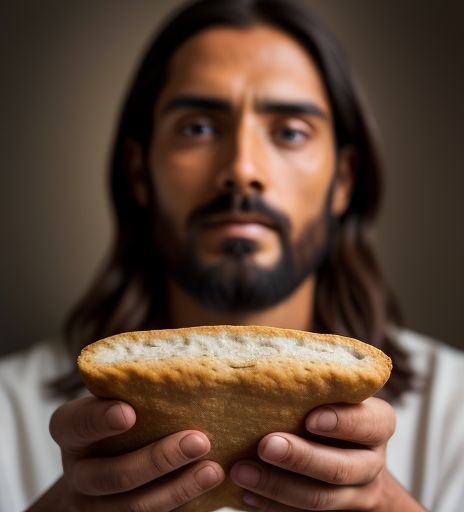
Or imagine if Jesus had just gone halfway with the Last Supper, which was the first Holy Mass. What if he had taken the bread and given it to his disciples saying, “This is like my Body. Do this with a thought of me”? Jesus said, “Amen, amen, I say to you, unless you eat the flesh of the Son of Man and drink his blood, you do not have life within you. Whoever eats my flesh and drinks my blood has eternal life, and I will raise him on the last day. … Whoever eats my flesh and drinks my blood remains in me and I in him.” What would become of us if we could not receive Jesus in the Eucharist?

Or what if instead of Easter, Jesus Christ had merely suffered and died and never rose again? St. Paul’s answer is emphatic: “If Christ has not been raised, your faith is vain; you are still in your sins. Then those who have fallen asleep in Christ have perished. If for this life only we have hoped in Christ,” Paul says “we are the most pitiable people of all!” Therefore, if Jesus had stopped at half-measures in his mission, we would not be saved!

At the beginning of Easter Sunday Mass we sang “Jesus Christ is risen today!” We celebrate him risen not like some celebrate the Easter Bunny hiding eggs or Santa Claus bringing gifts for Christmas. A savior of merely “once upon a time” cannot save us. We celebrate Jesus Christ who was truly risen on Easter morning in 33 AD, but who is also risen, living and active, in our world today. And in the face of sin of death, he is our only hope.

This is the day the Lord has made; let us rejoice and be glad!” Embrace today’s good news, the joy of the Gospel, firmly resolved to go forward in such a way that you may be saved. Realize that you cannot safely clear a six-foot chasm by only taking three-foot hops. Half-measures are not enough.

In his suffering, in his sacraments, in his dying and his rising, Jesus shows us how far he goes in love to reach and save us. So in your daily prayers and weekly worship, in virtue and noble service, in Christian faith and fellowship, by your gratitude and love, walk with our Lord Jesus Christ with your full measure of devotion.

Consolations In The Passion

April 12, 2025

Palm Sunday
By Fr. Victor Feltes

We rightly recall Christ’s sufferings during his Passion but have you ever meditated upon his consolations?

When Jesus went out to pray and await his betrayal at the Mount of Olives, his disciples followed him. Their flesh was weak but their spirits were willing, and in that dark hour he was glad not to be alone. Jesus also had constant recourse to his Father. Though not all of his prayers were immediately granted, he knew his Father always heard him.

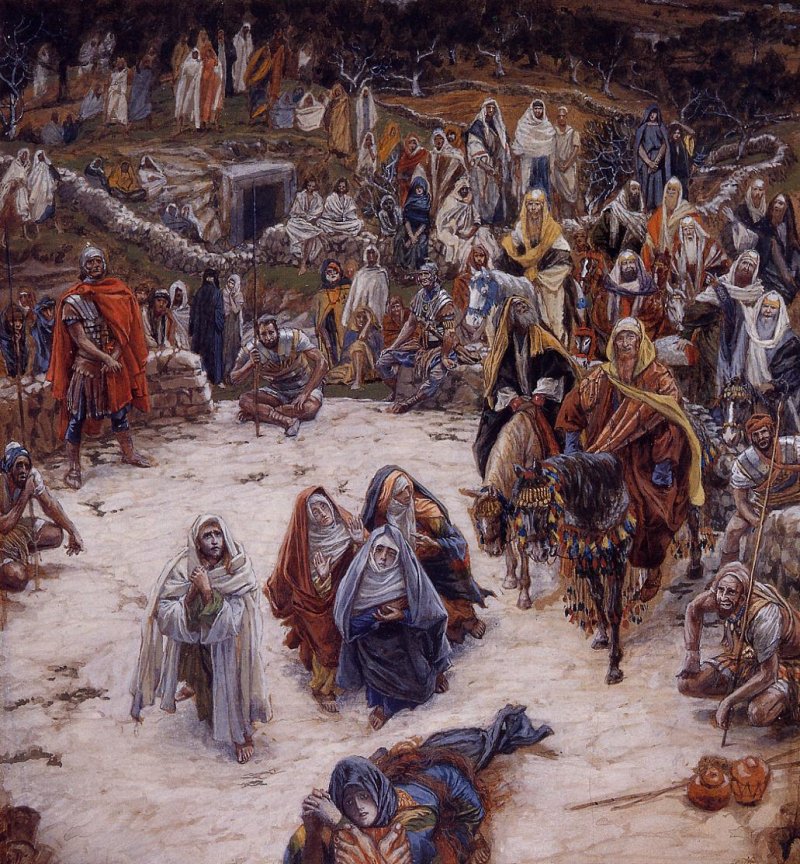
When Pilate condemned Jesus, they led him away but made Simon of Cyrene help carry his Cross. That was a welcome relief in his weakened condition. A large crowd followed Jesus, including many women who mourned and cried for him. Those women felt powerless, but their expressions of devotion strengthened him.

Once they had crucified Jesus, one of the condemned men mocked him but the other honored Christ, expressing saving faith in him. Jesus could behold his sacrifice already bearing fruit. Standing by his Cross were his mother and his beloved disciple, and “all his acquaintances stood at a distance, including the women who had followed him from Galilee” witnessing these events. And he saw them there for love of him, and it consoled him.

Therefore, if Jesus during his greatest suffering received some consolations, then in our trials we should not be ashamed to ask for help and comforts too. Jesus’ disciples were not perfect and they sometimes let him down, but the presence and support of his friends helped him to press on. So pray to God for consolation, invest in your personal relationships, and stay close to your Christian community. If you are going to pick up your cross daily and follow Christ in his sufferings you must also share in his consolations.

The Deaths of Lazarus

April 6, 2025

5th Sunday of Lent
By Fr. Victor Feltes

God does not do bad things, for “God is not subject to temptation to evil” and “what he hates he does not do.” However, God is all-knowing and all-powerful. There is nothing knowable that God does not know, and nothing good and doable that he cannot do. Therefore, when a bad thing happens, God has allowed that to happen. Yet we also “know that God causes all things to work together for the good of those who love him.” We see these truths reflected in today’s Gospel reading.

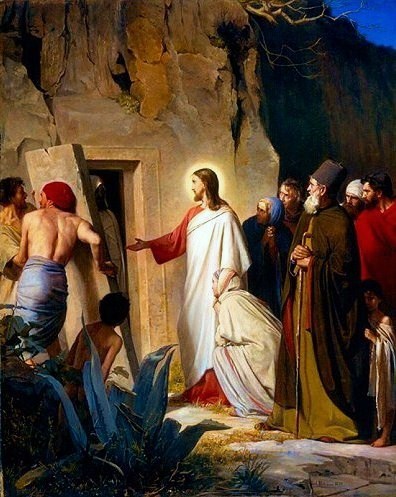
God clearly permitted Lazarus to fall ill. And when Jesus received the urgent message from Martha and Mary that their brother was sick, he remained in the place where he was and allowed Lazarus to die. “Now Jesus loved Martha and her sister and Lazarus.” So why did Jesus not come earlier, when he was told “the one you love is ill.” Or why did Jesus not heal his friend Lazarus’ sickness from a distance, like he cured the centurion’s servant or the royal official’s son? Jesus says the dying and rising of Lazarus was “for the glory of God, that the Son of God may be glorified through it,” and “that you may believe.”

Earlier in his public ministry, Jesus had raised Jairus’ daughter from the dead, having told mourners that the little girl was “asleep.” But that resurrection miracle was performed privately, shortly after death, and with strict orders to its witnesses that no one should know of it. By publicly raising Lazarus from the tomb in the presence of a crowd, Jesus manifests his power not only to heal the sick but to restore the dead to life.

Picture this: One moment, Lazarus was ailing and fading out of consciousness on his deathbed. The next thing he knows, he wakes up wrapped in bandages inside of a cave, and comes out toward the light at the sound of his friend Jesus’ call. His sisters would have filled him in on what he missed when he was dead.

The Gospels tell us Lazarus later attended a dinner with Jesus the day before Palm Sunday at the house of Simon the Leper. Martha served the meal while Mary took costly perfumed oil and poured it on Jesus’ head as he reclining at table. “A large crowd of the Jews found out that he was there and came, not only because of Jesus, but also to see Lazarus… And the chief priests plotted to kill Lazarus too, because many of the Jews were turning away and believing in Jesus because of him.” After Holy Week, the New Testament tells us no more of what happened to Lazarus. But we can imagine what it was like, years after Easter Sunday, when Lazarus died again.

Knowing that Jesus died and was risen, and having personally experienced death and resurrection himself, must have given Lazarus great peace even during his final passion. Consider Martha or Mary watching their brother die once more; having to burying him again. There would naturally still be sadness and ache in that parting, but I imagine the sisters would feel different this time: ‘We know he will rise in the Resurrection on the Last Day. Jesus Christ is the resurrection and the life who has come into the world, and whoever believes in him, even if they die, will live.’ Our brother Jesus died and has risen from the dead “for the glory of God” and “that you may believe.” Knowing and embracing this reality changes our life and how we face death. Do you believe this?

Last week, April 2nd, marked the twentieth anniversary of the passing of Pope St. John Paul the Great. And if you are like me, having witnessed how he lived and died, is inspiring. Pope John Paul’s famous motto was “Be not afraid!” In this, of course, he was quoting Christ who frequently said, “Be not afraid!” “Be not afraid,” Jesus tells us, “If you believe you will see the glory of God.”

The Living Water Jesus Gives

March 23, 2025

3rd Sunday of Lent
By Fr. Victor Feltes

Jesus tells the woman at the well, “Everyone who drinks this water will be thirsty again; but whoever drinks the water I shall give will never thirst; the water I shall give will become in him a spring of water welling up to eternal life.” What is this water he speaks of? The Samaritan woman, initially either humoring him, mocking him, or believing him, replies to Jesus, “Sir, give me this water, so that I may not be thirsty or have to keep coming here to draw water.” She seems to be imagining literal, physical water. The disciples likewise thought Jesus spoke of literal food when they returned from town and heard him say, “I have food to eat of which you do not know.” They asked one another, “Could someone have brought him something to eat?” But Jesus clarified, “My food is to do the will of the one who sent me and to finish his work.” So what is the “living water” Jesus wants to give?

Later in John’s Gospel, he gives us another clue. Jesus stands up in the temple area and exclaims, “Let anyone who thirsts come to me and drink. Whoever believes in me, as scripture says: ‘Rivers of living water will flow from within him.’” Jesus announces this during the last and greatest day of the Jewish Feast of Tabernacles, a celebration of God’s forty years of care for his people during the Exodus. And that context is significant. When the Hebrews entered the Sinai Desert, they were thirsty and cried out for water. So the Lord commanded Moses to strike a rock with his staff, miraculously causing water to flow for the people to drink and live. St. Paul the Apostle would later reflect that the Hebrews “all drank the same spiritual drink, for they drank from a spiritual rock that followed them, and the rock was the Christ.” Jesus Christ is our source of life. He pours out his living water so we may spiritually survive our pilgrimage through the desert of this world and happily enter the Promised Land of the life to come. Where do we find this living water with Jesus? Three places come to mind and the three are intertwined.

Christ’s water of life first comes to us in baptism. The Catechism of the Catholic Church teaches that “Holy Baptism is the basis of the whole Christian life, the gateway to life in the Spirit, and the door which gives access to the other sacraments. Through Baptism we are freed from sin and reborn as sons of God; we become members of Christ, are incorporated into the Church and made sharers in her mission….” This sacrament is called “‘the washing of regeneration and renewal by the Holy Spirit,’ for it signifies and actually brings about the birth of water and the Spirit without which no one can enter the Kingdom of God.” St. Paul teaches that we who were baptized into Jesus Christ were baptized into his death. He writes, “We were indeed buried with him through baptism into death, so that, just as Christ was raised from the dead by the glory of the Father, we too might live in newness of life.” Baptism connects us to Jesus’ Passion, Death, and Resurrection. We also encounter the water of Christ from the Cross.

On Good Friday, when the Roman soldiers “came to Jesus and saw that he was already dead, they did not break his legs, but one soldier thrust his spear into his side, and immediately blood and water flowed out.” Jesus nourishes us with himself in his Eucharist so that he remains in us and we remain in him as constant companions. Knowing of his sacrifice nourishes our souls as well when we consider how Jesus does these things for love of us; both dying for us once on the Cross and then giving us himself from this altar today. We encounter the living water of Christ in baptism and from the Cross, but John’s Gospel tells us of a third way.

When Jesus stood up in the temple area and exclaimed, “Let anyone who thirsts come to me and drink,” St. John’s Gospel notes Christ “said this in reference to the Spirit that those who came to believe in him were to receive,” adding “There was, of course, no Spirit yet, because Jesus had not yet been glorified.” To be clear, the Holy Spirit is an eternally existing divine Person and St. Luke’s Gospel shows us that the Holy Spirit was active in the world even before the birth of Christ, yet through Jesus’ victory every Christian is now made into a temple—an enduring dwelling place—for the Holy Spirit within them. Jesus said, “Whoever believes in me, as scripture says: ‘Rivers of living water will flow from within him.’” He said this in reference to the life-giving and refreshing Holy Spirit that those who came to believe in him were to receive.

Sharing in Christian Baptism, Confirmation, Holy Eucharist, and the Holy Spirit who guided Jesus, we drink of the living waters of Christ. A person who drinks natural water will be thirsty again, but Jesus says whoever drinks the water he gives will never thirst. With Jesus, on our pilgrimage through the deserts and trials of this world, our hearts can be refreshed and satisfied through the gift of God.

Difficult Decisions? Look to the Star

March 15, 2025

2nd Sunday of Lent
By Deacon Dick Kostner

Our gospel this weekend tells of another Epiphany, the “Light of Christ.” Jesus has just disclosed to his disciples that his death is near. He needs to get away from the World and so he invites some of his friends Peter, James and John, to take some time off and follow him to the top of a mountain and pray for support from the Father for him to conclude his ministry vocation as savior of those he loves. His friends do not yet understand that he must die and rise from the dead to complete his assignment. But Jesus gifts them with a look at who he really is. They witness him talking to two Saints Moses and Elijah two Old Testament heroes. Showing them that he is the fulfillment of the Torah. Then they witness his glorified body turning into the bright Light of Christ and they begin to realize that he is not just their fisherman friend but also hear the Father call him his son who commands them to “listen to him.

Jesus is the great teacher and we, like the disciples are called to “listen to him,” and to follow his directions, actions, and words, and to teach the same to the children of God. Jesus gives us directions today on how we can be successful and fruitful disciples. First, we need to pray for help. Prayers seem to be more successful if we pray on “Holy Ground.” Where do we find that? Some, find it on a mountain like Jesus found it. Some find it in a Church where the Blessed Sacrament resides. But for many it lies where ever you go to when you need help and direction from God through prayer. For me that is usually near my garden or a place that I can witness the Father’s creatures and creations. A place of reverence and quiet wonder of creation. Sometimes it is my chair where I write my homilies and reflect on Scripture writings. Bottom line is the whole world can and is “Holy” if you find yourself thanking God for where you can find peace to talk to Him.

Next, Jesus tells us to invite family and friends to join you and maybe provide some help and support from them when you are confused or suffering through an event you need to get through. My favorite place to view this is at a funeral liturgy. Remember Jesus works through and with his followers, who he calls His earth Body, His Church.

Finally, remember that Jesus has respect for suffering, and in this life, it is a very important element of faith, for it requires us to admit we need his supernatural strength to overcome and turn suffering into redemptive faith in and through his power to bring about an end to suffering through Easter Sunday and bring about our glorified eternal life with him in heaven.

Transfiguration can happen to us when we are called by God to commit to a vocation call from Him. At RCIA/OCIA class we talked about special events we have experienced in our lives and I shared with the class one of my special and fearful events that occurred to me when we were asked to purchase for ourselves an alb, a white vestment which I believe is related to our baptismal vow to be priest, prophet and king,.  It was to be used by us for leading parish  prayer events after we had completed our two years Lay Minister class some twenty-nine years ago. Barb, had me trying on several albs at a store in La Crosse and after she found one that she thought looked best on me she told me to go over to the mirror to get my take on the one she had picked. I walked over to the mirror glanced at the alb ,which I thought was fine, and then I looked up and fear overtook me. The face I saw in the reflection was not some one that I knew. I said to myself “who is this person?” This is not the person I grew up with. I did not share this with Barb until a week or so later. A few days after the happening while having a beer with my best friend I confessed my experience to my best friend telling him that I think God has something planned for me that I have not yet thought about. I asked him what he thought about the event and where I should go from here with this new person I had met in the mirror. He grinned at me and said, “I think you should get to know this new person and that you should go for it!” You all know the ending.

P.S.: The guy I grew up with is still with me, and the new guy and him are now good friends.

Passing the Marshmallow Test

March 9, 2025

1st Sunday of Lent
By Fr. Victor Feltes

A young child is brought into an empty room and seated at a table. On the table is a plate with a single yummy marshmallow. An adult explains that if the child waits fifteen minutes to eat the treat, one more yummy marshmallow will be given. Will the child eat one treat now or enjoy two treats later? Versions of this experiment are known as the Marshmallow Test. Studies of the Marshmallow Test have varied in their findings about how much this predicts a child’s future academic and social success. But in every test, a person faces a free choice: to either grasp at an easy thing, or to resist temptation and obtain something better. The temptations of Jesus in the desert were a high-stakes test which our Lord passed and we can learn from.

During Jesus’ public ministry, when “unclean spirits saw him,” St. Mark records they would fall down before Jesus and shout, “You are the Son of God!’” But St. Luke records how Jesus “rebuked them and would not allow them to speak, because they knew he was the Messiah.” The title “Son of God” was thought a reference to the Messiah, Christ, or Anointed One spoken of in the 2nd Psalm. During the Temptations in the Desert, the devil may or may not have known that Jesus is divine, but the devil’s questions show he at least strongly suspected that Jesus was the Christ, the prophesized King of the Jews: “If you are the Son of God, command this stone to become bread. … I shall give to you all this power and glory… All this will be yours, if you worship me. … If you are the Son of God, throw yourself down from (this roof ledge of the temple).” With each temptation, the devil was placing before Jesus an easy way to become a flawed Messiah.

Like the forty days of Moses atop Mount Sinai, Jesus ate nothing for forty days in the desert and he felt hungry. By suggesting that he tell stones to become bread (possibly against God’s command that he fast) the devil was enticing Jesus to be a materially-focused Messiah. Yet “man does not live on bread alone.” Giving everybody bread without saving their souls would doom the whole world to death. Instead, Jesus obeys his Father, and goes on to change bread into his Flesh for the life of the world. By suggesting that Jesus worship the wicked “Prince of this World” the devil was enticing him to grasp at worldly power like evil lords, kings, and emperors. Instead, Jesus establishes a Kingdom in this world not of this world and reigns now as our uncorrupted, holy, righteous King. By suggesting that Jesus jump off from the height maybe the devil sought to fool him into presumptuously ending his own life, or maybe he wanted Jesus to be a Messiah who would refuse to die so he could never be the Lamb of God whose sacrifice takes away the sins of the world. Instead, Jesus is obedient unto death, even death on a cross, winning for himself and for us a resurrection to glory. Each time, Jesus resists the temptation, refusing the easy evil way but obtaining something better for himself and others.

Our daily temptations may not be so dramatic as Jesus’ in the desert, but we frequently face similar tests. When you are tempted to sin, consider the cost and opportunities lost. If you choose to throw rocks through your windows, if might be fun in the moment but you will lose money and time repairing them. And that money you would have used for a nice meal or clothing or some other good thing will instead be spent on panes of glass. If you choose to sin, it will cost you; not only in the pains which follow but also in the goods things you fail to obtain. When the devil would lead you down the smooth and easy path, call out to the Lord and trust Jesus enough to take the path that Christ has shown you. We see the greater things Christ’s faithful obedience ultimately brought himself and others. Patiently endure in order to see the victories it leads to in this life and the next life, in this world and the world to come. Remember the Marshmallow Test and pass the test before you.

Why Bread & Wine

February 17, 2025

6th Sunday in Ordinary Time
By Fr. Victor Feltes

This Sunday, our seven week exploration of the sacraments culminates and concludes with the Most Holy Sacrament, the Most Blessed Sacrament, the Source and Summit of the Christian life. It is called the Breaking of the Bread, the Lord’s Supper, our King’s Heavenly Banquet, the Marriage Supper of the Lamb. It is the Bread from Heaven, the Bread of Angels, the Bread of Life; the antidote for death and the medicine of immortality. This sacrament is the Holy Sacrifice, our Holy Communion, the Most Holy Eucharist. After this homily, following our profession of the Creed and our prayers of the faithful, gift-bearers will carry up bread and wine along with water and our Sunday collection. Why did our Lord in his divine wisdom choose bread and wine for use in a sacrament, for this greatest sacrament? There are many reasons.

One reason is that the Last Supper was a Passover meal, and Passover meals featured unleavened bread and wine with a sacrificed lamb. The Passover celebrated how the angel of death harmlessly passed over the homes marked with the blood of the lamb, freeing God’s people from Egyptian slavery to Pharaoh, and enabling them to journey toward the Promised Land. The Eucharist frees us from slavery to Satan, sin, and death, enabling us to enter heaven and the new Creation, passing over unharmed into freedom and new life.

During the exodus, God’s people ate flakes of Manna in the desert. This Manna resembled and was called bread from heaven strengthening and preserving them on their journey. Jesus proclaims himself the new Bread from Heaven: “I am the living bread that came down from heaven; whoever eats this bread will live forever; and the bread that I will give is my flesh for the life of the world.”

Jesus changing water into wine at Cana reveals Christ can transform one thing into another. And Jesus’ multiplication of loaves shows that he can multiply something so that a multitude can partake of it. These miracles foreshadow how Jesus changes bread and wine into himself so that all of us can receive him in the Eucharist.

Daily bread” and wine were staple foods for Gentiles and Jews in the ancient world. Psalm 104 says God gave “wine to gladden the heart of man,” and “bread to strengthen man’s heart.” Though wine was more commonplace in those days, it was a symbol of special rejoicing as well. Jeremiah noted how people typically tread grapes with “shouts of joy,” and Ecclesiastes observed “wine gives joy to the living.” A feast of bread and wine combines the humblest of common foods with the peak of luxurious royal drinks. Likewise, the Eucharist unites the ordinary and extraordinary, our earthly everyday combines with the height of heavenly celebration.

Wheat and grapes grow on every continent on earth besides Antarctica, making these sacramental ingredients available to people throughout the world. God provides the raw materials, fruits of the earth and vine, to be worked by human hands into the bread and wine we offer the Lord God of all Creation. We are called to serve as his faithful stewards. Christ then takes our works and makes them still more bountiful. He does this in this sacrament and also throughout our lives.

The processes for making bread and wine reflects the Passion of Christ. Wheat is beaten, ground, and pummeled. Grapes are crushed, drained, and outpoured. They suffer along their way to God-honoring sacrificial glory.

The baked bread resembles human skin and red wine resembles human blood. And at the words of Consecration these things really become Jesus Christ through and through—his Body, Blood, Soul, and Divinity; living, whole, and undivided—with only the outward appearances of bread and wine remaining. To symbolically separate the Body of Christ from his Precious Blood is a symbol of death. And their reunion within us is a symbol of resurrection. Christ is truly risen in history and risen in us. As Jesus says, “Whoever eats my flesh and drinks my blood remains in me and I in him.”

This sacred sacrifice is also a communal meal. The Eucharist which unites us to Jesus Christ unites us to one another in him. As St. Paul writes to the Corinthians, “The cup of blessing which we bless, is it not a participation in the blood of Christ? The bread which we break, is it not a participation in the body of Christ? Because there is one bread, we who are many are one body, for we all partake of the one bread.”

Finally, consider how instead of coming to us as a frightening fire, Jesus Christ comes as non-threatening food. He says, “Take this, all of you, and eat of it, for this is my Body… Take this, all of you, and drink from it, for this is the chalice of my Blood…” It is very important that we approach him lovingly and reverently, in a state of grace, but Jesus urges us to partake of him. Christ’s desire is for us and him to live as one, to become the Body of Christ you receive in this Most Blessed Sacrament.

The Gift of Holy Orders

February 9, 2025

5th Sunday of Ordinary Time
By Fr. Victor Feltes

The seven sacraments of the Catholic Church are sensible signs instituted by Christ to gift us his grace. Sometimes the sacraments are powerfully moving experiences but a person can also receive graces and be transformed by them without feeling anything extraordinary. It is possible, for instance, for a baby sleeping in its mother’s arms to be born again through baptism without waking up. It is possible to hold the God of infinite glory upon your tongue in the Eucharist while being totally distracted with a wandering thought. From modern science, lethal amounts of radiation — though invisible — can kill you. From the sacraments, God’s graces can give you life even when you do not feel them. Ministers of the sacraments typically do not feel divine power flowing in or out from them, like Jesus at the healing of the hemorrhaging woman. However, I believe I felt the moment that I was ordained a priest.

Fifteen years ago, I was ordained a priest of Jesus Christ at our cathedral in La Crosse. The Sacrament of Holy Orders, which can ordain a man first a deacon, then a priest, and then a bishop, is celebrated through a bishop’s laying of hands and consecratory prayer. I had not studied the words of the ritual beforehand but I knew going in that my ordination would occur by the end of that consecratory prayer, and I wondered if there would be some moment before the “amen” when I would be ordained.

The prayer’s first ten sentences recount the Old Covenant priesthood, the high priesthood of Jesus Christ, and the priesthood of his apostles. God declares his people to be a priestly people, since all of us are called to offer spiritual sacrifices and help sanctify the world. But from this multitude, God has called certain men to be ministerial priests to serve him and his people.

Then I heard Bishop Listecki say these words: “Grant we pray, Almighty Father, to these, your servants, the dignity of the priesthood; renew deep within them the Spirit of holiness; may they henceforth…” and when he said “henceforth,” I began feeling a pleasant but unsettling wooziness. The words which followed were: “may they henceforth possess this office which comes from you, O God…” I felt the effect of those words.

There is one eternal priest, Jesus Christ, the source of all priesthood. He is the true priest, with all others being merely his ministers Jesus chose apostles to be his first New Covenant priests. These men then appointed and ordained through the laying of hands bishops, priests, and deacons to serve, sanctify, and shepherd the Church—an apostolic line of authority which endures to this day. In Jesus Christ, priest, prophet, and king, these ministers are called to lead worship, teach truth, and pastorally lead. Though history’s greatest and holiest woman who has ever lived was in their midst, Jesus and his apostles never ordained the Virgin Mother Mary nor any other female, and the Church lacks the authority to ordain women today. Men and women are equal in dignity, but a man is not a woman and a mother cannot be a father.

Priests, however faithful or unworthy, act in the person of Christ. Without them, we would not have the Eucharist, or Confirmation, or Anointing of the Sick, or the sacramental forgiveness of sins. Without the successors to St. Peter and the apostles, the pope and the bishops, the Magisterium of the Church whose definitive teachings are protected by the Holy Spirit from error, we could not know our one, holy, catholic, and apostolic Faith with certainty. How lost we would be without shepherds for our flock! Such is the importance of the Sacrament of Holy Orders.

Last week, when I asked different people what I should preach about this sacrament, more than one said to mention the importance of praying for priests. It is important to pray for more vocations to the priesthood, but these folks meant praying for the priests we have, for their holiness, endurance, and fruitfulness. Pray for your bishops, priests, and deacons, both the ones that you like and the ones that you don’t. St. Paul asked that “supplications, prayers, petitions, and thanksgivings” would be offered “for all in authority, that we may lead quiet and tranquil lives in all devotion and dignity.” Pray for your clergy that they may more effectively aid you and many to grow into saints in this world and one day reach heaven.

A man who thinks Jesus may be calling him like he called Simon Peter, James, and John in today’s gospel, should earnestly explore this vocation, since priesthood is likely the greatest mission, duty, and life he could ever pursue. In the words of St. John Vianney, “The priest continues the work of redemption on earth… If we really understood the priest on earth, we would die not of fright but of love… The Priesthood is the love of the heart of Jesus.”

The Gift of Confirmation

February 2, 2025

Feast of the Presentation
By Fr. Victor Feltes

Forty days after Jesus’ birth, Joseph and Mary took him up to Jerusalem to offer the sacrifice required for a firstborn son. Jesus had been conceived through the Holy Spirit, but that was not the Spirit’s only activity in the world. The Holy Spirit revealed to a devout and righteous man named Simeon that he would encounter the Christ during his lifetime. On the day of the Presentation, the Spirit moved Simeon to come into the temple and enabled him to recognize the Christ when he saw him. Then Simeon took Baby Jesus into his arms and spoke words of prophecy which the Spirit inspired in him. There was also a prophetess there, an 84-year-old widow named Anna who never left the temple but worshiped night and day with fasting and prayer. The Spirit enlightened her too, to draw near and meet the Christ, and she spoke about the child to all. Through the Holy Spirit these servants of God, St. Simeon and St. Anna, were witnesses to Christ and filled with knowledge, courage, and joy. The plan of God was not to keep this gift of the Spirit limited to a few, but to grant him to many.

When the Spirit came down on Pentecost Sunday, St. Peter recalled the Old Testament prophesy of Joel: “‘It will come to pass in the last days,’ God says, ‘that I will pour out a portion of my Spirit upon all flesh. … Indeed, upon my servants and my handmaids I will pour out a portion of my Spirit in those days…” The Holy Spirit is poured out in the Sacrament of Confirmation which, together with Baptism and Eucharist, is necessary for the completion of our baptismal grace.

At Jesus’ baptism, the Holy Spirit descended upon him in the form of a dove, and “drove” and “led” him out into the desert for forty days before commencing his public ministry. The Old Testament had foretold that the Spirit of the Lord would rest upon the Christ or Messiah, titles which both mean “Anointed One.” Jesus was quoting the Prophet Isaiah when he declared in the synagogue at Nazareth, “The Spirit of the Lord God is upon me, because the Lord has anointed me.” Old Covenant priests, prophets, and kings were inaugurated through anointing with oil. Jesus was anointed with the Holy Spirit as our New Covenant Priest, Prophet, and King. And Christians are anointed with that same Spirit through Baptism and Confirmation to participate in Christ’s identity and mission.

In our Latin rite, a person celebrates Confirmation typically sometime after the age of reason, but in danger of death it is even given to newborns. The ordinary minister of Confirmation is the bishop, our successor to the apostles, though Catholic priests can be granted the authority to validly confirm when needed. A person is confirmed when the minister laying his hand on his or her head and anoints the forehead with a blessed oil called chrism while saying, “Be sealed with the Gift of the Holy Spirit.” Chrism is made of olive oil plus a fragrant sap called balsam. This gives chrism its perfumed scent, such that the anointed Christian — to use the words of St. Paul — bears “the aroma of Christ.”

One of my memories from the evening following my Confirmation by Bishop Burke in Eau Claire’s Zorn Arena was feeling great joy. When I wondered at its source I thought, “Oh yeah, the Holy Spirit.” Joy, love, peace, patience, kindness, goodness, generosity, gentleness, faithfulness, modesty, self-control, and chastity are among the Spirit’s fruits. And wisdom, understanding, counsel, fortitude, knowledge, piety, and fear of the Lord are numbered among his gifts.

In the ancient world, oil was a sign of abundance and joy, as at harvest time. It was used for cleansing both before and after baths. The injured used oil to heal wounds and soothe bruises Track and field athletes and wrestlers used it to limber their limbs. And it gave radiant beauty to both men and women’s skin. The Holy Spirit, in addition to the generous gifts he gives and fruits he brings, purifies us from sin and vice toward perfection, heals our past wounds and soothes our daily bruises empowers us to prevail over temptation and opponents, and gives us the beautiful glory of a more than natural goodness.

By the sacrament of Confirmation, you are more perfectly bound to the Church and enriched with a special strength. This sacrament is not an ending but a new beginning. After Confirmation you are, as true witnesses of Christ, more obliged to bravely spread and defend our Faith by word and deed in the world. If you were never confirmed within the Catholic Church, do not neglect this sacrament. Ask me about how you can receive this gift. And if you have already received the Holy Spirit in Confirmation, sincerely and lovingly ask him for his greater gifts and fruits. Like the fire passing atop candles, one to the next, God the Holy Spirit is not diminished by being more widely shared and spread. The child Jesus grew and became strong, filled with wisdom, and the favor of God was upon him. By the Holy Spirit, God desires to do greater things with you.

The Vision of Christian Marriage

January 18, 2025

2nd Sunday in Ordinary Time
By Fr. Victor Feltes

God created mankind in his image; in the image of God he created them; male and female he created them.” When God’s Old Covenant people only knew of God’s oneness, they may have assumed we only share in God’s image by our freewill, our intellect, and our rule over creation. But Jesus reveals to his New Covenant people that God’s oneness is not mere solitude but a unity of persons sharing one divine nature – the Holy Trinity. The Father eternally begets the Son, while the Son eternally gifts himself back to the Father, and from their love the Holy Spirit eternally proceeds. And in the beginning in the Garden of Eden, from Adam’s side close to his heart, Eve is fashioned — the woman of his dreams, his equal in dignity, sharing one human nature. And from their self-gift to each other, another person (children) can proceed. A family or loving community reflects a fuller image of God than an individual alone.

The human body speaks a language. In the one-flesh union, a man and woman’s bodies express a total gift of self to each other, open to enduring love and open to new life. This embrace says, “I give myself to you freely and completely for the rest of our lives. In the sight of God and neighbor I pledge my love for you and promise to will the very best for you.” When an occasion of this act does not match what the language of the body is saying, it is a lie, a sin, and often feels impure. But when what is being said matches the reality, then it is true, pure, and holy. Indeed, for Christian couples it seals or renews their covenant in the Sacrament of Marriage.

God made marriage before the Fall and created it good, but after the Fall the relationships between men and women have been impacted by sin. Since then, their unity has been threatened by discord, spirits of domination, selfishness, infidelity, jealousy, and conflict which can even escalate to hatred and separation. To prevail over sin, man and woman need the help of God’s grace which in his infinite mercy he never refuses them. The Sacrament of Marriage connects couples to Christ’s grace to create new holy families. Indeed, Christ the Bridegroom’s earthly mission was a courtship leading to a marriage with children.

Jesus’ first recorded miracle was performed at the wedding feast of Cana. “There were six stone water jars there for Jewish ceremonial washings,” and his public ministry began by transforming those Old Covenant waters into wine. In Sacred Scripture, six is a number of imperfection and incompletion while seven is a number of completion and perfection. And there is a seventh jar in the Gospel of John: “[On the Cross,] aware that everything was now finished, in order that the Scripture might be fulfilled, Jesus said, ‘I thirst.’ There was a jar filled with sour wine. So they put a sponge soaked in wine on a sprig of hyssop and put it up to his mouth. When Jesus had taken the wine, he said, ‘It is finished (or fulfilled, complete, consummated)’ And bowing his head, he handed over the Spirit.

Jesus is the New or Second Adam who, naked at a tree with the New Eve, proves faithful to God. Jesus enters the deep sleep of death, and from his side, from his heart, water and blood pour forth, the water for baptism and Blood for the Eucharist from which the Bride of Christ is fashioned. This bride, the Church, is fruitful in bearing, nurturing, and forming her children. The Old Testament foreshadowed this, like in our first reading from Isaiah: “As a young man marries a virgin, your builder shall marry you; and as a bridegroom rejoices in his bride, so shall your God rejoice in you.” And at the end of Scripture in the Book of Revelation it is declared in heaven: “Blessed are those who have been called to the wedding feast of the Lamb.”

The Sacrament of Marriage taps into the mystery and power of this loving union of Christ and his Church. In Ephesians 5, St. Paul writes how husbands and wives should love each other, with wives respecting their husbands’ leadership and husbands serving their brides like Jesus loves us. And Paul says in conclusion, “This is a great mystery, but I speak in reference to Christ and the Church.” Twenty years ago this year, when I was still a seminarian I attended my cousin’s wedding. Around the time when the bride and groom exchanged their vows, they were gazing in each other’s eyes, holding hands, and smiling. Then, without anything visibly changing, my perception shifted, and for several seconds I saw in them Jesus Christ marrying the Church. Now I hesitate to share this story because it might be like when someone talks about an “awesome” dream they had which fails to impress or translate for others. Yet I mention it all the same in hopes that, in addition to seeing the importance of being sacramentally married in the Church and being open to God’s will in bearing and raising children, you may have the vision to see your marriage in a new, real, more spiritual and mystical way.