Archive for the ‘Salvation History’ Category

Attacks Within — Tuesday, 1st Week of Ordinary Time—Year I

January 18, 2011

In the beginning, when God created the heavens and the earth, He also created purely spiritual beings called angels to serve Him and share His friendship. Unfortunately, some of these spirits decided that they would not serve, and rejected His friendship. We call these rebels demons, and with intense hate they wage spiritual war against us on the battlefields of our hearts and minds.

Demons are pleased when we hold either of these two extreme attitudes towards them: either in denying their very existence, so that we will be completely unaware of their activity in the world, or in fixating upon them, so that we are paralyzed with false fears of their power. Demons are powerful (by nature we human being are “lower than the angels”) but we should not be terrorized. First, Jesus is greater than them all. Made “for a little while lower than the angels” the Father has crowned Jesus “with glory and honor, subjecting all things under his feet.” Second, as a baptized Christian, you belong to Christ, you are claimed by Him, and that gives you special protection. Demons cannot possess you like the man in the Gospels unless you invite them in. (This is why Ouija Boards, Tarot cards, seances, magic and other things occult are so dangerous.) Demons cannot control us, overriding our freewill, but they can influence our thoughts and feelings.

When I interact with you, I can influence your thoughts and feelings by what I say and how I act. If I mention elephants, you’ll think of elephants. If I smile and compliment you, you’ll feel good, and if I insult you, you’ll feel bad. But however I interact with you, you can see and hear me doing it right in front of you. The work of spirits, on the other hand, is more subtle since they operate invisibly, speaking in our thoughts and influencing our hearts. God’s good angels direct us toward what is good, but demons would lead us toward sin and harm. To be forewarned and aware of the demons’ tactics is to be forearmed and prepared to resist them.

One typical demonic tactic is to first entice and then condemn. Suppose you gave up cookies for Lent and you notice the cookie jar sitting on the counter. A demon might entice you by speaking thoughts to you like this: “… a cookie would be great right now …this sucks …I’ve been good all Lent… I’ve earned it.” Then, once you give in and have the cookie, the enemy shifts to words of condemnation: “…couldn’t even give up one cookie for God.” Whenever you fall into sin, the demons don’t want you to get back up with Christ, they want to kick you when you’re down and keep you there. Sometimes our heavenly friends will correct and challenge us, but whenever they do, they always do it in a way that makes us stronger to do what’s right.

Another demonic tactic is Always/Never, or All or Nothing Thinking. If you find yourself thinking that you’re “always” this, or “never” that, you’re probably being fed a lie; either an untruth welling-up out of your own human brokenness, or a lie coming from an external attack. If you find yourself thinking that you ‘always mess things up,’ or that you ‘don’t have any friends,’ or that you ‘never really sin,’ you’re facing a falsehood. The truth is that only in rare cases are you “always” or “never” anything. The truth is probably somewhere in the middle.

Another tip: don’t dialogue with temptations. Whether the temptation springs from an external enemy or merely from our own desirous passions, both demons and we ourselves are cleaver enough to persuade us into sinning, if granted enough time for convincing.

So what can we do to defend against such attacks? We should pray every day and stay close to Jesus Christ through frequent reception of confession and the Eucharist. We should use holy water and holy images to sanctify the places where we dwell. We should call on our heavenly friends; Mary, St. Michael the Archangel, leader of God’s angelic armies, and all the saints. We should also remember that we are always accompanied by a Guardian Angel who God-given mission is to light, to guard, to rule, and to guide us.

Demons want us to either fixate on them or to deny that they even exist. Instead, let’s be forewarned in faith and confident in Christ about the invisible spiritual warfare fought on the battlefields of our hearts and minds.

Novo Anno Domini — Januray 1 — Mary, Mother of God / Epiphany

January 16, 2011

This new year begins us an interesting conjunction of dates. Today, a day typically thought of as a secular holiday comes right alongside an acknowledged Christian holy day. I speak of New Year’s and the Feast of the Epiphany.

People tend to celebrate New Year’s in a rather worldly way. They drink, usually more than they should, and frequently gather to watch something drop at midnight: in New York it’s a ball; in Miami it’s an Orange; in Bangor, Maine it’s a sardine. There are many such examples. When the new year arrives people traditionally look for someone to kiss, while others propose marriage.  The new year is felt to offer new hope and people make resolutions to change their lives. We tend to think of New Year’s as a secular holiday, but it actually marks a Christian milestone.

On the eighth day from His birth, Mary and Joseph had Jesus circumcised according to the law God had given His people through Moses. On this day, Jesus entered into the covenant of the Jews. One could argue that this eighth day from December 25th, January 1st, is the day that Jesus became the king of the Jews.

In the ancient world, events were often dated according to the reigns of the kings in power. For instance, the Romans would have once referred to 20 B.C. as “the eighth year of the reign of Emperor Augustus.” [One Gospel records that John the Baptist’s preaching began “in the fifteenth year of the reign of Tiberius Caesar.” – Luke 3:1] Today, we date our years according to the reign of our king, Jesus Christ, the King of kings.

The abbreviation “B.C.” means Before Christ.  “A.D.” doesn’t mean After Death, as some people suppose. (If it did, where would be the other 30 years of Jesus’ life?) “A.D.” is a Latin phrase, Anno Domini, which means In the Year of Our Lord. We call this new year of ours 2011 A.D., or the 2011th year of our Lord’s reign.

Whether they know it or not, when the world celebrates New Year’s they are really anticipating and celebrating the reign of a King who has already come. They raise their eyes up to see something descend — they look for the One who descended from Heaven. They long for an passionate love and an unending intoxication — the Bridegroom has come with the Holy Spirit of joy. They resolve to change into better people — the Christ who calls us to change and empowers us to do it has already come.

Two thousand years ago, the world did not realize that the Christ had been born, but the Magi, the “Great Ones,” knew. With devotion like the Magi, let us journey and draw near to Jesus. In your prayer, let the infant Jesus grab your finger and watch Him smile at you. In finding Jesus’ parents, the Magi found the Lord. Draw closer to Mary and Joseph, for they are already your friends and they lead whoever comes closer to them to their Son. In this 2011th year of his reign, let us rejoice in our King, Jesus Christ, and resolve to love Him more deeply.

He Came To Us — Wednesday, 1st Week in Ordinary Time—Year I

January 12, 2011

In today’s Gospel, “everyone” was looking for Jesus but only a few disciples could find Him. Jesus told them, “Let us go on to the nearby villages that I may preach there also. For this purpose have I come.”

Since the beginning, humanity has been searching for its completeness in God, but only a few could find Him. This is why He came to us as one of us. As the Letter to the Hebrews said, “Since the children share in blood and flesh, Jesus likewise shared in them.” He approached us as one of us, grasped our hands and helped us up, because everyone had been looking for Him, but only a few could find Him.

Multiplying Our Gifts — Tuesday After Epiphany

January 5, 2011

When the crowd gets hungry, Jesus takes the five loaves and two fish that his disciples offer to Him and uses these to feed everybody. Now if Jesus had wanted to, He could have used just one loaf and one fish. Or, He could have transformed a single piece of bread into more loaves, more fish, or whatever He chose. In fact, Jesus could have forgone the bread and fish business entirely and created a meal from absolutely nothing (ex nihilo) if He had wished. Yet, Jesus takes everything that the disciples offer to Him, blesses it, and uses it to a greater effect than any of them could imagine. Let us remember this when we consider offering our gifts to God.

Seen and Unseen — December 28 — St. John the Evangelist

December 27, 2010

Today’s Gospel says that when John the Apostle went into the tomb on Easter morning “he saw and believed.” What did he see that led him to believe? Was it how the burial cloth which had wrapped Jesus’ body wasn’t taken away or tossed in a mess on the floor,  but left behind (perhaps deflated) in its place? Or was the cloth which had covered the Lord’s head rolled up in a familiar way, such that John recognized Jesus’ hand behind it. Or perhaps, if the Shroud of Turin is truly the burial shroud of Christ, John believed through beholding its testimony to the resurrection.

On the other hand, maybe it wasn’t something John saw that led him to believe, but something he didn’t see. Perhaps it was from the fact that Jesus wasn’t there that he infered the truth. “Dead bodies don’t just disappear for no reason at all. I didn’t do this. None of us did this. And what motive would our enemies have to take Him? This is the work of God.”

Just as John may have inferred the resurrection of Jesus from the empty tomb, so we can infer the truth of God from the presence of the universe: “Things don’t just appear for no reason at all. I didn’t make this. None of us made this. And how could an enemy have to create beauty, life, and love? This is the work of God.”

Tradition says that after Jesus entrusted the care of His mother into the care of John the Apostle, they went to live in what is modern-day Turkey.  What if we had gone to visit them in their home at Ephesus and asked them how someone can believe in the God of the universe, or the Lord Jesus Christ, when their reality can sometimes seem so distant.

I can imagine Mary or John replying, “Beloved, the One who was from the beginning, whom we have heard, whom we have seen with our eyes, whom we looked upon and touched with our hands, the Word of God, the Word of Life, the Lord Jesus Christ——we have seen Him, and testify to Him, and proclaim to you His eternal life.” The Christian faith is firmly founded, upon the unseen things we can infer and the things which we  have seen.

Their First Christmas — Christmas Mass at Midnight

December 27, 2010

Christmas can be a hard time of year for a lot of people. Despite the pious, peaceful, and nostalgic scenes we see on the Christmas cards (like the one on the right,) many peoples’ Christmases are less than picture perfect. Today I would like to tell you the true story of two friends of mine, newlyweds whose first Christmas together was far from idyllic. (I’ll call them Chuck and Sue, though that’s not their real names.)  

In fact, Chuck and Sue’s first year together had been a rocky road. Chuck has always been a good and faithful man, but at one point in the beginning, he seriously thought about getting a divorce. He says that it was only by the grace of God that the serious tensions and misunderstandings between them were resolved and their marriage was saved.

After they tied the knot, the two picked-up and moved away from their closest family and friends to a small town down south where they had some distant relatives. Chuck worked hard as a blue-collar laborer, but after this transition, he found himself unemployed. And unfortunately, all of those distant relatives proved too distant to care about helping-out a struggling young couple in need. Their first Christmas together, Chuck and Sue were out of work, pregnant, and homeless.

How do you think Sue must have felt? Do you think she felt concerned about their circumstances and their family’s future? And how do you think Chuck must have felt when through no fault of his own he wasn’t able to provide better for his wife and child on the way? Had it not been for their deep faith in God and the consolation of their prayers, they would have been overcome by darkness, resentment, fear, and despair. But instead, their first Christmas together was the brightest and most joyful in history. You know Chuck and Sue’s story well, for theirs is the Christmas story. Chuck’s real name is Joseph and Sue’s real name is Mary.

Remember, the Christmas story is not a fairy tale from far, far away. It’s a real story in the real world, and for the real world. Our lives still have difficulties, but Jesus Christ has come, and that makes all the difference in the world. No matter what we’re going through, because of Christmas, we all have good reason to be merry.

And in closing, let me say one final word: I’m always pleased by how full the church is at Christmas. Please come back. Jesus Christ calls you back. He knows our world well and He knows how much you and those you love need His grace to get through it. The shepherds were called to find Jesus in a feed trough. Jesus invites you to find Him here.

Three Unexpectedly Expectant Mothers

December 22, 2010

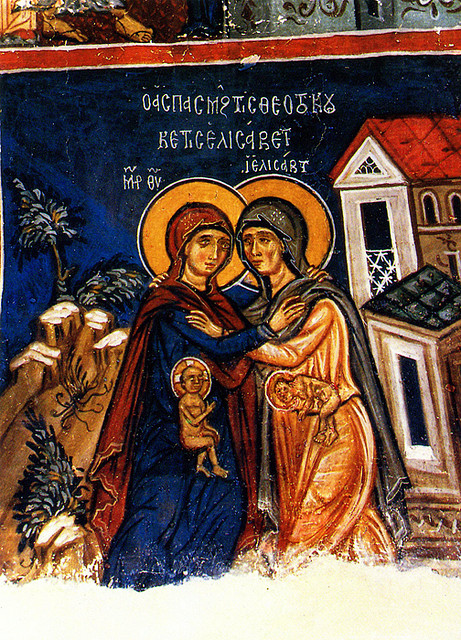
Today’s readings feature three women who all wonderously conceived: Hannah, Mary, and Elizabeth.  There are many parallels between them. Together they teach us these lessons, among others:

  • With God, you can be more fruitful than you’d imagine.
  • You have great reason to rejoice today.
  • You keep forever what you give to God.

Of A Great Lineage — Friday, 3rd Week of Advent

December 17, 2010

Among the four Gospels, three of them contain genealogies of Jesus Christ. Matthew traces His origin from Abraham, for salvation is from the Jews. Luke traces His origin back to Adam, for Jesus is the savior of all. And John traces His origin from the Eternal Father, for Jesus is the Son of God.

In today’s gospel, we heard the names of all sorts of Old Testament people who became ancestors to Jesus Christ. They were all connected to each other, by faith and by blood, yet they little understood the amazing plan that God was accomplishing through them; namely, the Incarnation of Jesus Christ, the Son of God and Savior of the world. I believe that Jesus is accomplishing great things with all of us. We might not see it now, but in Heaven we will see what great things He is doing through us.

The New Eve — December 8 — Immaculate Conception

December 8, 2010

In the beginning, when our first parents fell, they lost a great deal, but they were not deprived of hope, for God spoke in their hearing a prophesy to the deceiving serpent, the devil. God said, “I will put enmity between you and the woman, and between your offspring and hers; he will strike at your head, while you strike at his heel.” Who is this offspring, who strikes back at the devil? He is Jesus the Christ, the New Adam, the Son of God. And who is this woman, who is Satan’s enemy? She is Mary of Nazareth, the New Eve, the Immaculate Conception.

After their Fall, when Adam and Eve heard God approaching in the garden, they became afraid, they fled and hid, so God called out, “Where are you?” When God drew near to Mary, she also was afraid, but she did not hide or flee. She declared, “Behold, I am the handmaid of the Lord. May it be done to me according to your word.” And, because she did, her Holy Offspring could go on to say in His garden of testing, “Father… not my will but yours be done.”

The first man, Adam, called the first woman Eve, because she became the mother of all the living. Now, Mary is the New and Second Eve, for she is the mother of all the living, and she loves each one of us personally as her very own children.

She is the icon of the Church, and as she is, we are called to be: holy and without blemish before God, as the second reading from Ephesians says. But how can we do this? Unlike Mary, at times we have been allies of Satan by our sins. To cleanse us, God gives us the sacrament of reconciliation, and to strengthen us He gives us the fruit from the new tree of life; that tree is the cross, and its fruit is the Eucharistic Christ.

If it has been a long time since you have been to confession, come that you may be purified as pure as Mary. And if you receive our Lord in the Eucharist tonight, consider that the Son of God Incarnate has come to dwell in you, just as truly as He dwelt in Mary.

Let Advent Be Advent — 2nd Sunday of Advent—Year A

December 5, 2010

John the Baptist was living quite differently compared to people in his day. What he wore was different, what he ate was different, and what came from his lips was also different. Yet, John shared something in common with us today. Like Christians in this season of Advent, John knew that the Christ, or Messiah, had already been born, years before in the past. Like us, what John was preparing for was the coming of Christ anew.

That’s the reason why in Advent, in this season of awaiting the Messiah’s arrival, John the Baptist is so prominently featured in our Sunday Gospel readings, like today’s. By looking at John we can learn how to prepare ourselves for Christ’s arrival. As I mentioned before, John was rather different from his neighbors in his day. Today I suggest that we in the Church need to be a bit more different from everybody else if we want to prepare better for Christ’s coming this year.

What did John do with all that time alone in the desert, when he wasn’t out preaching or baptizing? Surely, John was praying, asking for grace and contemplating the one who was coming. The desert is a quiet place, free of distractions, and conducive to prayer. The world can make this month before Christmas a very stressful time. This Advent, you must find a desert, a quiet place, free from distractions, where you can pray each day. Create a daily desert space for your own family as well and prayer together as one. You cannot prepare well for Christ’s coming without daily prayer and the peace it gives.

What did John eat in the desert? He ate locusts, or grasshoppers, and wild honey. The wild honey may sound pretty sweet, until you realize that it was guarded by wild bees. John ate simply. Our meals in Advent should be simple too. You know how it is at Easter, when you enjoy what you gave up for Lent again for the first time? You find yourself enjoying what you denied yourself more than ever before. Then just think of how much greater your Christmas feasting will be if you eat more simply in Advent. (Besides, if you fast or diet now, there will less pounds to lose next year.)

John dressed differently than other people in his day. He wore a garment made of camel’s hair and tied a leather belt around his waist. He dressed like the Old Testament prophet Elijah because he wanted people to know that these were special days. You can also dress in ways that witness to the world that these are special days. One way to do this is to dress liturgically. As you can see, the main color of Advent is purple. If you have purple outfits or ties, now is their season.

By the way, this Wednesday, December 8th, is a holy day of obligation and Christ is asking you to attend the worldwide feast in honor of His immaculately conceived mother. On such a day, intentionally wearing blue or white would honor her. Try dressing liturgically and you’ll find that it reminds you and others of what makes these days special.

What came from the lips of John was different, and despite the large crowds, whatever he spoke was not for himself but for Christ. This year, wish people “merry Christmas” instead of “seasons greetings,” and instead of “happy holidays,” say “happy holy days,” for by this you give witness to the true reason for the season.

John knew that he must decrease and that Christ must increase, for John himself was not the light but had come to give testimony to the light. In the world, the Christmas songs have already begun on the radio and the Christmas trees are all up and lit in the malls, but the day after Christmas their songs will stop and their decorations will be taken down. But as the world is packing Christ away for another year, the Church is just beginning its celebration. You know the “twelve days of Christmas?” On Christmas day, the twelve day begin, not end. Like Easter, the Church celebrates not just one day, but for weeks after.

This year, let Advent be Advent, and save Christmas for Christmas. Sing Advent songs for Advent, and (as much as possible) save Christmas carols for their time. I suggest leaving your Christmas lights, on your tree and on your house, unlit during Advent. Then, when you plug-in at last on Christmas Eve, you shall enjoy a joyful sign that the light of the world has come.

St. John the Baptist calls to you through the Scriptures. I encourage you here, before you. And I hope the Holy Spirit is now prompting you, in your hearts and minds, to keep Advent as Advent this year, and to prayerfully prepare for the coming of Christ at Christmas more profoundly than you ever have before.

The Sound of Heaven — Monday, 34th Week in Ordinary Time—Year II

November 22, 2010

What do you think Heaven sounds like? In the first reading, St. John describes it for us. “I heard a sound from Heaven like the sound of rushing water or a loud peal of thunder. The sound I heard was like that of harpists playing their harps.”

The sound of Heaven that John describes is powerful and beautiful. It is like the onslaught of a tidal wave or a thunder burst, yet it has the harmony, clarity, proportion and perfection of supreme beauty. What John is hearing is the sound of worship in Heaven.

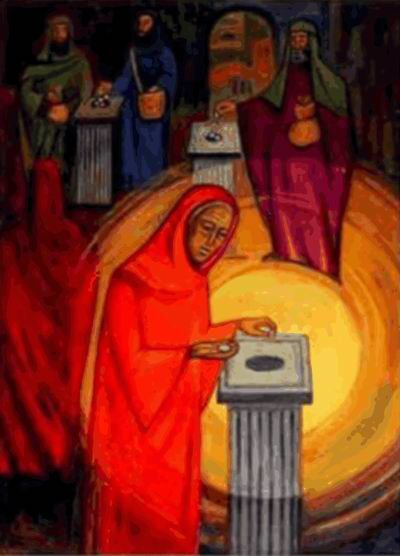
In the Gospel, we hear another sound, neither great nor gorgeous in itself: the quiet chinking of two small coins. Yet, this simple sound has echoed for two-thousand years and millions have been drawn to it. When Jesus Himself heard the sound of the faithful, poor widow’s generous gift, He was moved to speak words in praise. Despite its subtlety, it reminded Jesus of a sound He knew well; it reminded Him of the sound of Heaven.

In our own simple ways, with unending joy, let us echo on earth the song of the angels in Heaven as they praise God’s glory for ever.

Everything Awaits Her Reply

November 20, 2010

From a homily ‘In Praise of the Virgin Mother’ by St. Bernard of Clairvaux:

You have heard, O Virgin, that you will conceive and bear a son; you have heard that it will not be by man but by the Holy Spirit. The angel awaits an answer; it is time for him to return to God who sent him. We too are waiting, O Lady, for your word of compassion; the sentence of condemnation weighs heavily upon us.

The price of our salvation is offered to you. We shall be set free at once if you consent. In the eternal Word of God we all came to be, and behold, we die. In your brief response we are to be remade in order to be recalled to life.

Tearful Adam with his sorrowing family begs this of you, O loving Virgin, in their exile from Paradise. Abraham begs it, David begs it. All the other holy patriarchs, your ancestors, ask it of you, as they dwell in the country of the shadow of death. This is what the whole earth waits for, prostrate at your feet. It is right in doing so, for on your word depends comfort for the wretched, ransom for the captive, freedom for the condemned, indeed, salvation for all the sons of Adam, the whole of your race.

Answer quickly, O Virgin. Reply in haste to the angel, or rather through the angel to the Lord. Answer with a word, receive the Word of God. Speak your own word, conceive the divine Word. Breathe a passing word, embrace the eternal Word.

Why do you delay, why are you afraid? Believe, give praise, and receive. Let humility be bold, let modesty be confident. This is no time for virginal simplicity to forget prudence. In this matter alone, O prudent Virgin, do not fear to be presumptuous. Though modest silence is pleasing, dutiful speech is now more necessary. Open your heart to faith, O blessed Virgin, your lips to praise, your womb to the Creator. See, the desired of all nations is at your door, knocking to enter. If he should pass by because of your delay, in sorrow you would begin to seek him afresh, the One whom your soul loves. Arise, hasten, open. Arise in faith, hasten in devotion, open in praise and thanksgiving. “Behold the handmaid of the Lord,” she says, “be it done to me according to your word.”

Laodicean Christians — Tuesday, 33rd Week in Ordinary Time—Year II

November 16, 2010

The Christians of Laodicea lived in what is now southwestern Turkey. Today, their city is merely ruins, but in those days it was a modern, rich, commercial center of banking, industry, and entertainment. The Christians there were well-off and contented, but Jesus knew them and their city well and he was not content with them. In the Book of Revelation He rebukes them, “You say, ‘I am rich and affluent and have no need of anything,’ and yet do not realize that you are wretched, pitiable, poor, blind, and naked.”

A few decades before, in 60 AD, an earthquake ravaged their city and the Roman emperor offered to send them money to aid in their recovery, but within a year, the wealthy Laodiceans had finished rebuilding using only their own resources. To a people too rich and proud to accept a king’s aid, Jesus says, ‘I advise you to buy from me gold, (good works) refined by fire, so that you may be (truly) rich.’

Laodicea was home to the Marshfield Clinic of its day in the field of eye medicine. There they produced of an ointment for the eye which was used throughout the Roman empire. But Jesus urges the Chrisitians, ‘buy (true) ointment to smear on your eyes so that you may see (the truth).’

Laodicea was also known for its fine, soft, black cloth, made from the wool of the region’s excellent dark sheep. But Jesus sees the Christians’ immorality and warns, ‘put on white garments, so that your shameful nakedness may not be exposed.’

Laodicea had an aqueduct which carried water to the city from hot springs some five miles away, but by the time this water would get to them, it would be merely lukewarm; neither cold enough to cool in hot weather, nor hot enough to warm-up in cold weather. Jesus likens the Laodicean Christians to their water supply. “I know that you are neither cold nor hot. I wish you were either cold or hot. So, because you are lukewarm, neither hot nor cold, I will spit you out of my mouth.”

Jesus Christ, being divine, knows the Christians of Laodicea perfectly well. By their values, words, and actions, He sees them living not much different than any other Laodiceans. And because He loves them, he corrects them, and warns them that they need to repent and to start getting serious about living true, Christian lives.

Do we live in a Christian nation? Compared to the secularized countries of Europe, or to the Asian or African countries where Christianity is the minority religion, the United States is a very Christian nation. On the other hand, only about one in four Americans went to Church last weekend. [source] Only one in four Americans offered up an hour to God, to thank Him, worship Him, and to fulfill the commandment, “You shall keep holy the Lord’s day.” Of course, being a Christian is about more than just going to Church, but this gives us some indication of our society’s commitment to Christ.

To think of our country as a Christian nation at a 25% level, or to a 25% degree, is both discouraging and encouraging. It is discouraging that our devotion is not greater, but there is encouragement to be found in this: if our society’s half-hearted, or even quarter-hearted commitment to Christ and His Gospel can do as much good as we see now, imagine what things would be like if we were whole-heartedly His disciples.

As G.K. Chesterton said, “Christianity has not been tried and found wanting; it has been found difficult and not tried.” The Gospel is supposed to be radical. It’s supposed to change the world. If there is nothing very counter-cultural about your life as a Christian, then you are not yet living out the Gospel like Christ calls you to do. If you are living the same way as everyone else in our present-day Laodicea, then Jesus Christ’s wake-up call from the Book of Revelation through the centuries is addressed to you.

Jesus is looking for people who will go out on a limb for Him, people like Zacchaeus, people who will risk the mockery and judgment of others, people who would give half of their possessions to the poor if that is what Christ wills, people who will rise and open the door for Christ when they hear Him knocking. Jesus is looking for disciples who seek the riches of being a true and whole-hearted Christian. With a person like that, Jesus can change the world.

Go to church every weekend, pray every day, and do not merely learn about our faith but act on it in your life. Jesus Christ pleads to you, through me and your teachers who have witnessed their faith to you, please: go out on the limb for Him.

Demonic Delay — 33rd Sunday in Ordinary Time—Year C

November 14, 2010

Once upon a time, an uncertain number of years ago, there was an important meeting of demons in Hell. In the midst of their fires and shadows, with a foul and terrible stink in the air, the top of Hell’s hierarchy was planning a long-term strategy for how to mislead humanity.

Why do they scheme against us? Because on the day when Jesus comes again to judge and rule the world with justice, the demons do not want us to experience His healing rays; they want us to burn with fire, like themselves. Since they cannot hurt God directly, they lash out by trying to make us share in their misery.

As they met, brainstorming for ideas, one demon suggested, “How about we try telling them that there is no such thing as evil?” The chairman said, “You stupid worm, you pathetic disgrace, the humans will never believe that! Do you think that we can pit a person against a person, a nation against a nation, or a soul against our Enemy above, without the humans noticing the sadnesses, sufferings, impurities, jealousies, envies, rivalries, resentments, hatreds, injustices, cruelties, or murders that follow? They see evidence of evil on the front page of every newspaper and in every gossip’s tale! Humans are reminded that something’s wrong with their world whenever their alarm clocks ring, whenever their toes get stubbed, or whenever someone they know dies! You’ll have to do better than that!”

A little while later, another demon suggested, “What if we told them that there is no such thing as goodness?” The chairman said, “You worthless slime, you ugly idiot, the humans will never believe that! Our Enemy above has littered their world with beauties and gifts to many to count, and everything that the humans do is in the pursuit of what they think is good! They have this irresistible desire to be happy that our Enemy has built into them! Tell me, how would we tempt them to sin without promising them something which attracts them, something which is at least seemingly good? Is there anyone here who is not a useless fool?”

But then, one of the chairman’s most cunning underlings suggested another approach, an approach which was immediately welcomed by the others with cruel smiles and restrained applause (for a demon resists praising anyone but himself.) This insightful demon said, “Let us convince the humans… that there’s no need to hurry.”

In every generation, there have been Christians who belived that their generation would be the last. But personally, I don’t expect the second coming of Jesus Christ to happen in the very near future for the simple fact that it remains legal to be a Christian throughout North and South America. There are great evils in our world, even within our own country, but the final attack of evil against Christ’s Church in the last days should be far worse than this. [For more from the Catechism of the Catholic Church on “The Church’s Ultimate Trial,” see CCC 675-677 ]

I do not expect Christ to come in the immediate future to us, but we must always be preparing ourselves to be ready to go to Him, for we never know when we will die. Never be anxious and never be afraid, but prepare yourself for what is certainly coming. Instead of being busybodies, distracted by many unimportant things, let’s get busy making the most important things the most important things.

If you knew for a fact that you were going to die six months from today how would you begin to live your life differently? Would you pray more each day? Would you go to confession and to Mass more often? Would you work harder at doing good works? Would you crush your lingering vices? Would you forgive your enemies? Would you show more love to the people in your daily life?

Seriously thinking about what you would you do different if you knew you were going to die will give you a good place to start in living more intentionally for Christ, with your eternal goal in mind. Do not believe the demon’s whispered lie that ‘there is no need to hurry,’ for your last day is closer than it was yesterday, and it may be much closer than you think.

Uniquely Different — October 28 — Sts. Simon and Jude

November 3, 2010

[Jesus] called his disciples to himself,
and from them he chose Twelve,
whom he also named Apostles:
Simon, whom he named Peter…
Simon who was called a Zealot,
and Judas the son of James,
and Judas Iscariot, who became a traitor.

In the early days of their ministry, whenever Jesus called out for ‘Simon’ or ‘Judas,’ more than one head may have turned. Among Jesus’ apostles there were two Simon’s and two Judas’. There was Simon Peter and Simon the Zealot, and Judas (or Jude) the son of James and Judas Iscariot the betrayer. Though these pairs shared the same names and the same calling to be apostles, they were different in important ways.

Simon Peter was called to be the Rock, the leader of the apostles and of the nascent Church. Simon the Zealot may have shared his zeal, but he was not meant to have the same role as Peter. Each saint’s apostleship was unique to him.

Sometimes Christians who eagerly desire to be saints themselves strive to impersonate their favorite holy heroes. We do well to learn from the lived examples of the saints, for St. Paul did say, “Be imitators of me, as I imitate Christ,” but there can truly be only one St. Paul, one St. Francis, or one St. Therese of Lisieux. Every saint in history has been unique, and every future saint will be, too.

The two Judas’ teach us a lesson, too. Even after years of preaching the Gospel, I can imagine some people felt an initial uncertainty towards Judas the son of James. Intellectually, Christians would know that this apostle could not possibly be Judas the betrayer (because he one took his own life,) yet they might feel wary about this “Judas” in their midst.

Sometimes our feelings toward other people are influenced by who they remind us of. For instance, if you meet someone whose face resembles a person who has hurt you in the past, you may be involuntarily uncomfortable around them. In psychology, this shift of emotions from one person or thing to another is called transference. This is the stuff that prejudice is made of, and the good apostle, Judas, caught some of its unjust, negative effect.

Though the apostles shared names and a common calling, they were unique individuals. The two Simons teach us that each is called to live out their own, unique, holy life. The two Judas’ teach us that we must always receive others in their own personal uniqueness.