Archive for the ‘Salvation History’ Category

Child of God Homily

February 9, 2011

 
Do you know who Bill Gates is? He started a computer software company called Microsoft and is one of the richest men in the world.  If Bill Gates were your dad do you think that he would be willing to buy you things you could never have otherwise? Imagine if President Obama were your uncle.  Do you think he would invite you to the White House sometime?  Do you think that you would have the opportunity to talk to him about your concerns and ideas for the world? Hold that in mind…

When I was younger, something about how we professed the Nicene Creed on Sundays struck me as strange: “For us men and for our salvation He came down from heaven. *Profound Bow* By the power of the Holy Spirit, He was born of the Virgin Mary, and became man. *Straighten* He was crucified under Pontius Pilate. He suffered, died, and was buried.” I wondered, “Why do we bow for Jesus being born? Heck, even I was even born. Why don’t we bow for His suffering instead?” 

We tend to think of God becoming man as a perfectly normal thing for God to do, we take it for granted, but it is actually the most surprising thing that has ever happened in history. The divine Son became one of us so that He could be our brother, and so that His Father could be ours. “See what love the Father has bestowed on us that we may be called the children of God. Yet so we are.”

Our heavenly Father is unimaginably rich, and He wants to provide for you and bless you. Our Father is all-powerful, and He is always open to hearing your prayers. Our Father in heaven has a house far greater than the White House, and He is preparing a place for you to stay. Remember this: you are a child of God the Father, and that’s a big deal.

Sodium Chloride Reaction — 5th Sunday in Ordinary Time—Year A

February 8, 2011

Let me tell you two stories about chemicals that produced quite a reaction in me. In summers when I was a kid, I liked to go to the Osseo city pool. They had there a brown door with red letters warning something to the effect of: “Danger, Deadly Chlorine Gas, Staff Only!” I needed no further persuading. Years later, my high school science teacher put a bucket in the snow, and in the bucket he put some water, and in the water he put in a chunk of pure sodium, using tongs. The water steamed and bubbled and exploded a couple of time. It was awesome, but also rather threatening.

What do you get if you put these two dangerous elements together? You get sodium chloride. I warn you that this compound is now found in our environment and in our homes. The oceans are full of it. It’s on our city streets. It’s even in the food we eat and feed to our children. Sodium chloride sounds rather threatening, but you know this benign compound by another name: Salt.

Like salt, Christianity is pervasive, it’s everywhere. Like salt, people can fear and oppose Christianity, thinking it’s harmful for people and bad for our world. But in truth, Christianity, like salt, is necessary for life. Christians, to the extent that they are truly Christians, are the salt of the earth.

The world’s irrational fear and opposition to our faith is nothing new. Listen to this anonymous letter written to a man named Diognetus that dates from the second century. Listen for how Christians resemble the salt of the world, ubiquitous, helpful and good, and feared and opposed:

“Christians are indistinguishable from other men either by nationality, language or customs. They do not inhabit separate cities of their own, or speak a strange dialect, or follow some outlandish way of life. … With regard to dress, food and manner of life in general, they follow the customs of whatever city they happen to be living in, whether it is Greek or foreign. And yet there is something extraordinary about their lives. They live in their own countries as though they were only passing through. They play their full role as citizens, but labor under all the disabilities of aliens. Any country can be their homeland, but for them their homeland, wherever it may be, is a foreign country. Like others, they marry and have children, but they do not expose them. They share their meals, but not their wives.  They live in the flesh, but they are not governed by the desires of the flesh.

They pass their days upon earth, but they are citizens of heaven. Obedient to the laws, they yet live on a level that transcends the law. Christians love all men, but all men persecute them. Condemned because they are not understood, they are put to death, but raised to life again. They live in poverty, but enrich many; they are totally destitute, but possess an abundance of everything. They suffer dishonor, but that is their glory. They are defamed, but vindicated. A blessing is their answer to abuse, deference their response to insult. For the good they do they receive the punishment of malefactors, but even then they, rejoice, as though receiving the gift of life. They are attacked by the Jews as aliens, they are persecuted by the Greeks, yet no one can explain the reason for this hatred.

Why does the world oppose devout Christianity, now as then? One reason is that the Christian dedicates himself exclusively to Jesus Christ, in a way that worldly people think is disproportionate and dangerous. They imagine the believing Christian behaves like sodium in water, hot with intolerance and hatred, violent in their reactions. In fact, a Christian’s total commitment to Jesus Christ is what leads Him to have mercy for all and extend love toward all. Who is more responsible for ‘sharing bread with the hungry, sheltering the oppressed and the homeless, and clothing the naked’ in history of the world than Christians in general and the Catholic Church in particular?

Another reason why the world hates Christianity is that worldly people think it lethal to the joys of life. Like inhaling chlorine gas, they fear that Christianity stands to afixiate their happiness. This too is nothing new. In Roman times Christians were charged with “hatred of humanity” for it was thought, “whoever loves man will love what man loves.” As the writer to Diognetus observed in the second century, “The world hates the Christians, not because they have done it any wrong, but because [Chritians] are opposed to its enjoyments.” It is still so today. It is as Jesus said: He calls us the light of the world, and elsewhere notes, “Everyone who does wicked things hates the light and does not come toward the light, so that his works might not be exposed.” We tell the world that some things that it loves are false roads to happiness, and it hates us for it.

So what are we to do? First, realize that the modern world’s hostility to Christianity is nothing new. Don’t wait for the world’s hostility to pass, it won’t. And don’t think your faith is a shameful thing, it’s not. Instead, do as Jesus teaches, “your light must shine before others, that they may see your good deeds and glorify your heavenly Father.” If you are a Christian, people who know you should see something different in you and ask, “What’s your secret.” And when they do you should say, “It’s because of my relationship to Jesus Christ and His Church.” Pray for this grace. Pray that you may be a witness to Christ in both your words and deeds. Then, as the psalmist said, you will be “a light in darkness” and you will help to save many souls in the world.

Wine and Drunkenness — Tuesday, 5th Week of Ordinary Time—Year I

February 8, 2011

“God looked at everything he had made, and he found it very good. … Such is the story of the heavens and the earth at their creation.”

Everything that God has made is good, but anything can be misused or abused in ways that are wrong. A volleyball-sized amount of Uranium can provide electrical power to 200 U.S. homes for a year, but it can also be used in a single bomb to level a city like Hiroshima. The complimentarily of man and woman is very good.  They were made for each other, but they sometimes use each other in painful and unloving ways.

What about alcohol in its many forms? Is it good or bad? On the one hand, the Scriptures praise God for it as a gift: “You bring bread from the earth, and wine to gladden our hearts.” (Psalm 104:14-15) Yet throughout, the Scriptures also caution about the sin of drunkenness: “…Do not get drunk on wine, in which lies debauchery, [instead] be filled with the Spirit.” (Ephesians 5:18) You’ll recall that Jesus provided wine for the wedding feast of Cana, yet He would not be pleased if the guests used His gift for getting trashed.  If we are adults we may only drink alcohol in moderation, and if we are still minors we may only consume it under our parents’ direct supervision. Anything else is misuse, abuse, immoral and dangerous.

But what about illegal or recreational drugs? Can they be used in moderation? No, there is no moderation in this, for the entire goal of using them is to get high, to become intoxicated. If you have never abused drugs or alcohol, I hope you never start; and if you have, I hope you never will again.

Please do not dismiss this teaching as merely the tradition of your elders; for it is God’s command that we should never get drunk or high. God forbids it, just as every good parent forbids it of their children, because getting intoxicated is harmful and dangerous for us. The Scriptures say, “Honor your father and your mother,” and, “Whoever curses father or mother shall die.” Indeed, those who spurn their parents in this can taste sin and death in many forms.

When you’re intoxicated you make dumb decisions. (I don’t know about you, but I already make enough dumb mistakes in a day as it is.) Someone who is drunk or high will do impulsive, stupid things that they would never do otherwise. You lose control of yourself and become vulnerable to others. I don’t want any of you to wake up a morning after, regretting some serious thing done the night before. I don’t want any young woman here to find herself with child, and be tempted to do something terrible.

Imagine which experience would be worse as a consequence of getting intoxicated? To die alone from driving your car off a road into a tree, or to survive a head-on collision that kills a stranger or a friend? Go too far just once and alcohol poisoning or a drug overdose can have you pass out and never wake up again, put you in a coma or make you drown in your own vomit.

Or consider the risk and costs of addiction. Any recovering alcoholic can tell you a story about how much addiction costs, and any smoker can tell you how hard additions are to break. Of course, not everyone who gets drunk or high will become an addict, but some will, and after the first use of certain drugs, addiction is all but certain. With addiction, even if drug or alcohol abuse never sends you to prison, it can still cost you your freedom. And even if drug use never takes your life, it can cost lives of people far away.

Did you know that since 2007 there have been over 35,000 deaths in Mexico from the violence of their organized crime drug cartels? That’s almost ten times the number of American troops who have died in combat since 2001 in Iraq and Afghanistan. Why so much violence? It’s because the Mexican drug cartels make more than one hundred billion dollars a year from selling marijuana and other drugs to Americans, and they will murder or assassinate whoever stands up to them. When we buy their drugs, we’re supporting their terror.

Today I set before you life and death; choose life. If you have never abused drugs or alcohol, I hope you never start; and if you have, I hope you never do again. May no one ever say of Columbus Dons as Jesus said of the Pharisees: their hands are clean in public and ‘they honor me with their lips, but their hearts are far from me.’

Evil: Unholy Holes — Tuesday, 5th Week of Ordinary Time—Year I

February 8, 2011

“God looked at everything he had made, and he found it very good.” Everything that God has made, everything that has being, contains God’s goodness. What then is this thing called evil?

Think of a hole in the ground. What is the hole made of? Nothing really. If not for the good earth surrounding it you would not even know that a hole was there. Evil is like that hole, it’s an absence, a deprivation, a negation of something good. Evil can only be present within something good, as a corruption. Even though evil is essentially nothingness, that doesn’t mean that it can’t still hurt you, like falling into a deep, gaping hole.

Let no one think that evil is necessary for there to be good. No one should think of evil as the Ying to God’s Yang. God created a universe which was entirely good. It has been the free choices of the demons and of us to rebel in sin which have brought evils upon us.

Because of the goodness that remains in them, God shall love and preserve the Devil, the demons, and the damned forever. They shall not be destroyed, but they shall no longer do harm. They shall be as the wounds in Jesus’ hands, feet and side, which are as they are due to evil, but which cause no more pain, only glory.

The Beatitudes Incarnate — 4th Sunday in Ordinary Time—Year A

January 30, 2011

If you want to know what the beatitudes mean, look at Jesus Christ. And if you want a window into Christ, consider the beatitudes. Let us consider how Jesus embodies the beatitudes and choose to imitate Him.

Jesus is poor in spirit. Sometimes we get can proud and adore ourselves as if we were complete and self-sufficient. But Jesus, even though He was divine, never worshiped Himself. Jesus prayed every day. He depended on His Father, like a humble child, because He was poor in spirit. Do we pray every day like Him?

Jesus is a person who mourns. But what does He mourn? He mourns the sins of others and how badly lost they are. His lament is for many when He says, “Jerusalem, Jerusalem, you who kill the prophets and stone those sent to you, how many times I yearned to gather your children together as a hen gathers her brood under her wings, but you were unwilling!” Another time, He said through tears, “If… you only knew what makes for peace…” Do we know people who are far from God? When we mourn and pray for people far from God, our hearts are like the heart of Jesus.

Jesus is meek. He says so Himself, “Take my yoke upon you and learn from me, for I am meek and humble of heart.” As Zechariah prophesized about Him, Jesus did not enter to Jerusalem on a war horse or chariot, but meekly, on a donkey. Jesus doesn’t carry a sword, but a cross-shaped yoke. He comes not as the destroyer of nations, but as the planter of a harvest. In this way, Jesus conquered the world. Why do we think that own petty battles over matters of pride even need to be fought?

Jesus hungers and thirsts for what is right. He feels it from his gut when He says, “I have come to set the earth on fire, and how I wish it were already blazing!” When we see what is objectively wrong we should feel a hunger to fix it, and this hunger for righteousness should move us to action, to pray or petition, to volunteer or vote, to donate or give our witness to the truth. What wrongs do you hunger and thirst and work to have changed?

Jesus is merciful and He seeks to make peace. Jesus, as men were murdering Him in a crime that cried out for justice, pleaded to Heaven for mercy, “Father, forgive them, they know not what they do.” Jesus says that if we show mercy, we will be shown mercy. Only if we are peacemakers, we will know peace. Do we pray for those who hate us or are not at peace with us?

Jesus is clean of heart. This means more than just being chaste. He is clean of heart because His heart is full of goodness. Jesus teaches that “from the fullness of the heart the mouth speaks. A good person brings forth good out of a store of goodness, but an evil person brings forth evil out of a store of evil.” What impurities need to be scrubbed out from our hearts before we shall see God face to face?

Jesus was persecuted for the sake of righteousness, and He tells us our reward will be great if others insult us and persecute us and utter evils against us falsely because of Him. Has this ever happened to us? If not, why not? Are we too timid in bearing witness to Christ before others.

Living the beatitudes conforms us to Jesus Christ. My hope is that you will take even one thing from this homily and put it into practice in your life, for those who practice Christ’s beatitudes are promised to share His rewards.

Attacks Within — Tuesday, 1st Week of Ordinary Time—Year I

January 18, 2011

In the beginning, when God created the heavens and the earth, He also created purely spiritual beings called angels to serve Him and share His friendship. Unfortunately, some of these spirits decided that they would not serve, and rejected His friendship. We call these rebels demons, and with intense hate they wage spiritual war against us on the battlefields of our hearts and minds.

Demons are pleased when we hold either of these two extreme attitudes towards them: either in denying their very existence, so that we will be completely unaware of their activity in the world, or in fixating upon them, so that we are paralyzed with false fears of their power. Demons are powerful (by nature we human being are “lower than the angels”) but we should not be terrorized. First, Jesus is greater than them all. Made “for a little while lower than the angels” the Father has crowned Jesus “with glory and honor, subjecting all things under his feet.” Second, as a baptized Christian, you belong to Christ, you are claimed by Him, and that gives you special protection. Demons cannot possess you like the man in the Gospels unless you invite them in. (This is why Ouija Boards, Tarot cards, seances, magic and other things occult are so dangerous.) Demons cannot control us, overriding our freewill, but they can influence our thoughts and feelings.

When I interact with you, I can influence your thoughts and feelings by what I say and how I act. If I mention elephants, you’ll think of elephants. If I smile and compliment you, you’ll feel good, and if I insult you, you’ll feel bad. But however I interact with you, you can see and hear me doing it right in front of you. The work of spirits, on the other hand, is more subtle since they operate invisibly, speaking in our thoughts and influencing our hearts. God’s good angels direct us toward what is good, but demons would lead us toward sin and harm. To be forewarned and aware of the demons’ tactics is to be forearmed and prepared to resist them.

One typical demonic tactic is to first entice and then condemn. Suppose you gave up cookies for Lent and you notice the cookie jar sitting on the counter. A demon might entice you by speaking thoughts to you like this: “… a cookie would be great right now …this sucks …I’ve been good all Lent… I’ve earned it.” Then, once you give in and have the cookie, the enemy shifts to words of condemnation: “…couldn’t even give up one cookie for God.” Whenever you fall into sin, the demons don’t want you to get back up with Christ, they want to kick you when you’re down and keep you there. Sometimes our heavenly friends will correct and challenge us, but whenever they do, they always do it in a way that makes us stronger to do what’s right.

Another demonic tactic is Always/Never, or All or Nothing Thinking. If you find yourself thinking that you’re “always” this, or “never” that, you’re probably being fed a lie; either an untruth welling-up out of your own human brokenness, or a lie coming from an external attack. If you find yourself thinking that you ‘always mess things up,’ or that you ‘don’t have any friends,’ or that you ‘never really sin,’ you’re facing a falsehood. The truth is that only in rare cases are you “always” or “never” anything. The truth is probably somewhere in the middle.

Another tip: don’t dialogue with temptations. Whether the temptation springs from an external enemy or merely from our own desirous passions, both demons and we ourselves are cleaver enough to persuade us into sinning, if granted enough time for convincing.

So what can we do to defend against such attacks? We should pray every day and stay close to Jesus Christ through frequent reception of confession and the Eucharist. We should use holy water and holy images to sanctify the places where we dwell. We should call on our heavenly friends; Mary, St. Michael the Archangel, leader of God’s angelic armies, and all the saints. We should also remember that we are always accompanied by a Guardian Angel who God-given mission is to light, to guard, to rule, and to guide us.

Demons want us to either fixate on them or to deny that they even exist. Instead, let’s be forewarned in faith and confident in Christ about the invisible spiritual warfare fought on the battlefields of our hearts and minds.

Novo Anno Domini — Januray 1 — Mary, Mother of God / Epiphany

January 16, 2011

This new year begins us an interesting conjunction of dates. Today, a day typically thought of as a secular holiday comes right alongside an acknowledged Christian holy day. I speak of New Year’s and the Feast of the Epiphany.

People tend to celebrate New Year’s in a rather worldly way. They drink, usually more than they should, and frequently gather to watch something drop at midnight: in New York it’s a ball; in Miami it’s an Orange; in Bangor, Maine it’s a sardine. There are many such examples. When the new year arrives people traditionally look for someone to kiss, while others propose marriage.  The new year is felt to offer new hope and people make resolutions to change their lives. We tend to think of New Year’s as a secular holiday, but it actually marks a Christian milestone.

On the eighth day from His birth, Mary and Joseph had Jesus circumcised according to the law God had given His people through Moses. On this day, Jesus entered into the covenant of the Jews. One could argue that this eighth day from December 25th, January 1st, is the day that Jesus became the king of the Jews.

In the ancient world, events were often dated according to the reigns of the kings in power. For instance, the Romans would have once referred to 20 B.C. as “the eighth year of the reign of Emperor Augustus.” [One Gospel records that John the Baptist’s preaching began “in the fifteenth year of the reign of Tiberius Caesar.” – Luke 3:1] Today, we date our years according to the reign of our king, Jesus Christ, the King of kings.

The abbreviation “B.C.” means Before Christ.  “A.D.” doesn’t mean After Death, as some people suppose. (If it did, where would be the other 30 years of Jesus’ life?) “A.D.” is a Latin phrase, Anno Domini, which means In the Year of Our Lord. We call this new year of ours 2011 A.D., or the 2011th year of our Lord’s reign.

Whether they know it or not, when the world celebrates New Year’s they are really anticipating and celebrating the reign of a King who has already come. They raise their eyes up to see something descend — they look for the One who descended from Heaven. They long for an passionate love and an unending intoxication — the Bridegroom has come with the Holy Spirit of joy. They resolve to change into better people — the Christ who calls us to change and empowers us to do it has already come.

Two thousand years ago, the world did not realize that the Christ had been born, but the Magi, the “Great Ones,” knew. With devotion like the Magi, let us journey and draw near to Jesus. In your prayer, let the infant Jesus grab your finger and watch Him smile at you. In finding Jesus’ parents, the Magi found the Lord. Draw closer to Mary and Joseph, for they are already your friends and they lead whoever comes closer to them to their Son. In this 2011th year of his reign, let us rejoice in our King, Jesus Christ, and resolve to love Him more deeply.

He Came To Us — Wednesday, 1st Week in Ordinary Time—Year I

January 12, 2011

In today’s Gospel, “everyone” was looking for Jesus but only a few disciples could find Him. Jesus told them, “Let us go on to the nearby villages that I may preach there also. For this purpose have I come.”

Since the beginning, humanity has been searching for its completeness in God, but only a few could find Him. This is why He came to us as one of us. As the Letter to the Hebrews said, “Since the children share in blood and flesh, Jesus likewise shared in them.” He approached us as one of us, grasped our hands and helped us up, because everyone had been looking for Him, but only a few could find Him.

Multiplying Our Gifts — Tuesday After Epiphany

January 5, 2011

When the crowd gets hungry, Jesus takes the five loaves and two fish that his disciples offer to Him and uses these to feed everybody. Now if Jesus had wanted to, He could have used just one loaf and one fish. Or, He could have transformed a single piece of bread into more loaves, more fish, or whatever He chose. In fact, Jesus could have forgone the bread and fish business entirely and created a meal from absolutely nothing (ex nihilo) if He had wished. Yet, Jesus takes everything that the disciples offer to Him, blesses it, and uses it to a greater effect than any of them could imagine. Let us remember this when we consider offering our gifts to God.

Seen and Unseen — December 28 — St. John the Evangelist

December 27, 2010

Today’s Gospel says that when John the Apostle went into the tomb on Easter morning “he saw and believed.” What did he see that led him to believe? Was it how the burial cloth which had wrapped Jesus’ body wasn’t taken away or tossed in a mess on the floor,  but left behind (perhaps deflated) in its place? Or was the cloth which had covered the Lord’s head rolled up in a familiar way, such that John recognized Jesus’ hand behind it. Or perhaps, if the Shroud of Turin is truly the burial shroud of Christ, John believed through beholding its testimony to the resurrection.

On the other hand, maybe it wasn’t something John saw that led him to believe, but something he didn’t see. Perhaps it was from the fact that Jesus wasn’t there that he infered the truth. “Dead bodies don’t just disappear for no reason at all. I didn’t do this. None of us did this. And what motive would our enemies have to take Him? This is the work of God.”

Just as John may have inferred the resurrection of Jesus from the empty tomb, so we can infer the truth of God from the presence of the universe: “Things don’t just appear for no reason at all. I didn’t make this. None of us made this. And how could an enemy have to create beauty, life, and love? This is the work of God.”

Tradition says that after Jesus entrusted the care of His mother into the care of John the Apostle, they went to live in what is modern-day Turkey.  What if we had gone to visit them in their home at Ephesus and asked them how someone can believe in the God of the universe, or the Lord Jesus Christ, when their reality can sometimes seem so distant.

I can imagine Mary or John replying, “Beloved, the One who was from the beginning, whom we have heard, whom we have seen with our eyes, whom we looked upon and touched with our hands, the Word of God, the Word of Life, the Lord Jesus Christ——we have seen Him, and testify to Him, and proclaim to you His eternal life.” The Christian faith is firmly founded, upon the unseen things we can infer and the things which we  have seen.

Their First Christmas — Christmas Mass at Midnight

December 27, 2010

Christmas can be a hard time of year for a lot of people. Despite the pious, peaceful, and nostalgic scenes we see on the Christmas cards (like the one on the right,) many peoples’ Christmases are less than picture perfect. Today I would like to tell you the true story of two friends of mine, newlyweds whose first Christmas together was far from idyllic. (I’ll call them Chuck and Sue, though that’s not their real names.)  

In fact, Chuck and Sue’s first year together had been a rocky road. Chuck has always been a good and faithful man, but at one point in the beginning, he seriously thought about getting a divorce. He says that it was only by the grace of God that the serious tensions and misunderstandings between them were resolved and their marriage was saved.

After they tied the knot, the two picked-up and moved away from their closest family and friends to a small town down south where they had some distant relatives. Chuck worked hard as a blue-collar laborer, but after this transition, he found himself unemployed. And unfortunately, all of those distant relatives proved too distant to care about helping-out a struggling young couple in need. Their first Christmas together, Chuck and Sue were out of work, pregnant, and homeless.

How do you think Sue must have felt? Do you think she felt concerned about their circumstances and their family’s future? And how do you think Chuck must have felt when through no fault of his own he wasn’t able to provide better for his wife and child on the way? Had it not been for their deep faith in God and the consolation of their prayers, they would have been overcome by darkness, resentment, fear, and despair. But instead, their first Christmas together was the brightest and most joyful in history. You know Chuck and Sue’s story well, for theirs is the Christmas story. Chuck’s real name is Joseph and Sue’s real name is Mary.

Remember, the Christmas story is not a fairy tale from far, far away. It’s a real story in the real world, and for the real world. Our lives still have difficulties, but Jesus Christ has come, and that makes all the difference in the world. No matter what we’re going through, because of Christmas, we all have good reason to be merry.

And in closing, let me say one final word: I’m always pleased by how full the church is at Christmas. Please come back. Jesus Christ calls you back. He knows our world well and He knows how much you and those you love need His grace to get through it. The shepherds were called to find Jesus in a feed trough. Jesus invites you to find Him here.

Three Unexpectedly Expectant Mothers

December 22, 2010

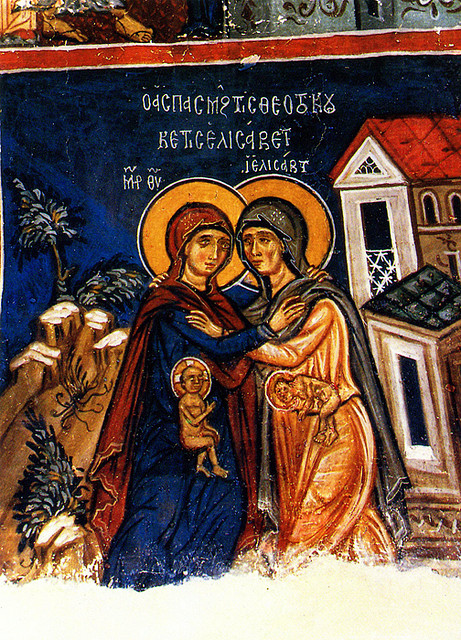
Today’s readings feature three women who all wonderously conceived: Hannah, Mary, and Elizabeth.  There are many parallels between them. Together they teach us these lessons, among others:

  • With God, you can be more fruitful than you’d imagine.
  • You have great reason to rejoice today.
  • You keep forever what you give to God.

Of A Great Lineage — Friday, 3rd Week of Advent

December 17, 2010

Among the four Gospels, three of them contain genealogies of Jesus Christ. Matthew traces His origin from Abraham, for salvation is from the Jews. Luke traces His origin back to Adam, for Jesus is the savior of all. And John traces His origin from the Eternal Father, for Jesus is the Son of God.

In today’s gospel, we heard the names of all sorts of Old Testament people who became ancestors to Jesus Christ. They were all connected to each other, by faith and by blood, yet they little understood the amazing plan that God was accomplishing through them; namely, the Incarnation of Jesus Christ, the Son of God and Savior of the world. I believe that Jesus is accomplishing great things with all of us. We might not see it now, but in Heaven we will see what great things He is doing through us.

The New Eve — December 8 — Immaculate Conception

December 8, 2010

In the beginning, when our first parents fell, they lost a great deal, but they were not deprived of hope, for God spoke in their hearing a prophesy to the deceiving serpent, the devil. God said, “I will put enmity between you and the woman, and between your offspring and hers; he will strike at your head, while you strike at his heel.” Who is this offspring, who strikes back at the devil? He is Jesus the Christ, the New Adam, the Son of God. And who is this woman, who is Satan’s enemy? She is Mary of Nazareth, the New Eve, the Immaculate Conception.

After their Fall, when Adam and Eve heard God approaching in the garden, they became afraid, they fled and hid, so God called out, “Where are you?” When God drew near to Mary, she also was afraid, but she did not hide or flee. She declared, “Behold, I am the handmaid of the Lord. May it be done to me according to your word.” And, because she did, her Holy Offspring could go on to say in His garden of testing, “Father… not my will but yours be done.”

The first man, Adam, called the first woman Eve, because she became the mother of all the living. Now, Mary is the New and Second Eve, for she is the mother of all the living, and she loves each one of us personally as her very own children.

She is the icon of the Church, and as she is, we are called to be: holy and without blemish before God, as the second reading from Ephesians says. But how can we do this? Unlike Mary, at times we have been allies of Satan by our sins. To cleanse us, God gives us the sacrament of reconciliation, and to strengthen us He gives us the fruit from the new tree of life; that tree is the cross, and its fruit is the Eucharistic Christ.

If it has been a long time since you have been to confession, come that you may be purified as pure as Mary. And if you receive our Lord in the Eucharist tonight, consider that the Son of God Incarnate has come to dwell in you, just as truly as He dwelt in Mary.

Let Advent Be Advent — 2nd Sunday of Advent—Year A

December 5, 2010

John the Baptist was living quite differently compared to people in his day. What he wore was different, what he ate was different, and what came from his lips was also different. Yet, John shared something in common with us today. Like Christians in this season of Advent, John knew that the Christ, or Messiah, had already been born, years before in the past. Like us, what John was preparing for was the coming of Christ anew.

That’s the reason why in Advent, in this season of awaiting the Messiah’s arrival, John the Baptist is so prominently featured in our Sunday Gospel readings, like today’s. By looking at John we can learn how to prepare ourselves for Christ’s arrival. As I mentioned before, John was rather different from his neighbors in his day. Today I suggest that we in the Church need to be a bit more different from everybody else if we want to prepare better for Christ’s coming this year.

What did John do with all that time alone in the desert, when he wasn’t out preaching or baptizing? Surely, John was praying, asking for grace and contemplating the one who was coming. The desert is a quiet place, free of distractions, and conducive to prayer. The world can make this month before Christmas a very stressful time. This Advent, you must find a desert, a quiet place, free from distractions, where you can pray each day. Create a daily desert space for your own family as well and prayer together as one. You cannot prepare well for Christ’s coming without daily prayer and the peace it gives.

What did John eat in the desert? He ate locusts, or grasshoppers, and wild honey. The wild honey may sound pretty sweet, until you realize that it was guarded by wild bees. John ate simply. Our meals in Advent should be simple too. You know how it is at Easter, when you enjoy what you gave up for Lent again for the first time? You find yourself enjoying what you denied yourself more than ever before. Then just think of how much greater your Christmas feasting will be if you eat more simply in Advent. (Besides, if you fast or diet now, there will less pounds to lose next year.)

John dressed differently than other people in his day. He wore a garment made of camel’s hair and tied a leather belt around his waist. He dressed like the Old Testament prophet Elijah because he wanted people to know that these were special days. You can also dress in ways that witness to the world that these are special days. One way to do this is to dress liturgically. As you can see, the main color of Advent is purple. If you have purple outfits or ties, now is their season.

By the way, this Wednesday, December 8th, is a holy day of obligation and Christ is asking you to attend the worldwide feast in honor of His immaculately conceived mother. On such a day, intentionally wearing blue or white would honor her. Try dressing liturgically and you’ll find that it reminds you and others of what makes these days special.

What came from the lips of John was different, and despite the large crowds, whatever he spoke was not for himself but for Christ. This year, wish people “merry Christmas” instead of “seasons greetings,” and instead of “happy holidays,” say “happy holy days,” for by this you give witness to the true reason for the season.

John knew that he must decrease and that Christ must increase, for John himself was not the light but had come to give testimony to the light. In the world, the Christmas songs have already begun on the radio and the Christmas trees are all up and lit in the malls, but the day after Christmas their songs will stop and their decorations will be taken down. But as the world is packing Christ away for another year, the Church is just beginning its celebration. You know the “twelve days of Christmas?” On Christmas day, the twelve day begin, not end. Like Easter, the Church celebrates not just one day, but for weeks after.

This year, let Advent be Advent, and save Christmas for Christmas. Sing Advent songs for Advent, and (as much as possible) save Christmas carols for their time. I suggest leaving your Christmas lights, on your tree and on your house, unlit during Advent. Then, when you plug-in at last on Christmas Eve, you shall enjoy a joyful sign that the light of the world has come.

St. John the Baptist calls to you through the Scriptures. I encourage you here, before you. And I hope the Holy Spirit is now prompting you, in your hearts and minds, to keep Advent as Advent this year, and to prayerfully prepare for the coming of Christ at Christmas more profoundly than you ever have before.