Archive for the ‘Salvation History’ Category

Journeying With Jesus — Funeral Homily for James “Jim” Eder, 73

August 26, 2024

By Fr. Victor Feltes

Of all the Old Testament Psalms, the most famous is Psalm 23 by King David. King David writes, “The Lord is my shepherd,” and describes himself as a cared-for sheep in God’s flock. King David’s greatest descendant, Jesus Christ our Lord, goes on to declare, “I am the good shepherd.” However, St. John the Baptist proclaims on more than one occasion that Jesus is “the Lamb of God.” The presiding priest proclaims the same at every Mass. So Jesus Christ is both a sheep and our shepherd.

Amongst the New Testament Gospels, the most famous section may be Jesus teaching his Sermon on the Mount. And the most famous portion of the Sermon on the Mount is Jesus’ opening: the Beatitudes. “Blessed are the poor in spirit… those who mourn… [and] the meek… those who hunger and thirst for righteousness… the merciful… the clean of heart… the peacemakers… those who are persecuted for the sake of righteousness.” In these blessed statements, Jesus presents a portrait of people in this world who are well-aligned with the Kingdom of God. Christ’s Beatitudes describe his Christian saints, but they also describe Jesus Christ himself.

Jesus Christ is not only our teacher and Lord; he is also our Christian role-model. And Jesus is not only our shepherd, but also a lamb who understands us. So even as we walk through sad valleys in the shadow of death, like this passing of our brother Jim, we are not afraid. Jesus is at our side, guiding us and giving us courage; he has walked this path before us.

Jesus has become one of us; was born and lived among us. St. Paul notes “it is Christ Jesus who died, rather, was raised, who is also at the right hand of God and [now] indeed intercedes for us.” Jesus is that much on our side; so much in our favor. Such is his goodness and kindness. Such is “the love of God in Christ Jesus our Lord.”

He spreads a table before us. He anoints our heads with oil. His blessing cup overflows all the days of our lives. He invites us to dwell in this his house for years to come – until the day he calls each of us by name, just as he has called Jim before us. Let us pray for Jim and one another, that following our Lord we may be led to the place where we will journey no more and restful peace never ends.
Faithful Efforts & Divine Increase

July 27, 2024

17th Sunday of Ordinary Time
By Fr. Victor Feltes

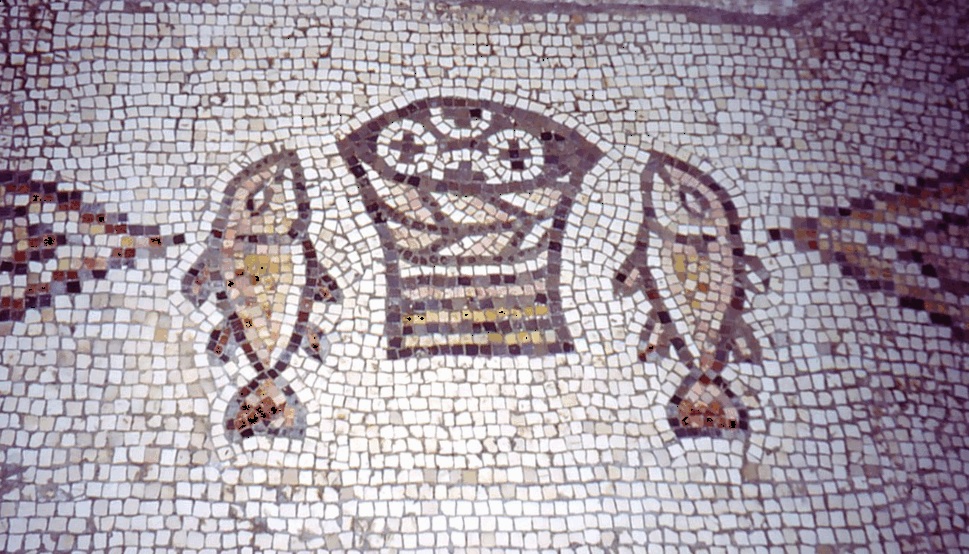
In our first reading from the 2nd Book of Kings, the Prophet Elisha uses twenty barley loaves to feed a hundred people. That suggests a miraculous multiplication of five times. In our Gospel reading, Jesus Christ uses five loaves to feed about 5,000 men – a multiplication of 1,000 times. So Jesus’ miracle was 200 hundred times greater than Elisha’s. That 200 figure is interesting because of something Philip the Apostle says.

When Jesus asked him, “Where can we buy enough food for them to eat,” to see what he would say, Philip remarked, “200 days’ wages worth of food would not be enough for each of them to have a little!” What good could 200 days of work do for so many? One might ask what good are any of our labors or efforts in the face of such great problems in our world today?

Many days passed between the events of the 2nd Book of Kings and the events of the Gospels. Why did the Old Testament people of God have to work and wait, suffer and endure, for days and years, for generations and centuries, before the coming of Christ? Because it was not yet the fullness of time; things were not yet fully prepared for those greater wonders. Our redemption in Christ is preeminently the work of God but God wills that the faithful efforts of faithful people help prepare the way.

While the disciples were still wondering what to do about the problem of the hungry crowd, Andrew the Apostle told Jesus, “There is a boy here who has five barley loaves and two fish, but what good are these for so many?” Jesus would take those loaves, give thanks to God the Father, and distribute the loaves and fishes to the reclining crowd as much as they wanted, and they all ate and had their fill.

Consider this: in the beginning, all things were created through God the Son out of nothing, ex nihilo. Yet Jesus did not conjure food to feed that crowd out of nothing. Like at the Wedding Feast of Cana, he received what was offered to him and transformed it for both our good and God’s glory.

That boy and those five loaves and two fish are remembered to this day, in our Gospel stories on earth and even more gloriously in heaven. Jesus used that entire gift, he multiplied all the loaves and fishes offered, just like how at Cana he transformed the contents of all six of the large stone water jars which the servants had filled for him. And Jesus directed his disciples to “gather the fragments left over, so that nothing will be wasted,” filling a dozen wicker baskets with fragments from the five barley loaves which had been more than they could eat.

Even as Christians we may get discouraged, feel overwhelmed and wonder, “What good are any of my labors or efforts? What good is this for few or many?” Today’s Gospel reading reminds us that Jesus will use everything which we offer him. He will bless it, transform it, multiply it, grow it. He will use it for both our good and God’s glory, and nothing will be wasted. Remember that Jesus promises “whoever gives but a cup of cold water… to drink… [for me] will surely not lose his reward.” (Matthew 10:42)

What did Jesus Sing at the Last Supper?

June 1, 2024

Solemnity of the Body and Blood of Christ – Corpus Christi
By Fr. Victor Feltes

The Last Supper was a Passover meal. Jesus says so when he instructs two of his disciples, “Go into the city and a man will meet you, carrying a jar of water. Follow him. Wherever he enters, say to the master of the house, ‘The Teacher says, “Where is my guest room where I may eat the Passover with my disciples?”’ Then he will show you a large upper room furnished and ready. Make the preparations for us there.

The disciples found the upper room following the sign of a water jar. At the start of Jesus’ public ministry in Cana there were six stone water jars. As his ministry comes to its climax, there is a seventh water jar. The number seven symbolizes “fullness” or “completeness” in the Bible, like the sum of seven days is the completion of one full week. At the wedding feast of Cana, Jesus changes water into wine. At the Last Supper, Jesus changes bread and wine into himself.

While they were eating, he took bread, said the blessing, broke it, gave it to them, and said, ‘Take it; this is my body.’ Then he took a cup, gave thanks, and gave it to them, [and] said to them, ‘This is my blood of the covenant, which will be shed for many….’ “Then,” St. Mark writes in his gospel, “after singing a hymn, they went out to the Mount of Olives.” St. Matthew recounts the same detail: “Then, after singing a hymn, they went out to the Mount of Olives.”

This presents a mystery: what hymn did they sing at the Last Supper? Would you be curious to know what lyrics Jesus was singing on the eve of his Passion? Since the Last Supper was a Passover meal, we have a well-founded answer to that a question. For thousands of years, the Jewish people have traditionally sung Psalms 113 through 118 at the ritual Seder meal for Passover. So Psalms 113 through 118 were very likely psalms which Jesus prayed at the Last Supper.

This Sunday’s responsorial psalm consists of passages from one of these, Psalm 116. Contemplate Jesus saying these words:

“How shall I make a return to the Lord
for all the good he has done for me?
The cup of salvation I will take up,
and I will call upon the name of the Lord.

Precious in the eyes of the Lord
is the death of his faithful ones.
I am your servant, the son of your handmaid;
you have loosed my bonds.

To you will I offer sacrifice of thanksgiving,
and I will call upon the name of the Lord.
My vows to the Lord I will pay
in the presence of all his people.”

Jesus is the Son of Mary, “the handmaid of the Lord.” He offers up the cup of salvation which contains the gift himself, a gift offered up to God the Father and offered up for us. The Jewish rabbis taught that all temple sacrifices would end with the coming of the Messiah or Christ except one: the thanksgiving sacrifice. In Greek, the word “Eucharist” means “thanksgiving.” Today across the nations, from the rising of the sun to its setting, the Holy Mass is Christ’s enduring thanksgiving sacrifice.

St. Luke notes how at the Last Supper, “when the hour came, [Jesus] took his place at table with the apostles and said to them, ‘I have eagerly desired to eat this Passover with you…’” Jesus spoke this to the apostles yet he speaks these words to us as well. The Last Supper, the Cross, the Holy Mass are all mystically joined as Christ’s one great sacrifice for all. Jesus Christ is really present, Body and Blood, Soul and Divinity, in his Holy Eucharist, and he eagerly desires to share this Passover feast with you.

Three Pillars

May 26, 2024

Solemnity of the Most Holy Trinity
By Fr. Victor Feltes

Sacred Scripture proclaims, “God created mankind in his image; in the image of God he created (us); male and female he created (us).” And our Catholic Faith teaches the divine image is present in every human person. The image of God also shines forth in the communion of human persons, communion in the likeness of the union of the Trinity’s Divine Persons among themselves. We are finite and sinful while God is infinite and perfect, yet we reflect his image and likeness in many ways: as individuals, as families, and as the Church of Jesus Christ.

Each one of us, made in God’s image, “possesses the dignity of a person, who is not just something, but someone.” Like God, we can know things, choose freely, and love. Like God, we can fashion things beyond ourselves, we can enter into relationship with others and reign over Creation. One psalmist in the Book of Psalms asks God: “What is man that you are mindful of him, and a son of man that you care for him? Yet you have made him little less than a god, crowned him with glory and honor. You have given him rule over the works of your hands, [and] put all things at his feet.” These words proclaim the glory of human persons, but also foretell the coming of Christ, who called himself “the Son of man.” Jesus Christ reveals to us that which was veiled yet always true before: God is not the solitary oneness of a single person but a unified oneness in three eternal Persons. This revelation of the Trinity opens our eyes to how the image of God is reflected among us not only individually but communally, such as in a family and as in the Church.

In the beginning, when God created the first human person, he saw that it was not good for the man to be in utter solitude. So, perhaps because it was the bone closest to his heart and core, God brought forth the woman from the man’s rib, ‘bone of his bone, flesh of his flesh.’ This is a reflection of God where, “God from God, Light from Light,” the Son is eternally begotten of the Father. God the Father lovingly gives all that he is to the Son and God the Son gives himself back as a total gift to the Father. And from this mutual self-gifting love, the Holy Spirit eternally proceeds. This is likewise reflected in marriage, where a husband and wife gift their whole selves to each other and a third distinct person can proceed.

Jesus Christ the Bridegroom founds the Church as his Bride, unites us in her and makes us fruitful, yet even though he makes us one he does not make us all the same. There are more than a billion Catholics spread across the earth. We have different strengths, cultures, and treasures, “different gifts according to the grace given to each of us.” No one of us mere creatures completely manifests the infinite goodness of God. But united together as his holy Church, our diversity of goods more fully reflects God’s glory.

God has created mankind in his image; in the image of God he has created us. So reverence each and every human person he has made, honor the holiness and fruitfulness of marriage, and celebrate the plethora of goodness present in the Church. For all of these are God’s creations, pillars of Christian civilization, and each one reflects the glory of our Triune God.

Holy Spirit Unites Us

May 18, 2024

Pentecost Sunday
By Fr. Chinnappan Pelavendran

Pentecost was a game changer. Just look at the behavior of the disciples before and after Pentecost. Before the descent of the Holy Spirit, the early Christians were timid and afraid. After the coming of the Advocate, they were fearless even to death. Before the death of Jesus, He said, “When the Counselor comes, whom I shall send you from the Father, who proceeds from the Father, he will bear witness to me; and you also bear witness, because you have been with me from the beginning.” (John 15:26-27) After the reception of the Holy Spirit at Pentecost, the disciples fearlessly bore witness to Jesus despite the cost.

Pentecost is an ongoing celebration of the gift of God’s Spirit, who is always with us, inseparable from believers. The fire that was ignited in the hearts of the disciples gathered in the upper room in Jerusalem continues to enflame in the hearts of all who have been gathered together here today. The Church is our upper room where we come together in communion of faith and love. The disciples gathered behind closed doors because they were uncertain about the future and were too frightened to publicly proclaim the risen Lord. Without a doubt, we have a lot in common with the first disciples.

Let us look at the Apostles, some of them were fishermen, simple people accustomed to living by the work of their hands, but there were also others, like Matthew, who was an educated tax collector. They were from different backgrounds and different social contexts, and they were from different names like Hebrew and Greek. In terms of character, some were meek and others were strong and excitable. They all had different ideas and emotions. They were all different. Jesus did not change them. He felt their difference and now he unites them by anointing them with the Holy Spirit. The union comes from the anointing at the Pentecost; the Apostles understand the unifying power of the Spirit. They see it with their own eyes when everyone, though speaking in different languages, comes together as one people, the people of God.

Let us focus on ourselves, and what it is that unites us, what is the basis of our unity? We too have our differences, for example, opinions, choices, and sensibilities. What unites us are our beliefs and morality. But there is much more, our principle of unity is the Holy Spirit. He reminds us that first of all, we are God’s beloved children, all the same, in this and all the differences. The Spirit comes to us, in our differences and difficulties, to tell us that we have one Lord Jesus and one Father and that for this reason, we are brothers and sisters.

Like the disciples after Pentecost, it is our job to bear witness to the Gospel. In humility, when we cooperate, the seven gifts of the Holy Spirit will come alive and assist us in carrying out this mission. May God the Holy Spirit inspire every one of you until the day you hear, “Well done, good and faithful servant; you have been faithful over a little, I will set you over much; enter into the joy of your master.” (Matthew 25:21)

Welcoming the Holy Spirit

May 18, 2024

Pentecost Sunday
By Fr. Victor Feltes

On Pentecost, about one hundred and twenty people, including the Blessed Virgin Mary and the apostles were together in the upper room. There on this day, the third Person of the Trinity “appeared to them as tongues as of fire, which parted and came to rest on each one of them,” and “they were all filled with the Holy Spirit.” Yet this was not actually the first time Mary or the apostles had encountered the Spirit.

In response to Mary’s fiat, to her saying “Let it be done to me according to your word” at the Annunciation, the Holy Spirit descended to conceive the Christ Child within her. And we hear in today’s gospel how on Easter Sunday evening Jesus visited the apostles in the upper room, exhaled on them, and said, “Receive the Holy Spirit. Whose sins you forgive are forgiven them, and whose sins you retain are retained.” So Mary and the apostles had each received the Holy Spirit before, sort of like us on this Pentecost Sunday.

We received the Holy Spirit at our baptisms, and received him again at our confirmations, and we can always encounter him anew. Since the Holy Spirit is an infinite Divine Person we can always receive more from him. So how can we receive the Spirit and his gifts more abundantly? Here are three ways:

First, ask for the Holy Spirit and his gifts in prayer. Prior to Pentecost, Jesus’ disciples had been praying for nine days—the Church’s first novena. They prayed to receive the promised Gift of the Father of which Jesus had spoken, to be “clothed with power from on high.” The disciples’ Pentecost joy and courage, the manifested miracle of speaking many languages, and that day’s three thousand conversions won were all fruits of the Holy Spirit in answer to their prayers.

A second way to welcome the Holy Spirit is to prepare a place for him. At Jesus’ baptism, the Spirit descended upon him in the likeness of a dove. Offer the Holy Spirit a hospitable place to land with you. If we are combative towards a dove or simply being too noisy, the bird will not approach us or stick around for long. So renounce all hostility towards God and cultivate peace within your house that his peace may rest on you. In other words, renounce your sins and go confession, and focus more on quieting your soul and dedicating time to daily prayer.

A third way to be touched and changed by the Holy Spirit is to expect and watch for his influence. The Holy Spirit descended on Pentecost in the likeness of fire. Fire transforms everything it touches. It causes other objects to radiate heat like itself, to shine like itself, to become fire like itself. If you ask for the Holy Spirit and his gifts and you are open to his influence, watch with eager expectation for him to inspire, empower, and transform you.

Back in my college days, one afternoon I was lying on my bed praying rather apologetically to the Holy Spirit. I said, ‘Holy Spirit, you’re like the most neglected Person of the Trinity. You’re just as much God as the Father or the Son but we direct much more prayer and worship to them than you. And when we do pray to you it’s because we want something, but you’re not just some divine vending machine. I’m sorry.’ Then I heard in my mind these words: “I am gift.” Now whenever you possibly receive a heavenly message, it is wise to check its truth in light of true Catholic teaching, since God will not contradict himself. So I considered that statement seemingly from the Holy Spirit: “I am gift.”

From all eternity, God the Father gives all that he is to his Son and the Son gives himself back as a total gift to the Father. And from this mutual exchange of self-gifting love, the Holy Spirit eternally proceeds. The Father and the Son send the Holy Spirit to earth as a gift to sanctify and transform us so that we may participate in the life of the Trinity. The Holy Spirit rejoices to be gifted. He is gift. And when we ask for his gifts we are inviting his presence—for how could his gifts be manifested someplace where he is not? So from this I concluded the Holy Spirit does not begrudge us asking him for his great and holy gifts.

On this Pentecost Sunday, what gifts do you desire of the Holy Spirit? Pray for his powerful presence, like Mary and the apostles did. Turn away from sin and cultivate quiet peace, offering a welcoming place for the Holy Spirit to land. And watch with eager expectation for the transforming effects of the Spirit’s fiery influence.

The Graduation Party of the Holy Family

May 12, 2024

The Feast of the Ascension
By Deacon Dick Kostner

You have heard me say many times that “Family” is God’s plan for our salvation and the key to heaven. It is through family that we receive mentorship and instruction from Jesus on how to live a life bringing us happiness in this life and the key to heaven for all eternity. As I reflected upon the Ascension of Jesus into heaven I realized that this act of Jesus was his way of telling his disciples and us that we are ready to begin our “ascension” into God’s Kingdom. It’s time for us to celebrate our readiness to begin to share the good news with others of the Gospel message that Jesus tells us will bring us to fulfillment and life with him in heaven.

It is through family that we learn that we are called to care for others more than caring for ourselves. It is through family that we humans are gifted with the ability to co-create with God in bringing about new life. It is through family that we learn to share our gifts of faith and time to help others overcome life struggles. Today we also celebrate Mother’s Day. A time when we thank our mothers for not only giving us life, but also for their gift to us of giving up their desire for time for themselves for the welfare and happiness of their children. Jesus himself refers to them when he calls his Church and Mary our mother and his followers as his brothers and sisters.

Our readings today have Jesus telling his disciples and us that we are ready to begin our ascension into heaven. He has given us his teachings and sacraments. He has instilled in us his gift of wisdom. He has adopted us as his brothers and sisters though our baptism into His Holy Family and today he tells his followers that its time for us to begin our solo takeoff to our ascension into heaven. He gives us the power to bring others into the Holy Family. The power to drive out demons and speak many languages. The power to heal the hurts of others, and to lay hands on the sick to overcome their illnesses. He promises to send his very spirit to aid us when we are uncertain or afraid. Bottom line is that today is our Graduation our license to go out into this crazy world and to love others as Jesus has loved us. We are called into service. Our compensation for this will be out of this world.

Let me share with you my “out of this world experience” I recently was gifted with, as a Deacon and as an attorney. In February Barb and I decided to take a few days off and go with some friends to Arizona. We were to fly out of Eau Claire on a early Sunday morning flight. We arrived before daylight and were directed to get our boarding passes from one of three airport attendants. We got in line with 190 other people when all at once one of the airport attendants eyeballed me and pointed out to the other attendants, “Look, that guy is my Deacon!” Everyone turned around to look at me and then she said with a smile, “ That guy is the Deacon at my Church.” One of the other attendants said to me “she needs a Deacon, I could tell you some pretty nasty stories about her.” I told him that it sounds like she needs to go to confession but that Deacons are not allowed to forgive sins but I would be willing to hear her sins but I would require a fee for only the priests do that for free. Everyone laughed and we moved on. I felt like a rock star. Jesus had given me a thumbs up for my ministry as a Deacon. But my story continues.

All 190 of us boarded the plane and I was given the isle seat on the left side of the plane and Barb had the isle seat on the right side of the plane. We were seated at the rear of the plane where the bathrooms were located. About an hour into the flight I noticed a woman walking towards me from the front of the plane. As she got closer I recognized that she was one my clients from the Sand Creek area who had just lost her husband about a year earlier and whose funeral I had attended. I had done their legal work for over 30 years. As she got closer to me she looked twice at me and then recognized who I was. She yelled out, “Dick”, and threw her arms around me and gave me a big hug. Everyone around us looked at me including Barb. After she left Barb asked me ,“Who was that?” my response was, “oh, just a client.” God gave me another thumbs up for my vocation of being a deacon whose service area extends far beyond the walls of a church altar.

I was flying high and truly humbled and the last time I felt that happy was when I had found out that I had passed the Bar exam. God gives to the Holy Family out of this world “thank yous” when he is proud of his Family Ministers. It is time folks to start our ascension into heaven knowing that it might be scary, and thinking that we are not ready, but the time clock keeps ticking, but I promise you that you will feel great when others thank you for giving of your time and ministry so that they too can experience the joy of their “out of this world” ascension experience of ascending up the stairs to heaven. And to all the Mothers of our Parish both living and deceased and on behalf of all of us here at St. Paul’s, I wish to thank you and may God bless you for your sacrifices and your mentorship of love! Happy Mother’s Day!

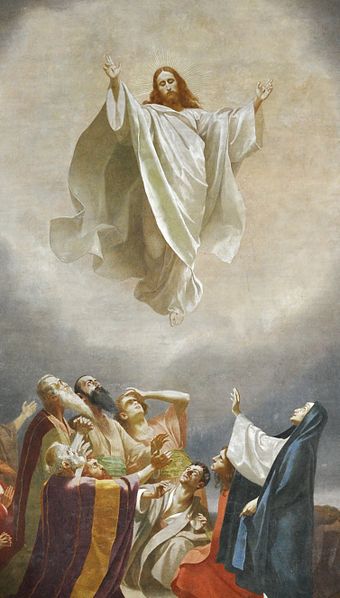
The Ascension of Our Lord

May 12, 2024

Feast of the Ascension
By Fr. Chinnappan Pelavendran

Today, we are celebrating the Feast of the Ascension of the Lord. Jesus, after his resurrection, spent forty days with his disciples instructing them and encouraging them as they prepared for the mission. The Ascension of Jesus into Heaven completed his earthly work of our redemption. Jesus proved two things. First, he proved that he was the promised Messiah. Secondly, he proved that through him who overcame death, persons who persevere in their living faith in Jesus, also overcome death and inherit the Kingdom of God.

In today’s First Reading from the Acts of the Apostles Luke explains how for forty days, Jesus had appeared to his disciples after his resurrection, presenting himself to them and convincing them that he was alive. During this time, he explained to them the Scriptures and spoke about the Kingdom of God. He ate and drank with them and spent his time with them strengthening them in their ministry. He commanded them not to leave Jerusalem until they had been baptized with the Holy Spirit promised by the Father. Through his actions, Jesus was opening the eyes of his disciples about his mission. Some of them, even at this time, did not fully understand him and asked for the day of the political restoration of Israel. With immense patience, he told them that this restoration is in the eternal plan of the Father. Jesus then told the disciples that they would receive power when the Holy Spirit came upon them and they would be his witnesses in Jerusalem, in all Judea and Samaria, and to the ends of the earth.

In the second reading of today, Paul reminds the Ephesians of the marvelous generosity and goodness of God who had made them Christians and sharers-to-be in the glory of Christ, who was the eternal glory of God. St. Paul prayed that God would enlighten their minds to try to understand and appreciate the marvelous things God had done for them through the incarnation, death, resurrection, and finally the ascension of our Lord Jesus Christ.

The feast of the Ascension is not to commemorate a departure but the celebration of the living and lasting presence of Jesus in the church. Jesus tells the disciples of the present situation as he gives the command to “make disciples” of people everywhere. He now introduces them to his mission as he passes on his authority to his disciples. Pentecost will be the confirmation of this. They now have the power to reconcile sinful persons with God and with the community and to decide who is not yet ready for reconciliation and full participation in the community’s life. Hence there are four aspects to this mission which Jesus gives in today’s Gospel: to evangelize, that is, to communicate the life and vision of Jesus, to continue the healing mission of Jesus both physical and spiritual, to experience the power of the Holy Spirit, and experience the presence of Jesus.

Jesus’ Ascension marks the end of his physical presence on earth, but it also marks the beginning of his spiritual presence in our lives. Just as Jesus was taken up into heaven, so too we will be taken up to be with him one day. The Ascension reminds us that our ultimate citizenship is in heaven, and we are called to live as pilgrims on earth, longing for our true home. The Ascension also reminds us of the importance of prayer and the need to continually seek God’s presence in our lives.

Lord, Let Your Face Shine on Us

April 18, 2024

3rd Sunday of Easter
By Fr. Chinnappan Pelavendran

We have been reading and reflecting on the appearances of Jesus to his disciples, and the experiences of those disciples. Jesus appeared to Mary Magdalene who was weeping by the gravesite of Jesus. Mary Magdalene did not recognize Jesus. She mistook Jesus to be a gardener. Jesus opened her eyes to recognize him. The effect of the experience was that Jesus made her the first bearer of the good news of his resurrection.

Jesus appeared to the two men returning to their village called Emmaus. They did not recognize Jesus. They mistook him to be a stranger. Their eyes opened to recognize him at the breaking of bread. The effect of the experience was that Jesus empowered them to go back to Jerusalem to share the good news of his resurrection with the other disciples.

Today, we read that Jesus appeared to his disciples and they mistook him to be a ghost. He opened their eyes and sent them to be witnesses to the power of his resurrection. He said to them, “These are my words that I spoke to you while I was still with you, that everything written about me in the Law of Moses and in the prophets and psalms must be fulfilled.” Then he opened their minds to understand the scriptures. And he said to them, “Thus it is written that the Messiah would suffer and rise from the dead on the third day and that repentance, for the forgiveness of sins, would be preached in his name to all the nations, beginning from Jerusalem. You are witnesses of these things.”

Peter preached these words of Jesus as we see in the first reading. Peter said, “Repent, therefore, and be converted, that your sins may be wiped away.” Peter who was fearful and denied Jesus three times became transformed by the power of the resurrection. He began to preach boldly to the Jews whom he feared.

Many people in the world do not know Jesus and do not experience him. Some see Jesus as a gardener; some as a stranger, and others as a ghost. They can only know him and experience him through us who are his followers. We are to share the good news of the transforming power of the resurrection to the world.

Jesus needs us as witnesses to continue his mission. Jesus needs Spirit-filled followers to be his eyes, ears, hands, and feet, to bear witness to his love, mercy, and forgiveness through our interactions with our brothers and sisters.

We must daily invite Jesus and the Holy Spirit to help us, especially when we read the scriptures. Therefore, let us pray with the psalmist today: “Let the light of your face shine on us, O Lord.” The light of His face will illuminate and cast away the shadows of ignorance from our minds, increase our faith, and finally, make us firm witnesses to the resurrected Christ.

Fruits of Faithfulness — Funeral Homily for Beatrice “Bea” Seibel, 91

April 15, 2024

By Fr. Victor Feltes

Jesus begins his Sermon on the Mount by describing to his followers what makes a person truly happy or blessed. What do the blessings promised to those who follow Jesus look like? They are promised the Kingdom of heaven, the reign of God. When we allow the Lord to be our King we can be comforted with peace this world cannot give. Our hunger and thirst can be satisfied, because Jesus gives us our daily bread of meaning and hope. We can be shown mercy, mercy we all need because of our many sins, the divine mercy which is our doorway to go forth and sin no more. We see God whenever we open our eyes to Jesus. In Christ, we become children of God the Father. And when your Father is the king, you receive every good gift upon his earth with gratitude, and you will inherit everything he has as yours in the life to come. When yours is the Kingdom of heaven, you experience life in this imperfect world differently – with an assurance of goodness’s future victory and of goodness’s great reward hereafter. These fruits do not grow naturally, they come from faith in Christ.

Bea and her husband Robert had nine children; six girls, two boys, and one child they lost. Remarkably, her children have nothing negative to say about her (apart from a less than stellar singing voice). They did not grow up wealthy on their farm, they almost never vacationed and for awhile they had an outhouse and showered in the milk house, but they never felt deprived. Now her children look back and ask each other, “Can you imagine having just one brother or one sister?” “No,” they agree, “[That would be] boring!” Beatrice has been close to all her grandchildren and they respect her. They see how Bea loves and how her family loves her, causing one granddaughter to say, “After seeing all this, I want five kids.” It has been asked about Bea, “How can one little lady bring so much warmth?” The answer is the same as how St. Peter proclaims Christ after the Resurrection: “He went about doing good… for God was with him.”

Her children describe Bea as faith-driven. Our Catholic Faith formed her and sustained her. They saw her pray at her bedside, begin mornings with her prayer book, and pray before every meal. She led them to Mass every weekend, helped them receive Christ’s sacraments, and formed them all through St. Paul’s Catholic school. She never skipped encountering Christ at Holy Mass, and would watch on TV when she could not attend. She loved lighting vigil candles at church in response to the joys and trials of others. When she could not light these visible expressions of prayer herself she would ask that candles to be lit at church ‘for this, and this, and this.’ Near the end, she would say, “Light a candle for me.” When I visited to give Bea the Last Rites in her final days, she was no longer speaking much, but she knew what was happening and felt consoled by the sacrament and her loved ones, and we heard her join in the Litany of the Saints being invoked for her. A beautiful Christian life culminating in a beautiful death with hope in the life to come. I encourage you to pray for her, but more importantly, I urge you to emulate these Bea attitudes. Beautiful fruits like hers do not grow everywhere, they come from a living faith in our Lord Jesus Christ.

A Glorious Moment

April 14, 2024

3rd Sunday of Easter
Fr. Victor Feltes

Boys and girls, I want to tell you about an adventure I went on last week. I took a short trip to see the solar eclipse on Monday in Indiana. (An eclipse is a very rare event where the Moon gets in front of the Sun in just the right way that, for a few minutes in particular places, the Moon blocks out the Sun’s light.) My friends and I had looked forward to that day for seven years, ever since 2017 when we traveled to see the total eclipse in Missouri. Widespread clouds had been forecasted for Monday, but the skies were providentially clear for millions of eclipse-watchers from Texas to Ohio.

The Moon began covering the Sun over the course of an hour. At first, to the naked eye, you couldn’t notice anything had changed, but the sunlight slowly became like an overcast day. (Remember kids, do not stare at the Sun because that can permanently damage your eyes.) In the final moments before the full eclipse, it was like seeing the world’s dimmer switch being turned down. Then, the Moon totally covered the blinding light of the Sun. You could see the Sun’s corona resembling white wisps of motionless smoke. Jupiter and Venus were visible in the darkened sky, while every horizon around us looked like twilight. All the birds were quiet. After three minutes, the Sun began to reemerge and several seconds later, its light became too bright again for us to look at without our special, filtered safety glasses. Imagine if colorful sunsets only occurred on Earth at particular places on a handful of dates each decade. Seeing the total eclipse was as special as that.

Besides its beauty, a wondrous thing about a total eclipse is our ability to predict them. The orbits of the Earth and Moon around the Sun are well-known, such that we can calculate with high accuracy, years in advance, when and where eclipses will occur. For instance, unless the second coming of Christ occurs first, the United States’ next total eclipses will be in 20 and 21 years. (You children will be grown up by then.) And 75 years from now, a total eclipse is forecast over Bloomer, Wisconsin, on September 14, 2099 at 10:45 AM, lasting four minutes. (So far, I have nothing else scheduled on my calendar for that day, but we’ll see.)

Another wondrous thing about total eclipses is that they are even possible. The Moon is 400 times smaller than the Sun. The Moon it is also about 400 times closer to us than the Sun. For this reason, our Moon and Sun appear the same size in our sky and one can closely cover the light of the other. Scientists have not identified any reason why their relative sizes and distances would have to be this way, but if their ratios were just a bit different then the stunningly beautiful eclipses we have would never occur; the Moon would cover either too much or not enough of the Sun. Countless things about our universe are fine-tuned in this way.

The physical laws of the universe fit together so providentially to allow and sustain living and interesting and beautiful things that some want to imagine there’s an infinite number of universes to explain away this fact. St. Paul wrote to the Romans about people who deny our Creator, “Ever since the creation of the world, [God’s] invisible attributes of eternal power and divinity have been able to be understood and perceived in what he has made. As a result, they have no excuse; for although they knew God they did not accord him glory as God or give him thanks. Instead, they became vain in their reasoning, and their senseless minds were darkened.” Our lives are not an accident. We are willed by God. Heaven and earth are full of God’s glory. We and our world are wonderfully made.

The coming of Christ, the sacrifice of Christ, and the resurrection of Christ we heard about it today’s gospel reading are like a total eclipse; beautiful, awesome, and stunning; happening in real history at a particular place at a particular time; and “announced beforehand through the mouth of all the prophets.” These things draw the attention of millions, though many disregarded them. God was like the Sun, our source of life, yet too hot, too blinding, and too far away to approach. Jesus Christ is like a solar eclipse. Like the Sun and Moon during a solar eclipse he is God and man united, allowing us to see God’s glory. Jesus Christ performs a similar wonder today for you. Behind the appearances of bread you can gaze upon his very self. Jesus has chosen this day, this place, this glorious moment to give you his Most Holy Eucharist, this most precious gift of himself.

Peace Be With You

April 11, 2024

Divine Mercy Sunday
By Fr. Chinnappan Pelavendran

On Good Friday, Jesus suffered and died for our sins. His trusted disciples abandoned him. Judas sold him for thirty pieces of silver. Peter denied him three times. The rest of the disciples went into hiding themselves except John. When Jesus needed their help, they failed him. One reason for this must be fear of the Jews and their peace was completely disturbed. After the resurrection of Jesus, they were afraid to face Jesus because of what they had done to him. They thought he would surely condemn them for their infidelity. Now, Jesus appeared to them for the first time. He stood in their midst and the first words he uttered were “Peace be with you!

The resurrection of Jesus changed everything. It was a new experience for the disciples, even though Jesus constantly preached and explained about his rising from the dead, they were unable to understand it. Today’s gospel helps us to move from fear to joy, seclusion to mission, absence to presence, disbelief to faith, and mere existence to new life. Just look at how Thomas changed. Before he met Jesus, he was depressed, absent from the group of apostles, and disbelieving: “Unless I see the mark of the nails in his hands and put my finger into the nail marks and put my hand into his side, I will not believe.” (John 20:25) after His resurrection, Jesus offered Thomas the proof he needed. Thomas was amazed, and he exclaimed, “My Lord and my God!” (John 20:28) In that moment, Thomas’s doubt turned to faith.

During his apparition to the disciples, Jesus gave the mission; telling them that just as the Father had sent him, he was sending them to continue the mission that was given to Jesus by his Father. He was commissioning the Church through His disciples to continue the work of salvation. They are called upon to live like Jesus and draw others to share their personal experience of knowing and loving Jesus and being loved by him. Now they have a mission to spread the love of Jesus, to form a community, and celebrate the Eucharist.

Jesus’ mission to his disciples was to restore their peace. He said to them Peace be with you, do not be afraid. In the same way, Jesus says to all of us this Sunday, “Peace be with you, do not be afraid,” because I have truly risen. Therefore, this is one message that we must bring to our world as we witness the risen Christ this season. This is because our world lacks peace and needs the peace that comes from Christ. This is very important in a world where all we hear every day is about wars, bombing, hatred, accidents, shooting, fighting, killing, broken relationships, and fractured families. We must accept and bring the peace of the risen Christ to our families, to our neighbors, to our communities, and our world.

On the second Sunday of Easter, we celebrate Divine Mercy Sunday. Let us celebrate the mercy of God. Like the disciples of Jesus, we, too, have been unfaithful to Him. We have turned our backs on Him and have failed Him so many times. However, Jesus does not condemn us, nor is He angry with us. It is because He is the God of mercy. Mercy is the word for generous love towards sinners.

Encountering Our Risen Lord

March 31, 2024

Easter Sunday
Fr. Victor Feltes

This gospel reading is a curious one to proclaim on Easter Sunday. It’s the one we read on Easter Sunday morning every year: John’s story of Mary Magdalene, Peter, and the Beloved Disciple at the empty tomb. Other gospel reports about Jesus’ resurrection have miracles and appearances of angels or of Christ himself. St. John’s Gospel recounts examples of these on Easter as well; for instance, after where our reading ends, Mary is greeted by Jesus and angels at the tomb, and Peter sees and touches the Risen Lord in the Upper Room. This morning’s gospel reading, however, does not find Jesus and sees no angels or miracles in progress. Mary Magdalene discovers Jesus’ body is missing and runs away distressed. She finds Peter and the Beloved Disciple (traditionally, the Apostle John) and the men run back to the tomb. Both of them go inside but only find burial cloths. They had not yet understood Jesus’ previous remarks nor the Old Testament passages which foretold “that [Christ] had to rise from the dead.” But, when the other disciple went inside the tomb after Peter, “he saw and believed.”

So what convinced him? Was it something about those burial cloths? Was it because the cloth which had covered Jesus’ head was “not with the burial cloths but rolled up in a separate place” with a tender delicacy which a grave robber would not show? Was it because tomb raiders in the ancient world would typically steal fine burial linens and leave the body behind? Was it because a body-snatcher would not peel the dry-blood-caked shroud away from the body to carry away a naked corpse? Perhaps the cloths looked deflated, as though Jesus’ body had vanished or passed through without disturbing them. Or maybe a miraculous image of Jesus’ body had been left behind upon the shroud. Whatever it was, the Beloved Disciple reasoned from what he saw to firm conviction. Was Peter convinced by seeing the same scene? Maybe not. Mary Magdalene was not consoled by her first glances at the tomb. It was later encounters, typically together with other friends of Jesus, which led Christ’s disciples to faith in him as the risen Lord.

Many people come to church on Easter Sunday morning. And this is a good thing. Our Lord is pleased that you are here. On the first Easter Sunday evening, when Jesus Christ appeared in the Upper Room even though he had died for their sins, even though they had previously deserted him, he said to all those gathered: “Peace be with you… Peace be with you.” Many people come to church on Easter Sunday morning. But typically, on the following Sunday, a fewer number attend. Jesus may touch your heart this morning, he may give new insight to your mind, you may “see and believe” in a new way. Or maybe you will encounter Jesus’ empty Easter tomb this morning and walk away unchanged. Remember that it was later encounters, typically together with other friends of Jesus, which led disciples to faith in him as the risen Lord.

Jesus desires a personal relationship with each one of us; a relationship which will bless, console, strengthen, and guide us. A life of daily prayer, weekly worship, and true devotion. Praying to God only when I need something is like talking to a friend only when I want something. If you have been away from Christ, he calling you to return, to draw nearer, so your personal relationship and conviction may deepen. Realize that if Jesus Christ had not been risen, nothing else in life would matter. But since Jesus Christ has been risen, nothing else in life matters as much as this.

Building Community

March 31, 2024

Easter Vigil
By Fr. Victor Feltes

A theme of Easter Sunday was Jesus Christ’s disciples being reunited. When some female disciples find the stone rolled away, an angel announces that Jesus has risen and instructs them to “go and tell his disciples and Peter…” Later, when Jesus himself appears to Mary Magdalene outside the empty tomb, he tells her to “go to my brothers and tell them…” The two disciples on the road to Emmaus would not have returned to Jerusalem if they had not encountered Jesus along the way. And all of the remaining apostles (except for Thomas) were together Easter Sunday evening when Jesus appeared in the Upper Room. Notice that for St. Thomas the Apostle coming to full faith in Christ and accomplishing his Christian calling involved him rejoining the other disciples and sharing in their community. Now Jesus did not need to employ messengers. Post-resurrection, he could have opted to appear to each of his disciples personally, individually. Mary Magdalene, Peter, and Paul each had private first-encounters with the risen Lord. Yet Jesus wants his friends to help share the good news about him with others and he prefers to reveal himself when they are gathered together.

June of last year, our church renovation pledge drive concluded. Since then, your contributions, generously fulfilling those pledges, have been flowing into the parish. This January, we signed the building contract to renovate our vestibule. And tonight we see that project substantially compete, though a few details remain to be finished. In just a nine-month span, St. Paul’s entryway has been transformed, under budget and sooner than we had imagined. I wish to thank God and St. Paul our patron, who helped all of this come together better than we could have planned. And I wish to thank you for your generosity, those of you who served on our committees and all who have contributed to our Inspired by the Spirit campaign. Based upon some back-of-the-envelope calculations I made this afternoon, with the capital campaign monies we have received and at the rate your campaign contributions have been coming in, I estimate we could have all the money needed for our next stage, the renovation of our nave—that is, the front portion of our church—about a year and a half, eighteen months from now, or less.

Our new vestibule is a wonderful thing. The elderly or handicapped who may have stayed away from Mass now have recourse to a first floor bathroom. Parents self-conscious about their babies now have a cry-room space and a first floor changing station. Funeral mourners now have a space for casual visitations onsite, and no longer need to go outside on school days to find a restroom. And now our parish has a natural place to mingle after Mass respecting the prayerful quiet of this sacred space while strengthening bonds of holy friendship between us. The growing and deepening of this community is the greatest reason for our vestibule renovation.

Tonight we are delighted to be initiating through Baptism, Confirmation, and Holy Communion, new Catholic Christians among us. We welcome you and feel great joy that our collective witness has drawn and not repulsed you to full communion with Jesus Christ’s Church on earth. We treasure you and rejoice to share with you the precious gifts of grace and wisdom which we have received from the Lord. But brothers and sisters, we must do more to be inviting and share these gifts.

Jesus wants us, his friends, to help share the good news about him with others and he prefers reveal himself when we are gathered together. An old joke goes, “I don’t know why people say our parish is unfriendly — I always say ‘hello’ to everyone I know.” If you see someone new at Mass, please make them feel welcome. If you would like to organize after-Mass socials for our vestibule, with coffee and doughnuts, or ice cream, or something else to promote community, let me know. Invite a non-practicing Catholic back. Invite a non-Catholic Christian or even a non-believer to come and see. Invite them to come here with you to some weekday or Sunday Mass or to Eucharistic Adoration. Maybe offering to treat them to a coffee or meal after. Pause and ask the Holy Spirit: “Whom are you calling for me to invite here?” Let’s see how many more souls we can help bring into communion with Christ’s Church at next year’s Easter Vigil. If Jesus Christ had not been risen, nothing else would matter. But since Jesus Christ has been risen, nothing else matters so much.

Why Did They Do It?

March 29, 2024

Good Friday
By Fr. Victor Feltes

Why did they do it? Judas, the Jewish leaders, Pilate — why did they send Jesus to his death? Understanding their motives can help us avoid their errors.

Governor Pilate was actually not eager to kill Jesus. He did not want to get involved in that religious squabble. Pilate declared three times that he found no guilt in Jesus, but then people were saying, “If you release him, you are not a Friend of Caesar!” When Pilate’s interests were threatened he acted selfishly rather than doing justice, and condemned to death an innocent man whom he had a duty to protect. We have a responsibility to care for the vulnerable too.

As for the Jewish leaders, Pilate knew that they had handed over Jesus out of envy. Jesus did not belong to their circles but hailed from rural Galilee, and his miracles and teachings were drawing crowds of thousands. He challenged those religious figures’ hypocrisy, their vanity, their neglect of justice, mercy, and faithfulness — the weightier things of the law. And the proud Jewish leaders, instead of despising their sins and repenting, despised and condemned the messenger. We must be humble enough to love Jesus more than our sins.

Why did Judas Iscariot betray him? St. John reveals that Judas carried the apostles’ money bag and used to steal the contributions. In exchange for his betrayal, he accepted thirty pieces of silver, about a month’s wages for a day-laborer, so the greed of Judas was one factor. Yet when he saw that Jesus had been condemned to death Judas tried to return the money, to undo what he had done. It appears that he did not want Jesus to die but wished to force him into a confrontation where he would wield his might and claim King David’s throne. Perhaps he greeted Jesus with a kiss in the garden to conceal his treachery, hoping to soon enjoy power alongside him in luxury. Judas wanted Jesus to be his king but on Judas’ own terms. We need to accept Christ as our Lord according to his will.

So that is why they did it, but why did Jesus do it? Why did Jesus allow himself to be killed? He did it for love. He was obedient unto death because of his love for God the Father and he became our saving sacrifice because of his love for us. The crucifixion is Jesus Christ’s glory because it reveals to everyone for all time his great goodness, holy virtue, and incredible love.