Archive for the ‘Typology’ Category

United Hearts — The Kristopher and KayLee Schnitzler Wedding

July 4, 2011

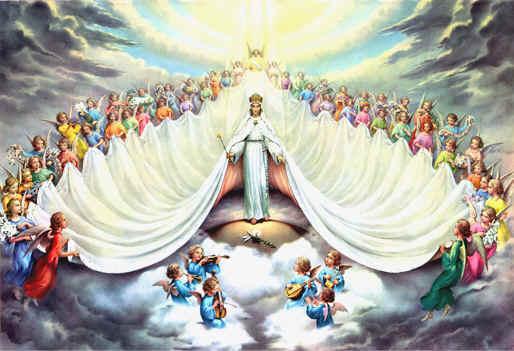
Kristopher and KayLee, when you chose this day, July 2nd, to be your wedding day you were probably not aware that you were choosing an extra special date. We unite your hearts today in holy matrimony amidst Sacred Heart of Jesus and the Immaculate Heart of Mary. Yesterday was the Solemnity of His Sacred Heart and today is the Memorial of her Immaculate Heart. We celebrate these two feasts so closely on the calendar, one after the other, because no two human hearts are so intimately united in a perfect love. I present them to you as role models for your love

Mary and Jesus were mother and Son. They were never married in the way we think of marriage, so how can they be role models for your marriage? In Jesus and Mary, we see the perfect man with the perfect woman, we see the New Adam together with the New Eve, we see the King and Queen of Heaven and Earth. Jesus is the Bridegroom and Mary is the flawless image of the Church, which is His Bride. By seeing how Jesus loves her and how Mary loves Him we can learn much about how men and women are to serve and love each other.

How does Jesus love Mary? For one thing, he listens to her. He is receptive to her wants and needs. It was true at the wedding feast of Cana, He worked a miracle to provide wine at her request, and it is still true now in heaven, where she continues to ask for good things for us. A good husband must be receptive to his wife’s wants and needs. On the other hand, in what manner do you think Mary asks things of Jesus? Mary does not nag Jesus, asking Him in plaintive tones. She doesn’t sit next to Jesus in Heaven and sigh, “I see you still haven’t taken care of the garbage down there.” Instead, I imagine she says to Him, “It would make me very happy if you would do this for me.” A good wife must allow pleasing her to be her husband’s joy, not his burden.

A good husband must die to himself in many ways for his family, and a good wife must support him through his sacrifices. Look how Jesus goes to the cross and offers Himself for the good of Mary and her children. He suffers for her and lays down his life for her. And how does Mary support Him? She is right there, at the foot of the cross, faithful and consoling. God gave Eve to Adam as a partner, to support him in the garden. Mary continues to be a helpmate to Jesus in His work of harvesting the vineyard of this world. A good husband lays down his life for his wife and a good wife must support him through his sacrifices.

From the cross, Jesus make Mary the mother of all Christians. He desired Mary to be the mother of many children, and now, Mary’s motherhood is perhaps her greatest joy. A good husband and wife must be open to children. This is the will of God for you and He will bless you with joy for saying “Yes” to Him.

The worship of God and following His will was at the center of the relationship between Jesus and Mary. Every Sabbath they came to join the worship at the synagogue (the Church of their day) and every day they said prayers and remained close to God. So too, God must be at the center of every good marriage. You must come to Mass every Sunday and pray every day. Good husbands and wives share the same mission in life, to assist each other and their children in getting to Heaven.

From earth to Heaven, Jesus led Mary through life with love, and Mary faithfully followed Him. A good husband must have the integrity not to phone it in, but to lead, and a good wife must have the courage to follow that lead. Kristopher and KayLee, May the hearts of Jesus and Mary reign in your homes. May you model their virtues on earth. And may you draw each other, and your children, to share their heavenly joy forever.

Our Lady of Good Help Pilgrimage Homily

June 14, 2011

In the Garden of Eden, there were many fruit-bearing trees but Genesis mentions two by name: the Tree of Life, and the Tree of the Knowledge of Good and Evil. By partaking of the Tree of Life, the human race could keep living forever, but the Lord warned that to eat from the other tree would mean our certain death.

On October 9th, 1859, the Blessed Virgin Mary appeared here, to 28 year-old Belgian emigrant, named Adele Brise, as she was walking 11 miles home from Sunday Mass. Interestingly, Our Lady chose to appear to Adele not in a church setting such as this, but between two trees: a Maple tree and a Hemlock tree.

You’re all familiar with the beauty and goodness of the Maple. In the fall, its leaves turn the most striking colors; and in the spring, its sap yields sweet syrup. But do you know what distinguishes the Hemlock tree? The poison that Socrates was condemned to drink came from this plant. Ingesting just six or eight fresh Hemlock leaves can kill a healthy adult. [Post-Script: The Hemlock Tree found in Wisconsin is not poisonous, but merely shares the name.] The Maple is a tree of life, while the Hemlock is a tree of death. Mary, the New Eve, stands between the two. [Post-Script: The Hemlock Trees native to Wisconsin are a non-poisonous but share the name.]

She tells Adele, “I am the Queen of Heaven, who prays for the conversion of sinners, and I wish you to do the same. You received Holy Communion this morning, and that is well. But you must do more. Make a general confession, and offer Communion for the conversion of sinners. If they do not convert and do penance, my Son will be obliged to punish them.”

Our Lady’s message by the trees recalls the counsel of Moses, who told the Israelites: “I have set before you life and death, the blessing and the curse. Choose life, then, that you and your descendants may live, by loving the Lord, your God, heeding his voice, and holding fast to him. For that will mean life for you, a long life for you to live on the land….”

Apparently, Our Lady’s warnings were not sufficiently heeded. In October of 1871, The Great Peshtigo Fire erupted. In terms of both size and loss of human life, The Great Peshtigo Fire remains the worst recorded forest fire in North American history. Between 1,200 and 2,400 lives ended in that firestorm which saw, according to an eyewitness, “large wooden houses torn from their foundations and caught up like straws by two opposing currents of air which raised them till they came in contact with the stream of fire.” This seems to be the punishment due to sin that Mary spoke of, but this does not mean that everyone who perished in that fire was condemned. We should remember that at harvest time, the good wheat and the bad weeds are pulled up together in a moment, but their future fates are not the same. Once uprooted from the earth, the good are gathered and kept in the barn, while the bad are thrown away forever.

The Peshtigo firestorm came and surrounded this shrine, where hundreds had come with their families and herds, to beseech the intercession of Mary before God. As many as fled to her were saved. The morning of October 9th, 1871, twelve years to the day after Our Lady’s appearance, saw them delivered.  This consecrated earth was an emerald-green island in an ocean of smoldering ashes as far as eyes could see.

After witnessing this miraculous deliverance, and seeing the lifelong dedication and fruitfulness in Adele Brise’s efforts, many began to believe that she had indeed seen and heard Our Lady. Just last year, the Church formally agreed, approving the apparitions and locutions given to Adele Brise in October of 1859 as worthy of belief by the Christian faithful. Some people will think that this official recognition closes the book on the story of Our Lady of Champion. Some will come here like tourists, excited see where Mary once appeared and go home contented. They won’t think to imagine that Mary’s message was not only meant for Adele in the past, but directed toward us today

In 1859, Mary prayed for and sought the conversion of sinners. Have we gotten less sinful since then? In 1859, Mary lamented how the young did not know the faith. How much better do we live it now? In 1859, Mary warned that if people did not convert and do penance, her Son will be obliged to punish them.” Do we need to convert and do penance? Would you be surprised if a great natural or man-made disaster befell us? How spiritually well prepared do you think people would be to face that?

I don’t think it is a coincidence that the message of Our Lady of Champion is arising to new prominence in our day. Today we heard talks about Our Lady’s Fatima apparitions, which date from 1917. At that time, Mary asked for Russia to be consecrated to her Immaculate Heart to bring about its conversion and a period of peace in the world. On March 25th, 1984, Blessed John Paul the Great consecrated Russia and the whole world to the Immaculate Heart of Mary. It was on the feast of the Annunciation. On Christmas, seven years later, the miracle arrived. On the evening of December 25th, 1991, Mikhail Gorbachev peacefully resigned as the President of the Soviet Union and from atop the Kremlin, the Soviet flag was lowered forever. This was not a coincidence. Politics, economics, and the threat of nuclear war did no bring the Soviet Union to a stunning and peaceful end; it was the work of Jesus and Mary.

What moved Blessed John Paul the Great to consecrate Russia, so many years later after the apparitions, precisely when he did? What moved Bishop David Ricken to approve this apparition, so many years later, as our country’s first Marian apparition site, here and now in our day? In both cases, I suspect that there is more behind these events than the personal whims of men. I suspect that both acts are orchestrated for their role in God’s plan.

I don’t think that Mary’s message was meant for Adele alone, such that their relevance passed away with her death. I think Mary is asking similar things from us. But what exactly? Mary’s message focused upon interceding for sinners and teaching the faith.

Mary the Queen of Heaven, prays for the conversion of sinners, and she wishes you to do the same. You receive Holy Communion, and that is well. But you must do more. First, regularly receive the sacrament of reconciliation, for the sinner whose conversion you are most responsible for is you. I suggest going once a month, for it is effective for growing in holiness.

Next, in this state of grace, offer holy Communions for the conversion of sinners. At every Mass, the priest has an intention for which he is offering the sacrifice. This is a person or group that he asks to be graced, or a problem or need he asks to be helped, by this offering of Jesus’ sacrifice. At every Mass that you attend, you can also offer an intention of your own. Offer some of your holy Communions for the conversion of sinners. And, like the children of Fatima, you can offer your daily sacrifices, burdens borne or pleasures foregone to help those far from God. In doing this, you follow Jesus, who suffered what He endured in order to save others.

Mary also told Adele: “Gather the children in this wild country and teach them what they should know for salvation.” Anyone who faith is immature is still a child in the faith. You can help teach them. Mary told Adele to ‘teach children their catechism, how to sign themselves with the sign of the Cross, and how to approach the sacraments.’ For children you will do one way, for adults, another, but you have something to offer them all; your children and relatives, your coworkers and acquaintances. As Mary said, “Go and fear nothing. I will help you.”

And finally, if and when a new firestorm afflicts our land, or when personal firestorms erupt in the lives of those we love, lead them to take refuge in Jesus through Mary. Confession and holiness of life, holy offerings and penances for sinners, teaching the faith to all, and leading them all to Jesus with Mary—this was Adele’s mission, and it is our mission too.

“Are You Saved?”

May 13, 2011

Catholics take a modest approach to the question, “Are you saved?” We hope to be saved in Jesus Christ, and we can have some measure of confidence that we will be, but Catholics consider it presumptuous to say that our salvation is assured. The Catholic attitude is like that expressed by Paul:

“It does not concern me in the least that I be judged by you or any human tribunal; I do not even pass judgment on myself; I am not conscious of anything against me, but I do not thereby stand acquitted; the one who judges me is the Lord. Therefore, do not make any judgment before the appointed time, until the Lord comes, for he will bring to light what is hidden in darkness and will manifest the motives of our hearts, and then everyone will receive praise from God.” (1st Corinthians 4:3-5)

After seeing the light on the road to Damascus, if anyone could be certain of their salvation one would imagine it would be Paul. However, in 1st Corinthians 9, Paul doesn’t speak as if he had Heaven already in the bag. He says:

“All this (becoming all things for all people) I do for the sake of the gospel, so that I too may have a share in it. … I drive my body and train it, for fear that, after having preached to others, I myself should be disqualified.” (1 Cor 9:23, 27)

Immediately following this, Paul warns the Corinthians about the necessity of remaining faithful lest they be condemned like God’s people during the Exodus:

“They were all under the cloud (like the Holy Spirit) and all passed through the sea (like baptism) and all of them were baptized into Moses (who imaged Christ) in the cloud and in the sea. All ate the same spiritual food, and all drank the same spiritual drink (like the Eucharist)… Yet God was not pleased with most of them, for they were struck down in the desert. These things happened as examples for us, so that we might not desire evil things, as they did. … Therefore, whoever thinks he is standing secure should take care not to fall.” (1 Cor 10:1-6, 12)

In Matthew’s Gospel, Jesus warns us that if we are to be saved, we must not be among those who acknowledge Him as “Lord, Lord” but fail to do God’s will:

“Not everyone who says to me, ‘Lord, Lord,’ will enter the kingdom of heaven, but only the one who does the will of my Father in heaven. Many will say to me on that day, ‘Lord, Lord, did we not prophesy in your name? Did we not drive out demons in your name? Did we not do mighty deeds in your name?’ Then I will declare to them solemnly, ‘I never knew you. Depart from me, you evildoers.'” (Matthew 7:21-23)

Those condemned seemed surprised that they are refused entry into Heaven. This is why Catholics do not rest in a self-assurance of Heaven (that judgment belongs to the Lord.) Our part is to ceaselessly strive to cooperate with the saving grace of Jesus Christ as we “work out [our] salvation with fear and trembling” as God does His work in us. (Philippians 2:12)

The Emmaus Travelers — 3rd Sunday in Easter—Year A

May 7, 2011

Let’s start off with a riddle… Once, a father and his son were driving along in the country together when they got into a terrible car crash. They were both seriously injured and ambulances rushed them to two different hospitals. But when the boy was brought into the Emergency Room, the surgeon on duty saw him and declared, “I can’t operate on him. He’s my son.” How can this be…? The trick of the riddle is that we tend to assume that surgeons will be male. The answer is that the surgeon is the boy’s mother.

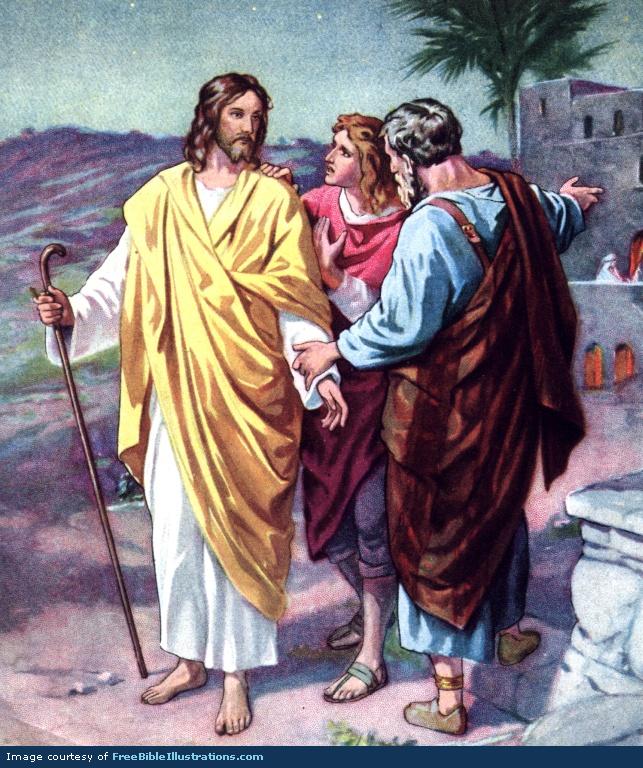
There is a similar trick of the mind at work when we hear the story of the two travelers on the road to Emmaus; we always assume that they were two men. It’s not wonder, since virtually every painting of the encounter on the road to Emmaus will show Jesus with two men. For example, look at the relief on the front of our altar. Many people assume that this is a depiction of the Last Supper (but that there are only two apostles shown because we had to crop it down to size.) Actually, this scene is from after His Passion—you can see crosses on the hill in the distance and there are wound marks in Jesus’ hands. What we have here is to two men at the house in Emmaus, shocked to recognize Jesus in the breaking of the bread.

The artistic depictions always show two men [the picture on the right being the only possible exception I could find], however the original Greek does not call them “two men,” or even “two disciples.” It only says there were “two of them” and that one of them was a man named Cleopas. As to the name and gender of the other traveler, the gospel text is silent. Perhaps the second person’s identity is left as a mystery so as to invite any of us to imagine ourselves in their place in this story. This may be the extent of what we can know for certain, but there is an interesting clue from another Gospel that suggests more detail.

In Gospel of John, it says that “standing by the cross of Jesus were his mother and his mother’s sister, Mary the wife of Clopas….” (John 19:25) So we have a Clopas and Cleopas both associated with Jesus. Perhaps these similar names are merely a coincidence, but perhaps Clopas and Cleopas are variations of the same person’s name. If Clopas and Cleopas are one in the same person, then the other traveler on the road was probably his wife, Mary. This Mary was most likely either Jesus’ aunt and the sister of St. Joseph, or one of the cousins of the Blessed Virgin Mary. What we do know for certain is that this Mary stood with Jesus’ mother at the foot of the cross.

Admittedly, it is speculation to say the other traveler was Cleopas’ wife, but if it was, then this Resurrection episode has a much greater poetry. In the Garden of Eden, a husband and wife ate from a tree. “Then the eyes of both of them were opened, and they realized that they were naked.” They felt ashamed and afraid. But in the house at Emmaus, a husband and wife ate the Eucharist, the fruit of the tree of the cross. “With that their eyes were opened and they recognized Him.” They felt joyful and unafraid. In Eden, God moved about the garden with the man and the woman. After the resurrection, Jesus walks with us, both men and women, along our road.

But whether that second traveler on the road was a woman or not, it would be a remain mistake to think that only men were important in the early Church. That would be at least as mistaken as thinking that every surgeon is a male. Jesus Christ chose some men to be the Church’s leaders, and much is said about them in the Scriptures, but He chose to spread the good news about Himself through the witness of women as well.

Though we sing of the “Faith of Our Fathers,” the faith of our mothers has been just as important, if not more, through time. Today,  it is oftentimes mom who takes the forefront in fostering faith in the family, in leading her children to Christ and His Church; through bedtime prayers and Bible stories, by bringing them to Mass and to CCD, in seeing to it that they receive the graces of the sacraments. If you feel like you’re alone in witnessing to the faith in your family, I commend you, and Jesus is proud of you.

There is another trick of the mind when it comes to celebrating Mother’s Day. On Mother’s Day we remember our mothers, who gave us birth and nurtured us, who raised us and put up with us, but we tend to forget about the greatest gift, the gift of our faith. At the Easter vigil the Exultet asks: “What good would life have been to us, had Christ not come as our redeemer?” Indeed, what good would life be to us if after our births we had not also been brought to Christ through the witness of holy women. Who were these holy women in your life? At this Mother’s Day Mass, let us remember and pray not only for our mothers in the natural order, but for each of our spiritual mothers as well.

A Man In Jesus’ Image — Divine Mercy Sunday—Year A

May 1, 2011

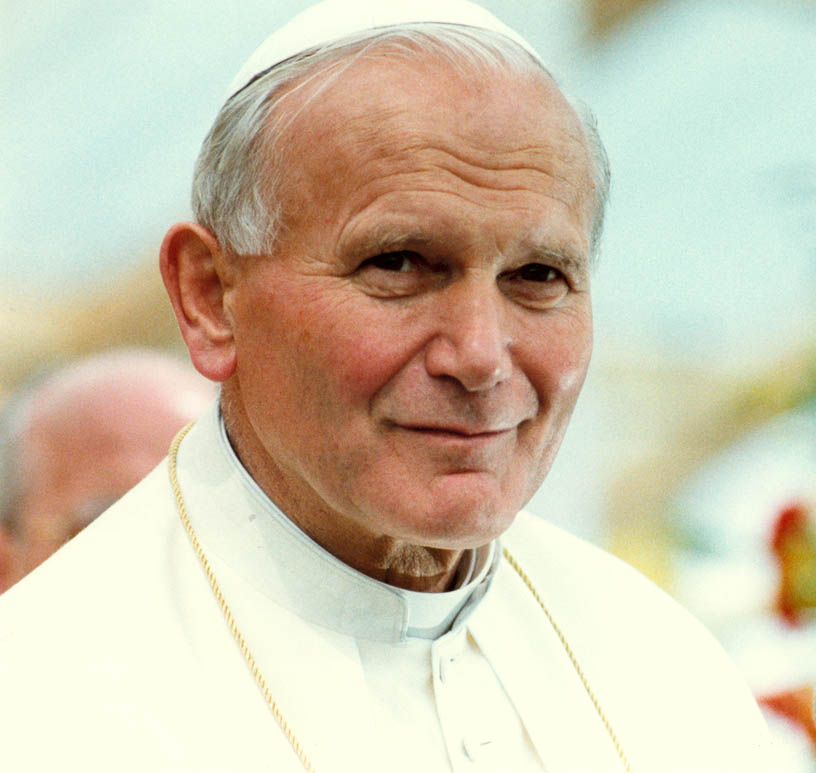
This Divine Mercy Sunday, our Catholic Church throughout the world celebrates and glorifies two men together in a special way. The first is our Savior, our Lord and our God, Jesus Christ; and the second is the great pope John Paul the Second, who is being beatified today in Rome. John Paul the Great, born Karol Wojtyla, is a man who lived in the image and likeness of Jesus Christ.

Both chose the Blessed Virgin Mary to be their mother. One chose her after the loss of his earthly mother as a boy. The other chose her from all eternity. Growing up, both of their beloved homelands were occupied and oppressed by foreign empires. For one it was the Romans. For the other it was the Nazis and then the Soviet Union. As young men, they both worked as manual laborers, in lives hidden from the world. When people encountered their ministries for the first time, many said, “Who is this man, and where does he come from?”

Both men transformed this world, not by leading violent revolutions, not by amassing incredible fortunes, but by speaking the truth, and living the truth, and leading others in doing the same for God. They preached God’s message, and their words gave hope and courage to many, but their words were not accepted by all. Both men had enemies who sought to destroy them, but they forgave, face to face, those who sought their lives.

At the end of their lives, both men were afflicted with great physical sufferings, but neither laid down their crosses. Some onlookers mocked or dismissed them in their afflictions, but those with spiritual insight beheld them to be offering a sacrifice to the Father for the salvation of the world.

St. John tells us that Jesus has done many other signs in the presence of his disciples that are not written in his Gospel. As St. John writes elsewhere, “There are many other things that Jesus did, but if these were to be described individually, I do not think the whole world would contain the books that would be written.”

Among these signs are the lives of the saints throughout the centuries, saints like Pope John Paul the Great. His life was a sign worked by Jesus Christ in our midst so that we would come to believe more deeply that Jesus is the Christ, the Son of God, and that through this belief we may have life in his name.

Why did people love Pope John Paul II so much? Catholics of every country and of all ages loved and flocked to him. Even non-Catholics and non-Christians were drawn to him. What explains this phenomenon? I think the answer is simple. People saw in him a reflection of Jesus Christ’s love for them. John Paul the Second was an icon of Christ and his love.

Every time you saw Pope John Paul, he was smiling. He traveled the nations, and embraced everyone warmly. When you encountered him, you felt loved, even if you were one person in a crowd of thousands. This was the Holy Spirit at work. Although you did not see Jesus you loved him in Pope John Paul; even though you did not see Jesus you believed in him all the more because of him, and rejoiced with an indescribable and glorious joy.

This morning we celebrate a feast day which Pope John Paul II established, Divine Mercy Sunday. What is divine mercy like? What does Jesus’ unfathomable love, which enfolds every one of us here and every person God has made, look like? Through the life of Pope John the Great we saw a partial glimpse of the divine mercy and love of Jesus Christ.

“He Is Not Here” — Easter Vigil

April 23, 2011

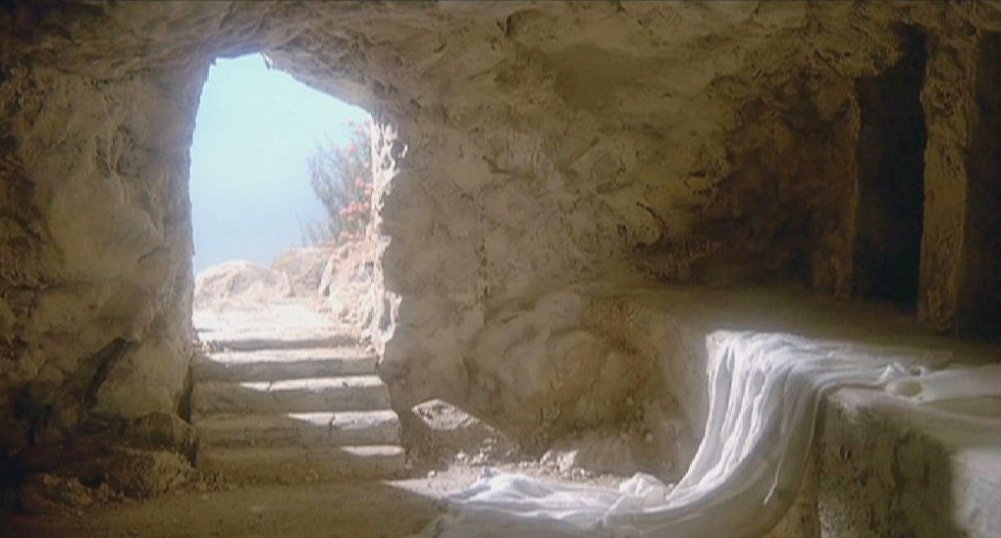
When the women came to the tomb they did not find Jesus, but a radiant messenger. He told them, “Do not be afraid! I know that you are seeking Jesus the crucified. He is not here.…” The tomb was empty, Jesus was not there.

Jesus was present at the beginning of creation, for through Him all things were made. Going forth from the Father’s mouth, He was at hand on earth throughout the ages, achieving His purposes.

He was mystically with Noah, who saved his family from death by building a ship, just as Jesus built the Church to save us.

He was mystically with Isaac, who, though bound and led to sacrifice, was not to be lost forever.

He was mystically with Moses, who freed God’s people from Pharaoh’s demonic slavery by leading them through miraculous waters.

He was mystically with all the prophets, in proclaiming a law to be written on hearts instead of stones, in promising the gift of a Holy Spirit from Heaven, in suffering at the hands of those who refused to hear wisdom.

He has been in His saints, from the least to the greatest, throughout the centuries to this very night. He is present here in all of us who are ‘living for God in Christ Jesus.’

By the all foreshadowings that proceeded His coming, and by the fruitful witness of all His saints ever since, we can confirm the angel’s words, “he has been raised just as he said.”

Jesus is not there in the empty tomb. He is here,  tonight, with us.

Christ Or Foe? — Monday, 6th Week in Ordinary Time—Year I

February 15, 2011

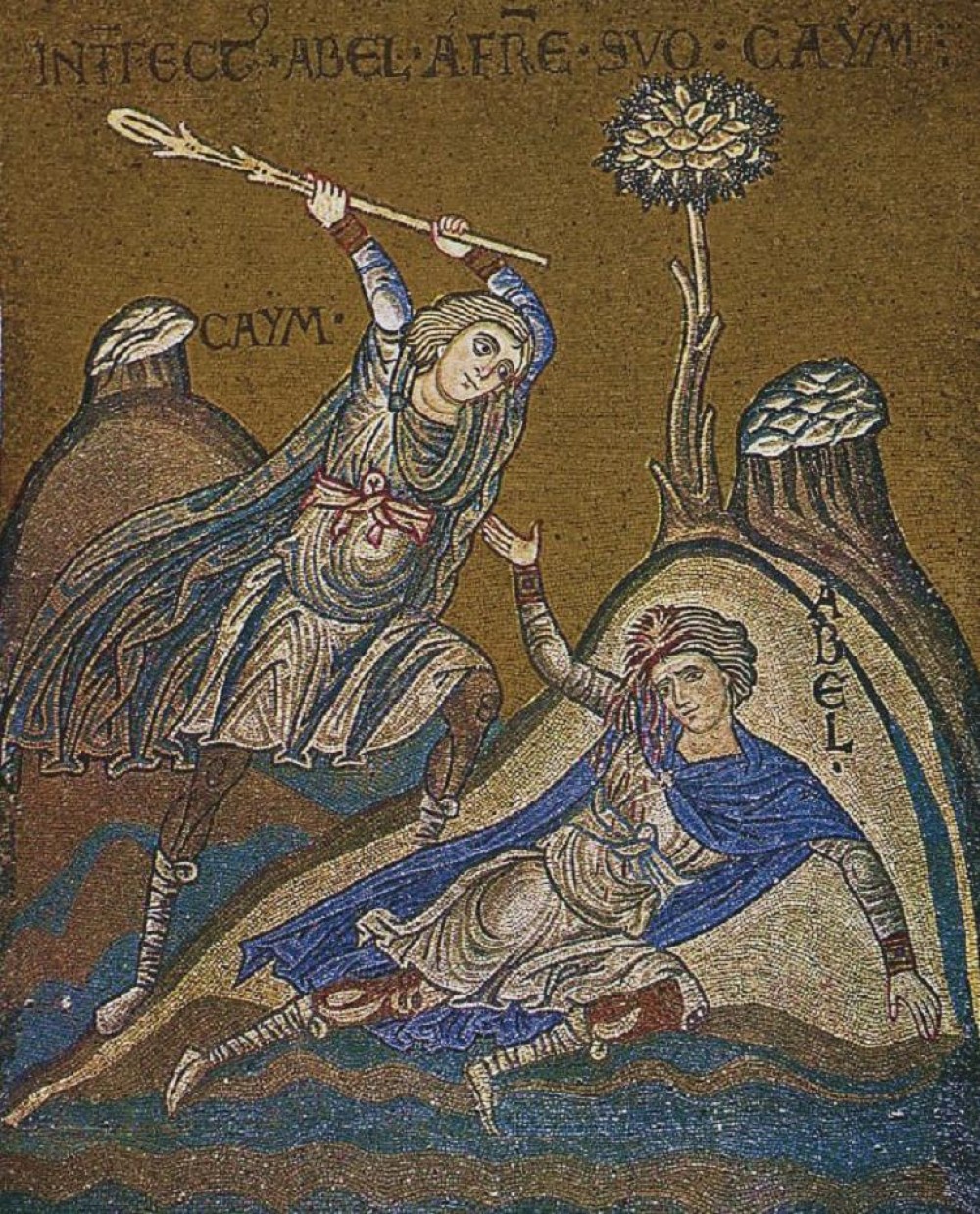
Today we recall two brothers who were icons of Christ. I speak of Cain and Abel. (At least, they both started off as images of Christ.)

When Eve conceived and bore Cain, she said, “I have produced a man with the help of the Lord.” We can imagine the New Eve, Mary, saying the same thing. Abel was a keeper of flocks, like Jesus the Good Shepherd. Cain was a tiller of the soil, like Jesus the Sower of the Seed and Reaper of the Harvest. Both Cain and Abel had priestly characters because both offered sacrifices to God.

Imagine how much better the world would have been if these two brothers had lived and worked together in harmony. They would have transformed the whole world, like the holy brothers Cyril and Methodius, the patron saints of Europe.  Instead, tragically, jealousy, resentment, temptation, and sin led Cain to murder his brother. By this spilling of innocent blood, Abel came to image the future Christ still further, while Cain became a likeness of the Christ’s future enemies; the chief priests, scribes, and Pharisees.

For you and I, in the end, it may all come down to this: are we Christ, or are we those who would destroy Him?

Christ’s Boat — Tuesday, 6th Week in Ordinary Time—Year I

February 15, 2011

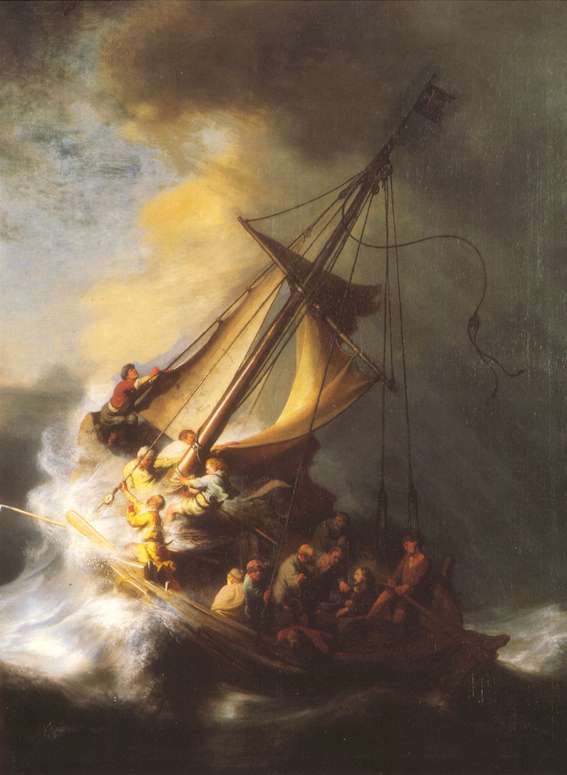
Perhaps you’ve noticed at Mass that most of our prayers are directed to God the Father. That is why you see me looking up so often. I’m looking up to our Father in Heaven as I speak to Him. From time to time, while I’m looking up, I can’t help but notice the ceiling. Take a look for yourself. It often reminds me of a boat’s wooden hull. That is really quite appropriate, because the Church is a boat and it is an important boat to be in.

The old ark was a boat built by Noah in which a few persons, eight in all, were saved through the waters of the flood. The new ark is our Church, the boat built by Christ, in which many are saved through the waters of baptism. Jesus’ boat has the cross for its mast and its sails are filled by the winds of the Holy Spirit. The Catholic Church, the bark of Peter, is the only vessel that navigates safely through the dangerous waters of this world.

As the Church Fathers frequently said, “Outside the Church there is no salvation.” But how should we understand this teaching? Restated positively it means this: that all salvation comes from Christ the Head through the Church, which is his Body. Basing Herself on Scripture and Tradition, Bride of Christ teaches that she, the Church, is necessary for salvation. As the Second Vatican Council repeated in modern times, Jesus “himself explicitly asserted the necessity of faith and Baptism, and thereby affirmed at the same time the necessity of the Church which men enter through Baptism as through a door. Hence they could not be saved who, knowing that the Catholic Church was founded as necessary by God through Christ, would refuse either to enter it or to remain in it.”

It must be noted that this teaching is not aimed at those who do not know Christ and his Church through no fault of their own. “Those who, through no fault of their own, do not know the Gospel of Christ or his Church, but who nevertheless seek God with a sincere heart, and, moved by grace, try in their actions to do His will as they know it through the dictates of their conscience – those too may achieve eternal salvation.”

“Although in ways known to Himself God can lead those who, through no fault of their own, are ignorant of the Gospel, to that faith without which it is impossible to please Him, the Church still has the obligation and also the sacred right to evangelize all men.” If we love all men, we will naturally desire to share the truth and blessings of the Church’s Gospel with everyone. Think of it this way: while it is theoretically possible for anyone to swim the English Channel, it is a far easier crossing if we take the ferry. In the same way, it is not a matter of indifference if people come into the Church or not. The journey is much safer and easier if you’re in the boat.

Remember not underestimate the importance of the Church. In the end, all those who will be saved will be saved through their relationship, known or unknown, with the one, holy, catholic and apostolic Church Jesus founded.

And do not underestimate the importance of the Mass. All the graces that flow into souls pours forth from the Catholic Church through this sacrifice we celebrate. The Mass takes the sacrifice of Calvary from then and there, through space and time, to here and now, and applies its power and effects to our world today. (What we’re doing here is a very important thing.)

And finally, do not underestimate the importance of remaining in the Church. May we never forsake it. We have to stay in the boat with Jesus Christ, because without Him, none of us can walk on water.

In Her Image — Funeral for Carol Beck, 87

February 15, 2011


I never got to know Carol in life, but what I have been told of her is very good; that she is a sweet, peaceful, good and devoted woman of God. And from what I am told, she is clearly a woman of quiet strength.

On December 7th, 1958, Carol’s husband Robert, the father of Steve and Kathy, after nine years of marriage, unexpectedly died of a heart attack. That infamous date, December 7th, happened to be Carol’s birthday. I’m told that when Carol got married she was perfectly happy with the thought of being taken care of for years to come, but when Robert died she was called to rise to the occasion and take charge. This widow raised her children to maturity, and Steve and Kathy indicate that she raised them rather well. Though he was not visibly present in an unveiled way, I bet that Robert was never far spiritually, helping her through the trials.

Carol was simple and meek and seemingly ordinary in the world, but at the same time she was a quite stunning in appearance, with dark hair and beautiful brown eyes. Though everything, she remained close to her Lord, Jesus Christ. She drew strength from daily prayer and the grace of the sacraments, and with her beautiful voice she sang praises to God. Now she has passed on, to go where her bridegroom has gone before her.

We should pray the purification of Carol’s soul, as we do for all the dead, but I have no fear for her future. Carol’s life on earth has been as an image, an icon, of  Christ’s Church on earth. The mystery of the Church was reflected through her life.

We call the Church a she, because she is the bride of Christ. As we hear in the Gospel, the day He died was the birthday of the Church. The Church is a mother, and with love and concern she raises her own children to maturity. Though her bridegroom is not visibly present in an unveiled way, He is always near her and helps her through every trial. She is stunningly beautiful, and yet she is simple, meek, and seemingly ordinary in this world. Though everything, she remains close to her Lord, Jesus Christ. She is strengthened through her daily prayers and the grace of the sacraments, and with one beautiful voice, she sings praises to God. And one day, she too will pass on from this world, to where her bridegroom has gone before her.

Please pray to God for Carol’s soul, but do not be afraid. I am confident that when all is said and done, Jesus shall present her in splendor to Himself, without spot or wrinkle or any such thing, that she may be holy and happy with Him forever. Those who live in the Church’s likeness are promised her reward.

The Lamb of God — 2nd Sunday in Ordinary Time—Year A

January 16, 2011

When John the Baptist sees Jesus coming toward him he declares, “Behold, the Lamb of God, who takes away the sin of the world!” Why does John say that? How is Jesus like a lamb? Under the Old Covenant, animal sacrifices were offered for the forgiveness of sins.  The symbolism was that the animal, typically an unblemished lamb, was dying in place of the sinner who offered it. Jesus, like an obedient sheep that follows its master’s voice, does His Father’s will and takes our place in the sacrifice that truly forgives our sins. This is why Jesus is the Lamb of God who takes away the sins of the world.

John the Baptist goes on to say, “He is the one of whom I said, ‘A man is coming after me who ranks ahead of me because he existed before me.’” Indeed, Jesus existed before the universe itself. Through Him, all things were made, and all things that were made to point to Christ. For this reason, it is not so much that Jesus resembles the lambs of Old Covenant sacrifices. Instead, God established the ritual of sacrificing lambs for the forgiveness of sins in order to point to Christ.

Jesus is born in the age of the New Testament, but throughout the entire Old Testament the Holy Spirit has spoken through the prophets about Him. For example, our first reading from the book of Isaiah, written several centuries before Christ, is just one of hundreds and hundreds of passages pointing to Him. But, before we look at it again, a little background: Jacob was Abraham’s grandson. Jacob was renamed “Israel” by God and fathered twelve sons. From these twelve sons descended the twelve tribes of Israel. This is why the names “Jacob” and “Israel” can be interchangeable, and can refer to one person or many.

In Isaiah, the prophet writes, “The Lord said to me: You are my servant, Israel, through whom I show my glory.” To whom is God speaking here? Who is the servant whom God formed in the womb; the prophet himself, God’s faithful people, or Jesus Christ? There is truth to each of these interpretations, but Jesus shines especially through. Isaiah continues:

“It is too little, the Lord says, for you to be my servant, to raise up the tribes of Jacob, and restore the survivors of Israel; I will make you a light to the nations, that my salvation may reach to the ends of the earth.”

Jesus is the one who brings salvation and the resurrection not only to the descendants of Abraham, Isaac and Jacob, but for all the nations on earth, bringing His light to Gentiles like you and I.  For another example, consider today’s psalm, written by King David 1,000 years before Christ. Hear these words again as coming from Jesus’ own lips:

Sacrifice or offering you wished not,
but ears open to obedience you gave me.
Holocausts or sin-offerings you sought not;
then said I, “Behold I come.”

“In the written scroll it is prescribed for me,
to do your will, O my God, is my delight,
and your law is within my heart!”

I announced your justice in the vast assembly;
I did not restrain my lips, as you, O Lord, know.

I have waited, waited for the Lord,
and he stooped toward me and heard my cry.
And he put a new song into my mouth,
a hymn to our God.

I suspect that these words had a personal meaning to David when he composed them, and the fortieth psalm has been prayed in a personal way by God’s faithful people ever since, but these words apply especially to the person and life of Christ. After preaching God’s word before crowds of thousands in the time of His ministry and obediently coming to the cross at its end, after crying out for His Father to save Him and waiting three days in the tomb, the resurrection has put a new song in Jesus’ mouth, a new hymn of praise to our Father.

The point is this: the Old Testament is not a dead letter, or a merely historical book. The passages of the Old Testament meant something historically to the people who wrote them, but those men were not the only authors—the Holy Spirit was writing, too. The Spirit was writing for all generations of God’s faithful people, including you and I today. The Spirit was also revealing and prophetically pointing to the person and life of Jesus Christ.

St. Jerome said, “Ignorance of the Scriptures is ignorance of Christ.” So when you hear the Old Testament proclaimed at Mass, and read the Bible on your own, look for the meaning it had in its historical context, look for the spiritual meaning it has for us today, and look for Jesus, because you can find Him there, and get to know Him better.

The New Eve — December 8 — Immaculate Conception

December 8, 2010

In the beginning, when our first parents fell, they lost a great deal, but they were not deprived of hope, for God spoke in their hearing a prophesy to the deceiving serpent, the devil. God said, “I will put enmity between you and the woman, and between your offspring and hers; he will strike at your head, while you strike at his heel.” Who is this offspring, who strikes back at the devil? He is Jesus the Christ, the New Adam, the Son of God. And who is this woman, who is Satan’s enemy? She is Mary of Nazareth, the New Eve, the Immaculate Conception.

After their Fall, when Adam and Eve heard God approaching in the garden, they became afraid, they fled and hid, so God called out, “Where are you?” When God drew near to Mary, she also was afraid, but she did not hide or flee. She declared, “Behold, I am the handmaid of the Lord. May it be done to me according to your word.” And, because she did, her Holy Offspring could go on to say in His garden of testing, “Father… not my will but yours be done.”

The first man, Adam, called the first woman Eve, because she became the mother of all the living. Now, Mary is the New and Second Eve, for she is the mother of all the living, and she loves each one of us personally as her very own children.

She is the icon of the Church, and as she is, we are called to be: holy and without blemish before God, as the second reading from Ephesians says. But how can we do this? Unlike Mary, at times we have been allies of Satan by our sins. To cleanse us, God gives us the sacrament of reconciliation, and to strengthen us He gives us the fruit from the new tree of life; that tree is the cross, and its fruit is the Eucharistic Christ.

If it has been a long time since you have been to confession, come that you may be purified as pure as Mary. And if you receive our Lord in the Eucharist tonight, consider that the Son of God Incarnate has come to dwell in you, just as truly as He dwelt in Mary.

Prayer is Necessary — 29th Sunday in Ordinary Time—Year C

October 17, 2010

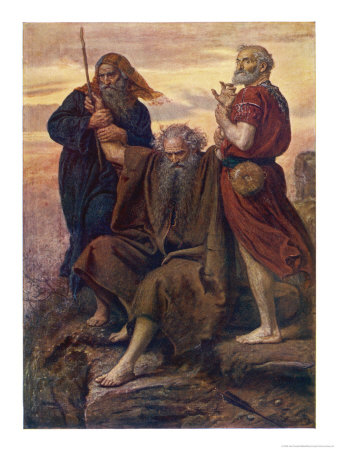
As the Hebrews fought the Amalekites, Moses held up in his hands, above his head, the wooden staff of God. In doing this, He resembles Jesus, who outstretched his arms on the cross, and the priests of Christ’s Church, who raise their hands up to Heaven.  Each one, Moses, Jesus, and His priests, offer prayers to the Father.

As long as Moses kept his hands raised up,
Israel had the better of the fight,
but when he let his hands rest,
Amalek [the enemy] had the better of the fight.

What would have happened if Moses had kept his arms just down at his sides? God’s people would have lost their deadly battle. What would happen if Jesus were to stop pleading for us at right hand of the Father in Heaven? We would be left all on our own. What would happen if priests were to no longer to offer the Mass? The Church would be deprived of graces. If Moses, or Jesus, or the priests of the Church were not persistent in prayer, souls would be lost. The same is true for you and I as individuals.

If you or I wish to be saved, it is necessity for us to pray always without becoming weary. As St. Alphonsus Liguori, a doctor of the Church, said: “He who prays is certainly saved; he who does not pray is certainly damned. All the saints in heaven, except infants, were saved because they prayed; and all the damned in hell were damned because they did not pray, and this is their greatest torment to see how easily they could have been saved, had they prayed, and that now the time for prayer is over.”

Prayer is how we grow in our relationship with God. And Heaven consists first and foremost in an intimate relationship with Him. But, if we do not pray, we will not have much of a relationship with God, and Heaven will not be a place where we really want to live. It is essential that you commit yourself to praying every day, ‘whether it is convenient or inconvenient.’

To remain committed to this, ask the help of other to strengthen you and keep you faithful to prayer. Moses had the help of Aaron and Hur, at his right and his left. Jesus had the help Mary and John, at the foot of His cross. The priest celebrating Mass has the help of God’s people, those in the church on earth and those in the Church in Heaven. So have your spouse, your children, and your friends to pray with you and keep you faithful to prayer.

Families should pray together, parents with their children. This will instill the Faith in them more than anything else.  And Fathers need to take the lead, for if only Mom prays with the children they will wonder, “Why doesn’t Dad pray, too?”

Couples should also pray together.  A couple that prays together every day a divorce rate less than one percent. And it makes sense, because if I know that someone is praying for me, that they’re willing my true good, then even if there are rough spots between us, I know that we’re on the same side. So before you leave the house, or before you go to bed, pray together as a couple; even if it’s as simple as a moment of silent prayer. Remember that the family that prayers together, stays together.

It is necessity for us to pray always without becoming weary, as families and individuals, for “He who prays is certainly saved; he who does not pray is certainly damned.” So pray every day, because our souls depend on it.

We’re Inn-Keepers — 15th Sunday in Ordinary Time—Year C

July 18, 2010

The “Good Samaritan” is a very familiar parable, but there remains much for us to learn from it. Today I will present the history, the context, behind it; the symbolic meaning contained within it; and the challenge to ourselves that comes out of it.

Jesus’ story begins, “A man fell victim to robbers as he went down from Jerusalem to Jericho.” From this we might think that Jericho is south of Jerusalem because we put the South at the bottom of our maps. Yet, Jericho is actually some twenty miles to northeast of Jerusalem. The reason why the man went down from Jerusalem is that Jerusalem is situated 2,550 feet above sea level, while Jericho is about 1,200 feet below sea level, near the Dead Sea, which is the lowest place on the surface of the earth.

Jerusalem was the city of the temple, the place of God’s dwelling. Jericho, you may remember, was the city which Joshua and the Hebrews marched around for seven days, before blowing their horns and shouting, causing the walls to fall down. They conquered the city because it was in rebellion with God.

“The [robbers] stripped and beat [the man] and went off leaving him half-dead. A priest happened to be going down that road,
but when he saw him, he passed by on the opposite side. Likewise a Levite came to the place, and when he saw him, he passed by on the opposite side.”

You know what a priest is. He is one who offers sacrifice. What is a Levite? They were like acolytes or altar servers; they helped the priest offer the sacrifices at the temple. Why did they both pass by ‘on the opposite side?’ Maybe that they thought the man was already dead and wanted to avoid ritual impurity. The Mosaic Law taught that contact with a dead body made one ritually impure and ritual purity was necessary to worship at the temple. Whether this was their reason, or whether they just did not care enough to be bothered, another comes along who is both willing and able to help.

“…A Samaritan traveler who came upon him and was moved with compassion at the sight.” Who are these Samaritans? We hear about them in the Gospels and we know they didn’t get along with the Jews. For instance, the woman at the well that Jesus meets in John was a Samaritan. Where do they come from?

Some five hundred years before the coming of Christ the Babylonians were the superpower of the ancient world. When the king in Jerusalem decided he was not going to pay tribute to Babylon anymore, the king of Babylon was not pleased. He sieged Jerusalem, conquered it, and carried the region’s inhabitants into what is called the Babylonian Exile. Not everyone was taken though; some of the poor, the farmers and the vine-dressers, were left behind. To ensure that the people did not rebel again, and to make sure that the land did not go to waste, the Babylonians settled five pagan nations in the land.

Seventy years later, after the Babylonians had been conquered by the Persians, the new king gave the Jews permission to return to their homeland. When they got there they found that the people who had remained behind had intermarried with the pagans, in both their families and religion. The Jews regarded these people, these Samaritans, as unfaithful to the Lord. It is no coincidence that the Samaritan woman at the well had had five husbands.

Jesus chooses a Samaritan as the protagonist, the hero, of his story. He does this to show us an example we are to follow. The Samaritan was not Jewish victim’s neighbor geography, for he was only a traveler to the region, nor was he related to him by blood, nor by prior friendship. In the same way, our neighbors are not to be only those who are close to us in distance, are in our family, or who have shown kindness to us. Everyone is to be our neighbor. Such is the meaning of the parable in its historical context, but contained within this story there is Christian symbolism, as well.

The man who fell to the robbers is you and I, this man represents all mankind. Traveling from Jerusalem to Jericho, we were descending from the height of communion with God to the depths of rebellion. We fell to robbers, to evil spirits and evil desire. These stripped us naked, depriving of our original honor and glory. They beat us and left us half-dead; biologically we still lived, but spiritually we were dead. No one could or would help us. But then the Good Samaritan came. This man is Jesus Christ.

He looked upon us and was moved with compassion. Jesus approached to us and poured His blood on us, like wine, to cleanse the wounds of our sin. He poured the Holy Spirit on us like oil to make us strong again. Jesus gave us his teachings and commandments as bandages for our wounds. These disciplines bind us, yet they free us through the health they provide. Jesus lifted us up on his own animal.  This beast of burden was his own flesh. He took us to the inn, which is the Church, and here He continues to care and provide for us in it until the time of His return.

Even though the man who fell to the robbers is meant to symbolize each one of us, I don’t think he is the character in this story with whom we can most identify ourselves. The character I have in mind is one everyone overlooks. I don’t mean the Good Samaritan, nor the priest or the Levite. The character I’m thinking of is the inn-keeper, who is only mentioned in passing.

Here’s all that Jesus tells us about the inn-keeper: “The next day [the Good Samaritan] took out two silver coins and gave them to the innkeeper with the instruction, ‘Take care of him. If you spend more than what I have given you, I shall repay you on my way back.’”

Most of us here entered into the Catholic Church when we were baptized as infants. So we don’t remember being brought into the Church, half-dead.  For us, it feels like this inn has always been our home. This is where we have lived and worked for as long as we can remember. So I think we may identify more with the inn-keeper, more then the victim who has been gratefully saved. With this comes a challenge for our lives.

We are like the inn-keeper.  We are comfortably at home, and business is good. The Samaritan brings in this guy like a sack of potatoes, buys a room and takes care of him. That’s fine with us, but this Samaritan guy comes along and instructs us to take care of this friend of His. Now he is shifting that job onto us. Sure he’s given us some coin for doing it, two silver denarii, the sum of two day’s wages, and he says that if we spend more than what he has given he will repay us on his way back, but do I really want this hassle?

Besides, is that Samaritan fellow really coming back?  If not, then the more I give caring for this invalid the less I’ll have left for myself. If I’m stuck with the bill for this guy and his friend, them I’ll feel like a fool. On the other hand, if I just toss the guy out of my inn, or just ignore him while he’s here, that’s two day’s profit for me guaranteed. If I just pretend that I never heard that Samaritan’s instructions, if I can just quiet my conscience, I’ll get along just fine.

I’m busy enough as it is already. Is playing nurse to this crime statistic really worth my time? Do I trust that Samaritan? Do I believe he is he truly good?  Do I believe he is really coming back? Jesus is the Good Samaritan, and he brings many people to our lives and asks us to take care of them in our inn. Are you living as though Jesus is really coming back to repay each of us according to our deeds, or are you just minding your own business?

Everything you have comes from Jesus, and everything you have belongs to Him.  He is entitled to your time, talents, and treasure and He wants you to share them with your neighbors. Do not fear, don’t be afraid. The truth is that you can never spend more than what He has given you. Act with confidence that He will repay you an amount far greater than you give, not only at the end of your life, but even by the end of the day.

Jesus Christ’s command which He “enjoin[s] on you today is not too mysterious and remote for you. …No, it is something very near to you, already in your mouths and in your hearts; you have only to carry it out.” You shall love your neighbor as yourself.

An Original Marian Hymn

June 3, 2010
Hail Mary, with God You Found Favor
by Father Victor Feltes
 

Set to the tune Rendez a Dieu, (audio, sheet music ) as in “Father, We Thank Thee who has Planted,” or “When John baptized by Jordan’s River.” For use with permission only.

Hail Mary, with God you found favor,
preserved from sin and filled with grace;
prepared as gate for our Creator,
and new Eve for our human race.
“Let it be done to me as you say,”
you told the angel God had sent;
becoming mother of our Savior,
and new ark of the covenant.
 
Hail Mary, mother of all Christians,
you stood by Christ the day He died.
Now you reign as our queen in heaven,
enthroned beside Him glorified.
Blessed are you among all women
and blessed is your fruit adored.
Pray for us Mary, now and always,
to ever love your Son, our Lord.

Approved for use in the Mass in the Diocese of La Crosse by (then) Bishop Jerome Listecki in August 2009.

Rejoice, Daughter Zion! — The Visitation

June 2, 2010

The Blessed Virgin Mary is the Icon of Israel and the Icon of the Church. Mary is the bridge between the Old and New Testaments and we can discover her in both. Whenever we encounter positive descriptions of “Jerusalem,” “Zion,” “Daughter Zion,” or “Israel” in the Old Testament, or praises of “Mother Church” today, these words often apply quite fittingly to Mary as well. Today’s first reading is a great example of this. But before returning there, let me share with you this interesting detail. Even though we traditionally pray, “Hail Mary, Full of Grace,” the Archangel Gabriel’s greeting to Mary at the Annunciation [“Chaire” in Greek] literally means , “Rejoice… Full of Grace!” Now hear again the words from the Book of Zephaniah:

Shout for joy, O daughter Zion!
Sing joyfully, O Israel!
Be glad and exult with all your heart,
O daughter Jerusalem!

In today’s Gospel, Mary fulfills these words, glad and exulting with all her heart:

My soul proclaims the greatness of the Lord
My spirit rejoices in God my savior

Zephaniah says:

The LORD has removed the judgment against you,
he has turned away your enemies;
The King of Israel, the LORD, is in your midst,
you have no further misfortune to fear.

And Mary agrees:

He has mercy on those who fear Him
In every generation.
He has shown the strength of his arm,
he has scattered the proud in their conceit.

Earlier, at the Annunciation, when the angel Gabriel came to Mary, He said to her:

“Hail, [Rejoice,] full of grace! The Lord is with you.” But she was greatly troubled at what was said and pondered what sort of greeting this might be.

As Zephaniah foretells,

On that day, it shall be said to Jerusalem:
Fear not, O Zion, be not discouraged!
The LORD, your God, is in your midst,
a mighty savior;

And the angel says to her, “Do not be afraid, Mary, for you have found favor with God. Behold, you will conceive in your womb and bear a son, and you shall name him Jesus,” a name which means, “God saves.”

Zephaniah foretold of the Lord’s pleasure in Mary,

He will rejoice over you with gladness,
and renew you in his love,
He will sing joyfully because of you,
as one sings at festivals.

The Lord rejoices over Mary, and Mary in her Lord. Let us always remember, that the Lord rejoices over us as well. Despite our sins and failings, we are the Church, the new Israel, and whatever one can say of Mary usually applies quite fittingly to us as well. Mary is the icon of the Church, the sign of who we are, and who we are called to be with Christ.