The Mother & The Governor

March 3, 2024

By Fr. Victor Feltes

We say their names at every Sunday Mass. We recall them at the start of every Rosary. They are the only two, non-divine persons referred to by name in the Nicene and Apostles’ Creeds. They are the Virgin Mary and Pontius Pilate.

For us men and for our salvation he came down from heaven, and by the Holy Spirit was incarnate of the Virgin Mary, and became man. For our sake he was crucified under Pontius Pilate, he suffered death and was buried, and rose again on the third day in accordance with the Scriptures.

Consider how many other figures from salvation history could have been justifiably cited in these creeds; from Adam and Eve to Peter and Paul. Yet only Mary and Pilate are mentioned. Why? At the heart of human history, where on our timeline B.C. becomes A.D., the eternal Son of God became man. Our Savior lives not “Once upon a time.” He is born, suffers, dies, and rises in flesh and blood reality. Mary, the woman who gave him life and Pilate, the man who put him to death, ground Jesus Christ, our Gospel, and our salvation in real human history.

Mary and Pilate are not merely historical figures but also archetypes. They represent two patterns, two types of people we can learn from: Mary, whose good example we should follow, and Pilate, whose bad example we should avoid. Recounting the gospel accounts of the Roman trial during Christ’s Passion, let us compare, contrast, and profit from contemplating Governor Pontius Pilate and the Blessed Virgin Mary. Consider to these reflections for what lessons you can gain.

On Good Friday morning, all the chief priests and the elders of the people took counsel against Jesus to put him to death. They bound him, led him away, and handed him over to Pilate, the governor.

Confronted with Jesus the Christ, all four Gospels record Pilate asking this pivotal question: “Are you the king of the Jews?” Jesus responds affirmatively that it is so. At the Annunciation, after greeting and reassuring Mary, St. Gabriel the Archangel said, “Behold, you will conceive in your womb and bear a son, and you shall name him Jesus. He will be great and will be called Son of the Most High, and the Lord God will give him the throne of David his father, and he will rule over the house of Jacob forever, and of his Kingdom there will be no end.” When the Virgin Mary is confronted with Jesus the Christ, the king of the Jews, she asks a clarifying question too. She said to the angel, “How can this be, since I have no relations with a man?

Pilate and Mary have this in common: they both ask serious questions about Jesus Christ seeking to better understand. It is good for us ask honest questions about Jesus Christ, about God, or about our Catholic Faith. Jesus says, “Whoever asks, receives,” and “whoever seeks, finds.” But when we receive our answer, when we find the truth, how will we respond to the Word? Here we see a difference between Mary and Pilate.

Pilate then addressed the chief priests and the crowds, “I find this man not guilty.” But they were adamant and said, “He is inciting the people with his teaching throughout all Judea, from Galilee where he began even to here.” On hearing this, Pilate asked if the man was a Galilean; and upon learning that he was under Herod’s jurisdiction, he sent him to Herod who was in Jerusalem at that time.

After questioning Jesus, Pilate finds him not guilty of any crime. Realize that Pontius Pilate does not want to kill Jesus; however, the governor would be very glad to be rid of him. Jesus has done nothing worthy of punishment, but Pilate wants to keep those who hate their Roman governor at bay while avoiding making new enemies. He declares Christ not guilty but refuses to set him free. As soon as Pilate sees an opportunity to pawn off Jesus the Nazarene to King Herod across town, he does so. Rather than doing something brave and good, Pilate punts. In contrast, at the Annunciation, when Mary is first presented with Jesus Christ, she does not ask the angel if someone else could be given this task. She does not refuse to do something righteous and courageous. Mary lovingly receives Christ through her “fiat,” saying, “Let it be done to me according to your will.”

King Herod had been eager to meet Jesus and questioned him. Yet the Lord gave him no reply, even as the chief priests and scribes stood by accusing him harshly. Herod does not hold Jesus in prison or behead him as he did with St. John the Baptist. Instead, having grown tired of Jesus, Herod sends Jesus back to Pilate dressed in resplendent garb like a king as a joke. Even though Herod and Pilate had previously been enemies, St. Luke records that the two became friends that day. This shows you that neither ruler saw Jesus as much of a threat. The worldly, like Pilate, will judge by appearances, but the godly, like Mary, can be granted the gift to see deeper realities. When Jesus gets brought back to Pilate’s praetorium doorstep, the governor must deal with this problem anew.

Pilate said to him, “Then you are a king?” Jesus answered, “You say I am a king. For this I was born and for this I came into the world, to testify to the truth. Everyone who belongs to the truth listens to my voice.” And Pilate said to him, “What is truth?” When he had said this, he again went out to the Jews and said to them, “I find no guilt in him.

Our styles and technologies have changed since ancient times, generations and great empires have come and gone, but human nature remains the same. Pilate is a moral relativist, a postmodern man in the ancient world. “What is truth” he scoffs at Jesus, turns his back on Truth Incarnate, and walks away. He thinks that truth cannot be known, except for those “truths” which we choose for ourselves or impose upon others.

Later in the Passion, Pilate provokes Jesus’ enemies with the sign he orders to be posted above Jesus’ head on the Cross. When the chief priests complain to Pilate saying, “Do not write ‘The King of the Jews,’ but that “He said ‘I am the King of the Jews.’” Pilate replies dismissively, “What I have written, I have written.” Pilate does not believe in truth but serves the truth despite himself. The Virgin Mary believes in truth, belongs to the truth, and cooperates with the truth: “Let it be done to me according to your word.” Jesus says everyone who belongs to the truth listens to his voice.

Pilate knows worldly wisdom, he is clever and cunning.
Mary knows God’s wisdom, and she is truly wise.

Pilate seeks the glory of men.
Mary seeks the glory of God.

Pilate, despite all his worldly power, is ruled by fear.
Mary, despite her natural weakness, is freed from fear.

Pilate is the secular Man of the World.
Mary is the devoted Disciple of Christ.

While Governor Pilate was still seated on the judge’s bench, his wife sent him a message, “Have nothing to do with that righteous man. I suffered much in a dream today because of him.”

This is another similarity between Pilate and Mary: both of their spouses experienced prophetic dreams. St. Matthew recounts how Mary’s husband, St. Joseph, had at least four inspired dreams. One dream reassured him to take Mary into his home, one told him to flee with his family into Egypt, another later told him to return them to the land of Israel, and one more dream which led him to resettle them in Nazareth. Matthew likewise records the dream of Pontius Pilate’s wife, and her urging her husband to “have nothing to do with that righteous man.” Mary listened to her spouse and was blessed. Pilate did not heed his wife and walked into disaster. God gave spouses to each other as helpmates, and the Lord sometimes gives authentic mystical experiences to guide us. Now spouses are not always right and some dreams are just dreams—some fears and some visions are merely imagined. But it is wise not to dismiss out of hand the input of your helpmate or the possibility of mystical experiences from God.

The Jews answered Pilate, “We have a law, and according to that law he ought to die, because he made himself the Son of God.” Now when Pilate heard this statement, he became even more afraid and went back into the praetorium and said to Jesus, “Where are you from?” Jesus did not answer him. So Pilate said to him, “Do you not speak to me? Do you not know that I have power to release you and I have power to crucify you?” Jesus answered him, “You would have no power over me if it had not been given to you from above. For this reason the one who handed me over to you has the greater sin.”

Both Mary and Pilate were entrusted with power over Jesus from above. After Mary and Joseph found the boy Jesus at the temple, “He went down with them and came to Nazareth, and was obedient to them.” And Jesus told Pilate, “You would have no power over me if it had not been given to you from above.” When the Son of Man comes in his glory and the sheep are separated from the goats, we will be judged in part on whether we did what good was in our power: “Amen, I say to you, what you did [or did] not do for one of these least ones, you [did or] did not do for me.” Jesus says, “Much will be required of the person entrusted with much, and still more will be demanded of the person entrusted with more.” Who and what has been entrusted to you? How are you using your power?

The gospels show how Pilate knows that Jesus Christ is innocent, or at least believes he poses no real threat to society, yet Pilate is willing to have this innocent man whipped and even killed when that becomes the most expedient thing to do.

When Pilate saw that he was not succeeding at all, but that a riot was breaking out instead, he took water and washed his hands in the sight of the crowd, saying, “I am innocent of this man’s blood. Look to it yourselves.” … Then he handed him over to be crucified.

Governor Pilate washes his hands, as if he had no hand in Jesus’ death. He washes his hands as a sign to say ‘my hands are clean in this injustice.’ Yet all our sins caused Jesus Christ to die. Though Mother Mary was free from sin and her hands were truly clean, Christ’s sacrifice was for her too. The First Letter of St. John says if you or I say, “‘We are without sin,’ we deceive ourselves, and the truth is not in us. If we acknowledge our sins, he is faithful and just and will forgive our sins and cleanse us from every wrongdoing. If we say, ‘We have not sinned,’ we make him a liar, and his word is not in us. If we claim to be without sin, we deceive ourselves and the truth is not in us.” If we go looking for excuses for our sinful behavior, we will always find them. Instead, let us repent of sin and live in the truth.

Pilate had an inscription written and put on the cross. It read, “Jesus the Nazorean, the King of the Jews.” Now many of the Jews read this inscription, because the place where Jesus was crucified was near the city; and it was written in Hebrew, Latin, and Greek.

Sometimes you will see this titulus sign depicted at the top of crucifixes featuring the letters “INRI.” This is an abbreviation for the Latin phrase “Iesus Nazarenus, Rex Iudaeorum,” or “Jesus the Nazarene, King of the Jews.” It was the Romans’ custom to display upon condemned persons’ crosses the crime for which they were being executed. As I said before, through this inscription, Pilate was antagonizing or trolling the Jewish religious leaders. Pilate does not truly believe that Jesus is a king, the Jewish Messiah or the Christ. Yet he accurately identifies the reason for Jesus Christ’s death: Jesus was killed for being who he was, he was killed for being the Christ. St. John’s Gospel says, “He came to what was his own, but his own people did not accept him. But to those who did accept him he gave power to become children of God, to those who believe in his name.”

On Good Friday, Pilate wrote his sign’s message in three common languages of that day for all the world to see. In the centuries since, when Mary has appeared in various apparitions around the world, she speaks in the native tongue of the visionaries in order for her messages pointing to her Son to be better understood by all. God never directly wills evil. Sins are something which we freely choose. But God writes straight with crooked lines. In the end, all of us, both God’s friends and his enemies, will have been agents of God’s will. Some, like Mary, will cooperate with him willingly. Others, like Pilate, will serve him unwittingly.

Jesus said, “Amen, I say to you that you who have followed me, in the new age, when the Son of Man is seated on his throne of glory, will yourselves sit on twelve thrones, judging the twelve tribes of Israel. And everyone who has given up houses or brothers or sisters or father or mother or children or lands for the sake of my name will receive a hundred times more, and will inherit eternal life. But many who are first will be last, and the last will be first.

So where are Pilate and Mary now?
The last became first and the first became last.

She who wept, now laughs.
He who laughed, now weeps.

He was Roman governor of Judea.
She is now queen of heaven and earth.

He took root in the desert for self-glory, but was barren and uprooted.
She was planted beside the flowing waters of her Son, and endured, bore fruit, and shares in God’s glory.

When Jesus saw his mother and the disciple there whom he loved, he said to his mother, “Woman, behold, your son.” Then he said to the disciple, “Behold, your mother.” And from that hour the disciple took her into his home.

Mary and Pilate: the one who gives Christ life and the one who puts him to death, the one who serves the Lord and the one who serves himself, the faithful one and the faithless one. Are we Pilate or are we Mary? At different times, in different ways, we may be like one or the other. During this Lenten season, let us examine and discern who we are. “How and when am I like Pilate? Where and how am I like Mary?” May we reject his bad example and follow her good leading to draw closer to Jesus Christ and share in his rewards and glory.

Zeal for Your House Will Devour Me

March 2, 2024

3rd Sunday of Lent
By Fr. Chinnappan Pelavendran

Like the desert (Lent week 1) and the mountain (week 2), the Temple is a place of special encounter with God. However, today we are not going to see the glorious face of Jesus; we are going to see his angry face. At the same time Jesus is kind and merciful, we should not take his kindness for granted. His love is forever yet, he corrects our faults. By chasing those buying and selling out of the Temple, Jesus gives us a foretaste of his wrath on those who do not obey the commandments of God. The Ten Commandments (Ex. 20:1-17) given by God are meant to be obeyed and kept by all. Yet many of us are taking it for granted. God is the Father of us all and he wants us to be upright.

For this reason, St. Paul tells us that, “while the Jews demand miracles and Greeks look for wisdom, here are we preaching a crucified Christ.” (1 Cor. 1:22-25) We preach Christ because he is the power and wisdom of God. Those who follow Christ are on the right path because he has the message of eternal life. Those who do not know Christ lack wisdom.

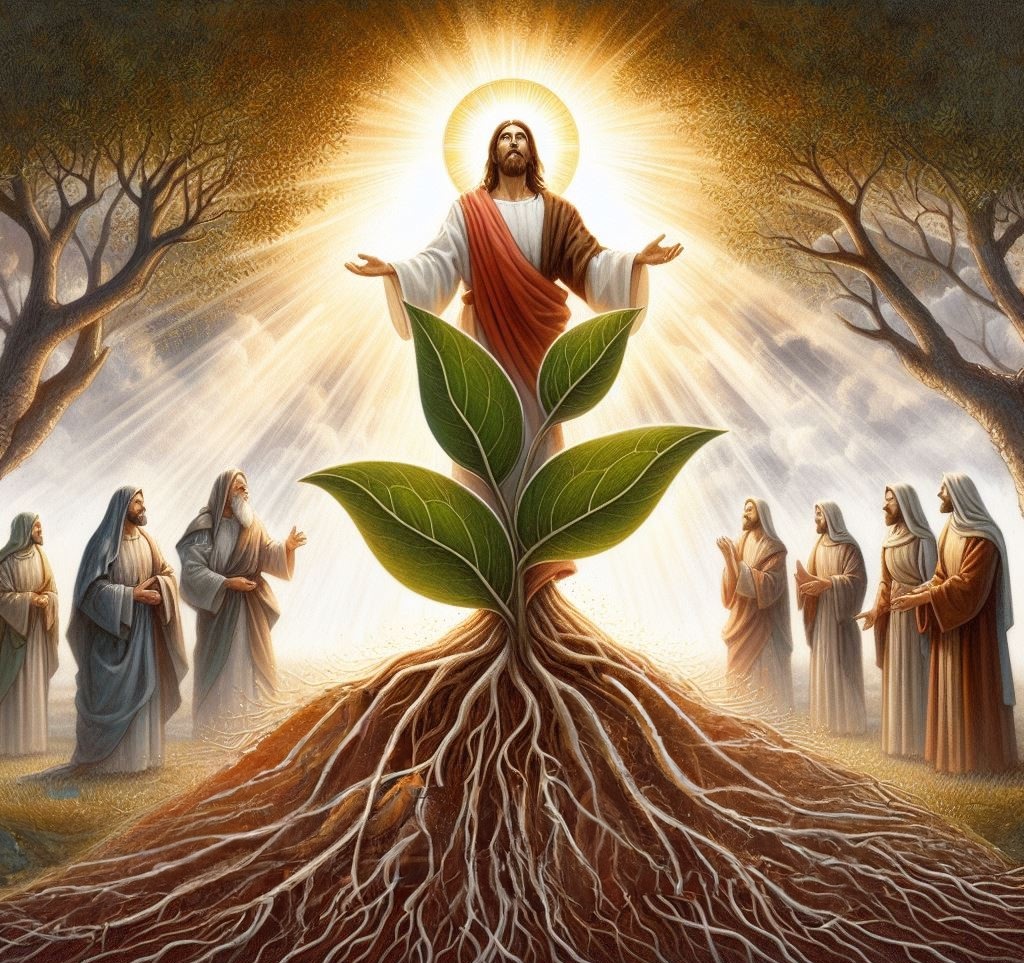
Since they lack wisdom, they turned the house of God, which is meant for prayer into a marketplace. Jesus proved to them that he had a strong desire to dwell in God’s house forever. He exclaimed, “zeal for your house will devour me.” (Jn. 2:13-25) This zeal to dwell in God’s house forever is the motivating factor behind Jesus’ mission. He has come to serve, not to be served, and to give his life as a ransom for many. The house of God is the house of prayer and worship.

On the spiritual level, the temple refers to every one of us. St. Paul tells us in the First Letter to the Corinthians (3:16-17) that we are God’s temple and God’s Spirit dwells in us. Therefore, if anyone destroys God’s temple, God will destroy the person, for God’s temple is Holy, and that we are.

For those who feel that going to church to worship God is not necessary, Jesus has proved to them that we meet in God’s house for adoration and prayers. The church is a sacred place. It should be kept holy and reserved for things concerning God. When we gather in the church, we are in the presence of the almighty and ought to maintain the decorum befitting his presence. May our Lenten observance help us to experience the presence of God among us.

Let us love our parish Church as “our Heavenly Father’s house” and make it a holier place by our care for it, by our active participation in the liturgy, by offering our time and talents in the various ministries, and by our financial support for its maintenance and development.

Revere What Is Holy

March 2, 2024

3rd Sunday of Lent
By Fr. Victor Feltes

On a spring day before Passover, Jesus went up to the Jewish temple in Jerusalem. He found people there selling animals to be sacrificed; oxen, sheep, and doves. He also saw money changers doing business there, seated at their tables exchanging foreign currencies. Jesus Christ, the Prince of Peace, then made a whip out of cords and drove them all out of the temple area along with the sheep and oxen. He spilled the money changers’ coins and overturned their tables. The doves for sale were kept in cages, so Jesus told those vendors, “Take these out of here!” Jesus proclaims peacemakers blessed, yet we see that he is not a pacifist. His disciples who witnessed the event recalled a verse from Psalm 69, “Zeal for your house consumes me, and the insults of those who insult you fall on me.” So why was what was going on at the temple upsetting to Jesus and insulting to his Father?

Jesus said, “Stop making my Father’s house a marketplace!” He also quoted to them a verse from Isaiah, “My house will be called a house of prayer for all nations.” “But you,” Jesus said, “are making it ‘a den of thieves!’” Jesus was angered by how they were profaning the temple, exploiting the Jewish faithful, and being obstacles to foreign peoples’ coming to worship God. The Jews regarded marketplaces as impure places. St. Mark’s Gospel notes how “on coming from [marketplaces], they would not eat without purifying themselves.” Running a market at the temple was treating the holy place like somewhere base or ordinary. Jesus likened the vendors and temple officials to a den of thieves for charging the Jews who came for worship inflated animal prices and exploitive rates of exchange. And their marketplace was setup inside the Court of the Gentiles, the temple courtyard for all the nations, where God desired non-Jews to come and worship him. Consider how much harder it is to pray when surrounded by the noise of others. (This is why we encourage people after Mass to gather to chat in our vestibule or basement—to preserve the quiet of this holy place for the benefit of others at prayer.) Ultimately, Jesus cleanses the temple because the ways in which it was being profaned were creating obstacles to peoples’ deeper relationship with God.

A physical holy place can be profaned. Holy names can be treated profanely as well. God commands his people, “I, the Lord, am your God… You shall not take the name of the Lord, your God, in vain. For the Lord will not leave unpunished the one who takes his name in vain.” This second of the Ten Commandments forbids the misuse of God’s holy name. Swearing false oaths, invoking God to declare untruths, is taking his name in vain. Neglecting or spurning doing something that you have vowed to God, is taking his name in vain. And most commonly of all, using the Lord’s name without reverence and love (that is, blasphemy), is taking his name in vain. Using God’s name carelessly like a joke, employing the name of Christ like a word for excrement, treating holy things as base or ordinary creates a stumbling block for others as they see our Faith as foolishness. If we do not lovingly respect our holy friends in heaven and holy things on earth, then why should they? Only say “O my God” as an act of prayer. Only say “Bless your heart” if you sincerely mean it. And only say “I swear to God” about things which are gravely important and true.

The Second Commandment demands reverence for the Lord’s name for the same reason Jesus forcibly cleansed the temple; that people may come into deeper loving communion with God. Let us love God, and his holy ones, and everyone by word and deed, and respect his holy things and places. By our lived Christian example, may others come to do the same.

St. Paul’s Vestibule Renovation (Day 30)

February 27, 2024

Our vestibule’s support beam is two-thirds installed, our new bathroom’s drywall is up, and our stained boards await their installation. (Click Images to Enlarge)

The Mountaintop Experience

February 26, 2024

2nd Sunday of Lent
By Fr. Chinnappan Pelavendran

God’s call is personal; it is an invitation to enter into his holiness with an attitude of faith and total trust in God. As we enter the second week of Lent, our task is to continue to examine our hearts and change ourselves to be worthy of his glorious paschal mystery. As human beings, we do not like to change and we resist any change as much as we can. However, change is a part of our life. We know that we are pilgrims on a journey to a more permanent dwelling place. A place of total union with our God.

In Genesis 12, God tested Abraham to leave his father’s land for an unknown land. Abraham through his obedience demonstrated that he loved God more than his father’s land. In the first reading as we saw today, God tested Abraham again to see how convinced and strong his faith was by asking him to sacrifice the son of promise. Abraham was a man of great faith and his faith led him to the mountaintop, a place of great encounter with God. It took Abraham three days to journey to the mountaintop at Moriah for the sacrifice and within this period Abraham never changed his mind for his faith remained firm.

God wants you to make the first step with determination and he will come and take control. Remember not to entertain distractions and discouragements in your journey to the mountain-top, Abraham had to leave his servants at the foot of the mountain while he climbed with Isaac alone to avoid distractions. When we keep our faith strong in God and we are ready to make enormous sacrifices towards meeting Him at the mountaintop, then we can be sure that God will be on our side and as the second reading says if God is on our side nobody can be against us. Even when we make mistakes as humans, God would still forgive us since Christ has died to spare us and he stands at God’s right hand interceding for us.

In the Gospel reading, Jesus leads his disciples up a high mountain to witness his transfiguration. Elijah and Moses appear and this demonstrates that Jesus is the fulfillment of the prophets and the law. God speaks from heaven and this gives the disciples clarity in their vocations. Peter wants to stay in the moment. Peter wants to build monuments and to stay. Soon after the events at Mount Tabor, however, Jesus begins to lead his disciples to Jerusalem and the cross. You see, Jesus leads his disciples to another mountain, Golgotha, where all of humanity is transfigured through his passion, death, and resurrection. For Abraham, the undiscovered country seems to be a stretch of land that God would give to him and his descendants. For the disciples of Jesus, the undiscovered country is our salvation, the promise of resurrection and everlasting life.

As we make our way with Jesus from our Mount Tabors to our Good Fridays, we are invited to never lose sight of where Jesus is ultimately leading us. Our destination is our Easter hope. To get there, we need to know who we are, and where we are going, and recommit ourselves to following Jesus who is the Lamb of God who takes away the sins of the world.

His Manifest Devotion

February 24, 2024

2nd Sunday of Lent
By Fr. Victor Feltes

How could Abraham do what he did? He fully trusted in God, and through this trust he and us were greatly blessed. God had promised descendants to Abraham through his son, Isaac, declaring, “Through Isaac descendants shall bear your name.” Because of the miraculous birth his son and other experiences with God, Abraham believed the Lord could and would keep all his promises.

So when Abraham reached the mountain of sacrifice, where the Jewish temple would be built about 900 years later in Jerusalem, he told his servants (in a passage omitted from our first reading): “Stay here with the donkey, while the boy and I go on over there. We will worship and then we will come back to you.” The Holy Spirit tells us in the Letter to the Hebrews that Abraham “reasoned that God was able to raise even from the dead, and he received Isaac back as a symbol.”

After Jesus was transfigured and proclaimed by the Eternal Father to be his beloved Son, “as they were coming down from the mountain, [Jesus] charged [Peter, James, and John] not to relate what they had seen to anyone, except when [he] had risen from the dead. So they kept the matter to themselves, questioning what rising from the dead meant.” The sacrifice of Isaac, in which Abraham’s son was spared, foreshadows the sacrifice of Jesus offered by God the Father for us.

Upon staying the hand of Abraham, the Lord’s messenger said, “I know now how devoted you are to God.” After Christ’s sacrifice, we now know how devoted God is to us. St. Alphonsus Liguori agrees with St. Thomas Aquinas in saying, “God loves man just as if man were His god, and as if without man He could not be happy; ‘as if man were the god of God Himself, and without him He could not be happy.’”

Such is God’s devotion to us. And brothers and sisters, as St. Paul writes, “If God is for us, who can be against us? He who did not spare his own Son but handed him over for us all, how will he not also give us everything else along with him?” So let us fully trust God as Abraham did, and through this well-founded trust be greatly blessed and greatly bless others as well.

St. Paul’s Vestibule Renovation (Day 24)

February 22, 2024

Our plumbing and electrical installation has progressed and the installation of our varnished trim nears. (Click Images to Enlarge)

What Is “The Gospel”?

February 17, 2024

1st Sunday of Lent
By Fr. Victor Feltes

God loves us despite our sins. Sin divides people from God and one another. So to forgive our sins, to heal our divisions, and to make us saints, God the Father sends his Eternal Son. Jesus Christ, the Son of God and Son of Mary, suffers, dies, and rises again to achieve our reconciliation. Through baptism into Christ and his Church we can be saved from sin and death, similar to the story of Noah whose family is saved through the Flood inside of the ark. As God the Holy Spirit drove Jesus out into the desert so he guides his Church, forming saints in Christ’s likeness.

This is an expression of what today we call the gospel. God loves us and wants to deliver us from sin and death and to bless us in his Church through Christ’s saving sacrifice. This is our Faith. This is the Good News both you and I are called to share with others. Who will you invite to receive the gifts of God you have known and enjoyed? If you are open to it, the Holy Spirit will arrange opportunities for you to do so.

Today we hear St. Mark recount how “Jesus came to Galilee proclaiming the gospel of God: ‘This is the time of fulfillment! The Kingdom of God is at hand! Repent, and believe in the gospel!’” This is how Jesus preached at the beginning of his public ministry years before his Passion, Death, and Resurrection. We have an idea of what “the gospel” means now, but what was “the gospel of God” that Jesus called people to believe in before his saving sacrifice had happened?

All of the New Testament writers wrote in Greek. The word our English bibles translate as “gospel” is the Greek word “euangelion” (εὐαγγέλιον). Euangelion is a compound word which combines eu which means “good” and angelia meaning “announcement.” In the ancient Greco-Roman world, the news of a new ruler coming to power or of some major military victory were proclaimed as euangelion. In that cultural setting, Jesus proclaims the great announcement that God’s Kingdom is near.

A divine victory was imminent. Time had come for fulfillment of God’s Old Covenant promises. The will of God would soon be done more fully on earth as it’s done in heaven. Jesus says, “This is the time of fulfillment! The Kingdom of God is at hand! Repent, and believe in the gospel!” Jesus is calling his hearers to believe that things can get better.

Pessimists imagine this world is forever getting worse. But if that were true, if things were always becoming worse and worse what good would there remain for any of us to see now? How could any of us still be left alive? Things can get worse or they can get better. In days past, at the beginning of his public ministry, and now, at the start of this season of Lent, Jesus calls for repentance and faith in the gospel. He calls us to believe that we can become more perfectly like himself; to believe this world around us, as a result of grace and cooperation with Christ, can be more fully God’s Kingdom come.

When he came to his hometown, the people of Nazareth were unwilling to believe in Jesus and what he preached. They refused to believe that Jesus could change their lives and change their world. “So,” St. Mark records, Jesus “was not able to perform any mighty deed there, apart from curing a few sick people by laying his hands on them. He was amazed at their lack of faith.” Peoples’ trust and openness was a factor in how much they could receive from Christ.

What could Jesus do in us and in our world beginning in this Lent? Jesus calls you to “repent and believe in the gospel!

St. Paul’s Vestibule Renovation (Day 16)

February 13, 2024

There’s progress in our plumbing and electrical work while Dell Construction is fashioning our wood trim at their shop.
(Click Images to Enlarge)

Rites of Miraculous Cleansing

February 11, 2024

6th Sunday of Ordinary Time
By Fr. Victor Feltes

The gospels record how a man with some advanced form of skin disease once came to Jesus in one of Israel’s towns. Seeing Jesus, he approaches and kneels and bows beseeching him, “Lord, if you wish, you can make me clean.” Our Lord, who can read human hearts, probably knows how much this particular miracle will cost him, but he is moved with compassion. Jesus reaches out his hand, touches the leprous man and says, “I do will it. Be made clean.” And the leprosy left him immediately.

One can imagine that man’s joy and excitement. He wants to tell everyone about his miracle! However, Jesus warns him sternly, “See that you tell no one anything.” Apparently, at this point in his public ministry, Jesus does not want to attract too much attention too quickly. Instead, Jesus tells the cured man, “Go, show yourself to the priest and offer for your cleansing what Moses prescribed; that will be proof for them.” What did this offering prescribed in the Mosaic Law look like?

We read in the Old Testament Book of Leviticus: “This is the law for the victim of leprosy at the time of his purification. He shall be brought to the priest, who is to go outside the camp to examine him.” This reference to ‘going outside of the camp’ dates back to the days when the Hebrews were still wandering in the Sinai desert. “If the priest finds that the sore of leprosy has healed in the leper, he shall order the man who is to be purified, to get two live, clean birds, as well as some cedar wood, scarlet yarn, and hyssop.” So this offering involves a curious collection of items: two birds, some cedar, scarlet yarn, and at least a branch of hyssop plant.

Then Leviticus says, “The priest shall then order him to slay one of the birds over an earthen vessel with spring water in it. Taking the living bird with the cedar wood, the scarlet yarn and the hyssop, the priest shall dip them all in the blood of the bird that was slain over the spring water, and then sprinkle seven times the man to be purified from his leprosy. When he has thus purified him, he shall let the living bird fly away over the countryside.”

Jesus told the man he cured to perform to this peculiar ritual saying, “that will be proof for them.” But what would it prove? First, it would demonstrate to the Jewish leaders at the Temple that Jesus had not come to transgress God’s Law but to fulfill it. Also, the cured man himself would be living proof of Jesus’ greatness, for the miracle of a leper being suddenly healed is documented only twice in the Old Testament (i.e., the case of Moses’ sister Miriam and that of Naaman the Syrian). Yet ultimately, this ritual provides proof for all people that Jesus Christ’s saving sacrifice had been long-foreseen by God.

The scarlet yarn, the wood, and the hyssop would each have a role in his Passion. The scarlet yarn foreshadows the robe in which they clothed him. That cedar wood points to the Cross connected to his death. And St. John’s Gospel notes how a sprig of hyssop was employed to lift a sponge of sour wine up to Jesus’ lips. The two birds in that purification ritual were of symbolic importance as well. One bird is slain, while the other is spared. That second bird, after being dipped in the water and the blood of its brother, is set free. That spring water, risen from the earth, points to the liberating water of Christian baptism which receives its power from Jesus’ blood.

In addition to its commandments regarding sometimes contagious skin diseases, the Book of Leviticus has rules for evaluating, quarantining, and purifying fungal infections of houses, fabrics, or leather. These commandments were useful in helping protect peoples’ physical health. But these teachings also illustrate, in an allegorical way, lessons about sin in our lives. Mold in your home can harm the health of your whole household. Knowing this, people take black growths on their walls seriously. How seriously do you take diseases in your flesh? How seriously do you take the sins in your soul?

If you had been a leper back then, would you have come to Jesus? Lent begins this week, so decide what you will you do. Go, show yourself to the priest in Confession and faithfully offer the holy Sacrifice of the Mass. Remember and honor the scarlet yarn, the wood, and hyssop of the Innocent One who took your place and through whom you can be cleansed and freed.

The Lord’s Prayer — Funeral Homily for Jack Wolf, 87

February 9, 2024

By Fr. Victor Feltes

In Jack’s final months, I regularly encountered him in his room at Dove Nursing Home. I always found his wife, Mary, there at his side. Like our Blessed Mother Mary or St. Mary Magdalene at the Cross, she faithfully supported Jack through his Passion. He was grateful to receive Holy Anointing and Last Rites, grateful for the consolation of prayers and blessings, and most especially grateful for the precious gift of Jesus in the Holy Eucharist I brought him. Jack was peaceful, prayerful, and well-prepared to die, ready to commend his spirit to God.

His wife Mary tells me that on Jack’s final Friday before God took him to himself, they were praying the Rosary together. Jack was too weak by then to speak very much, but he would join in the first words of the Rosary’s greatest prayer: “Our Father… Our Father… Our Father.” The “Our Father” is known as “The Lord’s Prayer” because it is how our Lord Jesus Christ taught his disciples how to pray. Jesus’ prayer models what he wishes us to desire and to ask for.

One Friday afternoon outside Jerusalem, while darkness covered the whole land, Jesus hung dying on his Cross. Before breathing his last breath, Jesus cried out in a loud voice, “Father, into your hands I commend my spirit!” He prays to God his Father, who is now our Father too. Jesus desires that God’s name would be hallowed; that is, known as holy and loved by all.

Though Jesus is both King of the Jews and the King of Kings, he serves and dies to help the reign of God’s Kingdom come. As Jesus sees and suffers the consequences of our sins, he longs that his Father’s will would be done on earth as it is in heaven. Christ offers his Body on the Cross as he did at the Last Supper. He once declared, “the Bread that I will give is my Flesh for the life of the world.” He gives this Bread to his Church daily at every Holy Mass.

Jesus sacrifices himself to forgive us our trespasses hoping and insisting that we would likewise forgive those who trespass against us. Jesus wants us reconciled vertically to God and horizontally to each other, uniting heaven and earth and East and West in the likeness of the Cross. Jesus faces temptation to save us from temptation. He endures this world’s evil deliver us from evil. So you see, the Our Father prayer Jesus urges us to pray, reflects the great blessings the Lord wills for us.

St. Paul proclaims that “we who were baptized into Christ Jesus were baptized into his death.” And “if we have grown into union with him through a death like his, we shall also be united with him in the resurrection.” It is right that we should offer prayers for Jack’s soul, that he may be perfectly pure to stand before our holy God with all the saints and angels in heaven. Yet we have a great and calm confidence for Jack, that he who was united to Jesus and devoted to our Father will share in Christ’s resurrection to glory. Amen.

St. Paul’s Vestibule Renovation (Day 9)

February 6, 2024

Our back wall’s demolition has begun and wood frames for our vestibule new wall and 1st floor bathroom are installed. Our carpet has been taken-up, revealing the very old tile beneath. Stay tuned for further updates. We plan to have a renewed and expanded vestibule by the Wednesday of Holy Week. (Click Images to Enlarge)

Growing In Christ’s Likeness

February 4, 2024

5th Sunday in Ordinary Time
By Fr. Victor Feltes

This Sunday’s readings feature Job, Paul, and the mother-in-law of Simon Peter. What do these three people have in common? Let’s consider each in turn.

In our first reading we hear from Job who, like Jesus Christ and Mother Mary, suffers greatly despite his innocence. “I have been assigned months of misery,” he says, and troubled nights have been allotted to me. My days [swiftly] come to an end without hope.” At one point, Job’s wife even tells him to “curse God and die!” Yet, despite his painful, honest questions, Job never disobeys. He never renounces the Lord.

Next we hear the Apostle Paul telling the Corinthians how and why he preaches the gospel. Paul insists that preachers have a right to payment for their work, just like others who do valuable labor. He asks, “What then is my recompense?” What is his repayment or reward? “That, when I preach, I offer the gospel free of charge so as not to make full use of my right in the gospel.” What is Paul saying? How is he repaid by not getting paid? Paul says he makes himself “a slave to all so as to win over as many as possible… All this I do for the sake of the gospel, so that I too may have a share in it.”

Lastly, we hear the story from Mark’s Gospel about Simon Peter’s sick mother-in-law. She lays in bed in Capernaum enduring a severe fever. Having just cast out a demon at the synagogue, when Jesus enters the nearby house of Simon Peter and Andrew along with James and John, they immediately tell him about her condition. Jesus approaches her, grasps her hand, and helps her up. The fever leaves her immediately and she waits on them. It seems she had been eager to serve, only her illness had prevented her. Something which Job, and Paul, and Simon Peter’s mother-in-law have in common (besides all appearing in today’s readings) is sharing a likeness to Jesus.

We see Jesus in our gospel driving out demons and curing the sick. If he had been charging fees for his healings, Jesus might have soon become the richest man in Capernaum. If he had announced that he was the Messiah and called men in the region to take up arms with him, Jesus could have soon been seated upon a Jerusalem throne. Instead, though everyone is looking for him, Jesus withdraws alone to a deserted place to pray. Jesus Christ was not called to be great in worldly wealth and power (in the pattern of Herod, or Pilate, or Caesar) but to be a suffering servant. He had not come to be served but to serve, giving his life as a ransom for many.

This is the path to Christ’s glory, which he calls others to share. So the innocent victim Job undergoes a “dark night” when his physical and spiritual consolations are stripped away. Would he still love God and goodness when no longer tasting their rewards? Through Job’s trials his love is purified to become more like Christ’s in his Passion. And St. Paul, like Jesus, does not labor for earthly riches but takes the form of a slave. He ministers for the love of souls and to share in heaven’s reward which this world cannot equal. And Simon Peter’s mother-in-law is eager to serve as she is able, agreeing with Jesus that it more blessed to give than to receive.

It’s too late in time for your name or mine to be written in the Bible, but if in the end our names appear in heaven’s Book of Life, our Christian lives will have shared some likeness to the life of Jesus Christ.

Obey Christ For Abundant Life

January 28, 2024

4th Sunday of Ordinary Time
By Fr. Victor Feltes

The people of Capernaum witnessed the authority and power of Jesus, “He commands even the unclean spirits and they obey him.” The demons are mere creatures, but Jesus Christ is Lord. Will we heed and obey him? According to Catholic exorcists, a good confession is more powerfully effective than an exorcism. This makes sense. It is difficult to root out demonic influence in a person’s life when the person is siding with the demons in rebellions against God through grave sin. But once that person comes to Confession — repentant, seeking to sin no more — they are rejecting those sins and the demons lose some in-roads.

I once received a request from an unmarried, non-Catholic couple to help them with spiritual disturbances occurring in their home. They were hearing strange noises and voices, seeing and finding inanimate objects moving about, and their dogs were behaving strangely. Unless they were lying to me (and I can see no purpose in them lying) the couple sometimes witnessed phenomena together, which rules out the possibility of these being mere hallucinations. I visited and spoke with them, blessed their house, prayed for them, and blessed them.

When I reached out to them some months later, they said they had been thinking about contacting me again. They said that following the house blessing things had gotten better — quieter, for a time — but then the disturbances resumed and maybe worse than before. So I came back and blessed their house and both of them anew, but I admonished them again, just as I had before, that it was gravely important that they cease fornicating. I told them God’s will for them was either to marry, to live separately, or to live chastely like a brother and sister. Behaving otherwise is to lie with one’s body; simulating a permanent gift of self without vowing that same commitment before God and the world.

That man and woman and I did not know whether spiritual disturbances had occurred in that house before they moved in. However, I can see why the Lord might permit these unsettling signs for the couple’s own good: to deepen their faith in spiritual things, to help them recognize their sin, and to motivate them to change. I believe my first blessings had some effect to reveal to these non-Catholics that such blessings hold power and to validate me as a messenger. Yet these blessings did not make the disturbances go away forever since that would do them little good; making the symptoms disappear without curing the underlying disease. The couple was grateful for my visits, but I do not know what they went on to choose.

Jesus manifests his full authority over demons. “He commands…the unclean spirits and they obey him.” So one might ask, “Why doesn’t Jesus simply constrain all of the demons now, making them completely incapable of doing anything?” I suppose some imagine that without any demons there would be no further evil in the world, but temptations and sins would still remain. As St. James writes in his New Testament letter, “each person is tempted when he is lured and enticed by his own desire. Then desire conceives and brings forth sin, and when sin reaches maturity it gives birth to death.” Would our temptations be less if the demons were no more? Quite possibly. So why does Jesus allow them to prowl about the world at all? It must be for our greater good and glory, for “God works all things for the good of those who love him.” Why was Satan allowed to tempt Jesus in the desert if not for Christ’s glory and our greater good? And notice how once Jesus said, “Get away, Satan,” then the devil left him. Jesus Christ offers each of us the grace to do his will, but will we heed and obey him?

Someday, I would like to write a book imagining modern-day America if it suddenly became impossible to commit the vast majority of sins. How would people react to God the Father decreeing that much more of his active will must be done on earth as it is in heaven? My story would describe the initial disruptions for a society in which the markets for immoral things evaporate overnight, and many other goods and jobs (like door locks and security guards) are no longer needed. Then I would tell how much society would benefit from the abolishment of sin. Imagine all of the wealth wasted on sins or on repairing sins’ effects instead being spent more usefully; not to mention the greater peace people would enjoy from never being willfully mistreated anymore. Yet my narrative would also note how much people would complain; for instance, they would insist upon their “rights” to speed or curse or lie, or to misuse their bodies or their money however they desire. They would denounce God for his tyranny, and wail and grind their teeth. For these people, it would be like a hell on earth.

In Deuteronomy, Moses proclaims to the Hebrews, “A prophet like me will the Lord, your God, raise up for you from among your own kin; to him you shall listen.” God declares about that prophet, “[I] will put my words into his mouth… Whoever will not listen to my words which he speaks in my name, I myself will make him answer for it.” Jesus is that promised prophet raised up from his own people, the Incarnate Word of God. “People were astonished at his teaching, for he taught them as one having authority and not as the scribes.

Jesus does not instruct us in order to control us. He does not command us so that he may dominate us. Jesus declares, “A thief comes only to steal and slaughter and destroy; I came so that [you] might have life and have it more abundantly.” In this age, we are free to disobey God like the demons did. But in the age to come, such sins will no longer be permitted. If we die as friends of God, before we can enter heaven our love for sins will need to first be fully purged. God shall not force his enemies into heaven against their will.

Brothers and sisters, Christ is Lord. He is here to help us, not to destroy us. So choose love over sin, end your rebellions, and encounter him in the confessional. Heed his authority, obey his teachings, and embrace the more abundant life Jesus is offering you.

A Protest Against Paradise

We’re Called To Follow Jesus Together

January 20, 2024

3rd Sunday in Ordinary Time
By Fr. Victor Feltes

Imagine four teenagers growing up in the same small town. They’re seniors in high school and play on the same varsity football team together. What are the odds of all of them going on to play and eventually being inducted into the Hall of Fame? The odds are tiny. Not many players are drafted by the NFL and fewer still get their names enshrined at Canton, Ohio. This scenario would require an incredible concentration of athletic talent emerging in the same place at the same time.

In today’s gospel, as Jesus passes by the Sea of Galilee, he sees two brothers, Simon and Andrew, casting their fishing nets into the sea. When Jesus says, “Come after me and I will make you fishers of men,” they abandon their nets to follow him. Walking along a little farther, Jesus sees James and John, the sons of Zebedee, mending their nets in a boat. Jesus calls them too and they leave to follow him. What were the odds of these four, young, uneducated men, living and laboring together in the same small seaside town, going on to become some of the Church’s greatest saints?

Was this all arranged through divine providence? Had God been gently guiding the course of history to prepare for the day of their calling by Christ? Or, can Jesus do great works with anyone who answers his call? Yes and yes. “God works all things for the good of those who love him,” preparing, and calling, and making them fruitful when they follow him. Look at the Prophet Jonah. Just one day’s preaching in an enormous city accomplished the people of Nineveh’s repentance, delivering them from destruction. Had God been preparing the Ninevites’ minds and hearts for that day, or did God graciously empower Jonah’s words? Yes. God prepares to do great things with us in our free cooperation with him.

There is another interesting reflection found in the calling of Simon, Andrew, James and John. These four fishermen already knew each other. They were coworkers in business together, two pairs of biological brothers, and familiar friends. These future-apostles began as Jesus’ disciples already sharing close relationships with one another. Not all twelve apostles knew each other before they followed Jesus, but they came to know each other very well. And when Jesus would send them out on missions he did not send them out alone, he sent them two by two. Jesus understands that such community and friendship is important for Christians to support each other and grow together.

Consider again the Prophet Jonah. At first, he fled alone from doing God’s will. And then, from the dark depths, he feared to die alone. Reluctantly, he came alone to preach at Nineveh, yet he still refused to forgive and pray and hope for the Ninevites’ salvation. After Jonah’s dreams were dashed (that is, when the Ninevites were not destroyed) he became angry and wished to die alone. Imagine if Jonah had had a Christian friend accompanying and supporting him. Someone to caution him to do God’s will. Someone to comfort him as he faces death. Someone to challenge him to forgive his enemies. Someone to encourage him to see the goodness in his own life and in other people. Jonah could have greatly benefited from having a companion like that.

Jesus knows Christian friendship and fellowship helps us become saints together. So cultivate such community. If you lack it, pray for it and actively pursue it. Reach out to people, have phone or video chats, invite them out to lunch, or have them over for coffee. Find fellowship in “That Man Is You,” or with our Knights of Columbus, or in our parish ladies’ group. Stick around after Masses to chat with people in our vestibule. If you see someone new at church, please make them feel welcome. Christ calls every one of us and plans to make us fruitful as we cooperate with him, but it is unlikely Jesus is asking you to follow him all by yourself. He calls us to follow him together.