The Saints of the Week

August 18, 2013

●  August 20—St. Bernard of Clairvaux

He was a 12th century abbot and a reformer and Doctor of the Church. You may know the beautiful Memorare Prayer he composed:

Remember, O most gracious Virgin Mary, that never was it known that anyone who fled to thy protection, implored thy help, or sought thy intercession was left unaided. Inspired with this confidence, I fly to thee, O Virgin of virgins, my Mother; to thee do I come; before thee I stand, sinful and sorrowful. O Mother of the Word Incarnate, despise not my petitions, but in thy mercy hear and answer me.  Amen.

 ●  August 21—St. Pope Pius X

This Holy Father, who reigned from 1903 t0 1914, notably promoted the daily reception of Jesus in the Holy Eucharist:

“If the Angels could envy, they would envy us for Holy Communion.”

“My advice is that you receive holy communion frequently—if you cannot do so daily—and unite yourself to the Savior. Make frequent visits to him in the solitude and silence of the tabernacle.”

●  August 22—The Queenship of St. Mary

Why do we celebrate the Blessed Virgin Mary as a queen? In the days of the Davidic kingdom, Jerusalem’s kings took multiple wives. Who, then, was considered the queen? The king’s mother was acknowledged as queen mother. She had a throne at the king’s right hand, the seat of honor, and served as a special intercessor in the kingdom, bringing subjects’ requests to her son. (See 1 Kings 2:17-20)

St. Mary, our sweet Lady, is the mother of Jesus, the everlasting Davidic king whose reign extends over all. Therefore, in his Kingdom, Mary is the queen mother, the queen of heaven and earth, the celebrated queen of all creation. She now sits enthroned at Christ’s right hand and serves as a powerful and compassionate intercessor for us all.

What do the Virgin Mary & the Ark of the Covenant Have in Common?

August 17, 2013

The Ark of the Covenant bore the presence of God and three other important things, while Mary’s womb bears Jesus Christ, our Priest, Prophet and King. (Hebrews 9:4)

The Ark bore the Ten Commandments, the word of God in stone, while Mary’s womb carries Jesus Christ, the Word of God in flesh. (Deuteronomy 31:26, John 1:14)

The Ark bore the staff of Aaron which had miraculously blossomed, while Mary’s womb carries Jesus Christ, a bud blossoming miraculously from the stump of Jesse. (Numbers 17:10, Isaiah 11:1)

The Ark bore a gold container of Manna from heaven, while Mary’s womb carries Jesus Christ, the Bread from heaven. (Hebrews 9:4, John 6:41)

The Ark was made of wood overlaid with pure gold, inside and out, while Mary is a human being who is made “full of grace.” (Exodus 25:10-11, Luke 1:28)

King David joyfully leaped and danced before the Ark, while St. John the Baptist leaps within his mother’s womb at Mary’s arrival. (2 Samuel 6:14, Luke 1:44)

David asks, “How can the ark of the Lord come to me,” while St. Elizabeth asks, “And how does this happen to me, that the mother of my Lord should come to me?” (2 Samuel 6:9, Luke 1:43)

The Ark remained in the house of Obed-edom outside Jerusalem for three months and God blessed his whole house, while Mary remains in the house of Zechariah in Judea for three months. (2 Sam 6:14, Luke 1:56)

No man was to touch God’s holy Ark, lest they die. St. Joseph holds a similar reverent regard towards Mary, his wife. (Numbers 4:15, 2 Samuel 6:7, Matthew 1:25)

The Ark was a mercy-seat which served as the throne for God’s presence on earth. “On entering the house [the Magi] saw the child with Mary his mother.” (Exodus 25:22, Matthew 2:11)

In his vision of heaven, St. John saw the Ark revealed. The next thing he sees is a glorious woman pregnant with the Christ child. (Revelation 11:19, 12:1)

Just as the Ark of the Covenant was of central, though secondary, importance in the Old Covenant, so God gives the Blessed Virgin Mary an essential role in his New Covenant.

The “In Brief” Catechism on the Revelation of God (CCC #68-73)

August 17, 2013

● By love, God has revealed himself and given himself to man. He has thus provided the definitive, superabundant answer to the questions that man asks himself about the meaning and purpose of his life.

●  God has revealed himself to man by gradually communicating his own mystery in deeds and in words.

●  Beyond the witness to himself that God gives in created things, he manifested himself to our first parents, spoke to them and, after the fall, promised them salvation (Genesis 3:15) and offered them his covenant.

●  God made an everlasting covenant with Noah and with all living beings (Genesis 9:16). It will remain in force as long as the world lasts.

●  God chose Abraham and made a covenant with him and his descendants. By the covenant God formed his people and revealed his law to them through Moses. Through the prophets, he prepared them to accept the salvation destined for all humanity.

● God has revealed himself fully by sending his own Son, in whom he has established his covenant forever. the Son is his Father’s definitive Word; so there will be no further Revelation after him.

20 Good Reasons

August 8, 2013

Twenty good reasons to attend Mass on Sundays and every holy day of obligation: 

  1. Jesus wants you there.

  2. Mary wants you there.

  3. The angels and saints want you there.

  4. Father wants you there.

  5. Jesus, through his Church, insists.

  6. Our Church needs prayers.

  7. Our world needs prayers.

  8. Our country needs prayers.

  9. Your family and friends need prayers.

  10. Your absence would deprive our parish.

  11. We must put God first in our lives.

  12. We must keep the 3rd Commandment.

  13. Kids must see that Mass is important.

  14. Joining at Mass prepares us for Heaven.

  15. If we refuse, we are unready for Heaven.

  16. The Mass empowers you for daily life.

  17. The Holy Spirit would speak to you.

  18. The Son would come to you.

  19. The Father would bless you.

  20. God is not outdone in generosity.

The “In Brief” Catechism

August 8, 2013

In 1992, Pope John Paul the Great released the Catechism of the Catholic Church as “a sure norm for teaching the faith.” It is an excellent resource for anyone wishing to practice or understand the Catholic Faith better, but who has the time to read it?

Thankfully, the Catechism summarizes its extensive teaching into 59 “In Brief” sections. If you are committed to learning more about your Catholic Faith in an easy though comprehensive way, then study the “In Brief” Catechism in this year ahead.

On Man’s Capacity for God (CCC #44-49)

● Man is by nature and vocation a religious being. Coming from God, going toward God, man lives a fully human life only if he freely lives by his bond with God.

● Man is made to live in communion with God in whom he finds happiness: “When I am completely united to you, there will be no more sorrow or trials; entirely full of you, my life will be complete.” (St. Augustine)

● When he listens to the message of creation and to the voice of conscience, man can arrive at certainty about the existence of God, the cause and the end of everything.

● The Church teaches that the one true God, our Creator and Lord, can be known with certainty from his works, by the natural light of human reason.

● We really can name God, starting from the manifold perfections of his creatures, which are likenesses of the infinitely perfect God, even if our limited language cannot exhaust the mystery.

● Without the Creator, the creature vanishes. This is the reason why believers know that the love of Christ urges them to bring the light of the living God to those who do not know him or who reject him.

Catholic Word Puzzles

August 6, 2013

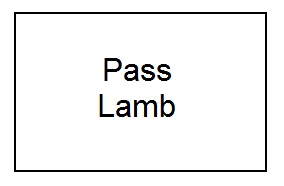
Can you decipher the Catholic phrases represented in these word puzzles? The first, for example, is “Walking on Water”:
Walking on WaterGo in PeaceThree Days in the TombPass Over LambJesus Rose on the Third DayVirgin MarySeparated BrethrenArk of the CovenantLove Covers a Multitude of SinsThe Second Letter of Paul to the Thessalonians

Solutions [Highlight to Reveal]: “Go in Peace,” “Three Days in the Tomb,” “Passover Lamb,” “Jesus Rose on the Third Day,” “Virgin Mary,” “Separated Brethren,” “Ark of the Covenant,” “Love Covers Many (a Multitude of) Sins,” “The Second Letter of Paul to the Thessalonians.”

Pope Francis’ August Prayer Intentions

August 6, 2013

General Intention: Parents and Teachers
That parents and teachers may help the new generation to grow in upright conscience and life.

Missionary Intention: The Church in Africa
That the local Church in Africa, faithfully proclaiming the Gospel, may promote peace and justice.

We Keep Only What We Have Given

August 6, 2013

By St. Basil the Great (330-379 AD)

You are going to leave your money behind you here whether you wish to or not. On the other band, you will take with you to the Lord the honor that you have won through good works. In the presence of the universal judge, all the people will surround you, acclaim you as a public benefactor, and tell of your generosity and kindness.

Do you not see how people throw away their wealth on theatrical performances, boxing contests, mimes and fights between men and wild beasts, which are sickening to see, and all for the sake of fleeting honor and popular applause? If you are miserly with your money, how can you expect any similar honor? Your reward for the right use of the things of this world will be everlasting glory, a crown of righteousness, and the kingdom of heaven; God will welcome you, the angels will praise you, all men who have existed since the world began will call you blessed. Do you care nothing for these things, and spurn the hopes that lie in the future for the sake of your present enjoyment. Come, distribute your wealth freely, give generously to those who are in need. Earn for yourself the psalmist’s praise: He gave freely to the poor; his righteousness will endure forever.

How grateful you should be to your own benefactor; how you should beam with joy at the honor of having other people come to your door, instead of being obliged to go to theirs! But you are now ill-humoured and unapproachable; you avoid meeting people, in case you might be forced to loosen your purse-strings even a little. You can say only one thing: “I have nothing to give you. I am only a poor man.” A poor man you certainly are, and destitute of all real riches; you are poor in love, generosity, faith in God and hope of eternal happiness.

A Multiple Choice Meditation

August 6, 2013

In the Gospel’s Parable of the Rich Fool, a rich man’s land produces bountifully. Upon seeing this, which of the following does the rich man say:

A) “I shall fill my barns and give the rest to the poor.”
B) “I shall tear down my barns and build larger ones to store everything away.”
C) “I shall keep only what I need and give the rest away.”
D) “Lord, what do you want me to do with all of this wealth?”

Which response do you think would have pleased the Lord most?

The Work & Riches God Esteems

August 6, 2013

Two weeks ago, Martha approached Jesus to complain about her sister, “Tell her to help me.” Today, a man goes to Jesus to complain about his brother, “Tell my brother to share the inheritance with me.” While both complaints are seemingly appeals for justice, Jesus refuses them. They are actually centered on selfishness rather than love. Jesus says, “it will not be taken from her,” and “take care to guard against all greed.”

The rich man in the parable says to himself, “You have so many good things stored up for many years, rest, eat, drink, be merry,” but the God says, “You fool, this night your life will be demanded of you.” The rich man is about to come to face his judgment as a truly poor man—possessing no wealth “in what matters to God.”

Martha is corrected for being obsessed with her anxious, self-centered work. The Rich Man is condemned for aspiring to an easy life of leisure. We are called to avoid both errors as we work diligently with generous love to accrue the kind of riches that God esteems.

Misquoting the Pope

August 6, 2013

They say a rumor can travel around the world while truth is still pulling its boots on.

  • In 2006, media reports suggested that Pope Benedict, in referencing the statement of a 14th century Byzantine emperor, had insulted Mohammad in a speech on faith and reason. Muslim protests and violence followed.
  • In 2010, news reports said that Pope Benedict had loosened the Church’s teachings against contraception in an interview.
  • Last May, the media indicated that Pope Francis had preached in a homily that atheists would go to heaven by merely doing good.
  • This week, reports made it seem that Pope Francis was diverging with the Church’s teaching on the wrongness of homosexual acts because of one reply in an interview with reporters on his flight returning from World Youth Day in Brazil.

In each of these cases, the initial headlines and news reports took the popes’ words out of their larger contexts and trumpeted them with a significance which they never had. Many reporters know little about religion and misunderstand the Catholic news stories they cover. Some reporters are hostile toward Catholicism and tend to report on the Church as if it were changing to accord with their views. The lesson here is that initial media coverage about a Pope saying something controversial can be relied upon to be unreliable. Do not be unsettled when you hear such “news reports.” Just wait a few days for the neglected facts and the unremarkable full story to catch up.

The Wisdom of the Saints

July 25, 2013

“You cannot be half a saint; you must be a whole saint
or no saint at all.”

-St. Therese of Lisieux

“If you are what you should be, you will set the whole world ablaze!”

St. Catherine of Sienna

“You learn to speak by speaking, to study by studying, to run by running, to work by  working, and just so, you learn to love by loving. All those who think to learn in any other way deceive themselves.”

-St. Francis de Sales

“Let us go forward in peace, our eyes upon heaven,
the only one goal of our labors.”

-St. Therese of Lisieux

“Love God, serve God; everything is in that.”

-St. Clare of Assisi

“Pray as though everything depended on God.
Work as though everything depended on you.”

-St. Augustine

“Pray, hope, and don’t worry”

-St. Pio of Pietrelcino

Excerpts from Lumen Fidei, The Light of Faith (Part 4)

July 25, 2013

The light of faith is capable of enhancing the richness of human relations, their ability to endure, to be trustworthy, to enrich our life together. Faith does not draw us away from the world or prove irrelevant to the concrete concerns of the men and women of our time. Without a love which is trustworthy, nothing could truly keep men and women united. Human unity would be conceivable only on the basis of utility, on a calculus of conflicting interests or on fear…. Faith is truly a good for everyone; it is a common good. Its light does not simply brighten the interior of the Church, nor does it serve solely to build an eternal city in the hereafter; it helps us build our societies in such a way that they can journey towards a future of hope. (§51)

The first setting in which faith enlightens the human city is the family. I think first and foremost of the stable union of man and woman in marriage. This union is born of their love, as a sign and presence of God’s own love, and of the acknowledgment and acceptance of the goodness of sexual differentiation, whereby spouses can become one flesh (see Genesis 2:24) and are enabled to give birth to a new life, a manifestation of the Creator’s goodness, wisdom and loving plan. Grounded in this love, a man and a woman can promise each other mutual love in a gesture which engages their entire lives and mirrors many features of faith. Promising love for ever is possible when we perceive a plan bigger than our own ideas and undertakings, a plan which sustains us and enables us to surrender our future entirely to the one we love. Faith also helps us to grasp in all its depth and richness the begetting of children, as a sign of the love of the Creator who entrusts us with the mystery of a new person. (§52)

In the family, faith accompanies every age of life, beginning with childhood: children learn to trust in the love of their parents. This is why it is so important that within their families parents encourage shared expressions of faith which can help children gradually to mature in their own faith. …We have all seen, during World Youth Days, the joy that young people show in their faith and their desire for an ever more solid and generous life of faith. (§53)

Modernity sought to build a universal brotherhood based on equality, yet we gradually came to realize that this brotherhood, lacking a reference to a common Father as its ultimate foundation, cannot endure. We need to return to the true basis of brotherhood. …Thanks to faith we have come to understand the unique dignity of each person, something which was not clearly seen in antiquity. …Without insight into these realities, there is no criterion for discerning what makes human life precious and unique. Man loses his place in the universe, he is cast adrift in nature, either renouncing his proper moral responsibility or else presuming to be a sort of absolute judge, endowed with an unlimited power to manipulate the world around him. (§54)

When faith is weakened, the foundations of life also risk being weakened, as the poet T.S. Eliot warned: “Do you need to be told that even those modest attainments / As you can boast in the way of polite society / Will hardly survive the Faith to which they owe their significance?”If we remove faith in God from our cities, mutual trust would be weakened, we would remain united only by fear and our stability would be threatened. (§55)

To speak of faith often involves speaking of painful testing, yet it is precisely in such testing that [St.] Paul sees the most convincing proclamation of the Gospel, for it is in weakness and suffering that we discover God’s power which triumphs over our weakness and suffering. …Christians know that suffering cannot be eliminated, yet it can have meaning and become an act of love and entrustment into the hands of God who does not abandon us; in this way it can serve as a moment of growth in faith and love. By contemplating Christ’s union with the Father even at the height of his sufferings on the cross (see Mark 15:34), Christians learn to share in the same gaze of Jesus. Even death is illumined and can be experienced as the ultimate call to faith, …the ultimate “Come!” spoken by the Father, to whom we abandon ourselves in the confidence that he will keep us steadfast even in our final passage. (§56)

Let us turn in prayer to Mary, Mother of the Church and Mother of our faith.

Mother, help our faith! Open our ears to hear God’s word and to recognize his voice and call. Awaken in us a desire to follow in his footsteps, to go forth from our own land and to receive his promise. Help us to be touched by his love, that we may touch him in faith. Help us to entrust ourselves fully to him and to believe in his love, especially at times of trial, beneath the shadow of the cross, when our faith is called to mature. Sow in our faith the joy of the Risen One. Remind us that those who believe are never alone. Teach us to see all things with the eyes of Jesus, that he may be light for our path. And may this light of faith always increase in us, until the dawn of that undying day which is Christ himself, your Son, our Lord!

Given in Rome, at Saint Peter’s, on 29 June, the Solemnity of the Holy Apostles Peter and Paul, in the year 2013, the first of my pontificate. (§60)

Excerpts from Lumen Fidei, The Light of Faith (Part 3)

July 25, 2013

In the Easter liturgy, the light of the paschal candle lights countless other candles.  Faith is [likewise] passed on, we might say, by contact, from one person to another, just as one candle is lighted from another. (§37)

The transmission of the faith not only brings light to men and women in every place; it travels through time, passing from one generation to another. …It is through an unbroken chain of witnesses that we come to see the face of Jesus. But how is this possible? How can we be certain, after all these centuries, that we have encountered the “real Jesus”? Were we merely isolated individuals… a certainty of this sort would be impossible. I cannot possibly verify for myself something which happened so long ago. But this is not the only way we attain knowledge. …Faith’s past, that act of Jesus’ love which brought new life to the world, comes down to us through the memory of others — witnesses — and is kept alive in that one remembering subject which is the Church. …The love which is the Holy Spirit and which dwells in the Church unites every age and makes us contemporaries of Jesus…. (§38)

It is impossible to believe on our own. Faith is not simply an individual decision which takes place in the depths of the believer’s heart, nor a completely private relationship between the “I” of the believer and the divine “Thou,” between an autonomous subject and God. By its very nature, faith is open to the “We” of the Church; it always takes place within her communion.(§39)

The Church, like every family, passes on to her children the whole store of her memories. But how does this come about in a way that nothing is lost, but rather everything in the patrimony of faith comes to be more deeply understood? It is through the apostolic Tradition preserved in the Church with the assistance of the Holy Spirit that we enjoy a living contact with the foundational memory. …For transmitting a purely doctrinal content, an idea might suffice, or perhaps a book, or the repetition of a spoken message. But what is communicated in the Church, what is handed down in her living Tradition, is the new light born of an encounter with the true God…. There is a special means for passing down this fullness, a means capable of engaging the entire person, body and spirit, interior life and relationships with others. It is the sacraments, celebrated in the Church’s liturgy. (§40)

The transmission of faith occurs first and foremost in baptism. Some might think that baptism is merely a way of symbolizing the confession of faith, a [teaching] tool for those who require images and signs, while in itself ultimately unnecessary. An observation of Saint Paul about baptism reminds us that this is not the case (see Romans 6:4). (§41)

[Baptism] is not an act which someone can perform on his own, but rather something which must be received by entering into the ecclesial communion which transmits God’s gift. No one baptizes himself, just as no one comes into the world by himself. Baptism is something we receive. (§41)

The sacramental character of faith finds its highest expression in the Eucharist. The Eucharist is a precious nourishment for faith: an encounter with Christ truly present in the supreme act of his love, the life-giving gift of himself. In the Eucharist we find the intersection of faith’s two dimensions. On the one hand, there is the dimension of history…. On the other hand, we also find the dimension which leads from the visible world to the invisible. (§44)

[These] are the four elements which comprise the storehouse of memory which the Church hands down: the profession of faith, the celebration of the sacraments, the path of the ten commandments, and prayer. …TheCatechism of the Catholic Church, [which is structured on these four elements] is a fundamental aid for that unitary act with which the Church communicates the entire content of her faith: “all that she herself is, and all that she believes.” (§46)

These days we can imagine a group of people being united in a common cause, in mutual affection, in sharing the same destiny and a single purpose. But we find it hard to conceive of a unity in one truth. We tend to think that a unity of this sort is incompatible with freedom of thought and personal autonomy. Yet the experience of love shows us that a common vision is possible, for through love we learn how to see reality through the eyes of others, not as something which impoverishes but instead enriches our vision. Genuine love, after the fashion of God’s love, ultimately requires truth, and the shared contemplation of the truth which is Jesus Christ enables love to become deep and enduring. (§46)

Faith is also one because it is directed to the one Lord, to the life of Jesus, to the concrete history which he shares with us. St. Irenaeus of Lyons made this clear in his struggle against Gnosticism [which contrasted the crude, fleshy faith of the many & the enlightened, spiritual faith of the few.] St. Irenaeus insisted that there is but one faith, for it is grounded in the concrete event of the incarnation and can never transcend the flesh and history of Christ, inasmuch as God willed to reveal himself fully in that flesh. For this reason, he says, there is no difference in the faith of “those able to discourse of it at length” and “those who speak but little.” (§47)

Since faith is one, it must be professed in all its purity and integrity. Precisely because all the articles of faith are interconnected, to deny one of them, even of those that seem least important, is tantamount to distorting the whole. Each period of history can find this or that point of faith easier or harder to accept: hence the need for vigilance in ensuring that the deposit of faith is passed on in its entirety (see 1 Timothy 6:20) and that all aspects of the profession of faith are duly emphasized. Indeed, inasmuch as the unity of faith is the unity of the Church, to subtract something from the faith is to subtract something from the veracity of communion. (§48)

As a service to the unity of faith and its integral transmission, the Lord gave his Church the gift of apostolic succession. …She depends on the fidelity of witnesses chosen by the Lord for this task. …Thanks to the Church’s magisterium, [the whole counsel of God] can come to us in its integrity, and with it the joy of being able to follow it fully. (§49)

Who’s Who — 15th Sunday in Ordinary Time—Year C

July 14, 2013

Who are the “thrones, dominions, principalities and powers” mentioned in today’s second reading?

Saint Paul is listing four varieties of angels who have differing roles in serving God. Angels are purely spiritual creatures who were made through and for Christ. They have minds for knowing and freewill for choosing—this makes them persons and capable of love. The angels always glorify God and  serve in his saving plans for other creatures. Sometimes they are His messengers, like Gabriel at the Annunciation. Some serve as guardians; over whole nations or even the least children (see Daniel 10 & Matthew 18:10.) Archangels and our guardian angels are thought to belong to the lowest levels in the hierarchy of angels—well below the power of the ranks that Saint Paul mentioned—yet we do well to remember to pray for their help. Even the least of our angelic protectors is more powerful than any flesh and blood foe. Even the highest demons who act against God’s will can be overcome by humble angels, as the archangel Saint Michael’s victory over the devil proves (see Revelation 12:7-9.)

In our Gospel, Jesus is questioned by a “scholar of the Law.”  What does that title tell us about that man?

He was an expert on the Old Covenant Law of Moses and its 613 commandments. The scribes in Jesus’ day were regarded as scholars of the Law but tended to be hostile toward Christ.

A “Levite” passed on the opposite side. Who were the Levites?

These were men of the tribe of Levi (though not descended from Aaron like the Jewish priests) who were appointed to assist in the worship and rituals at the Temple in Jerusalem. A commandment in the Law of Moses required Levites (and priests) to avoid contact with dead bodies in order to remain ritually pure, which is probably why they passed by on the opposite side of the road.

The Samaritan showed mercy. Who were the “Samaritans?”

The Samaritans were a mixed-race people descended from intermarriage between Israelites and Assyrian colonists. They dwelt in Samaria, the region between Galilee and Judea. Samaritans worshiped the same God as the Jews and kept many of the same religious practices, but they rejected the priesthood at Mt. Zion and worshiped instead on their own Mt. Gerizim. The enmity between the Jews and Samaritans was so great that Jews traveling between Galilee and Judea often crossed the Jordan to bypass the land of Samaira entirely.