Mary’s Advice — 2nd Sunday in Ordinary Time—Year C

March 3, 2013

The Blessed Virgin Mary is the greatest woman who has ever lived. She is the mother of God, but also our mother, our sister, and our friend. Mary is so easy for us to love because she is so lovable and she loves us a lot. God loves Mary even more than we do and, like a man in love, he speaks about her throughout the Bible, from the beginning to the end.

In Genesis, God speaks of Mary when he says to the serpent-devil, “I will put enmity between you and the woman, and between your offspring and hers.” And in the book of Revelation, ‘A great sign appears in the sky, a woman clothed with the sun, with the moon under her feet, and on her head a crown of twelve stars. She gives birth to a son, a male child, destined to rule all the nations….’

In our first reading today, when the Lord professes his love for Mount Zion and the city of Jerusalem, he is speaking about the people symbolized by these places.  First among these is Mary, the virgin and bride, in whom God, the builder and bridegroom, rejoices.

Maybe you will be surprised to learn that, despite her great importance, Mary speaks on only four occasions in all the Scriptures. (Her husband, St. Joseph, utters no words at all, and so we imagine him as being a quiet man.) Mary speaks at the Annunciation, at the Visitation, upon the Finding of the Boy Jesus in the Temple, and at today’s Wedding Feast of Cana.

Mary’s words are few, but powerful. For instance, today we hear the profound last words that Mary speaks in the Bible. Mary says to the servants, “Do whatever he tells you.” That’s good advice for Christians in every age. “Do whatever Jesus tells you.” This has essentially been Our Lady’s message to us at every Marian apparition throughout the centuries since then. Mary never tells us anything different from the Gospel’s message, but encourages, or gravely reminds us: “Do whatever he tells you.”

This is not only Mary’s message, but also the way she lived and lives her life. At the Annunciation, when Mary said, “I am the handmaid of the Lord; let it be done unto me according to your word,” she was essentially saying, ‘Lord, I want to do whatever you say.’ When Mary gave the servants her instruction she did not know what Jesus was going to do, it seemed like he might do nothing, but she trusted in him. She trusted that whatever the Lord wished would truly be best.

Mary wants us to have this attitude our lives too; to trust in his care when unexpected problems arise; to trust him when we are burdened by carrying the heavy waters of our duty. Jesus’ plans may not be what we would prefer but they will always be the best. Jesus transformed Cana’s water into wine. Mary says, “Do whatever he tells you.” Listen to Mary and see what he transforms in your life.

La Santísima Virgen María es la mujer más grande que jamás haya vivido. Ella es la madre de Dios, sino también nuestra madre, nuestra hermana y nuestra amiga. María es tan fácil que nos encanta, porque es digno de ser amado y nos ama mucho. Dios ama a María incluso más que nosotros y, como un hombre enamorado, habla de ella a través de la Biblia, desde el principio hasta el final.

En el Génesis, Dios habla de María cuando le dice a la serpiente-demonio, “Y pondré enemistad entre ti y la mujer, y entre tu descendencia y la suya.” Y en el libro de Apocalipsis, ‘aparecia entonces en el cielo una figura prodigiosa: una mujer envuelta por el sol, con la luna bajo sus pies y con una corona de doce estrellas en la cabeza…. La mujer da a luz un hijo varón, destinado a gobernar todas las naciones….’

En nuestra primera lectura de hoy, cuando el Señor le declara su amor por el monte de Sión y la ciudad de Jerusalén, está hablando acerca de la gente simbolizados por estos lugares. La primera de ellas es María, la doncella y la esposa, en quien Dios se alegra.

Tal vez usted se sorprenderá al saber que, a pesar de su gran importancia, Mary habla en sólo cuatro ocasiones en todas las Escrituras. (Su esposo, San José, pronuncia ninguna palabra en absolute, y así nos imaginamos a José como un hombre tranquilo.) Ella habla en la Anunciación, en la Visitación, en el hallazgo del Niño Jesús en el Templo, y en la banquete de la boda de Caná de hoy.

Las palabras de María son pocas, pero poderosas. Por ejemplo, hoy oímos las palabras últimas María habla en la Biblia. María dice a los servían: “Hagan lo que Él les diga.” Es un buen consejo para los cristianos de todas las épocas. “Hagan lo que Jesús les diga.” Esto ha sido esencialmente el mensaje de Nuestra Señora a nosotros en cada aparición mariana a través de los siglos desde entonces. Ella nunca nos dice nada diferente que el mensaje del Evangelio, sino que alienta o gravemente nos recuerda: “Haced lo que Él os diga.”

Esto no es sólo María mensaje, sino también la forma en que vivió y vive su vida. En la Anunciación, cuando María dijo: ” Yo soy esclava del Señor, que Dios haga conmigo cono me has dicho,” fue básicamente diciendo: “Señor, quiero hacer lo que dice.” Cuando María dio a los criados su instrucción, María no sabía que Jesús iba a hacer, parecía como si fuera a hacer nada, pero ella confiaba en él. Confía en que cualquier cosa que el Señor ha querido realmente sería lo mejor.

María quiere que tengamos esta actitud en nuestra vida también, a confiar en el cuidado de Jesús cuando se producen problemas, confiar en Jesús cuando estamos agobiados por llevar las aguas pesadas de nuestros deberes. Los planes de Jesús no puede ser lo que nosotros preferiríamos, pero siempre será mejor. Jesús transformó el agua en vino de Caná. María dice, “Haced lo que Él os diga.” Escuche a María y ver lo que se transforma en su vida.

Baptize Him? — Baptism of the Lord—Year C

March 3, 2013

We can understand why God chose water as his sacramental instrument. Water is a rich symbol. Water cleans things. Baptism, likewise, cleanses from sin. Water is essential to life, all living creatures depend upon it. Baptism, likewise, gives us divine life. Water is ordinary but precious, like Jesus Christ incarnate. But why is Jesus baptized today? He has no sins and he already has divine life, so why does he seek baptism?

From ancient times, water has also been a symbol of death. Deep waters, such as the temperamental sea, can be dangerous. Going underwater is a symbol of death. Baptism, likewise, immerses us in Jesus’ death and his resurrection. Jesus was not born, baptized, nor sacrificed for his own sake, but for ours. He becomes one of us in life and death so that we may be united to him through these things.

When Jesus comes out of the water, God the Holy Spirit descends and rests upon him. God the Father speaks and declares from heaven, “You are my beloved Son, with whom I am well pleased.” When you were baptized, you came out of the water with Jesus. The Holy Spirit came to rest upon you, and the Father has considered you his child ever since. Now, when the Father gazes on you, he sees his beloved Son. Therefore, call on the power of the Holy Spirit in your needs, and always find peaceful rest in the reality of your sonship.

Podemos entender por qué Dios escogió agua como su instrumento sacramental. El agua es un símbolo rico. El agua limpia las cosas. Bautismo, del mismo modo, limpia de pecado. El agua es esencial para la vida, todos los seres vivos dependen de ella. Bautismo, del mismo modo, nos da la vida divina. El agua es normal, pero precioso, del mismo modo Jesús Cristo encarnado. Pero ¿por qué es bautizado Jesús hoy? Él no tiene pecados y ya tiene la vida divina, así que ¿por qué busca el bautismo?

Desde la antigüedad, el agua ha sido también un símbolo de la muerte. Las aguas profundas, tales como el mar tempermental, pueden ser peligroso. El ir bajo el agua es un símbolo de la muerte. Bautismo, del mismo modo, nos sumerge en la muerte de Jesús y su resurrección. Jesús no nació, bautizado, ni sacrificado por su propio bien, sino para el nuestro. Se convierte en uno de nosotros en la vida y la muerte, para que podamos estar unidos a él a través de estas cosas.

Cuando Jesús sale del agua, Dios el Espíritu Santo desciende y se posa sobre él. Dios el Padre habla y declara desde el cielo: “Tú eres mi hijo, el predilecto; en ti me complazco.” Cuando usted fue bautizado, usted salió de la agua con Jesús. El Espíritu Santo se posó sobre ti, y el Padre ha considerado que su hijo desde entonces. Ahora, cuando el Padre mira en usted, ve a su amado Hijo en usted. Por lo tanto, llamamiento a las potencias del Espíritu Santo en sus necesidades, y siempre encontrar descanso tranquilo en la realidad de su filiación.

Great Gifts — Epiphany of the Lord

March 3, 2013

Today we celebrate the Epiphany. Today the magi from the East arrive in Bethlehem. They do not come on Christmas day, but much later, months or perhaps a year later. The Holy Family has moved from the stable into a house. The magi enter the house and find the child with his mother, Mary. (This is still true today, for we will find Jesus wherever Mary is.) The magi bow down before the little one and give him gifts of gold, frankincense, and myrrh. These are strange gifts for an ordinary child, but they are poetically appropriate for Jesus.

Still today, gold symbolizes wealth and power. They give Jesus gold because he is a king, the newborn king of the Jews. Since ancient times, incense has been used in temples and chapels for the worship of God. Jesus should be offered incense because he is not only our great high priest but he is also God. Myrrh is a fragrant spice which people formerly used to prepare dead bodies for burial. Jesus shall be the divine and human sacrifice who will die for us.

The gospel tells us that the magi went back home by another way. Our ways should change after encountering the Christ child. He is our king. He comes not to dominate, but to liberate, yet he demands our obedience. We need to read the gospels and adopt the habits he teaches. Imagine how the world would be different if everyone did this. At first, we can be converted ourselves, but this by itself is enough to make our lives, our families, and our community noticeably better.

The baby Jesus comes to us in the least intimidating way conceivable. Do not fear the infant Jesus, like King Herod did. Do not fear his kingship over you. Let Jesus be the Lord of your life.

Hoy celebramos la Epifanía. Hoy los magos de Oriente llegan a Belén. Los magos no vienen en el día de Navidad, pero más tarde, tal vez meses o un año más tarde. La Sagrada Familia se ha movido desde el establo en una casa. Los magos entran en la casa y encontrar al niño con su madre, María. (Esto es aún cierto hoy, vamos a encontrar a Jesús donde María está.) Los magos se postran ante del pequeño y le dan regalos de oro, incienso y mirra. Estos son regalos extraños para un niño ordinario, sino les son apropiados para Jesús.

Aún hoy, el oro simboliza la riqueza y el poder. Los magos dan a Jesús oro, porque él es un rey, el rey recién nacido.  Desde tiempos antiguos, el incienso se ha utilizado en los templos y capillas para la adoración de Dios. Jesús se debe ofrecer incienso, porque no es sólo nuestro gran sumo sacerdote, sino que también es Dios. Mirra es una especia aromática que la gente antiguamente utiliza para preparar los cadáveres para el entierro. Jesús será el sacrificio divino y humano que va a morir por nosotros.

El Evangelio nos dice que los magos regresaron a a su tierra por otro camino. Nuestros caminos se debe cambiar después de encontrarse con el niño Jesús. Él es nuestro rey. Él no viene a dominar sino para liberar, sin embargo, demanda nuestra obediencia. Debemos leer los evangelios y adoptar los hábitos de que enseña. Imagínese cómo el mundo sería diferente si todo el mundo lo hizo. Al principio, puede ser convertido a nosotros mismos, pero esto, por sí misma, es suficiente para hacer que nuestras vidas, nuestras familias y nuestra comunidad notablemente mejores.

El niño Jesús viene a nosotros en la forma menos intimidante concebible.  No temas al niño Jesús, como el rey Herodes hizo.  No tengas miedo de su reinado sobre ti.  Permita que Jesús sea el Señor de tu vida.

Into Her Hands — January 1 — Mary the Mother of God

March 3, 2013

Why do we call Mary the mother of God? Some Protestants hesitate to call Mary this because they don’t know what we mean by it. It is true that Mary did not give birth to either God the Father or the Holy Spirit. Mary is not an eternal mother-goddess. However, this human woman, whom God created, did give birth to Jesus Christ. Since Jesus is divine, Jesus is God, and therefore Mary is truly the Mother of God. We begin this new year of our Lord celebrating his mother by this awesome title.

Sometimes Protestant Christians fear that we Catholics put Mary ahead of Jesus. This is a silly fear. We celebrate Mary because we celebrate her Son. Mary is important because Jesus is so important. Mary is so wonderful because Jesus is so wonderful. He is the Sun, she is the moon. Her radiance, her beauty, her goodness, her love, they all shine bright, but her light is only a reflection of His.

On this first day of this new year of our Lord, let us entrust our lives into the soft hands of Mary. God the Father entrusted his Son into those kind hands. She will look after us too, and always lead us to her son.

¿Por qué llamamos María “la madre de Dios?” Algunos protestantes temen llamar María esta porque no saben lo que significa. Es verdad que María no hizo nacer Dios el Padre o el Espíritu Santo. María no es una eterna diosa madre. Sin embargo, esta mujer humana, que Dios creó, nació Jesucristo. Puesto que Jesús es divino, Jesús es Dios, por lo que María es verdaderamente la Madre de Dios. Comenzamos este nuevo año de nuestro Señor celebrando su madre por este gran título.

A veces los cristianos protestantes temen que ponemos María delante de Jesús. Pero celebramos a María porque celebramos su hijo. María es importante porque Jesús es tan importante. María es tan maravilloso porque Jesús es tan maravilloso. Él es el Sol, mientras que ella es la luna. Resplandor de María, su belleza, su bondad, su amor, todos brillan, pero su luz es sólo un reflejo de Jesús.

En este primer día de este nuevo año de nuestro Señor, encomendamos nuestras vidas en las manos suaves de María. Dios el Padre ha confiado a su Hijo en las manos amables. Ella cuidará de nosotros también, y siempre nos llevan a su hijo.

Prepare the Way — 2nd Sunday of Advent—Year C

March 3, 2013

The message of John the Baptist is “prepare the way of the Lord. Fill the valleys, lower the hills, straighten the roads, and smooth the paths.” What is he talking about? John is speaking like the heralds or messengers who, in ancient times, were sent ahead to announce to villagers how they were to prepare for the king’s arrival. They would gather everyone together and say, “Pay heed! Your king is coming to visit you soon, but this road on which he will come is full of potholes and has too many twists and turns. Smooth and straighten this road, otherwise when the king comes he will feel unwelcome.”

John the Baptist words are not only spoken to the past. He speaks to us today about the state our lives. Advent prepares not only for the coming of Christ at Christmas but for the coming of Jesus as our Lord and judge on the Last Day. There are sacred works for us to do in preparation.

Note that in the fifteenth year of Caesar Tiberius, the word of God did not come to the emperor in Rome. The word of God did not come to the governor or kings of the Holy Land. This word did not come to the chief priests in Jerusalem. This word came upon John in the wilderness, John the poor, John the stranger, John the seemingly insignificant. The word of God comes to little ones, like John and us. Popes, bishops and presidents do important things, but if we rely solely on them to prepare and advance the kingdom of God on earth we will be greatly disappointed. The Lord also will be disappointed, because he wants to do great things through us. We cooperate with the Lord in the Gospel cause.

What holy works does God want you to do? I do not know, but the Holy Spirit knows. He is always there with you; at home, at work, when you are praying. He has a word for you. The Lord wants to do great things through you. Listen, listen, and prepare their part of the way of the Lord in your life and those around you.

San Juan el Bautista dice, “Preparen el camino del Señor; rellenen los valles, rebajen las montañas, alanen los caminos!” Juan habla como antiguos heraldos y mensajeros que se enviaron por delante para anunciar a los aldeanos cómo debían prepararse para la llegada del rey. “Preparen el camino del Rey, para que cuando él venga, estará encantado con ustedes.”

Estas no son palabras dichas sólo para el pasado. Se hablan hoy a nosotros. Adviento prepara no sólo para la venida de Cristo en Navidad. Adviento prepara para la venida de Jesús como nuestro Señor y juez en el último día.  Hay obras sagradas para nosotros que hacer en preparación.

Observe que en el año décimo quinto del César Tibero, no vino la palabra de Dios al emperador en Roma. La palabra de Dios no vino al gobernador o reyes de la Tierra Santa. Esta palabra no vino a los sumos sacerdotes en Jerusalén. Esta palabra vino sobre Juan en el desierto; Juan el pobre, Juan el desconocido, Juan el aparentemente insignificante. La palabra de Dios vino a los pequeños, como Juan, y nosotros. Papas, obispos y presidentes hacen cosas importantes. Pero si dependemos exclusivamente de ellos para preparar y avanzar el reino de Dios en la tierra, vamos a estar decepcionado. El Señor también se sentirán decepcionados, porque quiere hacer grandes cosas a través de nosotros. Tenemos colaborar con el Señor en la causa del Evangelio.

¿Qué santas obras qué Dios desea que hagas? No sé, pero el Espíritu Santo sabe. Él siempre está allí con usted en su casa, en su trabajo, o cuando se está rezando. Él tiene una palabra para ti. El Señor quiere hacer grandes cosas a través de usted. Escucha, escucha, y preparar su parte del camino del Señor en la viva a su alrededor.

Lost Children — Feast of the Holy Family—Year C

March 3, 2013

Joseph and Mary loved their faith. Every year they journeyed with family and friends to celebrate the Passover in Jerusalem. But one year, when the festivities had ended and they were heading for home, Jesus stayed behind.

It takes a day for them to realize He’s even missing, and then his parents hastily retrace their steps, with impassioned prayers on their lips for the safety of their Son. (Perhaps Mary wondered if these days would bring the sword that was to pierce her soul.) But then, on the third day, they find Jesus safe and sound, dialoguing ably with the religious teachers in the temple.

He seems surprised that his parents would be searching for Him, “Why were you looking for me?” Jesus still has some “advancing” to do in both wisdom and in the experience that comes with age. Not telling His parents where He was going to be was perhaps the boy Jesus’ honest mistake, and when Mom and Dad tell Him it’s time to come home He leaves with them and is obedient to them.

Today, on the Feast of the Holy Family, we recall Saints Mary and Joseph, the ideal parents, who lost track of their only Son in the big city; and we recall Jesus, the holy Child, the sinless Lamb, who wandered off from them. This episode goes to show that even perfect people sometimes make mistakes. Remember: not every personal failure is a personal sin.

Sometimes parents come to me with great sadness because their children have wandered from the Catholic Faith. They often blame themselves. Now it is possible to be negligent in not handing on the Faith, but the kind of parents who grieve over their children leaving the Church are probably ones who raised their children in the best way they knew how. These parents should not be so hard on themselves. Even Mary and Joseph had a child who wandered off on His own.

In this Year of Faith, who are the ones who have wandered from the Church that we should be seeking out? Pray for them and invite them back. Tell them, “It’s time to come home.”

Remain Within — 21st Sunday in Ordinary Time—Year B

March 3, 2013

In our first reading, Joshua led the Hebrews into a new country. Joshua told the people: “Say here now whom you will serve.” (The Lord, or another god?) They had to make a choice. They had to do this many times again later, amid the temptations of their new home.

In our gospel we hear: “From that time many of his disciples withdrew and did not want to walk with him.” This is John, chapter six, verse sixty-six (interestingly: six, six, six.) Some disciples of Christ still leave him today. In the gospel, they left because of his teaching on the Eucharist. Today many leave to enjoy forbidden pleasures, leaving the God of true love. Other people become very rich and comfortable and think they do not need the creator of all these things.

We say: “Far from us to forsake the Lord to serve other gods, for the Lord is our God.” But even if we approach the Lord every week here in the parish, we must remember that serving the Lord means more than saying the right things. Remember, Jesus said: “Not every one that saith unto me, Lord, shall enter into the kingdom of heaven, but he who does the will of my Father who is in heaven.”

What is that will? Jesus tells his bride, the Church. Christ loves the Church and gave himself for her to sanctify. In it, Jesus purifies us with the sacraments, the Scriptures and the teachings of the apostles.
Stay in it, and you will be one with him. The Catechism of the Catholic Church says: ‘A word of St. Joan of Arc to her judges sums up the faith of the holy doctors and the good sense of the believer: “About Jesus Christ and the Church, I simply know that they’re just one thing, and we shouldn’t complicate the matter.”‘ Remain in her in this new country and you will be one with him. Say: “As for me, my family and I will serve the Lord.”

En nuestro primera lectura, Josué ha conducido a los hebreos en un nuevo país. Josué le dijo al pueblo: “Digan aquí y ahora a quién quieren servir. (El Señor, o un otro dios.) Tuvieron que hacer una elección. Que tenían que hacer esto muchas veces de nuevo más tarde, en medio de las tentaciones de sus nuevo hogar.

En nuestro evangelio escuchamos: “Desde entonces, muchos de sus discípulos se echaron para atrás y ya no querían andar con él.” Esto es Juan, capítulo seis, versículo sesenta y seis (interesante: seis, seis, seis.) Algunos discípulos de Cristo todavía le abandonan hoy. En el evangelio, se fueron porque de su enseñanza sobre la Eucaristía. Hoy en día muchos lo dejan para disfrutar pleasures prohibidos, abandonando al Dios del amor verdadero. Otras personas llegar a ser muy rico y cómodo, y no piensan que necesitan el creador de todas estas cosas.

Nosotros decimos: “Lejos de nosotros abandonar al Señor para servir a otros dioses, porque el Senor es nuestro Dios.” Pero, incluso si nos acercamos al Señor cada semana aquí en la parroquia, hay que recordar que servir al Señor significa mucho más que decir las cosas correctas. Recuerde, Jesús dijo: “No todo el que me dice: Señor, Señor, entrará en el reino de los cielos, sino el que hace la voluntad de mi Padre que está en los cielos.”

¿Cuál es esa voluntad? Jesús le dice a su esposa, la Iglesia. Cristo ama a su Iglesia y se entregó por ella para santificarla. En ella, Jesús nos purifica con los sacramentos, las Escrituras, y las enseñanzas de los apóstoles. Permanece en ella, y tú serás uno con él. El Catecismo de la Iglesia Católica dice: ‘Una palabra de Santa Juana de Arco a sus jueces resume la fe de los santos doctores y expresa el buen sentido del creyente: “De Jesucristo y de la Iglesia, me parece que es todo uno, y que no es necesario hacer una dificultad de ello.”’ Permanece en ella, en esto nuevo país, y tú serás uno con él. Digamos: “En cuanto a mí toca, mi familia y yo serviremos al Señor.”

What Jesus is Like — 4th Sunday in Ordinary Time—Year C

March 3, 2013

You may recognize today’s second reading from many weddings. This beautiful discourse on love from Saint Paul’s first letter to the Corinthians is often chosen by couples to be read at their ceremony. Ironically, Saint Paul wrote these words to the Christians at Corinth because they were not living together in love. However, these words gave to them, and give to us, a pattern to follow. This pattern for love is Jesus.

As Saint John has told us, “God is love.” Also, Jesus Christ is truly God. Therefore, whatever is true for love, is true about Jesus Christ. And likewise, knowing Christ gives us understanding into love.

Jesus is patient, Jesus is helpful and does not envy; Jesus is not boastful nor conceited, not rude nor selfish, not irritable nor resentful; he does not rejoice in unrighteousness, but rejoices with the truth. Jesus bears all things, hopes all things, preserves all things. Jesus endures forever.

Meditating on these words help us to know Jesus better. They can also serve as a list for ourselves. In which area do you need and want to improve the most? Choose one virtue and pray at this Mass for the help of God.

Never be afraid because your growth in holiness is slow. In today’s Gospel, the people of Nazareth, neighbors and acquaintances of Jesus, “were filled with wrath, and rose up, drove him out of the city and took him to a ledge of the mountain … to thrust him down. But passing through the midst of them, went away from there. You or I, in the situation of Jesus, could begin to hate these people. But Jesus’ love lasts forever.

Jesus can be patient and merciful towards people who hate him. Imagine the intense joy he has for people who want to serve and please him.

Usted podría reconocer la segunda lectura de hoy de muchas bodas.  Este discurso hermoso en el amor, de la primera carta de San Pablo a los Corintios, se elige a menudo por las parejas para ser leído en su ceremonia. Irónicamente, San Pablo escribió estas palabras a los cristianos de Corinto porque no estaban viviendo juntos en el amor. Sin embargo, estas palabras dio a ellos, y daran a nosotros, un modelo a seguir. Esto modelo del amor es Jesús.

Comosan Juan nos ha dicho: “Dios es amor”. Además, Jesucristo es verdaderamente Dios. Por lo tanto, todo lo que es verdadero para el amor, es verdad acerca de Jesucristo. Y de igual manera, sabiendo que Cristo nos da la comprensión en el amor.

Jesús es comprensivo, Jesús es servicial y no tiene envidia; Jesús no es presumido ni se envanece; no es grosero ni egoísta; no se irrita ni guarda rencor; no se alegra con la injusticia, sino que se goza con la verdad. Jesús disculpa sin límites, confía sin límites, espera sin límites, soporta sin límites. Jesús durara por siempre.

Meditando sobre estas palabras nos ayudan a conocer mejor a Jesús. También pueden servir como una lista para nosotros. ¿En qué área te necesito y quiero mejorar más? Elija una virtud y rezar en esta Misa por la ayuda de Dios.

Nunca tengas miedo porque su crecimiento en la santidad es lento. En el evangelio de hoy, la gente de Nazaret, los vecinos y los conocidos de Jesús, “se llenaron de ira, y levantándose, lo sacaron de la ciudad y lo llevaron hasta una saliente del monte…  para despeñarlo. Pero Él, pasando por en medio de ellos, se alejó de ahí”.  Usted o yo, en la situación de Jesús, podría comenzar a odiar a esta gente. Pero el amor de Jesús durara por siempre.

Jesús puede ser paciente y misericordioso hacia las personas que lo odian. Imaginen se la legría intensa que él tiene para las personas que quieren servirte y agradarte él.

Infinite Power at Work

August 27, 2012

“What if God visited to you today and said, “Here.  It’s all yours.  Everything.  I put it all under your feet.  Anything you want done.  The universe will be your servant.  Just speak and it will respond.”

…I bet you wouldn’t do what Jesus did… ”Jesus knew that the Father had put all things under his power.”  So he cured all disease, ended all suffering, erased all evil, wiped away every tear.  He answered all our prayers.  He stopped the nonsense and rebellion and asserted his lordship.

No.  Not this God.

“Jesus knew that the Father had put all things under his power… so he got up from the meal, took off his outer clothing, and wrapped a towel around his waist.  After that, he poured water into a basin and began to wash his disciples’ feet, drying them with the towel that was wrapped around him.”

Love is what God is after and power has no power to prompt love.  So behold the Master of the Universe, the Ancient of Days, the Lord of Heaven’s Armies: Jesus Christ the Foot Washer.”

-Chris Travis

A Cursory Commentary of St. Matthew’s Gospel

July 23, 2012

By Father Victor Feltes

Matthew 1

Jesus is not a “once upon a time” myth, he becomes man as a part of real history

Jesus’ genealogy shows that God writes straight with crocked lines. He succeeds despite sins.

Forty forefathers’ generations precede Jesus because forty symbolizes times of preparation.

Like God the Father, Joseph chose mercy over what “the law” permitted (Deuteronomy 22:20.)

Joseph, like his namesake in Genesis, has dreams which lead to the salvation of the world.

Read the rest of this entry »

Lingering Before The Lord — Tuesday, 17th Week in Ordinary Time—Year I

July 26, 2011


During the Exodus, the Lord’s presence would descend in a cloud upon the desert tabernacle called the tent of meeting. All the children of Israel would worship at the mouth of their own tents while Moses and his young assistant Joshua went in before the Lord. After speaking with the Lord, Moses had to leave to tend to the responsibilities involved in leading God’s people. Joshua, however, remained behind to pray, give thanks, and intercede for others.

God was pleased with Moses for the time he could spend with Him, blessing Him with a radiant light. He was also pleased with Joshua for lingering after. He would later select Joshua to lead the people after Moses’ passing because he was a man like David, “a man after God’s own heart.” Sometimes we can’t come to Mass early or linger after because of the demands of home and work and that’s ok. But if you can and do spend extra time with the Lord, know that this pleases Him greatly and helps you yield a greater harvest for Him.

Parables About Jesus — Monday, 17th Sunday in Ordinary Time—Year A

July 26, 2011

Jesus speaks of Kingdom of God (or the Kingdom of Heaven) more times in the Gospel than perhaps anything else. But what is this kingdom? The Kingdom dwells among us when God’s will is done on earth as it is in Heaven. The Kingdom reigns wherever the will of God is known and followed. His Kingdom is not equally present at all times and everywhere, which is why we pray for the kingdom to fully come, yet it can be present within a good community, in a loving family, or within a Christian’s soul.

Jesus leads us into the Kingdom of God. He teaches us how to live as kingdom people. There’s an interesting twist contained in Jesus’ teachings: whenever He speaks about the kingdom of God, He is usually teaching us something true about Himself. This is so, because Jesus is the kingdom incarnate. Wherever Jesus is, you find the Kingdom, and wherever the Kingdom is, Jesus is there.

Because of this close identification between Jesus and the Kingdom, we can substitute between these terms and reread Scripture with new eyes. For example, “In those days John the Baptist appeared, preaching in the desert of Judea saying, ‘Repent, for (Jesus Christ) is at hand!’” The beatitude becomes: “Blessed are the poor in spirit, for theirs is (Jesus Christ).” One time, when Jesus sees how his disciples are shooing the little children away, He becomes indignant and says to them, “Let the children come to me; do not prevent them, for (I) belong to such as these.” And we hear it said, “Seek ye first (Jesus Christ) and his righteousness, and all these things will be given you besides.” When applied to today’s Gospel, Jesus three parables become revelatory of Jesus Himself.

Jesus is like a treasure buried in a field. This means that Jesus must be found. In the movie Forrest Gump, a down-in-the-dumps Lt. Dan Taylor asks Forrest derisively, “Have you found Jesus, Gump?” Forrest replies, “I didn’t know I was supposed to be looking for Him, Sir.” If I ask you if you’ve found Jesus you might feel like a bit Forrest; you’re baptized, you’re here at church, how could you still need to find him?

Well, think of it this way: do you have a joy and excitement in your relationship with Christ anything like a man who finds a hidden treasure? Does you life feel rich and full of opportunity because you know Him? If not, then you have not yet found Him like He wants you too. We need to seek after Him in prayer and learning. Encounter Him in the Gospels, especially if you never have before. (Do you want to reach the end of your days without ever having read the Gospels?) Jesus is a rich treasure whom we must seek out and discover.

The second parable: Jesus is like a merchant searching for fine pearls. (Notice that Jesus was first the treasure, now He’s the searcher.) This means that Jesus searches after us. We should not despair. He pursues more passionately than a man searching a profit. Jesus seeks us as a man in love. A pearl may get dirty and think it is no longer desirable, but Jesus has the solution for cleansing pearls. He emptied Himself of glory to become man for us, and then he gave everything He had to die as a man for us. Do not forget that if we were the only sinner on earth He would have still come for you. Never despair. Jesus will always pursue you like a man in love.

In the third and final parable, Jesus is like a net thrown into the sea, which collects fish of every kind. This means that Jesus confronts us all. As Simenon foretold of The baby Jesus when Mary and Joseph brought Hi to the temple, “Behold, this child is destined for the fall and rise of many in Israel, and to be a sign that will be contradicted so that the thoughts of many hearts may be revealed.” The truth of Jesus Christ confronts all people, even if they’ve never heard the name of Jesus. But we have heard His name, and we must not put off responding to Him forever.

Jesus is the treasure we must seek. We must not despair, for Jesus relentlessly seeks after us. Jesus is the net who confronts us all, so we must not put Him off forever.

Whom Her Heart Loves — July 22 – St. Mary Magdalene

July 23, 2011


Mary Magdalene in today’s gospel shares obvious parallels with the woman in the first reading from the Song of Songs. The woman in the Song of Songs rose to find him whom her heart loves. Mary Magdalene rose early in the morning and came to the tomb. The woman in the Song of Songs sought her beloved but did not find him. Mary Magdalene reported to the apostles, “They have taken the Lord from the tomb, and we don’t know where they put him.” The watchmen came upon the woman in the Song of Songs. As Mary wept, she saw two angels in white. The woman in the Song of Songs asked, “Have you seen him whom my heart loves?” Mary said (unknowingly to Jesus), “Sir, if you carried him away, tell me where you laid him, and I will take him.” The woman in the Song of Songs had hardly left the watchmen when she found him whom her heart loved. Jesus said Mary’s name; she turned and said to him, “My rabbi!” The woman in the Song of Songs goes on to say, “I took hold of him and would not let him go.” Jesus had to say to Mary Magdalene, “Stop holding on to me, for I have not yet ascended to the Father.”

So what is the reason behind this providential parallel between Mary Magdalene and the woman in the Song of Songs? I have heard it said that the Song of Songs is the book of the Bible on which the saints have written about most. Perhaps God gave us Mary’s example so that we would not interpret the Song of Songs merely as a description of the corporate love between Yahweh and the people of God, or between Jesus and His bride the Church, but so that we would also see in it the love affair between Him and every person individually.

Our faith is not based upon feelings alone. (Feelings are too fickle to be our foundation.) Yet, feelings of the heart are an important part of our relationship with God. As Jesus said, “You shall love the Lord you God with all your heart, with all you mind, with all your strength, and with all your soul.” We must love Him with the intellect of our minds, with the strength of our bodies, and with the will of our souls, but we must also love Him with the emotions of our hearts. Stir up your affections for Christ, pattern the emotions of Mary Magdalene, who showed true devotion to Him whom her heart loved.

The Desert Problem—Thursday, 16th Week in Ordinary Time—Year I

July 21, 2011

This morning I would like to talk with you about something I call “the Desert Problem.” We see it with the children of Israel during the Exodus. They had seen the ten plagues that were afflicted on their Egyptian oppressors. They had seen the Red Sea split before them. They heard God speak so powerfully and intensely with Moses at the mountain that they trembled. They accepted God’s covenant. They saw, they heard, but then they forgot. The Israelites seem to always be sinning in the desert and we can feel annoyance at them. However, we should not judge them harshly, for their story is our own. We also struggle with the desert problem.

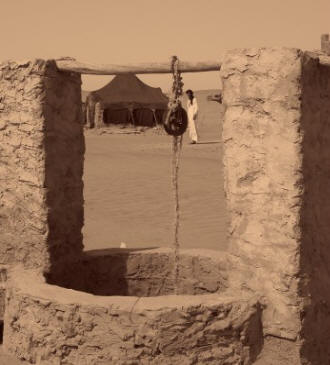
We come to dry and difficult places in our own lives, too. When we face difficulties we too often forget what we have seen and heard and give in to depression, despair, and sin. The solution to the desert problem is the refreshing water of memory. When you are in a desert you need water, but you don’t need to dig a new well every time you need refreshment; you can go back to an old and reliable well. Before you come to your next desert, think of times in the past when you knew God was close, perhaps an intense consolation experienced in prayer, or a providential miracle you’ve witnessed in life. And when you enter your next desert (or if you find yourself in one now) recall these memories to mind and be refreshed in faith. ‘Blessed are your eyes, because they have seen, and your ears, because they have heard,’ but to remain faithful to God in the desert you must remember the great things of God you have seen and heard.

Bread of Angels — Wednesday, 16th Week in Ordinary Time—Year I

July 21, 2011

Here at St. John’s, on the wall behind me, there is painted an angel holding a banner which says, “Ecce Panis Angelorum.” This is a Latin phrase. “Ecce” means “behold,” “panis” means “the bread,” and “angelorum” translates to “of the angels.” And thus the phrase goes, “Ecce Panis Angelorum; Behold the bread of angels.” This idea comes from Psalm 78, the psalm we heard today, which says of the Manna and the Israelites in the desert, “Man ate the bread of angels, food he sent them in abundance.” 

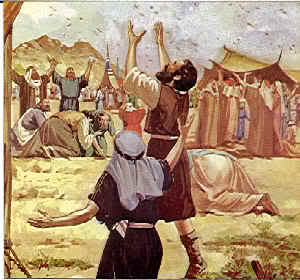
Why was the Manna in the desert was called the bread of angels? Extra-Biblical Jewish tradition suggested that the Manna bread actually nourished the angels. The Manna also came down from Heaven for the benefit of men and came through the mediation of angels. Of course, the Manna prefigures the Eucharist, which nourishes us through the deserts of this life toward the Promised Land. The Eucharist is really Jesus Christ who came down from Heaven for mankind. The angels are indeed nourished by this bread, Jesus Christ, for their lives are sustained thorough Him. We also receive the New Testament Manna with the help of the angels. As we say in Eucharistic Prayer I: “Almighty God, we pray that your angel may take this sacrifice to your altar in heaven. Then, as we receive from this altar the sacred body and blood of your Son, let us be filled with every grace and blessing.” It has been said that if angels could envy us, it would be for our reception of Jesus in the Eucharist.

The angels do more for us than we realize. We should remember to thank them; for getting us out of bed to come to Mass this morning, for assisting us here in our prayers, and for assisting us in our daily lives. Lovingly invite them, give them the permission, to do more in your lives. (They’re probably just waiting for you to ask.) Let us ask their intercession and at this Mass, together with the angels who surround us, let us delight in the bread of angels.