Prayer is Necessary — 29th Sunday in Ordinary Time—Year C

October 17, 2010

As the Hebrews fought the Amalekites, Moses held up in his hands, above his head, the wooden staff of God. In doing this, He resembles Jesus, who outstretched his arms on the cross, and the priests of Christ’s Church, who raise their hands up to Heaven.  Each one, Moses, Jesus, and His priests, offer prayers to the Father.

As long as Moses kept his hands raised up,
Israel had the better of the fight,
but when he let his hands rest,
Amalek [the enemy] had the better of the fight.

What would have happened if Moses had kept his arms just down at his sides? God’s people would have lost their deadly battle. What would happen if Jesus were to stop pleading for us at right hand of the Father in Heaven? We would be left all on our own. What would happen if priests were to no longer to offer the Mass? The Church would be deprived of graces. If Moses, or Jesus, or the priests of the Church were not persistent in prayer, souls would be lost. The same is true for you and I as individuals.

If you or I wish to be saved, it is necessity for us to pray always without becoming weary. As St. Alphonsus Liguori, a doctor of the Church, said: “He who prays is certainly saved; he who does not pray is certainly damned. All the saints in heaven, except infants, were saved because they prayed; and all the damned in hell were damned because they did not pray, and this is their greatest torment to see how easily they could have been saved, had they prayed, and that now the time for prayer is over.”

Prayer is how we grow in our relationship with God. And Heaven consists first and foremost in an intimate relationship with Him. But, if we do not pray, we will not have much of a relationship with God, and Heaven will not be a place where we really want to live. It is essential that you commit yourself to praying every day, ‘whether it is convenient or inconvenient.’
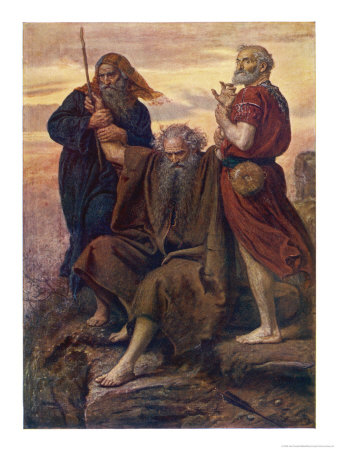
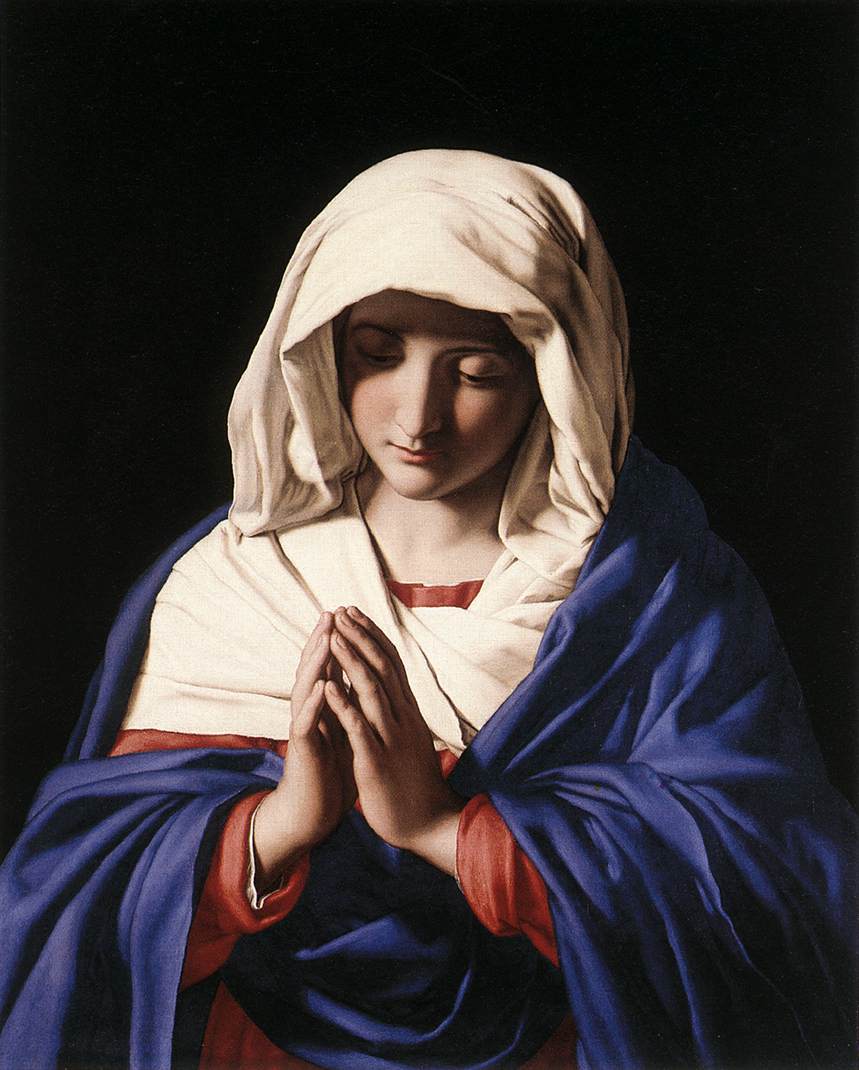
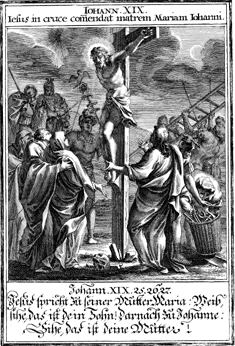
To remain committed to this, ask the help of other to strengthen you and keep you faithful to prayer. Moses had the help of Aaron and Hur, at his right and his left. Jesus had the help Mary and John, at the foot of His cross. The priest celebrating Mass has the help of God’s people, those in the church on earth and those in the Church in Heaven. So have your spouse, your children, and your friends to pray with you and keep you faithful to prayer.

Families should pray together, parents with their children. This will instill the Faith in them more than anything else.  And Fathers need to take the lead, for if only Mom prays with the children they will wonder, “Why doesn’t Dad pray, too?”

Couples should also pray together.  A couple that prays together every day a divorce rate less than one percent. And it makes sense, because if I know that someone is praying for me, that they’re willing my true good, then even if there are rough spots between us, I know that we’re on the same side. So before you leave the house, or before you go to bed, pray together as a couple; even if it’s as simple as a moment of silent prayer. Remember that the family that prayers together, stays together.

It is necessity for us to pray always without becoming weary, as families and individuals, for “He who prays is certainly saved; he who does not pray is certainly damned.” So pray every day, because our souls depend on it.

The Rot Inside — Tuesday, 28th Week in Ordinary Time—Year II

October 13, 2010

St. Paul says in the first reading that “the works of the flesh are obvious.”  If so, then why does Jesus have to point out the sins of the scribes and Pharisees, whose sinfulness “are like unseen graves over which people unknowingly walk”? It’s not that Jesus is pronouncing “woe” upon people unaware that they have sins, the problem is these people think that their hidden sins are no big deal because of their outward practices and appearances.

As long as we are at ease with “immorality, impurity, licentiousness, idolatry, sorcery, hatreds, rivalry, jealousy, outbursts of fury, acts of selfishness, dissensions, factions, occasions of envy, drinking bouts, orgies, and the like,” in our lives we will not enter the Kingdom of God. Even if we do not end up in Hell because of them, we will certainly have to wait on the doorstep to Heaven in Purgatory until these sins are rooted out. Let us crush these sins in our lives like the cancers that they are.

The Great Marriage — The Nick and Laurel White Wedding

October 9, 2010

In the Gospel we just heard Jesus say that “from the beginning of creation, God made them male and female,” and “for this reason a man shall leave his father and mother and be joined to his wife, and the two shall become one flesh.” Jesus is quoting here from Genesis, but something about these words has always struck me as a little strange. Why did Jesus and Genesis mention that ‘a man shall leave his father and mother to be joined to his wife?”

We tend to think of the bride as leaving her family to join her husband. Traditionally, as we saw today, her father walks her down the aisle to give her away, and the bride changes her name to match her husband’s. Perhaps it was put this way (“a man shall leave his father and mother”) because for the man must go out in pursuit of his bride. If a woman in a relationship found out that her man was leaving it to her to pursue him she would be very disappointed.

There is, I think, another important reason for the choice of these words: these words speak of Christ. Jesus left His eternal Father’s house in Heaven to become a man, and then He departed His perfect mother’s house to begin His ministry, all in pursuit of winning a bride, His bride the Church. Jesus is the man who left His father and His mother to be joined to his wife.

From the beginning of creation, God had made us male and female. So when the Lord sought to be perfectly united with us, Christ became a human being. Jesus became one flesh with our humanity, so that we could become one with His divinity. He came as a man because a man, like God, pursues his beloved. He comes to us as a man in love, not out of lust, not to dominate us or for His own selfish pleasure, but for a noble purpose. Jesus comes to propose to us and to enter into a marriage between Heaven and Earth, between God and man, between Himself and His bride, the Church.

Nick and Laurel, the sacrament you are about to enter, the sacrament of marriage, connects you to this union between Christ and the Church. Don’t try to rely on you own resources alone, but connect to the power of your sacrament. Nick, ask Jesus to let you share the love He has for His bride. Then, empowered by this love, you will lay down your life for your bride, and cherish her and bless her as long as you both shall live. Laurel, ask Mary and the saints, to let you share the love they have for the Bridegroom. Then, empowered by this love, you will rejoice in your husband, and honor him and follow him as long as you both shall live. Remember, this sacrament you are about to enter is not merely a symbol the of love between Christ and His bride. It makes that love truly present in you.

The Divine Perfectionist — Funeral for Joseph Stockheimer, 76

October 9, 2010

I never got to know Joseph while he lived on earth, but in preparation for this homily, I talked to Helen, his wife of 51 years, and his daughter, Vicky, and asked them what sort of person Joseph is. They described a man who lived faithfully, piously, and with high standards. These qualities expressed themselves in a certain perfectionism throughout his life.

He worked his farm for 35 years. Not only did he keep to the cows’ daily milking schedule, but I’m told his field rows were perfectly straight and cleared every stone. Even the barn (the barn) was clean! After retiring from farming, Joseph turned his efforts to working the flower garden and cleaning the house, two activities that pleased Helen greatly. Their house was always clean and his nails were always dirty. Sometimes Joseph would be work in the garden until 11:30 at night.  There wasn’t any light to see, but he still kept at it. Joseph also worked in the kitchen at the Knights of Columbus hall. They called him “Scrubby” because he never quit on cleaning the pans. He would talk to you while he worked, but he wouldn’t stop scrubbing.

Joseph’s attitude was, ‘If you start a job, get it done, and get it done right.’ In this, Joseph bears a likeness to an attribute of our Lord, Jesus Christ. The Lord works as a perfectionist too. Jesus says, “Everything that the Father gives me will come to me, and I will not reject anyone who comes to me… …This is the will of the one who sent me, that I should not lose anything of what he gave me, but that I should raise it on the last day.” Jesus is not content to save just some of what the Father gives Him. He is not willing to save only some of those who come to Him. ‘For this is the will of His Father, that everyone who sees the Son and believes in him may have eternal life, and He shall raise them on the last day.’ There is hope and consolation for us in this: we are the Lord’s field, we are His house, we are His garden, we are His pans, and  Jesus does not willingly give up on His work.

It is a good thing that Christ is a perfectionist, for nothing imperfect can bear to stand in God’s fully unveiled presence. The fact is that you and I will refuse to enter Heaven until we are perfect, so Christ must make us so. Even if we are good and faithful, the pan-bottoms of our souls may still need some hard scrubbing at the end of our lives. This is what we call purgatory, the joyful but challenging time after death when our souls are scrubbed clean of every imperfection.

Now I am confident that Joseph is bound for Heaven, since Jesus does not reject those who are His own. But I think we do well to assist Him with our prayers to help Him get his last job done and to get it done right—the job of perfecting His soul for Heaven. So talk to Joseph, for he can hear you, and pray for Joseph, especially at this Mass, so that he may have eternal rest and fully enjoy the reward of his labors.

The Eager Provider — Thursday, 27th Week in Ordinary Time—Year II

October 7, 2010

Today we celebrate Our Lady of the Rosary and we hear a parable about a man who would rather not be bothered.  Let us compare this man to Mary.

He considers his visitor his friend, but she claims us as her children.

He feels too tired to help, but she never sleeps.

He hesitates to provide, but she is eager to give.

If mothers who are imperfect know how to give good gifts to their children, how much more will our perfect mother in Heaven intercede to give us good things whenever we ask her in the Rosary. It is a prayer which she receives from us as a sweet bouquet of roses.

The Author of Life — Tuesday, 27th Week in Ordinary Time—Year II

October 5, 2010

If you took our Catholic faith and boiled it down to its most central and fundamental truths what would you have? I think you would end up with these four foundations:

First, that God is three divine persons who are one in being, a union we call the Trinity. Second, that Jesus Christ is both God and Man, a reality we call the Incarnation. Third, that Jesus Christ, to save us from sin and death, suffered, died, resurrected and ascended, an event we call the Pascal Mystery, and from which Jesus empowers His Church’s sacraments. And fourth, that every, single, human being has inherent worth and surpassing value, a truth we call the dignity of the human person. It is this fourth fundamental truth of our Catholic Faith that I will focus upon today.

The psalmist says to God:

“Truly you have formed my inmost being;
you knit me in my mother’s womb.
I give you thanks that I am fearfully, wonderfully made”

From the womb, God fashioned your inmost being, giving you an intellect to know, a freewill to act, and a desire for loving communion with others. Made in God’s own image and likeness, made for a purpose and made for love, every human life is precious from conception to natural death.

Sadly, laws sometimes disregard this dignity, and even Christians can forget it too. Martha looked down on her sister because she thought Mary was not being useful enough or productive enough. Martha only saw Mary as causing a burden to herself, yet Mary was exactly where the Lord willed her to be.

As Mrs. Eichstadt said before, God has a providential plan for each one of you. Like St. Paul, the Lord has set you apart from your mother’s womb for a great story which He has in mind. But anyone who would presume to cut short an innocent life would deprive God of a masterpiece.

Assisted suicide or euthanasia rips out the crucial final chapters. Suicide, murder, or neglect of our neighbor unto death, would end a story halfway. And abortion prevents the story from ever being told. Jesus is the author of our lives and He is to be the one who decides when our lives end. Maybe you will always remember the homily when Father tore up a book, but remember this too: every human life is precious and worth more than many, many books.

Faith Enough — 27th Sunday in Ordinary Time—Year C

October 3, 2010

The apostles say to Jesus, “Increase our faith.” They have faith, but they feel like it’s not enough so they ask for more. Jesus replies, “If you have faith the size of a mustard seed, you would say to this mulberry tree, ‘Be uprooted and planted in the sea,’ and it would obey you.” In saying this, Jesus’ is not expressing disappointment in His disciples—He’s means to encourage them and us.

He wants us to understand that we have enough faith right now to be faithful in his service and to do incredible things. You have already enough faith to do what He asks you to do today. You need only to act upon it.

As we see with Habakkuk, we may need patience to see the fruits of our faithfulness. And as Paul reminds Timothy, we must put our faith into action. But the thing Jesus wants us to understand today is that we do not need to wait for more faith before we begin to be more faithful. We have already enough faith to do what He asks of us today.

If you had a perfect faith, what would you do? Try acting that way today, and you will find yourself living in faithfulness. Wouldn’t you like to see the difference that makes?

Jesus once called the mustard seed as the smallest of seeds. The mustard seed may be tiny, but its flavor is most powerful.  So it is with our faith.  The faith within us can be powerful despite its small size. A faith-filed Christian can transform the world. Think of Blessed Mother Teresa of Calcutta. Her faith helped and blessed so many people. Our faith can do great good too, but we do well to remember Mother Teresa words, “We are called upon not to be successful, but to be faithful.” Our job is to be faithful. If we do that, the Lord take care of the miracles. 

After teaching the apostles about the incredible power of their faith, Jesus reminds them of them of the importance of their being humble. We need to remember that the He is the master, and we are only His servants. Like the sorcerer’s apprentice, if we try to work great magic on our own we will only make a mess of things. Our efforts and projects must be from Him, with Him, and for Him if they are to do any lasting good.

We need not wait for God to increase our faith to begin to be more faithful. Christ has already given us enough faith to begin transforming our lives, our families, our communities, and our world. But our efforts must be those of humble servants of Christ our Lord, from whom all good things come.

The Little Flower — October 1 — St. Therese of Lisieux

October 1, 2010

Why do we call St. Therese of Lisieux “the Little Flower?” This imagery comes from Therese’s autobiography and she applies the name to herself.  She writes:

“[Jesus] showed me the book of nature, and I understood that every flower created by Him is beautiful, that the brilliance of the rose and the whiteness of the lily do not lessen the perfume of the violet or the sweet simplicity of the daisy. I understood that if all the lowly flowers wished to be roses, nature would lose its springtime beauty, and the fields would no longer be enameled with lovely hues. And so it is in the world of souls, which is the garden of Jesus.  He has been pleased to create great saints who may be compared to the lily and the rose, but He has also created lesser ones, who must be content to be daisies or simple violets flowering at His feet, and whose mission it is to gladden His divine eyes when he deigns to look down on them.”

She writes that her autobiography is “the story of the Little Flower gathered by Jesus.”

Therese thought she was only a little flower, yet she was greater than she realized. Just 27 years after her death she would be canonized a saint. John Paul the Great would name her a Doctor of the Church (the third, female Doctor, after Catherine of Sienna and Teresa of Avila.) Pope Pius XI even called her, “The greatest saint of modern times.” Such was the greatness of her life, her words, and her friendship with God.  And yet, Therese didn’t realize her greatness while she lived.

If St. Therese, the Doctor of the Church, could so misjudge her importance in the garden of the Lord, then how easy might it be for a humble, daily, Mass-goer to under-appraise his or her significance in the eyes of God too?

Job’s Desolation — Tuesday, 26th Week in Ordinary Time—Year II

September 28, 2010


The sadness of Job is like a heavy stone hanging from his neck.

In his pain, he seems to forget that he is surrounded by people who care about him very much. When Job’s friends learn of his misfortune they come to him. For days and nights they sit with Job, listening, not saying a word, yet saying a great deal by just being there. He is not alone.

In his despair, Job imagines that his life will never get better. Yet he cannot see the future. The Lord is going to bless Job and happiness will return to him.

In his darkness, Job wishes he were dead. He asks, “Why did I not perish at birth?” Yet death is not the way. When the Samaritans rejected Jesus, James and John asked to rain down fire, but Jesus rebuked them for it. As long as there is life, there is hope, for the Samaritans, and for us.

How wrong it is if we mistake death for the way of peace, for that is not Christ’s answer. How wrong it is if we imagine that we will never be happy again, for sun’s light shines beyond our horizon or behind the clouds, even if we cannot see it. And how wrong it is if we forget that people care about us, for each of us here is loved more than we know.

Rich Man’s Loss — 26th Sunday in Ordinary Time—Year C

September 26, 2010

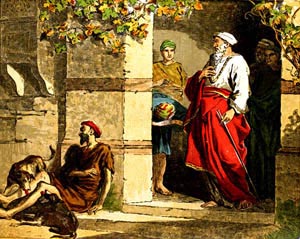
[The rich man] cried out, “Father Abraham, have pity on me. Send Lazarus to dip the tip of his finger in water and cool my tongue, for I am suffering torment in these flames.”

Why does the rich man suffer in flames? It’s not that Abraham is unaware of him, for when the rich man speaks Abraham answers him. And it’s not that Abraham no longer acknowledges him, for Abraham calls him “my child.” It’s not that Abraham lacks in mercy, for Abraham once intervened to spare a city of sinners. The rich man is not in the flames because of Abraham, or Moses, or the prophets of God, for if he had listened to them he would not be in torment.

So why does the rich man suffer in flames? He suffers because he feasted each day, while Lazarus starved. Because he dressed in fine linen, while Lazarus went naked. Because he was clothed in purple, while Lazarus was covered in purple sores. Yet the rich man is not in the flames because he is rich, for King David was far richer than he and is heralded as a man after God’s own heart. The rich man suffers because the dogs who licked Lazarus’ wounds showed the poor man more kindness than he ever did.

The rich man was not unaware of Lazarus lying at his door, for he had passed him enough times to recognize him when he saw him. The rich man even knew Lazarus by name, for he calls out, “Father Abraham… Send Lazarus…”  The rich man suffers in flames because he did not care about Lazarus. The rich man suffers because he did not love. If we wish to avoid the flames, we should ponder and act on this question: Who is Lazarus in your life?

Pray for Politicians

September 19, 2010

Do you recall St. Paul’s words from this Sunday’s second reading?

First of all, I ask that supplications, prayers, petitions, and thanksgivings be offered for everyone, for kings and for all in authority, that we may lead a quiet and tranquil life in all devotion and dignity. This is good and pleasing to God our savior, who wills everyone to be saved and to come to knowledge of the truth.  (1st Timothy 2:1-4)

With faith in prayer’s power to turn hearts and do good, and recognizing the Catholic duty to act for the transformation of culture, I invite you to join in a new spiritual effort, to earnestly pray for our political leaders.

My new blog, Pray for Politicians, will highlight a different federal elected official each day. Pray for them and leave a note of your spiritual offering in the comments.  (If you prefer, you can click the subscribe button to receive the daily posts by email.)

I invite and encourage you to be a part of this effort.

Pray for Politicians Blog
http://prayforpoliticians.wordpress.com

Investments & Debts — 25th Sunday in Ordinary Time—Year C

September 19, 2010

Last week we heard Jesus’ parable of the Prodigal (or squandering) Son. Today He tells us about a debt-canceling steward. These stories offer similar lessons: the first lesson is about how to use our wealth profitably.

The prodigal son wastes his wealth on himself, on a life of self-indulgence, and he finds himself poor and alone. But hisgood father uses his wealth to generously cloth and feed him, and he thereby restores their relationship. Today’s steward gets reported for squandering the master’s property and is soon to be sent away destitute. But the prudent steward finds a way to always have a place to stay. He forgives others’ their debts and thereby wins their friendship. The first lesson is that we will lose whatever we hoard for ourselves, but whatever we invest in love will have an everlasting return.

The reason we exist, the reason we were created, is for personal relationships with God and each other. And when we die, we will take nothing with us, except these relationships. Our computers, cars and credit cards will be left behind, but personal love remains with us. A $100 bottle of wine can be enjoyed for an evening, but then it is lost forever. A donation to Catholic Relief Services can save a life, and a donation to Relevant Radio can save a soul, and someday, when all of our investments in love for family, neighbors and strangers are revealed, they will give us everlasting joy forever. So “I tell you, make friends for yourselves with dishonest wealth, so that when it fails, you will be welcomed into eternal dwellings.”
 
The second lesson of these parables is the importance of forgiveness. The good father wins back his dead and lost son, because he is willing to forgive him. The older son, however, is unwilling to forgive. He refuses to enter the house of his father and will not join the feast until his heart is changed. The good father symbolizes God, and the house is Heaven, and unless we forgive everyone one from the heart, we will refuse to join the feast. The second parable is also symbolic. God is the rich man and we are the squandering steward. Consider how much He has given you and how fruitlessly you have used it. At the end of our lives we will be called to give an account of our stewardship, and who can stand that judgment? This is what we must do: we must forgive our debtors their debts by forgiving their sins against us.

A sin forms a debt because it takes away from others what is owed to them by right. Every sin makes a debt, first and foremost to God, but also to the people trespassed against. It is speculated that the steward in the parable was forgiving his master’s debtors the part which was his own commission. If we are prudent like him, we will quickly take the opportunity to forgive our debtors the debt owed to us by forgiving the sins they have sinned against us. For we have it on Jesus’ word, “If you forgive others their transgressions, your heavenly Father will forgive you. But if you do not forgive others, neither will your Father forgive your transgressions.”
 
Now a lot of people refuse to forgive, or think that they can’t, because they think forgiveness means something its not. To forgive another’s sin is not to say that what they did wasn’t wrong—that would be a lie. And forgiveness doesn’t mean convincing yourself that the wrong doesn’t hurt—Jesus forgave his enemies amid excruciating pain. To forgive, all you need to do is to will the good of your trespasser. If you can pray for them, you are forgiving them. On the other hand, if there is anyone that you find that you are unable to pray for, then you have not forgiven them. That is the person whom you must pray for, for your own sake as well as theirs. So let your “supplications, prayers, petitions, and thanksgivings be offered for everyone… This is good and pleasing to God our savior, who wills everyone to be saved and to come to knowledge of the truth.”

Jesus’ parables teach us this: to use our wealth for lasting profit, and to forgive our debtors their debts. Let us be prudent to obtain true riches on earth and a everlasting home in Heaven.

A Picture is Worth a Thousand Hits

September 18, 2010

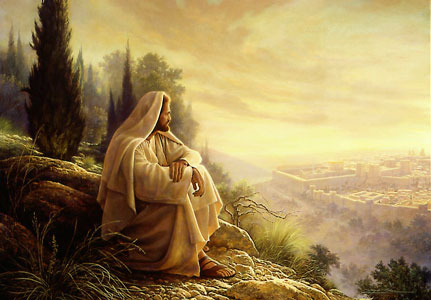
Today, the Parishable Items blog surpassed 10,000 hits.  In recent months, the visitor counts have been increasing exponentially. Are people flocking here for my preaching? Probably not.  I think it’s the pictures I’ve used to illustrate my posts. For example, internet search engine variations of the phrase “Solomon and the Queen of Sheba” have brought more than 350 people to the site; “Jesus (overlooking) Jerusalem,” over 190 hits. Below are what seems to be my three most popular images:

#3: Ruins of the Temple of Apollo in Ancient Corinth, Greece


#2: Jesus Overlooking Jerusalem


#1: Solomon & the Queen of Sheba, Pleased to Meet Each Other

The Scandalous Cross — September 14 — Exultation of the Holy Cross

September 14, 2010

Jesus died on a cross. But what if Jesus had died differently? Then, instead of crosses, Christians might wear little nooses. Under different circumstances, we might be celebrating the Feast of the Holy Electric Chair, or the Exultation of the Lethal-Injection Syringe. These images unsettle us, but we are comfortable with the idea of Jesus’ cross. However, whenever we find ourselves complaining, we are feeling the scandal of the cross.

We will naturally dislike it when life is hard on us, but “do not forget the works of the Lord.” Jesus’ crucifixion, despite its pain, injustice, and seeming futility, was the means for His glory and for our salvation. With Christ we become invincible, because even our suffering profits us. So when unavoidable crosses come, patiently bear them and use them as a powerful offering to God.

Pray for Peace — 24th Sunday in Ordinary Time—Year C

September 12, 2010

I have a friend… let’s call her Kelly. Kelly works for a private company that does high-tech, scientific analysis for its clients. Most of this work is connected to criminal cases, examining and testing physical evidence on behalf of the prosecution or defense, but sometimes they also do sensitive work for the federal government, work about which Kelly shares no details. Kelly also wants to enter into religious life and become a nun. It’s a vocation she has considered for many years, and her job has only intensified her certainty of that calling.

You see, her work has shown her that if people want to do great evil in our world they would not seem to lack the opportunity. The technology and resources are out there; all that is needed is the malevolent will to use them. Kelly sees that our world is not preserved from self-annihilation by law enforcement, militaries, or government agencies alone. Just as important as these is the work of the spiritual battle which is invisibly waged amongst angels and demons and souls and whose primary battlefield is humanities’ hearts and minds. All of the peacekeepers and diplomats in the world cannot achieve peace, unless peace first wins its victory within the human soul. This peace is won through prayer.

In July of 1917, the Blessed Virgin Mary appeared to three shepherd children near a Portuguese town called Fatima. While the First World War was still raging, Mary told them, “The war is going to end. But if people do not stop offending God, another, even worse one will begin in the reign of Pius XI.” (At that time, the pope was Benedict XV.) “To prevent it,” Mary said, “I shall come to ask for the consecration of Russia to my Immaculate Heart and the Communion of reparation on the first Saturdays. If people attend to my requests, Russia will be converted and the world will have peace. If not, she will scatter her errors throughout the world, provoking wars and persecutions of the Church. The good will be martyred, the Holy Father will have much to suffer, and various nations will be destroyed.” Russia at that time was a war-devastated nation, poor and militarily weak. It was unclear what sort of “errors” they could spread. Four months later, the Communists came to power in the November Revolution. Mary’s call for prayer and conversion was not heeded and the worse war Mary which spoke of did come to pass; this was the Second World War.

Mary told the children, “In the end, my Immaculate Heart will triumph. The Holy Father will consecrate Russia to me; it will be converted, and a certain period of peace will be granted to the world.” I think many people here of a certain generation will remember having prayed for the conversion of Russia, and it came to pass. The Cold War ended not with the explosions of a thousand suns, nor with a thousand years of darkness, but peacefully with a new dawn of freedom. It was a miracle which no one saw coming, but a miracle for the whole world to see.

Despite the present conflicts around the world, we seem to be now living in that “certain period of peace” of which Mary spoke, but for how long will it last? That depends, in part, on us. We must offer prayers of intercession for the world, even for our present enemies, for there to be lasting peace.

In our first reading, did God really want to annihilate His people for their sins before Moses interceded for them? God said to Moses “Let me alone… that my wrath may blaze up against them to consume them.” But what was really holding the Lord back from punishing them instantly? Nothing really. In saying, “Let me alone,” the Lord prompts and gives Moses the opportunity to be their intercessor. In this, Moses prefigures Christ, who intercedes to save all sinners. God calls us to pray for sinners, too.

In the second reading St. Paul tells us, “This saying is trustworthy and deserves full acceptance: Christ Jesus came into the world to save sinners.  Of these I am the foremost.” He says, “I was once a blasphemer and a persecutor and arrogant, but I have been mercifully treated…” Paul was shown mercy, saw the light and converted to Christ. This happened in part because the Church was praying for him. He was one of the most feared and notorious persecutors of the early Christians. He was their enemy, but the Church had not forgotten Jesus’ words, “Love your enemies and pray for those who persecute you.”

The early Church’s prayers converted one of their greatest enemies. Moses’ intercession preserved the welfare of his nation. And the prayers of Mary and her children converted a misled people, and saved the world from destruction. The power of prayer has not diminished with time. It can still win our enemies for Christ, safeguard and bless our nation, and convert distant and misled peoples. The Lord calls us to pray for our enemies, for our nation and for our world, because as much as anything else, lasting peace depends on our prayers.

 [See the image I had to resist using to illustrate this post.]