Archive for the ‘Catholic Church’ Category

The Precepts of the Church

January 28, 2016

(Catechism of the Catholic Church #2041-2043)

The precepts of the Church are set in the context of a moral life bound to and nourished by liturgical life. The obligatory character of these positive laws decreed by the pastoral authorities is meant to guarantee to the faithful the indispensable minimum in the spirit of prayer and moral effort, in the growth in love of God and neighbor:

The first precept (“You shall attend Mass on Sundays & holy days of obligation.”) requires the faithful to participate in the Eucharistic celebration when the Christian community gathers together on the day commemorating the Resurrection of the Lord.

The second precept (“You shall confess your sins at least once a year.”) ensures preparation for the Eucharist by the reception of the sacrament of reconciliation, which continues Baptism’s work of conversion and forgiveness.

The third precept (“You shall humbly receive your Creator in Holy Communion at least during the Easter season.”) guarantees as a minimum the reception of the Lord’s Body and Blood in connection with the Paschal feasts, the origin and center of the Christian liturgy.

The fourth precept (“You shall keep holy the holy days of obligation.”) completes the Sunday observance by participation in the principal liturgical feasts which honor the mysteries of the Lord, the Virgin Mary, and the saints.

The fifth precept (“You shall observe the prescribed days of fasting & abstinence.”) ensures the times of ascesis [self-discipline] and penance which prepare us for the liturgical feasts; they help us acquire mastery over our instincts and freedom of heart.

The faithful also have the duty of providing for the material needs of the Church, each according to his abilities.

The Names of Our Parishes

January 6, 2016

When a child is presented for baptism, the parents are asked: “What name do you give [or have you given] your child?” The Diocese of La Crosse is comprised of 162 parishes across nineteen Wisconsin counties and is home to more than 200,000 Catholics. These are the top ten names attached to parishes in the Diocese of La Crosse:

Holy Rosary – 3 Parishes

St. James, St. Anthony, Holy Family – 4 Parishes

St. Peter, St. Paul – 5 Parishes

St. John the Baptist, St. Patrick – 7 Parishes

Sacred Heart (of Jesus) – 13 Parishes

St. Joseph – 14 Parishes

St. Mary [with her various tiles] – 30 Parishes

Names are important; choose holy ones.

On Praying with Separated Brethren

November 21, 2015

This evening, I received an email from a concerned parish visitor who was responding to a pair of area ecumenical Thanksgiving services being promoted in our bulletin:

Dear Father. I was severely shocked and disappointed to see this in a CATHOLIC  bulletin.   I am a devout Roman Catholic visiting family in the area. Not only is this confusing to to parishoners. It is outright contradicting to Church doctrine. You have beautiful homilies, and seem to be a devout priest ! Which is why I’m so confused and outright shocked !!!  I will also be emailing the Bishop to address this issue with him.  God bless [F]ather. And may the Sacred Heart [guide] us both !  [-Signed-]

In case there is wider confusion and concern on this subject, here is the reply I sent.

Dear —,

Thank you for your note. Properly representing our Catholic Faith and preventing scandal are important to me and I’m glad you wrote me.

The Catholic Church calls Protestants our “separated brethren.” This is because we are united as brothers and sisters in Christ though, at the same time, divided in non-trivial ways. (I hope this teaching of the Church is clearly reflected through my preaching, for I believe our Lord desires all of his disciples and all people to come into full communion with his Catholic Church.) While Catholics and Protestants are certainly not in full communion with each other, we share and revere many of the same elements of Christian Prayer, Scripture, and Tradition. Without compromising on the truth, the Church allows Catholics to come together with other Christians for ecumenical prayer events such as the upcoming Thanksgiving gatherings you saw advertised in the bulletin.

This evening, I spoke with Mr. Christopher Carstens, our (solidly orthodox) diocesan director of liturgy, regarding your concerns. He confirmed that these ecumenical events are not condemned by the Church. In fact, The Directory for the Application of Principles and Norms on Ecumenism promulgated by St. Pope John Paul II in 1993 states that, “In liturgical celebrations taking place in other Churches and ecclesial Communities [i.e, Protestant churches], Catholics are encouraged to take part in the psalms, responses, hymns and common actions of the Church in which they are guests. If invited by their hosts, they may read a lesson or preach.” (#118) The upcoming area Thanksgiving ecumenical services are celebrations of this sort, consisting of scripture readings, psalms, prayer responses, hymns, and talks (without common communion.) And so, Catholics may feel welcome to take part.

Through our participation in such ecumenical events and gatherings, while remaining firmly and unabashedly Catholic, I hope that our separated brethren may be drawn from (perhaps) prejudice against Catholicism, to curiosity, to understanding, to attraction, and finally into full communion with Mother Church. Sharing the truth with love and showing love informed by truth through encounters like these will be key to the reunion of all Christians.

Thanks again for writing me with your concerns, which are hopefully now relieved.

God bless,
Fr. Victor Feltes

Annual Appeal Videos

November 19, 2015

The story of a new, young priest, Rev. Billy Dodge.


About the La Crosse Diocese’s work with social ministries & concerns.


The good work of the diocesan TV Mass.

Charles Dickens’ Otherworldly Visitor

November 17, 2015

Charles Dickens by Frith, 1859        One night in 1844, the year after he published A Christmas Carol, a 32-year-old Charles Dickens seemingly encountered a visitor from beyond while vacationing in Venice, Italy. Within this dream or vision, Dickens thought himself speaking to his dearly-beloved sister-in-law, Mary Hogarth, who had died in 1837, yet he also observed that the spirit “bore no resemblance to any one I have known.” Dickens recorded this experience soon afterward in a letter to a friend:

“Let me tell you of a curious dream I had, last Monday night; and of the fragments of reality I can collect, which helped to make it up. [I] had laid awake nearly all that night…. [W]hen I fell asleep and dreamed this dream. Observe that throughout I was as real, animated, and full of passion as [the English actor William Macready] in the last scene of Macbeth.

In an indistinct place, which was quite sublime in its indistinctness I was visited by a Spirit. I could not make out the face, nor do I recollect that I desired to do so. It wore a blue drapery, as the Madonna might in a picture by Raphael; and bore no resemblance to any one I have known except in stature. I think (but I am not sure) that I recognized the voice. Anyway, I knew it was poor Mary’s spirit. I was not at all afraid, but in a great delight, so that I wept very much, and stretching out my arms to it called it “Dear.”

At this, I thought it recoiled; and I felt immediately, that not being of my gross nature, I ought not to have addressed it so familiarly. “Forgive me!” I said. “We poor living creatures are only able to express ourselves by looks and words. I have used the word most natural to our affections; and you know my heart.” It was so full of compassion and sorrow for me—which I knew spiritually, for, as I have said, I didn’t perceive its emotions by its face—that it cut me to the heart; and I said, sobbing, “Oh! give me some token that you have really visited me!

“Form a wish,” it said. I thought, reasoning with myself: ‘If I form a selfish wish, it will vanish.’ So I hastily discarded such hopes and anxieties of my own as came into my mind, and said, “Mrs. Hogarth is surrounded with great distresses (observe, I never thought of saying ‘your mother‘ as to a mortal creature) will you extricate her?” “Yes.” “And her extrication is to be a certainty to me that this has really happened?” “Yes.”

But answer me one other question!” I said, in an agony of entreaty lest it should leave me. “What is the True religion?” As it paused a moment without replying, I said—Good God in such an agony of haste, lest it should go away! “You think, as I do, that the Form of religion does not so greatly matter, if we try to do good? or,” I said, observing that it still hesitated, and was moved with the greatest compassion for me, “perhaps the Roman Catholic is the best? Perhaps it makes one think of God oftener, and believe in him more steadily?” “For you,” said the Spirit, full of such heavenly tenderness for me, that I felt as if my heart would break; “for you, it is the best!” Then I awoke, with the tears running down my face, and myself in exactly the condition of the dream. It was just dawn.

I called up [my wife] Kate, and repeated it three or four times over, that I might not unconsciously make it plainer or stronger afterwards. It was exactly this. Free from all hurry, nonsense, or confusion, whatever.”

One’s Catholic imagination wonders if this tender, compassionate, glorious “Mary” who visited Charles Dickens that night was actually the Blessed Virgin. Like Our Lady of Lourdes responded to Bernadette’s initial requests for her name with a silent smile, this visitor holds back at first to finally reveal a climactic answer. Whether this was a true vision or merely a dream we cannot say, but this visitor’s answer to his religious question does not disqualify our Blessed Mother: the glorious woman told him, “For you, [the Catholic religion] is the best!”

Would this statement imply that Catholicism would not be the best religion for some? Dickens himself held that the form of one’s religion did not greatly matter if someone tried to do good, and his strong distaste for formal religion had drawn him to Unitarianism. If our Mother Mary, who knew Charles through and through, wished to lead him into full communion with the Catholic Church, she would speak truth to him in the way which he could best receive it. Indeed, for him the Catholic faith truly would be best, but he may have balked-outright at her teaching that it is best for everyone. If his was a vision of the Blessed Virgin sent from God, the plan was to bring him into the fullness of the truth over time, as we often see God patiently doing with others.

Charles Dickens never did become a Catholic during his lifetime, but after 1847 (three years after this experience) he began attending the Anglican church near his home and prayed each morning and night. A year before his death, he wrote in his 1869 last will and testament, “I commit my soul to the mercy of God through our Lord and Saviour Jesus Christ….” Today his body lies buried in Poets’ Corner of Westminster Abbey.

Five Seeming Liturgical Abuses That Are Actually Legit

August 27, 2015

These five liturgical practices may seem unorthodox, but the Roman Catholic Church officially allows for each of them:

1.  Receiving the Blessed Sacrament Twice in the Same Day

The Church limits the number of communions the faithful may receive in a day, lest people misguidedly pursue sanctity by filling their days with numerous communions, and to keep the reception of this most sacred gift from feeling common by receiving too-frequently. According to the Code of Canon Law (which governs Church practices) the faithful may receive Our Eucharistic Lord twice daily. And, unless someone is in danger of death, the second time must be while participating at Holy Mass. (Canons 917 & 921)

Ten Commandments - Sacred Heart Catholic Church - Wauzeka WI2.  A Priest Eating Between His Sunday Masses

Ordinarily, a person who is going to receive Our Lord in the Most Holy Eucharist is to abstain from all food and drink (besides water or medicine) for at least one hour before holy communion. This is done to prepare oneself to worthily receive this most precious food (though the elderly, the infirm, and those caring for them are exempted from the fast.) The Church, recognizing that a priest could have difficulty finding time for needed nourishment, allows priests who celebrate the Eucharist two or three times in the same day to take something between their Masses, even if there is less than one hour between them. (Canon 919)

3.  Offering Mass for the Soul of a Notorious Person

May a priest offer a Mass for the soul of Osama Bin Laden, Adolf Hitler, or Judas Iscariot? Pastoral prudence may advise him against doing so publicly but the Code of Canon law affirms, “A priest is entitled to offer Mass for anyone, living or dead.” (Canon 901) While the Church has declared many saints and blesseds to be now in Heaven, she has never declared any particular human being to be presently in Hell. Since Jesus warns us so strongly and frequently about damnation, and we know that the devil and ‘one third’ of the angels are eternally consigned to Hell, it seems very unlikely that all people will be saved. (Revelation 12:4 & 9, Matthew 25:41, Catechism of the Catholic Church #393) However, even if hoping against hope, we may still offer our prayers (capable of transcending space and time) for the salvation of any and all human souls.

4.  A Wedding Couple Processing into Church Behind the Priest

At weddings in the United States, the groom typically takes his place near the altar to await his bride’s walk down the aisle. But the Catholic Rite of Marriage, while allowing for local custom, presents a different entrance as the norm: “If there is a procession to the altar, the ministers go first, followed by the priest, and then the bride and the bridegroom.” (Rite of Marriage, no. 20) The ministers of the sacrament of marriage are actually the bride and groom themselves — the priest (or deacon) simply presides as the Church’s official witness. (Catechism #1623) Thus, it is fitting that the couple enter the church on their wedding day side-by-side in liturgical procession.

5.  A Priest Dipping Hosts Into the Precious Blood at the Distribution of Communion

Host and Chalice - Sacred Heart Catholic Church - Wauzeka WIA minister of the Holy Eucharist who steeps the Host into the Precious Blood before placing it upon a communicant’s tongue is distributing by “intinction.” The General Instruction of the Roman Missal (or GIRM, which governs liturgical practices for Holy Mass) states, “The Blood of the Lord may be consumed either by drinking from the chalice directly, or by intinction, or by means of a tube or a spoon.” (GIRM, no. 245) While noting that “distribution of the Precious Blood by a spoon or through a straw is not customary in the Latin dioceses of the United States of America,” the U.S. Conference of Catholic Bishops reiterates that a bishop may allow distribution by intinction in his diocese. (Norms, no. 48 & 24, citing GIRM no. 283)

As the GIRM describes it, “If Communion from the chalice is carried out by intinction, each communicant, holding a Communion-plate under the mouth, approaches the Priest who holds a vessel with the sacred particles, with a minister standing at his side and holding the chalice. The Priest takes a host, intincts it partly in the chalice and, showing it, says, The Body and Blood of Christ. The communicant replies, Amen, receives the Sacrament in the mouth from the Priest, and then withdraws.” (GIRM, no. 287) The U.S. Bishops further emphasize that the faithful, including extraordinary ministers of the Eucharist, are never to self-communicate by intinction. (Norms, no. 50) May an extraordinary minister of the Eucharist distribute by intinction? The GIRM passage above speaks of “the Priest,” but I would refer people to their local bishop’s norms on the distribution of Communion for a judgment on this question.

The Biggest Catholic News Stories of 2014

December 17, 2014

January:
Tens of thousands of pro-lifers, mostly young people, ‘March for Life’ in Washington, D.C.

February:
A report by a U.N. committee on children criticizes the Church’s teachings on homosexuality, contraception, and abortion.

March:
Nearly 200 associated Catholic groups file a class-action lawsuit against the HHS contraceptive-abortifacient-sterilization insurance coverage mandate.

Canonization_2014-_The_Canonization_of_Saint_John_XXIII_and_Saint_John_Paul_IIApril:
Pope John XXIII and Pope John Paul the Great are canonized by Pope Francis, with Pope Emeritus Benedict XVI in attendance.


May
:
A planned satanic ‘Black Mass’ at Harvard University is canceled following a strong public outcry.

June:
Vatican theologians approve a miracle for the beatification of Bishop Fulton Sheen (however, the process is indefinitely suspended in September due to an inter-diocesan impasse.)

July:
The U.S. Supreme Court rules 6 to 3 in favor of Hobby Lobby’s religious liberty (boding well for Catholic religious conscience cases.)

August:
After atrocities against Christians and Muslims, the U.S. begins airstrikes on ISIS.

September:
Bishop Blase Cupich of Spokane, WA is named the new archbishop of Chicago, replacing the ailing Cardinal Francis George.
Extraordinary Synod on the Family at the Vatican, October, 2014
October
:
The Extraordinary Synod on the Family meets at the Vatican and reaffirms Catholic teachings.

November:
Cardinal Raymond Burke is appointed the new patron of the Knights of Malta.

December:
Pope Francis announces a consistory to name new cardinals in February of 2015.

Praying with a “Marked Deck”

October 19, 2014

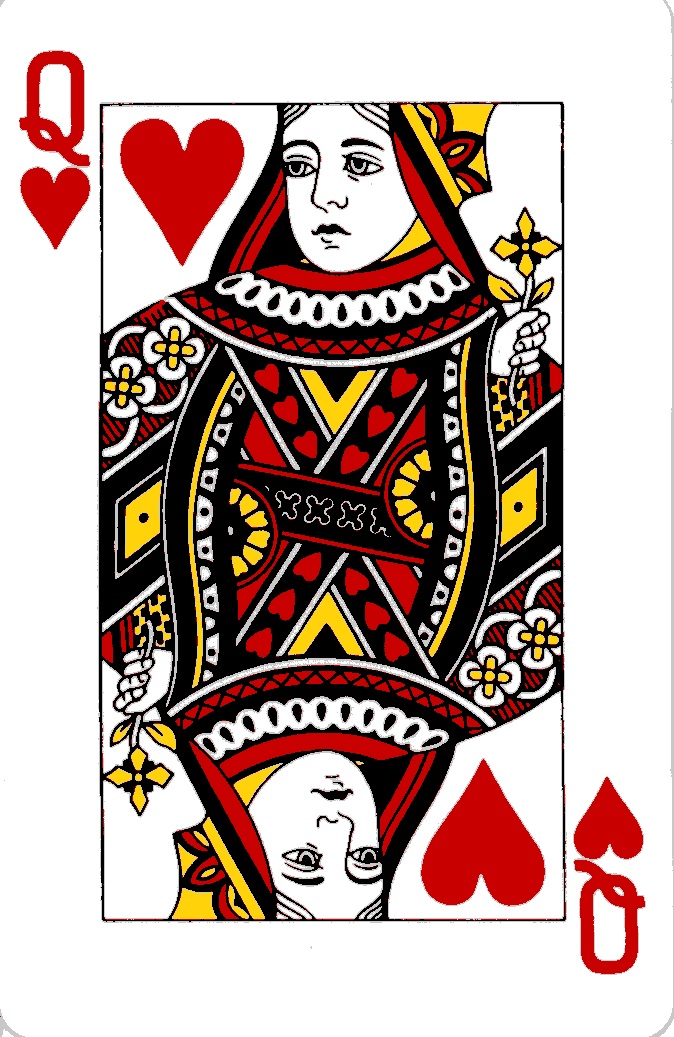
The Queen of HeartsMeditating on the Gospels helps us to grow closer to Jesus, but which passage should we bring to our time of prayer?

With the 1st Sunday of Advent (coming liturgically the evening of November 29th, 2014) we’ll begin exploring the Gospel of Mark in our Cycle B Sunday readings. One option for prayer is to meditate on next Sunday’s Gospel in order to enter more deeply into the Mass.

Or, to contemplate Mark’s entire Gospel, you can pray with it bit by bit, day by day, from start to finish.

On the other hand, you can let yourself be completely surprised by whatever divine providence deals you. In my Holy Hours, I’m planning to randomly draw my Marcan passage for lectio divina from this list, and you can do the same:

2♠   Mark 1: 1-15
3♠   1: 16-31
4♠   1: 32-45
5♠   2: 1-12
6♠   2: 13-22
7♠   2: 23 – 3: 6
8♠   3: 7-19
9♠   3: 20-35
10♠ 4: 1-9, 14-20
J♠   4: 10-13, 21-25
Q♠  4: 26-34
K♠  4: 35-41
A♠  5: 1-20

2♥   5: 21-24, 35-43
3♥   5: 25-34
4♥   6: 1-16
5♥   6:17-29
6♥   6:30-44
7♥   6:45-56
8♥   7: 1-13
9♥   7: 14-30
10♥ 7: 31-37 & 8: 22-26
J♥    8: 1-10
Q♥   8: 11-21
K   8: 27 – 9: 1
A♥   9: 2-13

2♦   9: 14-29
3♦   9: 30-37
4♦   9: 38-50
5♦   10: 1-16
6♦   10: 17-31
7♦   10: 32-45
8♦   10: 46 – 11: 11
9♦   11: 12-25
10♦ 11: 27 – 12: 12
J♦   12: 13-27
Q♦  12: 28-37
K♦  12: 38-13:2
A♦  13: 3-23

2♣   13: 24-37
3♣   14: 1-11
4♣   14: 12-26
5♣   14: 27-42
6♣   14: 43-52
7♣   14: 53-65
8♣   14: 66-72
9♣   15: 1-15
10♣ 15: 16-24
J♣   15: 25-38
Q♣  15: 39-47
K♣  16: 1-13
A♣  16: 14-20

Popes Are Not Perfect — Wednesday, 27th Week of Ordinary Time—Year II

October 8, 2014

Readings: Galatians 2:1-2,7-14; Luke 11:1-4

[W]hen Cephas came to Antioch, I [Paul] opposed him to his face because he clearly was wrong. For, until some people came from James, he used to eat with the Gentiles; but when they came, he began to draw back and separated himself, because he was afraid of the circumcised. And the rest of the Jews acted hypocritically along with him, with the result that even Barnabas was carried away by their hypocrisy. But when I saw that they were not on the right road in line with the truth of the Gospel, I said to Cephas [Peter] in front of all, “If you, though a Jew, are living like a Gentile and not like a Jew, how can you compel the Gentiles to live like Jews?”

Jesus was praying in a certain place, and when he had finished, one of his disciples said to him, “Lord, teach us to pray just as John taught his disciples.” He said to them, “When you pray, say: Father, …forgive us our sins….”

Christ Handing the Keys to St. Peter by Pietro Perugino (detail)The Church on earth is both human and divine — it is holy, yet made up of and led by sinners. When the apostles asked Jesus how they should pray he told those men who were to become the Church’s first leaders to always ask that God the Father would forgive their sins.

Some bulk at the doctrine of papal infallibility asking, “How can a pope, a sinful man, be infallible?” (One could likewise ask how sinful men could write the Sacred Scriptures.) A pope is infallible when he proclaims a doctrine by a definitive act as supreme pastor and teacher of all the faithful regarding faith or morals, but nothing guarantees that he and the Church’s other leaders will never make sincere yet unwise decisions, or that they will never commit serious sins. Infallibility is not the same as impeccability. Imagine the Church as car on the interstate. The Holy Spirit provides guard rails to prevent us from crashing, but we do not always drive as straightly and speedily as we could.

In today’s reading from Galatians, St. Paul recalls the time he gave some fraternal correction to the first pope. St. Peter had not been teaching error regarding the Gentiles and the Mosaic Law, but his personal example (withdrawing from their company so as not to offend the circumcised) was sending a mixed and wrong signal. Even St. Peter could make a mess of things sometimes. Popes, bishops, and priests need the help of our prayers. Like St. Augustine observed: for you, they are leaders; but with you, they are Christians. They are disciples of Jesus Christ who, like yourself, must strive and follow after Him daily.

Comparing Catholic Bibles

September 6, 2014

The Douay-Rheims

  • This was the earliest Catholic Bible in English (New Testament published in 1582; Old Testament in 1610.)
  • It pre-dates the most famous Protestant Bible, the 1611 King James Version.
  • It is a very literal translation from St. Jerome’s Latin Vulgate from 382 AD.
  • It uses archaic English words, like “thou.”

The New Revised Standard Version – Catholic Edition (NRSV-CE)

  • The RSV was a translation for American readers from the original languages by thirty Catholic, Protestant, and Orthodox scholars in the 1940’s & 50’s and was adapted for Catholic use in 1966.
  • It is considered a very literal & readable translation by many orthodox Catholic scholars.
  • It is often used in university or seminary courses and by important Catholic & Protestant biblical scholars.
  • The New RSV (or NRSV) was published in 1989 and has gender-neutral (or inclusive) language.

The New Jerusalem Bible (NJB)

  • The 1966 Jerusalem Bible was an English translation of a French Edition published by Dominican scholars in Jerusalem in 1956.
  • The 1985 New Jerusalem Bible revises the Jerusalem Bible directly from the original languages and contains inclusive language.
  • The NJB has a very literary style but is comparable in quality to the NRSV in scholarship.
  • This is the most widely used Catholic Bible in English outside of the United States.

The New American Bible (NAB)

  • The NAB was translated from the original languages according to the principles of the Second Vatican Council in 1970.
  • The 1980’s revised edition (the NAB-RE) restored some traditional phrasing and added inclusive language in the New Testament and Psalms.
  • The Holy See approved some use of inclusive language where the speaker or author intended a mixed audience (e.g. “brothers and sisters”, instead of the older “brethren,”) but rejected this in references to God or Christ, and to man, where the word has anthropological and theological significance.
  • Since Pentecost 2002, the revised NAB’s lectionary is the only one approved for use in U.S. English Masses, so faithful Catholics are already familiar with its readable style.

Translation Comparison of Matthew 18:15

Douay-Rheims:  “But if thy brother shall offend against thee, go, and rebuke him between thee and him alone. If he shall hear thee, thou shalt gain thy brother.”

NRSV-CE:  “If another member of the church sins against you, go and point out the fault when the two of you are alone. If the member listens to you, you have regained that one.”

NJB:  “If your brother does something wrong, go and have it out with him alone, between your two selves. If he listens to you, you have won back your brother.”

NAB-RE:  “If your brother sins against you, go and tell him his fault between you and him alone. If he listens to you, you have won over your brother.”


Primarily Used Sources:

Pope Paul VI Has Died

August 6, 2014

Thus begins my new blog presenting the day-to-day happenings in the papacy of His Holiness, Pope John Paul I.

Ten Things Catholics Don’t Believe

June 15, 2014

The Venerable Bishop Fulton J. Sheen once wrote, “There are not a hundred people in America who hate the Catholic Church. There are millions of people who hate what they wrongly believe to be the Catholic Church — which is, of course, quite a different thing.”

Mending the mistaken notions of our non-Catholic friends and relatives about what we actually believe is both a spiritual work of mercy and an important step in the reunion of all Christians. Below is a list of ten common misconceptions paired with what the Catholic Church really teaches:

1. Catholics don’t believe that Mary is a goddess, but that she is the holy mother of God and of all Christians.

2. Catholics don’t worship statues, but images help us connect with our friends in Heaven.

3. Catholics don’t believe that the pope is sinless or inerrant about everything, but that he is the successor to St. Peter and can teach infallibly on faith and morals.

4. Catholics don’t believe that people shouldn’t read Sacred Scripture, but that we won’t interpret it well apart from Sacred Tradition.

5. Catholics don’t believe that we are “saved by works,” but that we must cooperate with God’s saving graces.

6. Catholics don’t believe that Jesus is re-sacrificed every Mass, but that the Mass re-presents (makes present) his one sacrifice and applies its power here and now.

7. Catholics don’t believe in cannibalism, but that the Eucharist truly is the real, living person of Jesus Christ.

8. Catholics don’t believe that married couples must have as many children as humanly possible, but that it is harmful to separate what God has joined in the marital embrace.

9. Catholics don’t believe that purgatory is a second chance or “temporary hell,” but that God perfects us to be in his holy presence in Heaven.

10. Catholics don’t believe that all non-Catholics will go to hell, but we want everyone to come into full communion with us in Christ’s one Church.

Freed from Error — Friday, 5th Week of Easter

May 23, 2014

Readings: Acts 15:22-31, John 15:12-17

The first-century Church faced an important doctrinal question: was it necessary for Gentiles (i.e., non-Jews) to keep the full Mosaic Law in order to be saved? Self-professed Christians argued on opposing sides of the issue. Yet, after the Council of Jerusalem, the Church’s ordained leaders decreed to the Gentile Christians:

“‘It is the decision of the Holy Spirit and of us not to place on you any burden beyond these necessities…”

This conclusion was not merely the opinion of “the apostles and the presbyters.” As they themselves declare and Sacred Scripture affirms, the Holy Spirit was infallibly working with and through them. In his explanation of Why I Am a Catholic, G.K. Chesterton explained that, “[Catholicism] is the only thing that frees a man from the degrading slavery of being a child of his age.”  Jesus said:

“I no longer call you slaves, because a slave does not know what his master is doing. I have called you friends, because I have told you everything I have heard from my Father.”

The Church is the bride of Christ. She is his intimate friend with whom Jesus shares everything. And, by the power of the Holy Spirit, she offers us protection and deliverance from the limitations and blind spots of our own particular cultures, eras, and intellects in questions of our Faith.

One Bible, Many Interpretations

April 29, 2014

Mormons teach that the Father, Son, and Holy Spirit are three Gods, and that we too can become Gods in our own right someday.

You may reply to them, for instance, with James 2:19, “You believe that God is one. You do well. Even the demons believe that and tremble,” but Mormons will have some explanation for that New Testament passage which fits their theology.

Oneness Pentecostals teach that the Father, Son, and Holy Spirit are not three persons but three manifestations of one divine person, God.

You may ask them who Jesus is praying to in Matthew 26:39 when he says in the Garden of Gethsemane, “My Father, if it is possible, let this cup pass from me; yet, not as I will, but as you will,” yet Oneness Pentecostals will offer some answer for why Jesus is not praying to another person.

Jehovah’s Witnesses teach that Jesus is not God, not divine, but God’s first and greatest creature and that the Holy Spirit is not a person but the active force of God the Father in the world.

You may answer with the beginning and end of the Gospel of John: with John’s prologue where we see “the Word was with God, and the Word was God. … And the Word became flesh,” and the gospel’s climax, John 20:28, “Thomas answered and said to [Jesus,] ‘My Lord and my God!'” However, Jehovah’s Witnesses will surely have some reply for these verses.

A diagram of the ancient, orthodox, Christian conception of the Holy Trinity

A diagram of the ancient, orthodox, Christian conception of the Most Holy Trinity: One God, Three Divine Persons

In my personal experience, advocates of Mormon polytheism, Oneness Pentecostal modalism, or Jehovah’s Witnesses Arianism-esque theology have all been sincere, friendly, rational, and not unintelligent people. They were all well-versed in the Bible, regarded it as God’s infallible Word, and used it to support their beliefs. They all proudly claimed the name of “Christian.” However, the undeniable fact that their theologies contradict each other proves that these admirable personal traits are not enough to guarantee a true understanding of the Christian Faith. The problem is that there seems to be more than one possible internally-coherent interpretation of the Bible. Just as texts out of context can suggest several defensible, though incorrect, meanings; interpreting biblical texts outside the context of Christ’s one, holy, catholic, and apostolic Church leads to many errors.

Last week, two very nice Jehovah’s Witnesses visited me at my rectory and we spoke for a couple of hours. I believe we were debating whether one of Jesus’ “I Am” statements in John’s Gospel was a profession of his divinity when one of my guests remarked, “We can’t really be certain what he meant.” I replied to the effect, “You’re right!–If your opinion and my opinion are all we have to go on, if there’s no visible authority on earth with power from Jesus Christ to infallibly answer biblical questions, then we can never be certain our interpretations are true–since many sincere, reasonable, and even scholarly Christians firmly disagree. Without a clear, external teaching authority within the Church, we would be left as sheep without a shepherd and inevitably scatter.” Most Christians revere the Holy Scriptures as God’s infallible Word, and this is right and good, but for some reason many of them reject the Catholic Church through which the Scriptures come.

Recall that Jesus wrote nothing in the Gospels (except perhaps something in the dust near the woman caught in adultery) but Jesus did establish a Church. Through this Church the New Testament was written, collected, canonized, and revered. However, this process was certainly not completed in the first century AD. In the early Church there was much debate over which New Testament writings were inspired and should be included in the canon. The Shepherd of Hermas? The Book of Revelation? The Didache? The Letter to the Hebrews? The Epistle of Clement? Some early Church Fathers included works such as these in their lists of Bible books, while others left them out. It was the Catholic Church that ultimately canonized the New Testament books which all Christians acknowledge today.

One teaching shared by Mormons and Jehovah’s Witnesses is the belief that a Great Apostasy occurred in the early Church. The New Testament contains verses which warn about false teachers arising who will mislead many. A great deception, those religions say, happened soon after the death of the apostles and explains why the majority of self-professed Christians in history have held core doctrines widely different from their own. I would agree that false teachers and heresies arise in every age, but was there a Great Apostasy soon after the apostles that devastated Christ’s Church and caused his central teachings (like the true nature of God) to be discarded and forgotten?

Christ Handing the Keys to St. Peter by Pietro Perugino (detail)

Jesus entrusting the keys of his Kingdom to St. Peter (Matthew 16:19)

All Christians will agree that Jesus was a wise man. Jesus was a wise man indeed, who built his house on rock. Jesus declared to Simon, “‘I say to you, you are Peter [that is, you are “Rock” in Greek] and upon this rock I will build my church, and the gates of the netherworld shall not prevail against it.'” (Matthew 16:18) If Jesus was a wise man who built his house on rock we can be assured that even though “the rain fell, the floods came, and the winds blew and buffeted the house–it did not collapse; [his Church] had been set solidly on rock.” (Matthew 7:24-25)

After building his Church on Peter for some forty years, did Jesus let it go into shambles and fail to repair it for about eighteen centuries, until Joseph Smith or The Watchtower came along? If so, Jesus really dropped the ball. If the Mormons or Jehovah’s Witnesses are right, then God managed to get all of the New Testament books infallibly written, correctly canonized, and faithfully preserved throughout millennia, but could not maintain the truth about himself in his Church on earth in the hearts and minds of believers much beyond the death of the apostles. More likely, our Lord Jesus Christ succeeded in preserving his teachings and the visible hierarchical authority he gave to his Church, from St. Peter (the first pope) and the apostles to Pope Francis and the bishops in communion with him today. A clear and necessary line of teaching authority runs though the centuries, through the laying of hands and apostolic succession.

You may encounter people who will present you with internally-consistent but very different interpretations of Scripture. Do not let your hearts be troubled. There are good reasons for everything we believe as Catholics. They may “know” the Bible, but we are blessed to know God’s Church from which the Bible comes. If you love Jesus Christ, love his Catholic Church. As even St. Joan of Arc, who personally experienced the complexities of the Church as a divine and human institution, said, “About Jesus Christ and the Church, I simply know they are just one thing and we shouldn’t complicate the matter.” If you love Jesus’ Church you will love him well. Jesus Christ is risen and his Catholic Church, though ancient, has never died. Christ’s Church, the Bride he protects and for whom he laid down his life, is very much alive.

Some Sacramental Clarifications

April 5, 2014

● A funeral Mass is not celebrated as an honor, but as a mercy. A funeral Mass does not canonize, but offers Christ’s sacrifice for graces upon the deceased and the assembled mourners. “This saying is trustworthy and deserves full acceptance: Christ Jesus came into the world to save sinners.” (1 Timothy 1:15) If the deceased has been condemned, the offered funeral Mass will only help the family (perhaps to be converted and saved,) but if the departed is in purgatory, the Holy Mass is the greatest prayer we can offer on his or her behalf. Apart from notorious and unrepentant apostates, heretics, and schismatics, we want to error on the side of mercy, as we have been shown mercy.

● Though all should contribute to the work of the Church, no Catholic parish is a private club that requires up-to-date dues in order to be welcomed. All Catholics are members of the world-wide body of Christ—the Church.

● No one will be refused sacraments in our parish because of an inability to pay parish fees or stipends.

● Everyone is welcome at our parish Masses; however, those not in full communion with the Catholic Church, or those aware of having committed grave sin who have not obtained absolution in the sacrament of Confession, should not present themselves to receive the Holy Eucharist—these may receive a blessing instead by approaching with crossed arms.

● Any child, for whom there is a well-founded hope of being raised Catholic and whose guardians have completed a baptismal preparation program here or at another parish, may be baptized in our parish.

● If you have any additional sacramental questions regarding our parish community, please contact Father, your priest, directly.