Archive for the ‘Catholic Church’ Category

One Bible, Many Interpretations

April 29, 2014

Mormons teach that the Father, Son, and Holy Spirit are three Gods, and that we too can become Gods in our own right someday.

You may reply to them, for instance, with James 2:19, “You believe that God is one. You do well. Even the demons believe that and tremble,” but Mormons will have some explanation for that New Testament passage which fits their theology.

Oneness Pentecostals teach that the Father, Son, and Holy Spirit are not three persons but three manifestations of one divine person, God.

You may ask them who Jesus is praying to in Matthew 26:39 when he says in the Garden of Gethsemane, “My Father, if it is possible, let this cup pass from me; yet, not as I will, but as you will,” yet Oneness Pentecostals will offer some answer for why Jesus is not praying to another person.

Jehovah’s Witnesses teach that Jesus is not God, not divine, but God’s first and greatest creature and that the Holy Spirit is not a person but the active force of God the Father in the world.

You may answer with the beginning and end of the Gospel of John: with John’s prologue where we see “the Word was with God, and the Word was God. … And the Word became flesh,” and the gospel’s climax, John 20:28, “Thomas answered and said to [Jesus,] ‘My Lord and my God!'” However, Jehovah’s Witnesses will surely have some reply for these verses.

A diagram of the ancient, orthodox, Christian conception of the Holy Trinity

A diagram of the ancient, orthodox, Christian conception of the Most Holy Trinity: One God, Three Divine Persons

In my personal experience, advocates of Mormon polytheism, Oneness Pentecostal modalism, or Jehovah’s Witnesses Arianism-esque theology have all been sincere, friendly, rational, and not unintelligent people. They were all well-versed in the Bible, regarded it as God’s infallible Word, and used it to support their beliefs. They all proudly claimed the name of “Christian.” However, the undeniable fact that their theologies contradict each other proves that these admirable personal traits are not enough to guarantee a true understanding of the Christian Faith. The problem is that there seems to be more than one possible internally-coherent interpretation of the Bible. Just as texts out of context can suggest several defensible, though incorrect, meanings; interpreting biblical texts outside the context of Christ’s one, holy, catholic, and apostolic Church leads to many errors.

Last week, two very nice Jehovah’s Witnesses visited me at my rectory and we spoke for a couple of hours. I believe we were debating whether one of Jesus’ “I Am” statements in John’s Gospel was a profession of his divinity when one of my guests remarked, “We can’t really be certain what he meant.” I replied to the effect, “You’re right!–If your opinion and my opinion are all we have to go on, if there’s no visible authority on earth with power from Jesus Christ to infallibly answer biblical questions, then we can never be certain our interpretations are true–since many sincere, reasonable, and even scholarly Christians firmly disagree. Without a clear, external teaching authority within the Church, we would be left as sheep without a shepherd and inevitably scatter.” Most Christians revere the Holy Scriptures as God’s infallible Word, and this is right and good, but for some reason many of them reject the Catholic Church through which the Scriptures come.

Recall that Jesus wrote nothing in the Gospels (except perhaps something in the dust near the woman caught in adultery) but Jesus did establish a Church. Through this Church the New Testament was written, collected, canonized, and revered. However, this process was certainly not completed in the first century AD. In the early Church there was much debate over which New Testament writings were inspired and should be included in the canon. The Shepherd of Hermas? The Book of Revelation? The Didache? The Letter to the Hebrews? The Epistle of Clement? Some early Church Fathers included works such as these in their lists of Bible books, while others left them out. It was the Catholic Church that ultimately canonized the New Testament books which all Christians acknowledge today.

One teaching shared by Mormons and Jehovah’s Witnesses is the belief that a Great Apostasy occurred in the early Church. The New Testament contains verses which warn about false teachers arising who will mislead many. A great deception, those religions say, happened soon after the death of the apostles and explains why the majority of self-professed Christians in history have held core doctrines widely different from their own. I would agree that false teachers and heresies arise in every age, but was there a Great Apostasy soon after the apostles that devastated Christ’s Church and caused his central teachings (like the true nature of God) to be discarded and forgotten?

Christ Handing the Keys to St. Peter by Pietro Perugino (detail)

Jesus entrusting the keys of his Kingdom to St. Peter (Matthew 16:19)

All Christians will agree that Jesus was a wise man. Jesus was a wise man indeed, who built his house on rock. Jesus declared to Simon, “‘I say to you, you are Peter [that is, you are “Rock” in Greek] and upon this rock I will build my church, and the gates of the netherworld shall not prevail against it.'” (Matthew 16:18) If Jesus was a wise man who built his house on rock we can be assured that even though “the rain fell, the floods came, and the winds blew and buffeted the house–it did not collapse; [his Church] had been set solidly on rock.” (Matthew 7:24-25)

After building his Church on Peter for some forty years, did Jesus let it go into shambles and fail to repair it for about eighteen centuries, until Joseph Smith or The Watchtower came along? If so, Jesus really dropped the ball. If the Mormons or Jehovah’s Witnesses are right, then God managed to get all of the New Testament books infallibly written, correctly canonized, and faithfully preserved throughout millennia, but could not maintain the truth about himself in his Church on earth in the hearts and minds of believers much beyond the death of the apostles. More likely, our Lord Jesus Christ succeeded in preserving his teachings and the visible hierarchical authority he gave to his Church, from St. Peter (the first pope) and the apostles to Pope Francis and the bishops in communion with him today. A clear and necessary line of teaching authority runs though the centuries, through the laying of hands and apostolic succession.

You may encounter people who will present you with internally-consistent but very different interpretations of Scripture. Do not let your hearts be troubled. There are good reasons for everything we believe as Catholics. They may “know” the Bible, but we are blessed to know God’s Church from which the Bible comes. If you love Jesus Christ, love his Catholic Church. As even St. Joan of Arc, who personally experienced the complexities of the Church as a divine and human institution, said, “About Jesus Christ and the Church, I simply know they are just one thing and we shouldn’t complicate the matter.” If you love Jesus’ Church you will love him well. Jesus Christ is risen and his Catholic Church, though ancient, has never died. Christ’s Church, the Bride he protects and for whom he laid down his life, is very much alive.
Some Sacramental Clarifications

April 5, 2014

● A funeral Mass is not celebrated as an honor, but as a mercy. A funeral Mass does not canonize, but offers Christ’s sacrifice for graces upon the deceased and the assembled mourners. “This saying is trustworthy and deserves full acceptance: Christ Jesus came into the world to save sinners.” (1 Timothy 1:15) If the deceased has been condemned, the offered funeral Mass will only help the family (perhaps to be converted and saved,) but if the departed is in purgatory, the Holy Mass is the greatest prayer we can offer on his or her behalf. Apart from notorious and unrepentant apostates, heretics, and schismatics, we want to error on the side of mercy, as we have been shown mercy.

● Though all should contribute to the work of the Church, no Catholic parish is a private club that requires up-to-date dues in order to be welcomed. All Catholics are members of the world-wide body of Christ—the Church.

● No one will be refused sacraments in our parish because of an inability to pay parish fees or stipends.

● Everyone is welcome at our parish Masses; however, those not in full communion with the Catholic Church, or those aware of having committed grave sin who have not obtained absolution in the sacrament of Confession, should not present themselves to receive the Holy Eucharist—these may receive a blessing instead by approaching with crossed arms.

● Any child, for whom there is a well-founded hope of being raised Catholic and whose guardians have completed a baptismal preparation program here or at another parish, may be baptized in our parish.

● If you have any additional sacramental questions regarding our parish community, please contact Father, your priest, directly.

False Presumptions — Wednesday, 7th Week of Ordinary Time—Year II

February 28, 2014

Readings: James 4:13-17, Mark 9:38-40

We must be careful not to cling to false presumptions about God’s activity regarding the present or the future. It is prudent to make plans for tomorrow and also good to strive for the reunion of all Christians into Christ’s one, holy, catholic, and apostolic Church. However, James warns us not to be presumptuous about our plans (instead of remaining open to God’s will,) while Jesus reminds us that even those who “do not follow us” can ‘perform mighty deeds in his name.’ “Whoever is not against us is for us.” God is never against us, and (unusually) neither are our separated brethren.

Catholicism

February 14, 2014
  • We love marriage and celebrate celibacy.
  • We scandalize with hard truths and easy mercy.
  • We feed the poor and hungry with food and beauty.
  • We observe days for fasting and feasting.
  • We insist that men lead as servants.
  • We help mothers and their children.
  • We respect women and men as unique and equal.
  • We condemn communism and critique capitalism.
  • We advocate for peace and, as a last resort, Just War.
  • We want everyone to go to Heaven and no one to be killed.
  • We have faith in human reason and employ reason in our Faith.
  • We believe in miracles and demons and investigate them critically.
  • We accept science and Divine Revelation.
  • We canonized God’s books and canonize His saints.
  • We honor Jesus’ Father and mother like He did, as our own.
  • We pray for living and dead neighbors and ask their prayers for us.

Stained Glass Symbols — The Sailboat

February 5, 2014

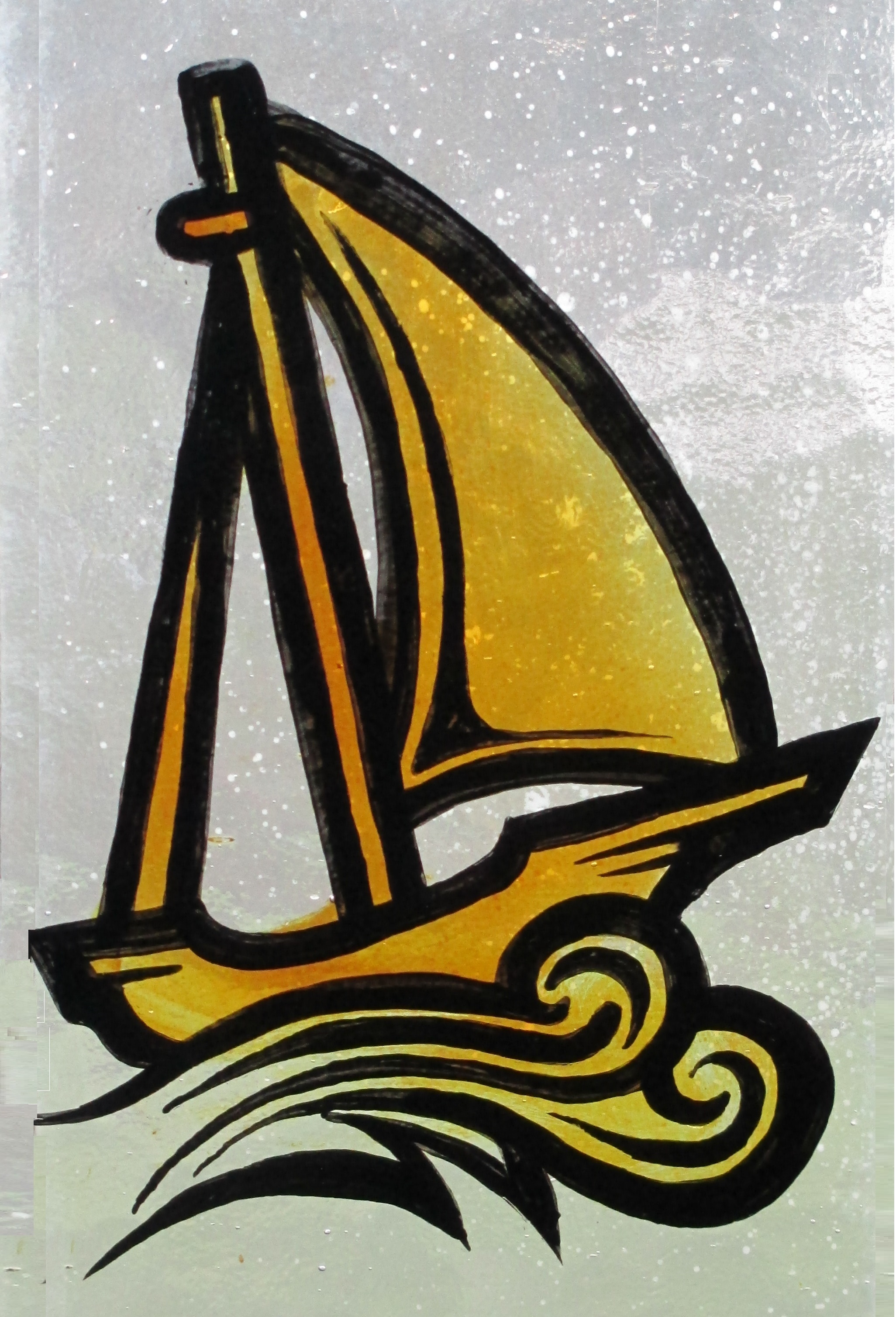
Sailboat - Sacred Heart Catholic Church -  Wauzeka WIA Symbol of the Church

Like Noah’s Ark, the Church carries God’s people through the world’s deadly and chaotic waters. The Holy Spirit fills the sails of this “barque (boat) of St. Peter,” guiding her course through time and leading her safely to the distant shore of Heaven.

Answering Evangelicals

November 16, 2013

Evangelicals are often some the finest non-Catholic Christians. They get many things right, but  they regrettably do not understand Catholicism very well. (If they did, they would become Catholic.) Here is how you can answer some of their most common misunderstandings:

“Why do you Catholics worship Mary?”
Nobody worships Mary, she is only a creature, but she is highly honored as the Mother of God. In this we follow Jesus, who surpassingly fulfilled the commandant “Honor your Father and Mother.” Indeed, Mary is our mother too. (See John 19:27 & Revelation 12:17)

“Why do you pray to Mary and the saints when we can pray to Jesus directly?”
Have you ever asked someone to pray for you? Of course you have, and rightly so. The Bible tells us to “pray for one another” because “the fervent prayer of a righteous person is very powerful.” (James 5:16) We can always pray to Jesus, but sometimes we also ask the saints, our holiest friends, to offer prayers with us and for us (as we see them doing in Revelation 5:8.)

“Have you been ‘born-again?'”
Yes, because I am baptized. As Jesus told Nicodemus, one enters the kingdom of God by being “born of water and Spirit.” (John 3:5) Demonstrating what he meant, “After this, Jesus and his disciples went into the region of Judea, where he spent some time with them baptizing.” (John 3:22) Indeed, as St. Peter wrote, “baptism now saves you.” (1st Peter 3:21)

“Have you accepted Jesus Christ as your personal Lord and Savior?”
Yes. For example, I often receive him as my Lord and Savior in the Eucharist. As Jesus said, “Whoever eats my flesh and drinks my blood remains in me and I in him.” (John 6:56)

“Do you believe you can earn salvation by your works, rather than by faith alone?”
No one can earn the initial grace of salvation by their works. (Ephesians 2:8-9) But once God has brought us into his friendship we must cooperate with his grace in our actions, “otherwise [we] will be cut off.” (Romans 11:22) “Faith without works is dead.” (James 2:17)

“How can you believe that the Pope, a sinner like every man, is infallible?”
The Holy Spirit used sinful men to write the inspired Scriptures. Likewise, God protects the Pope from teaching in error about Christian faith and morals lest the whole Church be led astray. Jesus made St. Peter both the Church’s rock foundation and its chief shepherd on earth. (Matthew 16:18-19) The Pope is St. Peter’s successor in that office.

Popes or Presidents Quiz

September 19, 2013

There have been 266 papal reigns, from Pope St. Peter to Pope Francis, and 44 U.S. presidential tenures, from President Washington to President Obama. Take this quiz to see how well you know your popes from your presidents.

The Ever-Timely G.K. Chesterton — Wednesday, 24th Week in Ordinary Time—Year I

September 18, 2013

Today’s readings remind me of things said by G.K. Chesterton (1874-1936,) the British journalist, writer, husband, and convert to the Faith, whose cause for canonization has just been opened.

In the Gospel, the same critics who rejected John the Baptist, who came “neither eating food nor drinking wine,” as too extreme are rejecting Jesus for being too lax, on account of his “eating and drinking.” This is akin to something Chesterton noticed about criticisms of Christianity while he was still a non-believer. Christianity was supposedly too meek, and the cause of countless wars. It was condemned for its penitential austerity, and condemned for its opulence. The Church imprisoned women, yet was criticized as being “too feminine.” The Church promoted celibacy against the good of marriage, and it promoted marriage, forcing the shackles of marriage and family upon us. The Church feared sexuality, and Catholics had too many children. (Though this was a century ago, similar arguments are still made today.) Chesterton eventually concluded that Christianity was sane and all its critics mad—in various ways.

Why did Chesterton go on to become a Catholic? Partly because he did not see how the Bible could be wielded as a weapon against the Catholic heritage:

The ordinary sensible skeptic or pagan is standing in the street (in the supreme character of the man in the street) and he sees a procession go by of the priests of some strange cult, carrying their object of worship under a canopy, some of them wearing high head-dresses and carrying symbolical staffs, others carrying scrolls and sacred records, others carrying sacred images and lighted candles before them, others sacred relics in caskets or cases, and so on. I can understand the spectator saying, “This is all hocus-pocus”; I can even understand him, in moments of irritation, breaking up the procession, throwing down the images, tearing up the scrolls, dancing on the priests and anything else that might express that general view. I can understand his saying, “Your croziers are bosh, your candles are bosh, your statues and scrolls and relics and all the rest of it are bosh.” But in what conceivable frame of mind does he rush in to select one particular scroll of the scriptures of this one particular group (a scroll which had always belonged to them and been a part of their hocus-pocus, if it was hocus-pocus); why in the world should the man in the street say that one particular scroll was not bosh, but was the one and only truth by which all the other things were to be condemned?  Why should it not be as superstitious to worship the scrolls as the statues, of that one particular procession? Why should it not be as reasonable to preserve the statues as the scrolls, by the tenets of that particular creed? To say to the priests, “Your statues and scrolls are condemned by our common sense,” is sensible. To say, “Your statues are condemned by your scrolls, and we are going to worship one part of your procession and wreck the rest,” is not sensible from any standpoint, least of all that of the man in the street.

What is the “pillar and foundation of truth?” Most Protestants would say “the Bible,” yet Sacred Scripture (in today’s first reading from St. Paul’s 1st letter to Timothy) answers “the Church.” The Bible cannot be trusted more than Catholic Church, which wrote and canonized its books (not to mention taught, revered, and preserved them for two millennia.)

(May the works and prayers of G.K. Chesterton aid us in the world today.)

Deciphering Catholic Codes

September 16, 2013

Recently we noted that A.D. signifies that we are living in the 2,013th “Year of our Lord.” Today we present the meanings behind other enigmatic Catholic acronyms & symbols.

INRI = “Jesus the Nazarene, King of the Jews”
At the crucifixion, Pilate ordered a sign to be written in Hebrew, Greek and Latin and placed atop Jesus’ cross to display the charge against him. The Latin read “Iesus Nazarenus, Rex Iudaeorum,” from which INRI comes. Though the punishment of Jesus was unjust, this charge against him was true.

CCD = “Confraternity of Christian Doctrine”
In other words, a group in service of teaching the faith to children.

RCIA=“Rite of Christian Initiation for Adults”
The process, involving lessons and sacraments, by which adults and older youths are gradually introduced into full communion with the faith of Christ’s  Roman Catholic Church.

IHS = “Jesus”
In Greek, the name Jesus is ΙΗΣΟΥΣ. These first three letters were Latinized into “IHS,” forming a symbol for the Holy Name of Jesus.

= “Christ”
In Greek, the title Christ, or “anointed one,” is ΧΡΙΣΤΟΣ. These first two letters, the Chi and Rho, were merged to form a symbol for   Christ known as the Chi-Rho.

Jesus Fish = “Jesus Christ, God’s Son, Savior”
The fish was an early Christian symbol containing a summary of the faith. The letters of the Greek word for fish, ΙΧΘΥΣ (or “ichthys,”) are an acronym for the phrase above.

Falsely Accused

August 21, 2013

In his time, Jesus was accused of being a glutton and a drunk, a sinner, a madman, a blasphemer, an insurrectionist, a false prophet, & demon-possessed. (And these are just some of the slanders that were included in the Gospels. Imagine what was left out!) Jesus was not surprised by these hostile reactions; he understood human nature well.

In our time, terrible things are constantly said about the Church and her leaders. Remember when Pope Benedict was even accused of being a Nazi? Is there any “controversial” teaching for which the world does not condemn the Church as being hateful, hypocritical, or cruel? We will experience hostility personally as well for standing with Jesus’ Church, but this should not surprise us. The Body of Christ, the Church, will share the experiences of Jesus Christ, our Head.

As Jesus said, “If the world hates you, realize that it hated me first. … If they persecuted me, they will also persecute you. …In the world you will have trouble, but take courage, I have conquered the world.”

Important Church Documents Revealed

August 20, 2013


● Encyclicals by the First Catholic Pope:

Blessed be the God” (ευλογητος ο θεος – Eulogetos o Theos)
As Everything to Us” (ως παντα ημιν – Hos Panta Amin)


● An Online Archive of Little-Known Documents from the 21st Ecumenical Council.

Misquoting the Pope

August 6, 2013

They say a rumor can travel around the world while truth is still pulling its boots on.

  • In 2006, media reports suggested that Pope Benedict, in referencing the statement of a 14th century Byzantine emperor, had insulted Mohammad in a speech on faith and reason. Muslim protests and violence followed.
  • In 2010, news reports said that Pope Benedict had loosened the Church’s teachings against contraception in an interview.
  • Last May, the media indicated that Pope Francis had preached in a homily that atheists would go to heaven by merely doing good.
  • This week, reports made it seem that Pope Francis was diverging with the Church’s teaching on the wrongness of homosexual acts because of one reply in an interview with reporters on his flight returning from World Youth Day in Brazil.

In each of these cases, the initial headlines and news reports took the popes’ words out of their larger contexts and trumpeted them with a significance which they never had. Many reporters know little about religion and misunderstand the Catholic news stories they cover. Some reporters are hostile toward Catholicism and tend to report on the Church as if it were changing to accord with their views. The lesson here is that initial media coverage about a Pope saying something controversial can be relied upon to be unreliable. Do not be unsettled when you hear such “news reports.” Just wait a few days for the neglected facts and the unremarkable full story to catch up.

Eliakim the Prime Minister Prefigures Peter

April 28, 2013

Eliakim, son of Hilkiah, was master of the palace, the prime minister in the Davidic kingdom. (Isa 22:15,20)
Simon Peter, son of Jonah, is always first in lists of Jesus’ Apostles—while Judas is listed last. (Matt 16:17, Matt 10:2, Mark 3:16. Luke 6:14, Acts 1:13)

Eliakim’s predecessor, Shebna, had hewn a tomb in a great rock which he hoped would be a lasting a resting place. (Isa 22:16)
Simon Peter is declared to be the “rock” (“Petros”) upon which Jesus will build his Church. (Matt 16:18)

Eliakim was clothed with a robe and girded with a sash. (Isa 22:21)
Peter stretches out his hands to be dressed by another. (John 21:18)

Eliakim was “a father to the inhabitants of Jerusalem and to the house of Judah.” (Isa 22:21)
Peter is the pope (“papa” or “Holy Father”) to the Church on earth.

Eliakim was given authority, “the key of the House of David.” (Isa 22:22)
Peter is given “the keys to the kingdom of heaven.” (Matt 16:19)

The Lord said of Eliakim, “What he opens, no one will shut, what he shuts, no one will open.” (Isa 22:22)
Jesus says to Peter, “Whatever you bind on earth shall be bound in heaven; and whatever you loose on earth shall be loosed in heaven.” (Matt 16:19)

Love Against Indifference — 5th Sunday of Lent—Year C

March 22, 2013

The scribes and Pharisees do not care about the woman caught in adultery. They do not care about her sin. If they actually cared about the adultery, the man she sinned with would be there too. They do not really care whether this woman gets punished or forgiven. They only want to trap Jesus. They want Jesus to say something against the Law of Moses that they can use to attack him. When it becomes clear that their scheme will not work, they leave Jesus and the woman. She has merely been their tool for a failed task.  Now she is left alone with Jesus.  Jesus neither denies the woman’s sin nor withholds his mercy. He says, “Neither do I condemn you. Go, and from now on sin no more.”

Jesus does not deny the truth. What the woman has done is wrong and it needs to end. But Jesus encounters her with love. We need to be the same way with the persons in our lives. Sharing the truth without love is repulsive. Who can embrace the truth when served with a sour taste? On the other hand, loving someone without sharing important truths is an imperfect love. We each have the duty to share the truth seasoned with love.

Like many of you, I am very happy concerning our new Holy Father. Pope Francis is a pleasant gift. He is an interesting and refreshing character who seems very holy. He comes to us from Argentina and is the first pope from Latin America, where more than forty-one percent of world’s Catholics live. One of my hopes is that Pope Francis will renew the Catholic faith there and here. Sometimes Catholicism can be widely present but not deeply held. Many claim our Faith but neglect to live lives moved by it.

I am honored to come here to celebrate Mass for few or for many and I am happy to do it. But how many people do you know that are absent from Mass? Invite them lovingly to come to the Mass here in the special weeks ahead. Next Sunday is Palm Sunday, which includes the reading of the Passion. And in two weeks is Easter Sunday, the most important of all Christian celebrations.

The scribes and Pharisees did not care about the sinning woman. Let’s be unlike them. Let us help the people in our lives with love, truth, and the invitation of Jesus Christ to the sacraments in his Church.

Lost Children — Feast of the Holy Family—Year C

March 3, 2013

Joseph and Mary loved their faith. Every year they journeyed with family and friends to celebrate the Passover in Jerusalem. But one year, when the festivities had ended and they were heading for home, Jesus stayed behind.

It takes a day for them to realize He’s even missing, and then his parents hastily retrace their steps, with impassioned prayers on their lips for the safety of their Son. (Perhaps Mary wondered if these days would bring the sword that was to pierce her soul.) But then, on the third day, they find Jesus safe and sound, dialoguing ably with the religious teachers in the temple.

He seems surprised that his parents would be searching for Him, “Why were you looking for me?” Jesus still has some “advancing” to do in both wisdom and in the experience that comes with age. Not telling His parents where He was going to be was perhaps the boy Jesus’ honest mistake, and when Mom and Dad tell Him it’s time to come home He leaves with them and is obedient to them.

Today, on the Feast of the Holy Family, we recall Saints Mary and Joseph, the ideal parents, who lost track of their only Son in the big city; and we recall Jesus, the holy Child, the sinless Lamb, who wandered off from them. This episode goes to show that even perfect people sometimes make mistakes. Remember: not every personal failure is a personal sin.

Sometimes parents come to me with great sadness because their children have wandered from the Catholic Faith. They often blame themselves. Now it is possible to be negligent in not handing on the Faith, but the kind of parents who grieve over their children leaving the Church are probably ones who raised their children in the best way they knew how. These parents should not be so hard on themselves. Even Mary and Joseph had a child who wandered off on His own.

In this Year of Faith, who are the ones who have wandered from the Church that we should be seeking out? Pray for them and invite them back. Tell them, “It’s time to come home.”