Archive for the ‘Christian Perfection’ Category

Taking Jesus Too Literally

September 30, 2015

Jesus Facepalm

We do well to closely heed all that our Lord Jesus says, but we must also carefully understand what the Word of God Incarnate is really telling us. Using Scripture to interpret Scripture, let us consider two examples where some modern-day Christians misinterpret Jesus’ teaching by taking him too literally.


“Do not swear at all”

Jesus declares, “You have heard that it was said to your ancestors, ‘Do not take a false oath, but make good to the Lord all that you vow.’ But I say to you, do not swear at all; not by heaven, for it is God’s throne; nor by the earth, for it is his footstool; nor by Jerusalem, for it is the city of the great King. Do not swear by your head, for you cannot make a single hair white or black. Let your ‘Yes’ mean ‘Yes,’ and your ‘No’ mean ‘No.’ Anything more is from the evil one.” (Matthew 5:33-37)

Swearing an oath or vow invokes God as one’s witness to a claim or a promise and invites God’s just punishments if his name is taken in vain. It seems that people in Jesus’ day were trying to steal credibility without fearing divine retribution by swearing by lesser holy things. But Jesus warns that all good things belong to God, and condemns clever manipulations of the truth as coming from the devil. Instead, Jesus says, “do not swear at all,” but “let your ‘Yes’ mean ‘Yes.’”

So do any appropriate times and places remain for swearing oaths or vows in the New Covenant? God reveals that such exist through St. Paul. In Galatians 1:20 and 2nd Corinthians 1:23, God himself inspires St. Paul to swear oaths (for example, “I call upon God as witness, on my life, that it is to spare you that I have not yet gone to Corinth.“) And in Acts 18:18, we read that St. Paul “had taken a vow.” Thus, in rare, righteous, and serious situations a Christian may solemnly swear to things before God.


“Call no one on earth your father”

Jesus tells us, “Call no one on earth your father; you have but one Father in heaven.” (Matthew 23:9) Does this mean that we should not call priests (or our even own dads) “Father?” This is not how the first Christians understood Jesus’ words.

St. Stephen calls the Jewish leaders “fathers” in Acts 7:2, and St. Paul does similarly in Acts 22:1. God prompted St. John to address Christian community elders as “fathers.” (1st John 2:13-14) God also willed St. Paul to write of “our father Isaac” and to call Abraham “the father of us all.” (Romans 9:10, 4:16-17) God inspired St. Paul to regard and describe himself as a father to his spiritual children. (1st Corinthians 4:14-15, 1st Timothy 1:2, Titus 1:4, Philemon 10) Therefore, the true concern of our Lord is not with the label of “father,” but that our greatest devotion and love always be directed toward “our Father who art in Heaven.”

Pope Francis’ Great Americans

September 25, 2015

Pope Francis, during his visit to our country this week, elevated one figure from American history to sainthood, and spotlighted two other Catholics in his speech to the U.S. Congress. Who are they and what do they have to show and teach us?


St. Juniperro SerraSt. Junípero Serra
 (1713–1784)

This missionary was a Spanish Franciscan friar who founded nine missions for evangelizing the native people from San Diego to San Francisco in what is today California. In his homily for St. Junípero’s canonization on Wednesday, Pope Francis said of him:

“He was the embodiment of ‘a Church which goes forth,’ a Church which sets out to bring everywhere the reconciling tenderness of God. Junípero Serra left his native land and its way of life. He was excited about blazing trails, going forth to meet many people, learning and valuing their particular customs and ways of life. He learned how to bring to birth and nurture God’s life in the faces of everyone he met; he made them his brothers and sisters. Junípero sought to defend the dignity of the native community, to protect it from those who had mistreated and abused it. Mistreatment and wrongs which today still trouble us, especially because of the hurt which they cause in the lives of many people.

Father Serra had a motto which inspired his life and work, a saying he lived his life by: ‘Siempre adelante! Keep moving forward!’ For him, this was the way to continue experiencing the joy of the Gospel, to keep his heart from growing numb, from being anesthetized. He kept moving forward, because the Lord was waiting. He kept going, because his brothers and sisters were waiting. He kept going forward to the end of his life. Today, like him, may we be able to say: Forward! Let’s keep moving forward!”

© Copyright 2010 CorbisCorporationServant of God Dorothy Day
(1897–1980)

This Catholic social activist was an agnostic American journalist who converted and established the Catholic Worker Movement, Houses, and Newspaper. These advanced Catholic social teachings and provided direct aid for the poor and homeless. As a young woman, prior to her conversion, Day had an abortion and later gave birth to her daughter, though she never married. (A patron for repentance from sins like these seems much needed in our time.) The cause for her canonization has been opened by the New York Archdiocese since 2000, bestowing her the title “Servant of God.” In his (first of its kind) speech before Congress on Thursday, Pope Francis said, “Her social activism, her passion for justice and for the cause of the oppressed, were inspired by the Gospel, her faith, and the example of the saints.

Dorothy Day’s own famous quotes include, “The greatest challenge of the day is: how to bring about a revolution of the heart, a revolution which has to start with each one of us?” Of herself, in life she said, “Don’t call me a saint. I don’t want to be dismissed so easily.” And of Catholicism she said, “Our faith is stronger than death, our philosophy is firmer than flesh, and the spread of the Kingdom of God upon the earth is more sublime and more compelling.”

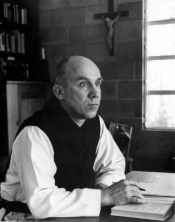
Thomas MertonThomas Merton  (1915–1968)

This monk lived a life as checked as Day’s prior his conversion to Catholicism during college in his mid-twenties. In December 1941, he joined the Trappist monetary in Gethsemani, Kentucky. Seven years later, he published an autobiography about his converion and spiritual journey called “The Seven Storey Mountain.” Though Merton wrote more than 70 books, this work spoke to his generation more than any other, inspiring many monastic vocations.

In his speech before Congress, Pope Francis said of Merton:

“He remains a source of spiritual inspiration and a guide for many people. In his autobiography he wrote: ‘I came into the world. Free by nature, in the image of God, I was nevertheless the prisoner of my own violence and my own selfishness, in the image of the world into which I was born. That world was the picture of Hell, full of men like myself, loving God, and yet hating him; born to love him, living instead in fear of hopeless self-contradictory hungers.’ Merton was above all a man of prayer, a thinker who challenged the certitudes of his time and opened new horizons for souls and for the Church. He was also a man of dialogue, a promoter of peace between peoples and religions.”

Thomas Merton own quotes include: “Pride makes us artificial and humility makes us real.” “We are not at peace with others because we are not at peace with ourselves, and we are not at peace with ourselves because we are not at peace with God.” “The beginning of love is to let those we love be perfectly themselves, and not to twist them to fit our own image.” And, “Faith is the total surrender to Christ, which places all our hope in Him and expects all strength and sanctity from his merciful love.”

The Catholic Catechism on Immigration

September 21, 2015

Paragraph 2241:

Catholic AmericanThe more prosperous nations are obliged, to the extent they are able, to welcome the foreigner in search of the security and the means of livelihood which he cannot find in his country of origin.  Public authorities should see to it that the natural right is respected that places a guest under the protection of those who receive him.
Political authorities, for the sake of the common good for which they are responsible, may make the exercise of the right to immigrate subject to various juridical conditions, especially with regard to the immigrants’ duties toward their country of adoption.  Immigrants are obliged to respect with gratitude the material and spiritual heritage of the country that receives them, to obey its laws and to assist in carrying civic burdens.

Preventable Tragedies

September 12, 2015

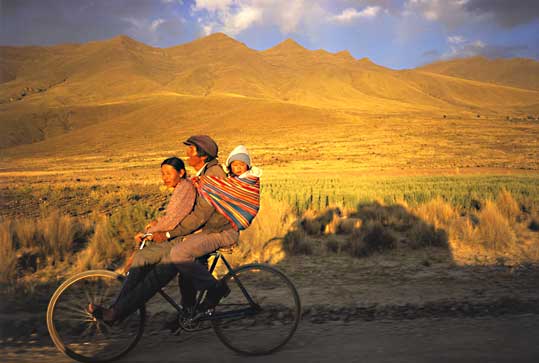
A Bolivian Family Riding a Bicycle, 1991

While studying for the priesthood, I spent a summer at our diocese’s mission in Bolivia. There I learned that South America’s poorest country has a death rate from tuberculosis 222-times higher than here. I was told the Bolivian government offers free TB medicine, but that many who take the pills start to feel better and quit before they’ve finished the prescription. Tragically, this allows the disease to resurge, and the patients are lost. Their half-measured approach to what would save them invites their death.

As our children soon return to CCD, I wish to emphasize the obvious truth that CCD alone is not enough to form a child into a mature Christian adult. Religious education must be paired with daily family prayer (beyond simply before meals) and family Mass attendance each week. Without these, children learn from their parents’ silent instruction that their Catholic faith may be carelessly discarded once their “last hoop” of Confirmation is cleared. This must not be so!

If you are already attending Mass and sharing family prayers, please keep it up. If not, please follow this powerful prescription of prayer and Sunday worship. Embrace it for your children’s sake and for your own. Our Catholic faith is not mere “fire insurance.” It is the path to abundant life for this life and the next. As Jesus says, “I came so that they might have life and have it more abundantly.” (John 10:10)

A True Story of Pain, Transformation, & Hope

August 20, 2015

My hometown friend, pro-life speaker Katie Stelter, spoke at our parish’s youth group this evening. Her story was made into this powerful docudrama, Metamorphosis:

Holy Aphorisms — August 4 — St. John Vianney

August 4, 2015

        St. John Vianney, the Curé of Ars and patron saint of priests, is well known as a confessor who could see into peoples’ souls and who took great penances upon himself for the conversion of sinners. Less known, though, is his wisdom. St. John Vianney may have had difficulties learning Latin and passing his seminary exams, but he preached beautiful spiritual insights such as these:

“To approach God you should go straight to Him, like a bullet from a gun.”

“Prayer is the conversation of a child with his Father.  Of a subject with his King.  Of a servant with his Lord.  Of a friend with the Friend to whom he confides all his troubles and difficulties.”

“A pure soul is with God, as a child with its mother.  The child caresses and embraces her, and its mother returns all its endearments.”

“God commands you to pray, but He forbids you to worry.”

“You must accept your cross.  If you bear it courageously it will carry you to heaven.”

However, “Our Lord takes pleasure in doing the will of those who love him.”

“Just as a mother holds her child in her hands to cover it with kisses, so does God hold the devout person.”

“Here is a rule for everyday life: Do not do anything which you cannot offer to God.”

And as we approach the Eucharist, let us recall this final thought: “To content his love, God must give Himself to us separately, one by one.”

(Originally published August 4, 2010;
edited & republished August 4, 2015)

Moral Principles & Just War

July 23, 2015

St. Paul providentially wrote,

“[W]hy not say — as we are accused and as some claim we say — that we should do evil that good may come of it? Their penalty is what they deserve.” (Romans 3:8)

In this passage, the Holy Spirit led St. Paul to denounce the idea that having a good goal in mind can ever justify using immoral means to achieve it. God’s most basic commandment is heard in every human conscience: “Do good, avoid evil.” We must never do evil in hopes that good may result. If we do, there is no guarantee that our hoped for goal will come to pass, but we will have surely allied ourselves (in some measure) with evil by opposing God’s will.

A second moral principle (which frees us as it binds) is this: we must never intentionally kill the innocent, for this is murder. All human life is sacred and precious, which makes any decision to wage war a most serious one. Catholic Just War doctrine teaches that all of the following conditions must hold for a war to be morally just:

  1. The damage inflicted by the aggressor on the nation or community of nations must be lasting, grave, and certain.
  2. All other means of putting an end to it must have been shown to be impractical or ineffective.
  3. There must be serious prospects of success.
  4. The use of arms must not produce evils and disorders graver than the evil to be eliminated.
    (See The Catechism of the Catholic Church, #2309)

B-24 BomberEven if all of these conditions are met and a country goes justly off to battle, enemy civilians must not be targeted. It is inevitable that some innocents will die in the chaos of war; sometimes bombs dropped over a military target will accidentally hit homes nearby. But it is something very different to intentionally aim for the civilians in hopes of killing as many as possible. This is a war crime. It is murder. “But what if murdering civilians will end the war faster and save more lives in the end?” (*) This is the tempter’s promise, but God’s commandment remains without exception: ‘You shall not become a murderer.’

I do not share these moral principles to condemn any previous wartime generation. God knows it is hard do what is right in times of stress and fear; and only He can judge hearts. I share these teachings because history shows that even in peacetime we stand between wars. When the next conflict threatens we must judge aright whether it must be fought, and if so, guard that the war does not make casualties our souls.

Three Crosses Line Break

( * – Some may claim that if enemy civilians are working, paying taxes, and not in rebellion against their government, then they are legitimate military targets, since they are aiding the enemy. Such thinking abandons the distinctions between combatants and non-combatants, condoning all sorts of evils. A similar case could be made for summarily-executing enemy prisoners of war, since their captivity aids the enemy by diverting our wartime resources. )

Sunday: A Day of Rest & Grace

July 22, 2015

From the Catechism of the Catholic Church, #2184-2187

      Just as God “rested on the seventh day from all his work which he had done,” (Genesis 2:2) human life has a rhythm of work and rest. The institution of the Lord’s Day helps everyone enjoy adequate rest and leisure to cultivate their familial, cultural, social, and religious lives.

      On Sundays and other holy days of obligation, the faithful are to refrain from engaging in work or activities that hinder the worship owed to God, the joy proper to the Lord’s Day, the performance of the works of mercy, and the appropriate relaxation of mind and body. Family needs or important social service can legitimately excuse from the obligation of Sunday rest. The faithful should see to it that legitimate excuses do not lead to habits prejudicial to religion, family life, and health.

Jesus Overlooking Jerusalem      Those Christians who have leisure should be mindful of their brethren who have the same needs and the same rights, yet cannot rest from work because of poverty and misery. Sunday is traditionally consecrated by Christian piety to good works and humble service of the sick, the infirm, and the elderly. Christians will also sanctify Sunday by devoting time and care to their families and relatives, often difficult to do on other days of the week. Sunday is a time for reflection, silence, cultivation of the mind, and meditation which furthers the growth of the Christian interior life.

      Sanctifying Sundays and holy days requires a common effort. Every Christian should avoid making unnecessary demands on others that would hinder them from observing the Lord’s Day. Traditional activities (sports, restaurants, etc.), and social necessities (public services, etc.), require some people to work on Sundays, but everyone should still take care to set aside sufficient time for leisure. With temperance and charity the faithful will see to it that they avoid the excesses and violence sometimes associated with popular leisure activities. In spite of economic constraints, public authorities should ensure citizens a time intended for rest and divine worship. Employers have a similar obligation toward their employees.

The Priest’s “Secret” Prayers at Mass

July 22, 2015

Offering the Mystical and Holy Mass     Did you know that the Church gives priests celebrating the Mass several prayers to say in a low voice such that few (if any) in the church hear them? These are called the “secret” prayers (from the Latin word for “hidden.”) May the great beauty of these prayers inform and inspire your own devotion at Holy Mass.

The priest, before proclaiming the Gospel, pauses in front of the altar to bow and pray:

“Cleanse my heart and my lips, almighty God, that I may worthily proclaim your holy Gospel.”

 At the end of the Gospel, the priest (or proclaiming deacon) kisses the book and prays:

“Through the words of the Gospel may our sins be wiped away.”

During the Offertory, the priest (or assisting deacon) pours a little water into the chalice of unconsecrated wine and prays:

By the mystery of this water and wine may we come to share in the divinity of Christ, who humbled himself to share in our humanity.”

After thanking God for the gifts of bread and wine He has given us to offer (“Blessed are you, Lord God of all creation…”) the priest bows behind the altar and prays:

“With humble spirit and contrite heart may we be accepted by you, O Lord, and may our sacrifice in your sight this day be pleasing to you, Lord God.”

While the priest washes his hands, he prays:

“Wash me, O Lord, from my iniquity and cleanse me from my sin.”

During the “Lamb of God,” the priest places a small piece of the Host into the chalice, praying:

“May this mingling of the Body and Blood of our Lord Jesus Christ bring eternal life to us who receive it.”

At the end of the “Lamb of God,” the priest joins his hands and prays one of these two prayers:

1. “Lord Jesus Christ, Son of the living God, who, by the will of the Father and the work of the Holy Spirit, through your death gave life to the world, free me by this, your most holy Body and Blood from all my sins and from every evil; keep me always faithful to your commandments, and never let me be parted from you.”

2. “May the receiving of your Body and Blood, Lord Jesus Christ, not bring me to judgment and condemnation, but through your loving mercy be for me protection in mind and body and a healing remedy.”

Before consuming the Body of Christ, the priest prays:

May the Body of Christ keep me safe for eternal life.

Before consuming the Blood of Christ from the chalice, the priest prays:

May the Blood of Christ keep me safe for eternal life.

Finally, while purifying the sacred vessels following the distribution of Communion, the priest prays:

“What has passed our lips as food, O Lord, may we possess in purity of heart, that what has been given to us in time may be our healing for eternity.”

Starving the Beast

July 22, 2015

A Baby Held In Hands

According to 2nd Vote, a consumer research app, the following corporations have all made direct contributions to Planned Parenthood—the group which sold and performed more than 327,000 abortions in our country last year:

Clothes & Body: Avon, Bath & Body Works, Converse, Dockers, Johnson & Johnson, La Senza, Levi Strauss, Macy’s, Nike, Unilever, Pfizer

Charities: American Cancer Society, March of Dimes, Susan G. Komen, United Way

Finance & Insurance: American Express, Bank of America, Deutsche Bank, Fannie Mae, Liberty Mutual, Morgan Stanley, Progressive, Wells Fargo

Food: Ben & Jerry’sPepsiCo, Starbucks, Tostitos

Industrial: Energizer, Clorox, ExxonMobil

Tech: Adobe, AT&T, Expedia, Groupon, Intuit, Microsoft, Oracle, Verizon

It is not a sin for a person to use the products or services of these Planned Parenthood supporting companies (since the customer’s connection to abortions is so very indirect and remote.) However, it might do good for many of us to cease, wherever possible, giving these companies our business and to let them know our reason why. For example:

Dear Sir or Madam,

It has come to my attention that your company has given direct contributions to Planned Parenthood, a group that has killed millions of innocent human beings. Because of this, as far as possible, I will no longer be your customer and I will encourage others to do likewise. I urge your company to reconsider its support of Planned Parenthood.

Sincerely,
{Signed}

[Links to each company’s feedback page are provided above.]

Finally, it should be noted that the largest single contributor to Planned Parenthood is not any of these companies, but our own government. In the 2013-2014 fiscal year, Planned Parenthood received $528.4 million in taxpayer-funded health service grants and reimbursements. Efforts to end this public funding of Planned Parenthood are also worthy of our support.

Source:  The Daily Signal – “Meet the 38 Companies That Donate Directly to Planned Parenthood

My Five Most Common Bits of Advice in Confession

July 17, 2015
Peter Swims to Jesus on the Shore in John 21

Peter was not afraid to approach the Lord whom he had denied, leading to his tripartite reconciliation. We can encounter Jesus likewise in the Sacrament of Confession.

Of the seven sacraments, Confession is my second favorite (after the Holy Eucharist.) This holds whether I am the one absolving or the one being absolved. It feels good to have that joy of a fresh beginning, or to know that I have helped another come nearer to the Lord. Having our sins forgiven does us incredible good — exorcists say a good confession is more powerful than an exorcism — but the priest in the confessional usually also offers some advice to help us cooperate with God’s grace, sin no more, and live daily life with peace.

Priests tend to hear certain sins or fears more often than others in confession, and in response to these a priest will tend to give similar advice. At risk of making my priestly counsel stale, but in hopes of spreading these helpful lessons for the benefit of many, I have detailed below the five most frequent pieces of advice that I share in confession.

Being Tempted Is Not The Same As Sinning

No priest should say that a sin is not a sin, but priests do right to free troubled consciences from guilt about things which are not sinful. Guilt from experiencing temptation is one example. Temptation, in and of itself, is not a sin. A temptation becomes a sin when we welcome its presence and give it our “yes.”

Sometimes people confess having bad thoughts or desires. I ask them whether they welcomed or entertained these temptations or if they resisted them. This matters because thoughts, feelings, and desires will often come our way without our willing them, but it is what we choose that is important. Only when our will chooses do we act in a saintly or sinful way. For instance, choosing to resist a temptation by praying or distracting ourselves is a holy deed. A saint is not someone who never knows temptation—he or she will likely understand temptation better than most—a saint is someone who consistently chooses love and the Lord even amidst temptation.

Good & Bad Reasons For Missing Mass

Our Sunday obligation flows from the commandment to keep the Lord’s Day holy. Whenever someone confesses missing Holy Mass I ask whether it was by their own choice. (Again, what we do not choose is not our sin.) Sickness, hazardous travel conditions, or the need to care for others are all serious reasons that justly excuse us from attending Mass. However, deliberate, willful absence (such as on a family vacation) is a sin to be avoided. Using the internet and a telephone we can plan ahead to find and celebrate the Lord’s Sacrifice wherever our travels take us.

Forgiving May Not Be What You Think

Sometimes anguished persons confess that they just cannot forgive someone, even though they want to. Usually, this turmoil is due to thinking that forgiveness means something it does not. For example, without a bout of amnesia, we cannot literally “forgive and forget.” And trying to agree that past sins done to us were not actually wrong is a lie against the truth. Sometimes sins break relationships and circumstances such that things cannot go back to same way they were before. Or, perhaps we may still feel the pain inflicted—for some wounds cannot be healed merely by our willing it, but only with grace and time. However, none of these realities prevent us from forgiving. In fact, the person who desires to forgive already has everything they need to begin.

Forgiveness means loving someone despite past wrongs. Jesus calls us to love everyone, which means that we must forgive everyone. If you fear that there is someone whom you hate or whom you have not forgiven, simply pray for them. It is impossible to both will the eternal good of another (as we do in prayer) and to hate them at the same time. If you are praying for them, you are loving and forgiving them. The Holy Spirit may prompt you to take further steps in forgiveness down the road, but your prayer begins to open you both to the transforming power of God.

Training Yourself Not To Misuse Holy Names

Crude language is bad, but swearing by misusing the holy name of God or his saints is worse. Our love and respect for someone should be reflected, not negated, by our words. Whenever someone confesses the habitual sin of taking the Lord’s name in vain I suggest a new habit: The next time you misuse a holy name, as soon as you realize it, follow it with a praise (such as “I love you, Lord,” or a “Glory Be…’) This will do three things: it will help undo the wrong with a good (getting you back on the horse,) it will help drive out the bad habit with a good one, and it will present a Christian witness to anyone who may have overheard your profanity.

Apologizing To Your Children

When parents confess to yelling in (uncontrolled) anger at their kids, I ask them whether they apologized to their children. This is a good and beautiful thing for a parent to do because it models true Christian behavior for the children: “I needed to discipline you because you were doing something wrong, but I shouldn’t have yelled at you. I’m sorry.” If we want our children to repent of wrongdoings and seek forgiveness, we must walk the talk and show them how it looks. Authority is most respected when it manifests integrity.

The Meaning of Life

June 9, 2015

Homer Simpson once had this exchange with “God”:

HomerGod, I’ve gotta ask you something.
What’s the meaning of life?

God:      Homer, I can’t tell you that.
HomerC’mon!
God:      You’ll find out when you die.
HomerI can’t wait that long!
God:      You can’t wait six months?
HomerNo, tell me now!
God:      Well, OK. The meaning of life is…

[The theme song and ending credits interrupt before we hear the answer.]

So what is the meaning of life? Why are we here, for what purpose do we exist?

Philosophers and TV writers may balk at the answer, but for Christians this is not an unanswerable riddle. Jesus Christ tells us what we are meant to do on earth (and likewise, in Heaven): first, to “love the Lord, your God, with all your heart, with all your soul, with all your strength, and with all your mind,” and second, to “love your neighbor as yourself.” (Matthew 22:37-40, Mark 12:30-31, & Luke 10:27-28)

Nothing is more important than this. This is what the Law, the Gospels, the prophets, and the saints are all about. Loving relationship with God and each other is the meaning of our lives. Of what enduring value is anything else if separated from this?

Blessed with knowing this precious knowledge, how are you going to live?

June Scripture Suggestions for Prayer

June 1, 2015

June 1              Exodus 24:3-8

June 2              Psalm 116:1-9

June 3              Psalm 116:10-18

June 4              Hebrews 9:11-15

June 5              Mark 14:12-16

June 6              Mark 14:22-26

June 7              (Corpus Christi Sunday)

June 8              Ezekiel 17:22-24

June 9              Psalm 92:2-10

June 10            Psalm 92:11-16

June 11             2nd Corinthians 5:6-10

June 12             Mark 4:26-29

June 13             Mark 4:30-34

June 14             (11th Sunday in Ordinary Time)

June 15             Job 38:1, 8-11

June 16             Psalm 107:1-22

June 17             Psalm 107:23-43

June 18             2nd Corinthians 5:11-15

June 19             2nd Corinthians 5:16-21

June 20             Mark 4:35-41

June 21             (12th Sunday in Ordinary Time)

June 22             Wisdom 1:13-2:11

June 23             Wisdom 2:12-24

June 24             Psalm 30

June 25             2nd Corinthians 8:7-15

June 26             Mark 5:21-34

June 27             Mark 5:35-43

June 28             (13th Sunday in Ordinary Time)

June 29             Ezekiel 2:1-10

June 30             Ezekiel 3:1-15

July 1                Psalm 123

July 2                2nd Corinthians 12:1-6

July 3                2nd Corinthians 12:7-10

July 4                Mark 6:1-6

July 5                (14th Sunday in Ordinary Time)

Bridget Achenbach Funeral Homily

May 29, 2015

May my words approach what Jesus Christ and Bridget would like me to speak. May my words give you consolation and timely help.

Bridget Achenbach Fair Ambassador

Bridget Achenbach, 1995-2015

Last year, Bridget left home to become a freshman at UW-La Crosse. I’ve heard it said that when a young person goes off to college the experience is very different for the child and for the family. It’s much easier for the child leaving home than for the family left behind. For a young person like Bridget, this transition begins an adventure. She’s learning fascinating, new, amazing things. She’s meeting great people, making new friends. Of course, she still loves and cares about her family at home. Yet she is so happy and excited to be beginning her new life.

For her parents and siblings at home, it’s understandably much harder. While her life is full, they can feel an emptiness. At home, she’s not in her room. She’s not in her seat at the kitchen table. Her voice and laughter are not heard in the house. Of course, her family can still speak to her long-distance. And she is still well-aware of everything that’s going on at home. But her departure creates some degree of separation, and that’s hard, and that’s sad.

Deeply loving parents could wish that their child would never leave home. “Why couldn’t she just live here?” When their child has gone away from home they worry if she’s OK, if she’s safe, if she’s happy, if she’s staying close to the Lord. Some, despite their Christian upbringing, when faced with the free choice, choose to leave the Lord and go their own way. When Bridget went to college last year, she was not like one of those. She went from good to better. She drew even nearer to Jesus, and grew with Him.

During her Freshman year, through the UW-L Catholic Newman Center, she was involved in Bible studies, attended a five-day Catholic youth conference in Tennessee, and pilgrimaged to the March for Life. On the bus trip of that last trip she shared with friends about how Jesus was transforming her life. She said she felt closer to Him than ever before.

Last year, Bridget began going to weekday Mass, receiving our Eucharistic Lord on more than just Sundays. Why would a young person like Bridget go to daily Mass? It’s not as though popular culture promotes that kind of devotion. It’s not because anyone is required to attend Mass on a weekday. A person who goes to daily Mass resonates with the psalmist’s words:

O God, you are my God, for you I long;
for you my soul is thirsting.
My body pines for you like a dry,
weary land without water.
So I gaze on you in the sanctuary
to see your strength and your glory.

A person desires to go Mass and receive Jesus in the Eucharist frequently because one has the desire to be closer to God. And this desire is not of ourselves but from Jesus’ desire to draw us closer to Him.

As you know, Bridget Achenbach is a remarkable woman. People who meet Bridget found her joyful and intelligent; faithful, yet approachable; pious, and yet relatable. One of Bridget’s mission trip leaders once said to himself, “I wish I had whatever she’s got.” Bridget’s past goodness and our present loss raises this troubling question: “How could Jesus allow his beloved one to be taken from us?” We echo the questioning plea of Martha and Mary to Jesus at the death of Lazarus, “Lord, if you had been here, my brother would not have died!” What are we to make of this?

We know that Jesus never, ever commits evil. He is goodness and love incarnated. “In Him there is no darkness at all.” But we also know that Jesus refrained from intervening with some (even subtle) miracle to prevent this from happening. Why would God permit such a charismatic young lady, apparently richly endowed with the Holy Spirit’s gifts, to die on Pentecost Sunday? Wouldn’t she do more good if she were left alive on earth? Wouldn’t her life be fuller if she lived on earth a full number of years?

Today we are like the disciples on the first Holy Saturday, the day after Good Friday’s shock and horror yet before Easter Sunday’s glory. On Good Friday, the disciples beheld the most distressing death of their Messiah. On Holy Saturday, His followers were grieving and questioning. But on Easter Sunday, they saw the resurrection Jesus had promised. Today is like Holy Saturday because we see our loss but not God’s purposes.

Bridget Achenbach PhotoPerhaps, as the Book of Wisdom says, God saw Bridget reach that perfection of soul He treasures and delivered her from this world’s wickedness to be safe with Him. Perhaps we don’t see reality with the clear vision of St. Paul, who assures us “we would rather leave the body and go home to the Lord.” We think of this place as home but Scripture tells us our true home is in Heaven. Perhaps Bridget has been called to continue the Lord’s work on earth from Heaven. The Blessed Virgin Mary, the spiritual mother of all Christians, was an invaluable presence among the first Christians in the early Church. But after she completed the course of her earthly life and was taken up into Heaven Mary was able to assist more powerfully than before. In her glorified state, Mary our mother can hear and intercede on behalf of millions while loving each of us uniquely. Perhaps God has such a mission for Bridget as well. We don’t yet know the answers now—“we walk by faith, not by sight”—but we do know the Lord Jesus in whom we trust.

We are not without hope, but it’s still hard. Today is sad, but you are not alone. This place literally overflows with love for you and Bridget. In times to come, give us the gift of allowing us to give gifts of our love to you. Talk to Jesus every day. As he told us, “I am with you always.” Share with Him your true feelings and your honest thoughts. Whether it’s anger or gratitude, He wants you to tell Him. He who suffered and died among us wants to walk with you through this and through all of life. And talk to Bridget. Whether through the power of God, the mediation of angels, or a soul to soul communication that is clearer than our words on earth, she will hear you. Like going off to college, Bridget is beginning a new life. But she still loves you and will enjoy hearing from you.

Our God is good. Jesus Christ is here. Bridget is loved, and she is at peace.

A Holy Spirit Novena

May 14, 2015

All novenas are inspired by the nine days during which Mary, the apostles, and the other disciples prayed in the upper room for the coming of the Spirit with power. To pray a novena to the Holy Spirit preceding this Pentecost yourself, begin this Friday, May 15th. Many Pentecost novenas are available online, but your daily prayer could simply be this:

 “Come Holy Spirit, fill the hearts of your faithful and kindle in them the fire of your love. Send forth your Spirit & they shall be created. And You shall renew the face of the earth.

O, God, who by the light of the Holy Spirit, did instruct the hearts of the faithful, grant that by the same Holy Spirit we may be truly wise and ever enjoy His consolations, Through Christ Our Lord, Amen.”