Archive for the ‘Holy Spirit’ Category

Uniting All Peoples

May 30, 2020

Pentecost Sunday—Year A

Did you know that the Feast of Pentecost actually predates Christianity? This solemn Jewish feast (called Shavuot in Hebrew and Pentecost in Greek) was established by God to celebrate and give God thanks for Israel’s wheat harvest. On this day, seven weeks after Passover, the Jews were to bring the first fruits of their harvests and present these in a basket at the Lord’s Temple. This is why “there were devout Jews from every nation under heaven” present in Jerusalem when the Holy Spirit descended on Pentecost. The Christians, who had been praying the first nine-day novena for His coming, were transformed by the Holy Spirit’s power and began proclaiming Jesus Christ in the streets. At the sound of it, a large crowd of these visiting Jews gathered, astonished and confused, because each one heard them speaking in his own language. In amazement they asked:

“Are not all these people who are speaking Galileans? Then how does each of us hear them in his native language? We are Parthians, Medes, and Elamites, inhabitants of Mesopotamia, Judea and Cappadocia, Pontus and Asia, Phrygia and Pamphylia, Egypt and the districts of Libya near Cyrene, as well as travelers from Rome, both Jews and converts to Judaism, Cretans and Arabs, yet we hear them speaking in our own tongues of the mighty acts of God.”

At this, St. Peter (suddenly emboldened by the Holy Spirit) proclaims the Good News about Jesus being the Resurrected Messiah that is the Christian Gospel. He urges the crowd: “Repent and be baptized, every one of you, in the name of Jesus Christ for the forgiveness of your sins; and you will receive the gift of the Holy Spirit. … Save yourselves from this corrupt generation.” Those who accepted his message were baptized and about three thousand persons were added that day.

Today, the solemn Christian feast of Pentecost celebrates the blessed gift of the Holy Spirit upon the earth and the harvest of the first fruits; men and women gathered from the nations and presented to God’s Church. As Jews and converts to Judaism, they were of many races and languages, they were of many cultures and countries of origin, but they were all called to be one in Christ. In time, the Holy Spirit led the apostles to see that this call to salvation was immediately accessible to non-Jews, to Gentile people, as well. Every person is created by God, loved by God, and called to close relationship with God through Jesus and his Church. In the words of St. Paul, “Through faith you are all children of God in Christ Jesus. For all of you who were baptized into Christ have clothed yourselves with Christ. There is neither Jew nor Greek, there is neither slave nor free person, there is not male and female; for you are all one in Christ Jesus.

Individuals are unique, one from another, so each person must be taken as they come. While we have differing backgrounds and talents, different material resources and gifts of the Spirit with which to serve, each person has equal worth before God. Yet a society apart from God will never fully honor that dignity. The people of Babel sought to build a great city reaching up to heaven. While working together apart from God’s truth and grace, however, they could bring about great evils in this world. (History is littered with such cultures and subcultures; you can know them by their fruits.) At Pentecost, the Lord undoes Babel. The peoples of many languages are reunited, becoming citizens and co-builders of the City of God. From where comes peace and true unity on this earth? Let us be led by the Holy Spirit and one with Jesus Christ that all peoples may be united in the one Kingdom of God.

The Gift of the Holy Spirit

June 11, 2019

If you ask people what the Solemnity of Pentecost is about, most will say “the sending of the Holy Spirit.” But Pentecost was not the first time the Holy Spirit had been active in human history.

On Easter Sunday evening, Jesus appeared the Apostles in the Upper Room – although the doors were locked. He said, “Peace be with you,” and showed them his hands and his side. Then Jesus breathed on them and said, “Receive the Holy Spirit…” Earlier in the Gospels, at the Annunciation, Mary asked the archangel how the Messiah, the Christ, would be conceived in her; and Gabriel replied it would be a miraculous work of the Holy Spirit. And then soon after, at the Visitation, her relative Elizabeth, with the little John the Baptist within her, was “filled with the Holy Spirit,” moving Elizabeth to joyfully exclaim the hidden knowledge: “Most blessed are you among women, and blessed is the fruit of your womb!” And the Holy Spirit worked in more than just the time of the Gospels. The Nicene Creed says the Holy Spirit “has spoken through the prophets.” He inspired all the books of both the Old and New Testaments.

So what was different about Pentecost? Before answering that, let’s review what happened. On that day, the Holy Spirit descended to the sound of strong, driving wind and in the appearance of flames, which separated and came to rest upon each of the gathered disciples without doing them any harm.

They were moved to voice ecstatic praises glorifying God and the Holy Spirit gave them the power to speak in different languages they did not naturally know to address Jews visiting from many lands of the then-known world. These devout Jews were gathered in Jerusalem to celebrate the annual Jewish feast of Pentecost, their feast of first fruits celebrating the new harvest from the earth. Similarly, the first Christian Pentecost was the disciples’ first abundant harvest of souls into Christ’s Kingdom.

The Holy Spirit not only gave the disciples the capacity to speak but embed them with courage to bear witness to Christ. Previously, they had hidden behind locked doors. Now they spoke openly in the streets. Peter, who during the Passion had denied Jesus three times out of fear, is inspired this day to begin preaching the Gospel to total strangers. “Those who accepted his message were baptized, and about 3,000 persons were added that day.”

On Pentecost, the curse of Babel is reversed. In the Genesis story of Babel, people tried to reach Heaven by building a towering city apart from God. God confused their language as a kindness, to limit the evil they could do. But at Pentecost, the Holy Spirit is building and populating the city of God, the Church, gathering them to God with this miracle of all languages united as one. Indeed his Church is catholic, that is universal, for every land and people, tribe and tongue.

So, returning to the previous question, what is different about Pentecost? Notice that these gifts of the Holy Spirit were given to each of the disciples gathered in the house; not only the Blessed Virgin full of grace, not just the Apostles—the first leaders of the Church, but each and every one of the roughly one hundred and twenty Christians gathered together there. The Holy Spirit was not acting in the world for the first time at Pentecost; nor was his presence and gifts meant for only for the most famous saints in the Early Church. The Holy Spirit’s activity continues in the Church today, not only within a favored few but in all of us in Christ.

As St. Augustine preached: “What the soul is to the human body, the Holy Spirit is to the Body of Christ, which is the Church.” In a living human body, all the parts of the body are joined to each other and joined to their supremely important head. Without the head, the body dies. Without the soul, the body is lifeless. We are the Body of Christ, Jesus is our exalted Head, and the Holy Spirit—the Soul of the Church—animates the body and every living part of it.

You and I first received the Holy Spirit at our baptisms, probably at an age earlier than we can remember. (I wish I had the time and opportunity to ask people baptized as adults to describe the difference having the Holy Spirit in their life has had.) We were more deeply configured to the Holy Spirit at our confirmations. (After my confirmation at Zorn Arena in Eau Claire, as my family and I were driving to a restaurant, I remember feeling particularly happy and wondering why. Then I remembered, “Oh yeah, the Holy Spirit.” Joy is one of his fruits.) The Holy Spirit was not new at Pentecost but he outpoured amazing gifts into all the Christians. Likewise, the Holy Spirit is not new in you, but he desires to outpour himself to you with his gifts anew.

How can this happen for us? Simply by asking and inviting him. Jesus tells us, “Everyone who asks, receives; and the one who seeks, finds; and to the one who knocks, the door will be opened.” In those days, a round, baked, loaf of bread could resemble a brown stone, so Jesus adds, “Which one of you would hand his son a stone when he asks for a loaf of bread? If you, who are wicked (who are sinful), know how to give good gifts to your children, how much more will the Father in Heaven give the Holy Spirit to those who ask him?” Ask for the Holy Spirit to empower you.

Try some experiments with the Holy Spirit. For instance, invite him into your prayer times. Anyone committed to regular prayer will have times of dryness, listlessness, lack of direction. St. Paul writes to the Romans that the Holy Spirit “comes to the aid of our weakness; for we do not know how to pray as we ought, but the Spirit intercedes…” At dry times in prayer, when I remember to ask the Holy Spirit for help, my prayer immediately becomes easier.

Invite the Holy Spirit to inspire your work. Though I care a great deal about writing good homilies, most Friday nights I don’t know what I will be preaching on Saturday afternoon. I think the Lord does this to improve my trust. After ten years of priesthood, he has never left me high and dry without anything to preach for Sunday.

And ask for the Holy Spirit’s aid in your interactions with others. I ask for his help in confessions or before challenging conversations. Now I share these examples because they are examples from my life, but don’t think that the Holy Spirit only comes to our air with church-y things. He wants to be present, to share his gifts in your everyday life, because this is where souls are lost and won for the Kingdom of God.

About a dozen years ago, I was lying on my bed one afternoon praying to the Holy Spirit rather apologetically. I said, ‘Holy Spirit, you are like the forgotten and ignored third Person of the Trinity. You’re just as much God as the Father and the Son, but we address many more prayers to them than you; and when we do pray to you it’s because we want something, but you’re more than just some divine vending machine.” Then I heard in my mind these words: “I am gift.”

Now whenever you receive a word in prayer it’s good to verify it against the truths that you know. So I thought, “Let’s see if this checks out.” From all eternity, God the Father gives all that he is to God the Son, and the Son gives himself back as a total gift to the Father. From this exchange of self-gift and love, God the Holy Spirit eternally proceeds. The Father and the Son send the Holy Spirit to earth as a gift to sanctify and transform us so we can join the life of the Trinity. The Holy Spirit rejoices to be gift. It is who he is. And when we ask for his gifts we are implicitly welcoming for his presence; for how could his gifts be manifested where he is not?

So conduct some experiments with the Holy Spirit. Invite him, and ask that his gifts be manifested in you. He is happy to give.

Captain America, St. Thomas More, & the Spirit of Truth

May 14, 2016

In the new blockbuster movie Captain America: Civil War the titular hero is discerning an important decision when he hears this message in a church:

“Compromise where you can. And where you can’t, don’t. Even if everyone is telling you that something wrong is something right, even if the whole world is telling you to move. It is your duty to plant yourself like a tree, look them in the eye and say, no. You move.”

Captain America - No, You MoveAs I watched in the movie theater, that bit about the tree struck me as odd. Trees bend and can be cut down, but pillars of iron or stone mountains don’t budge. I later discovered that these movie lines were adapted from a famous comic book speech Captain America once addressed to Spider-Man:

“When the mob and the press and the whole world tell you to move, your job is to plant yourself like a tree beside the river of truth, and tell the whole world — ‘No, you move.’”

Did you spot the difference? “Plant yourself like a tree beside the river of truth.” That’s not only more beautiful, it’s also an allusion to Old Testament imagery. Psalm 1:3 says:

“[The Just Man] is like a tree planted near streams of water that yields its fruit in due season, whose leaves do not wither, and whatever he does prospers.”

And Jeremiah 17:8 says:

“[Those who trust in the Lord] are like a tree planted beside the waters that stretches out its roots to the stream: It does not fear heat when it comes, its leaves stay green; In the year of drought it shows no distress, but still produces fruit.”

These verses teach that the just man who is rooted in the Law (or the Truth) of God prospers, and that those who trust in the Lord prevail against adversity.

I wish that Hollywood had included the fuller quote in the new Captain America movie—not only because it’s better writing, not only because it echoes Sacred Scripture, but because it better reflects the truth about where Truth comes from. My all-time favorite film disappoints me in a similar way.

A Man for All Seasons - St. Thomas More at TrialA Man for All Season won the 1966 Academy Award for Best Picture, but its depiction of its hero, St. Thomas More, falls short of perfection. In the movie, as in real life, Thomas More suffers unjust imprisonment for refusing to swear an oath recognizing King Henry VIII as the supreme head of the Catholic Church in England. The movie’s screenwriter, the agnostic Robert Bolt, drew on More’s own writings to craft some fantastic dialogues, but Bolt somewhat misrepresents the saint’s true motivations.

In one scene, Thomas More’s friend, the Duke of Norfolk, asks why he won’t just “give in.” Thomas answers, “I will not give in because I oppose it — I do — not my pride, not my spleen, nor any of my appetites, but I do — I!” The real St. Thomas More’s motivations are portrayed more accurately in the scene at his trial. He tells the court:

“The indictment [against me] is grounded in an act of Parliament which is directly repugnant to the law of God, and his Holy Church, the Supreme Government of which no temporal person may by any law presume to take upon [himself.] This was granted by the mouth of our Savior, Christ himself, to Saint Peter and the Bishops of Rome whilst He lived and was personally present here on earth. It is, therefore, insufficient in law to charge any Christian to obey it.”

The real St. Thomas More refused to sign the King’s oath because he saw in it a denial of Christ. He preferred to die rather than lose Heaven; and he did go on to die, thereby gaining Heaven. But Robert Bolt has his Thomas More conclude his courtroom speech like this:

“Nevertheless, it is not for [refusing the King’s] Supremacy that you have sought my blood, but because I would not bend to the [King’s re-marriage]!” (In other words, “No one is going to make me act contrary to my own self-will!”)

The real St. Thomas More was not standing up against the world for individually-chosen truth. (More opposed heretics when he served as King Henry’s High Chancellor.) He knew that Truth and right and wrong are not things we create for ourselves. We receive them, as water from a river. They do not flow from us as their source. The real St. Thomas More was a champion for the Truth which comes from God.

So how can we be faithful to the Truth which comes from God? How can we be planted like trees beside the River of Truth that flows from God? By prayerfully welcoming the Holy Spirit.

At his interrogation before the Roman Governor Pontius Pilate, Jesus says: “Everyone who belongs to the truth listens to my voice.” (In the Holy Trinity, the Father is the Speaker, Jesus is the Word, and the Holy Spirit is the Voice) But Pilate refuses to listen. He retorts to Jesus, “What is truth?” He rejects the Spirit of Truth and walks away.

Later, at his Ascension, Jesus instructs his disciples to remain in Jerusalem until they are clothed with power from on high with the Spirit of Truth who will teach them everything and remind them of all he has told them. Unlike Pilate, the disciples listen to Jesus and obey him. Some 120 persons (including the apostles, the Virgin Mary, some women, and some male relatives of Jesus) gather together and all devote themselves to prayer. They pray for nine days—the Church’s first novena, and on the tenth day, on the Jewish feast of first fruits called Pentecost, the Holy Spirit, the Spirit of Truth, comes and fills them.

St. Peter PreachingOnce the Spirit’s fire touches their heads, the disciples know what to say and they are unafraid to say it. Previously they had been hiding behind locked doors, but now they go out into Jerusalem’s crowded streets praising and preaching Jesus. This new-found wisdom and courage are gifts from the Holy Spirit, who empowers them to begin reaping the Church’s first fruits from the world. Observe well what the disciples do, for we are called to do the same: they listen to Jesus and obey him, they gather together and pray, they receive the Holy Spirit’s inspiration and gifts, and then they go forth to speak and act powerfully in the world.

In the Gospel of John, on the last and greatest day of one of the Jewish feasts, Jesus stands up in the temple area and exclaims, “Let anyone who thirsts come to me and drink. Whoever believes in me, as scripture says: ‘Rivers of living water will flow from within him.’” Here the Gospel writer adds: “He said this in reference to the Spirit that those who came to believe in him were to receive.”

The Holy Spirit is our River of Living Water. As trees planted beside him we will prosper, and by being rooted in him we will prevail against adversity. In Holy Mass let us pray to receive the Spirit wholeheartedly and to be clothed with his power. And then, filled with the Spirit of Truth, even if the whole world tells us to move, we will have the words and courage to stand our ground. By the Holy Spirit, we can be heroes for this world in desperate need of heroes, in the likeness of Captain America, St. Thomas More, and the apostles after Pentecost.

The “Light” of the Holy Spirit

May 21, 2015

        “The Spirit is the source of holiness, a spiritual light, and he offers His own light to every mind to help it in its search for truth. By nature the Spirit is beyond the reach of our mind, but we can know Him by His goodness. The power of the Spirit fills the whole universe, but he gives Himself only to those who are worthy, acting in each according to the measure of his faith.

“I believe in the Holy Spirit, the Lord, the giver of life, who proceeds from the Father and the Son, who with the Father and the Son is adored & glorified, who has spoken through the prophets.”

        Simple in Himself, the Spirit is manifold in His mighty works. The whole of His being is present to each individual; the whole of His being is present everywhere. Though shared in by many, He remains unchanged; His self giving is no loss to Himself. Like the sunshine, which permeates all the atmosphere, spreading over land and sea, and yet is enjoyed by each person as though it were for him alone, so the Spirit pours forth His grace in full measure, sufficient for all, and yet is present as though exclusively to everyone who can receive Him. To all creatures that share in Him he gives a delight limited only by their own nature, not by His ability to give.  …

        As clear, transparent substances become very bright when sunlight falls on them and shine with a new radiance, so also souls in whom the Spirit dwells, and who are enlightened by the Spirit, become spiritual themselves and a source of grace for others. From the Spirit comes foreknowledge of the future, understanding of the mysteries of faith, insight into the hidden meaning of Scripture, and other special gifts. Through the Spirit we become citizens of heaven, we enter into eternal happiness, and abide in God. Through the Spirit we acquire a likeness to God; indeed, we attain what is beyond our most sublime aspirations—we become God.”

— St. Basil the Great (c. 329-379 AD)

Why Did Christ Call the Grace of the Holy Spirit Water?

May 21, 2015

In John’s gospel, Jesus tells the Samaritan woman at the well, “Whoever drinks the water I shall give will never thirst; the water I shall give will become in him a spring of water welling up to eternal life.” Later, Jesus stands up at the Temple and exclaims, “Let anyone who thirsts come to me and drink. Whoever believes in me, as scripture says: ‘Rivers of living water will flow from within him.’” The text explains, “He said this in reference to the Spirit that those who came to believe in him were to receive.” Why did Jesus liken the grace of the Holy Spirit to water? St. Cyril of Jerusalem (313-386 AD) gives this insightful explanation:

“[A]ll things are dependent on water; plants and animals have their origin in water. Water comes down from heaven as rain, and although it is always the same in itself, it produces many different effects, one in the palm tree, another in the vine, and so on throughout the whole of creation. It does not come down, now as one thing, now as another, but while remaining essentially the same, it adapts itself to the needs of every creature that receives it.

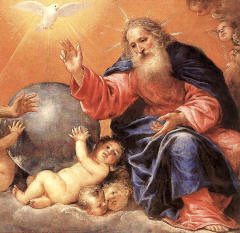
Holy Spirit Dove - Sacred Heart Catholic Church -  Wauzeka WIIn the same way the Holy Spirit, whose nature is always the same, simple and indivisible, apportions grace to each man as he wills. Like a dry tree which puts forth shoots when watered, the soul bears the fruit of holiness when repentance has made it worthy of receiving the Holy Spirit.

Although the Spirit never changes, the effects of his action, by the will of God and in the name of Christ, are both many and marvelous. The Spirit makes one man a teacher of divine truth, inspires another to prophesy, gives another the power of casting out devils, enables another to interpret holy Scripture. The Spirit strengthens one man’s self-control, shows another how to help the poor, teaches another to fast and lead a life of asceticism, makes another oblivious to the needs of the body, trains another for martyrdom. His action is different in different people, but the Spirit Himself is always the same. In each person, Scripture says, the Spirit reveals his presence in a particular way for the common good.

The Spirit comes gently and makes Himself known by His fragrance. He is not felt as a burden, for He is light, very light. Rays of light and knowledge stream before Him as He approaches. The Spirit comes with the tenderness of a true friend and protector to save, to heal, to teach, to counsel, to strengthen, to console. The Spirit comes to enlighten the mind first of the one who receives Him, and then, through Him, the minds of others as well.

As light strikes the eyes of a man who comes out of darkness into the sunshine and enables him to see clearly things he could not discern before, so light floods the soul of the man counted worthy of receiving the Holy Spirit and enables him to see things beyond the range of human vision, thing hitherto undreamed of.”

A Holy Spirit Novena

May 14, 2015

All novenas are inspired by the nine days during which Mary, the apostles, and the other disciples prayed in the upper room for the coming of the Spirit with power. To pray a novena to the Holy Spirit preceding this Pentecost yourself, begin this Friday, May 15th. Many Pentecost novenas are available online, but your daily prayer could simply be this:

 “Come Holy Spirit, fill the hearts of your faithful and kindle in them the fire of your love. Send forth your Spirit & they shall be created. And You shall renew the face of the earth.

O, God, who by the light of the Holy Spirit, did instruct the hearts of the faithful, grant that by the same Holy Spirit we may be truly wise and ever enjoy His consolations, Through Christ Our Lord, Amen.”

How God The Father Loves His Son

June 16, 2014

How does the Eternal Father love Jesus Christ his Son?
The Scriptures provide us insights into their relationship.


The Father gives his Son instruction and example

God the Father BlessingAs Jesus once said, “Amen, amen, I say to you, a son cannot do anything on his own, but only what he sees his father doing; for what he does, his son will also do,” adding, “I cannot do anything on my own.” The Father loves his Son and shows him everything that he does. Sometimes believers find it harder to relate to God the Father than Christ the Son. But what is the Father really like? He is just like his Son. Jesus “is the image of the invisible God.” As Jesus said, “Whoever has seen me has seen the Father.”  The Father offers his Son the perfect example, and his Son perfectly follows him.

The Father listens to his Son

Outside the tomb of Lazarus, Jesus said, “Father, I thank you for hearing me. I know that you always hear me…” Jesus shares his own attitude toward prayer when he tells us, “In praying, do not babble like the pagans, who think that they will be heard because of their many words. Do not be like them. Your Father knows what you need before you ask him. This is how you are to pray: Our Father…” Jesus knows that wordy, poetic prayers are not necessary because his Father is always listening.

The Father encourages his Son

At Jesus’ baptism in the Jordan River, the Father declared from heaven, “You are my beloved Son, in whom I am well pleased.” And on the summit of Mt. Tabor, at Jesus’ Transfiguration, the Father spoke from the cloud, “This is my beloved Son, listen to him.” The Father encourages his Son with reminders of his love.

The Father provides for his Son

Jesus said, “Everything that the Father has is mine.” Jesus’ Father is like the father in the parable of the Prodigal Son who told his first-born, “My son, you are here with me always; everything I have is yours.” Confident in his Father’s providence, Jesus tells us to be likewise unafraid concerning our basic needs, what we are to eat and drink, or what we are to wear: “Seek first the kingdom of God and his righteousness, and all these things will be given you besides.” The Father also provides his Son with gifts greater than material things. At the Last Supper, Jesus said of disciples, “Father, they are your gift to me.”

The Father welcomes closeness with his Son

It was a big deal when Jesus prayed, “Abba, Father.” As St. John Paul the Great observed, “An Israelite would not have used [“Abba” to address God] even in prayer. Only one who regarded himself as Son of God in the proper sense of the word could have spoken thus of him and to him as Father–Abba, or my Father, Daddy, Papa!” Because the Father welcomes intimate closeness with his Son, Jesus can say, “I and the Father are one.”

The Father loves his Son’s mother

At the Visitation, filled with the Holy Spirit, Elizabeth declared to Mary, “Most blessed are you among women,” and Mary rejoiced, “From this day all generations will call me blessed. The Almighty has done great things for me, and holy is his name.” By pouring his love and blessings into Mary, God the Father gave his Son a loving mother full of grace.

The Father fosters growth in his Son and sends him on mission

The Letter to the Hebrews says, “Son though he was, [Jesus] learned obedience from what he suffered; and when he was made perfect, he became the source of eternal salvation for all who obey him, declared by God high priest according to the order of Melchizedek.” But this raises a question: how can the divine Son grow in any way? Though perfect in heaven, the Son of God had no firsthand experience of weakness, suffering, or the trials of obedience, until his Incarnation. Through these things he was made complete so that he could be the savior of humanity. The Father prepares his Son and sends him on a mission to transform the world. “God did not send his Son into the world to condemn the world, but that the world might be saved through him.”

The Father as our model for Fatherhood

Whether we are biological or spiritual fathers, Jesus’ heavenly Father gives men a model for our fatherhood. We are to give our children instruction and good example. We should listen to them and encourage them, letting them know that they are well-beloved. We should provide for our children, according to our abilities, supplying their basic needs without neglecting the greater gifts. We are to welcome closeness with our children. We are to love our children by loving their mother, whether she be our spouse or the Church. We are to foster maturity and virtue in them so that they may go forth in mission to transform the world.  Which aspect of your fatherhood are you resolved to grow in with God the Father?

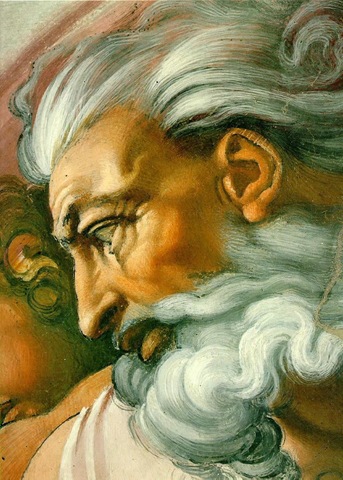
God the Father in the Creation of Man by Michelangelo, Sistine Chapel Ceiling, Vatican.Our Perfect Father

Some of us have had very good fathers, while some of our fathers were very far from perfect. But regardless of the quality of our earthly fathers, we all have a heavenly Father who loves us perfectly. As Jesus tells us, “the Father himself loves you, because you have loved me…” Our Father instructs us and shows us his example through his Word. He always listens, and we should not be surprised when he encourages us, speaking to us, in prayer. Our Father provides for our material needs and gives us the greater gifts. “For everyone who asks, receives…” Our Father welcomes intimacy with us, giving his children the spirit of his Son so that we too may cry, “Abba, Father!”  And he gives us Mary, the same perfectly loving mother he provided for his Son. Our Father would grow and mature us into greatness, into saints, into the likeness of his Son, and send us on mission for the transformation of the world.

Called by the Spirit — 3rd Sunday of Easter—Year A

May 5, 2014

Gospel: Luke 24:13-35

Let me tell you about the neatest thing that happened to me this week. Since Easter, our parish has been reading the book Rediscover Catholicism and discussing it on Thursday evenings in the rectory. In the latest chapter, Matthew Kelly writes that today’s Catholic Church will become all that she is meant to be only through the guidance of the Holy Spirit.

“[T]he ways of man will not get us from where we are today to where we are called to be. I also know that in every place and in every time since Pentecost the Holy Spirit has been present to guide you, me, and the whole Church. I am certain that the Church needs less and less of your ideas and mine, and more and more guidance from the Holy Spirit.”

Holy Spirit Dove - Sacred Heart Catholic Church -  Wauzeka WIMatthew Kelly then pauses in his text to invite the reader to pray the traditional prayer for the Holy Spirit to “renew the face of the earth.”

I was reflecting on these things while I was driving down the highway. Am I inviting the Holy Spirit to guide my everyday life? I try to do my best and make good choices, but my flesh is weak and my knowledge is limited. I work and hope for the best, but the Holy Spirit has power I ought to be open to and insight I should be more docile to. So I prayed to the Holy Spirit anew. And then a curious thing happened: the thought came mind to call my old friend, Colleen.

It was curious because I had not been previously thinking of her or thinking about calling anyone at all. Yet I wondered, “Is this coming from you, Lord, or is this just me?” I hesitated because I was aware of no reason to call. If she were to ask me what I was up to, or what I wanted to talk about, I would have nothing to say. So, to avoid embarrassment, I constructed some good reason for calling (to thank her and her husband for coming to a party I threw for old friends two weeks ago) before selecting her number on my cellphone.

She answered, and after greetings I asked, “So how are things going?”

Great,” she replied, less than enthusiastically.

“Is that an actually-great, or a sarcastically-great?”

It was the second. That morning, Colleen had quit her job without giving two-weeks notice. She said she had been at the end of her rope at work for some time and had quit in a fashion which precluded her return. She was anxious at losing her health insurance and uncertain about what she would do next. Then I knew the reason for my call. I mentioned that even though these events had come unexpectedly to her, they were no surprise to God. I encouraged her to ask Him to show her–and to lead her–where to go next. By the end of our chat, Colleen’s spirits were noticeably better than before.

I share this story because I cannot tell anyone else’s first-person account as well as my own, and as Pope Paul VI said, “Modern man listens more willingly to witnesses than to teachers, and if he does listen to teachers, it is because they are witnesses.” I may be misrecalling a phrase or two, but I know that my story is true. It reconfirms for me that God intervenes in our world, working miracles big and small, and that God would personally speak to you and me (not just to long-ago saints, or crazy people.)

Encounter on the Road to Emmaus — Luke 24A personal relationship requires two-way communication. Since God desires a personal relationship with every person, we should not be surprised that he would speak to us. When He speaks it is usually subtly, perhaps by a thought or through a friend. He comes discretely, like Jesus came veiled to the disciples on the road to Emmaus, and He does not force Himself upon us, just as Jesus “gave the impression that he was going on farther.” God can speak to us through whatever we’re paying attention to if we’re open to listening to Him and welcoming Him.

The apostles and the first disciples were ordinary people, made of the same stuff that we are. They worshiped just like we do, opening God’s Word and encountering Jesus in the Breaking of the Bread, but they also had the expectation that they would see God work mighty deeds in their midst and actively sought to be led by the Holy Spirit. Wouldn’t God want the same for us today?

What sort of things would the Lord like to do through us? In today’s gospel, the two men walking their road away from the holy city were visited that first Easter evening by Jesus incognito. Their encounter with Him restored their Christian faith and brought them back to the early Church in Jerusalem. One thing Jesus would like to do today is to encounter those who are far from His Church using us as His subtle disguise. Let us ask the Holy Spirit to inspire and lead us to invite and draw others to our parish. At worst, they’ll decline, but very possibly their lives could be changed and it could be the neatest thing that happens to you all week.

Come Holy Spirit, fill the hearts of your faithful and kindle in us the fire of your love.

Send forth your Spirit and we shall be created. And You shall renew the face of the earth.

Stained Glass Symbols — The Dove

February 9, 2014

Holy Spirit Dove - Sacred Heart Catholic Church -  Wauzeka WIA Symbol of the Holy Spirit

From the Ark, at the time of the Flood, Noah released a dove three times to scout for land. The bird’s return with a fresh olive leaf in its beak signaled an end to the deadly judgment and the beginning of new life. Noah’s dove revealed that peace was restored between heaven and earth. When Jesus was baptized in the Jordan River by John the Baptist, they saw the Holy Spirit descend in bodily form, like a dove, and land upon Christ. By receiving Christ’s baptism, the Holy Spirit comes to rest on us, pouring into us the new life and graces of the Trinity.

The Pentecost Project — Pentecost—Year C

May 18, 2013

Before Pentecost was a Christian celebration, it was an ancient Jewish observance. In the Old Covenant, in the Law of Moses, God commanded his people to bring some of the first grain harvested from their fields to Jerusalem be sacrificed as a burnt offering. This is the reason why Jews from so many distant countries were gathered in Jerusalem on this fiftieth day after Passover. Each Pentecost, the world’s first fruits were gathered and consecrated to the Lord. On one unique Pentecost, the Pentecost seven weeks after Jesus’ resurrection, Jews from every land were gathered by the Holy Spirit, and consecrated to God the Father, through Jesus Christ. By the end of Old Testament era, God had scattered the seeds of his chosen people across the world. On this Pentecost, the first fruits of his harvest are brought into his barn, the Church.

Pentecost can be seen as the beginning of the end of God’s project of salvation because we are now living in the world’s final era. And yet, Pentecost can also be seen as the start of a new divine project that will perdure forever. At the Tower of Babel, mankind endeavors to build a city reaching all the way to heaven. In other words, they attempt to become as gods while rejecting God. The Lord knows that this recurring human tendency leads to self-destruction, for both individuals and societies, so he thwarts their project by confusing their language. On Pentecost, God undoes Babel by allowing all peoples to understand the Apostles’ words, uniting and ennobling them. On this day, God begins in earnest to build up the Church, a new great city in communion with God that reaches all the way to heaven. Though heaven and earth pass away, this city of God, the Church, shall continue forever.

Why did the Holy Spirit come down in the form of fire? God the Holy Spirit, like the angels, is pure spirit and has no physical body. To be seen by human beings they must assume an appearance. Why did the Holy Spirit appear in the likeness of flames? Consider a different question: How many matches does it take to burn down a forest? The fire from just one small match is enough. As the small fire spreads, while remaining itself, it transforms everything around it. The holy fire that descended on Pentecost did not harm or destroy like natural fire would. The apostles may have been alarmed to see flames sailing towards their heads, but they were not burnt. The fire of the Holy Spirit is like the fire of the burning bush that Moses beheld in Exodus. Divine fire does not consume, but glorifies its hosts. Jesus once declared, “I have come to set the earth on fire, and how I wish it were already blazing!” (Luke 12:49) On Pentecost, a fire is lit in Jerusalem that spreads and transforms the world. This fire is the Holy Spirit at work.

All of salvation history was a preparation for Jesus Christ and Pentecost. Now we live in the last age of the world, the age of the Church, the city of God which shall last forever. Each of us is called to play an active part in this project of the Holy Spirit. On Pentecost, just as important as the gift of tongues given to the apostles was the Holy Spirit’s gift of fearless joy. Even after they had seen Jesus resurrected, the apostles timidly hid behind locked doors “for fear of the Jews.” But the reception of the Holy Spirit gave them a happy courage that allowed them to talk about Jesus in public to anyone who would listen. We have received the Holy Spirit also. Then why are we so timid? Why are we shy to introduce others to Jesus, our friend?  Why are we hesitant to welcome others to the Church, our community?  It seems that the Holy Spirit declines to act with power within us until we give him our free consent. Like he waited upon Mary’s response at the Annunciation, so the Holy Spirit awaits our invitation. Open yourself to the Holy Spirit’s will.  Ask him to give you new, powerful gifts. Give him permission to utilize you in the great project of salvation. And then, let us watch what he does through us.

Antes de Pentecostés era una fiesta cristiana, fue una celebración judía antigua. En el Antiguo Testamento, en la Ley de Moisés, Dios ordenó a su pueblo para llevar a algunos de los primeros granos cosechados de sus campos a Jerusalén ser sacrificado como ofrenda quemada. Esta es la razón Judios de muchos países lejanos se reunieron en Jerusalén en este quincuagésimo día después de la Pascua. Cada Pentecostés, las primicias del mundo se reunieron y se consagraron al Señor. Por un Pentecostés especial, siete semanas después de la resurrección de Jesús, Judios de todos los países se reunieron por el Espíritu Santo, y se consagraron a Dios Padre por medio de Jesucristo. Para el final de la época de del Antiguo Testamento, Dios había esparcido las semillas de su pueblo elegido a través del mundo. En este Pentecostés, los primeros frutos de su mies se llevan a su granero, la Iglesia.

Pentecostés se puede considerar como el comienzo del fin del proyecto de salvación de Dios porque estamos ahora viviendo en la época final del mundo. Y, sin embargo, Pentecostés se puede también ser visto como el comienzo de un nuevo divino proyecto que va a perdurar para siempre. A la Torre de Babel, la humanidad se esfuerza por construir una ciudad llegar al cielo. En otras palabras, ellos intentan convertirse en dioses mientras que rechazando a Dios. El Señor sabe que esta tendencia humana recurrente conduce a la auto-destrucción, tanto para los individuos y las sociedades. Por lo tanto, Dios frustra su proyecto a través de confundir su idioma. En Pentecostés, Dios deshace Babel a través de permitir que todos los pueblos a comprender las palabras de los apóstoles. Dios une a las gente y les ennoblece. En este día, Dios comienza en serio la edificación de la Iglesia, una nueva gran ciudad en comunión con Dios, que llega a todo el camino al cielo. Aunque el cielo y la tierra pueden pasar, esta ciudad de Dios, la Iglesia, continuará para siempre.

¿Por qué el Espíritu Santo descendió en forma de fuego? Dios el Espíritu Santo, como los ángeles, es espíritu puro y no tiene cuerpo físico. Para ser visto por los seres humanos deben asumir una apariencia. ¿Por qué el Espíritu Santo aparece en la imagen de las llamas? Considere una pregunta diferente: ¿Cuántas fósforos se necesitan para quemar un bosque? El fuego de un solo fósforo es suficiente. Como los pequeños fuego se extiende, sin dejar de ser ella misma, se transforma todo a su alrededor. El fuego sagrado que descendió en Pentecostés no dañar o destruir como el fuego natural. Los apóstoles pueden haber sentido la ansiedad a ver las llamas que vuelan hacia sus cabezas, pero no fueron quemados. El fuego del Espíritu Santo es como el fuego de la zarza ardiente que vio Moisés en Éxodo. Fuego divino no consume, pero glorifica a su moradas. Jesús una vez declaró: “Yo he venido a traer fuego sobre la tierra y ¡cuánto desearía que ya estuviera ardiendo!” (Lucas 12:49) En el día de Pentecostés, el fuego se enciende en Jerusalén, se extiende y transforma el mundo. Este fuego es el Espíritu Santo en el trabajo.

Toda la historia de la salvación fue una preparación para Cristo y Pentecostés. Ahora vivimos en la última época del mundo, la era de la Iglesia, la ciudad de Dios que durará para siempre. Cada uno de nosotros está llamado a desempeñar un papel activo en este proyecto delEspíritu Santo. En el día de Pentecostés, tan importante como el don de lenguas dadas a los apóstoles fue el don del Espíritu Santo de la alegría sin miedo. Aun después de que habían visto a Jesús resucitado, los apóstoles se escondían tímidamente detrás de puertas cerradas “por miedo de los Judios”. Sin embargo, la recepción delEspíritu Santo les dio un coraje feliz que les permitió hablar de Jesús en público a cualquier persona que escucharía. Hemos recibido el Espíritu Santo también. Entonces ¿por qué estamos tan tímido? ¿Por qué evitamos introducir a otros a Jesús, nuestro amigo? ¿Por qué estamos renuentes a dar la bienvenida a otros a nuestra Iglesia, nuestra comunidad? Parece que el Espíritu Santo se niega a actuar con el poder dentro de nosotros hasta que le demos nuestro consentimiento libre. Como él esperó a la respuesta de María en la Anunciación, del mismo modo el Espíritu Santo espera nuestra invitación. Ábrase a la voluntad delEspíritu Santo. Pídele que le dará nuevos, poderosos dones. Dará el Espíritu Santo permiso usarte más en su gran proyecto de salvación. Y luego, velemos lo que hace a través de nosotros.

Who’s What? — 6th Sunday of Easter—Year C

May 5, 2013

In the verse preceding today’s second reading, an angel tells Saint John, “Come here. I will show you the bride, the wife of the Lamb.” Therefore, the city of God that John next describes is the Church, the bride of Christ, in her holy glory. The city has twelve gates inscribed with the names of the twelve tribes of Israel. The city’s foundation stones are inscribed with the names of the twelve apostles.

But didn’t Jesus say, “I am the gate; if any one enters by me, he will be saved…” (John 10:9)? And didn’t Saint Paul say, “…No one can lay a foundation other than the one that is there, namely, Jesus Christ” (1 Corinthians 3:11)? Then why do the gates and foundation stones bear the names of God’s people and the apostles? Who is the foundation and gate—Jesus or his people?

Like so many theological concepts in Catholicism, the answer is “both/and.” The Lord works through us, with us, and in us to lead people to himself, to his church, and to heaven. The Trinity dwells in us and calls us to participate in the great project of saving the world. As Jesus said to his disciples: “Whoever loves me will keep my word, and my Father will love him, and we will come to him and make our dwelling with him.” And Jesus adds, “The Advocate, the Holy Spirit, whom the Father will send in my name, will teach you everything and remind you of all that I told you.” The apostles knew that they were working hand in hand with the Holy Spirit. Responding to an important doctrinal question, the apostles declare in the first reading, “It is the decision of the Holy Spirit and of us not to place on you any burden beyond these necessities…”

Recently, I have been more intentional about asking the Holy Spirit in the morning to guide my day. After asking him to help me be his instrument and a blessing to other people, I have experienced some amazing encounters and opportunities in my ministry. I urge you to try the same thing. God gives us the privilege of participating in his great work of blessing, love, and salvation. Make yourself available to the Trinity dwelling within you.

En el versículo anterior a la segunda lectura de hoy, un ángel dice a San Juan: “Ven acá. Yo te mostraré la novia, la esposa del Cordero.” Por lo tanto, la ciudad de Dios que Juan describe próxima es la Iglesia, la esposa de Cristo, en su santa gloria. La ciudad tiene doce puertas con los nombres de los doce tribus de Israel. Las piedras de los cimientos de la ciudad están inscritos los nombres de los doce apóstoles.

¿Pero no dijo Jesús: “Yo soy la puerta; si alguno entra por mí, será salvo…” (Juan 10:9)? ¿Y no San Pablo dice: “…Nadie puede poner otro fundamento que el que ya está puesto, el cual es Jesucristo.” (1 Corintios 3:11)? ¿Por qué entonces las puertas y cimientos tienen los nombres de le gente del Señor y sus apóstoles? ¿Quién es el fundamento y la puerta-Jesús o su pueblo?

Como tantas ideas teológicas en el catolicismo, la respuesta es “ambos”. El Señor obra por medio de nosotros, con nosotros y en nosotros para llevar a la gente a sí mismo, a su iglesia, y al cielo. La Trinidad habita en nosotros y nos llama a participar en el gran proyecto de salvar al mundo. Jesús dice a sus discípulos: “El que me ama, cumplirá mi palabra y mi Padre lo amará y vendremos a él y haremos en él nuestra morada.” Y Jesús añade: “El Consolador, el Espíritu Santo que mi Padre les enviará en mi nombre, les enseñará todas las cosas y les recordará todo cuanto Yo les he dicho.”Los apóstoles sabían que estaban trabajando de la mano con el Espíritu Santo. En respuesta a una pregunta importante doctrinal, los apóstoles declaran en la primera lectura de hoy: “Es la decisión del Espíritu Santo y nosotros, no colocar el imponeros más cargas que estas necesidades…”

Recientemente, he estado más intencional en pedirle al Espíritu Santo que guía mi día. Después de pedirle que me ayude a ser su instrumento y una bendición para otras personas, he tenido algunos encuentros increíbles y oportunidades en mi ministerio. Ustedes pueden hacerlo tambien. Dios nos da el privilegio de participar en su gran obra de bendición, amor y salvación. Hacerte disponible para la Trinidad que habita en tu interior.

Prepare the Way — 2nd Sunday of Advent—Year C

March 3, 2013

The message of John the Baptist is “prepare the way of the Lord. Fill the valleys, lower the hills, straighten the roads, and smooth the paths.” What is he talking about? John is speaking like the heralds or messengers who, in ancient times, were sent ahead to announce to villagers how they were to prepare for the king’s arrival. They would gather everyone together and say, “Pay heed! Your king is coming to visit you soon, but this road on which he will come is full of potholes and has too many twists and turns. Smooth and straighten this road, otherwise when the king comes he will feel unwelcome.”

John the Baptist words are not only spoken to the past. He speaks to us today about the state our lives. Advent prepares not only for the coming of Christ at Christmas but for the coming of Jesus as our Lord and judge on the Last Day. There are sacred works for us to do in preparation.

Note that in the fifteenth year of Caesar Tiberius, the word of God did not come to the emperor in Rome. The word of God did not come to the governor or kings of the Holy Land. This word did not come to the chief priests in Jerusalem. This word came upon John in the wilderness, John the poor, John the stranger, John the seemingly insignificant. The word of God comes to little ones, like John and us. Popes, bishops and presidents do important things, but if we rely solely on them to prepare and advance the kingdom of God on earth we will be greatly disappointed. The Lord also will be disappointed, because he wants to do great things through us. We cooperate with the Lord in the Gospel cause.

What holy works does God want you to do? I do not know, but the Holy Spirit knows. He is always there with you; at home, at work, when you are praying. He has a word for you. The Lord wants to do great things through you. Listen, listen, and prepare their part of the way of the Lord in your life and those around you.

San Juan el Bautista dice, “Preparen el camino del Señor; rellenen los valles, rebajen las montañas, alanen los caminos!” Juan habla como antiguos heraldos y mensajeros que se enviaron por delante para anunciar a los aldeanos cómo debían prepararse para la llegada del rey. “Preparen el camino del Rey, para que cuando él venga, estará encantado con ustedes.”

Estas no son palabras dichas sólo para el pasado. Se hablan hoy a nosotros. Adviento prepara no sólo para la venida de Cristo en Navidad. Adviento prepara para la venida de Jesús como nuestro Señor y juez en el último día.  Hay obras sagradas para nosotros que hacer en preparación.

Observe que en el año décimo quinto del César Tibero, no vino la palabra de Dios al emperador en Roma. La palabra de Dios no vino al gobernador o reyes de la Tierra Santa. Esta palabra no vino a los sumos sacerdotes en Jerusalén. Esta palabra vino sobre Juan en el desierto; Juan el pobre, Juan el desconocido, Juan el aparentemente insignificante. La palabra de Dios vino a los pequeños, como Juan, y nosotros. Papas, obispos y presidentes hacen cosas importantes. Pero si dependemos exclusivamente de ellos para preparar y avanzar el reino de Dios en la tierra, vamos a estar decepcionado. El Señor también se sentirán decepcionados, porque quiere hacer grandes cosas a través de nosotros. Tenemos colaborar con el Señor en la causa del Evangelio.

¿Qué santas obras qué Dios desea que hagas? No sé, pero el Espíritu Santo sabe. Él siempre está allí con usted en su casa, en su trabajo, o cuando se está rezando. Él tiene una palabra para ti. El Señor quiere hacer grandes cosas a través de usted. Escucha, escucha, y preparar su parte del camino del Señor en la viva a su alrededor.

Sending Another Advocate — 6th Sunday in Easter—Year A

May 29, 2011

At the Last Supper, Jesus told His apostles that He would soon be departing from them. His disciples found this news distressful. Jesus had been their spiritual leader and intimate friend. For the better of three years, they spent almost all day, every day, with Him; sharing breakfasts in the morning, walking down the roads and conversing with Him, watching Him preach and heal n villages, spending evenings with Him around the fire. Not only had he taught them about God, he had also made them more godly men. And so, understandably, word of their Good Shepherd’s departure saddened them.

But Jesus told them, “Do not let your hearts be troubled. You have faith in God, have faith also in me.” In obedience to His Father, Jesus was going away, but He told the disciples that they would not be left orphans. God would send them another person to lead and sanctify them. Jesus told them God the Father would send them another Advocate, another Helper, another Guide, to be with them always. Jesus spoke of the Holy Spirit, who would continue the same work which Jesus had begun in them. The Father had blessed them before by sending them Jesus. Now, at Jesus’ departure, the Lord wanted them to trust and remember this: that they would be blessed again.

Today, this Gospel is fulfilled in our hearing. Father Stoetzel has asked me to read you this letter from him:

Dear parishioners,

Bishop Callahan has asked me to take a new parish assignment beginning July 1st. I will be the next rector of St. Joseph the Workman Cathedral in La Crosse. Also, I am very happy to announce your new pastor here and St. John the Baptist in Marshfield. He is Fr. Samuel Martin who is presently the director of the Holy Cross House of Formation and teacher at Aquinas High School in La Crosse. Please welcome him graciously as he is being sent by the bishop to be your pastor.

I want to thank you very much for the privilege of being your pastor for the past 15 years. My gratitude goes to you for the prayers and many acts of kindness you have shown. Let us continue to pray for one another. Be assured that you will be in my fondest thoughts.

Sincerely,
Fr. Stoetzel

The fact that our bishop has appointed Fr. Stoetzel to be the rector of the cathedral (the bishop’s own parish) says much about Father’s quality as a pastor. We will miss him in many ways. I don’t know Fr. Martin too well, but every encounter I have had with Him has been a positive one. I predict that we will all be very pleased with him when he comes in July and will be blessed by getting to know him better. In the meantime, let’s remember pray for Fr. Stoetzel, as he prepares for his new assignment in La Crosse. Let us also pray for our pastor-to-be, Fr. Sam Martin, as he prepares for us.

Jesus says, “Do not let your hearts be troubled. You have faith in God, have faith also in me.” The Lord wants us to trust and remember this: that He has blessed us before and that He we will be blessed again.

7 Superpowers — Tuesday, 1st Week of Advent

November 30, 2010

Back when I was in seminary, we would sometimes joke around with a game we called Superpower/Super-weakness. One of us would imagine a superpower for himself, and then we would try to come up with a super-weakness, or vulnerability, to go with it.

So let’s say that you’re able to fly; then, your super-weakness is that you can only fly to Iowa. Imagine you have the ability to change anything into food; however, that food is always celery and you don’t have any teeth. Or perhaps you can talk with animals, but they only want to talk to you about lawnmowers, trees, and how things smell.

Today, I have a challenge for you. I am going to describe to you seven superpowers, seven more-than-human abilities, though none of these will have built-in drawbacks. Your challenge is to choose which superpower you want for yourself. Here we go:

The first is the power to always recognize what is truly important. With this power, you always keep the big picture in mind. With this power, trifles never distract you and you always spend your time and money well. Let’s call this, Wisdom.

Or, would you rather have the ability to power to penetrate deeply into any topic and grasp it thoroughly. With this power, you could become an expert in any chosen field. If you were to study the dynamics of the stock market, or the weather, or even your female classmates, you would soon understand them thoroughly. Let’s call this power, Understanding.

Or, would you prefer the power to sense the best course of action to take in the middle of any situation? With this power, you would always get reliable hunches in uncertain moments. Let’s call this power, Counsel. (Possessing superhuman intuition would be useful, but even if you always knew the best choice to make, you wouldn’t necessarily always have the strength or courage to follow it through.)

Would you rather have the power to be free from all unreasonable fears and to be able to ignore any sufferings? With this ability, you are be perfectly brave and an overwhelming force. Let’s call this power, Fortitude.

Or, would you want the ability to detect when someone is speaking truth or a falsehood? With this power, you are more than a human lie-detector, you are able to see through subtle and false arguments which other people accept as true. Let’s call this power, Knowledge.

Or, would you prefer to have the innate ability that you would always intensely desire to do what you know to be right? People often know the right thing to do but they still don’t do it. With this power, you are irresistibly drawn to do what’s good. Let’s call this power, Piety.

Or, lastly, would you rather have total protection from ever doing anything stupid? With this ability, you are spared from making the mistakes and errors which are committed by many other people. Let’s call this power, Holy Fear.

So, how many here would choose Wisdom; the ability to always recognize what is truly important and to keep first things first in life?

Who here would choose Understanding; to penetrate deeply into great mysteries?

How many would choose Counsel; an uncanny intuition for choosing the best course of action?

How many here would choose Fortitude; the power to be freed from fears and endure all sufferings?

Who would choose Knowledge; the ability to recognize truth or falsehood whenever you hear it?

How many would choose Piety; the ability to intensely desire to do whatever you know to be right?

And how many would choose Holy Fear, or the Fear of the Lord, to be protected from doing foolish things?

These seven superpowers, these seven more-than-human abilities, are the seven gifts of the Holy Spirit. Their names come from today’s first reading, Isaiah 11:1-10. The good news for us is that God freely gives these gifts to the childlike who ask Him for them, and He does not limit us to just one. At this Mass, pray for all seven gifts of the Holy Spirit, but especially for the power which you desire the most.

The Glorious Mysteries, Meditations with the Saints

October 27, 2010

The 1st Glorious Mystery:
The Resurrection of Jesus from the Dead

St. John Bosco, an Italian priest, founded a famous school for boys in the mid-1800’s and is the patron saint of students. He is known to have worked many miracles, but one from 1849 stands out. Returning from a journey, he learned that Charles, a 15 year old student, had died. He went immediately to the teenager’s home where the family informed him that Charles had been dead for over 10 hours. The body was laid out in the living room, already dressed for burial.

Fr. Bosco asked everyone to leave except the mother and the aunt. After some time in silent prayer, he cried out: “Charles, rise!” Charles emitted a long sigh, stirred, opened his eyes, stared at his mother and asked, “Why did you dress me like this?” Then, realizing Fr. Bosco was present, he told him how he had cried out for him and how he had been waiting for him. He exclaimed, “Father, I should be in hell!” He told of how a few weeks before he had fallen into serious sin. Then he said he had a “dream” of being on the edge of a huge fiery furnace, and as he was about to be thrown into the flames, a beautiful lady appeared and prevented it. She said, “There is still hope for you, Charles. You have not yet been judged.” Then he heard the voice of Fr. Bosco calling him back.

Charles asked Fr. Bosco to hear his confession. After his confession, the mourners filled the room again, and Fr. Bosco said, “Charles, now that the gates of heaven lie wide open for you, would you rather go there or stay here with us?” A profound silence filled the room. Charles, with tears in his eyes said, “I’d rather go to heaven.” Then he leaned back on the pillows, closed his eyes and breathed his last.

Unless Jesus’ Second Coming happens first, each of us here will die, and rise. As we meditate on Jesus’ resurrection, let us consider how ready we are to meet Him.

The 2nd Glorious Mystery:
The Ascension of Jesus into Heaven.

St. Padre Pio is another Italian priest from not so long ago who also worked remarkable miracles. During WWII, Allied planes flew bombing raids over Italy. Almost all of the centers of the region were subjected to repeated bombardment, but no bombs ravaged the town of San Giovanni Rotondo. Every time the aviators approached that place, they saw a monk flying in the air who prevented them from dropping their bombs. Understandably, reports of this flying friar did not amuse the superior offices.

Bernardo Rosini, a general of the Italian Air Force, recounts this story: “One day, an American commander wanted to lead a squadron of bombers himself to destroy the German arms depository of war material that was located at San Giovanni Rotondo. The commander related that as he approached the target, he and his pilots saw rising in the sky the figure of a friar with his hands held outward. The bombs released of their own accord, falling in the woods, and the planes completely reversed course without any intervention by the pilots.”  

Someone told the commanding general that in a convent at this town, there lived a saintly man. At war’s end, the general wanted to go meet this person. “He was accompanied by several pilots… He went to the convent of the Capuchins. As soon as he crossed the threshold of the sacristy, he found himself in front of several friars, among whom he immediately recognized the one who had ‘stopped’ his planes. Padre Pio went forward to meet him, and putting his hand on his shoulder, he said, `So, you’re the one who wanted to get rid of us all!’”

As we meditate on the Ascension of Jesus, to the right hand of the Father in Heaven, let us pray that He would establish justice and peace, in this country and the whole world, in our time.

The 3rd Glorious Mystery:
The Descent of the Holy Spirit at Pentecost

We usually don’t associate India with Christianity, but that nation has over 24 million Christians.  That’s about as many people as live in Texas, our second largest state. If you were to ask them how the faith reached their land they would point to St. Thomas the Apostle.

What led St. Thomas, who at first refused to even believe in the Good News, to travel over 2,500 miles to bring them the Gospel? It was not merely seeing the risen Christ. Jesus knew His disciples would need more to strengthen them then merely their memories of Him. St. Thomas journeyed because the Lord had sent the Holy Spirit at Pentecost, to fill them with gifts, like wisdom, courage, and zeal.

If we are in the state of grace, God the Holy Spirit dwells in us too, and He wants to empower us with His gifts. As we meditate on the descent of the Holy Spirit at Pentecost, let us pray for whatever spiritual gift that we need the most.

The 4th Glorious Mystery:
The Assumption of the Virgin Mary.

No Church, in the East or the West, claims to contain the body of St. Mary. This is because “the Immaculate Mother of God, the ever Virgin Mary, having completed the course of her earthly life, was assumed body and soul into heavenly glory.” This is because Jesus would not suffer Mary, His sinless, faithful beloved, to undergo corruption.

Death is a consequence of human sin, and without human intervention, as in embalming or mummification, our dead bodies will ordinarily experience its corruption. But, sometimes, the Lord preserves the dead bodies of his saints, to give a sign of their holiness, and to show that death is not all that awaits us.

Among the numerous saints whose incorrupt bodies you can still see today are:  St. John Bosco, St. John Vianney, St. Catherine Laboure (the visionary of the Miraculous Medal), St. Bernadette Soubirous (the visionary of Lourdes), and St. Maria Goretti.

As we meditate on the Assumption of the Virgin Mary, let us pray for purity in our lives.

The 5th Glorious Mystery:
The Coronation of Mary as the Queen of Heaven and Earth

Once, when St. Maximillian Kolbe was a boy, his behavior began trying his mother’s patience. She said in exasperation, “Maximillian, what will become of you?” As St. Maximillian writes, “Later, that night, I asked the Mother of God what was to become of me. Then she came to me holding two crowns, one white, the other red. She asked me if I was willing to accept either of these crowns. The white one meant that I should persevere in purity, and the red that I should become a martyr. I said that I would accept them both.” St. Maximillian would receive both crowns, as a holy Franciscan brother, and as a victim of the Nazis at Auschwitz, were he took the place of another innocent man who was condemned to die.

Jesus crowns his holy ones. He wills that those who share in His sacrifice should also share in His glory. As we meditate on the Coronation of Mary, let us pray to accept whatever crowns of burden and glory the Lord wants to give to us.