Archive for the ‘Feast Day Homilies’ Category

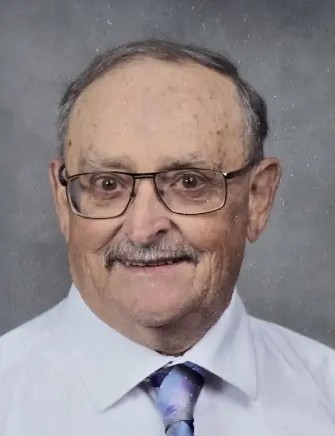
Life Eternal — Funeral Homily for Ronald “Ron” Woolever, 75

August 6, 2025

By Fr. Victor Feltes

We are courageous, and we would rather leave the body and go home to the Lord.” That is what St. Paul writes about himself and the Christians at Corinth in our second reading. But is this true for us today? Would we rather leave the body and go home to the Lord?

Imagine if you could have endless more years of this life on earth. Would you wish for that? Pondering such a wish you would be wise to reflect upon the burdens of bad health. The coming of such crosses in the later years of life makes many people more open to the next life. Ron endured poor health but he is freed from that burden now.

But suppose you could live an endless life on earth free from all illness and pain; the next thing you might consider is the prospect of outliving everybody you know now, as well as everyone you would ever know. Even with our well-founded hope for Heaven, where all friends of God will be reunited, the temporary separation between us and our dearly departed causes sadness in us who remain behind. It is okay to mourn at Ron’s passing, though we do ‘not grieve like those who have no hope,’ for we have hope in him who said “Do not let your hearts be troubled. You have faith in God; have faith also in me.”

But imagine if each person on earth were granted pain-free immortality; the next thing to consider is what life in that world would be like. After Adam and Eve sinned at the tree they were deprived of the fruit of another—the Tree of Life—lest they eat of it and live forever in their unhappy fallen state. Even if scientists were to develop a treatment to eradicate all pain and all death, moral sickness would remain untreated in many human souls. Endless life without Christian conversion would create a hell of moral evils on earth. Ron’s love for Jesus and our Catholic faith led to his deep devotion to the Holy Eucharist and St. Paul’s Parish. He hungered and thirsted for holiness, and our holy religion helped him to go deeper, change, and grow with God in his grace.

Now suppose if everyone on earth were forever freed from pain and death and sin, to live peacefully together on earth forever—what would life in that world be like? Ron delighted in many things in our world. Beyond family and friends, there were monster trucks and parade floats, old cars, new movies, and countless good things more. But after living in our world a few decades, which is far less time than millennia, we can think to ourselves, “These things are nice but is this really all there is?” Every heart contains a God-shaped hole which can only be fully satisfied by the infinite beauty, goodness, and love of the Holy Trinity. Understanding this changes how we see our lives in this world (which we must not cling to) and our future deaths (which we must not grasp at) until the Lord finally calls us home to be with him. Jesus tells his disciples, “I am going to prepare a place for you… [and] take you to myself, so that where I am you also may be.”

Therefore,” St. Paul writes, “we aspire to please him, whether we are at home or away. For we must all appear before the judgment seat of Christ, so that each may receive recompense, according to what he did in the body, whether good or evil.” Pray for Ron’s soul, that he may now enjoy the endless bliss of Heaven. And let Jesus Christ be the good and loving Lord of your life so that you may enter eternal life, for ‘no one comes to the Father except through him.’

Catholic Diversity In Unity

July 3, 2025

Solemnity of Saints Peter & Paul
By Fr. Victor Feltes

Today, I wish to speak to you about Saints Peter and Paul, vocations, the Catholic Church and the Churches in her, and two aspects of the Holy Mass. This homily will be a bit longer than usual, but each of its parts are interesting. Saints Peter and Paul shared many similarities but manifested in different ways:

🔸 Both were personally called by Christ to become apostles; Peter quite early during Jesus’ public ministry, but Paul rather late, after Jesus’ Ascension.

🔸 Both beheld Jesus in his transfigured glory; making his friend Peter feel ecstatic, but making his persecutor Paul go temporarily blind.

🔸 Both preached the Gospel; Peter primarily to the Jews, but Paul particularly to the Gentiles.

🔸 Both taught the Faith; Paul the Pharisee was highly-educated, but Peter the uneducated fisherman was not.

🔸 Both experienced weakness; Peter in conquering his passions, but Paul by enduring “a thorn in the flesh.”

🔸 Both were martyred by the Roman Empire in Rome; Peter was crucified upside-down, but Paul the Roman citizen was beheaded.

That Saints Peter and Paul whom we celebrate this Sunday shared one Faith, one Lord, and one calling, and yet manifested these differently in their faithful lives. We also see this in the Catholic Church today. Peter and Paul were called to be apostles. Today, some are called to be bishops, priests, or deacons. Others are called to be consecrated male or female religious. Many more are called to the vocation of holy marriage. Others live out their baptismal mission and call as single persons or consecrated virgins. Which of these ways is the greatest way to live a Christian life? The greatest, most glorious, most fruitful path for you is the one Christ has called or is calling you to. Your life may look differently than others’, even amongst people living out the same vocation, but you can still be living a faithful, fruitful Christian life.

We belong to Christ’s Catholic Church. The word “Catholic” comes from Greek, meaning “universal, worldwide, (or) all-inclusive.” The Catholic Church, established by God for all people and places in this present age, unites humanity in our diversity, but even within our unity we see legitimate variety. Did you know that the one Catholic Church contains 24 Churches with apostolic roots and varying liturgical traditions practiced in full communion with the pope? The largest of these Catholic Churches is the Roman Catholic Church, to which we belong along with more than 98% of the world’s 1.3 billion Catholics. About 18 million other Catholics are in Churches in full communion with Rome; the three largest being the Ukrainian Greek Catholic Church (mainly in Western Ukraine), the Syro-Malabar Catholic Church (mainly in India), and the Maronite Church (mainly in Lebanon). Our one Faith differently celebrated. (Other Churches called the Orthodox Churches have nearly 300 million members put together, with valid priests and bishops and all seven sacraments like us, yet they are not in communion with the pope. Pray for our reunion. The gap between us is less than any Protestant group.) There is even legitimate variation within the Holy Mass of our Roman Catholic Church. I wish to highlight two examples: one in how one receives the Eucharist and another in how the Eucharist is celebrated.

The early Church Fathers mention the Eucharist being placed upon communicants’ hands. Other Communion customs also existed but Communion in the hand was explicitly described. For instance, St. Cyril in Jerusalem and St. Theodore in Turkey instructed the faithful to lay one hand over the other to create a throne (for both saints declare one is about to receive a King) cupping one’s palm to receive “The Body of Christ” and answering “Amen.” St. John Chrysostom observes how a communicant’s hands “hold [the Eucharistic Sacrifice] but for a time.” He writes, “Oh! What a marvel! What love of God to man! He who sits on high with the Father is at that hour held in the hands of all…” And St. Basil the Great records “in the church, when the priest gives the portion, the recipient takes it with complete power over it, and so lifts it to his lips with his own hand.” These and the writings of other Church Fathers show that receiving Communion in the hand existed in the Early Church.

However, though Communion in the hand is allowed today, the many-centuries-long tradition of receiving Communion on one’s tongue is also permitted, either standing or kneeling. Some find receiving our Lord on the tongue strengthens their reverence and devotion; acknowledging the glory of their Great Guest, extending the red carpet of one’s tongue for him to enter under one’s roof through the doors of one’s lips, humbly receiving this priceless Gift of pure grace. After next summer’s church renovation, once there is more space in front of these steps to our sanctuary, I plan to place a kneeler in the center-front as an option, as you may have seen offered already at churches in Chippewa Falls. How you receive our Lord, standing or kneeling, on your hand or on your tongue, is for you to personally discern, since they each option is permitted for you by the present liturgical rules of the Church.

The next legitimate Mass option I would like to explain pertains to the celebrant leading the congregation. Since the Second Vatican Council, the most common way priests have celebrated Mass is versus populum, or “towards the people.” Yet the much-longer-practiced custom has been for the priest and the people to face (literally or symbolically) towards the east together, or “ad orientem.” Like the Jews used to pray towards the Holy Temple in Jerusalem, the writings of the Church Fathers show the early Christians prayed toward the east. St. Clement of Alexandria writes “prayers are made looking towards the sunrise in the east.” And Origen notes: “…Of all the quarters of the heavens, the east is the only direction we turn to when we pour out prayer…” Tertullian records that Christians facing east to pray caused some non-Christians to mistakenly believe we worshiped the sun. But the Christians praying toward the sunrise saw a symbol of Christ rising from the dead and of his promised return to earth in radiant glory one day. Throughout the centuries, even in churches which were not built to face east like our St. Paul’s Church, the priest and the people faced the same direction (or “liturgical east”) together. However, since the 1970’s the prevailing custom has been for the priest to face the congregation.

The Catholic Church approves both versus populum and ad orientem as valid options, and these two ways of celebrating the Mass emphasize different truths. Celebrating versus populum, toward the people, emphasizes the horizontal aspect, the communal meal. And the Holy Mass is indeed a meal, a memorial of the Last Supper, where Jesus Christ and his disciples gather at his table. Celebrating ad orientem, toward the east, emphasizes the vertical aspect, the sacrificial offering. And the Holy Mass is indeed a sacrifice, a memorial of the Cross, where Jesus Christ is offered up for us from his altar.

I experienced my first ad orientem Mass when I was still in seminary. The celebrant was a visiting alumnus and priest of our diocese, Fr. Derek Sakowski. I remember fearing that I would hate the Mass being said that way because I often dislike changes. (For instance, our seminary once changed the toaster in the dining hall and—even though I almost never used the old familiar toaster—I was annoyed when they had replaced it with a new one.) Fr. Sakowski said the same English prayers as at other Masses but watching him celebrate that Mass ad orientem, facing us when speaking to us and facing God when praying to God, I found it surprisingly beautiful and it made a lot of sense. When weekday Massgoers at St. John the Baptist Parish first experienced Mass ad orientem more than five years ago, the attendees reported positive experiences similar to mine.

I mention all this because I would like our weekday Massgoers to experience ad orientem in at least a few Masses this July and hear their feedback. After Vatican II, when Mass facing the people became the prevailing custom in the Church, pastors often introduced that liturgical change abruptly, without consultation, and without adequate explanation. It was jarring, and many lay people were bewildered and hurt. I do not wish to repeat such mistakes going in the opposite direction. Nothing will change without thorough consultation and consensus support. At the end of such a dialogue at St. John the Baptist’s Parish, one weekend Mass changed and the other stayed the same and today everyone seems happy or content with that. Our Faith, our calling, and our Lord are one, even as our faithful lives will manifest them differently. We are Catholic. So in essential things, unity. In non-essential things, liberty. And in all things, charity—that is, love.

Feeding the Multitude

June 24, 2025

Solemnity of Corpus Christi
By Fr. Victor Feltes

All four Gospels recount the miracle of Jesus multiplying the loaves and the fishes. He receives five loaves and two fish and successfully feeds (in the words of St. Matthew) “about five thousand men, not counting women and children,” with twelve wicker baskets full of fragments leftover. Now this event cannot be reduced to a so-called “miracle of sharing.” That would be a deed less impressive than what Elijah the great miracle-working prophet did in 2nd Kings: feeding one hundred people with twenty barley loaves and having some leftover. Merely persuading people to share food for one meal would not cause a crowd to declare somebody “the prophet who is to come into the world” and make them want to carry him off to make him king, as St. John records. This miracle was a true miracle, and it foreshadows the Last Supper and the miracle of the Eucharist.

St. John mentions ‘the Passover, the feast of the Jews, was at hand.’ This Passover was at least one year before the Passover of Holy Week, yet John mentions it all the same. And then there is the way the Gospel writers describe what Jesus does with the food for the meal: “Taking the five loaves and the two fish, and looking up to heaven, he said the blessing…, broke them, and gave them to the disciples to set before the crowd.” These phrases should sound familiar. They closely resemble what Jesus does at the Last Supper and what his priests celebrate at every Holy Mass.

Without Jesus, the apostles felt powerless to provide for such a great number of people. But Jesus commanded his apostles to “have them sit down in groups of about fifty,” in more than one hundred clusters on the green grass. The flock obeys the apostles as they are obeying Christ, and Jesus proceeds to feed them all through his ministers. The miracle at every Mass is greater than the one Jesus performed with the loaves and fishes. There, he made the food he was offered far greater in quantity. Now, he transforms the food we give him into something far greater, not in number but kind.

At Mass, we are figuratively fed by the Inspired Word, by both the Old Testament and the New Testament, drawn like two fish from the stream of salvation history. And at Mass we behold the Incarnate Word, the Body and Blood of Christ, which suffered the five famous wounds of his Passion. But greatest of all, at Mass we can be invited to truly partake of the Eternal Word, the Son of God, Jesus Christ, receiving his living Body, Blood, Soul, and Divinity in the Eucharist. In the Gospel we heard “They all ate and were satisfied. And when the leftover fragments were picked up, they filled twelve wicker baskets.” So rejoice in these holy gifts as your precious treasure. Tell others about them and invite them to join us here, for Jesus Christ desires this great feast to nourish everyone.

A Leader Like Us

May 31, 2025

Solemnity of the Ascension
By Fr. Victor Feltes

As a child in CCD class, I remember being told that a pope from the United States would never happen in our lifetimes. The common view was that having the earthly leader of the Catholic Church come from the world’s strongest superpower was something most cardinals would want to avoid. So it was quite surprising when the 69-year-old, Chicago-born Cardinal Robert Prevost was introduced to the world as Pope Leo XIV. But that concern about coming off as “America’s Pope” is probably why he only spoke Italian, Spanish, and Latin during his first public appearance.

If you’re like me, it’s surreal having so much in common with the pope. Like all of us here, he’s a Midwesterner. He speaks English without a foreign accent. He has consumed our movies, TV shows, and music and been active on social media. He has enjoyed American sports, like when he attended a White Sox World Series game. He has voted in our U.S. elections and attended the March for Life in Washington, D.C. He ministered in Peru for many years but we have something in common there too. Our diocese has supported Servant of God Fr. Joe Walijewski’s Casa Hogar orphanage in Lima for several decades. Like me, the new pope has a mathematics degree. My parents and relatives come from the Chicagoland area too. And we both picked the name “Leo XIV” — this new pope was literally named after my 12-year-old cat. He has a friendly smile and a sense of humor, he’s easygoing but takes Catholic teaching and worship seriously, he sings well, and writes out homilies to help him preach clearly. You probably have personal connections to our new pope yourself, like belonging to the same American Baby Boom generation.

Of course, the pontificate of Pope Leo XIV is still very young and its substantial fruits have yet to unfold. In the first week following his election, a reporter shook Pope Leo’s hand as he passed by and asked, “Holy Father… any message for the United States?” The pope smiled, lifted his hands, and replied, “Many! May God bless you all!” It’s exciting to have a pope who probably understands us, our country and our culture, both the good and the bad, better than any pope before him. So what does any of this have to do with the Solemnity of the Ascension we celebrate today? Much! And it relates to our June celebration of the Sacred Heart as well.

The Ascension marks the definitive entrance of Jesus Christ’s human nature into heaven. His humanity enters everlasting divine glory, symbolized by the cloud and sky. And from heaven, seated at God’s right hand, he constantly intercedes for us before the Father. Jesus Christ, being true God and true man, has a human intellect and will perfectly attuned to his divine intellect and will, knowing us and loving us all with a human heart. As Pope Francis wrote about the Sacred Heart last year, “The eternal Son of God, in his utter transcendence, chose to love each of us with a human heart.” Jesus possesses “genuine human emotions and feelings like ourselves, albeit fully transformed by his divine love. … Entering into the heart of Christ, we feel loved by a human heart filled with affections and emotions like our own.” Divine knowledge and love are eternal and we have had popes before. But the Ascension and Sacred Heart of Jesus are significant. Like a pope who intimately understands us, because he is one of us, we can rejoice that we now have a Lord in heaven, Jesus Christ, who knows us and loves us with a human heart like ours.

Jesus’ Love Succeeds

April 18, 2025

Good Friday
By Fr. Victor Feltes

The story of Christ’s Passion is a chronicle of human failures. Simon Peter, chief of his disciples, denies being his friend three times. Caiaphas and Annas, the highest Jewish leaders, reject, condemn, and hand over their Messiah. Pilate and Herod, representing the world’s political powers, tolerate injustice, persecute, and execute the Innocent One. The mob of humanity chooses the violent rebel, Barabbas (whose name means “Son of the Father”) instead of God’s Son, the peaceful Savior.

It is poignant and fitting how our liturgy has us speak the mob’s words, “Crucify him! Crucify him! …Take him away! Crucify him!” since it was our sins too which sent Jesus to the Cross. And yet, even as we are humbled and convicted at Jesus being crucified because of us, remember that Jesus accepted humiliation, pain, and death because of his love of us.

Though we may fail, Jesus’ love succeeds. He said, “When I am lifted up from the earth I will draw everyone to myself.” He stretches out his arms between heaven and earth as the everlasting sign of his New Covenant to invite and embrace us. And from the Cross, he says, “I thirst,” because his love thirsts for you and me.

Half-Measures Or Full Devotion?

April 18, 2025

Easter Sunday
By Fr. Victor Feltes

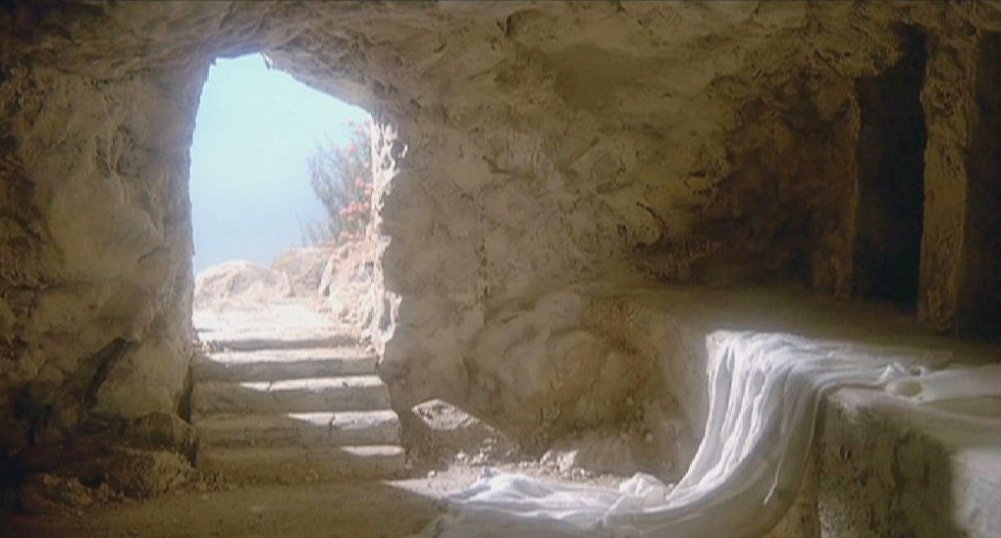
St. Peter the Apostle proclaimed: “We are witnesses of all that [Jesus] did… They put him to death by hanging him on a tree. This man God raised on the third day and granted that he be visible…to us, who ate and drank with him after he rose from the dead.” Jesus went to his Passion and Cross after the Last Supper, and from death and his tomb to the Resurrection. His apostles witnessed these events and were willing to die to testify to them, and nobody ever dies for what he knows to be a lie. The first Christians had full devotion because Christ did not go halfway in his saving mission.

But what if our Lord, instead of enduring pain and death, had chosen to spare and save himself? Jesus had told the apostles he “must suffer many things and be rejected by the elders, the chief priests and the teachers of the law, and that he must be killed and after three days rise again.” He said he had come “to give his life as a ransom for many,” shedding his blood “for the forgiveness of sins.” How could we ever find forgiveness of our sins in Christian faith and the sacraments, like Baptism and Confession, if Jesus never suffered and died?

Or imagine if Jesus had just gone halfway with the Last Supper, which was the first Holy Mass. What if he had taken the bread and given it to his disciples saying, “This is like my Body. Do this with a thought of me”? Jesus said, “Amen, amen, I say to you, unless you eat the flesh of the Son of Man and drink his blood, you do not have life within you. Whoever eats my flesh and drinks my blood has eternal life, and I will raise him on the last day. … Whoever eats my flesh and drinks my blood remains in me and I in him.” What would become of us if we could not receive Jesus in the Eucharist?

Or what if instead of Easter, Jesus Christ had merely suffered and died and never rose again? St. Paul’s answer is emphatic: “If Christ has not been raised, your faith is vain; you are still in your sins. Then those who have fallen asleep in Christ have perished. If for this life only we have hoped in Christ,” Paul says “we are the most pitiable people of all!” Therefore, if Jesus had stopped at half-measures in his mission, we would not be saved!

At the beginning of Easter Sunday Mass we sang “Jesus Christ is risen today!” We celebrate him risen not like some celebrate the Easter Bunny hiding eggs or Santa Claus bringing gifts for Christmas. A savior of merely “once upon a time” cannot save us. We celebrate Jesus Christ who was truly risen on Easter morning in 33 AD, but who is also risen, living and active, in our world today. And in the face of sin of death, he is our only hope.

This is the day the Lord has made; let us rejoice and be glad!” Embrace today’s good news, the joy of the Gospel, firmly resolved to go forward in such a way that you may be saved. Realize that you cannot safely clear a six-foot chasm by only taking three-foot hops. Half-measures are not enough.

In his suffering, in his sacraments, in his dying and his rising, Jesus shows us how far he goes in love to reach and save us. So in your daily prayers and weekly worship, in virtue and noble service, in Christian faith and fellowship, by your gratitude and love, walk with our Lord Jesus Christ with your full measure of devotion.

Consolations In The Passion

April 12, 2025

Palm Sunday
By Fr. Victor Feltes

We rightly recall Christ’s sufferings during his Passion but have you ever meditated upon his consolations?

When Jesus went out to pray and await his betrayal at the Mount of Olives, his disciples followed him. Their flesh was weak but their spirits were willing, and in that dark hour he was glad not to be alone. Jesus also had constant recourse to his Father. Though not all of his prayers were immediately granted, he knew his Father always heard him.

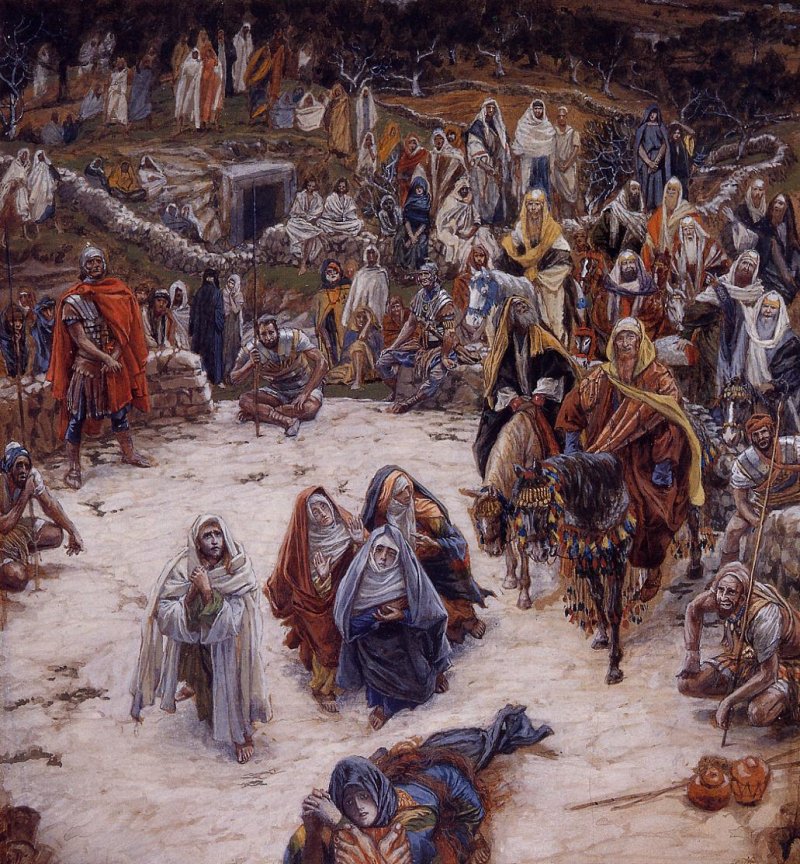
When Pilate condemned Jesus, they led him away but made Simon of Cyrene help carry his Cross. That was a welcome relief in his weakened condition. A large crowd followed Jesus, including many women who mourned and cried for him. Those women felt powerless, but their expressions of devotion strengthened him.

Once they had crucified Jesus, one of the condemned men mocked him but the other honored Christ, expressing saving faith in him. Jesus could behold his sacrifice already bearing fruit. Standing by his Cross were his mother and his beloved disciple, and “all his acquaintances stood at a distance, including the women who had followed him from Galilee” witnessing these events. And he saw them there for love of him, and it consoled him.

Therefore, if Jesus during his greatest suffering received some consolations, then in our trials we should not be ashamed to ask for help and comforts too. Jesus’ disciples were not perfect and they sometimes let him down, but the presence and support of his friends helped him to press on. So pray to God for consolation, invest in your personal relationships, and stay close to your Christian community. If you are going to pick up your cross daily and follow Christ in his sufferings you must also share in his consolations.

The Gift of Confirmation

February 2, 2025

Feast of the Presentation
By Fr. Victor Feltes

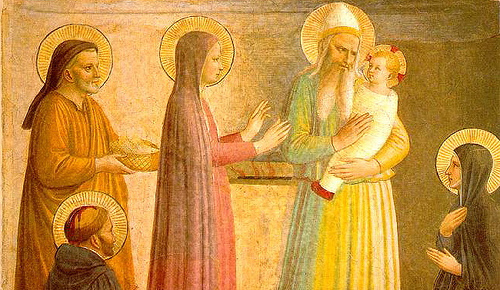
Forty days after Jesus’ birth, Joseph and Mary took him up to Jerusalem to offer the sacrifice required for a firstborn son. Jesus had been conceived through the Holy Spirit, but that was not the Spirit’s only activity in the world. The Holy Spirit revealed to a devout and righteous man named Simeon that he would encounter the Christ during his lifetime. On the day of the Presentation, the Spirit moved Simeon to come into the temple and enabled him to recognize the Christ when he saw him. Then Simeon took Baby Jesus into his arms and spoke words of prophecy which the Spirit inspired in him. There was also a prophetess there, an 84-year-old widow named Anna who never left the temple but worshiped night and day with fasting and prayer. The Spirit enlightened her too, to draw near and meet the Christ, and she spoke about the child to all. Through the Holy Spirit these servants of God, St. Simeon and St. Anna, were witnesses to Christ and filled with knowledge, courage, and joy. The plan of God was not to keep this gift of the Spirit limited to a few, but to grant him to many.

When the Spirit came down on Pentecost Sunday, St. Peter recalled the Old Testament prophesy of Joel: “‘It will come to pass in the last days,’ God says, ‘that I will pour out a portion of my Spirit upon all flesh. … Indeed, upon my servants and my handmaids I will pour out a portion of my Spirit in those days…” The Holy Spirit is poured out in the Sacrament of Confirmation which, together with Baptism and Eucharist, is necessary for the completion of our baptismal grace.

At Jesus’ baptism, the Holy Spirit descended upon him in the form of a dove, and “drove” and “led” him out into the desert for forty days before commencing his public ministry. The Old Testament had foretold that the Spirit of the Lord would rest upon the Christ or Messiah, titles which both mean “Anointed One.” Jesus was quoting the Prophet Isaiah when he declared in the synagogue at Nazareth, “The Spirit of the Lord God is upon me, because the Lord has anointed me.” Old Covenant priests, prophets, and kings were inaugurated through anointing with oil. Jesus was anointed with the Holy Spirit as our New Covenant Priest, Prophet, and King. And Christians are anointed with that same Spirit through Baptism and Confirmation to participate in Christ’s identity and mission.

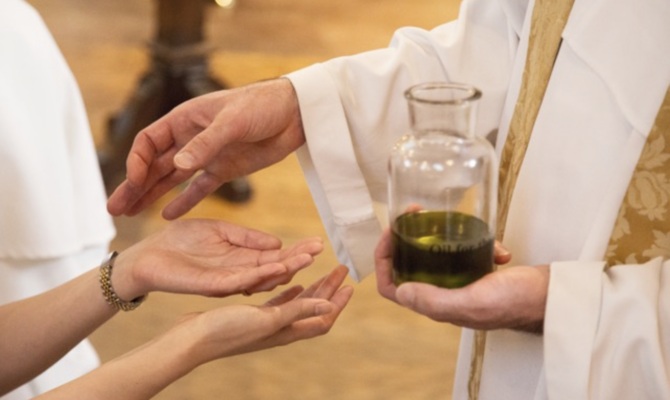
In our Latin rite, a person celebrates Confirmation typically sometime after the age of reason, but in danger of death it is even given to newborns. The ordinary minister of Confirmation is the bishop, our successor to the apostles, though Catholic priests can be granted the authority to validly confirm when needed. A person is confirmed when the minister laying his hand on his or her head and anoints the forehead with a blessed oil called chrism while saying, “Be sealed with the Gift of the Holy Spirit.” Chrism is made of olive oil plus a fragrant sap called balsam. This gives chrism its perfumed scent, such that the anointed Christian — to use the words of St. Paul — bears “the aroma of Christ.”

One of my memories from the evening following my Confirmation by Bishop Burke in Eau Claire’s Zorn Arena was feeling great joy. When I wondered at its source I thought, “Oh yeah, the Holy Spirit.” Joy, love, peace, patience, kindness, goodness, generosity, gentleness, faithfulness, modesty, self-control, and chastity are among the Spirit’s fruits. And wisdom, understanding, counsel, fortitude, knowledge, piety, and fear of the Lord are numbered among his gifts.

In the ancient world, oil was a sign of abundance and joy, as at harvest time. It was used for cleansing both before and after baths. The injured used oil to heal wounds and soothe bruises Track and field athletes and wrestlers used it to limber their limbs. And it gave radiant beauty to both men and women’s skin. The Holy Spirit, in addition to the generous gifts he gives and fruits he brings, purifies us from sin and vice toward perfection, heals our past wounds and soothes our daily bruises empowers us to prevail over temptation and opponents, and gives us the beautiful glory of a more than natural goodness.

By the sacrament of Confirmation, you are more perfectly bound to the Church and enriched with a special strength. This sacrament is not an ending but a new beginning. After Confirmation you are, as true witnesses of Christ, more obliged to bravely spread and defend our Faith by word and deed in the world. If you were never confirmed within the Catholic Church, do not neglect this sacrament. Ask me about how you can receive this gift. And if you have already received the Holy Spirit in Confirmation, sincerely and lovingly ask him for his greater gifts and fruits. Like the fire passing atop candles, one to the next, God the Holy Spirit is not diminished by being more widely shared and spread. The child Jesus grew and became strong, filled with wisdom, and the favor of God was upon him. By the Holy Spirit, God desires to do greater things with you.

The Great Gift of Baptism

January 11, 2025

Feast of the Baptism of the Lord
By Fr. Victor Feltes

As with the Jewish boys who received the rite of circumcision on their eighth day to enter the Old Covenant, the early Church gave the rite of baptism as a free gift for even newborns to enter the New Covenant. Unlike those of us who were baptized as babies, my friend Elena remembers her baptism from when she was nineteen years old.

She says, “Right up to the night (of that Easter Vigil in 2007), I was still partially afraid that God would strike me down when the baptismal waters touched me. I wanted so much to belong to him but half-thought that maybe he didn’t want me. I thought, ‘If he wanted me in the Church, why didn’t he have me born in a Catholic family?’” Full Christian initiation is accomplished through three sacraments: first, Baptism which is the beginning of new life; Confirmation which is its strengthening; and Holy Eucharist which nourishes the disciple with Jesus’ Body and Blood for transformation in Christ. Elena received all three sacraments that night, “and then after,” she says, “I could hear him in a whole new way (not like a voice but like thoughts that you know come from him). And I knew I was his and that he wanted me.

Through baptism, by being buried and rising again from the waters, we mystically enter the death and resurrection of Jesus. We are united with him as a member of his Church, members of his Body, members of his Bride. Through water and the Holy Spirit, we are “born from above” and “born again.” We become adopted children of God the Father and new temples of the Holy Spirit. Baptism forgives all our sins, indelibly changes our souls, bestows us graces enabling close relationship with God, and makes us sharers in the mission of his Church as priests, prophets, and kings in Christ. Jesus commands us to “go… and make disciples of all nations, baptizing them in the name of the Father and of the Son and of the Holy Spirit, teaching them to observe all that [he has] commanded [us].” Baptism opens the door to the other sacraments. It is the gateway into God’s Kingdom for salvation.

Jesus says, “Whoever believes and is baptized will be saved; whoever does not believe will be condemned.” Baptism is necessary for salvation for those to whom the Gospel has been proclaimed and who have had the opportunity to ask for this sacrament. God has bound salvation to his sacraments, yet he himself is not limited by his sacraments. His Church teaches that unbaptized martyrs, catechumens seeking baptism, and those who are ignorant of the Gospel of Christ and his Church but who seek the truth and do the will of God in accordance with their understanding of it can be saved through a baptism by blood or desire instead of water. How many are saved through these baptisms of desire? We don’t know. We do know that our clear salvific mission is the Great Commission Jesus gives us.

As St. Peter preached at Pentecost: “Repent and be baptized, every one of you, in the name of Jesus Christ for the forgiveness of your sins; and you shall receive the gift of the Holy Spirit!” Ordinarily, only deacons, priests, or bishops should baptize people by pouring, sprinkling, or immersion while invoking the Holy Trinity. However, in an emergency situation, anyone can baptize; simply intend to do what the Church does when it baptizes and pour water on the recipient’s head while saying “I baptize you in the name of the Father, and of the Son, and of the Holy Spirit.

This Sunday, we celebrate the Baptism of Jesus. Though sinless, he voluntarily submits himself to John’s baptism intended for sinners in order “to fulfill all righteousness.” By his own baptism, Christ connects himself with the baptized so the baptized can be united to Christ. Once Jesus was baptized, while he was praying, heaven opened and the Holy Spirit descended upon him in visible form like a dove. And the voice of God the Father came from heaven: “You are my beloved Son; with you I am well pleased.

My friend Elena recalls that after her baptism, “I had this almost euphoric joy for almost a whole year that nothing could touch. I remember some religious sisters I’d met just after my baptism warning me that would fade. I didn’t believe them, but they were right. Hard times came and it got more difficult to hold onto that joy. But I think that joy is what we’ll experience in heaven and I hold onto that hope now.” Our own baptisms may have been many years ago and perhaps we have no memories of that day at all. But the effects of baptism do not depend on our feelings. Remember who you are in Christ. The voice of the Father calls out from heaven for you to hear him: “You are my beloved one, my beloved child, and in you I delight.”

The Gift of Anointing

January 4, 2025

Feast of the Epiphany
By Fr. Victor Feltes

With Father Aro away in India for his annual vacation and spiritual retreat until February 12th I plan to celebrate all of our Masses for several weeks to come. This gives me a rare opportunity to preach with an ongoing theme. So over the next month and a half I will preach about the seven sensible signs instituted by Christ to give us his grace. These effective rituals entrusted to his Catholic Church through which we receive divine life are called the Sacraments. It is important for us to learn about these holy gifts of God so that we may benefit from them to the fullest. This Sunday, we begin with the final sacrament that many Catholics receive.

The Magi, upon entering the house of the Holy Family in Bethlehem, “saw the child with Mary his mother. They prostrated themselves and did him homage. Then they opened their treasures and offered him gifts of gold, frankincense, and myrrh.” These gifts pointed ahead to Christ’s Passion. Gold, for Christ is King. Frankincense, for he would offer God a pleasing sacrifice of himself. And myrrh, for his body would be anointed with this substance for his burial. The Holy Family was being hunted by King Herod, but God provided these gifts for his holy ones so they could escape the dangers of death and be saved. (That gold and those tradable goods were assets for the Holy Family in Egypt.) Through the Sacrament of the Anointing of the Sick, God provides for his holy ones as they face the threat of death. You are more precious to God than gold. Your sufferings can be united to Christ’s and offered up to heaven as a redemptive sacrifice. And the anointing of your body can better prepare you for either your recovery or your passing.

St. Mark records in his Gospel how the apostles “anointed with oil many who were sick and cured them.” And St. James instructs the 1st century Church in the New Testament letter which bears his name: “Are there any who are sick among you? Let them send for the priests of the Church, and let the priests pray over them, anointing them with oil in the name of the Lord.” James writes that “the prayer of faith will save the sick persons, and the Lord will raise them up. And if they have committed any sins, their sins will be forgiven them.” Whenever you begin to be in danger of death from illness, or from the frailty of old age, or because of an upcoming major surgery, the time for Holy Anointing has certainly already arrived. Call your priest, because he is unlikely to learn of your need unless you tell him. The hospital will not automatically contact us and only a priest can anoint you.

The priest will come and pray for you, silently laying his hands on your head. Then he will take some blessed oil and apply it in the shape of a cross on your forehead, saying “Through this holy anointing may the Lord in his love and mercy help you with the grace of the Holy Spirit.” Then he will anoint the palms of your hands in the same way, saying “May the Lord who frees you from sin save you and raise you up.” You can receive this anointing again either if your condition greatly worsens or if you recover and become seriously ill again later. When a priest believes it is likely to be the last time you’ll be anointed he will also give The Apostolic Pardon, Viaticum (or Holy Communion), The Litany of the Saints, and the Final Commendation as additional “Last Rites.

This sacrament gives strength, courage, and peace. It forgives your sins, if you were unable to obtain it through the Sacrament of Confession. And it unites you to Christ’s Passion to participate in his saving work, helping you offer redemptive sufferings like St. Paul describes to the Colossians: “I rejoice in my sufferings for your sake, and in my flesh I am filling up what is lacking in the afflictions of Christ on behalf of his body, which is the Church.” Sometimes this sacrament helps restore you to health, otherwise it prepares your soul to pass over to the next life.

Do not refuse or put off this sacrament. God is not an enemy like King Herod whom you should flee and hide from. Do not deprive yourself or loved ones by waiting too long to request holy anointing. Like gold given to an important person, like frankincense for offering holy sacrifice to God, or like myrrh to prepare us for the end of life, the Anointing of the Sick is a precious holy gift.

Life Lessons From A Holy Family

December 29, 2024

Feast of the Holy Family
By Fr. Victor Feltes

The Holy Family went up to Jerusalem each year for the feast of Passover. Once, when Jesus was twelve years old, as they were leaving the city at the end of the festival, the Boy Jesus stayed behind without his parents knowing it. Whole communities would pilgrimage to and from these feasts together, so Joseph and Mary had assumed Jesus was walking with others in the caravan during that first day journeying on the road back to Nazareth. But then, perhaps when it was time to share a meal or set up camp for the evening, his parents could not find him. They would have asked all of their relatives and neighbors about the last place they had seen the boy and realized that he had not been with them for hours. Joseph and Mary would soon return to Jerusalem and find Jesus alive and well on the third day. In this difficult episode for the Holy Family, there are lessons for us today.

Jesus had the best parents in all of human history. His adoptive father was a great saint and his mother was filled with grace. And yet, one time, they lost track of their only child for three days. This shows us that sometimes we can try our hardest and things will still go wrong (at least in our own eyes). We can always choose to put forth our best effort, but we cannot control every outcome. Remember: Just because something goes wrong, even painfully wrong, does not necessarily mean that we have sinned. The Blessed Mother was sinless and yet she lost her Son.

When we are little, our parents might seem perfect. As we grow up, we are disappointed to see their imperfections. But as we advance in wisdom and age becoming adults ourselves, we better understand human weakness and limitations. This does not erase people’s flaws and sometimes grave faults, but it can help us have more mercy for people, including forgiving our parents and ourselves.

After three days, Joseph and Mary found Jesus in the temple, “sitting in the midst of the teachers, listening to them and asking them questions.” Jesus shows us that we can learn things even from imperfect people. Jesus’ parents were astonished when they found him, and his mother said to him, “Son, why have you done this to us? Your father and I have been looking for you with great anxiety.” Like holy figures in the Old Testament before her, Mary questions the Lord about the things she does not understand.

Being twelve years old, Jesus was years beyond the age of reason. He must have known his parents would be concerned after he concealed his plans from them. But the Sinless One does not offer an apology. Instead, he asks them, “Why were you looking for me? Did you not know that I must be in my Father’s house?” It is a mystery why it was God’s will for Jesus to remain in Jerusalem. Even after his reply, his parents did not understand what he said to them. But he returned home with them to Nazareth and was obedient to them as he advanced in wisdom and age and favor before God and man. Blessed Mother Mary kept this episode in her memory, remembering its stressful beginning and joyful end, and pondering its meaning in her heart.

The things which happen in our lives, like the circumstances of our upbringing or the crises that come our way, will not always make sense to us. But we can learn and grow from all these things, and become more holy families because of them, for “God works all things for the good of those who love him.”

3 Things I Didn’t Know About Christmas

December 24, 2024

Christmas Eve
By Fr. Victor Feltes

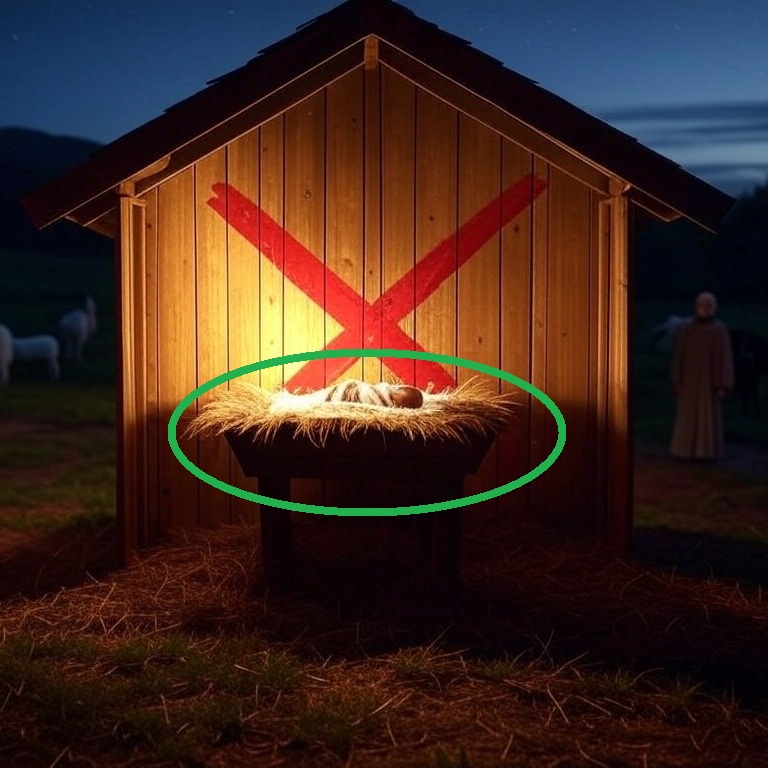
O holy night! Christmas has come! Jesus Christ is born! Tonight we celebrate and hear the story again of his world-changing birth. And though it is a familiar story, we all still have things to learn from it. For example, do you know what swaddling clothes are? “Mary wrapped her Son in swaddling clothes and laid him in a manger.

When I was younger, I didn’t know what swaddling clothes were. Maybe because “swaddle” sounded like “squalid” and I had seen the inside of messy barns, I imagined they were dirty pajamas. It’s actually an ancient and modern practice to use cloth to wrap up infants’ arms and legs tightly to their bodies. This is called “swaddling,” and babies enjoy it — it reminds them of the warm close comfort of the womb.

Another thing I didn’t know when I was younger was what a manger is. I assumed the manger was the stable because whenever someone would point out a “manger scene” what I always noticed was the big wooden barn. The shelter in Bethlehem where Jesus was born was actually more like a cave. But regardless, a manger is not a barn; it’s an animal feeding trough that holds dry feeds, like grain. So Mary wrapped up Jesus in swaddling clothes and laid him in a feed box.

These are interesting details, but why does St. Luke mention them? The details do reflect the humility of our Savior and King. Our Lord could have arranged providence instead to have himself born inside a palace with wealth, but he chose to enter into our human poverty and discomfort. But there is another reason why St. Luke notes these things: they foreshadow what would come later.

One day, decades after Christmas, assisted by another Joseph, the Blessed Mother Mary would wrap her Son’s body with cloths and lay him down inside another borrowed cave. And it is fitting that on Christmas night Jesus’ body was placed inside of a feedbox for grain, for he would go on to offer his full self as food for us, as Bread for the life of the world. It’s all connected and the beginning contains the end. Christmas leads to Holy Week, and Holy Week gives us the Faith, the Church, the Holy Eucharist.

A third and final thing I misunderstood when I was younger was when the Magi (or “Wisemen”) really arrived in Bethlehem. Having followed ‘the Christmas Star,’ I assumed they showed up on Christmas night. The Magi actually came later, sometime between forty days and perhaps two years after Christmas. We know this because Joseph and Mary did not yet have the Magi’s gift of gold to buy a sacrificial lamb for the Presentation at the Temple. And King Herod, in his attempt to kill Baby Jesus in Bethlehem, ordered the death of all the baby boys “two-years-old and under.The Magi responded to Christ’s birth and came after Christmas. They entered the house of the Holy Family and they came with gifts.

It is good that we are gathered for this holy night. Jesus has called you here to be with him and to be with us. But like the Magi, we all are also called to respond to his birth by coming after Christmas. This is the house of his Holy Family, and we must honor and adore him, bearing for him the gift of ourselves. Jesus’ wish this Christmas is for you, and each of us need him. Christmas, Easter, the Holy Mass; the Faith, the Church, the Eucharist; the past, the present, eternity; they’re all connected here, in Jesus Christ. Behold, I proclaim to you good news of great joy! A Savior has been born for you who is Christ and Lord. So come, let us adore him!

The Subtle Spirit

December 9, 2024

Solemnity of the Immaculate Conception
By Fr. Victor Feltes

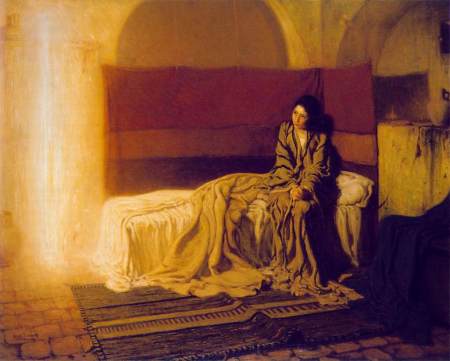
I would like to highlight certain stories about three people: Mary, Paul, and Caiaphas. First, consider the Blessed Virgin Mary. We celebrate how she was created by God, conceived entirely free from the wounds of original sin. Throughout her existence, she has been filled with God’s grace. She is the holiest woman who has ever lived. And yet, she was shocked that an angel would ever visit her. “Hail, full of grace,” announced the Archangel Gabriel, “The Lord is with you,” but she was greatly troubled at wondered at his greeting.

Next, consider St. Paul the Apostle. No human being has written more books of Sacred Scripture than he. These Pauline texts are usually letters written to particular Christian communities and they contain the particularities one finds in personal letters. For example, in the final chapter of his Letter to the Romans, Paul greets at least twenty-three persons by name. Now St. Paul believed that he was doing the Lord’s work, but if Paul had known the letters he was writing would go on to be as venerated and as widely read as the Old Testament’s books, I doubt he would have written, ‘Say Hi to Prisca and Aquila for me.’

Finally, consider Caiaphas. So many Jews were coming to believe in Jesus that the chief priests and the Pharisees convened and said, “If we leave him alone all will believe in him and the Romans will come and take away both our land and our nation!” Caiaphas, who was the high priest that year, said to them, “You know nothing, nor do you consider that it is better for you that one man should die instead of the people, so that the whole nation may not perish.” John’s Gospel notes, “He did not say this on his own, but since he was high priest for that year, he prophesied that Jesus was going to die for the nation….”

The High Priest Caiaphas was speaking prophesy but did not realize it. St. Paul the Apostle was writing inspired scripture but did not realize it. The Blessed Virgin Mary was living as the holiest of all women but did not realize it. They show us that the Holy Spirit is so agile, intelligent, and subtle that he can act through us without our realizing it.

Now, it is essential for us to remain in Christ, devoted to prayer and his Sacraments. Otherwise, the Holy Spirit will achieve his purposes in spite of us, as with the High Priest Caiaphas. But if you love our Lord, if you strive to please Jesus Christ, if you are open to doing the will of God, be encouraged and take heart. The Holy Spirit is working through you more profoundly than you realize.

Jesus Christ Is King

November 24, 2024

Solemnity of Christ the King
By Fr. Victor Feltes

Today’s psalm says: “The Lord is King, in splendor robed… Your throne stands firm from of old… Your decrees are worthy of trust indeed…” The Old Testament prophets agreed. Isaiah said “the Lord is our King, it is he who will save us.” Jeremiah said our God “is the living God, the eternal King.” And Zephaniah said “the King of Israel, the Lord, is in your midst.” At the center of human history, when Jesus Christ is born among us, he comes as King as well.

Behold, magi from the east arrived in Jerusalem, saying, ‘Where is the newborn king of the Jews?’” And when Jesus rode into Jerusalem, the crowd cried out, “Hosanna! Blessed is he who comes in the name of the Lord, even the king of Israel!” Pontius Pilate unknowing proclaimed this truth when he had a sign placed above Christ’s head on the Cross: “This is Jesus the Nazorean, the King of the Jews.” This Sunday, we celebrate that our Lord Jesus Christ is King of the universe now.

After his Resurrection, when Jesus appeared to his apostles on a mountain in Galilee, he told them, “All power in heaven and on earth has been given to me” and he gave his Church our Great Commission to spread his Kingdom, reassuring us, “Behold, I am with you always, until the end of the age.” This raises a challenging question for us: why is Jesus not visibly doing more now? All power in heaven and on earth has been given to him, so why is he not making more things happen?

His disciples wondered about this, too. Before the Risen Jesus ascended into Heaven, they asked him, “Lord, are you at this time going to restore the Kingdom to Israel?” He answered, “It is not for you to know the times or seasons that the Father has established by his own authority. But you will receive power when the Holy Spirit comes upon you, and you will be my witnesses in Jerusalem, throughout Judea and Samaria, and to the ends of the earth.” The Kingdom of God is among us, and Jesus calls us to work with him to spread it and deepen it, everywhere in everyone.

But why doesn’t Jesus just force everything to be better? As God, he is omnipotent. He has the power to do all possible things. But one thing he cannot do is to force someone’s free “No” into a free “Yes.” When Jesus returns in unveiled glory, coming upon the clouds and flanked by his angels in full-force, humanity’s time for decision will be over. That day will bring the Last Judgment and sin will no longer be given any quarter. After that, there will be only God’s Kingdom and the outer darkness. Now is the time for freely choosing.

Do we desire God’s Kingdom? Around 1000 B.C., the elders of Israel came to the Prophet Samuel asking, “Appoint a king over us to rule us like other nations.” Samuel was displeased they said, “Give us a king to rule us,” but he brought the matter to the Lord in prayer. And the Lord replied: “Listen to whatever the people say. You are not the one they are rejecting. They are rejecting me as their king.” And during Christ’s Passion, Pilate asked the crowd, “Shall I crucify your king?” The chief priests answered for the mob, “We have no king but Caesar.” They were rejecting the Lord as their King. When we pray “thy Kingdom come, thy will be done, on earth as it is in Heaven,” do we really mean what we are saying?

When Pilate asked Jesus if he was a king, Jesus answered, “You say I am a king. For this I was born and for this I came into the world, to testify to the truth. Everyone who belongs to the truth listens to my voice.” Pilate then responds with a line which today’s Gospel reading cuts off. Pilate dismissively replies, “What is truth,” and then turns his back on Truth himself, and walks away. If you desire Jesus as your Savior, you must let him be your Lord.

Advent begins next Sunday—our annual season of preparation for the coming of the Lord. Here are three wise steps for a better Advent. First, his decrees are worthy of trust. Which of his words will you neglect no more but specifically begin putting into practice? Make yourself a short list. Second, make an Advent Confession, for a fresh beginning, a new infusion of grace. And third, pray every day, for you cannot thrive without him. The saints worked wonders in this world by following Christ and doing his will. So can you. The Lord is in your midst. He is the living God, our eternal King. And if we will let him, it is he who will save us.

Are You Sinning Against The Holy Spirit?

June 9, 2024

10th Sunday in Ordinary Time
By Fr. Victor Feltes

Jesus says, “Whoever blasphemes against the Holy Spirit will never have forgiveness but is guilty of an everlasting sin.” This teaching makes some people mistakenly believe they are beyond forgiveness from somehow sinning against the Holy Spirit. What then is blasphemy against the Holy Spirit? It is good for us to know, lest we fall into despair.

Let’s look at the gospel context. Having heard of his miraculous healings, many people came to Jesus. The crowds were so great that Jesus and his disciples could not even eat, and Jesus soon needed to preach from a boat so as not to be crushed. Jesus was curing the sick and casting out demons, but the scribes who had come from Jerusalem said, “He is possessed by Beelzebul,” and “By the prince of demons he drives out demons!

Jesus dismantles their accusations as nonsense. “How can Satan drive out Satan,” he asks. “If I drive out demons by Beelzebul, by whom do your own people [your exorcists] drive them out?” Then, since they had said “he has an unclean spirit,” Jesus declares, “Amen, I say to you, all sins and all blasphemies that people utter will be forgiven them. But whoever blasphemes against the Holy Spirit will never have forgiveness, but is guilty of an everlasting sin.”

St. Athanasius observes that when the scribes and Pharisees credit “the works of God to the Devil… they have judged God to be the Devil, and the true God to have nothing more in His works than the evil spirits. … When the Savior manifested the works of the Father, raising the dead, giving sight to the blind, and other such deeds, they said that these were the works of Beelzebub. They might as well say,” Athanasius concludes, “that the world was created by Beelzebub.”

Blasphemy against the Holy Spirit is so deadly because it professes goodness and its Source to be evil. And if I declare Goodness “evil” how will I come to be reconciled to God? St. Thomas Aquinas wrote that “the sin against the Holy Ghost is said to be unpardonable by reason of its nature, in so far as it removes those things which are a means towards the pardon of sins.” A blasphemer against the Holy Spirit is blinding himself to the Light, yet St. Augustine encourages us “we should despair of no man, so long as Our Lord’s patience brings him back to repentance.”

It is spiritually deadly to denounce goodness as “evil.” Christians, however, profess faith in God as good and in Jesus Christ as our Savior. This makes a Christian unlikely to blaspheme the Holy Spirit. The dangerous error which we Christians are more likely to commit is in calling sinful evils “good.” Even while Christians claim Christ as Savior they sometimes deny his Lordship.

Jesus’ enemies did not want what he preached to be true. What he taught was challenging each of them to change. So they sought reasons to reject what he was teaching. Still today, we can rationalize sinfulness too, devising excuses to do what we want, refusing to repent, sometimes even reaching the point of celebrating shameful deeds as our pride. Willfully remaining in sin is a very serious thing so Jesus—who loves us—calls us to conversion.

In the gospels, we often see Jesus being gentle with sinners but hard on hypocrites. The Pharisees criticized him for being “a friend of sinners.” Jesus, in turn, denounced the Pharisees, saying, “You hypocrites! Isaiah was right when he prophesied about you: ‘These people honor me with their lips, but their hearts are far from me.’” So what is the difference between mere sinners and hypocrites?

Hypocrisy is more than just failing to live up to your professed morals, as all of us have done. The Greek word for “hypocrite” meant “actor” or “stage performer.” Hypocrites are farther off the narrow path than struggling sinners because hypocrites are only pretending to care about sin while ignoring the sins they have.

How can I distinguish whether I am a hypocrite versus a sinner striving to be faithful? One good sign is whether or not I am going to the Sacrament of Reconciliation. If I am complacent with my sins, if I have given up on spiritual growth, if I am refusing to convert for Christ, I won’t go to Confession. Adam hid after he sinned in the Garden of Eden. When the Lord called to him and asked “Where are you,” God was not ignorant of behind which trees the man was hiding. He calls out to us too, hoping we will come out to him.

What if you’re unaware of your sins? Then review a good, thorough examination of conscience to enlighten you. Are you well aware of your sins? Then come to Christ with a contrite heart to start a new beginning in the confessional. I hope that you will choose to meet our Lord Jesus there, for the only sinners he cannot forgive are those who refuse to repent.