Archive for the ‘Feast Day Homilies’ Category

God’s Holy Family of Saints

December 30, 2023

Feast of the Holy Family
By Deacon Dick Kostner

Today we celebrate the Holy Family the mentor of “Patience.” I like many Americans suffer from the illness I call “Patienitus” an illness that attacks those who demand results in conquering life struggles and challenges not tomorrow but rather right now- before any suffering can occur. Oh I know the rules of nature that God is not governed by “time” as we know it and you will hear me say “…remember God does not wear a watch like we wear” because God has no beginning nor end. But I also know that God has no limitations so God can speed things up or slow things down, if he so desires.

Today’s Gospel tells us the story about the Presentation of Jesus at the Temple as was required by the Law of Moses and two old people of faith Simeon and Anna who believed in the coming of Jesus and were awaiting his arrival to meet him before they died. They knew God is not governed by time but they also knew that their age was getting up there and I am sure they worried that they would die before they could meet Jesus and the Holy Family. They were beginning to show symptoms of coming down with “Patienitus.” But their faith held strong and they were finally blessed with meeting the Holy Family. Simeon and Anna knew the vaccination for not getting “Patienitus” was faith in God. God did not speed up their prayers to meet Jesus rather God just extended their life span so that they could witness their prayers being answered.

We live in troubled times. As a Parish family we continue to meet and offer our prayers to God together as a family asking for help for ourselves and help and direction for the welfare of our children and friends. But we sometimes wonder if God is really listening to our prayer petitions. The world needs divine help now not sometime in the future. We need Jesus to come to us now before we loose are freedoms, and before we just give up and that’s when we are most likely to become a disciple of the evil one who is working very hard to destroy our faith that God will always be there for us.

You have heard the saying, “Only death and taxes are certain.” Well I learned a new certainty at my Deacon Education session a few weeks ago. The priest speaker said it is a certainty that as followers of Christ we must experience suffering before we are able to be admitted into heaven. He also said that we all expect that maybe we can get a pass but that cannot happen. Even Jesus prayed that the cup of suffering might pass, but then he ended his prayer with saying “but not my will but the will of the Father be done.” We need to remember to include that phrase in all our prayers for relief from suffering. No one, not even Jesus or Mary escaped the certainty and need for suffering as a requirement to enter into the Kingdom of God.

This is when we need to ask for help from the saints like Simeon and Anna who were growing old waiting to see in person, the Redeemer of the world, who would bring light to the darkness we experience during our journey to join Jesus and the Saints in the land of light. Mary and Joseph did not know what their experience would be like raising the Son of Light before their trip to the Temple with Jesus. But, God gifted them with the presence of two special people who shared with them a look into the future by sharing communications they had received from God on what life would be like raising the Son of God in a very troubled world.

The gift that God gave the Holy Family is also given to us as a member of the Holy Family, and that is the gift of faith. Faith that God has us covered even though things may seem hopeless, and time is running out for us to see in person our friend and redeemer, Jesus. Remember that Jesus has many faces and many bodies in people we call Saints who are members of the Holy Family who are living with and praying with us, and for us, every day.

No Jesus does not have a watch to keep track of time, but he does give us members of His Church to guide and support us here and now who will reveal to us our future life as Simeon and Anna did for Jesus and Mary. Let us remember today to give thanks to God for allowing us to become a member of the Holy Family and join them in prayer and thanksgiving celebrating our faith that Jesus is present with us for support and waiting for a hug from his brothers and sisters of faith.

From Creation to this Cradle

December 24, 2023

Christmas, the Nativity of the Lord
By Fr. Victor Feltes

Before all time’s beginning,
before creation’s making,
was our Lord, who is living.

Omnipotent, all-knowing,
unlimited, all-loving,
the self-existent Being.

This eternal deity
was not solely unity,
but divine community.

Father and Son, self-giving,
Spirit from both, proceeding,
Trinity, ever-living.

Though God could not be more great,
goodness loves to propagate,
so he opted to create.

The Lord said, “Let there be light,”
earth” and “sky” and “day” and “night,”
man” and “woman” in his sight
and in each did he delight.

Blessing us was his concern,
gifting gifts we did not earn,
minds to know and hearts to yearn
so we’d love him in return.

Like all things, he made us good,
yet, as God, he understood
human beings sadly would
freely choose to sin;
distaining the divine,
disturbing our domain.

Dissolution, desolation.
Division and dismay.
Despair and death.

Behold how in our world and lives,
sins stab and slice and scar like knives.
But our Lord lowers his lifeline,
a long thread throughout our timeline.

After the Flood and Babel’s tower,
God’s plan was launched with Abraham.
Summoned by the Higher-Power,
he journeyed to the Holy Land.

God vowed to him to give that earth,
to bless all peoples through his name,
and cause his barren wife to birth
a boy who would extend his fame.

Isaac was that wondrous son,
received back as from the dead.
His sacrifice was left undone;
as God supplied a ram instead.

(Note in Abraham’s descendants,
the Messianic lineage,
persons presenting precedents
repeated on the Gospel page.)

Next, from Isaac, Jacob came,
and suffered much from sinful deeds.
To “Israel” God changed his name,
and through twelve sons a kingdom seeds.

This tribe then west to Egypt fled
and grew up becoming many,
until from slavery God led
to “the land of milk and honey.”

For this nation, God appointed
from Bethlehem to kingly throne,
shepherd David, God’s anointed,
one with a heart after his own.

He was betrayed, mistreated,
but overcame each enemy.
God pledged there’d always be seated
a true son of his dynasty.

King Solomon, the peaceful one,
built with wisdom beyond compare
God’s temple in Jerusalem
for everyone from everywhere.

Isaiah’s prophesies foretold
and his consoling words record
how every nation would behold
salvation from our bridegroom Lord.

Then Babylon’s empire came
and took the Jews captive by sword.
But God removed his people’s shame
when to their homeland he restored.

These ups and downs had set the stage
for one night prepped thousands of years.
Between the old and current age,
the Son of God on earth appears.

It’s simple for our little ones,
the way in which our Savior comes.

A stable full of yellow hay?
Kids see a perfect place to stay.

Tiny Jesus is in his box,
asleep beside the sheep and ox.

His mom and dad on Christmas day,
as still as statues, kneel and pray.

That manger scene lit by a star
draws friends to Christ from near and far.

Our children lack experience
but maintain pure, sweet innocence.

They see with awe and gentle joy
our God become a baby boy.

Now that you and I are older,
we recognize complexity;
what Christ’s parents had to shoulder,
the burdens of humanity.

Joseph and Mary were displeased
when turned away from that hotel
and then unpleasant odors breathed
while giving birth where livestock dwell.

Stress-filled was that nativity,
mixed with their joys, feelings of dread,
as they combatted poverty
and unseen forces wished them dead.

The way of Christianity
is not promised to be easy,
but life with Christ, our deity,
has mercy, grace, and great beauty.

Our little ones are right in this,
though much in our world is amiss,
it’s right and wise to reminisce
on Christmas Day and feel great bliss.

Now to conclude, let us review:
God’s great goodness is real and true,
an ancient love that’s ever new
and through Christ’s birth comes into view.

So come to Mass — yes, please do!
His family’s less when lacking you.

The Fearfulness & Faithfulness of Mary & Joseph

December 8, 2023

Solemnity of the Immaculate Conception
By Fr. Victor Feltes

After our first parents ate the forbidden fruit, when they heard the sound of God walking about in the Garden of Eden, they hid themselves among the trees. The Lord God called to Adam and asked him, “Where are you?” He answered, “I heard you in the garden; but I was afraid, because I was naked, so I hid myself.” Did Blessed Mary the New Eve or St. Joseph her husband ever feel afraid? Indeed, Scripture records several such occasions.

In today’s gospel, at the Annunciation the Archangel Gabriel comes to Mary saying, “Hail, full of grace! The Lord is with you!” “But she was greatly troubled at what was said…” Then the angel said to her, “Do not be afraid, Mary, for you have found favor with God.’”

Later, when Joseph learned of Mary’s unprecedented pregnancy, he either suspected her and feared she was unworthy of him, or he believed her and feared he himself was unworthy of her and this holy child. “Since (Joseph) was a righteous man and not wanting to expose her to shame, (he) decided to divorce her quietly.” Such was his intention when an angel appeared to him in a dream and said, “Joseph, son of David, do not be afraid to take Mary your wife into your home.”

After the birth of Christ and the visit of the magi, Joseph was told by God’s angel in dream to flee with Mary and Jesus into Egypt. Once the murderous King Herod had died, the angel told Joseph in another dream to return to the land of Israel. “But when he heard that Archelaus was ruling over Judea in place of his father Herod, he was afraid to go back there. And because he had been warned in a dream, he departed for the region of Galilee” and resettled his Holy Family in the town of Nazareth.

In another episode from the Gospels, when Jesus was 12 years old Mary and Joseph lost track of him during their family pilgrimage to Jerusalem for Passover. They found him on the third day engaging with the religious teachers at the temple. When his parents saw him, they were astonished, and his mother said to him, “Son, why have you done this to us? Your father and I have been looking for you with great anxiety.

That’s four incidents of fearfulness in Mary, Joseph, or both, which are clearly referenced in the Gospels. What are we to make of this?

Jesus Christ had holy parents on earth. At this Mass we celebrate how Mary was sinless from the moment of her Immaculate Conception and full of grace throughout her life. Joseph her husband was a righteous and virtuous man. However, both Mary and Joseph sometimes experienced fear. This shows us that feeling fear is not the same as sin or lacking in faith.

Realize and remember that faith is not primarily a feeling. Though it is nice when our feelings line up with our beliefs, sometimes they won’t match. You can believe one thing while feeling something else and still choose to act faithfully. For example, you can believe that commercial air travel is safe. Perhaps you have seen the data showing that flying compared to other modes of ground-based travel is, mile-for-mile, safer by far. When the moment comes for you to board your important flight, you might feel natural anxiety. But if you get on that airplane anyway, your faith in flight is on display. You trust in the pilots, in the aircraft, and in what you know, and this trusting faith enables you to reach your good destination.

Mary had such trusting, loving faith in Joseph. One night, her husband woke from sleep and told her he had received another message from God’s angel in a dream; they were in danger from King Herod and must quickly escape to Egypt. Mary had not beheld Joseph’s dream, but whatever she was feeling she trusted him and took the flight with him into Egypt, and her acceptance of this hard thing enabled their salvation.

Mary also had trusting, loving faith in God. St. Elizabeth praises her faith at the Visitation. Filled with the Holy Spirit, Elizabeth cries out, “Most blessed are you among women… Blessed are you who believed that what was spoken to you by the Lord would be fulfilled!” Years later, during Jesus’ public ministry, a woman in a crowd called out to him, “Blessed is the womb that carried you and the breasts at which you nursed!” Jesus replied, “Rather, blessed are those who hear the word of God and observe it.” The Blessed Virgin Mary can be called “most blessed among women” because of her enduring faithfulness — she hears God’s word and keeps it.

It is essential that we not only hear God’s word but also faithfully obey it. Jesus declares, “Not everyone who says to me, ‘Lord, Lord,’ will enter the Kingdom of Heaven, but only the one who does the will of my Father in Heaven.”

Mary and Joseph loved and trusted God and each other, and God loved and trusted them to raise our Lord. Their faithfulness on earth is now rewarded with heavenly glory. God has entrusted them with shares in the spiritual care of his people on earth today. St. Joseph is the patron and protector of the entire Church, and St. Mary is the spiritual mother of every Christian. Ask Mary and Joseph to pray for you and ask Jesus to give you his grace to be always faithful despite whatever you might feel. For faith in Christ is not so much about feelings but about loving and trusting Jesus enough to be faithful to him.

Jesus Is The King

November 26, 2023

Solemnity of Christ the King
By Fr. Chinnappan Pelavendran

Today we celebrate the Feast of Christ the King. When I say “the King” to you, I am sure several images and concepts will immediately come to your mind, among them: a throne, white robes, kingship, servants, and feasts. judgment, glory, and dominion. The King we are going to reflect on today is something different from other kings. “His Kingdom will be a Kingdom of truth and life, a Kingdom of holiness and grace, and a Kingdom of justice, love, and peace.

The first reading today comes from the book of the Prophet Ezekiel and shows us God as a Shepherd. God himself will come personally to tend his sheep because the entrusted shepherds have not been found worthy of their charge. God will take care of the sick and weak sheep but will separate and punish those who have made themselves strong at the expense of the weak. This is the work of our king, something different from other kings. “I will seek the lost. I will bring back the strayed. I will bind up the injured. I will strengthen the weak.

The kingship of Jesus is different from that of other kings. During His life on earth, Jesus was born in the royal Davidic family. In the annunciation narrative, we have the angel Gabriel bringing the good news to Mary in Nazareth, saying, “He will be great and will be called Son of the Most High. The Lord God will give him the throne of his ancestor David. His Kingdom will never end.” When the Magi came to Jerusalem, they asked, “Where is he who is born King of the Jews?

Jesus preached the Kingdom of God and told the disciples to seek first the Kingdom of God and his righteousness. It means we must give first place in our lives to God. It means we must come under the rule of His kingship. We must confess that Jesus is the Lord and King. Yet, He called his disciples friends, not servants and bestowed on them a share in his priesthood and kingship. Though he died, unlike other kings, he died willingly to save his people, and his death was not a result of loss but of a glorious victory planned by his Father.

During his passion, he manifested that he was the King and died on the cross with the title that he was the King of the Jews. He was left alone to be mocked, insulted, beaten, humiliated, and finally to die a criminal’s death. His own disciples left him and ran away when he needed them the most. It was one of the thieves who was crucified with Him who recognized him as a king, and asked for a place in his Kingdom. Jesus promised him that place. The Lord’s death also shows that He is the king who came to serve all, even His enemies. He said: “Father, forgive them for they know not what they do.” His life, teachings, and death spell out a Kingdom of justice. At the same time, we know that when our King judges the world, his just judgment is balanced with radical love, mercy, peace, and forgiveness.

As the followers of Jesus, we need to surrender our lives to Christ’s rule because He is our King. We must do his will by sharing His forgiving love with others around us. This is what asked his disciples to do. And so, this feast is an invitation to all those who have power or authority in the government, in public office, in educational institutions, and in the family, to reflect. Are we using the authority we have been given by Jesus in the way He used His authority? Are we using our God–given authority to serve others with love and compassion as Jesus did? As parents, are we using our God–given authority to train our children in Christian values?

Our Friends Who Have Gone Before Us

November 2, 2023

All Souls’ Day
By Fr. Victor Feltes

Yesterday, we celebrated all of the saints in Heaven. The saints in Heaven now enjoy supreme, definitive, enduring happiness. They are in the glorious presence of God, the Father, Son, and Holy Spirit, with all the holy angels. There, the saints’ deepest human longings are fulfilled without end. The Church’s recognized saints, beatified saints, and canonized saints, are Christianity’s hall of famers. We celebrate these saints on their feast days throughout the year. However, there are also many, many unknown saints in Heaven. How do I know that? Because of what St. John describes in the Book of Revelation.

In the Book of Revelation, when John describes his vision of Heaven, he says: “I had a vision of a great multitude, which no one could count, from every nation, race, people, and tongue.” Thirteen years ago, I printed out this list of recognized saints. It is eighty-one pages long and lists more than 13,000 names. But the number of those in Heaven is “a great multitude which no one could count.” I could count beyond 13,000 in less than a day, so there must be many more saints in Heaven than these.

Something I think many Christians do not realize is that if your relative, or friend, or neighbor who passed away is now in Heaven, yesterday was their feast day. We celebrated them on All Saints’ Day. Today, is All Souls’ Day. So what is the difference? Today, we remember and pray for those who have died as friends of God but are still on their way to Heaven.

Why are there any Christians who have died but are not yet in the full glory of Heaven? Well, what if we die as friends of God but we are not yet fully perfect? The Book of Revelation says “nothing unclean will enter [God’s holy, heavenly city].” What if we die still loving some of our sins? What if we die still a slave to certain vices? What if we die carrying hatred or unforgiveness towards others in our hearts? Psalm 24 asks, “Who can ascend the mountain of the Lord? Or who may stand in his holy place?” Then it tells us, “One whose hands are sinless, whose heart is clean, who desires not what is vain.” And Jesus tells us in the Beatitudes, “Blessed are the clean of heart, for they will see God.”

Jesus tells us in our gospel, “Everything that the Father gives me will come to me, and I will not reject anyone who comes to me.” But what if we die as his friends but with unclean hearts, not yet ready to stand before and behold God’s all-holy, fully-unveiled presence? Happily, God provides a way to perfect, to heal, to sanctify his friends (if, and as needed) after death. This purifying process is called Purgatory, and everyone who enters it will surely reach Heaven. Yet we know from lived experience that personal change is difficult, so we should help the souls of people in Purgatory with our prayers.

One spiritual problem in our culture these days is the idea that every Christian who dies is immediately in Heaven. We can hope for our loved one’s quick entry into Heaven, but an ordinary funeral Mass is not a canonization Mass. If I die and need the cleansing work of Purgatory, I hope that people will be praying for my soul instead of assuming that I’m already all the way home to Heaven. We can and should pray for the dead. We who are united in the Body of Christ, even if temporarily separated by death, remain joined in love. We on earth do not know with certainty whether our loved ones have reached Heaven yet, until the Church beatifies or canonizes them, or unless we receive some private revelation from God. But whether they are with the saints in Heaven or with the souls in Purgatory, they can still pray for us!

St. James writes in his New Testament letter that, “The prayers of a righteous person are very powerful.” We ask people on earth to pray for us, especially if someone is holy, and we are eager for the help of their prayers to God. How mighty are the prayers of those holy ones who began journeying closer to God before us? “The prayers of a righteous person are very powerful.

Here’s some homework for today: first, I invite you to think of the most loving, devout, holy people you know who have passed away and pray for them in case they need it. (No loving prayers are ever wasted.) Next, thank God for the great gift those people were and are. Finally, ask these holy souls to pray for you. They will be happy to help you.

“I believe no happiness can be found worthy to be compared with that of a soul in Purgatory except that of the saints in Paradise; and day by day this happiness grows as God flows into these souls, more and more, as the hindrance to His entrance is consumed.”

~St. Catherine of Genoa, Treatise on Purgatory

Glimpses of our Future Glory

August 17, 2023

Solemnity of the Assumption
By Fr. Victor Feltes

The Church of Jesus Christ celebrates our Blessed Mother Mary. For instance, we mark her conception, her birth, and today the beginning of her life in glory. It is fitting the Church does this since her Lord commands us: “Honor your Father and mother.” And when the people we love have birthdays or anniversaries, we love to celebrate with them. Today we celebrate how the Virgin Mother of God was assumed body and soul into heaven.

She is the icon of the Church, the beginning and image of the Church’s coming to perfection. We are happy for Mary, but what we see in her is good news for us too. She is a sign of sure hope and comfort for our future, for what awaits for us in our resurrection to glory. To unpack what I mean, consider what the Blessed Virgin Mary has been up to in the centuries since her Assumption.

Enthroned beside her Son in a place of close intimacy and high honor, she is an intercessor for us, her spiritual children. How many children does Mary have? The Book of Revelation says “her offspring [are] those who keep God’s commandments and bear witness to Jesus.” Therefore, she has many, many millions of children. And how many “Hail Marys” and other prayers are sent her way every minute? Yet we believe that she hears us without becoming overwhelmed and that she knows each of us personally, as a mother knows her children. We also have reason to think that Mary has not merely remained in heaven for nearly 2,000 years, but has been active here below.

Though we are not obliged to hold belief any particular Marian apparition (since none of these later events belong to the ancient Deposit of the Faith) the Church has judged many proclaimed appearances of Mary to be credible, or “worthy of belief.” These apparitions offer us clues about Mary’s life now and what life will be like for us in resurrected glory.

In her Church-approved apparitions, the Blessed Virgin Mary comes in varying appearances. For example, in her appearances to St. Juan Diego in 1531, Our Lady of Guadalupe in Mexico had darker skin and black hair and wore traditional clothing indicating she was with child. In her appearances to the Belgian immigrant Adele Brise in 1859 near Green Bay, Wisconsin, Our Lady of Good Help had white skin and blonde hair in different apparel.

In Mary’s Church-approved apparitions she also speaks in varied languages. For instance, to St. Bernadette Soubirous at Lourdes, or the three shepherd children at Fatima, she did not speak ancient Aramaic, Hebrew, Greek, or Latin. She spoke to them in their local dialects. Mary resembles her seers and speaks their mother tongues because she is the mother of each of them.

Mary’s apparitions suggest a saint in his or her glorified body will have the power to change its age or appearance. Mary remains a woman, but race presents no barrier and different languages are no hindrance to communication. And if our glorified consciousness will become like hers, it will be no strain to know and be close friends with more than a billion people at once. Won’t that be wonderful?

Another detail that seers of Mary’s apparitions agree on is that she is now exceedingly beautiful. During the years of her life on earth, Mary may have looked quite ordinary. We do not imagine that Jesus Christ had to be the tallest, most muscular, or handsomest man who ever lived, so Mary need not have been the most beautiful woman alive either. In this fallen world, the holy can look ugly while the wicked can look very attractive. But now there appears to be no mismatch between Mary’s inner and outer beauty. This interior beauty is called holiness.

After our resurrection, the abundance (or lack) of holiness we have cultivated with God within us will be seen in our endless beauty (or ugliness) forever. The glory we are called to in Christ is like Mary’s and that gives us reason to rejoice with her today all the more.

Feast on the Transfiguration

August 5, 2023

Feast of the Transfiguration
By Deacon Dick Kostner

Today we celebrate the Transfiguration. Peter, James and John are invited by Jesus to join him on the mountain. They are invited to share an experience with Jesus and see that Moses and Elijah are still alive and conversing with Jesus. Is this a dream they say to themselves? And then, they witness an epiphany, a revealing of who Jesus, their friend, really is. They hear the voice of God from a cloud, shouting a truth: “This is my beloved Son, with whom I am well pleased; listen to him!” The three men are in awe, they feel special but are confused and do not understand why they cannot share this experience when Jesus tells them to be silent, until he is raised from the dead.

Although they are confused Peter relates their feelings when he proclaims, “Lord, it is good that we are here!” Folks, we too need to reflect upon the fact that we too can share in and experience the Transfiguration for through our baptism we have received a personal invitation like Peter, James and John, to join Jesus on the mountain. We, too, are special people and members of the Holy Family; we too can experience that Jesus does not live in the sky, but is really with us every minute of every day here on earth all we need to do is open our eyes and ears and as the Father said, “Listen to Him.

As I reflect on this Gospel the first thing that came to my mind was our Church and Eucharist. Jesus calls to us and says, “Folks, you are special to me, please come with me and we will climb out of this world and rise way above it on a mountain I have created for us, and we can vacation from the problems and trials of this world to the peace found only at the home of the family of God.” A mountain place that He has named, “Church.” Mass is for us a mountain escape. A place for us to join people who are family to us to pray, and listen to Jesus speak to us through Scripture and celebrate as a family, a meal with Jesus, with our friends, sharing our love for each other and pledging support for each other as we all journey on the road to salvation.

The second thing that came to my mind as I was doing my morning prayer intercessions a week or so later, was the great gift God shares with us which are his creatures here on earth. The prayer read, “Lord show us your goodness, present in every creature, that we may contemplate your glory everywhere.” The birds, and animals are many times directed by God to help mitigate for us the problems of life, and how although we are maybe confused or even frightened by their existence and intelligence, we are awed by the joy they give to us by allowing us to, join them on a mountain and receive a mini-vacation from the challenges of life. What a gift God gives to his Holy Family.

I believe God gives to all of his creatures vocations. For us, Jesus gave us an 11th Commandment to love others as he has loved us. For animals their vocation is to display to us God’s goodness through his love and care for those creatures as well as his love for us humans as his children.

I had previously told you about my holy cat who taught me the virtue of being patent with others even if they hate you. I have witnessed a hen duck whose mate was run over and killed by a car, sit by her mate in the middle of the road for three day’s before leaving his side. And look at our police departments and how they have learned to ask the help of our canine friends, to make this world a safer place for us to live and to give us comfort. Finally, how about the resident cat I read about a few years ago who was given the vocation and ability to know when people in the nursing home it lived in were about to die, and who would sit with that resident until they died to give them comfort. The staff had indicated that this cat had a 98% record of knowing who would die within three days of when it took up residency with a patient.

Although this world has a lot of challenges for us to bear let us fear not for we have been invited to join Jesus and his creatures, and experience God, and the Transfiguration on a “mountain” with family and friends. When climbing the mountain and experiencing an epiphany, I encourage you to say a prayer that I have named the prayer of St. Peter, “Lord, it is good … that we are here! And as the Father directed us to do, I do listen to you! Amen.

The New Manna

June 11, 2023

Solemnity of Corpus Christi
By Fr. Victor Feltes

In the Old Testament, God freed his people with the Prophet Moses. The Hebrews in Egypt were slaves to Pharaoh since birth, but God’s mighty works through Moses liberated them. Though he had led them through the waters of the Red Sea their journey was not yet completed. They were still in the arid desert and God wished to lead them into his Promised Land, “a land of milk and honey” he had promised to their ancestors. God had already blessed his people, yet he wished to give them his even fuller blessings there.

How were the Hebrew people sustained for forty years in the desolate Sinai desert? What did they eat to survive? Every day, God made fine flakes appear on the ground around their camp. These flakes were “white, and tasted like wafers made with honey.” Upon seeing them the people asked, “What is this?” (in Hebrew, “Manna?”) Moses told them, “It is the bread which the Lord has given you to eat.” Without that manna they would have starved to death. God’s people ate this bread until they entered the Promised Land.

Here we see things and events of the Old Testament foreshadowing events and things of the New. In the New Testament, God liberates his people with Christ Jesus his Son. We all were slaves to sin, Satan, and hopeless death, but God’s mighty works through Jesus Christ freed us. He has led us through the waters of baptism; however, our journey is not yet completed. We possess renewed life in this fallen world but God wishes to lead us into his Promised Land of Heaven. God has already blessed us, yet he wishes to give us his even fuller blessings there.

So how are we to endure as we walk through the present desert of this world? Every day, in churches like this one, God offers us the Bread that has come down from Heaven. Jesus says, “I am the living bread that came down from heaven; whoever eats this bread will live forever; and the bread that I will give is my flesh for the life of the world.” He gives us himself in the Eucharist. People see the Blessed Sacrament and wonder, “What is this?” It is the New Manna; the Body and Blood, Soul and Divinity of Jesus Christ.

In addition to Sacred Scripture, the Early Church Fathers attest to this. These theologians living in the first centuries of the Church teach and document what the earliest Christians believed about Jesus Christ’s Real Presence in the Eucharist. For instance, shortly after 100 AD, St. Ignatius of Antioch said, “The Eucharist is the Flesh of our Savior Jesus Christ.” Around 150 AD, St. Justin Martyr taught, “The Eucharist… is both the Flesh and the Blood of that incarnated Jesus.” St. Augustine of Hippo wrote in the early 400’s that, “Christ was carried in his own hands when, referring to his own body, he said, ‘This is my body.’ For he carried that body in his hands.” And there are many other examples of such teaching from that era.

This is what Christ’s one, holy, catholic, and apostolic Church has always believed and taught, and God has affirmed its truth here and there by Eucharistic miracles throughout the centuries. In the Old Testament, God’s people ate the manna until they entered the Promised Land. Had they not regularly eaten of it, they would have died from starvation. This reflects how important faithfully receiving and promoting the Holy Eucharist must be for you and me.

Never neglect Sunday Mass. To skip Mass from Saturday evening through Sunday night (without a grave reason for doing so) is to prioritize something else above of Jesus, spurning the Lord who commands us to keep his day holy. Let Jesus Christ be first in your life through faithfully worshipping and receiving him at Mass. And opportunities to worship and receive our Lord at Mass are not limited to the weekends.

If your schedule permits, I welcome and invite you to try weekday Mass, celebrated at St. Paul’s on Monday through Friday at 7:15 AM and mornings at St. John’s on Mondays, Thursdays, and First Fridays. Weekday Mass is only a half-hour long, it features a homily, and is among the best devotions for drawing closer to Jesus.

Are any of your friends or relatives interested in our Catholic Faith? Invite them to come with you to Mass or bring them to that other great way to encounter our Eucharistic Lord: Eucharistic Adoration.

What greater treasure do we have than Jesus, truly present in the Eucharist? Let us treasure him as we ought and introduce this treasure to others. Strengthened by his food, our Lord would bring us all together into his Promised Land of Heaven.

God is a Loving Communion of Persons

June 4, 2023

Trinity Sunday
By Fr. Victor Feltes

A Muslim man once accused me of what he called an “unforgivable sin.” My supposed offense was espousing a core truth of our faith, the foundation of all reality: Trinitarianism — that God is one being in three persons. (That man’s charge struck me as a rather poor conversion strategy. I mean, if proclaiming the Trinity were really an unforgivable sin, why would I bother converting to Islam?) I was dialoguing on that occasion with generally friendly and thoughtful Muslims, Jews, and Unitarians in a website’s comments section, responding to something a man who believes in God but rejects the Trinity had posted. This is what he wrote:

The Jews had no idea of the Trinity. Their faith was centred in the Shema: a unitary monotheistic confession. Jesus clearly affirmed that very same unitary monotheism in Mark 12:29″ where Jesus says, “Hear, O Israel! The LORD our God, the LORD is one!” This fellow concluded by chiding, “How is it that Christians today have abandoned their rabbi on this point?

Both that online poster and Jesus Christ referenced the Shema, which faithful Jews would recite every morning and evening. “Shema” is the Hebrew word meaning “hear” or “listen,” and the Shema prayer quotes Deuteronomy 6:4: “Hear, O Israel: The Lord our God, the Lord is one.” Does this oneness proclaimed by God’s Word refute our Trinitarian Christian Faith? Should we reject our belief in the Trinity because Jews in the Old Testament did not profess it? No, and here’s why.

This famous scripture verse declaring, “the Lord is one,” uses the Hebrew word “echad” for “one.” Now echad can mean singularity, solitary oneness, but this same word sometimes points to a unified oneness. For instance, when Genesis recounts the creation of the two sexes it says, “For this reason a man will leave his father and mother and be united to his wife, and the two shall become one (echad) flesh.” Later in Genesis, in the story of the Tower of Babel, God laments, “If now, while they are one (echad) people and all have the same language, they have started to do this, nothing they presume to do will be out of their reach.” God, by selecting the word “echad” to proclaim “the Lord is one,” inspired a passage with providential flexibility. Echad allows for the unified oneness of the Persons of the Trinity without requiring that interpretation from the Jewish generations who came before Christ.

In the Bible, we see God gradually leading humanity along from darkness to light, from error to truth. For example, from unchecked blood vendettas, to “an eye for an eye” taught in the Mosaic Laws, to the Gospel teaching of loving our enemies. Or from polygamy, to monogamy, to sacramental marriage. Or in this case, from polytheism (belief in many gods), to monotheism (belief in one God), to Trinitarianism (our belief in one God in three divine Persons).

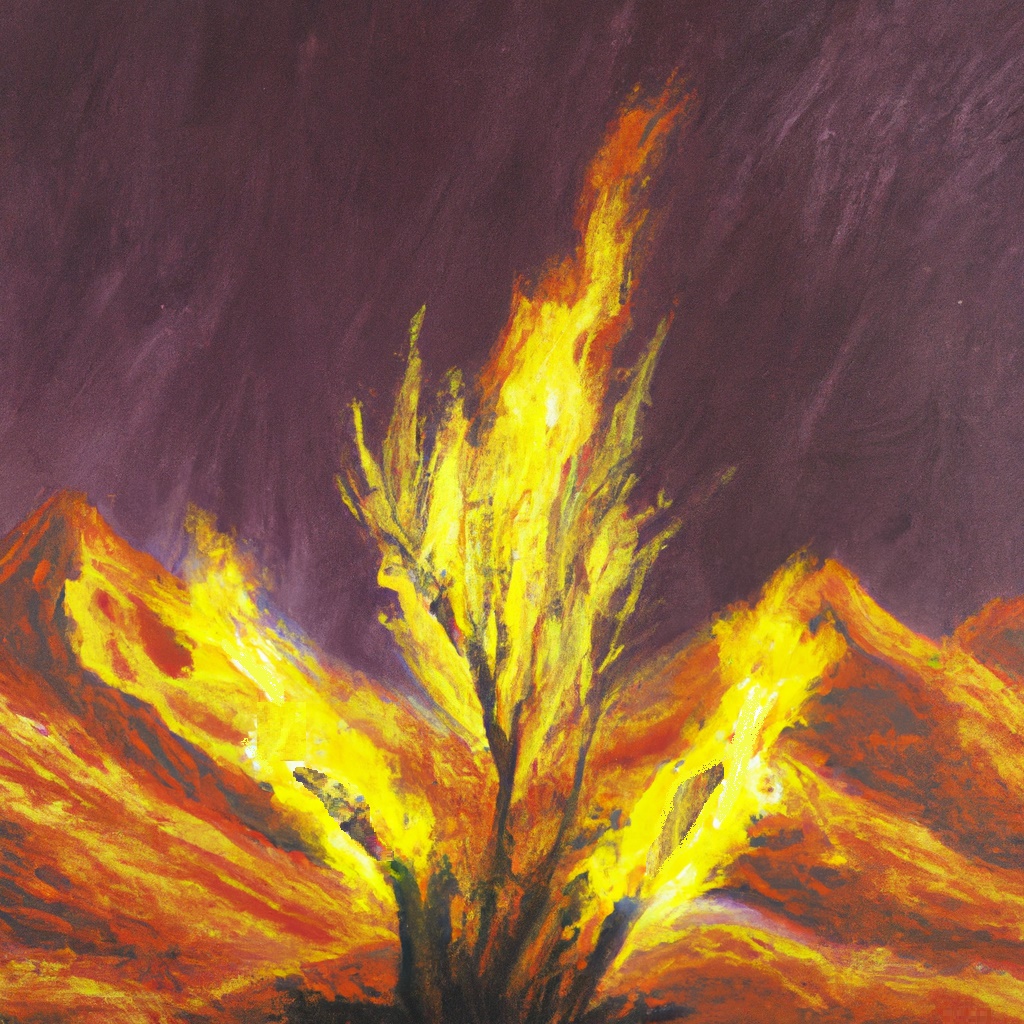
We see God’s progressive revelation occurring at the Burning Bush, where Moses must ask God to clarify for him, “If I go to the Israelites and say to them, ‘The God of your ancestors has sent me to you,’ and they ask me, ‘What is his name?’ what do I tell them?” The Lord replies, “I AM (the God) WHO AM.” That the Lord was not just another god among many pagan gods — that the Lord is, in fact, the only God — was a revelation God’s people were taught and accepted over time.

So who reveals to us that God is a Trinity; that the one divine being is three distinct Persons? This is revealed to us through Jesus Christ himself. Jesus claims authority to forgive sins, declares himself Lord of the Sabbath, demands an absolute and total commitment to himself, and presents himself as the one way of salvation. He accepts peoples’ worship, which would be idolatrous if he were not divine. And Jesus says “the Father and I are one” and “whoever has seen me has seen the Father,” yet he speaks to God his Father as another Person.

You and I are single-person beings, so we would naturally assume a personal God would be a singular-person like us. But through Jesus Christ we discover that God as a solitary one would be less perfect, less complete, less great than our God is. Our triune God, Father, Son, and Holy Spirit, is a loving communion of Persons. God the Father entirely gifts himself to his Son. God the Son entirely gifts himself back to his Father. And God the Holy Spirit proceeds from this eternal, self-gifting exchange. Indeed, as St. John writes, “God is love,” and we are made in and called to the image and likeness of God.

What does this teach us for our lives? The Holy Trinity teaches us our personal perfection will not come in isolation. God the Son calls us to be God’s children with himself, while God the Holy Spirit calls us to be animated with himself, while God the Father calls us to offer all things to himself, so that he — the source of all good things — may give us all good things in return. Loving personal relationships are the meaning of life. Our lives come from a loving communion of persons, and we are called to a loving communion of persons, the Trinity and their Church. We will only become Christian saints through self-gifting and receiving in the oneness of a holy, loving communion of persons.

His Resurrection has Changed Everything

April 16, 2023

Divine Mercy Sunday
By Fr. Chinnappan Pelavendran

The resurrection of Jesus was a new experience for the disciples, even though Jesus had often explained to them about His resurrection. The apostles must have been afraid beginning on Holy Thursday, because their friend and the messiah was dead. They all abandoned Him. His own disciple betrayed Him. The crowd which welcomed Jesus with palms turned against Him and called for the release of Barabbas. The apostles, now afraid of the crowd, stayed in their homes for their own protection.

The harmony among the first Christians that we see in our first reading is the fruit of Jesus’ resurrection. The new community, gathered around the resurrection, was no longer afraid. In the second reading, St. Peter reminds us that we have been transformed through the resurrection of Jesus. His resurrection gave us a new birth and hope. Through our baptism, we share in Jesus’ resurrection. St. Peter reminds us that we have “an inheritance that is imperishable, undefiled, and unfading.” The resurrection of Jesus has changed everything. Nothing will ever again be the same.

Look at how Thomas changed. Before he met the risen Jesus he was depressed, absent from the group of apostles, and disbelieving. At first, he said: “Unless I see the mark of the nails in his hands and put my finger into the nail marks and put my hand into his side, I will not believe.” (John 20:25) After seeing the Risen Jesus, he proclaimed: “My Lord and My God.” (John 20:28) What a difference after seeing Jesus: from fear to Joy, seclusion to the mission, absence to presence, disbelief to faith, and a mere existence to new life. His life was completely changed after seeing Jesus.

Jesus presented Himself to His disciples during their time of fear and confusion. He restored their peace. He commissioned them as ministers of the sacraments. The sacrament of reconciliation is the sacrament of mercy.

As we celebrate today Divine Mercy Sunday, we are reminded that God extended His mercy to us by allowing His son to pay the ransom for our sins. Christ accomplished this through His paschal mystery.

We must also extend this mercy to others. We are called to be apostles of mercy. As we spread the good news of Christ’s resurrection, we must thank God the Father of our Lord Jesus Christ because His Mercy and generosity endure forever.

We, too, are the witnesses of the Risen Lord. We shall certainly encounter people who will doubt our faith. This must not discourage us; we must remain focused on our mission. So, as the true disciple of Christ, let us continue to announce the good news to the whole world that Jesus Christ, our Lord has truly risen from the dead.

Today, Jesus invites us to see Him and touch Him. He invites us to encounter his wounded and glorified body. In that encounter with Jesus, he will help us to have faith in Him. One day, despite our wounds and weaknesses, our bodies will be glorified like Him.

From Fear to Peace: Celebrating Divine Mercy

April 15, 2023

Divine Mercy Sunday
By Fr. Victor Feltes

During the Exodus, before descending in fire and smoke upon a trembling Mount Sinai, God gave instructions to prepare the Hebrews for this encounter. The Lord said to Moses:

“Go to the people and have them sanctify themselves today and tomorrow. Have them wash their garments and be ready for the third day; for on the third day the Lord will come down on Mount Sinai in the sight of all the people. Set limits for the people all around, saying: ‘Take care not to go up the mountain, or even to touch its edge. All who touch the mountain must be put to death. No hand shall touch them, but they must be stoned to death or killed with arrows. Whether human being or beast, they must not be allowed to live.’ Only when the ram’s horn sounds may they go up on the mountain.”

Then Moses came down from the mountain to the people and had them sanctify themselves, and they washed their garments. He said to the people, “Be ready for the third day.

On the third day, as all the people witnessed the thunder and lightning, the blast of the ram’s horn and the mountain smoking, they became afraid and trembled. So they took up a position farther away and said to Moses, “You speak to us, and we will listen; but do not let God speak to us, or we shall die!” Moses answered the people, “Do not be afraid, for God has come only to test you and put the fear of him upon you so you do not sin.” So the people remained at a distance, while Moses approached the dark cloud where God was.

A pair of themes throughout the Old Testament are the holy otherness of God and the deadly sinfulness of man. Our Fall made it dangerous to approach God carelessly. And even Moses was mysteriously told, “You cannot see my face, for no one can see me and live.” Compare and contrast that with this Sunday’s Gospel.

On the third day, despite the doors being locked where the disciple were, the Risen Jesus came and stood in their midst and said to them, “Peace be with you.” When he had said this, he showed them his hands and his side. And he said again, “Peace be with you.” A week later when Thomas was there, Jesus appeared again and said, “Peace be with you.” He then invited Thomas, “Put your finger here and see my hands, and bring your hand and put it into my side, and do not be unbelieving, but believe.”

In former times, seeing the Lord or merely touching the mountain or ark of his holy presence could mean death. But disciples in the New Testament are invited to see his face and touch his wounds. In the New Covenant, we are called to receive Jesus Christ alive in the Eucharist. Today we celebrate Divine Mercy, mercy reflected in how — even after our sins led him to his Cross — Jesus returns and repeatedly wishes us “Peace.” In forgetting our past, we fail to appreciate what the Lord has done for us. And too few rejoice in his Divine Mercy because so many do not realize their need for it.

On Easter Sunday evening, Jesus breathed on his apostles saying, “Receive the Holy Spirit. Whose sins you forgive are forgiven them, and whose sins you retain are retained.” Why would Jesus give them this power to forgive sins if he did not intend them to use it? Why would he give his Church such a Sacrament if we did not need it? Jesus wishes you a peace beyond your fear. He desires to forgive your sins and personally give himself to you in the Eucharist. Will you trust him enough to regularly encounter his healing Divine Mercy in the confessional so that you may receive him all the more reverently, fittingly, lovingly and joyfully at his altar?

Why the Third Day?

April 8, 2023

Easter Sunday
By Fr. Victor Feltes

Why did Jesus rise from the dead on Easter? Christ’s resurrection was foretold, for instance in the 16th Psalm: “You will not abandon my soul to the netherworld, nor will you suffer your faithful one to undergo corruption.” Furthermore, Jesus rose again because without the Resurrection our Redemption would be incomplete. As St. Paul told the Romans, “[Our Lord] was handed over for our transgressions, and was raised for our justification.” In the words of the Church’s Catechism: “The Paschal mystery has two aspects: by his death, Christ liberates us from sin; by his Resurrection, he opens for us the way to a new life.” Jesus Christ came to redeem and save not only our souls but also our bodies and the rest of creation as well. Easter changes everything. Instead of living in a secular world where nothing really matters because cold death claims all, we now can live forever with God in Christ’s Kingdom.

Jesus rose again on Easter, but why did he resurrect on the third day in particular? Why not choose the first or second day, or the fourth or fortieth day to rise again? I see several reasons why God chose the third day to be Easter.

First of all, this number of days helps to confirm Jesus’ death. If Jesus had resurrected right away, immediately after being taken down from the Cross or sealed in the tomb, some would wonder if he had ever really died. Absent a miracle, no one could survive flagellation, crucifixion, and two nights alone in a cave without medical aid. The three days establish that Jesus was definitely dead.

Another reason for the three days was to fulfill the Scriptures. Post-resurrection, Jesus said, “Thus it is written that the Messiah would suffer and rise from the dead on the third day.” Many Old Testament passages foreshadowed this. For instance, Jesus and St. Paul both liken resurrection to plants sprouting, and it was on the third day of creation that God said, “Let the earth bring forth… every kind of plant.” It was “on the third day” that Abraham obediently offered Isaac in sacrifice, reasoning that God would keep all of his promises by raising his only son from the dead. But Heaven halted Abraham’s hand and he received back his beloved son alive on the third day. Jesus told the scribes and Pharisees, “Just as Jonah was in the belly of the whale three days… so will the Son of Man be in the heart of the earth.” Jesus also said, “Destroy this temple, and I will raise it again in three days.” (He said this in reference to the temple of his body.) The Book of Ezra records that the second Jewish Temple was completed on the third day of the month. And there are other Old Testament stories and signs one could cite as well. Jesus rose again on the third day in fulfillment of the Scriptures.

A third reason for the third day is what Jesus was doing on the second day. While his body was in the tomb observing a perfect Sabbath rest, his soul descended to the abode of those who had died before Christ. St. Peter writes in his First Epistle how Jesus “went and made proclamation to the imprisoned spirits;” that “the gospel was preached even to the dead.” Christ declared on earth, “Amen, amen, I say to you, the hour is coming and is now here when the dead will hear the voice of the Son of God, and those who hear will live.” Jesus used these three days to open heaven’s gates for all the just who had died before him.

Another reason for the third day is to signify a New Creation. “The third day,” Easter, was a Sunday. In Genesis, God’s work of Creation began on this first day of the week. Likewise, Easter Sunday and the Resurrection mark the beginning of a New Creation with Christ.

Though there may be millions of more reasons in the mind of God, a final, important reason I see for why Jesus rose on the third day is to give his Church a saving lesson in faithful endurance. The apostles had witnessed Jesus work many miracles. For example, they saw him use five loaves and two fish to feed five thousand men. Then, the following day, they heard him speak about the Real Presence. “My flesh is true food and my blood is true drink,” he said, and “unless you eat the flesh of the Son of Man and drink his blood, you do not have life within you.” However, people would not accept this teaching and in his Gospel St. John records, “as a result of this, many of his disciples returned to their former way of life and no longer accompanied him.” Then Jesus asked his apostles, “Do you also want to leave?” Simon Peter answered, “Lord, to whom shall we go? You have the words of eternal life. We have come to believe and are convinced that you are the Holy One of God.”

They believed in Jesus. His teachings were challenging, but they stayed with him. How shocking then was it for them to witness the torture and death of their Messiah, the Christ. Throughout Holy Saturday, they were full of doubts and fears, yet the disciples remained together in the Upper Room in which they had eaten the first Eucharist. Those apostles might have discreetly fled for home and missed out on Easter entirely, if they had not religiously respected the Sabbath which kept them from traveling far from the gathered Church. Therefore, when Jesus appeared on the third day, none of them had strayed too far away. Except for Judas and Thomas, all of them were there on Sunday to encounter their Risen Lord. They saw Jesus, and touched him, and he opened their minds to understand the Scriptures and the deeper meaning of their past and present and future. Then their doubts and fears and desires to be elsewhere, which had felt so very strong before, were now emptied of power, replaced with joy and peace. However, they never forgot what they experienced on that Holy Saturday leading to Easter Sunday, and they present to us a saving lesson for our faithful endurance.

Jesus Christ works miracles. He teaches beautiful, challenging things. And today, he is risen from the dead. The betrayals of Judases and doubts of Thomases do not change the reality of these things. Called here by God, you have gathered in this Upper Room for Easter. You have drawn near to Christ’s Holy Eucharist and his Church. Whatever doubts or fears (or even desires to be elsewhere) you might feel, I pray you will hereafter never stray nor remain far away. To whom else would you go? Only Jesus Christ has the words of eternal life. Remain here for him with his Church so that you may encounter and know the Risen Lord and us more deeply. As I said before, Easter changes everything. Instead of living in a secular world where nothing really matters because cold death claims all, we can now rejoice that we can live forever with God in Christ’s Kingdom.

3 Mysteries Remembered

April 6, 2023

Holy Thursday
By Fr. Victor Feltes

[Our] Lord Jesus, on the night he was handed over, took bread, and, after he had given thanks, broke it and said, ‘This is my body that is for you. Do this in remembrance of me.’” At this same Supper, Jesus washed his apostles’ feet, drying them with a towel. Then, when he reclined at the table again, Jesus told them, “If I, therefore, the master and teacher, have washed your feet, you ought to wash one another’s feet. I have given you a model to follow, so that as I have done for you, you should also do.”

For this Mass of Holy Thursday, the Church directs me to preach “a homily in which light is shed on the principal mysteries that are commemorated in this Mass, namely, the institution of the Holy Eucharist and of the priestly Order, and the commandment of the Lord concerning fraternal charity.” This no heavy burden. Jesus makes it easy by his actions that night. At the Last Supper, Christ gives us these precious gifts: his Holy Eucharist, his Holy Priesthood, and his holy model of loving service which he commands us all to follow.

Our Bishop William Callahan noted at this week’s Chrism Mass that without priests there would be no Eucharist, and without the Eucharist there would be no Church. The priesthood is essential to the Eucharist, and the priesthood and the Eucharist are essential to Christ’s Church. The Catechism of the Catholic Church echoes the words of the first century bishop and martyr St. Ignatius of Antioch in teaching “that without the bishop, presbyters, and deacons, one cannot speak of the Church.” (CCC #1593) And the Second Vatican Council famously teaches that the Eucharist is “the source and summit of the Christian life.” For in the Most Blessed Sacrament is contained the whole spiritual good of the Church, for it is Jesus himself. All the Church’s other sacraments, ministries, and good works flow from this one sacrifice, are united to it, and united to Christ.

Perhaps there are young men here tonight with a vocation to the priesthood. If you think you may have this divine calling, I urge you to actively pursue it. If you pursue this path and discover you are not called, you will be no worse off but blessed from the experience, and for the rest of your life you will never have to wonder or worry whether you might have had this calling. But if priesthood is your vocation, you will not find anywhere a greater life.

When Jesus commands at the Last Supper, “Do this in remembrance of me,” and declares, “I have given you a model to follow, so that as I have done for you, you should also do,” he was not only ordaining priests of the New Covenant and showing how them how to serve. Christ’s words are addressed to all disciples; not only that we should faithfully attend Holy Mass, but that we should live the way of love we see from him. The night before offering his Body and Blood on the Cross, Jesus gives these sacramentally in the Eucharist. Before offering up his death on the Cross, we see Jesus humbly provide loving service at table. Do you realize what he has done for you? Jesus has given us a model to follow, so that as he has done for us, we should also do. Do this in memory of him.

We are Worthy to be Saved in God’s Merciful Eyes

April 1, 2023

Palm Sunday (Year A)
By Fr. Chinnappan Pelavendran

The readings today remind us of the passion, crucifixion, and death of our Lord Jesus Christ, the Messiah, and the savior of the world. It reminds us of God’s love for us. Yet, our sinfulness makes us unworthy of that perfect love. So He sent His only begotten Son to redeem us by His passion, crucifixion, and death.

We have just said we are unworthy of God’s love because we have sinned, again and again, against Him, our loving Father. So why can’t He just leave us alone? This is the paradox of love. You and I are WORTHY TO BE SAVED in God’s merciful eyes!

So He sent His only Son Jesus to suffer and die so that we may be saved through Him. Yet, as we read and re-read the gospel passage on the passion, crucifixion, and death of Jesus, we see the same pattern of the response of the people then and the people now. Many people then denied, rejected, and brutally opposed the offer of salvation. Many people do the same things now. Let us pray and pray harder for the conversion of the people who continue to crucify Jesus, now by their frequent rejection of the Son of God.

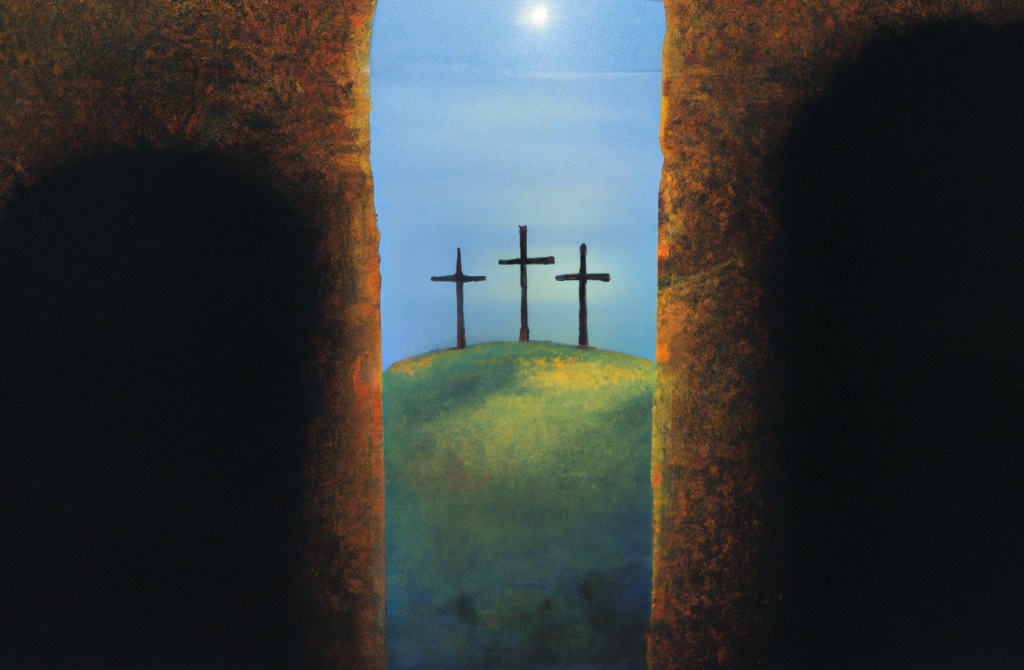
Jesus has suffered and died but it was not the end. The last verse in the gospel reading today tells us that they “secured the tomb by fixing a seal to the stone and assigning a guard.” Jesus rose from the dead on the third day. This is the source of our hope. This is the reason why we keep on reading and reflecting on the passion, crucifixion, and death of our Lord. The forces of darkness may have sealed a tomb but the victory of the Light has been seen in the Resurrection.

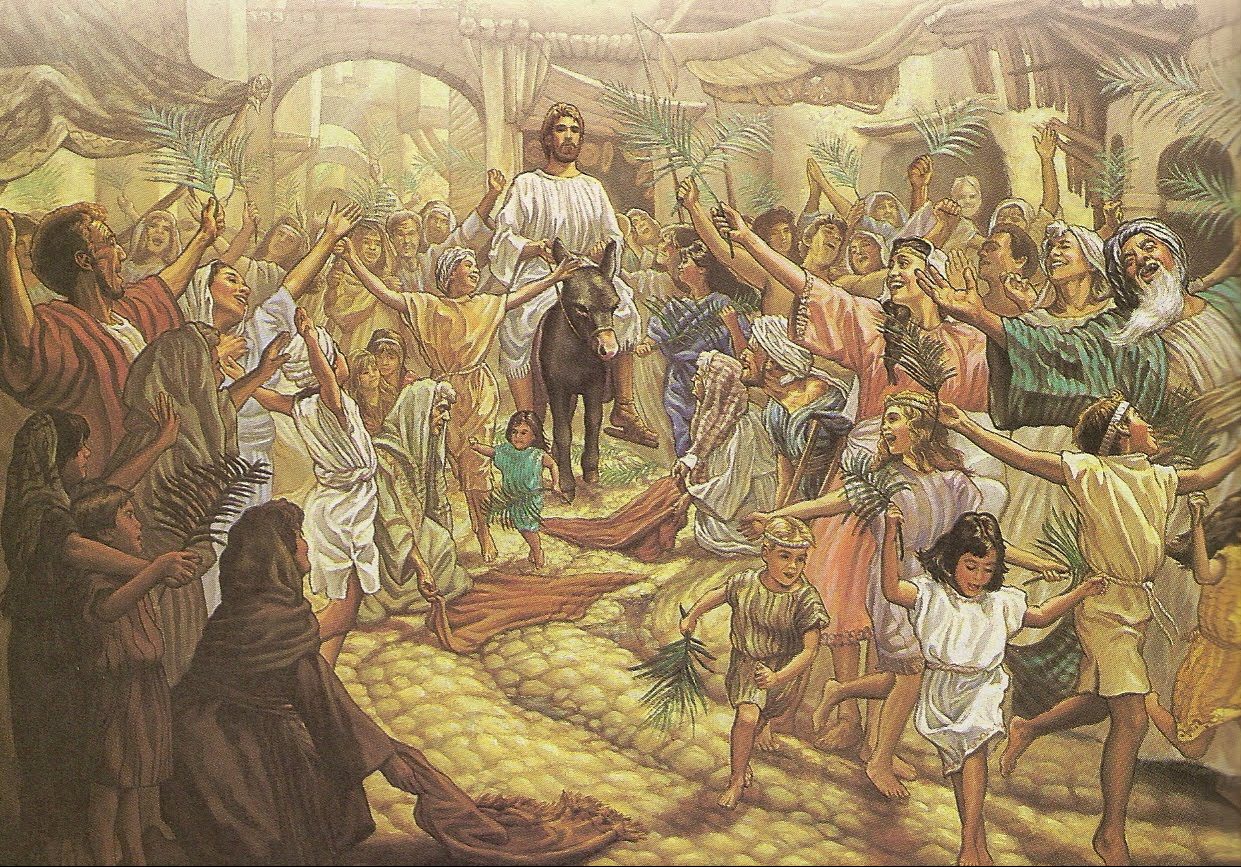
On the first day of the “Holy Week,” we commemorate the triumphant entry of Jesus into Jerusalem. The people removed their cloaks, waved palms, and sang hosannas while Jesus, riding on a donkey, passed by. Removing our clothes is a symbolic act of surrender to the Lord. It is a way of becoming open, confessing our sins, and accepting His offer of salvation. No more, disguise. No more resistance. On the other hand, the palm has been a traditional symbol of victory and rejoicing. (Leviticus 23:40) Thus by laying palms on the path of Jesus, the people acknowledged that in Jesus, there is victory. The donkey is an animal of peace. By riding on a donkey, Jesus showed that He is the prince of peace.

Let us pray that as we come in the name of the Lord, He may shower us with His blessings. May we continue to journey with Jesus, allowing Him to fill our hearts with hope, love, and peace so that we can become an instrument of hope and love to others and peace to all the earth.

Let us weep over our sins and remember that God will always forgive us. We need to welcome Jesus into our hearts in a special way during Holy Week. We can be like the prodigal son and God like his father. We need to love and ask God to strengthen our weaknesses. With God in our hearts, we can do anything.

8 Great Reflections on the Passion

April 1, 2023

Palm Sunday (Year A)
By Fr. Victor Feltes

Today’s Gospel is long, but this reading is rich. So here, briefly, are eight great reflections on the Passion.

  • At the Last Supper, Jesus told his apostles, “One of you will betray me.” They each replied, “Surely it is not I, Lord?” except for Judas Iscariot, who said, “Surely it is not I, Rabbi?” (Rabbi means teacher.) There is a big difference between Jesus just being a teacher and being your Lord.
  • In the Garden of Gethsemane, Jesus lovingly willed to save us but his humanity understandably dreaded the tortures his self-sacrifice could entail. He prayed: “My Father, if it is possible, let this cup pass from me; yet, not as I will, but as you will.” In this, Jesus shows us that we are allowed to pray for any good thing, even for ourselves, if we remain open to God’s will.
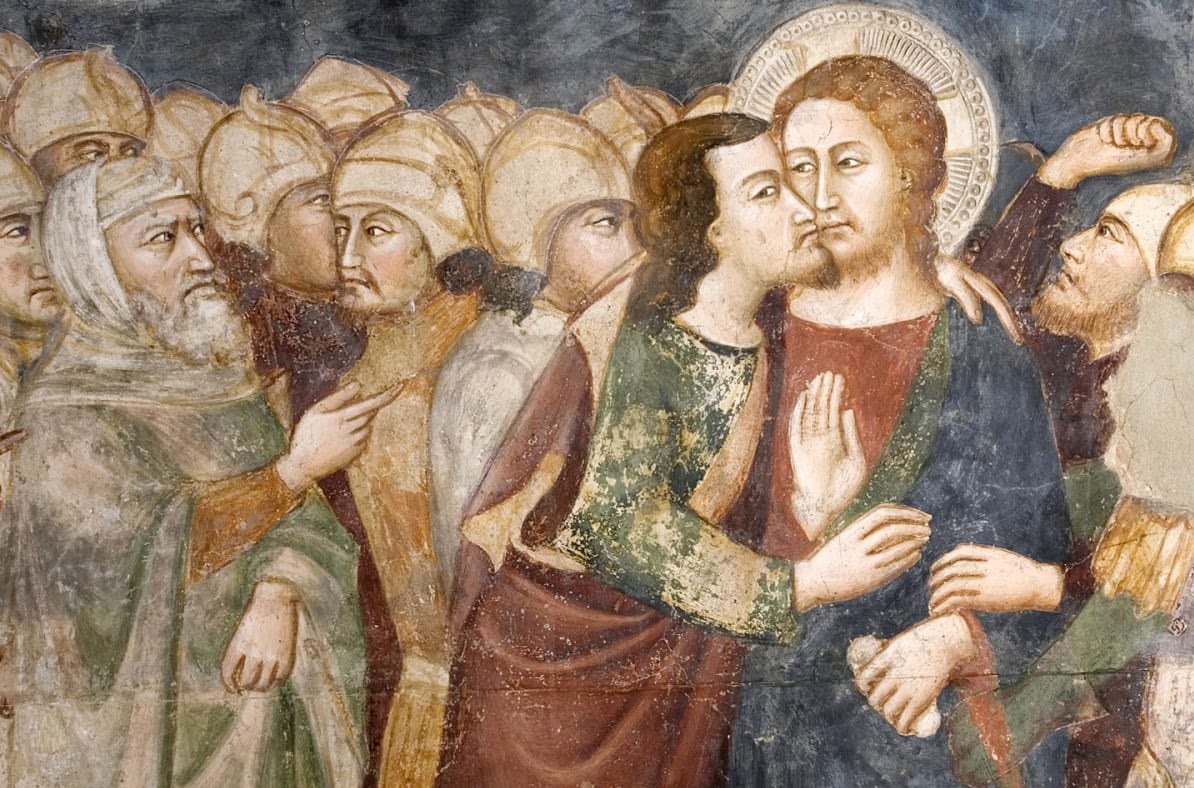
  • When Judas arrived in the Garden, he approached Jesus and kissed him saying, “Hail, Rabbi!” Jesus replied, “Friend, do what you have come for.” Jesus did not say this sarcastically; Jesus would die for Judas. Our Lord remains a friend towards us even if we betray him.
  • When the guards and soldiers laid hands on Jesus to arrest him, Peter struck the high priest’s servant, cutting off his ear with a sword. But Jesus commanded his disciple to sheathe the sword. Christian violence cuts off the ears of our enemies’ servants making them unable to hear the Gospel.
  • At his religious trial before the Sanhedrin, Jesus responded with silence, until the high priest said, “I order you to tell us under oath before the living God whether you are the Christ, the Son of God.” Then Jesus affirmed it was so. Even when the high priest’s judgment was erring, Jesus obeyed his legitimate religious authority.
  • In his trial before Pilate, the governor hoped to let Jesus go: “Which one do you want me to release to you, Barabbas, or Jesus called Christ?” The name “Barabbas” means “the son of the father.” Barabbas was a murderous rebel, a political revolutionary. Like the crowd that day, every generation is tempted to choose a different savior than Christ.
  • On his Cross, Jesus cried out, “My God, my God, why have you forsaken me?” This is the beginning of the 22nd Psalm. That psalm says, “They have pierced my hands and my feet; I can count all my bones.” Not only did this psalm prophesy Christ’s sufferings but also his resurrection, saying, “I will live for the Lord; my descendants will serve you.”
  • Finally, when Jesus died, “the veil of the sanctuary (inside the temple, which separated the place of God’s presence from the rest) was torn in two from top to bottom.” This veil was torn from the top as an act of God. Formerly, only the Jewish priests could even enter the building. Now, today, we as Christians are invited to approach and adore and receive our Lord in his temple.