Archive for the ‘Feast Day Homilies’ Category

From Fear to Peace: Celebrating Divine Mercy

April 15, 2023

Divine Mercy Sunday
By Fr. Victor Feltes

During the Exodus, before descending in fire and smoke upon a trembling Mount Sinai, God gave instructions to prepare the Hebrews for this encounter. The Lord said to Moses:

“Go to the people and have them sanctify themselves today and tomorrow. Have them wash their garments and be ready for the third day; for on the third day the Lord will come down on Mount Sinai in the sight of all the people. Set limits for the people all around, saying: ‘Take care not to go up the mountain, or even to touch its edge. All who touch the mountain must be put to death. No hand shall touch them, but they must be stoned to death or killed with arrows. Whether human being or beast, they must not be allowed to live.’ Only when the ram’s horn sounds may they go up on the mountain.”

Then Moses came down from the mountain to the people and had them sanctify themselves, and they washed their garments. He said to the people, “Be ready for the third day.

On the third day, as all the people witnessed the thunder and lightning, the blast of the ram’s horn and the mountain smoking, they became afraid and trembled. So they took up a position farther away and said to Moses, “You speak to us, and we will listen; but do not let God speak to us, or we shall die!” Moses answered the people, “Do not be afraid, for God has come only to test you and put the fear of him upon you so you do not sin.” So the people remained at a distance, while Moses approached the dark cloud where God was.

A pair of themes throughout the Old Testament are the holy otherness of God and the deadly sinfulness of man. Our Fall made it dangerous to approach God carelessly. And even Moses was mysteriously told, “You cannot see my face, for no one can see me and live.” Compare and contrast that with this Sunday’s Gospel.

On the third day, despite the doors being locked where the disciple were, the Risen Jesus came and stood in their midst and said to them, “Peace be with you.” When he had said this, he showed them his hands and his side. And he said again, “Peace be with you.” A week later when Thomas was there, Jesus appeared again and said, “Peace be with you.” He then invited Thomas, “Put your finger here and see my hands, and bring your hand and put it into my side, and do not be unbelieving, but believe.”

In former times, seeing the Lord or merely touching the mountain or ark of his holy presence could mean death. But disciples in the New Testament are invited to see his face and touch his wounds. In the New Covenant, we are called to receive Jesus Christ alive in the Eucharist. Today we celebrate Divine Mercy, mercy reflected in how — even after our sins led him to his Cross — Jesus returns and repeatedly wishes us “Peace.” In forgetting our past, we fail to appreciate what the Lord has done for us. And too few rejoice in his Divine Mercy because so many do not realize their need for it.

On Easter Sunday evening, Jesus breathed on his apostles saying, “Receive the Holy Spirit. Whose sins you forgive are forgiven them, and whose sins you retain are retained.” Why would Jesus give them this power to forgive sins if he did not intend them to use it? Why would he give his Church such a Sacrament if we did not need it? Jesus wishes you a peace beyond your fear. He desires to forgive your sins and personally give himself to you in the Eucharist. Will you trust him enough to regularly encounter his healing Divine Mercy in the confessional so that you may receive him all the more reverently, fittingly, lovingly and joyfully at his altar?

Why the Third Day?

April 8, 2023

Easter Sunday
By Fr. Victor Feltes

Why did Jesus rise from the dead on Easter? Christ’s resurrection was foretold, for instance in the 16th Psalm: “You will not abandon my soul to the netherworld, nor will you suffer your faithful one to undergo corruption.” Furthermore, Jesus rose again because without the Resurrection our Redemption would be incomplete. As St. Paul told the Romans, “[Our Lord] was handed over for our transgressions, and was raised for our justification.” In the words of the Church’s Catechism: “The Paschal mystery has two aspects: by his death, Christ liberates us from sin; by his Resurrection, he opens for us the way to a new life.” Jesus Christ came to redeem and save not only our souls but also our bodies and the rest of creation as well. Easter changes everything. Instead of living in a secular world where nothing really matters because cold death claims all, we now can live forever with God in Christ’s Kingdom.

Jesus rose again on Easter, but why did he resurrect on the third day in particular? Why not choose the first or second day, or the fourth or fortieth day to rise again? I see several reasons why God chose the third day to be Easter.

First of all, this number of days helps to confirm Jesus’ death. If Jesus had resurrected right away, immediately after being taken down from the Cross or sealed in the tomb, some would wonder if he had ever really died. Absent a miracle, no one could survive flagellation, crucifixion, and two nights alone in a cave without medical aid. The three days establish that Jesus was definitely dead.

Another reason for the three days was to fulfill the Scriptures. Post-resurrection, Jesus said, “Thus it is written that the Messiah would suffer and rise from the dead on the third day.” Many Old Testament passages foreshadowed this. For instance, Jesus and St. Paul both liken resurrection to plants sprouting, and it was on the third day of creation that God said, “Let the earth bring forth… every kind of plant.” It was “on the third day” that Abraham obediently offered Isaac in sacrifice, reasoning that God would keep all of his promises by raising his only son from the dead. But Heaven halted Abraham’s hand and he received back his beloved son alive on the third day. Jesus told the scribes and Pharisees, “Just as Jonah was in the belly of the whale three days… so will the Son of Man be in the heart of the earth.” Jesus also said, “Destroy this temple, and I will raise it again in three days.” (He said this in reference to the temple of his body.) The Book of Ezra records that the second Jewish Temple was completed on the third day of the month. And there are other Old Testament stories and signs one could cite as well. Jesus rose again on the third day in fulfillment of the Scriptures.

A third reason for the third day is what Jesus was doing on the second day. While his body was in the tomb observing a perfect Sabbath rest, his soul descended to the abode of those who had died before Christ. St. Peter writes in his First Epistle how Jesus “went and made proclamation to the imprisoned spirits;” that “the gospel was preached even to the dead.” Christ declared on earth, “Amen, amen, I say to you, the hour is coming and is now here when the dead will hear the voice of the Son of God, and those who hear will live.” Jesus used these three days to open heaven’s gates for all the just who had died before him.

Another reason for the third day is to signify a New Creation. “The third day,” Easter, was a Sunday. In Genesis, God’s work of Creation began on this first day of the week. Likewise, Easter Sunday and the Resurrection mark the beginning of a New Creation with Christ.

Though there may be millions of more reasons in the mind of God, a final, important reason I see for why Jesus rose on the third day is to give his Church a saving lesson in faithful endurance. The apostles had witnessed Jesus work many miracles. For example, they saw him use five loaves and two fish to feed five thousand men. Then, the following day, they heard him speak about the Real Presence. “My flesh is true food and my blood is true drink,” he said, and “unless you eat the flesh of the Son of Man and drink his blood, you do not have life within you.” However, people would not accept this teaching and in his Gospel St. John records, “as a result of this, many of his disciples returned to their former way of life and no longer accompanied him.” Then Jesus asked his apostles, “Do you also want to leave?” Simon Peter answered, “Lord, to whom shall we go? You have the words of eternal life. We have come to believe and are convinced that you are the Holy One of God.”

They believed in Jesus. His teachings were challenging, but they stayed with him. How shocking then was it for them to witness the torture and death of their Messiah, the Christ. Throughout Holy Saturday, they were full of doubts and fears, yet the disciples remained together in the Upper Room in which they had eaten the first Eucharist. Those apostles might have discreetly fled for home and missed out on Easter entirely, if they had not religiously respected the Sabbath which kept them from traveling far from the gathered Church. Therefore, when Jesus appeared on the third day, none of them had strayed too far away. Except for Judas and Thomas, all of them were there on Sunday to encounter their Risen Lord. They saw Jesus, and touched him, and he opened their minds to understand the Scriptures and the deeper meaning of their past and present and future. Then their doubts and fears and desires to be elsewhere, which had felt so very strong before, were now emptied of power, replaced with joy and peace. However, they never forgot what they experienced on that Holy Saturday leading to Easter Sunday, and they present to us a saving lesson for our faithful endurance.

Jesus Christ works miracles. He teaches beautiful, challenging things. And today, he is risen from the dead. The betrayals of Judases and doubts of Thomases do not change the reality of these things. Called here by God, you have gathered in this Upper Room for Easter. You have drawn near to Christ’s Holy Eucharist and his Church. Whatever doubts or fears (or even desires to be elsewhere) you might feel, I pray you will hereafter never stray nor remain far away. To whom else would you go? Only Jesus Christ has the words of eternal life. Remain here for him with his Church so that you may encounter and know the Risen Lord and us more deeply. As I said before, Easter changes everything. Instead of living in a secular world where nothing really matters because cold death claims all, we can now rejoice that we can live forever with God in Christ’s Kingdom.

3 Mysteries Remembered

April 6, 2023

Holy Thursday
By Fr. Victor Feltes

[Our] Lord Jesus, on the night he was handed over, took bread, and, after he had given thanks, broke it and said, ‘This is my body that is for you. Do this in remembrance of me.’” At this same Supper, Jesus washed his apostles’ feet, drying them with a towel. Then, when he reclined at the table again, Jesus told them, “If I, therefore, the master and teacher, have washed your feet, you ought to wash one another’s feet. I have given you a model to follow, so that as I have done for you, you should also do.”

For this Mass of Holy Thursday, the Church directs me to preach “a homily in which light is shed on the principal mysteries that are commemorated in this Mass, namely, the institution of the Holy Eucharist and of the priestly Order, and the commandment of the Lord concerning fraternal charity.” This no heavy burden. Jesus makes it easy by his actions that night. At the Last Supper, Christ gives us these precious gifts: his Holy Eucharist, his Holy Priesthood, and his holy model of loving service which he commands us all to follow.

Our Bishop William Callahan noted at this week’s Chrism Mass that without priests there would be no Eucharist, and without the Eucharist there would be no Church. The priesthood is essential to the Eucharist, and the priesthood and the Eucharist are essential to Christ’s Church. The Catechism of the Catholic Church echoes the words of the first century bishop and martyr St. Ignatius of Antioch in teaching “that without the bishop, presbyters, and deacons, one cannot speak of the Church.” (CCC #1593) And the Second Vatican Council famously teaches that the Eucharist is “the source and summit of the Christian life.” For in the Most Blessed Sacrament is contained the whole spiritual good of the Church, for it is Jesus himself. All the Church’s other sacraments, ministries, and good works flow from this one sacrifice, are united to it, and united to Christ.

Perhaps there are young men here tonight with a vocation to the priesthood. If you think you may have this divine calling, I urge you to actively pursue it. If you pursue this path and discover you are not called, you will be no worse off but blessed from the experience, and for the rest of your life you will never have to wonder or worry whether you might have had this calling. But if priesthood is your vocation, you will not find anywhere a greater life.

When Jesus commands at the Last Supper, “Do this in remembrance of me,” and declares, “I have given you a model to follow, so that as I have done for you, you should also do,” he was not only ordaining priests of the New Covenant and showing how them how to serve. Christ’s words are addressed to all disciples; not only that we should faithfully attend Holy Mass, but that we should live the way of love we see from him. The night before offering his Body and Blood on the Cross, Jesus gives these sacramentally in the Eucharist. Before offering up his death on the Cross, we see Jesus humbly provide loving service at table. Do you realize what he has done for you? Jesus has given us a model to follow, so that as he has done for us, we should also do. Do this in memory of him.

We are Worthy to be Saved in God’s Merciful Eyes

April 1, 2023

Palm Sunday (Year A)
By Fr. Chinnappan Pelavendran

The readings today remind us of the passion, crucifixion, and death of our Lord Jesus Christ, the Messiah, and the savior of the world. It reminds us of God’s love for us. Yet, our sinfulness makes us unworthy of that perfect love. So He sent His only begotten Son to redeem us by His passion, crucifixion, and death.

We have just said we are unworthy of God’s love because we have sinned, again and again, against Him, our loving Father. So why can’t He just leave us alone? This is the paradox of love. You and I are WORTHY TO BE SAVED in God’s merciful eyes!

So He sent His only Son Jesus to suffer and die so that we may be saved through Him. Yet, as we read and re-read the gospel passage on the passion, crucifixion, and death of Jesus, we see the same pattern of the response of the people then and the people now. Many people then denied, rejected, and brutally opposed the offer of salvation. Many people do the same things now. Let us pray and pray harder for the conversion of the people who continue to crucify Jesus, now by their frequent rejection of the Son of God.

Jesus has suffered and died but it was not the end. The last verse in the gospel reading today tells us that they “secured the tomb by fixing a seal to the stone and assigning a guard.” Jesus rose from the dead on the third day. This is the source of our hope. This is the reason why we keep on reading and reflecting on the passion, crucifixion, and death of our Lord. The forces of darkness may have sealed a tomb but the victory of the Light has been seen in the Resurrection.

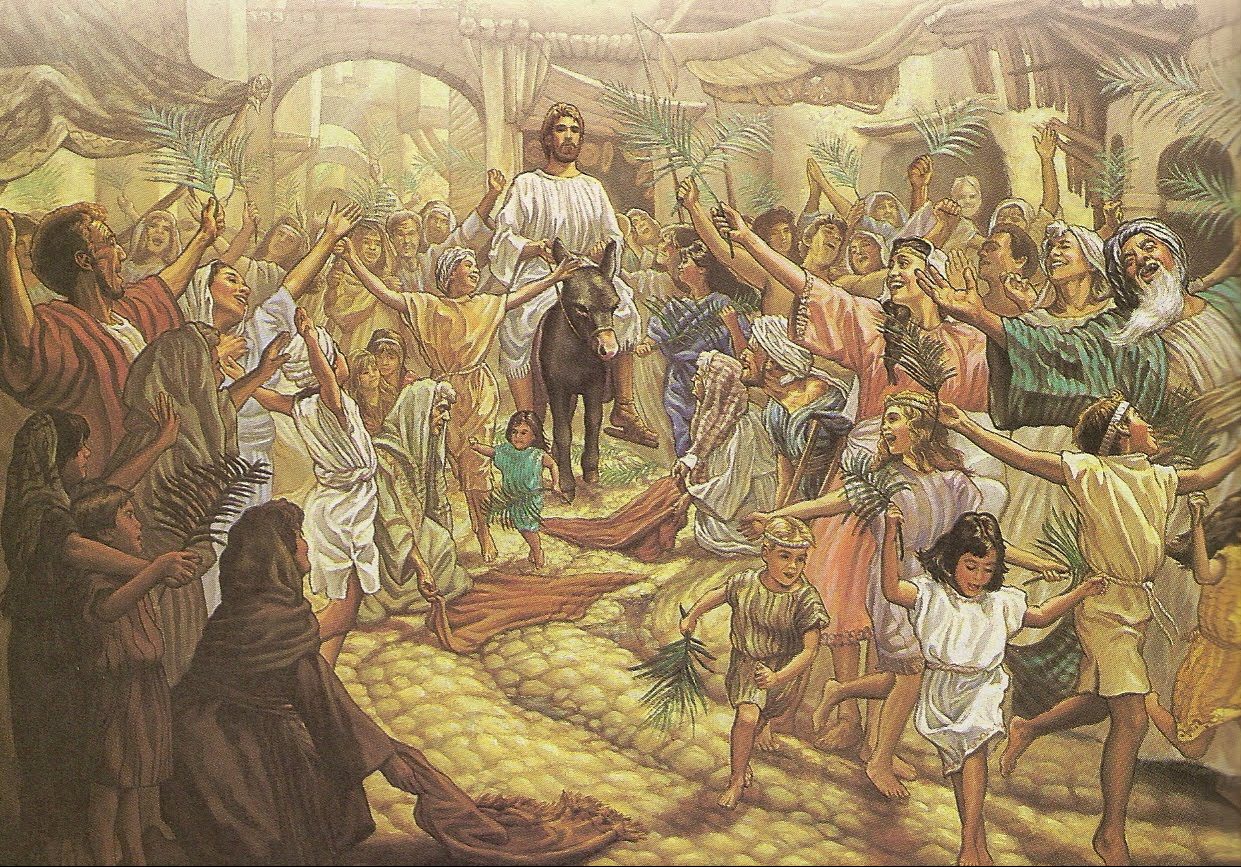
On the first day of the “Holy Week,” we commemorate the triumphant entry of Jesus into Jerusalem. The people removed their cloaks, waved palms, and sang hosannas while Jesus, riding on a donkey, passed by. Removing our clothes is a symbolic act of surrender to the Lord. It is a way of becoming open, confessing our sins, and accepting His offer of salvation. No more, disguise. No more resistance. On the other hand, the palm has been a traditional symbol of victory and rejoicing. (Leviticus 23:40) Thus by laying palms on the path of Jesus, the people acknowledged that in Jesus, there is victory. The donkey is an animal of peace. By riding on a donkey, Jesus showed that He is the prince of peace.

Let us pray that as we come in the name of the Lord, He may shower us with His blessings. May we continue to journey with Jesus, allowing Him to fill our hearts with hope, love, and peace so that we can become an instrument of hope and love to others and peace to all the earth.

Let us weep over our sins and remember that God will always forgive us. We need to welcome Jesus into our hearts in a special way during Holy Week. We can be like the prodigal son and God like his father. We need to love and ask God to strengthen our weaknesses. With God in our hearts, we can do anything.

8 Great Reflections on the Passion

April 1, 2023

Palm Sunday (Year A)
By Fr. Victor Feltes

Today’s Gospel is long, but this reading is rich. So here, briefly, are eight great reflections on the Passion.

  • At the Last Supper, Jesus told his apostles, “One of you will betray me.” They each replied, “Surely it is not I, Lord?” except for Judas Iscariot, who said, “Surely it is not I, Rabbi?” (Rabbi means teacher.) There is a big difference between Jesus just being a teacher and being your Lord.
  • In the Garden of Gethsemane, Jesus lovingly willed to save us but his humanity understandably dreaded the tortures his self-sacrifice could entail. He prayed: “My Father, if it is possible, let this cup pass from me; yet, not as I will, but as you will.” In this, Jesus shows us that we are allowed to pray for any good thing, even for ourselves, if we remain open to God’s will.
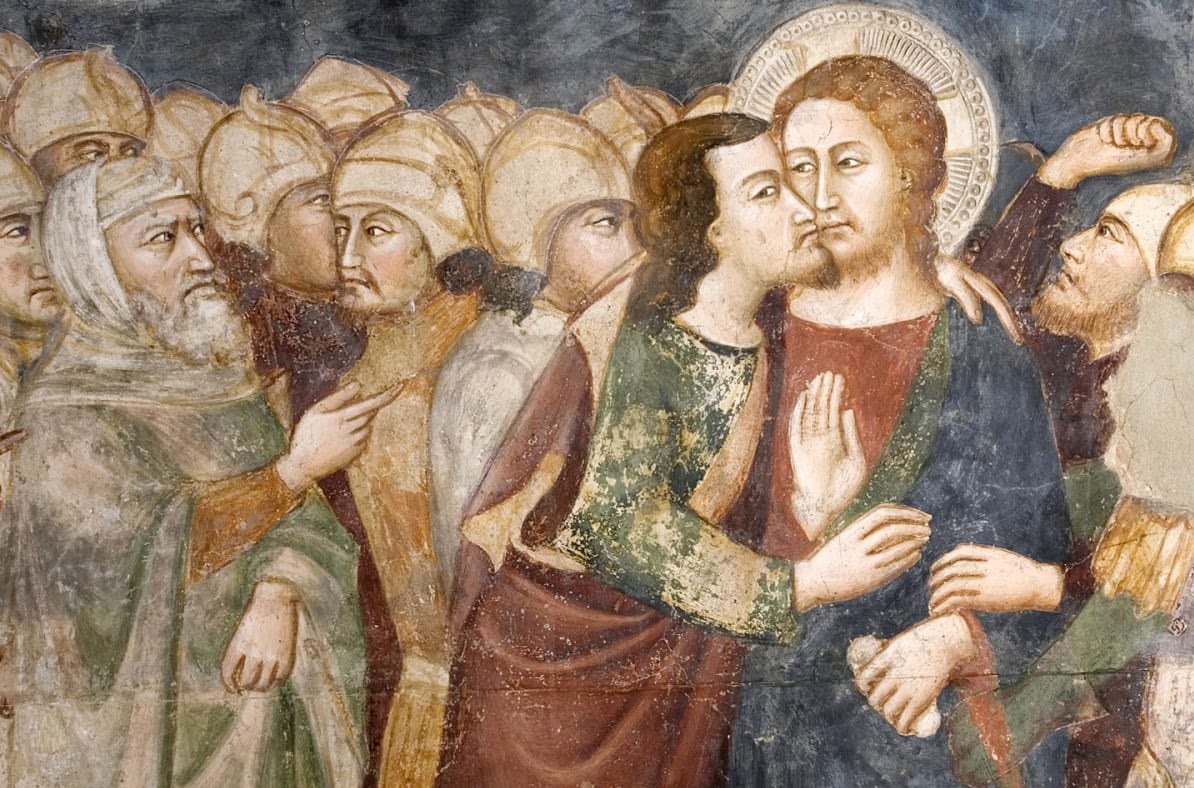
  • When Judas arrived in the Garden, he approached Jesus and kissed him saying, “Hail, Rabbi!” Jesus replied, “Friend, do what you have come for.” Jesus did not say this sarcastically; Jesus would die for Judas. Our Lord remains a friend towards us even if we betray him.
  • When the guards and soldiers laid hands on Jesus to arrest him, Peter struck the high priest’s servant, cutting off his ear with a sword. But Jesus commanded his disciple to sheathe the sword. Christian violence cuts off the ears of our enemies’ servants making them unable to hear the Gospel.
  • At his religious trial before the Sanhedrin, Jesus responded with silence, until the high priest said, “I order you to tell us under oath before the living God whether you are the Christ, the Son of God.” Then Jesus affirmed it was so. Even when the high priest’s judgment was erring, Jesus obeyed his legitimate religious authority.
  • In his trial before Pilate, the governor hoped to let Jesus go: “Which one do you want me to release to you, Barabbas, or Jesus called Christ?” The name “Barabbas” means “the son of the father.” Barabbas was a murderous rebel, a political revolutionary. Like the crowd that day, every generation is tempted to choose a different savior than Christ.
  • On his Cross, Jesus cried out, “My God, my God, why have you forsaken me?” This is the beginning of the 22nd Psalm. That psalm says, “They have pierced my hands and my feet; I can count all my bones.” Not only did this psalm prophesy Christ’s sufferings but also his resurrection, saying, “I will live for the Lord; my descendants will serve you.”
  • Finally, when Jesus died, “the veil of the sanctuary (inside the temple, which separated the place of God’s presence from the rest) was torn in two from top to bottom.” This veil was torn from the top as an act of God. Formerly, only the Jewish priests could even enter the building. Now, today, we as Christians are invited to approach and adore and receive our Lord in his temple.

Let Us Become Stars

January 8, 2023

Feast of the Epiphany
By Fr. Chinnappan Pelavendran

Today is the Feast of Epiphany. Christ our light has come into the world and dispels the darkness. The Epiphany occurred when the magi came to honor the Christ Child. The gifts they brought were rare and expensive. They brought gold, frankincense, and myrrh. These gifts had a spiritual meaning: gold was a symbol of Kingship on the earth, frankincense or incense was a symbol of priesthood, and myrrh the embalming oil was a symbol of death. These gifts point to the future of Jesus.

Today’s first reading talks about non–Jews bringing gifts to honor the God of Israel. The prophet was consoling the people in exile. He wanted them to know that they would be redeemed and restored, and be able to live a new life in their own land. The Messiah would soon rise among his people and his glory would be seen by all. They were God’s chosen people and it was prophesied that the Jewish nation would be the light of the world. The prophecy of Isaiah tells the people that Jesus Christ is God’s anointed one. He is the Messiah and the Savior of the world. In His Church, the New Jerusalem is made up of Jews and Gentiles.

In today’s second reading, St. Paul reveals that God’s plan includes the Jews and the Gentiles. To God, we are all equally important, Jews and Gentiles. There are no second-class members in the Church among Christian believers. St. Paul declares that he has been commissioned by Christ to make this known to the world.

Today Gospel tells us the Magi followed the star that led them to the Child Jesus. The star must have been very bright to allow them to follow it. To them, the light of the star was a symbol of hope, joy, and of peace. Christ enriches those who bring him their hearts.

The Magi came with humble joy in their hearts to visit the Christ Child. Traditionally we are told they were Melchior, Balthazar, and Caspar. God has revealed himself in many different ways. The Bible is full of many examples. The magi were in search of the divine, and their joy was immense when they found Jesus. They followed the star and they encountered God. That tells us that we too have to search for God in our lives. We too should be a light in the world.

Let us be an example to others by actively worshiping Jesus at Mass, by giving a new direction to our lives, let us choose a better way of life. Let us become stars, leading others to Jesus. Let us remove the darkness of any evil around us by radiating the light of Jesus’ love.

Like the Magi, let us offer Jesus our gifts on this feast of the Epiphany and every day.  We can offer the gift of our lives during the Holy Mass and every morning as soon as we get up. The gift of a relationship with God, by talking to him in prayer and listing to him through reading the Holy Bible daily. The gift of friendship with God by recognizing Jesus’ presence in everyone we encounter and getting reconciled to God every night, asking for his pardon and forgiveness for our sins and failures during the day.

God’s Amazing Encouragements for Joseph and Mary

January 8, 2023

Feast of the Epiphany
By Fr. Victor Feltes

Unlike how some imagine the event, the magi were not in Bethlehem on Christmas night or even the following day. (You will notice that our magi statues did not reach our Nativity scene until this Feast of the Epiphany.) On Christmas night, the Holy Family was visited by local shepherds. The shepherds had seen a vision of angels proclaiming the birth of Christ. St. Luke records that Joseph and Mary “were amazed by what had been told them by the shepherds. And Mary kept all these things, reflecting on them in her heart.”

At least forty days later, Joseph and Mary presented Baby Jesus in the Temple to offer a sacrifice for him. When they carried Jesus in, an aged prophet and prophetess named Simeon and Anna came forward to proclaim great things about the child. And again, St. Luke writes that Jesus’ “father and mother were amazed at what was said about him.” Under Old Testament Law, a firstborn son required the sacrifice of a lamb, but if his parents could not afford this, two turtledoves or pigeons could be offered instead. Joseph and Mary sacrificed a pair of birds because they did not have enough money to purchase a lamb. The magi had not yet arrived with their gift of gold.

Sometime after the Presentation in the Temple, magi from the east came to Bethlehem. (Based upon whom wicked King Herod hunted afterwards, the magi may have arrived even two years after Christ’s birth.) The Holy Family, having moved out of the Christmas stable, was now living in a house. And “on entering the house [the magi] saw the child with Mary his mother. They prostrated themselves and did him homage. Then they opened their treasures and offered him gifts of gold, frankincense, and myrrh.” The magi explained how a certain rising star had informed them of this new king’s birth; how the star had preceded them and stopped over this place where the child was. Though St. Mathew’s Gospel does not explicitly say so, Joseph and Mary were surely amazed by this encounter as well.

The shepherds on Christmas, Simeon and Anna at the Temple, and the magi preceding the Holy Family’s escape into Egypt were amazing consolations for Joseph and Mary at challenging times in their lives. Imagine the stress of delivering a baby in a stable after being unable to find any place better. Imagine feeling embarrassment at being too poor to afford the best sacrifice for the Son of God at the Temple. Imagine the anxiety of having to flee to another land to save your family’s lives. One could imagine a person asking in such circumstances “Why is this happening? Have we done something wrong? Is God really with us in all this?” But in the midst of their difficult trials, God gave Joseph and Mary encouraging signs to reassure them that he was indeed with them and that their faithful struggles really mattered.

Our missions may not be as lofty as Joseph and Mary’s, but we can be helped by divine consolations too. In our trials, we can either choose to fall to the temptation of clinging to bitterness and settling for cynicism, or instead be receptive to signs and open to wonders. We can recall in our hearts (like Mary) the great things God has done. We can also pray to God for new gifts of consolation. We can ask to receive his strengthening reassurances, that he is with us and that our personal sacrifices truly matter. As St. Paul says, “God is faithful; he will not let you be tested beyond what you can bear. But when you are tested he will also provide a way [through] so that you can endure it.” God gives us his own Son at Christmas, on the Cross, and in the Holy Eucharist — how will he refuse to give us whatever else we truly need? As he did for Joseph and Mary before us, God will answer our prayers in times of burden with amazing and helpful encouragements.

Good News Needed by Each & All

December 24, 2022

Christmas Mass
By Fr. Victor Feltes

I proclaim to you good news of great joy!” Today is born our Savior, Christ the Lord. Why is his birth such good news? Well, why do people still need Jesus Christ today?

Would you say we presently live in a time of great wisdom? A time of advanced technology? Certainly. A time with more wealth than previous centuries? Sure. But is this a time of great wisdom? Relatively few know how to live rightly, anchored firmly in hope, and thrive. Would you say we live in a time of great heroes? Who would be our heroes now beyond paid athletes or fictional characters with superpowers? No U.S. politician in national office today has an approval above 50%. And even the best leaders among us are flawed. Would you say we live in a time of strong fatherhood? Rather, families are increasingly strained or broken. And many people have never had a good father. Would you say we live in a time of great peace? Bombs are not exploding around us like in Ukraine, but is there peace in our culture and peace in all our souls?

The good news of Christmas, as the Prophet Isaiah foretold in our first reading, is that ‘the people who walk in darkness see a great light; upon those who dwell in the land of gloom a light shines.’ “A child is born to us, a son is given us… They name him Wonder-Counselor, God-Hero, Father-Forever, Prince of Peace.” In our foolish world, Jesus is the wisest teacher whose counsel wondrously changes lives. In our unvirtuous world, Jesus is the only flawless hero; he is God among us. In our world lacking fatherhood, Jesus says he “only [does] what he sees his Father doing”— so Jesus acts and loves like his Good Father forever. And in our troubled world, Jesus is the Lord who would bring us peace, both around us and within us.

In the days of the birth of Jesus, St. Matthew’s Gospel notes a decree had gone out from the Roman Emperor that the whole world should be enrolled in a census. (This brought the Holy Family to Bethlehem.) Caesar Augustus wanted everybody grouped and tallied for his worldly purposes: to tax more efficiently, to draft more men for war, and to dominate more effectively. Beginning with the birth of Jesus at the center of history, God decrees for all the people of the world to be gathered into his Church for his holy purposes. It is not to tax us, but to give us his gifts. It is not for waging wars, but to bring about his peace. It is not to dominate us, but to share with us the freedom of his Kingdom. Like St. Paul says in our second reading, the grace of God has appeared in Christ to save and train us all to reject godless ways and worldly desires and to live temperately, justly, and devoutly in this age, as we await our blessed hopes: the return of Christ, the resurrection of the dead, and everlasting life with him.

On Christmas Day, Divine Providence brought the Holy Family (Jesus, Mary, and Joseph) and the shepherds all together. God’s Providence has likewise brought you and all of us together this morning with the Lord Jesus in this Church. Will you be here next Sunday? I pray the joyful news of Christmas will bring you back again. The Lord who loves you calls you. Our world needs Jesus Christ profoundly and so do you.

Make Room for the Child Jesus

December 24, 2022

Christmas Mass
By Fr. Chinnappan Pelavendran

Once up a time there was a class of small children who wanted to have a nativity play. One of the children, a very tall boy wanted to be a shepherd and carry the sheep on his shoulders, but the teacher decided that he should be the innkeeper who would drive away Mary and Joseph away from the inn. When Mary and Joseph came to the inn, the little innkeeper told them loudly that there was no room for them. Mary turned to Joseph and began to cry. The little innkeeper turn back to them and said, there is no room here in the inn but you can take my room. He showed the spirit of Christmas that there is room for everyone.

Christmas is the feast of God sending us a Savior. The Incarnation of Jesus as the True God and true man was to save us from our sins. As our Savior, Jesus freed us from the slavery of sin and atoned for our sins through his suffering, death, and Resurrection. Every Christmas reminds us that we need a Savior every day of our lives.

Christmas is the Feast of God’s sharing his love with us. Jesus, as our Savior, brought the Good News that our God is a loving, forgiving, and merciful God. He demonstrated by his life and teaching how god our heavenly father loves us and forgives us. All of His miracles were signs of His divine love. At the end, Jesus gave his life and died on the cross to atone for our sins and make us children of God. Each Christmas reminds us that sharing love with others is our Christian privilege and duty. Let Jesus be reborn in our hearts and lives, not only during Christmas but every day. His presence within us will allow us to share our love in words and deeds.

Christmas is the feast of Emmanuel, God living with us and within us. The New Testament begins with the birth of Christ. He has now come to live with us and continues to live with us during our entire life. He lives in us in the sacraments, especially in the holy Eucharist.

Christmas reminds us that we are to bring God to those around us by loving them as Jesus did. This is the best Christmas gift we can give or receive today.

Today the new king is born to us and He is not like any secular king. The first people to find out about his birth are not the royal officials, religious officials, military leaders, or the wealthy elite. The first people to be informed are the shepherds whose social and political status would be among the lowest ranks. The angels announced the birth of Jesus and declared he is the Messiah and the lord. There is no palace or royal household for him, he is wrapped in swaddling clothes and laid in the manger. There is no celebration, only silence. We are aware that Christmas is the birthday of Jesus and we share it too since we are reborn as children of God at our baptism. This is the news of great Joy and he is the great light that has appeared in the world.

When Jesus first came into the world over two thousand years ago, His arrival was to fulfill the promise of God. The Bible tells us that from the Fall of Adam and Eve, God promised to send a redeemer. The people waited eagerly for him. Sometimes they were faithful to God and sometimes they were not. The birth of Jesus is a reminder that God is faithful forever and has not forgotten us. It is a reminder of how much God loves us. It is a reminder that God has reached down to us, so we may reach up to Him with praises and glory in thanksgiving for our salvation.

Let us enjoy the true spirit of Christmas by accepting Jesus the Christmas Baby as our Savior – God. Let us invite him to rule our lives and ask him for the strengthening power of his Holy Spirit to do God’s will every day of our lives. Let us be like the little innkeeper that we talked about earlier, and make room for the Child Jesus in our hearts.

What We Have to Give is Enough

June 19, 2022

Corpus Christi Sunday
By Deacon Dick Kostner

Have you ever wished that you could do more or give more during your life? Sure you have because part of being human is the desire to always try to do more than what you think you are capable of doing. This is not bad for it makes us strive to accomplish more than what is possible in our present condition. The problem is that sometimes this is not possible it might be because of a disability that we have been burdened with. It could be physical, mental, financial. It might be because we see ourselves powerless because of circumstances that appear beyond our control. That is what the disciples of Jesus faced in our “Father’s Day” Gospel Jesus shares with us today.

The disciples face a dilemma in today’s Gospel. Jesus has been teaching a crowd of thousands of people and his friends have come to realize that they have no food to provide for the crowd and no resources to take care of that many people. They search for an answer and help from the crowd but find but a couple of fish and five loaves of bread. They are overwhelmed and they do what we would do and search for a miracle from their friend Jesus. After all he can walk on water and raise people up from the dead. He certainly can take over and solve this problem right?

Is that not what we all do when we are overwhelmed with our life problems? Sure, we pray for a miracle. We look to someone else to take over. Although Jesus could do just that after all He is God, but what does he do? Jesus does not take over but rather he tells his disciples to take care of it themselves. He puts them in charge. He does not allow them to slip out the back door and find someone else to solve the problem rather he empowers them to find a solution and shows them that he believes in them to solve this problem.

The disciples search for an answer and find but two fish and five loaves of bread, which they take to Jesus confessing that this is all they could find. Jesus takes what they have found, blesses the food, and tells the disciples to distribute what they have to the people. They do as he says and guess what, it not only feeds all the people but there is also food left over. Jesus shows them that all they need to do is to do the best they can and then have faith that God will provide them with enough support to solve any problems they may run into.

Let me share with you my true story of how this plays out. The Law School I attended in Chicago required a grade average a 82% or the student would go on probation. If one at any time would go on probation a second time you were expelled. There was one exam for each course for each semester. It was a timed exam and consisted of five or six essay questions which contained multiple issues and rules of law to apply. I always was running out of time and not completing in full all the questions and yes I went on probation the first semester. Pressure was on and I knew this was my last chance. Sweating this out a couple of semesters I made it without another probation until my final year. Just before my semester exam I said a prayer to God telling him I was doing my best but wondered if He really wanted me involved with this profession. The exam day drew near and a met with Bob, a friend of mine after one class to have a beer and forget about the exam day. I confessed to him that I had been on probation before and that I always seemed to run out of time before completing the questions to my satisfaction. He looked at me and said, “Dick, are you out-lining each question before you apply the law?” I looked at him puzzled and said, “I don’t have time to do this.” He laughed and said that I needed to do that first for each of the questions and then go into application of the law for the instructor would see that I had arrived at the issues and knew the law which was 90% of the grade. Well I took his advice and was one of twelve of our class of 200 who graduated.

Today we celebrate the gift God has given us in the Eucharist. His body and blood for us to consume and give us all that we need to find success and fulfillment in this world of problems. This gift requires only that we do the best we can in handling problems of life and then if we offer this up and ask the Father to bless it, that this will be enough! Today is Father’s Day and I know that dads want the best for their children but many times feel powerless in helping their children solve life problems. Jesus gives to us dads the solution. All that we need to do is to try to do the best we can and then offer it to God as a gift and guess what? This, and faith the size of a mustard seed, will be enough! Happy Father’s Day and remember what we have to give of ourselves is enough in God’s eyes!

Encountering the Holy Trinity at St. John the Baptist Church

June 11, 2022

Trinity Sunday
By Fr. Victor Feltes
I am back again at St. John’s this Sunday for the final weekend of our Inspired by the Spirit capital campaign and I have good news to share. Going into this weekend, nineteen households have pledged and their pledges total almost $83,000. From the actual monies received to date, our Diocesan Annual Appeal for next year is already covered. And if all of our campaign pledges are fulfilled, about $54,000 will come back to replenish St. John’s Building Maintenance Fund over the next five years.

That’s a great thing; however, this depends upon people following through on their pledges over the coming years. And things happen, so it’s likely not everyone will fulfill them. So today during announcement time I’ll provide one more chance to fill out or grab a pledge card to make a five-year pledge for our capital campaign. If our actual campaign monies raised over these next five years happen to surpass our $80,000 goal, 80% of that overage will return to St. John’s. Or if you prefer, you can always write checks directly to St. John’s with “Building Fund” in the memo line and we will deposit your entire gift into that St. John’s Parish account.

As I mentioned last week, St. John’s Building Fund was depleted by our interior renovation project which made this church of ours one of the most beautiful in our area. And what I love about our church’s new design is that it’s not only beautiful but meaningful. This design, like everything in the universe, is connected to the Most Holy Trinity. Like Sacred Scripture, our sacred art has multiple true interpretations.

Consider, for instance, the colors of the nave where you sit. Our earth tone floor and walls recall how St. John the Baptist, with suntanned skin and camel hair clothes, dwelt among the rocky ground and sandy hillsides of the arid wilderness. Our blue ceiling down the center is like the Jordan River flowing through the desert. It was in this wilderness where John the Baptist, on more than one occasion, pointed out Jesus to declare “Behold the Lamb of God! … Behold the Lamb of God, who takes away the sin of the world!” In Latin, “Behold the Lamb of God” is “Ecce Agnus Dei,” which is the phrase upon our sanctuary’s arch. St. John the Baptist’s statue in our sanctuary points higher to Christ the Lamb of God. The Baptist said of him, “He must increase, I must decrease.” At Jesus’ baptism the Holy Trinity is revealed.

After Jesus was baptized by John in the Jordan, he came up from the water and the heavens were opened. The Holy Spirit was seen descending in the likeness of a dove and came down upon him. In our sanctuary, the Holy Spirit is seen descending over Jesus; Jesus on the Cross, Jesus in the Tabernacle, and Jesus on the altar. At the Jordan, the invisible Father—still unseen, pointed out his Son from the heavens, like the hand which represents God the Father points to Jesus’ Sacred Heart Statue in our sanctuary. At Jesus’ baptism, the words of the Father were heard: “This is my beloved Son, with whom I am well pleased.”

At our baptisms in the name of the Father and of the Son and of the Holy Spirit, we became children of God, temples of the Holy Spirit, and members of the Body of Christ. St. John the Baptist leads us to this personal union with the Holy Trinity. Our blue ceiling may also be taken to represent the sky. Many churches of Europe and the Eastern Church have blue ceilings. The gold plants featured on our walls have old precedent as well. The walls inside the ancient Jewish Temple in Jerusalem were decorated like a garden, with golden depictions of “palm trees and open flowers.” This is because God’s Temple represents a new Garden of Eden, where God dwells with the human race. Our Catholic churches, like the Temple, represent the whole created universe in union with our God in heaven.

The Bible speaks of three heavens. St. Paul writes in 2nd Corinthians of a man, most likely himself, who either in his body or out of his body “was caught up to the third heaven… to paradise, and heard inexpressible things…” What are those three heavens? The first heaven is our sky, where the clouds float and the birds fly. The second heaven is the outer space beyond it, where the stars and planets shine. But the third heaven is beyond them both, a dimension you cannot climb or ride a rocket to, the very presence of the Holy Trinity.

In this church, we are taken beyond the sky above us and the shining star before us into the presence of the Holy Trinity. In our church, through the waters of baptism we come to this altar of Sacrifice, where through Jesus, in union with the Holy Spirit, we offer glory and honor to our Father. At Mass, we give gifts to God; including our wealth and thanks and praise but, most importantly, the gift of ourselves. And at this altar the graces pour down from heaven and flow forth upon us and out into the world. The mystical river flows both ways. All being and truth flows from the Trinity, and all of creation is called back to God.

St. John’s Church is a beautiful church and its purpose is salvific. I desire, that centuries from now, Cooks Valley’s church will still be here, advancing the kingdom of God. That is why I am supporting St. John’s in this Inspired by the Spirit campaign and I encourage you to do the same.

“Receive the Holy Spirit”

June 5, 2022

Pentecost Sunday
By Fr. Chinnappan Pelavendran

On the day of Pentecost, the Holy Spirit descended with power upon the Apostles in the image of tongues of fire and thus began the mission of the Church in the world. Once they received the Spirit, they went out boldly and preached to all in Jerusalem and elsewhere. Jesus himself prepared the Eleven for this mission, appearing to them on many occasions after his Resurrection.

Jesus asked them to stay together to prepare themselves to receive the gift of the Holy Spirit. The disciples followed the command of Jesus. They as a community gathered together in prayer along with Mary in the Upper Room, awaiting the promised event. It is here they all received the Holy Spirit. This feast of Pentecost is the culmination of the Paschal mystery which tells us of the sending of the Spirit of the Father and the Son on the disciples.

During his apparitions Jesus gives two gifts to his followers, the gift of his abiding peace and the power to forgive sins. He commissions them to carry on his work, empowered by the gift of the Holy Spirit and peace. The Holy Spirit will continue to teach them the message of Jesus. Today is also the birthday of the Church. This Sunday is a commemoration and celebration of the receiving of the Holy Spirit by the early church.

We celebrate this day to recognize the gift of the Holy Spirit, realizing that God’s very life, breath, and energy lives in believers. The celebration reminds us of the reality that we are all having the unifying Spirit that was poured out upon the first disciples. It tells us that the same Spirit is given to each one of us, that we are all baptized by one Spirit into one body, and that the Spirit which raised Jesus from the dead will raise us too. So he said to them, “Receive the Holy Spirit.” With the giving of the Spirit came also the authority to speak and act in the name of Jesus.

If you forgive sins, they are forgiven; if you retain the sins of any, they are retained.” Forgiving sin, reconciling people with God has been the very core of the work of Christ and the Christian mission. The Holy Spirit will teach them the divine knowledge and wisdom of the Father that belongs to Jesus, both the Father and the Son is one in the Blessed Trinity

Being filled with the Holy Spirit, they were given the power of preaching and healing and they spoke in tongues. Thus having received the Holy Spirit, the disciples went out and preached the message of Jesus. Jesus greets his disciples with the gift of peace. “Peace be with you,” he says. Jesus then commissions his disciples to continue the work that he has begun “As the Father has sent me, so I send you.” He breathes the Holy Spirit upon the disciples and sends them to continue his work of reconciliation through the forgiveness of sins.

As we celebrate this great feast of the Church’s fifty days after the resurrection of Jesus, how have we been a sign of reconciliation in our families, in our world, and among people of faith everywhere? Have we been an instrument of God’s peace to everyone we meet? With the faith and trust modeled by Mary, the Mother of God, let us offer our prayers to God this day. Heavenly Father, in your wisdom, please hear and answer our prayers this day. We ask through Jesus Christ, your Son.

Our Upper Room

June 4, 2022

Pentecost Sunday
By Fr. Victor Feltes

Before his Passion in Jerusalem, Jesus desired a gathering place for him and his disciples. He sent Peter and John into the city, telling them to find a certain house and ask the owner of the home to use its guestroom. They did as Jesus asked and found “a large upper room, furnished and ready.”

This famous room, known as “the Cenacle,” was the site of the Last Supper, the First Holy Eucharist or Mass. Here the Risen Lord appeared to his Apostles after his Resurrection. This is where Mary, the Apostles, and other disciples (“a group of about one hundred and twenty persons in the one place”) “devoted themselves with one accord to prayer.” And here on Pentecost, following the Church’s first novena, the Holy Spirit descended upon the disciples in the likeness of separating flames. Then they went forth from there into the world, joyfully proclaiming Jesus to the nations with confidence and power.

Jesus desired his disciples to gather together in the Upper Room. There they meet with him, heard his teaching, and came to know that he is risen. They ate with him and worshiped him. And there his followers socialized, prayed as one, and received the Holy Spirit.

Sometimes people ask, “If God is everywhere, why do I have to go to church?” Yes, there is no place where God is not, but this excuse misses something important. Water is likewise everywhere around us—in clouds, in blades of grass, as vapor in the air—but if you do not wish to die of thirst you are well-advised to drink water from a well or a faucet. Jesus tells us, “If anyone is thirsty, let him come to me and drink.

In the words of the Letter to the Hebrews, “We should not stay away from our assembly, as is the custom of some.” This church, St. John the Baptist’s, is our Upper Room. Here we gather together and encounter Jesus Christ in his sacraments, Here we listen, and worship, and receive his gifts, blessings meant for us and for others in this world. Like the Apostles in the Upper Room, we did not build this room or parish. This holy place has been lent to us by those who were before us, and the Holy Spirit inspires us to care for and sustain it.

This weekend at St. John’s is Commitment Weekend for our Inspired by the Spirit” Capital Campaign. You have probably heard me speak about this campaign before, either at receptions or back on Announcement Weekend. 35% of our $80,000 goal funds our 2022-2023 Annual Appeal and other worthy diocesan initiatives, while 65% the goal returns to us to replenish our greatly diminished building maintenance fund.

Now the maintenance of parish facilities is not a flashy thing. Patching cracks in our parking lot or replacing our furnaces as they fail from old age are less exciting endeavors than when we renovated this church of ours into one of the most beautiful in our area. But without funding for the care and maintenance of the mundane things this parish and its mission will fail. That is why I ask you to join me in making a pledge to this five-year capital campaign.

Our pledging phase ends on June 17th, less than two weeks away. So far our recorded pledges total $60,000, so we have $20,000 in pledges to go. If we happen to raise more than our $80,000 goal, know that 80% of that surplus comes back to our parish. I’ll give you an opportunity to fill out a pledge card today during announcement time before the final blessing. I ask you to prayerfully consider pledging a $3,000 gift spread-out over five years, which (after a 10% initial down payment) works out to $45 monthly (above your usual tithing) for 60 months. If you are blessed to be able to pledge more generously than this, please do. If you can only pledge less, that’s ok too. And if you pledge a certain amount now and three of four years from now your financial circumstances change, you can just let us know and we’ll modify your pledge.

On the first Pentecost, the Holy Spirit inspired Christ’s disciples to go out into the world, sharing Jesus Christ and his salvation with all nations. But realize this mission began in their Upper Room. Please pledge generously to support our Upper Room: St. John the Baptist Parish.

We Celebrate Divine Mercy

April 23, 2022

Divine Mercy Sunday
By Fr. Chinnappan Pelavendran

We celebrate today the feast of God’s Mercy. God revealed His mercy, first and foremost, by sending His only begotten Son to become our Savior and Lord by His suffering, death, and Resurrection. Divine Mercy is given to us also in each celebration of the Sacraments, which were instituted to sanctify us.

Our Easter celebration, from the Mass of the Lord’s Supper on Holy Thursday through the Triduum to the glorious triumph of Christ over sin and death on Easter morning, and indeed through the whole Easter season – it’s all about the Divine Mercy of God. Through God’s mercy, Christ came forth to ransom us and bring us to salvation and our redemption from sin through the Cross of Christ involves the revelation of mercy in its fullness.

The theme of God’s mercy flows throughout today’s readings. The first reading from the Acts of the Apostles recounts how God continued to show his Divine Mercy by the healing power bestowed on the apostles through the Holy Spirit. Just as during Jesus’ earthly ministry God’s mercy was made known through the signs and wonders he worked for those in pain and distress, His Divine Mercy continued to be manifested to the early Church through the similar signs and wonders worked by the apostles – signs and wonders meant to strengthen the faith and bring others to believe.

Today’s second reading from the book Revelations reminds us that Christ is with us always, that his people are surrounded by Christ’s mercy at all times, and especially during times of distress and tribulation. Do not be afraid. I am the first and the last, the one who lives.

In today’s Gospel from John, we hear about Christ coming among his dispirited disciples behind locked doors on the evening of Easter. He bestowed on them the Holy Spirit, breathing into them a new life much as God-breathed original life into Adam in the Genesis creation story. Christ commissions his newly created apostles to go out and convert the world – “As the Father has sent me, so I send you.” He sends them out to continue His ministry of love, forgiveness, and mercy to all the world. In His commissioning, Jesus also institutes what we now call the Sacrament of Reconciliation – “Whose sins you forgive are forgiven them, and whose sins you retain are retained” – clearly a Sacrament manifesting the Divine Mercy of God.

Holy Thursday, Good Friday, the Easter Vigil – the Triduum we celebrated just last weekend – those are the three great days of grace – of the Divine Mercy bestowed on each of us through God’s great love. But the gift of Divine Mercy, the unconditional love of God, extends beyond the season of Easter. It’s manifested not just in the Sacrament of Reconciliation, but in ALL the Sacraments.

The depth of God’s love for us is manifest in the outstretched arms of Christ on the Cross, and He’s calling us to partake of His mercy. But the gift of Divine Mercy is a gift meant for sharing. As we continue our Easter journey, let us embrace and share the great gift of Divine Mercy won for us by our Savior. Let us become the apostles we have been called to be. Yes, the second Sunday of Easter is the Feast of Mercy, but there must also be deeds of mercy, which are to arise out of love for us. We must show mercy to our neighbors always and everywhere.

Running to the Empty Tomb

April 17, 2022

Easter Sunday
By Fr. Victor Feltes

There is a joke about how John ran faster than Peter on Easter. John wins the footrace to the tomb and shouts, “I won, I won!” But Peter taunts him, “Who will ever know?” And John says under his breath: “Everyone will know.

St. John’s Gospel records how when Mary Magdalene told them about the empty tomb, “Peter and [John] went out and came to the tomb. They both ran, but [John] ran faster than Peter and arrived at the tomb first.” When Peter arrives, they both enter in to experience signs and results of Jesus’ Resurrection. If St. John is not highlighting his faster foot speed in order to brag, if his purpose is not to rub it in “Slow-Poke Peter’s” face, why include the detail about arriving before Peter?

Part of this is due to St. John accurately describing his firsthand experience of the empty Easter tomb of Christ. Who did what, when and with whom, are important facts when providing eyewitness testimony. Documenting that the tomb was empty before his disciples saw him alive again clarifies that Jesus’ Resurrection is a physical, historical event. The Risen Jesus is not a ghost, he’s not a vision, he’s not a fantasy. His body is not in the tomb. Christ has died, Christ is risen, and Christ will come again.

Like other verses in Sacred Scripture, the detail about John running faster and Peter arriving after contains a spiritual meaning for us. One disciple arrives earlier, another disciple comes later, but they both meet together at the same holy place on Easter morning. They enter in together and see signs and results of Christ’s Resurrection inviting them to believe and accept that the world has changed. Sin and death do not have the last word. Jesus Christ is Lord.

Today, those of us here are like those two disciples. Maybe you’re a disciple who ran here faster. Or maybe you’re one who has arrived more slowly. Maybe you’ve been waiting here, preparing to enter into Easter, since the beginning of Lent. Or maybe you have not come to this holy place for months or years, until today. Either way, whether you came here first or last, all of us are called and blessed to be here together now.

How shall we respond to Easter? With faith or faithlessness? On the first Easter morning, St. Peter could have chosen to leave the tomb and return to his former life of commercial fishing. St. John, the newly-entrusted guardian of Jesus’ Mother Mary, could have abandoned her and fled far away, never to return. But both men chose to remain with the other disciples and soon experienced Christ alive among them.

I hope we all, from this day forward, will be here together each Sunday. Prioritize your faith above the world, like St. Peter did. Draw nearer to Mary and the saints, like St. John did. Remain with us here at St. Paul’s, as fellow disciples of Christ, to experience Jesus Christ alive among us. Christ is risen. He is risen indeed. So believe in him, accepting how he has changed our world.