Archive for the ‘Feast Day Homilies’ Category

Something God Can’t Do — March 25 — Annunciation

March 26, 2014

Despite God’s infinite power, he cannot force our free choice to love him. (It is a limitation of logic, not of power, that free-choices cannot be forced.) The Lord can invite and beckon, grant gifts of wisdom and liberation, but only we can give our “Yes.”

God accepts our sacrifices and offerings, but even more than what we have he desires the gift of what we are — that is, who we are — our very selves.

The Church is both Christian and Marian. The faithful say, “Not my will, Father, but yours be done” and “Let it be done unto me according to your word.”

God’s kingdom will come in its fullness even despite our stubborn “No” or, in part, because of our free “Yes.” However, let us answer, “Here I am, Lord; I come to do your will,” so that we may personally share his glory, like Mary and Gabriel do today.

The Pentecost Project — Pentecost—Year C

May 18, 2013

Before Pentecost was a Christian celebration, it was an ancient Jewish observance. In the Old Covenant, in the Law of Moses, God commanded his people to bring some of the first grain harvested from their fields to Jerusalem be sacrificed as a burnt offering. This is the reason why Jews from so many distant countries were gathered in Jerusalem on this fiftieth day after Passover. Each Pentecost, the world’s first fruits were gathered and consecrated to the Lord. On one unique Pentecost, the Pentecost seven weeks after Jesus’ resurrection, Jews from every land were gathered by the Holy Spirit, and consecrated to God the Father, through Jesus Christ. By the end of Old Testament era, God had scattered the seeds of his chosen people across the world. On this Pentecost, the first fruits of his harvest are brought into his barn, the Church.

Pentecost can be seen as the beginning of the end of God’s project of salvation because we are now living in the world’s final era. And yet, Pentecost can also be seen as the start of a new divine project that will perdure forever. At the Tower of Babel, mankind endeavors to build a city reaching all the way to heaven. In other words, they attempt to become as gods while rejecting God. The Lord knows that this recurring human tendency leads to self-destruction, for both individuals and societies, so he thwarts their project by confusing their language. On Pentecost, God undoes Babel by allowing all peoples to understand the Apostles’ words, uniting and ennobling them. On this day, God begins in earnest to build up the Church, a new great city in communion with God that reaches all the way to heaven. Though heaven and earth pass away, this city of God, the Church, shall continue forever.

Why did the Holy Spirit come down in the form of fire? God the Holy Spirit, like the angels, is pure spirit and has no physical body. To be seen by human beings they must assume an appearance. Why did the Holy Spirit appear in the likeness of flames? Consider a different question: How many matches does it take to burn down a forest? The fire from just one small match is enough. As the small fire spreads, while remaining itself, it transforms everything around it. The holy fire that descended on Pentecost did not harm or destroy like natural fire would. The apostles may have been alarmed to see flames sailing towards their heads, but they were not burnt. The fire of the Holy Spirit is like the fire of the burning bush that Moses beheld in Exodus. Divine fire does not consume, but glorifies its hosts. Jesus once declared, “I have come to set the earth on fire, and how I wish it were already blazing!” (Luke 12:49) On Pentecost, a fire is lit in Jerusalem that spreads and transforms the world. This fire is the Holy Spirit at work.

All of salvation history was a preparation for Jesus Christ and Pentecost. Now we live in the last age of the world, the age of the Church, the city of God which shall last forever. Each of us is called to play an active part in this project of the Holy Spirit. On Pentecost, just as important as the gift of tongues given to the apostles was the Holy Spirit’s gift of fearless joy. Even after they had seen Jesus resurrected, the apostles timidly hid behind locked doors “for fear of the Jews.” But the reception of the Holy Spirit gave them a happy courage that allowed them to talk about Jesus in public to anyone who would listen. We have received the Holy Spirit also. Then why are we so timid? Why are we shy to introduce others to Jesus, our friend?  Why are we hesitant to welcome others to the Church, our community?  It seems that the Holy Spirit declines to act with power within us until we give him our free consent. Like he waited upon Mary’s response at the Annunciation, so the Holy Spirit awaits our invitation. Open yourself to the Holy Spirit’s will.  Ask him to give you new, powerful gifts. Give him permission to utilize you in the great project of salvation. And then, let us watch what he does through us.

Antes de Pentecostés era una fiesta cristiana, fue una celebración judía antigua. En el Antiguo Testamento, en la Ley de Moisés, Dios ordenó a su pueblo para llevar a algunos de los primeros granos cosechados de sus campos a Jerusalén ser sacrificado como ofrenda quemada. Esta es la razón Judios de muchos países lejanos se reunieron en Jerusalén en este quincuagésimo día después de la Pascua. Cada Pentecostés, las primicias del mundo se reunieron y se consagraron al Señor. Por un Pentecostés especial, siete semanas después de la resurrección de Jesús, Judios de todos los países se reunieron por el Espíritu Santo, y se consagraron a Dios Padre por medio de Jesucristo. Para el final de la época de del Antiguo Testamento, Dios había esparcido las semillas de su pueblo elegido a través del mundo. En este Pentecostés, los primeros frutos de su mies se llevan a su granero, la Iglesia.

Pentecostés se puede considerar como el comienzo del fin del proyecto de salvación de Dios porque estamos ahora viviendo en la época final del mundo. Y, sin embargo, Pentecostés se puede también ser visto como el comienzo de un nuevo divino proyecto que va a perdurar para siempre. A la Torre de Babel, la humanidad se esfuerza por construir una ciudad llegar al cielo. En otras palabras, ellos intentan convertirse en dioses mientras que rechazando a Dios. El Señor sabe que esta tendencia humana recurrente conduce a la auto-destrucción, tanto para los individuos y las sociedades. Por lo tanto, Dios frustra su proyecto a través de confundir su idioma. En Pentecostés, Dios deshace Babel a través de permitir que todos los pueblos a comprender las palabras de los apóstoles. Dios une a las gente y les ennoblece. En este día, Dios comienza en serio la edificación de la Iglesia, una nueva gran ciudad en comunión con Dios, que llega a todo el camino al cielo. Aunque el cielo y la tierra pueden pasar, esta ciudad de Dios, la Iglesia, continuará para siempre.

¿Por qué el Espíritu Santo descendió en forma de fuego? Dios el Espíritu Santo, como los ángeles, es espíritu puro y no tiene cuerpo físico. Para ser visto por los seres humanos deben asumir una apariencia. ¿Por qué el Espíritu Santo aparece en la imagen de las llamas? Considere una pregunta diferente: ¿Cuántas fósforos se necesitan para quemar un bosque? El fuego de un solo fósforo es suficiente. Como los pequeños fuego se extiende, sin dejar de ser ella misma, se transforma todo a su alrededor. El fuego sagrado que descendió en Pentecostés no dañar o destruir como el fuego natural. Los apóstoles pueden haber sentido la ansiedad a ver las llamas que vuelan hacia sus cabezas, pero no fueron quemados. El fuego del Espíritu Santo es como el fuego de la zarza ardiente que vio Moisés en Éxodo. Fuego divino no consume, pero glorifica a su moradas. Jesús una vez declaró: “Yo he venido a traer fuego sobre la tierra y ¡cuánto desearía que ya estuviera ardiendo!” (Lucas 12:49) En el día de Pentecostés, el fuego se enciende en Jerusalén, se extiende y transforma el mundo. Este fuego es el Espíritu Santo en el trabajo.

Toda la historia de la salvación fue una preparación para Cristo y Pentecostés. Ahora vivimos en la última época del mundo, la era de la Iglesia, la ciudad de Dios que durará para siempre. Cada uno de nosotros está llamado a desempeñar un papel activo en este proyecto delEspíritu Santo. En el día de Pentecostés, tan importante como el don de lenguas dadas a los apóstoles fue el don del Espíritu Santo de la alegría sin miedo. Aun después de que habían visto a Jesús resucitado, los apóstoles se escondían tímidamente detrás de puertas cerradas “por miedo de los Judios”. Sin embargo, la recepción delEspíritu Santo les dio un coraje feliz que les permitió hablar de Jesús en público a cualquier persona que escucharía. Hemos recibido el Espíritu Santo también. Entonces ¿por qué estamos tan tímido? ¿Por qué evitamos introducir a otros a Jesús, nuestro amigo? ¿Por qué estamos renuentes a dar la bienvenida a otros a nuestra Iglesia, nuestra comunidad? Parece que el Espíritu Santo se niega a actuar con el poder dentro de nosotros hasta que le demos nuestro consentimiento libre. Como él esperó a la respuesta de María en la Anunciación, del mismo modo el Espíritu Santo espera nuestra invitación. Ábrase a la voluntad delEspíritu Santo. Pídele que le dará nuevos, poderosos dones. Dará el Espíritu Santo permiso usarte más en su gran proyecto de salvación. Y luego, velemos lo que hace a través de nosotros.

Why Didn’t Jesus Stay? — The Ascension—Year C

May 11, 2013

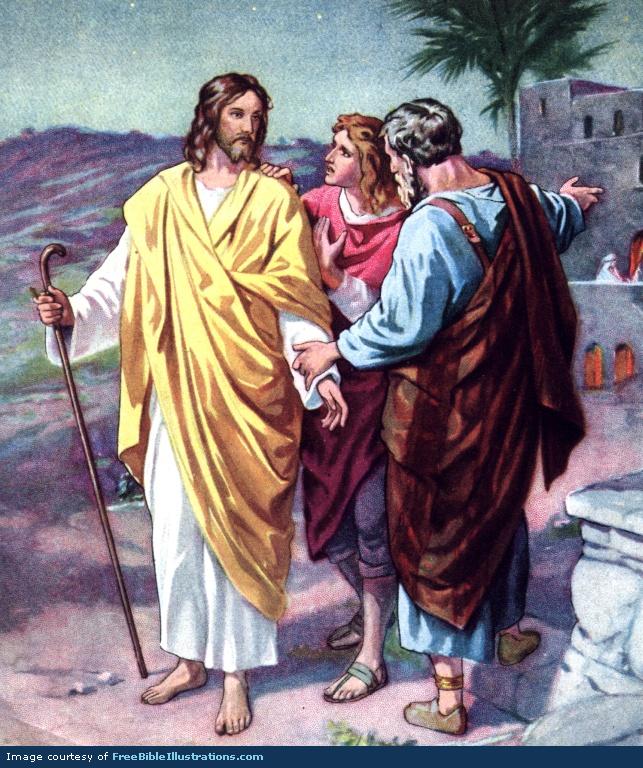
Today, Jesus ascends with his human nature into heaven. He takes his seat at the right hand of the Father. There Jesus enjoys the greatest honor and intimacy with his Father and from heaven he reigns and intercedes for us. Yet I wonder on this Feast of the Ascension, “Why didn’t Jesus remain visibly with us, here on earth? Why not lead us as our king down here so that we could see and hear him?”

Some would argue that Jesus was limited by his humanity—that Jesus’ human nature prevented him from being at more than one place at a time. They would say that Jesus could preach today in Chicago or heal the sick in Rio de Janeiro, but he cannot do both simultaneously—reigning from heaven allows Jesus to be more present to every place and every person. However, Jesus is not limited in this way by his glorified human nature. Several saints have manifested the gift of bi-location during their lifetimes. Most recently and famously, St. Padre Pio was often at more than one place at the same time. Surely, if Jesus’ saints can possess this power then the Lord Jesus would as well. Furthermore, Jesus demonstrates that his humanity can be more than one place simultaneously through his Real Presence in the Eucharist. Though veiled under the appearances of bread and wine, the entire living person of Jesus (including his body and blood, soul and divinity) is truly present in the Eucharist.

So if Jesus can be physically present in as many places as he wishes, why is he not visibly reigning in millions of places in roles here on earth? For instance, why isn’t Jesus the pastor at every parish church and the bishop in every diocese? One major reason why Jesus rejects this approach is that he wants us to share in his work, his mission, and his glory. Jesus wants you and I to have a part in saving our family and friends and the world. Jesus prayed to his Father at the Last Supper, “As you sent me into the world, so I sent them into the world,” (John 17:18) and Jesus told his disciples after his resurrection, “As the Father has sent me, so I send you” (John 20:21). You and I are sent to do and continue the works that we have seen Jesus do. As Jesus once said, “Amen, amen, I say to you, whoever believes in me will do the works that I do, and will do greater ones than these, because I am going to the Father” (John 14:12). It is not easy to live as Jesus Christ in the world, but this is our great vocation. For this reason, we must receive the force from on high. Pray for the deeper gifts that the Lord wants to give you through the Holy Spirit, whose coming in power we will celebrate next Sunday.

Hoy, Jesús asciende con su naturaleza humana al cielo. Jesús se sentó a la derecha del Padre. Allí Jesús disfruta del mayor honor y la intimidad con su Padre y él reina e intercede por nosotros desde el cielo. Sin embargo, me pregunto en esta fiesta de la Ascensión: “¿Por qué Jesús no permanecen visiblemente con nosotros, aquí en la tierra? ¿Por qué no quedarse aquí como nuestro rey para que nosotros pudiéramos verlo y escucharlo?”

Algunos podrían argumentar que Jesús estaba limitado por su humanidad-que la naturaleza humana de Jesús no poder estar en más de un lugar al mismo tiempo. Dirían que Jesús pudo predicar hoy en Chicago o curar a los enfermos en Río de Janeiro, pero lo no puede hacer ambas cosas al mismo tiempo—reinante desde el cielo permite que Jesús sea más presente a todo lugar y persona. Sin embargo, Jesús no se limita de esta manera por su naturaleza humana glorificada. Varios santos han manifestado el don de la bilocación durante sus vidas. Más recientemente y famosamente, San Padre Pio fue visto a menudo en más de un lugar al mismo tiempo. Seguramente, si los santos de Jesús pueden poseer este poder, entonces el Señor Jesús lo haría también. De hecho, Jesús demuestra que su humanidad puede haber más de un lugar al mismo tiempo a través de su presencia real en la Eucaristía. Aunque velado bajo las especies del pan y del vino, toda de la persona viva de Jesús (incluyendo su cuerpo y sangre, alma y divinidad) está realmente presente en la Eucaristía.

Si Jesús puede estar presente físicamente en tantos lugares como él desea, ¿por qué Jesús no reinando visiblemente en millones de funciones aquí en la tierra? Por ejemplo, ¿por qué Jesús no es el pastor en cada parroquia y el obispo en cada diócesis? Una gran razón Jesús rechazado este método es que él quiere que compartamos en su trabajo, su misión y su gloria. Jesús quiere que ustedes y yo tener una parte en salvando a nuestras familias, y nuestros amigos, y nuestro mundo. Jesús oró a su Padre en la Última Cena: “Como tú me enviaste al mundo, yo los envío también al mundo,” (Juan 17:18) y Jesús dijo a sus discípulos después de su resurrección: “Como el Padre me envió a mí, así yo los envío a ustedes,” (Juan 20:21). Ustedes y yo estamos envió a hacer y continuar los trabajos que hemos visto hacer a Jesús. Como Jesús dijo una vez: “Ciertamente les aseguro que el que cree en mí las obras que yo hago también él las hará, y aun las hará mayores, porque yo vuelvo al Padre,” (Juan 14:12). No es fácil vivir como Jesús Cristo en el mundo, pero este es nuestro gran vocación. Por esta razón, debemos recibir la fuerza de lo alto. Ore por los dones más profundos que el Señor Jesús quiere darte a través delEspíritu Santo, cuya venida en el poder vamos a celebrar el próximo domingo.

Baptize Him? — Baptism of the Lord—Year C

March 3, 2013

We can understand why God chose water as his sacramental instrument. Water is a rich symbol. Water cleans things. Baptism, likewise, cleanses from sin. Water is essential to life, all living creatures depend upon it. Baptism, likewise, gives us divine life. Water is ordinary but precious, like Jesus Christ incarnate. But why is Jesus baptized today? He has no sins and he already has divine life, so why does he seek baptism?

From ancient times, water has also been a symbol of death. Deep waters, such as the temperamental sea, can be dangerous. Going underwater is a symbol of death. Baptism, likewise, immerses us in Jesus’ death and his resurrection. Jesus was not born, baptized, nor sacrificed for his own sake, but for ours. He becomes one of us in life and death so that we may be united to him through these things.

When Jesus comes out of the water, God the Holy Spirit descends and rests upon him. God the Father speaks and declares from heaven, “You are my beloved Son, with whom I am well pleased.” When you were baptized, you came out of the water with Jesus. The Holy Spirit came to rest upon you, and the Father has considered you his child ever since. Now, when the Father gazes on you, he sees his beloved Son. Therefore, call on the power of the Holy Spirit in your needs, and always find peaceful rest in the reality of your sonship.

Podemos entender por qué Dios escogió agua como su instrumento sacramental. El agua es un símbolo rico. El agua limpia las cosas. Bautismo, del mismo modo, limpia de pecado. El agua es esencial para la vida, todos los seres vivos dependen de ella. Bautismo, del mismo modo, nos da la vida divina. El agua es normal, pero precioso, del mismo modo Jesús Cristo encarnado. Pero ¿por qué es bautizado Jesús hoy? Él no tiene pecados y ya tiene la vida divina, así que ¿por qué busca el bautismo?

Desde la antigüedad, el agua ha sido también un símbolo de la muerte. Las aguas profundas, tales como el mar tempermental, pueden ser peligroso. El ir bajo el agua es un símbolo de la muerte. Bautismo, del mismo modo, nos sumerge en la muerte de Jesús y su resurrección. Jesús no nació, bautizado, ni sacrificado por su propio bien, sino para el nuestro. Se convierte en uno de nosotros en la vida y la muerte, para que podamos estar unidos a él a través de estas cosas.

Cuando Jesús sale del agua, Dios el Espíritu Santo desciende y se posa sobre él. Dios el Padre habla y declara desde el cielo: “Tú eres mi hijo, el predilecto; en ti me complazco.” Cuando usted fue bautizado, usted salió de la agua con Jesús. El Espíritu Santo se posó sobre ti, y el Padre ha considerado que su hijo desde entonces. Ahora, cuando el Padre mira en usted, ve a su amado Hijo en usted. Por lo tanto, llamamiento a las potencias del Espíritu Santo en sus necesidades, y siempre encontrar descanso tranquilo en la realidad de su filiación.

Great Gifts — Epiphany of the Lord

March 3, 2013

Today we celebrate the Epiphany. Today the magi from the East arrive in Bethlehem. They do not come on Christmas day, but much later, months or perhaps a year later. The Holy Family has moved from the stable into a house. The magi enter the house and find the child with his mother, Mary. (This is still true today, for we will find Jesus wherever Mary is.) The magi bow down before the little one and give him gifts of gold, frankincense, and myrrh. These are strange gifts for an ordinary child, but they are poetically appropriate for Jesus.

Still today, gold symbolizes wealth and power. They give Jesus gold because he is a king, the newborn king of the Jews. Since ancient times, incense has been used in temples and chapels for the worship of God. Jesus should be offered incense because he is not only our great high priest but he is also God. Myrrh is a fragrant spice which people formerly used to prepare dead bodies for burial. Jesus shall be the divine and human sacrifice who will die for us.

The gospel tells us that the magi went back home by another way. Our ways should change after encountering the Christ child. He is our king. He comes not to dominate, but to liberate, yet he demands our obedience. We need to read the gospels and adopt the habits he teaches. Imagine how the world would be different if everyone did this. At first, we can be converted ourselves, but this by itself is enough to make our lives, our families, and our community noticeably better.

The baby Jesus comes to us in the least intimidating way conceivable. Do not fear the infant Jesus, like King Herod did. Do not fear his kingship over you. Let Jesus be the Lord of your life.

Hoy celebramos la Epifanía. Hoy los magos de Oriente llegan a Belén. Los magos no vienen en el día de Navidad, pero más tarde, tal vez meses o un año más tarde. La Sagrada Familia se ha movido desde el establo en una casa. Los magos entran en la casa y encontrar al niño con su madre, María. (Esto es aún cierto hoy, vamos a encontrar a Jesús donde María está.) Los magos se postran ante del pequeño y le dan regalos de oro, incienso y mirra. Estos son regalos extraños para un niño ordinario, sino les son apropiados para Jesús.

Aún hoy, el oro simboliza la riqueza y el poder. Los magos dan a Jesús oro, porque él es un rey, el rey recién nacido.  Desde tiempos antiguos, el incienso se ha utilizado en los templos y capillas para la adoración de Dios. Jesús se debe ofrecer incienso, porque no es sólo nuestro gran sumo sacerdote, sino que también es Dios. Mirra es una especia aromática que la gente antiguamente utiliza para preparar los cadáveres para el entierro. Jesús será el sacrificio divino y humano que va a morir por nosotros.

El Evangelio nos dice que los magos regresaron a a su tierra por otro camino. Nuestros caminos se debe cambiar después de encontrarse con el niño Jesús. Él es nuestro rey. Él no viene a dominar sino para liberar, sin embargo, demanda nuestra obediencia. Debemos leer los evangelios y adoptar los hábitos de que enseña. Imagínese cómo el mundo sería diferente si todo el mundo lo hizo. Al principio, puede ser convertido a nosotros mismos, pero esto, por sí misma, es suficiente para hacer que nuestras vidas, nuestras familias y nuestra comunidad notablemente mejores.

El niño Jesús viene a nosotros en la forma menos intimidante concebible.  No temas al niño Jesús, como el rey Herodes hizo.  No tengas miedo de su reinado sobre ti.  Permita que Jesús sea el Señor de tu vida.

Into Her Hands — January 1 — Mary the Mother of God

March 3, 2013

Why do we call Mary the mother of God? Some Protestants hesitate to call Mary this because they don’t know what we mean by it. It is true that Mary did not give birth to either God the Father or the Holy Spirit. Mary is not an eternal mother-goddess. However, this human woman, whom God created, did give birth to Jesus Christ. Since Jesus is divine, Jesus is God, and therefore Mary is truly the Mother of God. We begin this new year of our Lord celebrating his mother by this awesome title.

Sometimes Protestant Christians fear that we Catholics put Mary ahead of Jesus. This is a silly fear. We celebrate Mary because we celebrate her Son. Mary is important because Jesus is so important. Mary is so wonderful because Jesus is so wonderful. He is the Sun, she is the moon. Her radiance, her beauty, her goodness, her love, they all shine bright, but her light is only a reflection of His.

On this first day of this new year of our Lord, let us entrust our lives into the soft hands of Mary. God the Father entrusted his Son into those kind hands. She will look after us too, and always lead us to her son.

¿Por qué llamamos María “la madre de Dios?” Algunos protestantes temen llamar María esta porque no saben lo que significa. Es verdad que María no hizo nacer Dios el Padre o el Espíritu Santo. María no es una eterna diosa madre. Sin embargo, esta mujer humana, que Dios creó, nació Jesucristo. Puesto que Jesús es divino, Jesús es Dios, por lo que María es verdaderamente la Madre de Dios. Comenzamos este nuevo año de nuestro Señor celebrando su madre por este gran título.

A veces los cristianos protestantes temen que ponemos María delante de Jesús. Pero celebramos a María porque celebramos su hijo. María es importante porque Jesús es tan importante. María es tan maravilloso porque Jesús es tan maravilloso. Él es el Sol, mientras que ella es la luna. Resplandor de María, su belleza, su bondad, su amor, todos brillan, pero su luz es sólo un reflejo de Jesús.

En este primer día de este nuevo año de nuestro Señor, encomendamos nuestras vidas en las manos suaves de María. Dios el Padre ha confiado a su Hijo en las manos amables. Ella cuidará de nosotros también, y siempre nos llevan a su hijo.

Independence Day Homily

July 4, 2011


What is the most important and the most famous sentence ever coined in the English language? I believe it was a declarative sentence, of thirty-five words, published two hundred and thirty-five years ago today.

“We hold these truths to be self-evident, that all men are created equal, that they are endowed by their Creator with certain unalienable Rights, that among these are Life, Liberty and the pursuit of Happiness.”

Like a passage of Sacred Scripture, this sentence from the Declaration of Independence was more profound, and would effect more providential good, than its human authors ever imagined.

In their original context, these words from the Declaration of Independence were written to justify the American colonies’ separation from the English crown. At that time, many people believed in the divine right of kings, that a monarch had been invested by God with supreme authority to rule. There was precedent for this in the Old Testament, where God chose Saul, David, Solomon, and others to rule His people as anointed kings. In declaring that “all men are created equal,” the Founding Fathers were rejecting the idea that some men are born royal while others are born common. They further asserted that God Himself endows every man with certain rights, and that any government which deprives men of these rights may be justly replaced by its people. In this way, the signers justified the American Revolution.

How much did the Founding Father reflect on how their words about the equality of all men applied to men of color, such as those enduring intergenerational slavery? How much did they consider what these God-given rights required for the female segment of mankind? I would say that these words, like a passage of Sacred Scripture, carried truths more profound than their human authors knew.

These were providential words, for they have been, and continue to be, instrumental in the work of advancing and defending the rights and dignity of all people, from conception to natural death, in our country and around the world. Wherever our nation has failed to embody these words, we look back with shame; but wherever we have honored human dignity, these represent our proudest moments. Martin Luther King Jr. called these words our nation’s creed, and like him we have a dream that one day this nation will rise up and live out the true meaning of its creed: “We hold these truths to be self-evident, that all men are created equal, that they are endowed by their Creator with certain unalienable Rights….”

This Fourth of July, let us thank God for this great gift to our country. Let us praise God for endowing each one of us with dignity and rights which every person and every government must respect. And in the future, let us remember and remind our neighbors, that if our country allows government and men to become our gods, human dignity and human rights will be swiftly brushed aside. Like the Psalmist, may our country always say to the Lord, “My refuge and my fortress,my God, in whom I trust.”

The Emmaus Travelers — 3rd Sunday in Easter—Year A

May 7, 2011

Let’s start off with a riddle… Once, a father and his son were driving along in the country together when they got into a terrible car crash. They were both seriously injured and ambulances rushed them to two different hospitals. But when the boy was brought into the Emergency Room, the surgeon on duty saw him and declared, “I can’t operate on him. He’s my son.” How can this be…? The trick of the riddle is that we tend to assume that surgeons will be male. The answer is that the surgeon is the boy’s mother.

There is a similar trick of the mind at work when we hear the story of the two travelers on the road to Emmaus; we always assume that they were two men. It’s not wonder, since virtually every painting of the encounter on the road to Emmaus will show Jesus with two men. For example, look at the relief on the front of our altar. Many people assume that this is a depiction of the Last Supper (but that there are only two apostles shown because we had to crop it down to size.) Actually, this scene is from after His Passion—you can see crosses on the hill in the distance and there are wound marks in Jesus’ hands. What we have here is to two men at the house in Emmaus, shocked to recognize Jesus in the breaking of the bread.

The artistic depictions always show two men [the picture on the right being the only possible exception I could find], however the original Greek does not call them “two men,” or even “two disciples.” It only says there were “two of them” and that one of them was a man named Cleopas. As to the name and gender of the other traveler, the gospel text is silent. Perhaps the second person’s identity is left as a mystery so as to invite any of us to imagine ourselves in their place in this story. This may be the extent of what we can know for certain, but there is an interesting clue from another Gospel that suggests more detail.

In Gospel of John, it says that “standing by the cross of Jesus were his mother and his mother’s sister, Mary the wife of Clopas….” (John 19:25) So we have a Clopas and Cleopas both associated with Jesus. Perhaps these similar names are merely a coincidence, but perhaps Clopas and Cleopas are variations of the same person’s name. If Clopas and Cleopas are one in the same person, then the other traveler on the road was probably his wife, Mary. This Mary was most likely either Jesus’ aunt and the sister of St. Joseph, or one of the cousins of the Blessed Virgin Mary. What we do know for certain is that this Mary stood with Jesus’ mother at the foot of the cross.

Admittedly, it is speculation to say the other traveler was Cleopas’ wife, but if it was, then this Resurrection episode has a much greater poetry. In the Garden of Eden, a husband and wife ate from a tree. “Then the eyes of both of them were opened, and they realized that they were naked.” They felt ashamed and afraid. But in the house at Emmaus, a husband and wife ate the Eucharist, the fruit of the tree of the cross. “With that their eyes were opened and they recognized Him.” They felt joyful and unafraid. In Eden, God moved about the garden with the man and the woman. After the resurrection, Jesus walks with us, both men and women, along our road.

But whether that second traveler on the road was a woman or not, it would be a remain mistake to think that only men were important in the early Church. That would be at least as mistaken as thinking that every surgeon is a male. Jesus Christ chose some men to be the Church’s leaders, and much is said about them in the Scriptures, but He chose to spread the good news about Himself through the witness of women as well.

Though we sing of the “Faith of Our Fathers,” the faith of our mothers has been just as important, if not more, through time. Today,  it is oftentimes mom who takes the forefront in fostering faith in the family, in leading her children to Christ and His Church; through bedtime prayers and Bible stories, by bringing them to Mass and to CCD, in seeing to it that they receive the graces of the sacraments. If you feel like you’re alone in witnessing to the faith in your family, I commend you, and Jesus is proud of you.

There is another trick of the mind when it comes to celebrating Mother’s Day. On Mother’s Day we remember our mothers, who gave us birth and nurtured us, who raised us and put up with us, but we tend to forget about the greatest gift, the gift of our faith. At the Easter vigil the Exultet asks: “What good would life have been to us, had Christ not come as our redeemer?” Indeed, what good would life be to us if after our births we had not also been brought to Christ through the witness of holy women. Who were these holy women in your life? At this Mother’s Day Mass, let us remember and pray not only for our mothers in the natural order, but for each of our spiritual mothers as well.

The Death of Bin Laden — May 3 — Sts. Philip and James

May 3, 2011

Osama Bin Laden has caused the deaths of countless people worldwide, he has spread hatred and division among peoples, and he has exploited religion for these purposes. He has done evil things, and now he is dead. How should we take this news? On Sunday night, some people celebrated in the streets of New York City and Washington, DC. Many people said with unrestrained delight that not a man, but a vermin, or a thing of pure evil, had been exterminated. But what is God’s opinion? What are His feelings on these events? God speaks to us in his words from Ezekiel 33:11: “Answer them: As I live, says the Lord God, I swear I take no pleasure in the death of the wicked man, but rather in the wicked man’s conversion, that he may live.” If God does not rejoice in the death of the wicked, then neither should we.

Our U.S. Special Forces’ successful mission in Abbottabad, Pakistan rightly pleases us in many ways, like in how this achievement may prevent future terrorist attacks or the fact that al-Qaeda is now deprived of their most charismatic leader, but a Christian should not rejoice in the death of a sinner. It should be noted here, that Jesus the Prince of Peace loves peace, but He is not a pacifist. (A pacifist is someone who condemns the use of force in all situations.) Recall that Jesus did not drive out the money-changers and animal-sellers from the temple solely by endlessly asking them nicely. “He made a whip out of cords and drove them all out of the temple area…” Force, even deadly force, is sometimes just and necessary, as I believe it was in Abbattabad this Sunday. And yet, even in wartime, we must not hate those who hate us, nor rejoice in the death of wrongdoers, not even when it’s Osama Bin Laden. The death of a sinner is a tragedy to the heart of Jesus, whose Divine Mercy and Love we celebrated on that same Sunday.

Perhaps someone might hear this and ask, “What difference does it make whether or not I hate Bin Laden or other people I’ve never met? Or what difference does it make whether or not I hate some of the people I actually know?” This is why it matters. You heard Jesus say to Thomas, “I am the way and the truth and the life. No one comes to the Father except through me.” No one comes to the Father, except through Him. Jesus is the way. He is our way to Heaven not just by our saying that He’s our Lord and Savior. Jesus is the way because He is the way we must become. No one comes to the Father in Heaven except they who conform themselves to the person of Jesus Christ. Therefore, if you die hating anyone in your heart, when you come to the gates of Heaven, whether the persons you hate are inside or not, you will not enter in; either you will be prevented from entering until your heart is cleaned to be like Christ’s, or you will never enter in, because you will have decided that you do not want Heaven’s ways, Heaven’s truths, or Heaven’s life.

You’re unlikely to hear the message of this homily said anywhere on TV. Imagine how the world would react if someone went on FOX News or CNN and suggested we shouldn’t hate Bin Laden. If you’ve heard anything like this homily since Sunday’s events, it was probably here at Columbus, through one of your teachers. What makes them different from the world is that they have been formed by the Gospel and a Catholic Christian worldview. Our Catholic Faith is the only thing that frees from the slavery of merely being a child of one’s time. It allows us to see the world more through Jesus’ eyes and to conform our hearts to His. This is important, because if you and I want to enter into Heaven someday, we must be converted into Him.

A Man In Jesus’ Image — Divine Mercy Sunday—Year A

May 1, 2011

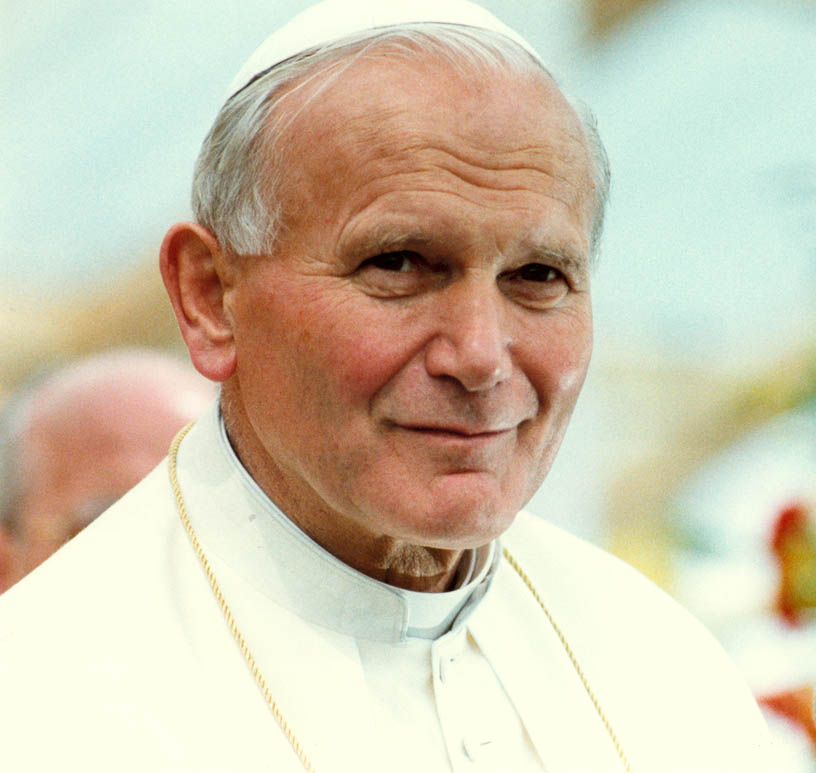
This Divine Mercy Sunday, our Catholic Church throughout the world celebrates and glorifies two men together in a special way. The first is our Savior, our Lord and our God, Jesus Christ; and the second is the great pope John Paul the Second, who is being beatified today in Rome. John Paul the Great, born Karol Wojtyla, is a man who lived in the image and likeness of Jesus Christ.

Both chose the Blessed Virgin Mary to be their mother. One chose her after the loss of his earthly mother as a boy. The other chose her from all eternity. Growing up, both of their beloved homelands were occupied and oppressed by foreign empires. For one it was the Romans. For the other it was the Nazis and then the Soviet Union. As young men, they both worked as manual laborers, in lives hidden from the world. When people encountered their ministries for the first time, many said, “Who is this man, and where does he come from?”

Both men transformed this world, not by leading violent revolutions, not by amassing incredible fortunes, but by speaking the truth, and living the truth, and leading others in doing the same for God. They preached God’s message, and their words gave hope and courage to many, but their words were not accepted by all. Both men had enemies who sought to destroy them, but they forgave, face to face, those who sought their lives.

At the end of their lives, both men were afflicted with great physical sufferings, but neither laid down their crosses. Some onlookers mocked or dismissed them in their afflictions, but those with spiritual insight beheld them to be offering a sacrifice to the Father for the salvation of the world.

St. John tells us that Jesus has done many other signs in the presence of his disciples that are not written in his Gospel. As St. John writes elsewhere, “There are many other things that Jesus did, but if these were to be described individually, I do not think the whole world would contain the books that would be written.”

Among these signs are the lives of the saints throughout the centuries, saints like Pope John Paul the Great. His life was a sign worked by Jesus Christ in our midst so that we would come to believe more deeply that Jesus is the Christ, the Son of God, and that through this belief we may have life in his name.

Why did people love Pope John Paul II so much? Catholics of every country and of all ages loved and flocked to him. Even non-Catholics and non-Christians were drawn to him. What explains this phenomenon? I think the answer is simple. People saw in him a reflection of Jesus Christ’s love for them. John Paul the Second was an icon of Christ and his love.

Every time you saw Pope John Paul, he was smiling. He traveled the nations, and embraced everyone warmly. When you encountered him, you felt loved, even if you were one person in a crowd of thousands. This was the Holy Spirit at work. Although you did not see Jesus you loved him in Pope John Paul; even though you did not see Jesus you believed in him all the more because of him, and rejoiced with an indescribable and glorious joy.

This morning we celebrate a feast day which Pope John Paul II established, Divine Mercy Sunday. What is divine mercy like? What does Jesus’ unfathomable love, which enfolds every one of us here and every person God has made, look like? Through the life of Pope John the Great we saw a partial glimpse of the divine mercy and love of Jesus Christ.

They Ran For Him — Easter Morning

April 24, 2011

When Mary Magdalene came to the tomb early Easter morning, she found the stone removed and the body of Jesus gone. She ran to Peter and John, because her love demanded that something must be done. “They have taken the Lord from the tomb,” she said, “and we don’t know where they put him!” So Peter and John went out and ran to the tomb. They both ran, but John ran faster and arrived at the tomb first; not because he loved Jesus more, but because he was younger than Peter.

Some adults run for exercise, but they are the odd exception. Generally, grown-ups just don’t run; except under special circumstances. For instance, my mother doesn’t jog, but she’ll sprint to answer a ringing phone. She loves her friends and doesn’t want to leave them hanging on the line. So, love can make a grown person run.

One time, when I was a boy, I saw my mother run outside in her nightgown and dive into our swimming pool. My mother saved the life of my younger sister, who was floating there facedown.

In all my life, I can only remember ever seeing my father run once. A few years later, during a family walk around a camping resort in my hometown, where we had never walked before, we came upon a tragic emergency. While Mom did CPR, Dad and I ran for the phone at the front office to call for an ambulance. I ran as hard as I could, but Dad was much faster than my ten-year-old legs. I remember seeing his back, his arms rapidly pumping, and thinking to myself, ‘I had no idea he could move that fast.’ And so, from my youth, I’ve known that for the love of another, or in matters of life and death, adults will run. If something is important to them, they’ll run for it.

Mary Magdalene, Peter and John ran to and from an empty tomb out of concern for a dead man’s corpse. So great was their love for Jesus, so great was their admiration for Him, that they ran for Him, even though they thought He had nothing more to offer them. But we are here this morning because Jesus wasn’t dead. He is risen and still active in peoples’ lives today. (To the latter, I am an eyewitness.) He has much to offer to us, our families, our children. But do we run to Him? Do we run to His Church, His sacraments, worship and teachings; or do we run from them? Whether we run is a question of love, and in a world subverted by sin and temptation in so many ways, it’s a matter of life and death. Jesus is risen. So let’s run to Him.

“He Is Not Here” — Easter Vigil

April 23, 2011

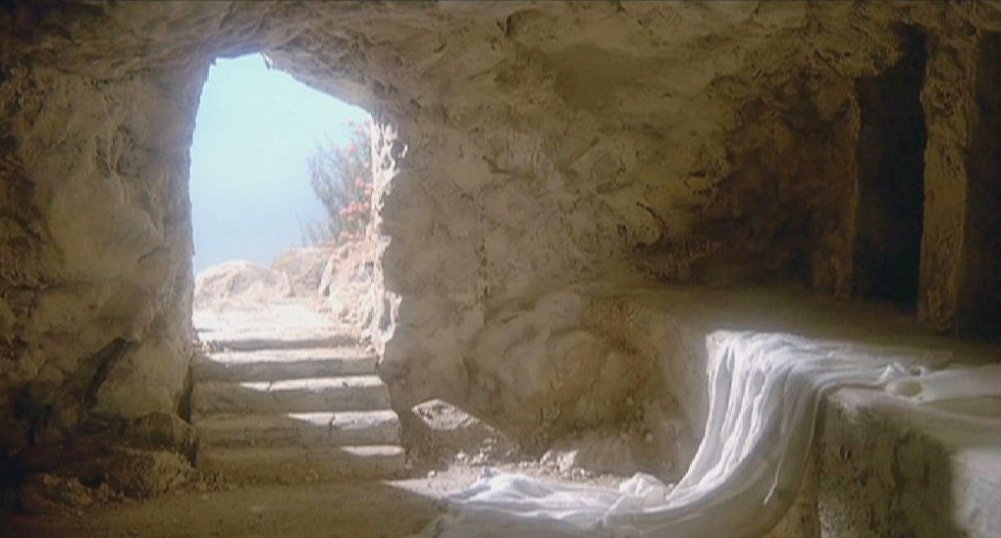
When the women came to the tomb they did not find Jesus, but a radiant messenger. He told them, “Do not be afraid! I know that you are seeking Jesus the crucified. He is not here.…” The tomb was empty, Jesus was not there.

Jesus was present at the beginning of creation, for through Him all things were made. Going forth from the Father’s mouth, He was at hand on earth throughout the ages, achieving His purposes.

He was mystically with Noah, who saved his family from death by building a ship, just as Jesus built the Church to save us.

He was mystically with Isaac, who, though bound and led to sacrifice, was not to be lost forever.

He was mystically with Moses, who freed God’s people from Pharaoh’s demonic slavery by leading them through miraculous waters.

He was mystically with all the prophets, in proclaiming a law to be written on hearts instead of stones, in promising the gift of a Holy Spirit from Heaven, in suffering at the hands of those who refused to hear wisdom.

He has been in His saints, from the least to the greatest, throughout the centuries to this very night. He is present here in all of us who are ‘living for God in Christ Jesus.’

By the all foreshadowings that proceeded His coming, and by the fruitful witness of all His saints ever since, we can confirm the angel’s words, “he has been raised just as he said.”

Jesus is not there in the empty tomb. He is here,  tonight, with us.

“I Thirst” — Good Friday

April 22, 2011

Shortly before He died on the cross, Jesus said, “I thirst.” Why did He say, “I thirst”? He was certainly physically dehydrated. As Psalm 22 foretells, His throat was as dry as broken pottery and His tongue stuck to His palate, but there was more reason for His words than just this.

Last night, at the Last Supper, Jesus had postponed drinking the traditional fourth and final cup of Passover. He said “I thirst” so that they would bring Him wine, so that He could drink, and unite the Last Supper and His Passion as one event. However, there is even more reason for His words than this.

Beside the crucifixes, in all of the chapels, in all of her religious houses around the world, Blessed Mother Teresa had written the words, “I thirst.” She understood that what Jesus thirsts for on the cross is us. Mother Teresa wrote, “Jesus is God, therefore His love, His Thirst, is infinite. He the Creator of the universe, asked for the love of His creatures. He thirsts for our love…” 

As we come to Him on the cross today, let us satisfy His thirst with the refreshment we can give to Him.

“Do This…” — Holy Thursday

April 21, 2011

At the Last Supper, the night before he suffered for us, Jesus took some bread. He thanks to God for it and He broke it. And He declared it to be His body which would be given up for others. Then He offered it to those He loved. When the supper was ended, Jesus took a cup of wine. Again He gave thanks and praise to the Father. And He declared it to contain His blood, blood to be shed for all. Then He offered the cup to His disciples and said, “Do this in remembrance of me.”

At the Last Supper, Jesus ordained His apostles the first priests of the New Covenant. They and their successors would do this in remembrance of Him, throughout the centuries, up to this very night, and until He comes again. When you and I celebrate the Mass we remember Him and what He did, and more than just recalling it, we re-encounter it as that same sacrifice is offered in front of us. But Jesus’ words, ‘to do this in memory of Him’ means more than just coming to Mass.

Jesus is calling and commanding us to do the thing that He is doing. We must give God thanks and praise for what He has given us. We must take our bodies and give them up. We must take our life’s blood and pour it out. And we can do this, for God and for each other, in as many ways as there is to love. The sacrifices of your daily life, at home, at work, and at prayer; the work of washing feet; may not seem significant to you now, but these sacrifices shall your glory in Heaven forever.

As Jesus washed His apostles’ feet He said, “What I am doing, you do not understand now, but you will understand later.” And when He had finished He said, “If I, … the master and teacher, have washed your feet, you ought to wash one another’s feet.  I have given you a model to follow, so that as I have done for you, you should also do.” At the Last Supper, Jesus said to His disciples, “Do this in remembrance of me.” Tonight, He says the same to us as well.

Peter Our Rock — February 22 — Chair of St. Peter

February 22, 2011

If you claim Jesus Christ as your Lord, then listen to His words. To those He sent to preach for Him, Jesus said this, “Whoever listens to you listens to me. Whoever rejects you rejects me.” (Luke 10:16) Today there are many people preaching many different things about what they think Jesus would have us believe and do. These varying opinions are well-intentioned and shared in good faith, by ministers from pulpits and in conversations between friends, but they cannot all be right. Unless it doesn’t matter what we believe or what we do, then this is a big problem. To whom should we listen? Is there anyone today for whom Jesus’ words are still true, “Whoever listens to you listens to me”?     Does anyone teach with authority, such that ‘whoever rejects their teaching rejects Christ?’ If not, we are lost; but if there is, where do we find this person?

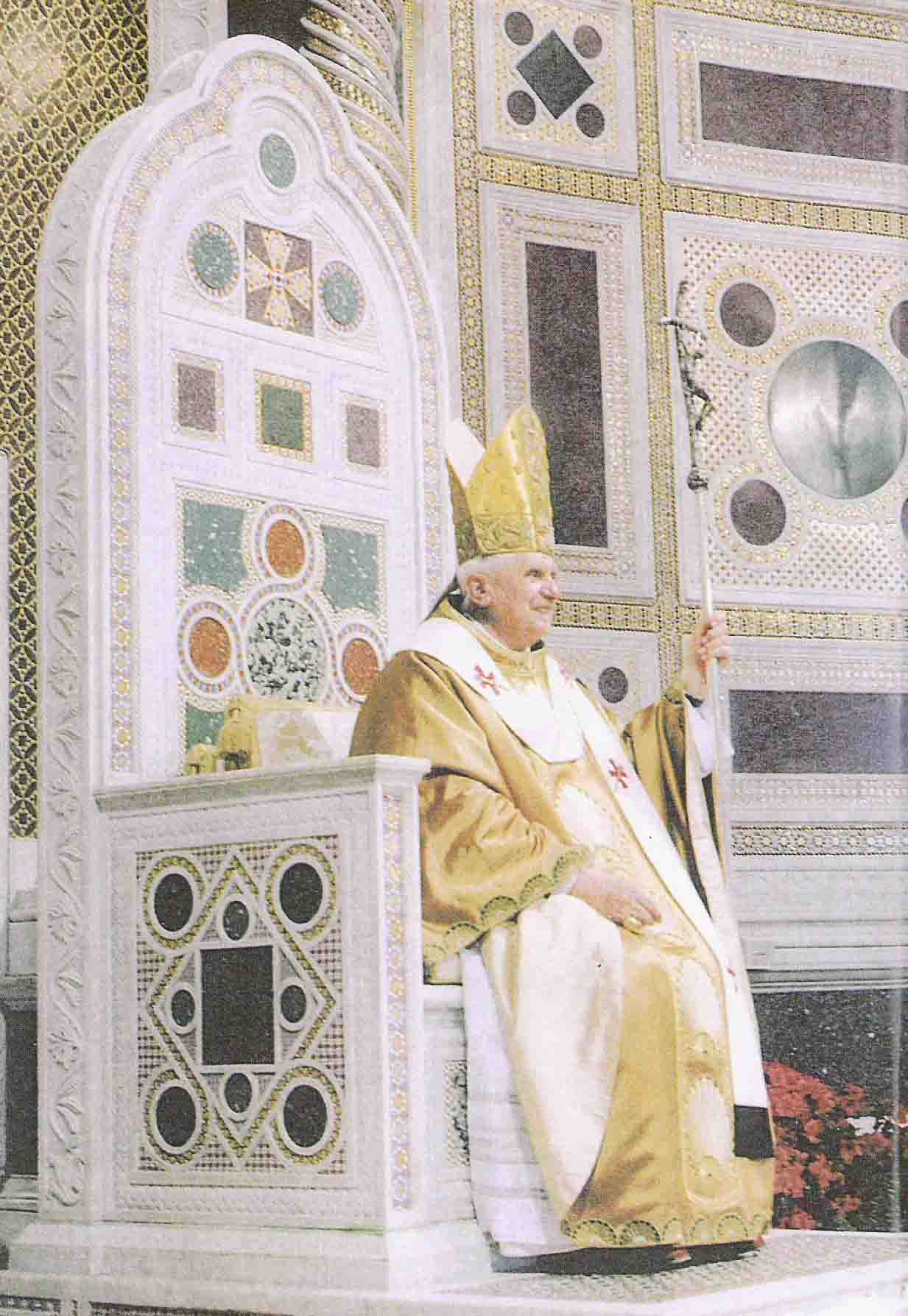
On another occasion, Jesus spoke to the crowds and to his disciples, saying, “The scribes and the Pharisees have taken their seat on the chair of Moses. Therefore, do and observe all things whatsoever they tell you, but do not follow their example. For they preach but they do not practice.” (Matthew 23:1-3) Today teachers usually stand in front of their classes to teach them, but teachers in the ancient world would teach sitting down. Their chairs symbolized their authority, like the “chairman of the board” or the “chair of the English department.” Jesus spoke of the Chair of Moses, the position of the authoritative teaching for old Israel. For His new Church, Jesus establishes a new chair, the chair that we celebrate today, the chair of St. Peter and of his successors the Popes.

St. Peter, like every Pope after him, was only a man. He wasn’t perfect and he was weak in many ways. But Jesus has built His Church upon this rock. When the Pope, as the supreme pastor and teacher of all the faithful, proclaims by a definitive act a doctrine pertaining to faith or morals, he teaches it infallibly. For the good of the Church, the Pope is empowered by the Holy Spirit to teach the faith of Christ without error. Can popes sin? Yes, infallible does not mean impeccable, as various popes in history have shown, yet even these bad popes prove the faithfulness of God in preserving them from teaching errors. Of them Jesus would have said, “Do as they teach, but do not follow their example.”

Jesus knew that living the fullness of Christianity on earth required that He provide us with an infallible guide. Some Christians have held that the Bible alone is this guide, but the Scriptures do not interpret themselves, nor did the Bible books put themselves in the canon. Even the infallible Scriptures require an infallible Church, and an infallible Church requires an infallible voice.

Mark Twain is believed to have remarked, “When I was a boy of fourteen, my father was so ignorant I could hardly stand to have the old man around. But when I got to be twenty-one, I was astonished at how much the old man had learned in seven years.” Of course, it was not the father but the child who had changed, when he finally recognizing the wisdom of his father. Some people reject or ignore Catholic teachings as stupid, like those on the sacred dignity of all human life, or the teachings on human sexuality. Some people neglect the sacraments of the Church for years of their lives. Then, after gaining painful experience, they return with a new love and respect for our Holy Father’s wisdom, and the ways of our Mother, the Church. As wonderful as it is whenever people to come back to the Catholic faith, I would much prefer that you would know the greater joy and peace of remaining ever united to the rock of truth found only in our Church.