Archive for the ‘Funeral Homilies’ Category

His Cause for Joy — Funeral for Michael “Mike” Rufledt, 67

February 28, 2020

If you had the chance to visit Mike over these past months of his final illness, might have come expecting to see a man anguished and crushed in the face of impending death. You might expect to find a quiet, somber, sad, inconsolable house. But if you visited, you encountered a house of joy; tears—but tears of love; and a joyful man, full of peace. How is this possible? It is the Lord. God had prepared him, God strengthened him, and God accompanied him through it all. And this began long ago.

When Mike was 31 years old, his father Ted died, and this event hit Mike really hard. Mike struggled with heavy grief, a grief he could not let go of or move beyond. He confided his pain to his mother and she gave him wise advice: “Pray to the Holy Spirit, Mike.” He took her advice and prayed. And that night or the next, he had a remarkable dream. He saw his father, standing before him, glowing with light, and smiling a large smile. His father did not say any words in the vision, but his presence and appearance were the message. Despite death, Mike’s father lived on, departed but not gone, still very much alive in God. Mike said that he was fine after that, so happy for his father that he was never stressed about his dad’s death again.

When Mike was 37, his mother Toni also died. Sometimes death’s approach is foreseen and we have time to prepare for it, but her death was sudden and unexpected. Mike was the first into her hospital room after she passed. He mournfully asked, not expecting a response, “What happened, Mom?” and kissed her on the forehead. And then, Mike reports, “I could feel her presence in the room.” Her spirit, her soul, was in his midst. And he heard her say, “It’s OK.” As you can imagine, that was incredibly consoling for Mike. About that time, his sister Mary called him on the phone. She was understandably distressed, like he had been just moments before. He told her, “It’s OK. It’s OK.” She said, “It’s not OK!” But he repeated the same words, “It’s OK.” He was too embarrassed, until recently, to share the story of the source of and reason for his peace that day.

Last year, Mike was up at his hunting cabin when he got the call from his doctor. He called with a grim diagnosis: it was cancer, serious cancer; and most likely, in the not very distant future, it would kill him. Imagine how it would be to receive such a diagnosis yourself. Mike felt like you might imagine. As he drove back home to break the news to Patti, he prayed, “I really need you now, Lord. You’re going to have to help me with this one. Let’s make the best out of this that we can.” To either miraculous recovery or death, they would take this journey together. In that hour Mike was not giving up, but surrendering himself, entrusting himself, to the Lord Jesus. And by the time he arrived back home to the farm, Mike felt peace, an incredible peace that remained with him through the months, weeks, and days that followed. Mike said towards the end of his illness. “[The Lord] really took the reigns on this one. And he stepped up immediately. He’s always there, but he went overboard on this one. I couldn’t thank him enough. He’s there for us all the time, all we have to do is ask. This has been a wonderful journey.

This Wednesday, we were marked with ashes for the beginning of Lent, for we are dust and to dust we shall return. Today we come to a Good Friday; not because death is good—death is not good—but because it is a more than OK thing to die with Jesus Christ. His life, passion, death, and resurrection—it’s all real, it’s true, and Mike’s great wish, then and now, is that you will believe in it, too. Jesus has given us the signs we need, so repent and believe in the Gospel.

The Great Restoration — Funeral for Donald “Don” Sokup, 76

January 15, 2020

Today, St. John the Baptist Parish is humbled, honored, and pleased to be able to offer our greatest prayer, the Holy Mass, for Don’s soul. We earnestly hope that our prayers will be a blessing to him, and a consolation to you, who know and love him best. A life like Don’s has many, many parts. And no brief funeral homily can examine or present them all. But just as you can look at a machine and draw some conclusions about the engineer who designed it, so parts of our lives can reflect truths of our Maker.

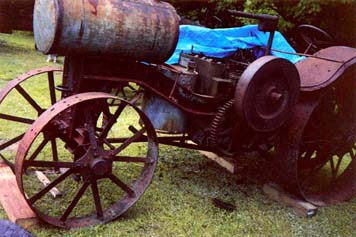
In the June/July 1996 issue of Gas Engine Magazine, a publication dedicated to “preserving the history of internal combustion engines,” there was an article entitled “Titan with a Top.” It was authored and submitted by a gas engine enthusiast from Elk Mound, Wisconsin: a Mr. Don Sokup. The titular Titan was a tractor, a 10-20 Titan tractor, manufactured in 1918. When Don found it, it was broken, buried, and decayed; the head of the engine had been buried in dirt for who knows how long. Most people said it would never run again, but Don believed he could restore it. This first picture is what it looked like, unearthed but dead.

After a year of hard labor,” Don wrote, “she came back to life and now purrs like a kitten. In the photo [below], you can see what a difference all my hard work made.” Don noted, “the top [the new red roof] is my own invention.” His resurrected and restored tractor was made greater and more glorious than it had been before. This is what our divine maker and restorer desires to do with each of us.

As our first reading from the Book of Wisdom says:

“The souls of the just.. seemed, in the view of the foolish, to be dead; and their passing away was thought an affliction and their going forth from us, utter destruction. But they are in peace… and their hope full of immortality…”

Jesus declares to us in our Gospel:

“This is the will of the one who sent me, that I should not lose anything of what he gave me, but that I should raise it on the last day.”

We heard St. Paul teach the Romans:

“If we have grown into union with him through a death like his, we shall also be united with him in the resurrection. … [If] we have died with Christ, we believe that we shall also live with him.”

May the words of our psalm today be our prayer, for Don and for ourselves:

“Preserve my life and rescue me;
let me not be put to shame, for I take refuge in you.
Let integrity and uprightness preserve me,
Because I wait for you, O Lord.”

As we commend Don’s soul to Jesus, entrust yourself to our good Lord as well, so that in Christ’s Resurrection we may all be gloriously restored and happily reunited one day.

Rose in His Garden — Funeral for Rose “Rosie” Schindler, 90

December 17, 2019

After seeing ninety-one falls and ninety springs, Rosie has come to her funeral day. Today we pray for her soul with our greatest prayer, the Mass, that Rosie may rise to glory. A full Christian life like Rosie’s, married sixty-seven years, bearing five children, ten grandchildren and fifteen great-grandchildren, cannot be fully captured in one brief homily. But by taking one aspect of her life and holding it up in the light of Christ, we can see truths about her and God and us.

Rosie has many interests and loves, the farmstead, this parish, her family, her friends, but her hobby of first note was gardening. I’m told that Rosie had a huge garden and loved her flowers. She delighted in her plants, the beauty of their flowering, in the goodness of their fruits: raspberries, strawberries, blue berries, and blackberries: even crab-apples had their pleasing place for her. It is hard work to cultivate a garden well, but she rejoiced in her results.

Now something Rosie could have done, had she preferred it, would have been to raise just a single plant; but she wanted more than just one. Or, Rosie could have chosen to grow only one variety of plant in her huge garden; a mass of plants all uniform, every one the same. But what gardener does this? Raising just a single plant, or having just one breed of plant, is not what God does either in the garden of this world. Listen to these words of “the Little Flower,” St. Therese of Lisieux, about the divine gardener’s design:

“Our Lord showed me the book of nature, and I understood that every flower created by him is beautiful, that the brilliance of the rose and the whiteness of the lily do not lessen the perfume of the violet or the sweet simplicity of the daisy. I understood that if all the lowly flowers wished to be roses, nature would lose it’s springtime beauty and the fields would no longer be enameled with lovely hues.”

God the Father did not plant his Son into the world to raise him up alone. God plants and tends and grows verities of people with Jesus. Jesus possessed the fullness of the beatitudes in their beauty, while we (in greater or lesser measure) bear blossoms and fruits of humility, mercy, purity, & sacrifice.

But what if I am struggling to live and grow because I’m not planted in his good soil? What if my behaviors are choking off the life of my neighbors in the garden? What if I am unfruitful because I have refused to be pruned? What if I am in danger of one day being uprooted as a weed? Then I must allow myself to be replanted and pruned by Jesus through his sacraments and through my choices, cooperating with the divine gardener, growing day-by-day, until my fall and harvest comes.

Look at these flowers donated for Rosie’s funeral. They have a variety of colors and flower types and the church is more beautiful for their uniqueness and diversity. Likewise, there is a is place for each of us in this church. Today we mourn yet rejoice in a beautiful Rose. May this day cause you and me to live in Christ, grow and blossom in our Lord, and bear sweet fruits in him as well.

Our Partner at the Table — Funeral for Lucille Meier, 86

December 2, 2019

Today, St. Paul’s Parish is humbly honored to be offering our greatest prayer, the Holy Mass, for Lucy; a wife of 66 years, a mother of seven daughters, a grandma to 22 grandchildren, and a great-grandma to 11 great-grandchildren. May Jesus Christ, present in the Holy Eucharist and everywhere in our world, give peace to you all. No funeral homily can fully reflect the beauty and mystery of a faithful Christian life, but the facets of our lives can point to Christ and illustrate truths about him and us.

One interesting thing I’ve learned about Lucy is her skill at cards, especially Bridge, which she played here in Bloomer for years. And not only was she a “card-shark,” but Lucy played in a noteworthy way: she never criticized her partners. As a Bridge partner and as a wife and mother, she might roll her eyes at someone’s particularly dumb move, but she never berated them. Lucy was merciful with others and their errors. She never said, “I told you so,” but remained to support them in a quiet way. And Lucy had such an excellent mind at Bridge that she could carry people to victory. Even in her later years, when her mind was weakened, Lucy could still play cards and pull out a win for her partner. Jesus is like that too.

Jesus partners himself with us in a bid to win our salvation. Jesus wants us to play faultlessly without flaw, but what does he do when we sin? He does not berate us. “The Lord is kind and merciful.” Jesus is for us. Now he is not indifferent to seeing our wrongdoing; and if we give up on playing hands with him, if we walk away from the Bridge table, we’re lost. But if we come back and keep partnering with him, Jesus’ sharpest of minds can finds ways to lead us to a shared victory. If Jesus is for us, who can be against us? By cooperating with his love, we win overwhelmingly through Jesus Christ who loves us.

As Jesus tells us in the Gospel, “Do not be afraid any longer, little flock, for your Father is pleased to give you the Kingdom.” Like the Prophet Daniel writes in our first reading, the Lord desires to raise up many, North and South, East and West, to eternal life. So partner with Jesus, remain at his table, or make a good confession to return to this table, and keep fearlessly striving for him.

Lucy loves Jesus Christ. Quite recently, Thor arranged for a Communion minister from this parish to bring our Eucharistic Lord to Lucy in her memory care unit. He tells me that Lucy could no longer speak, but her face clearly spoke of her love for the One who was held up before her. And she smiled at Him.

St. Monica, in her last dying days, told her son, St. Augustine: “Bury my body wherever you will…. Only one thing I ask of you, that you remember me at the altar of the Lord wherever you may be.” So pray for Lucy, and partner with Jesus Christ like she did, so that we may all enjoy his victory together forever.

A Well-Nourished Tree — Funeral for Lois Eastman, 93

November 9, 2019

I offer my personal sympathy and the condolences of St. Paul’s parish at the passing of Lois, whom you know and love. In this church, 69 years ago, Lois married Jerry, her husband of 42 years. They went on to be blessed with six children. Today, we pray for Lois to have a special place among God’s children at the wedding feast of Heaven. No brief homily can capture the full mystery of a Christian life. At funerals, I just try to preach about one true aspect of the departed person’s life that reflects an important lesson for us with Jesus Christ and his Church.

Lois’ family told me a number of stories about her, and one theme I noticed was her fierce independence. For many years now, until quite recently, Lois always lived on her own. Not long ago, when her children suggested she use something to help her keep her worsening balance, she replied, “Canes and walkers are for old people.” Lois was 93 years old. Lots of people are set in their ways or stubborn, but here’s the really remarkable thing: not long after that remark to her kids Lois actually took their advice and started using a cane. In this and other things, Lois’s independence did not prevent her from accepting the help she needed.

Years before she absolutely needed a cane, Lois had trouble negotiating steps. But she would drive somewhere, by herself, with a plan: ‘someone will help me up and down the stairs when I get there.’ She would show us and say to someone she saw, “Hey, you over there, can you help me?” If the streets were icy in the wintertime, she would stand by her car until a person came along to help her up the curb and across the sidewalk to where she was going.

Lois was fiercely independent, but she acknowledged her need for help – and Lois knew she needed Jesus. Lois prayed every night, and until a couple years ago went to Mass every day, every day of the week except Sunday. (That’s because she went to the Sunday vigil Mass on Saturday night.) She sat in front pew to hear Jesus’ word and receive his very self. Lois knew that other people needed him too, so she would pick people up to bring them to church and brought our Lord in the Holy Eucharist to others at their houses or nursing homes.

We all want to be free. We all want our lives to be full and fruitful. And Jesus wants that, too. But people imagine that living their best life means keeping Jesus away while we do our own thing. Do you keep Jesus at arm’s length? Hear then the Parable of the Solitary Tree:

Once upon a time, there was a tree. This tree wanted to be free, to be its own tree, free to do its own thing, and not rely on anyone. So it told the Sun to go away, along with the rain clouds above it, the air all around it, and the ground beneath it. And the tree soon found itself in cold darkness – thirsting, gasping, and falling. Realizing its serious error, the tree asked, the tree begged them all to return, and they returned to the tree; which then lived and grew and produced much fruit.

In the same way, you and I were never meant be completely independent. Almighty God, the source and the sustainer of the universe, is not a solitude, but a Trinity, a loving communion of persons. So we are most fully ourselves when we’re connected to God and each other through Jesus Christ.

Pray for Lois, but do not fear for her. You know how she loved and relied on Jesus. And if you’ve been away from Jesus, I urge you to call him back and return to his house, his Church. Do not be afraid to rely on our Good Lord. To quote one of Lois’ favorite songs:

If you wonder how long he’ll be faithful
I’ll be happy to tell you again
He’s gonna love you forever and ever
Forever and ever, amen.

The Master-Weaver — Funeral for Goldean Gehring, 93

August 1, 2019

This morning, our parish is honored to be offering our greatest offering, praying our greatest prayer, the Holy Mass, for our own Goldean. May it help her soul to Heaven, and console and strengthen you and me who are called to follow Jesus on the same journey. The full fabric of a person’s life is not reducible to a single thread, be it a job, a pastime, or a hobby. But the threads of a Christian life each lead back to our master-weaver. This homily will follow one such thread.

As you know, beginning at a very young age, Goldean sewed (and later knit and crocheted) throughout her entire life. At one point, her husband Ernie said ‘you should start a list to keep track of how many things you make.‘ That was about 275 sweaters ago. She and close friends would knit and sew together, with their club rotating from house to house, sharing their precious patterns and their congenial company. Goldean was pleased to create and to freely give. She made stocking hats for servicemen deployed to the Middle East for Operation Desert Storm, where nights can be cold and helmets uncomfortable. She made shawls, scarves, and mittens. She also made clothes for her family. Kathy says mom made her dresses and sewed her clothes. Goldean made clothes for her sons, Tom, Pete, and Steve as well. Everything was made in triplicate –whatever one got they all did.

This is like what our Father, our Creator, does for us in Christ. At the beginning of this Mass, Goldean’s casket was draped with the pall, a symbol of her having been clothed in Christ at her baptism. As St. Paul’s wrote to the Galatians: “Through faith you are all children of God in Christ Jesus. For all of you who were baptized into Christ have clothed yourselves with Christ. There is neither Jew nor Greek, there is neither slave nor free person, there is not male and female; for you are all one in Christ Jesus.

God is the master-weaver, who would clothe us all in Christ. Without destroying our precious and unique individuality, our Father desires each one of us to strikingly resemble our brother, Jesus Christ. This resemblance is not merely an external thing, like clothes or a costume that goes on and off. Jesus would transform us within. In our Gospel, Jesus says, “Whoever eats my Flesh and drinks my Blood remains in me and I in him… The one who feeds on me will have life because of me… And whoever eats this bread will live forever.” Goldean rejoiced to receive Him in the Holy Eucharist, and so we rejoice with hope today.

I want to thank Ann Bowe for reading the funeral readings for us today. Ten minutes before the Mass began, I learned that the person who was going to read today, through a misunderstanding or miscommunication, mistakenly thought this funeral was tomorrow. When my server, Donnie Stoik, found and asked Ann to read, she remembered that Goldean had once asked her to read at her funeral. It appears that Goldean is receiving special favors this day.

But pray for her. When I die I want the people who love me to pray for me. Pray that Jesus may tailor any alterations that remain necessary for her soul so that she may fit perfectly into Heaven. And let us be conformed to Jesus Christ; through our daily prayer to him, through frequenting his sacraments, through his holy word, and through a life-long friendship with him, so that we may not be found naked at our judgment on the last day, but gloriously clothed in Christ for ever.

The Highway — Funeral for Alvera “Veda” Hassemer, 88

July 26, 2019

St. Paul’s parish is honored to offer our greatest prayer, Christ’s sacrifice, for Veda. We also hope our prayer may be a consolation to you, who know and love her best. Veda was member of our parish throughout her life, though I never had an opportunity to meet her. For the last couple years she lived in a Chippewa Falls memory care-facility, but her children have told me some of her story. Veda’s Catholic faith, I am told, was the most important thing in her life. Her devotion to our Lord is reflected in today’s readings, which she pre-selected herself for her funeral. I often make note when I preach at funerals that no brief homily can capture the fullness and mystery of a faithful Christian life. But the features and details of such lives can help reveal the truth of Jesus Christ and his Gospel.

When Veda and Arnie got married in 1952, they settled on a dairy farm; accepting the hard, demanding work that comes with milking cows. It happens that their farm was situated a literal stonesthrow away from St. Catherine’s Catholic Cemetery, where Veda’s body will be buried today. Arnie and Veda lived and worked upon the dust of this earth, and in this same dust their earthly remains will lay side by side. But the toilsome labor of farm life and the lifeless stillness of the grave are not the sum of their story. Between the farm and the cemetery there is a road, Highway 64. Arnie and Veda took that road several miles to a new home, here in Bloomer. They did good in this community; he founded his Shoeland and sold his cookies, she nursed at Maplewood and maintained the house, and together they loved and blessed their children.

I’m told that Veda loved animals. Especially, four-legged fuzzy ones. Cows and horses were not her favorites though, and not only because of their lack of fuzz. When her son Michael was two years old, he wandered out near a horse. The horse reared up to kick him, potentially fatally, but Veda intervened. She stretched out her leg into the horse’s path and took the blow. She saved her son and bore the mark for the rest of her life.

Christ is the Good Shepherd, and we are his fuzzy, four-legged sheep. When we were threatened by eternal death, he intervened. He stretched out his limbs and took the blow. He saved us and bears the marks in his body to this day. Our lives are not reducible to a short journey of toil to the grave. Jesus Christ shows us a way, his narrow road, in between. That humble road, his highway, leads to a whole world above inhabited by billions who continue to do good. Jesus would invite us to a new home with him there, until our bodies and this broken world is someday resurrected and restored in him. “Therefore, our God, we give you thanks and we praise the majesty of your name,” and our sadness at Veda’s passing is lightened by our faith and hope in our Lord and Savior, Jesus Christ.

The Great Carpenter — Funeral for James “Jim” Rogge, 55

July 10, 2019

St. Matthew’s Gospel tells us that St. Joseph, the foster-father of Jesus, was a carpenter or craftsman by occupation. He supported his family, both wife and child, as a carpenter, a woodworker, or perhaps a mason, and a builder. And, as his son grew older, Joseph taught him his trade. We read in St. Mark’s Gospel that when Jesus returned to preach in his hometown, the people of Nazareth asked, “Is he not the carpenter, the son of Mary?” Odds are that Jesus the Nazarene was personally well-familiar with the work of preparing timber for his uses.

Every log comes to be from a once-living tree, from a natural canopy or tent of foliage over the earth. But every round log to become fit for the craftsman’s purpose, such as to become a portion of his dwelling place, must be transformed from its original, natural, unfinished state. Before the advent of modern sawmills, this difficult task was done up-close, by hand. First, the rough, brittle, dead bark must be stripped away. In life, this bark served as a protective layer against our imperfect, trial-some world, but in this stripping process this layer is removed and discarded into the craftsman’s fire. From there, the log of wood is hewn (perhaps flattened, notched, or whittled down) to fit its intended purpose. When the carpenter desires to erect a building, each piece, each log or plank, is made to fit with its neighbors, so that the builder’s structure may stand solidly and harmoniously as one. And the greater the carpenter the greater the perfection they desire in their work.

Our Lord Jesus Christ is a carpenter. He is the greatest carpenter. And his work material is the wood of humanity; that is, you, and me, and Jim. The Lord would shape us as he has done with others since ancient times: laboring personally, up-close. As King David said in the psalm: “He guides me in right paths for his name sake. I fear no evil; for you are at my side.” But we build up layers of bark against him and the world, because we’re afraid to trust or we love our faults, yet Jesus doesn’t give up. Our rough, brittle, dead bark must be stripped away, in this life or hereafter.

We must allow Jesus to befriend us – it is supremely important that we befriend him – for as Daniel writes in our first reading and St. Paul in our second, a resurrection and a judgment awaits us all. But if we do befriend the Lord, “we know that [when] our earthly dwelling, a tent, should be destroyed, we have a building from God, a dwelling not made with hands, eternal in Heaven.” As St. Paul told the Ephesians, “Through him the whole structure is held together and grows into a temple sacred in the Lord; in him you also are being built together into a dwelling place of God in the Spirit.

You probably know of Jim’s faith in Jesus, of his strengths and his weaknesses. Pray for him, that he may be hewn and perfectly fitted with our brothers and sisters in Heaven. And today at this altar, renew your commitment to Christ, so that we and he may remain in the house of the Lord, the master craftsman, forever.

Returning to Dust & Rising From the Ashes

March 11, 2019

Funeral Homily for Daniel G. Zwiefelhofer
by Fr. Victor Feltes on March 7, 2019

The Fall of Mankind and Expulsion from Paradise
by Michelangelo on the ceiling of the Sistine Chapel

Remember that you are dust, and to dust you shall return.” These words were heard many times yesterday on Ash Wednesday as ashes were applied to foreheads. There is another phrase the ash-bestowing minister can say, but “remember that you are dust, and to dust you shall return” is the classic option. Where does this phrase come from? It’s from the story of Genesis, following the Original Sin, the Fall of Man.

When Adam and Eve sinned in the Garden, punishments were placed on them and their descendants. To the woman God said, “I will intensify your toil in childbearing; in pain you shall bring forth children.” And to the man God said, “In toil you shall eat the ground’s yield all the days of your life. Thorns and thistles it shall bear for you, and you shall eat the plants of the field. By the sweat of your brow you shall eat bread, until you return to the ground, from which you were taken; for you are dust, and to dust you shall return.” And God announced a punishment upon the wicked serpent too: “I will put enmity between you and the woman, and between your offspring and hers; he will strike at your head, while you strike at his heel.”

We still feel the consequences of sin and observe of the brokenness of our world. Birthing babies is painful and raising children is challenging. Daniel learned these truths firsthand alongside Marion. And, as a lifelong farmer, Daniel experienced firsthand that farming is hard work. Growing food, from beasts or fields, demands the sweat of one’s brow. And today, after eighty-one years of life on this earth, we gather for Daniel’s funeral; for we are dust, and to dust we return. If these things were all that we saw and knew we would be left in sad despair, but this is not the end of the story; for Genesis, for Daniel, or for us.

I mentioned earlier that there’s another phrase option for ash-distributors to say on Ash Wednesday: “Repent and believe in the Gospel.” The Gospel is a message of living hope and it was proclaimed from the beginning. The Church teaches that the Protoevangelium, or “First Gospel” promising salvation was announced in the Garden of Eden. Recall how God said to the serpent, in the presence of Adam and Eve: “I will put enmity between you and the woman, and between your offspring and hers; he will strike at your head, while you strike at his heel.” This is speaking to more than the natural hatred between humans and deadly snakes – it’s a prophesy. That “he,” the offspring of the woman, was to be Jesus. The ancient serpent, the devil, struck out at Jesus’ lowly flesh (as at Jesus’ heel) in the Passion. But Jesus the New Adam, triumphed through his Passion, death, and resurrection, crushing the enemy’s head.

Jesus is the New Adam. Tempted in a garden (the Garden of Gethsemane) Jesus did not falter. Called to lay down his wife for his bride (the Church) Jesus did not balk. And by the sweat of his brow (even sweating blood) he has provided her bread, in the Most Holy Eucharist, which is himself. He accepted a crown of thorns from a world turned against him, but by his toil of carrying his Cross Jesus has produced a fruitful yield on earth. Jesus was placed into the dust of the earth — entombed at death, but Jesus was not abandoned to the dustbin of history. The New Adam triumphs over death.

And the New Eve, his bride the Church, continues (with toil and pains, but also with joy) to bear forth children who live and die with faith in Christ, like Daniel. And, as Daniel’s prophetic namesake says in our first reading, “Those who sleep in the dust of the earth shall awake; and some shall live forever…” Likewise, in our second reading, St. Paul proclaims to the Thessalonians: “We do not want you to be unaware, brothers and sisters, about those who have fallen asleep, so that you may not grieve like the rest, who have no hope. For if we believe that Jesus died and rose, so too will God, through Jesus, bring with him those who have fallen asleep.” The first Adam, by sinning, and gave death to all his descendants. But Jesus Christ, the new faithful Adam, offers life to all who follow him.

On Ash Wednesday and at any funeral, we are reminded that are dust and to dust we shall return. But we must also remember to repent and believe in the Good News of the Gospel. As night lead to dawn and sleep to arising; as winter leads to spring and Lent leads to Easter, so the dying of friends of Jesus leads to joyful resurrection.

A Christmas Funeral

December 29, 2018

Funeral Homily for Marie Clark

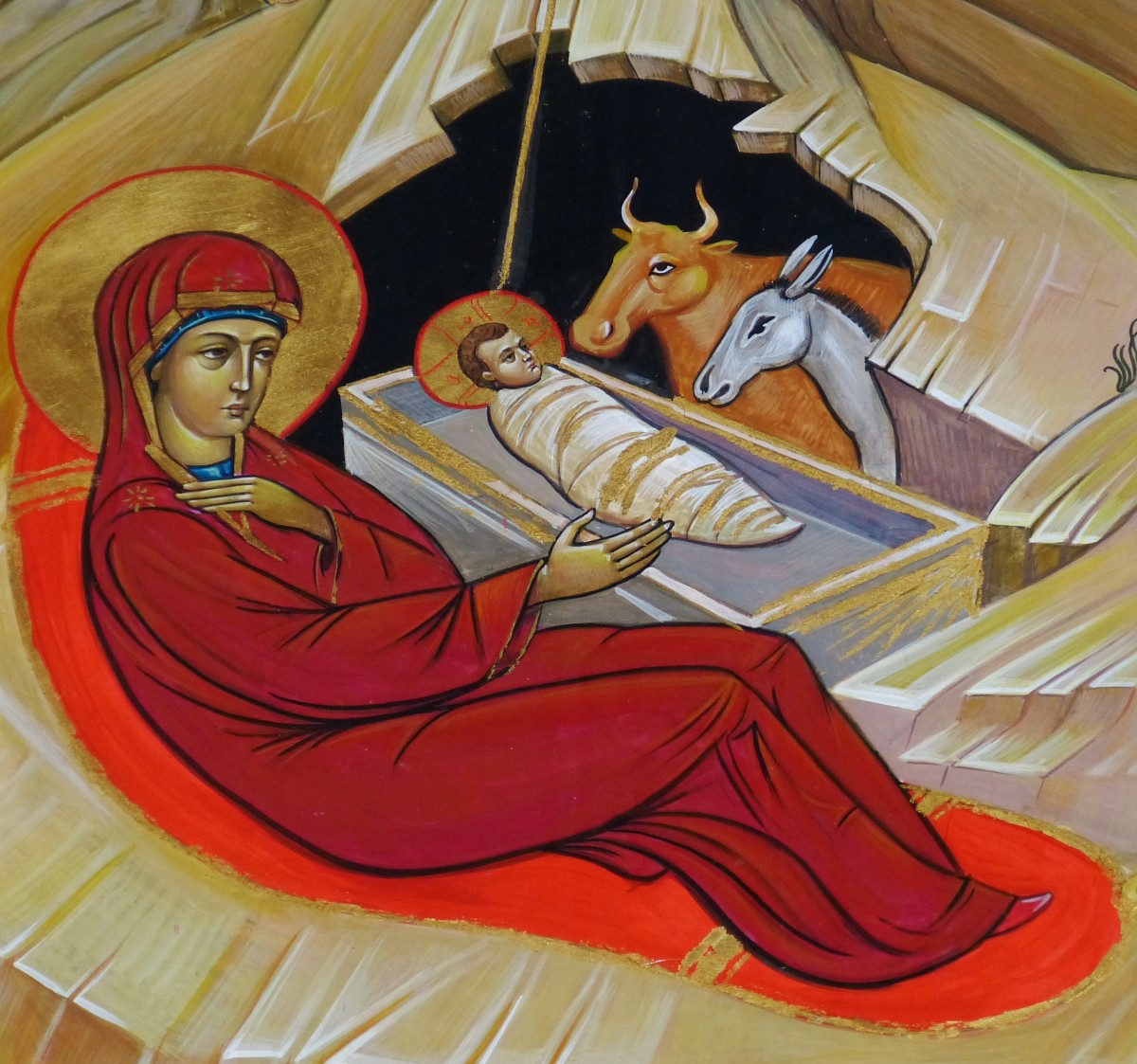
There is an understandable and natural sadness felt in the passing of a well-loved mother, sister, aunt, grandma, and  great-grandmother like Marie in any season of the year. But a funeral like this, so close to Christmas, can feel strange as well. Perhaps I have forgotten but I can’t remember — in almost a decade of priesthood — ever offering a funeral Mass so close to the celebration of Jesus’ birth, with Christmas trees still in the sanctuary. And yet, this is not so strange as it may seem, for the birth of Jesus the Christ bears many connections with and foreshadowings of his death:

Jesus’ birthplace, a stable, was actually a cave. His burial-place, his tomb, was a cave as well.

The first cave was prepared by Joseph, the poor carpenter from Nazareth. The second cave was also prepared by a Joseph, a rich man from Arimathea.

At his birth, Mary wrapped Jesus’ body tightly in cloths for swaddling clothes. At his death, Mary also wrapped Jesus’ body, in linen cloth, for a burial shroud.

She placed his body in a manger, a feed-box for grain. He would give his own body as food, feeding his flock with his flesh and blood.

Who first heard the news of Jesus’ birth? It was shepherds in the fields outside Bethlehem. From Bethlehem’s flocks the lambs were provided for sacrifice at the Temple in Jerusalem about 5½ miles away. Jesus is the Lamb of God who was born to die as a sacrifice to take away our sins.

The Christmas trees in our sanctuary are evergreen and gloriously-lighted. Contrast that to the wood of the Cross, stark and dead, where we see the starkness of death in Christ crucified. Yet the cross bears the Light of the World, for Jesus says, “I am the Light of the World.” Life flows from this tree.

The Church, in these days following Christmas, celebrates a series of martyrs. The day after Christmas is the feast of St. Stephen, the first martyr after Jesus’ Ascension. Tomorrow, it’s St. Thomas Becket, a bishop martyred more than a millennium later. Today, it’s the Holy Infants of Bethlehem, who died unknowingly for Christ, but who the Church has long-celebrated as martyrs. We can fittingly celebrate the martyrs or even a funeral so close to Christmas because the birth of Jesus Christ has great and vast implications for life and death.

As we heard in our first reading, “If before men, indeed they be punished, yet is their hope full of immortality. … They seemed, in the view of the foolish, to be dead; and their passing away was thought an affliction, and their going forth from us, utter destruction. But they are in peace.” So, even in the dark valleys of life, we are courageous (as St. Paul twice declares in the second reading) for the Lord who died and rose is our shepherd. “Even though I walk in the dark valley I fear no evil; for you are at my side.” And this is our Gospel: ‘this is the will of the Father, that everyone who sees the Son and believes in him may have eternal life, and Jesus shall raise them on the last day.’

Pray for Marie’s soul, as is fitting and right, but be courageous and even joyful through the sadness; for at Christmas we see:

Christ, by highest heaven adored,
Christ, the everlasting Lord.
Late in time behold he comes,
offspring of the Virgin’s womb.

Mild he lays his glory by,
born that we no more may die,
born to raise us from the earth,
born to give us second birth.

With the herald angels sing,
“Glory to the newborn King.”

Msgr. Urban Baer’s Funeral Homily

November 20, 2016

This is the text of part of the homily given by Fr. Francis Mulligan of St. John Church, Wilton, Wisconsin at the funeral Mass for Msgr. Urban Baer, former diocesan rural life director, former veterans’ chaplain, and former pastor of St. Wenceslaus Church in Eastman. Father Mulligan was a classmate of Msgr. Baer and he concelebrated the Mass of the Resurrection with La Crosse Bishop F.W. Freking and other priests in St. Wenceslaus Church in Eastman on November 19, 1973.

       What shall we say about our friend on this occasion? He had the faith and appreciated it. It may have come to him through God-given channels of a good home, good parents, good schooling, good priests and sisters. He has a special vocation: he was called to serve God and he answered that call. He knew what it meant; he was an adult, capable of making a serious decision. There was no turning back.

       I stopped to see him shortly before Fr. Charles Brady celebrated his 40th anniversary in the priesthood, and because he could not attend, I asked him to send greetings. “Just tell him the words of Father Feber,” he said: “To the noble shrine of love divine my lowly feet have trod; I ask no fame, no other name than this, a priest of God.” This was his own life motto.

       In these days when the boat is being rocked by thoughtless children, we hear much about identity and fulfillment, personality and growth. Who would dare say that Monsignor Baer did not have all of these qualities? …

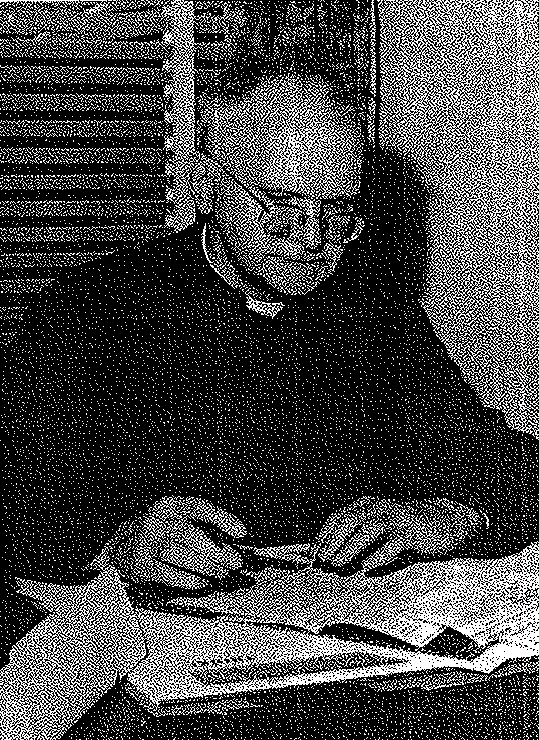
Msgr. Urban Baer       We knew him as a man who knew his vocation and loved it. In it he walked the way of humility and obedience and dedication. The capital sin of pride was not in him, whether he served as assistant or pastor. He worked for the salvation of people and the honor of the Church of God. When he served in the army, he was there to bring men to God. His highest rank was that of a priest of God. When he was sick and suffering, he bore his pains like a Francis of Assisi, knowing it was God’s will, and he knew that “Brother Body” would soon return to dust.

       Father Urban loved the Church, and the Holy Father, and his bishop, and all men. He saw the need for her attributes of authority , infallibility and indefectibility. His theology was that of his Master, “obedience is better than sacrifice.” Among his theology books were the Holy Bible, the Missal, the Breviary, and the Crucifix. Of course he had read and learned the decrees of Vatican II. But he knew that the purpose of the Council was to make men holy.

       His theology was not destructive or rebellious. Confession before or after first Communion, or receiving Communion in the hand or on the tongue — these were not disturbing questions for him. These were pastoral problems that could easily be solved. He also knew that “he who eats the Pope dies of ulcers.”

       He was sad when his friends turned away and walked no more with him. He was pleased with aggiornamento, which cleaned out the dust of ages and made the house ready for renewal. But he was violently opposed to those who pull down the house because they wish to play with novelty.

       Father Baer loved people—particularly the little people, and with them he identified himself. He knew that every man has the stamp of God and is a work of art.

       Father Baer: I am here to express our thanks to you for all you have done for us. On a few occasions you told me that I should preach your homily when you died. It was presumptive to say that I would. We walked the road together, and walking with you was an experience and an inspiration. We met in St. Louis, in September of 1925, when we entered Kenrick seminary. Four years later we marched up the aisle together to be ordained priests. Nervously but unhesitatingly we made our commitment: “We are here.”

       We offered our first Mass together, concelebrating with Archbishop John Glennon (later first cardinal of St. Louis.) After Mass he gathered us around him at the altar, where he spoke words that were not given to the rest of the congregation. He spoke about the priesthood and priestly service, of the honor and dignity connected with it. We were young, but we were old enough to make a decision and know that it meant. Gradually we advanced in the knowledge of our own ignorance and proceeded to grow up. We became fools for Christ.

       I watched you work as a curate and saw you serve as a pastor where you were sent. It did not take an “act of Congress” to change you from one assignment to the next. You served in the little places, but you knew there were no little people.

       When you served in the army, you were there to bring the men to God. The men knew their padre, and your greatest rank was that of Catholic priest. They knew you were like them, a civilian soldier. When the war ended, you returned to be appointed pastor here in the town of Eastman, where you served well for 15 years. This was your home, and now your body will rest with the people you loved.

       Here you showed your ecumenical spirit. You served in the ministerial association and occasionally presided at meetings. You were an active member of the American Legion and the Veterans of Foreign Wars. But you were always the padre and you wore your uniform.

       You were interested in farmers and farming, and you were appointed head of the rural life program in the diocese. Your activities branched out far beyond the limits of the diocese. I am sure that many here today visited farmers’ meetings at which you put on your act for better communication. We recall the red handkerchief and the corncob pipe with which you distracted us sometimes from a heated discussion. You were suited for this office, and I know that your book of advice on farming adorns a bookshelf in many homes.

       Father Baer taught in season and out that every good gift comes from above. Of old the farmer had been described as a man “with the emptiness of ages on his face and on his back the burden of the world.” But Monsignor helped to change that idea. For him farming was the most dignified profession and the one closest to God.

       For him this was God’s work, and this was loving his neighbor. In all of his service to people, he did not neglect his parish. First things came first. He administered the sacraments faithfully, offered the Holy Sacrifice daily, said the divine office for himself and all the people, for this was his business. He took care of the sick, and buried the dead, and you loved him and he loved you.

       Then came sickness, eight years of sickness, and I suppose, loneliness. For he was human and the world was busy, and friends were slow to visit the sick. He helped where and when he could for a time. He accepted all of this as God’s will. He never seemed to lose his sense of humor, because, I think, humor is a daughter of charity. He knew he was dying. Each of us should know this. The sentence was passed when we began to live.

       Today, Father Urban, the evidence is all in. Your case has been submitted. For you, I think, there will be a short hearing. This is your Father’s house. He has been waiting. Here is your Brother Christ. You were an Alter Christus. You communicated Christ to others. And here is Mary from whom the Word was made Flesh. Hail her again, as you did so often during your life and sickness. You know her, for she wears a rosary. And when you look around in astonishment at the wonder of it all, take a little time out to ask the Mother of God to pray for us sinners here below.

       Father Urban, as a member of the Church Triumphant, help us who are still soldiering, sometimes plodding alone where the mud is heavy, and our eyes blinded with filth and the devil’s pollution, and our shoulders ache beneath the pack, our own and those of the fallen. Help us to keep looking up, beyond the margin of the earth, where we have not a lasting city, but where we seek one that is to come.
(more…)

The Greatest Vacation — Funeral for Angela Ernst, 88

April 2, 2011

In the summer of 1923, when Angie was just eight months old, the Ernst family embarked for a new life in America. Little Angie traveled simply, but probably quite comfortably, in a basket, a memento that she kept among her possessions for the rest of her life. I think we can easily romanticize what it was like to immigrate to this country back then. We do not think about how intimidating, how daunting, how unnerving it was for people to leave behind what was well-known to come and live in a whole new world. I’m told that Mr. and Mrs. Ernst were not initially thrilled about life on these shores, but eventually they warmed-up to it, embraced this land and its people, and it became home for them.

I’m told that Angie was full of life and fun and love towards her family and friends for all these past eighty-eight years that she lived here in Marshfield. Yet, a wanderlust, a desire for travel, to see new places and meet new people, was always a part of her, whether it was with her brother Joseph, or later with her sister Rose. Angie traveled east to Europe multiple times and visited family in the old country. She traveled out west and backpacked in the mountains. She traveled further west still and enjoyed the beaches of Hawaii. She traveled north to Canada and south to Mexico, and wherever she went she sought out the Lord in His houses, His beautiful churches. Angie lived her life close to Jesus Christ and His Church with a great love for others that is reflected in your love for her. Therefore, I am confident that Angie is now enjoying the greatest adventure of all her travels. Every interesting, beautiful, and friendly place we can travel to on earth reflects something of Heaven, yet none of them compare. The journey to Heaven is the greatest of all vacations.

We all have a natural aversion to death, and that’s a healthy thing. But sometimes this aversion can be too great of an anxiety.  Even with our Christian faith, the idea of dying and leaving behind what is well-known to go and live in a whole new world can feel intimidating, daunting, and unnerving. Yet there is no cause for us to fear or grieve like people who see no hope. Instead let us remember this, if you and I live in Christ, dying shall be the greatest adventure of our lives. Do no be afraid to be comforted by the truth. It’s a wonderful thing to visit the shrine of Our Lady of Guadalupe in Mexico, as Angie did several times. But how much better must it be to travel to an encounter with Our Lady of Guadalupe herself. It’s fun to visit Jesus in His many earthly houses as Angie liked to do. But how much better must it be to visit Jesus in the Father’s house. I trust that Angie is now fine, “just fine,” as she would say, but just in case her journeying to Heaven continues let us help her with our prayers, especially at this Mass for her.

In Her Image — Funeral for Carol Beck, 87

February 15, 2011


I never got to know Carol in life, but what I have been told of her is very good; that she is a sweet, peaceful, good and devoted woman of God. And from what I am told, she is clearly a woman of quiet strength.

On December 7th, 1958, Carol’s husband Robert, the father of Steve and Kathy, after nine years of marriage, unexpectedly died of a heart attack. That infamous date, December 7th, happened to be Carol’s birthday. I’m told that when Carol got married she was perfectly happy with the thought of being taken care of for years to come, but when Robert died she was called to rise to the occasion and take charge. This widow raised her children to maturity, and Steve and Kathy indicate that she raised them rather well. Though he was not visibly present in an unveiled way, I bet that Robert was never far spiritually, helping her through the trials.

Carol was simple and meek and seemingly ordinary in the world, but at the same time she was a quite stunning in appearance, with dark hair and beautiful brown eyes. Though everything, she remained close to her Lord, Jesus Christ. She drew strength from daily prayer and the grace of the sacraments, and with her beautiful voice she sang praises to God. Now she has passed on, to go where her bridegroom has gone before her.

We should pray the purification of Carol’s soul, as we do for all the dead, but I have no fear for her future. Carol’s life on earth has been as an image, an icon, of  Christ’s Church on earth. The mystery of the Church was reflected through her life.

We call the Church a she, because she is the bride of Christ. As we hear in the Gospel, the day He died was the birthday of the Church. The Church is a mother, and with love and concern she raises her own children to maturity. Though her bridegroom is not visibly present in an unveiled way, He is always near her and helps her through every trial. She is stunningly beautiful, and yet she is simple, meek, and seemingly ordinary in this world. Though everything, she remains close to her Lord, Jesus Christ. She is strengthened through her daily prayers and the grace of the sacraments, and with one beautiful voice, she sings praises to God. And one day, she too will pass on from this world, to where her bridegroom has gone before her.

Please pray to God for Carol’s soul, but do not be afraid. I am confident that when all is said and done, Jesus shall present her in splendor to Himself, without spot or wrinkle or any such thing, that she may be holy and happy with Him forever. Those who live in the Church’s likeness are promised her reward.

The Divine Perfectionist — Funeral for Joseph Stockheimer, 76

October 9, 2010

I never got to know Joseph while he lived on earth, but in preparation for this homily, I talked to Helen, his wife of 51 years, and his daughter, Vicky, and asked them what sort of person Joseph is. They described a man who lived faithfully, piously, and with high standards. These qualities expressed themselves in a certain perfectionism throughout his life.

He worked his farm for 35 years. Not only did he keep to the cows’ daily milking schedule, but I’m told his field rows were perfectly straight and cleared every stone. Even the barn (the barn) was clean! After retiring from farming, Joseph turned his efforts to working the flower garden and cleaning the house, two activities that pleased Helen greatly. Their house was always clean and his nails were always dirty. Sometimes Joseph would be work in the garden until 11:30 at night.  There wasn’t any light to see, but he still kept at it. Joseph also worked in the kitchen at the Knights of Columbus hall. They called him “Scrubby” because he never quit on cleaning the pans. He would talk to you while he worked, but he wouldn’t stop scrubbing.

Joseph’s attitude was, ‘If you start a job, get it done, and get it done right.’ In this, Joseph bears a likeness to an attribute of our Lord, Jesus Christ. The Lord works as a perfectionist too. Jesus says, “Everything that the Father gives me will come to me, and I will not reject anyone who comes to me… …This is the will of the one who sent me, that I should not lose anything of what he gave me, but that I should raise it on the last day.” Jesus is not content to save just some of what the Father gives Him. He is not willing to save only some of those who come to Him. ‘For this is the will of His Father, that everyone who sees the Son and believes in him may have eternal life, and He shall raise them on the last day.’ There is hope and consolation for us in this: we are the Lord’s field, we are His house, we are His garden, we are His pans, and  Jesus does not willingly give up on His work.

It is a good thing that Christ is a perfectionist, for nothing imperfect can bear to stand in God’s fully unveiled presence. The fact is that you and I will refuse to enter Heaven until we are perfect, so Christ must make us so. Even if we are good and faithful, the pan-bottoms of our souls may still need some hard scrubbing at the end of our lives. This is what we call purgatory, the joyful but challenging time after death when our souls are scrubbed clean of every imperfection.

Now I am confident that Joseph is bound for Heaven, since Jesus does not reject those who are His own. But I think we do well to assist Him with our prayers to help Him get his last job done and to get it done right—the job of perfecting His soul for Heaven. So talk to Joseph, for he can hear you, and pray for Joseph, especially at this Mass, so that he may have eternal rest and fully enjoy the reward of his labors.

Alive in Christ — Funeral for Lila O’Brien, 94

March 3, 2010

On behalf of Christ the King parish I wish to offer to you, Lila’s family and friends, the sympathies and prayers of this community. I also want to give special recognition, praise and thanks to Lila’s children, who provided her with around the clock companionship and care, allowing her the blessing of dying at her home with her loved ones.

In these last months, I had the privilege to visit Lila at home on two occasions. The first time I came, I anointed her with holy oil, to strengthen her for the share in Christ’s passion which laid before her. The second time some of her family and I gathered and pray with her the prayers of commendation for the dying.

When I ask people about Lila they tell me that she was friendly and feisty. That she was ever active and always on the go. That she was funny, a bit goofy, and unpredictable. They tell me that she was very independent, yet also very personable. Lila was a neat lady. Let us not forget that she remains a neat lady.

It is the habit in our culture to refer to people who have died using the past tense. For instance people say, “So and so was such a loving person,” and they say the person “would have really enjoyed being with us today.” Even if unintentionally, these words implies that the dead love no longer and that they are no longer aware of us.

Yet after death, a person who is loving in this life becomes still more loving. It seems quite likely that each of us will be aware of our own funerals, just as I believe that Lila is aware of our gathering today.

Though we fall into speaking of the departed in the past tense, we do not really believe that death is the end. Dying does not annihilate those we love. As Jesus said, ‘The God of Abraham, the God of Isaac, and the God of Jacob is not the God of the dead, but of the living, for to Him all are alive.’

Nor does dying make a person less fully themselves than what they were before. “Whether we live or die, we are the Lord’s.” And as Jesus said in the gospel, to the good thief crucified with Him, “Amen, I say to you, today you will be with me in Paradise.”

Lila has passed on, but if you would like to talk to her, just go ahead and pray. She will hear you and she will appreciate it. And be sure to pray for her too.

In her years on earth, Lila did not like to travel far from home and she didn’t take long trips, unless the promise of a casino jackpot awaited her. But now Lila is making the human soul’s furthest trip, the journey to full and heavenly presence of God. She has an incredible jackpot to motivate her, the promise of supreme and perfect happiness, however receiving this reward is not a matter of luck. It requires the purification of her soul and the help of our prayers, so offer this morning’s mass and your continued prayers to God for her.

Lila has died, but Lila is not dead. If the woman we remember has changed it is only to become more perfectly who she really is, in all her unrepeatable uniqueness. Lila was, and she remains, a friendly, funny and feisty lady.