Archive for the ‘Sunday Homilies’ Category

The Fear of Inadequacies

July 12, 2021

15th Sunday in Ordinary Time
By Deacon Dick Kostner

Jesus at Prayer, Overlooking the Sea of GalileeOn my last homily I talked about the fact that faith can produce miracles. Today’s scripture readings helps us to understand how we acquire that gift of faith and participate in God’s divine partnership plan.

When I was studying for my Masters Degree in Pastoral Studies one of the revelations that God shared with me and that stood out in my mind was the fact that although God has no need to ask for help from anyone, that contrary to that he desires humans to participate in advancing and growing the body of Christ through human involvement in preaching and practicing the gospel message of love and service to others. The gift he bestows on those he asks for help from, and who accept his requests, is peace and happiness not only in this life but also the gift of the key to everlasting life in heaven.

For humans this presents us with obstacles in accepting those requests God asks from us, the greatest of which is our fear of inadequacy. Let me give you an example of this. When I began ministry studies one of my greatest fears was facing death or witnessing death. When I first got out of law school one of the first things I did was draft a will for myself and I placed a directive in it that I wished no funeral and requested that I be buried within twenty-four hours of my death. My thoughts were that this would make it easier for my family and friends to move on with their lives.

This fear stayed with me until I became a deacon and one day when our priest was on vacation, I received a call late one evening from our hospital. A car accident had happened and the family of the victim was trying to find a priest to administer the Sacrament of Healing for this young man. I advised the nurse that Father was gone out of town. She asked if I could come and be with the family. Fear hit me, and I told the nurse that I could not administer the Sacrament as deacons cannot do this. She then asked if I would come and maybe say some prayers with the family. My thoughts were that I was not adequate for the job and I did not feel I could do anything that would be beneficial for the family or their loved one. Then I remembered that part of my training for deacon ministry was to walk with someone and minister to someone who was dying. Fr. Frank, my director had assigned me to a elderly gentleman in Eau Claire who was terminally ill. I would meet with him on a weekly basis, at his home, and I would take Communion to him and his wife while spending time with him. I remember how after he died his wife called me and asked if I would do the Wake Service for him as he so much appreciated the times we got together while he was dying. I remembered how good this made me feel to know that they appreciated my company even though I felt inadequate for the mission Fr. Frank had assigned to me.

I decided to go and pray with that family at the hospital, and after doing so the family said they so much appreciated that I was willing to come and be with them during their suffering I finally realized that all that one needs to do is to show up and be there for those suffering and fearing death as the representative body of Christ. Jesus and the Holy Spirit do the rest. God knows that this is difficult for us but he always rewards those who say “Yes” to his call for help.

Our Gospel this weekend has Jesus telling his friends that its time for them to stand up and accept the job of helping others overcome their fears through their presence and healing. Jesus knows they don’t feel adequate for the job and so he sends them out in two’s knowing that this will help them feel more comfortable and capable of accepting their ministry mission. He tells them to not prepare and to take nothing with them as he promises to provide all the help that they will need to be successful.

Our parish at St. Paul’s is having a meeting this coming Monday to request help for our Fall Festival. This event provides not only financial support for the Parish but also allows its members to participate and say “Yes” to God’s requests for help. This will give evidence that Jesus is with us in helping not only others but ourselves to overcome our feelings of inadequacies. Like Jesus, the Parish is going to ask groups to come together as a unit to accomplish fellowship and support within our Parish Family Ministry. To the St. Paul’s committee people please plan on attending the meeting and by saying you will help build and exercise the Body of Christ in our community. St. John’s people encourage others to join you in planning your Parish activities to help reduce the fear we all have of being inadequate for the ministries asked of us by Jesus.

Remember the words of Jesus in today’s Gospel: “Take nothing for the journey but a walking stick—no food, no sack, no money.” Remember that God will provide you with everything necessary for his mission requests.

Lessons From The Gulag Archipelago

July 3, 2021

14th Sunday in Ordinary Time

Aleksandr Solzhenitsyn was a captain in the Red Army of the Soviet Union serving bravely on the front lines against the Germans in 1945. Three months before World War II’s end in Europe, his brigade commander summoned him to headquarters and asked for his pistol. When Solzhenitsyn handed it over two counterintelligence officers suddenly crossed the room. They ripped off the insignia from his uniform and shouted: “You are under arrest!” “Me? What for?” The pair gave him no answer. But as Solzhenitsyn was being hauled to the exit, the brigade commander firmly addressed him: “Solzhenitsyn. Come back here.” With a sharp turn he broke loose and stepped back to his superior.

Solzhenitsyn had never known his commanding officer very well. This colonel had never condescended to run-of-the-mill conversations with him, but now his ever-stern face displayed thoughtfulness. “You have…” the colonel asked weightily, “a friend on the First Ukrainian Front?” Solzhenitsyn understood instantly: he was being arrested for criticizing Joseph Stalin in private letters to a school friend. Over the decades, many millions would suffer in the soviet prison camps (known as gulags) for offenses as small as this or less.
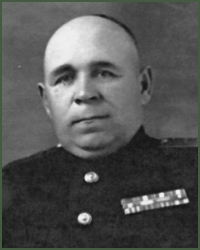
Travkin Zakhar Grigorevich

The counterintelligence officers objected. They shouted at the colonel for his revelation to the prisoner: “It’s forbidden! You have no right!” The colonel could get himself arrested, too. As Solzhenitsyn recalls in his own words, his colonel, “Zakhar Georgiyevich Travkin could have stopped right there! But no! Continuing his attempt to expunge his part in this and to stand erect before his own conscience, he rose from behind his desk — he had never stood up in my presence in my former life — and reached across the quarantine line that separated us and gave me his hand, although he would never have reached out his hand to me had I remained a free man. And pressing my hand… showing that warmth that may appear in an habitually severe face, he said fearlessly and precisely: ‘I wish you happiness. Captain!’ Not only was I no longer a captain, but I had been exposed as an enemy of the people… And he had wished [me] happiness…” Despite the danger to himself, the colonel did what little he could to bless and console a persecuted man – and Aleksandr Solzhenitsyn never forgot this.

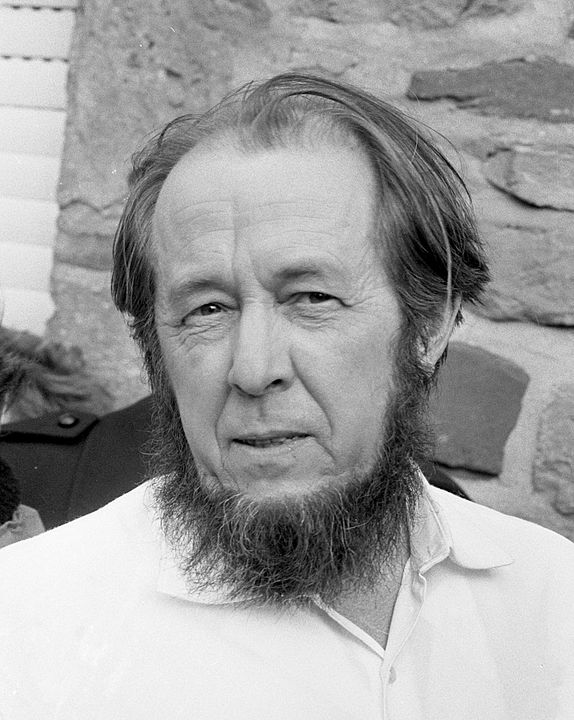
Aleksandr Solzhenitsyn in 1974Solzhenitsyn would go on to survive almost eight years inside prisons and forced labor camps. After his release, he became a world famous author, winning the Nobel Prize for Literature in 1970. But the publication of his most important work, The Gulag Archipelago in 1973, outraged the soviet authorities. They stripped him of his citizenship and expelled him from the USSR – they rejected him in his native place. Two Christmases ago, St. John the Baptist’s Altar Rosary Society gifted to me a subscription to Audible. A week and a half ago, I activated it and this non-fiction book, The Gulag Archipelago, is the first thing I’m listening to. It draws on interviews, documents, diaries, and Solzhenitsyn’s own experiences as a prisoner to detail the history and the horrors of soviet gulags from 1918 to 1956.

The dictator Joseph Stalin suspected and feared he had enemies everywhere, so he would hand down orders for entire groups to be arrested (“Arrest all the generals in the Red Army”) and he ordered large numbers of political arrests to be made (“Arrest 200 people in this city for political crimes by month’s end”). To fill their quotas, the police would arrest innocent people, employ terrible tortures to extract confessions, and then ship these condemned persons off to camps, often to die there from a bullet or from the inhuman conditions.

Getting confessions was very important for the corrupt and cynical interrogators. Caring nothing whether the accused were actually criminal conspirators, they inflicted intense physical and psychological sufferings to make them admit guilt and implicate others. These police were not afraid to lie, and any court trials there were were just for show. In that case, instead of breaking their victims, why didn’t the interrogators just forge signatures onto confessions? I suspect this was due to demonic influence. Demons delight to see the wicked do evil, but they are pleased still more by seeing the good fall, to see them sin by betraying the truth and betraying those they love. Solzhenitsyn urges us to have mercy on those who people fell: “Brother mine! Do not condemn those who, finding themselves in such a situation, turned out to be weak and confessed to more than they should have. … Do not be the first to cast a stone at them.

Vera Korneyeva as a young womanSome prisoners did not lie or betray anyone, but even took the opportunity to proclaim the truth. Solzhenitsyn tells the story of one Vera Korneyeva who was arrested with all seventeen members of a Christian group. Her interrogator had left her alone in a large office of the police building where half a dozen employees were sitting. A conversation started and Vera launched into a sermon. In freedom, she had been no more than a lathe operator, a stable girl, and a housewife. But the typists, stenographers, and file clerks of the secret police listened, sometimes asking her questions. People came in from other offices and the room filled up. She spoke mostly about religious faith and religious believers, and asked why anyone would need to persecute Christians.

Believers don’t need to be watched,” she said, “they do not steal, and they do not shirk [their duties]. Do you think you can build a just society on a foundation of self-serving and envious people? Everything in the country is falling apart. Why do you spit in the hearts of your best? … Why arrest [religious] people?” At that point, her interrogator reentered and started to rudely interrupt her. But everyone shouted at him: “Oh, shut up! Keep quiet! Go ahead, woman, talk.” Solzhenitsyn notes they were forbidden to call her comrade or citizen, but they referred to Vera with the honorable title Christ used: “woman,” and she continued in the presence of her interrogator. So there in an office of the police headquarters they listened to Vera Korneyeva — and why did the words of an insignificant prisoner touch them so? Like Ezekiel, a prophet had been among them.

Soviet prisons and gulags were hellish places, but like Mount Calvary, the Lord was present even there. Nikolai Aleksandrovich Kozyrev, whose brilliant career in astronomy was interrupted by his arrest, sustained himself in prison by doing theoretical work in his mind. His line of mental exploration, however, was blocked by forgotten figures. He could not build any further — he needed the data to develop his theory, but how could he obtain this from his solitary-confinement cell? The scientist prayed: “Please, God! I have done everything I could. Please help me! Please help me continue!” His eyes were fixed on the Lord, pleading for his mercy.

At that time, he was entitled to receive one book every ten days. Half an hour after his prayer, they came to exchange his book. As usual, without asking anything at all, they pushed a book at him. It was entitled A Course in Astrophysics! What was a book like this doing in a prison library? Kozyrev threw himself into it and began memorizing everything he needed and everything he might need later on. After two days, the prison chief made a surprise inspection of his cell and immediately noticed the book. “But you are an astronomer?” “Yes,” he answered. “Take this book away from him!” Yet its providential arrival had opened the way for the scientist’s further work, helping his mind and spirit survive his ten years of detention. Following his release, Dr. Kozyrev would go on to be the discoverer, through telescopic observations, of tectonic activity on the Moon. In other words, he discovered that there is hot magma inside of the Moon. Like Jesus Christ, the Moon is not long-dead (as many have thought) but is dynamically alive today.

Nikolai Aleksandrovich Kozyrev in 1958

Solzhenitsyn observed in 1983, “There always is this fallacious belief [around the world about great atrocities]: ‘It would not be the same here; here such things are impossible.’ Alas, all the evil of the twentieth century is possible everywhere on earth.” Will this church one day be torched by arsonists, as Catholic churches are now being burned down in Canada? Could we one day be fired, beaten, or arrested, be separated from our families, be deprived of our material possessions, or die because of our faith? Jesus Christ was perfect and sinless, “and they took offense at him.” He was hated, denounced, tortured, and murdered. If they persecuted him, why wouldn’t the world persecute us? I do not know how severe the persecution of Christians will become in our lifetimes, but I see no reason not to prepare our souls for this eventuality.

If we are to be like Jesus, even up to the point of dying like Christ rather than denying him (and indeed we are each called to be willing to do this) then we must begin practicing with the little things. Jesus says, “Whoever is trustworthy in very small matters is also trustworthy in great ones; and whoever who is dishonest in very small matters is also dishonest in great ones.” So we must never lie. Make no false professions or false confessions. As Jesus teaches us, “Let your ‘Yes’ mean ‘Yes,’ and your ‘No’ mean ‘No.’ Anything more is from the evil one.”

In addition to never telling falsehoods, we are called to speak the truth, like the woman Vera in the heart of the police organization. Are you afraid of what other people will think? Realize that they are concerned about what you think, too. If you are open, the Holy Spirit will give you opportunities to share the truth with others. Like Colonel Travkin with his accused Captain Solzhenitsyn, we must also be courageous enough to remain loyal to our peers when others would denounce and abandon them. And we must pray and rely on God, like Dr. Kozyrev (who was seemingly, but not truly) alone in his prison cell. Remember that Christ’s grace is sufficient for you, and his power is made perfect in weakness.

Practice these four things: never lie, share the truth, be loyal, and rely on Christ. Even if, in God’s Providence, you never come to suffer like Christ’s martyrs, by practicing these things you will become more like our Lord Jesus Christ.

Faith – The Miracle Worker

June 28, 2021

Blessed Mother Teresa with a happy, armless baby, photo by Eddie Adams of AP

13th Sunday in Ordinary Time
By Deacon Dick Kostner

What stood out for me with today’s readings is the fact that even though we have entered and begun “Ordinary Times” in our Church calendar, that since the Incarnation there does not exist anything that is “Ordinary” in our lives anymore. Miracles appear everywhere and everyday if we but possess the mustard seed of faith. Jesus has taught us that faith as small as a mustard seed will allow his followers to heal those who are ill, will allow us to accomplish supernatural tasks and move mountains that are not physically or humanly possible to move.

My mind journey began when I heard Deacon Matt’s homily on Trinity Sunday and how God has gifted those who have been baptized with supernatural abilities through membership into the family of the Trinity. Through the Sacraments we enter into a unitive state of being one in spirit with the Creator. A state of being where we communicate spiritually with the Trinity and God’s plan to make us one in thought and vocation with him.

Our gospel tells us that the key to life now and forever is “faith.” Jesus has shown us and told us to pick our friends carefully and listen to them. Follow their teachings to see miracles happen before our eyes. Let me tell you three stories about people of great faith who most of you lived with and know by name who have accomplished supernatural tasks through faith. Two are Christmas stories. The first involves Cecelia.

Cecelia and I were friends and she many times would tell me how much she enjoyed my homilies. Her and her sister were friends of my mom and were golf buddies. Cecelia was a daily Mass person and a person of prayer. She was very much concerned about the struggles the Church was having with its ministers and she would ask my advice on things that bothered her. When I had no good answer to the problems she would say, “I guess I will have to pray harder.” When I heard of her death on the Sunday before Christmas I was saddened and knew that I needed to attend her funeral to pray for her and say goodbye to her. The next day, Fr. Victor asked if I would do a Communion Service as he had three funerals scheduled for that week.

On the way to church that Monday, I was listening to Phlash Phelps on Sirius 60 Radio and he told how when he was a young boy his parents had invited their pastor to join them for Christmas Dinner. Phlash said that as a child he was in charge of putting the angel on the Christmas tree by using a hook pole to elevate the angel to the top of the tree. At Christmas dinner the Pastor had asked him what he liked most about Christmas and he responded proudly, “Getting the hooker to put the angel on their Christmas tree.” His parents turned very red and all had a good laugh over his response. I thought to myself, Cecelia would have loved that story and after the final blessing I shared that thought and story with the daily Mass people as a farewell to Cecelia.

That afternoon I began getting thoughts from Cecelia that were asking me to do the homily for her funeral. I called Father and told him that I could do that if he so desired. He was more than happy as he had two other funerals to do for that week. As I was preparing my homily, I thought about how Cecelia and her sister always got into it and argued and I had made the comment that Jesus would have to put up with the “girls” arguing at his birthday party and would have his hands full keeping them in line.

That evening, I received a call from her niece who said she very much enjoyed my homily and that she had been with Cecelia the day that she died. She shared with me that just before she died Cecelia had said, “I think it is time now for me to join my sisters and Jesus for Christmas.” The niece said that she asked Cecelia who Jesus would listen to more with all the “girls” being present and pressuring for recognition from Jesus? Cecelia answered: “The one who is the loudest.” I told Father about this when I told him that I believed we had just buried a Saint. Knowing Cecelia I am sure Jesus was gifted with the hooker story on his birthday that I had gifted Cecelia with at church that day.

The second faith story is about Kathleen when she died some years before on Christmas Day. I had been called over to her home by the family to do some prayers for the family that Christmas evening. Kathleen was one of my original RCIA ministers when I began that program at St. Paul’s and I was well aware of how strong her faith was in Jesus. The family shared with me that she had been dying for many days and the family kept telling her to not worry and that it was OK for her to leave and join Jesus for his birthday party. Her response was, “I know but I just want to savor this time and I will not leave until after we enjoy our customary Christmas meal.” Right after they had eaten she passed. I told her niece that I believe we were blessed with having lived with and prayed with a saint.

The final faith story is a story my cousin Bishop Bob told me about Mother Theresa. Bishop Bob was Bishop for the Diocese of San Diego. Mother Theresa had scheduled some dental work to be done on her mouth and while visiting the area she met with Bishop Bob and asked him if he would drive her around to look at some houses she was thinking about acquiring in the area to set up a new Home for the poor. He agreed and after looking at one house she said to Bob, “I like this one let’s take it.” The bishops’ jaw dropped. Now you need to know Bob is not a person who just jumps into a situation and he explained to her that the house was very expensive and it would take some time to raise the funds necessary to purchase it. Her response was to smile and say, “Oh Robert, you have such little faith!” She reached into her pocket and produced a small medal of Mary. She instructed him to place the medal over the door of the house that she wanted, and they left.

That Sunday, Bishop Bob introduced Mother to the parish and told of her plans to purchase a house for the poor in the area. He indicated that they were planning on a fundraiser in the parish to accomplish this task. After Mass Bishop Bob heard a knock on his door and a lady appeared saying she had been at Mass and heard him talk about raising money to purchase this house that Mother Theresa wanted. She proceeded to take out her checkbook and said, “What is the cost of the house?” He told her and she proceeded to sign a check for the entire amount. I can only imagine the look on Bob’s face of “little faith.” I am sure you too will be able to see and experience that with the faith of a mustard seed anything is possible, even moving a mountain, and that fear will never be able to overcome faith’s power.

Before I began to write this homily I said Morning Prayer and this statement appeared: Ephesians 4:3-6. In closing I share this scripture statement with you:

“Make every effort to preserve the unity which has the Spirit as its origin and peace as its binding force. There is but one body and one Spirit, just as there is but one hope given all of you by your call. There is one Lord, one faith, one baptism; one God and Father of all, who is over all, and works through all, and is in all.”

Amen.

Jesus Rested

June 19, 2021

12th Sunday in Ordinary Time

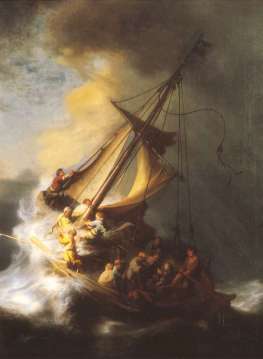
The Storm on the Sea of Galilee by Rembrandt, 1633.In today’s Gospel, we see Jesus commanding the wind and sea during a storm. He rebukes the wind and tells the sea, “Quiet! Be still!” and a great calm settles. His disciples in the boat, in awe at what they’ve witnessed, say to one another, “Who then is this whom even wind and sea obey?” It’s a stunning moment for them, but there’s another striking detail contained in this Gospel – a detail which Jesus’ disciples found completely unremarkable before the storm: Jesus was resting in the boat, he was asleep on a cushion in the stern. Christ wielding divine power is an important sign, but the fact that Jesus took naps also contains lessons for us that I’ll discuss a bit later.

The Book of Exodus records how the Lord had previously commanded winds and waters to save his people when he parted the Red Sea: “The Lord drove back the sea with a strong east wind all night long and turned the sea into dry ground. The waters were split, so that the Israelites entered into the midst of the sea on dry land.” God commanded the waters as with his words from the Book of Job: “Thus far shall you come but no farther, and here shall your proud waves be stilled!” Even though God brought the Hebrews safely through the Red Sea to Mount Sinai, delivering them from their Egyptian slavemasters, they were not yet free. God had gotten his people out of Egypt, but he needed to get Egypt out of his people.

Habits and attitudes from their years of bondage had to be unlearned. To do this, God’s Mosaic covenant commanded them, for example, to sacrifice animals which the Egyptians associated with their pagan deities, such as bulls and rams. To slay and offer up these creatures to the Lord undermined the cults of the false gods. Likewise, when you desire to turn away from old sinful habits, absolutely pray for God’s help and go to Confession, but also after that do more than just passively hoping that things will change. Take positive steps in the right direction. Make an act of your will to renounce your sins. Literally say: “I renounce the sin of (such-and-so),” and then actively avoid the patterns which you know lead you into sin. Like those bulls and rams sacrificed on God’s altar, kill and burn your idols.

Another way in which the Lord sought to train the Hebrews out of the old mindset and routines of their prior slavery was through giving them a weekly vacation day. God commanded his people:

“Remember to keep holy the sabbath day.
Six days you may labor and do all your work, but the seventh day is the sabbath of the Lord, your God.
No work may be done then either by you, or your son or daughter, or your male or female servant, or your beast, or by the alien who lives with you.”

As slaves in Egypt, the Hebrews worked long days for long stretches of days. It was grueling labor, fueled by fear of painful consequences. But the Lord did not wish for them to carry with them this slave mentality toward work. So he gave them a special day, every week, for worship, rest, and joy. God desires the Lord’s Day, Sunday, to be such a day for us.

When I was an undergrad at college, my studies were my daily grind. I looked forward to my college breaks, but those could be weeks or months away, and were always on the other side of due dates and exams. Although I faithfully attended Mass I had never observed Sunday as a special day of rest. The Catechism of the Catholic Church teaches:

On Sundays and other holy days of obligation, the faithful are to refrain from engaging in work or activities that hinder the worship owed to God, (that hinder) the joy proper to the Lord’s Day, (that hinder) the performance of the works of mercy, (or that hinder) the appropriate relaxation of mind and body.” Then it notes, “Family needs or important social service can legitimately excuse from the obligation of Sunday rest. (However,) the faithful should see to it that legitimate excuses do not lead to habits prejudicial to religion, family life, and health.

So I resolved in those days of college to abstain from doing homework or studying on Sundays. I had some very late Saturday nights, but I held faithfully to this rule. And over time, I noticed two surprising things. First, my Sunday resting never burned me academically. I can’t recall ever bombing a test, failing to meet a deadline, or doing worse on my assignments because I didn’t work on Sunday. My second great surprise was that I began looking forward to every Sunday as a one-day vacation. In addition to going to Mass, Sunday was a day for me to take a nap, see a movie, play a game, hang out with friends, or do anything delightful. I sacrificed a gift of myself to the Lord and he gave me an even greater gift in return. So I urge you to be courageous and intentional about keeping and celebrating the Lord’s day of rest yourself.

Let’s return to Jesus sleeping in the boat. What lessons does this teach us? First, the fact that he sleeps means he is a real human being who can personally relate to our own lived experience. Jesus knows firsthand what it’s like to be one of us, and he compassionately understands us.

Second, his sleep shows us that human fatigue is not a sin. Sometimes in confession I hear older people accuse themselves of laziness because they aren’t as productive as they were when they were decades younger. I encourage these persons to be easier on themselves. The Stations of the Cross recount Christ falling down three times. Jesus’ holy, loving spirit was willing, but his flesh was weakened, and none of his physical limitations, missteps, or stumbles were sins. Our own bodily limitations are not sins either.

A third lesson from Jesus napping is that caring for your body is an ordinary part of doing God’s will. While taking his nap, Christ isn’t preaching to the crowds, healing the sick, or performing mighty miracles, but he is exactly doing his Father’s will. And this rest prepares Jesus to do the Father’s works after. When I hear a parent in confession say they blew up unusually at their children, lost their temper and yelled at their kids, I ask that person whether they’re tired. Their answer is almost always yes. That’s not surprising, since everything is harder when you’re tired. Rather than disregarding your body, realize that sleeping well, eating right, and trying to be physically active can be important in enabling you to do God’s will.

St. John writes in his 1st New Testament epistle: “This is how you can recognize the Spirit of God: Every spirit that acknowledges that Jesus Christ has come in the flesh is from God.” Jesus Christ, God’s divine Son, took rest and enjoyed rest as a human being like us. Let us learn from his holy example.

Receiving the Gift

June 13, 2021

11th Sunday in Ordinary Time
By Deacon Eric Mashak

Christmas PresentThis is awesome! This Gospel. What a gift God wants to give us: Salvation, Himself, Heaven. The parable of the mustard seed which becomes the massive tree is symbolic. The mustard seed is the grace and faith which God gives us in this life; often times it seems so small that we hardly notice it. The huge tree is the fruition of what God has started in us by His grace; God bringing us to Himself: Heaven.
This is an amazing gift. Probably, many of you are good at giving gifts. There is a certain pleasure in giving the perfect gift to someone at a special occasion; birthdays, Christmas, or at holidays. Some of you may know a certain type of gift giver whom we would call a ‘re-gifter.’ You know, that person who has everything that they want, and who doesn’t keep any gift they receive; instead they give it away to someone else. There was one such person, a ‘re-gifter,’ who happened to be a priest from Detroit, Michigan. He was not only a ‘re-gifter’ but even an ‘expert re-gifter’ because he would receive a gift and then keep it for a decade to avoid getting caught re-gifting. One Christmas he was given a small Christmas Ornament by a family in his parish. As usual he briefly looked it over, put it back in the box, and set the box on his shelf in the closet … and didn’t give the ornament another thought for over ten years!

Obviously, this is no way to receive a gift! … and the gift of faith and of Heaven, which God wants to give you, are infinitely more precious than any gift we know how to give. This is because God desires to give you Himself! It’s not like God wants to give you some random object. He wants to give you Himself—and that is what Heaven is: the Beatific Vision is unmediated vision of God. After all, between true lovers, only the gift of self will do. I don’t want more cars … more money … more vacations! The best thing that you can give to someone is yourself … and that is exactly what God desires to give you.

Two weeks ago we celebrated the Solemnity of the Most Holy Trinity. We learned of that beautiful exchange which happens between the Three Divine Persons, and we know that the Holy Trinity, which is God, is inexhaustible … we can’t get bored with God. He is a gift which surpasses everything we have ever known; He cannot be passed over briefly or forgotten.

And so that Christmas Ornament sat on that priests shelf in his closet for 10 years … 12 years … 15 years, until finally he moved to a different parish. It was at that moment that he thought he could ‘re-gift’ the ornament with no one being the wiser. He decided to give the ornament to some parishioners whom he did not know very well. A few days later they came to his office in tears to thank him … and the priest was very surprised at this … because, after all, wasn’t it only a small Christmas Ornament. The parishioners saw his confusion at their heartfelt thanks and explained to the priest. “Father, when we looked closely at the ornament and found the hidden latch on the back … and when we opened it and found the $500 dollars which you had hidden inside for us … we were very surprised! We didn’t know that you loved us so much!” The priest thought to himself, “Me neither!

Some gifts take time to appreciate! The gift of grace and of salvation, which God wants to give us, takes time to unpack. The gift which God makes of Himself to us is like the Christmas Ornament: You have to spend time with it. You can’t get it all in one go. How are we to receive such a gift? For St. Paul tells us in the second reading (to the Corinthians), “For we must all appear before the judgement seat of Christ … so that each might receive recompense … whether good or evil.” This gift is received through death and judgement—places we would not expect to look. This gift of salvation is found on the same path that Jesus walked. Our standard of success cannot be different from that of Christ: who suffered and died for us. From the Garden of Gethsemane to the Carrying of the Cross, to His Crucifixion and Death, all the way to His Glorious Resurrection. We receive salvation ONLY in our Crucified and Risen Lord. So please, this week, spend some time with the gift that God wants to give you … in the sacraments … or in your own homes with 10 minutes of good quality prayer each day — get to know your Lord! 10 minutes a day may seem small … like a mustard seed, but in the end it makes a huge difference … perhaps an eternal difference.

As we gather before this altar to receive Jesus Christ, in His Body and Blood, may we ask for the grace to come to know Him and to love Him … so intimately that we would place all of our trust and confidence in Him—in His power to save us—such that at our particular judgement (that great moment when we come face to face with love itself) we might hear the words, not only of our judge, but also of our friend: “Well done, my good and faithful servant, come, share in your master’s joy.”

Believe Like Children

June 5, 2021

Solemnity of Corpus Christi

Earlier this week was the last day of classes for another academic year at St. Paul’s Catholic School. This pandemic-impacted year posed challenges, but we prevailed. Our school met in-person throughout and gave our children a full education – focused on forming not only their minds but also their souls as well. This aspect is so important, it is the reason the Catholic Church has schools. A true education is not complete unless a person learns about God, about Jesus’ saving words and deeds, and how to live, both now and forever, as a Christian like him.

This is why I encourage any of you who have children attending public school to enroll them into Catholic school for this fall. Ask our school families about how excellent a school it is. They’ll tell you. Pray on this decision, ask the Lord where he wants your sheep to be. And realize that a great Catholic education for your children is much more possible than you might think.

My favorite part of being the pastor of a Catholic school is teaching and speaking with the children. Their openness to the things of God is beautiful. In their classroom or in church, you can teach these little ones holy truths and they joyfully believe them. This openness is part of why Jesus says, “Amen, I say to you, unless you turn and become like little children, you will not enter the Kingdom of Heaven,” and “Whoever humbles himself like this child is the greatest in the Kingdom of Heaven.”

Sometimes I’ll meet with a class of youngsters and their teacher in the church outside of the Mass. We remind the children how to use the Holy Water at the doors to bless themselves and to genuflect when they reach their pews. Then I love to teach them and ask them questions, questions like, “Where is Jesus here?

Sometimes kids point to the big crucifix on the wall and I tell them, “That’s only a statue of Jesus. Seeing it reminds us of Jesus and can help us pray to him, but that’s just a statue which looks like him. Where is Jesus really, truly present in this room?

The children then point to the golden box at the foot of the cross – the Tabernacle – inside of which, I explain, within a special container called a ciborium, is kept Sacred Hosts consecrated at previous Masses. At the priest’s words of consecration at Mass, these Hosts became Jesus Christ, his Body and Blood, Soul and Divinity, really and truly present, really and truly him.

In our Catholic churches, what is typically located front and center? Not the priest’s chair, not a donation box, not even the baptismal font, but Jesus’ Tabernacle and the altar. This is because Jesus Christ and his Holy Sacrifice are at the center of our Catholic Faith. At the Last Supper, Jesus said, This is my Body, and Do this in memory of me. And his Bride the Church has listened, believed him, and obeyed him, celebrating his Real Presence at the Holy Mass throughout the centuries to this day.

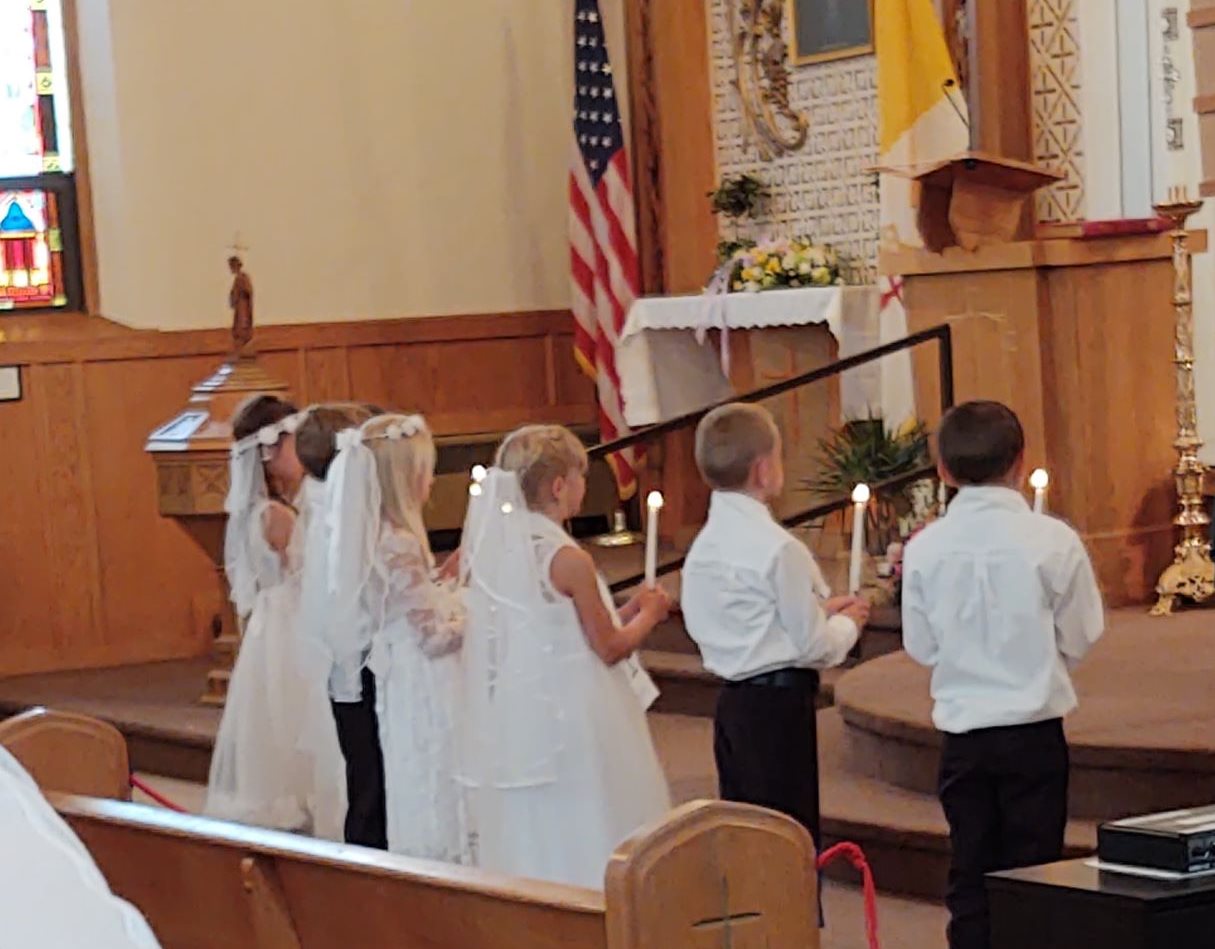
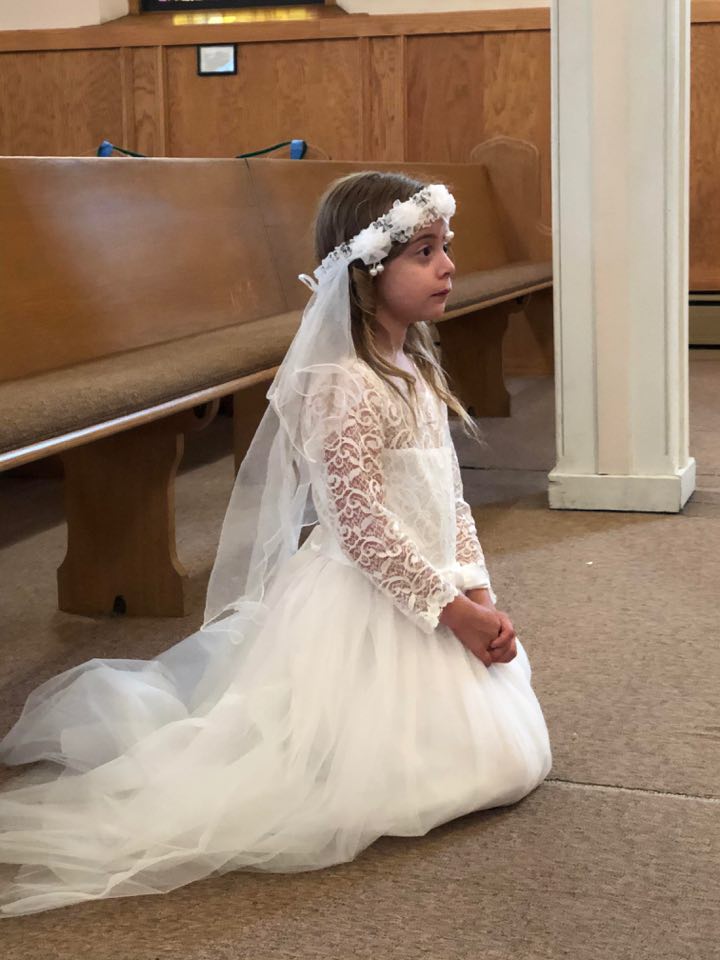
It has been humorously observed that for second graders preparing for and receiving their First Communion it can be harder for them to believe that the round, flat, unfluffy, Consecrated Host was ever bread to begin with than it is for them to believe it is Jesus. This is because they believe that Jesus can do, and does do, the things he says. On this feast of Corpus Christi, let’s humbly turn and become more like those children, who accept that their good and loving friend, our Lord Jesus Christ, is truly here before us.

The Trinity is a Communion of Love

May 29, 2021

Solemnity of the Most Holy Trinity
By Deacon Matthew Bowe

The Holy Trinity

Today we celebrate the Solemnity of the Most Holy Trinity, one of the Church’s most profound and deepest mystery. One thing to know about the Trinity, even if it is the only thing that you remember today about the Trinity, is this – the Trinity is a communion of Love. The Trinity is Love, for God is Love. As St. Augustine said long ago in the fourth century, the Father is the Lover, the Son is the Beloved, and the Holy Spirit is the shared Love between the Father and the Son. That is the mystery that dwells deeply within our prayers and meditations.

Throughout the centuries, many great theologians, mystics, and spiritual masters have meditated and contemplated upon the mystery of the Holy Trinity. They wrote treaties titled On the Trinity, of which there are many, and the reason for this desire to understand this mystery is that this is one of the mysteries that a person must believe in order to be a Christian.

Now the word “mystery” comes from the Greek word “mysterios,” meaning secret. “Mystery” does not mean something to be solved by following clues nor does it mean “secret” as in it is not meant to be known, for the mystery of the Holy Trinity is inexhaustible, and cannot be fully known or explained, and is therefore unsolvable, but it has been revealed to us, something to be known through faith. God wants us to know who He is in his infinite mysteriousness and greatness.

So what do we know about the Holy Trinity? I would like to use a lesser-known source. It is a Creed, like the Nicene or Apostle’s Creed that we profess during the Mass. It is attributed to St. Athanasius, who is known as the Doctor of Orthodoxy. The first part of this creed explains who the Trinity is.

The first truth is that we worship one God in Trinity, or Three Persons, and the Trinity in unity. There is one God, who is a Trinity, Three Persons who are in unity, hence the name, and we know the Three Persons are the Father, the Son, and the Holy Spirit.

The second truth is that God is one substance, or one Being. There are not three gods, only one, but a Being in Three Persons. The Father, the Son, and the Holy Spirit are God, but they are not each other. The Father is neither the Son nor the Holy Spirit, the Son is neither the Father nor the Holy Spirit, and the Holy Spirit is neither the Father and the Son, yet God is a Trinity of Three Persons who are in unity. Within the Godhead, there are what are called two processions. The Father begets the Son who is begotten, and the Holy Spirit proceeds from the Father and the Son.

The third truth is that each Person is equal, in majesty and glory. Each Person is uncreated, incomprehensible, eternal, and almighty. Each Person is God and Lord, yet we do not say that there are three gods and three lords. What we say about the Godhead can be said about each Person of the Trinity, again, not as three separate gods but each Person sharing in the attribute infinitely. This is the truth of the Catholic faith about the Trinity. As this part of the Athanasius Creed finishes, the belief of “the Unity in Trinity and the Trinity in Unity is to be worshipped. He therefore that will be saved must thus think of the Trinity.”

In fact, St. Caesarius of Arles stated that “the faith of all Christians rests on the Trinity” (CCC #232). The Trinity is the most real thing. Yet, the mystery of the Trinity cannot be known by reason. God needed to reveal this truth about Himself for us to know Him as a Trinity. It cannot be known by reason that the Godhead is a Trinity and that each Person is in relation to each other, of which there are four relations. The Father relates to the Son, and vice versa, and the Father and the Son to the Holy Spirit, and vice versa. The Three Persons are in an intimate communion with each other, and this communion of Persons is an archetype of the communion God desires with His people.

This is why Jesus commands His disciples to “Go, therefore, and make disciples of all nations, baptizing them in the name of the Father, and of the Son, and of the Holy Spirit.” God, Who is a communion of Three Persons, desires also to commune with His people and for His people to commune with Him. According to the Catechism, “Baptism signifies and actually brings about death to sin and entry into the life of the Most Holy Trinity through configuration to the Paschal mystery of Christ” (CCC #1239). This is why Baptism is so important and why the Church seeks newborns to be baptized within a short time after birth.

Next, the Holy Trinity, as a communion of Three Persons, is also an archetype of the family. The Catechism states that “the Christian family is a communion of persons, a sign and image of the communion of the Father and the Son in the Holy Spirit” (CCC #2205). Families are called to be missionaries and to evangelize to others. They are called to be witnesses to the Gospel message to other families and people who need Jesus in their lives. As members of the Mystical Body of Christ, of the Church, of the People of God, we should desire that other people come into communion with God and His Church, to experience His love. God is a Trinity because God is love.

How does someone pray to the Holy Trinity? First, simply sit in His presence. Have you ever sat with someone who is dear to you and you did not have to say anything? You simply enjoyed each other’s presence. This is good way to pray to God, especially when our words fail us. Simply sit silently in God’s love. Second, learn about the Holy Trinity (as I said, there are many treatises on it). In order to love something or someone, you must first know about it. The more you learn about the Holy Trinity the more that you will be capable of loving the Trinity. Third, pray to each Person of the Trinity, to the Father, Jesus the Son, or the Holy Spirit as persons, as you would speak to your friends and family.

The Trinity, although inexhaustible in mystery, is something that can be known and is accessible to us. The Trinity is near us. We remember both the Trinity and our Baptism when we sign ourselves with holy water. Just as the Trinity lives in intimate communion and relation with each other, the Trinity desires for us to do the same, for us to live in communion and unity with each other, and more importantly, for us to dwell in communion, relationship, and unity with the Most Holy Trinity. And if you remember nothing else from this homily, remember this: the Trinity is a communion of Love.

Trinity Symbol

You are Called to Service

May 22, 2021

Pentecost Sunday


You have hands and arms, feet and legs, ears and eyes, a mouth and a nose. They are all valuable parts of your body. But without the presence of your animating soul extending throughout them, these parts would just lie around, inactive, achieving nothing. God has likewise fashioned his Church as the Body of Christ with an animating Spirit. The Holy Spirit is like the soul of the Church, extending through all its members. St. Paul teaches the Corinthians in our first reading:

As a body is one though it has many parts, and all the parts of the body, though many, are one body, so also Christ. For in one Spirit we were all baptized into one body… and we were all given to drink of one Spirit.”

As your soul moves your body to achieve your works and purposes, so the Holy Spirit moves God’s Church to achieve his good works and purposes with us. St. Paul also tells us:

There are different kinds of spiritual gifts – but the same Spirit; there are different forms of service – but the same Lord; there are different workings – but the same God who produces all of them in everyone. To each individual the manifestation of the Spirit is given for some benefit.”

So each baptized person in communion with Christ has the Holy Spirit, and has gifts of the Spirit, and important works to do, and is called to Christian service.

I’ve heard people remark recently that their lives now feel like a clean and open slate. So many routines were cancelled by the pandemic that we now get to decide what worthwhile things to refill our lives and schedules with. I believe this is a important time and an opportunity for our parish. This season must begin a new springtime for the Church, otherwise our “new normal” could be an unchecked decline into decades of winter. How we respond will impact the salvation of souls for generations.

A week ago, I urged you to ask, “Lord, what do you want me to do?” What gifts are you being called to use? What new works are you being called to do? What service are you being called to begin? Let’s contemplate the gifts and desires the Holy Spirit has given you, and consider different works of service you may be called to in our parish.

► Are you a friendly person who knows our community and can make strangers feel welcome? You might be called to be an usher-greeter at our church.

► Can you appreciate the sense and mood of a sacred text, and read it well for others? You might be called to be a lector/reader.

► Are you a good singer or musician? You might be called to sing or play your instrument at Mass.

► Do you want to be close to God at his altar? You might be called to be an altar server, deacon, or priest.

► Do you have a heart for the homebound or those in nursing homes and desire to bring Jesus Christ to them? You might be called to be an Extraordinary Minister of the Holy Eucharist for them.

► Do you desire to be closer to Christ and appreciate that without prayer the Church’s efforts will not be fruitful? You might be called to be an adorer at St. John’s 24-hour Eucharistic Adoration (which precedes the 1st Fridays of each month), or called to join our parish prayer chain, or called to begin attending weekday Masses.

► Do you desire fellowship with other Catholic men or women and want to support charitable works? You might be called to join our Parish Council of Catholic Women or the Knights of Columbus.

► Do you enjoy reading great books and discussing them with friends? You might be called to start a parish book club here.

► Do you love a Catholic video series, like Jeff Cavins’ “The Great Adventure Bible Series,” or Bishop Barron’s “Catholicism” series, or Steve Ray’s “The Footprints of God”? You might be called to host a parish viewing and discussion group for it.

► Do you want to help the poor, the environment, and our church and school while having a fun time? You might be called to join our Thrift Sale volunteers, who do great work.

► Are you good with numbers and a person of integrity? You might be called to be collection counter or to help selling Scrip.

► Are you good with social media or data entry? You might be called to create posts for our parish Facebook page, or called to update our parishioner and school alumni databases.

► Do you care deeply about children, their education and well-being? You might be called to be a mentor, or a tutor, or a playground supervisor, or a school librarian, or even a teacher’s aide at St. Paul’s Catholic School.

► Do you want to help hand-on our Catholic faith to young people? You might be called to be a CCD teacher. After years of good and faithful service, Jenny Hoecherl is stepping down this summer as St. Paul’s CCD and youth ministry coordinator. You may be called to take this important, salaried position.

That’s about two dozen different roles and missions to which you may be called, and I’m sure the Holy Spirit could show you others. So what does the Lord want you to do? To what holy service are you being called? Before Pentecost, the disciples were uncertain and hesitant, hiding behind locked doors. But on Pentecost the Holy Spirit showed them what to do and gave them the courage to do it. Jesus says in today’s Gospel: “When he comes, the Spirit of truth, he will guide you to all truth.” So ask him what you are called to do. Sometimes God uses other people to show us his will. Tell your friends and family members what gifts of God you see in them and encourage them to put them to good use. Jesus sent his disciples on mission in pairs, two-by-two. Perhaps ask a friend or relative to join you in some holy endeavor so that neither of you need go alone. Who could you invite to what? As members of Christ’s Body you, are called to faithful service. So allow the Holy Spirit to enlighten and empower you to achieve God’s works and purposes in this important time.

So what do we do now?

May 16, 2021

Ascension Sunday

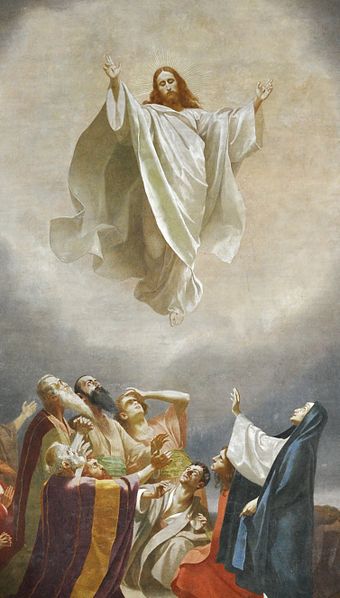
Christ's Ascension by Fresken von Gebhard Fugel, 1893-1894.Where are we now in the Easter season? Let’s recap. Jesus resurrects and first appeared to his disciples on Easter Sunday. And for forty days, he is with them off and on, appearing and disappearing, teaching them about the Kingdom of God and preparing them for their important work ahead: that of sharing the Good News and shepherding his Church. On the last of those forty days, Jesus ascends to his Father in heaven. And for the next nine days, his disciples (as per Christ’s instructions) remain in Jerusalem praying for and awaiting the promise of the Father about which they had heard Jesus speak. Finally, on the fiftieth day, on the Jewish feast of Pentecost, the disciples are intensely filled with the Holy Spirit. They become empowered to begin sharing their stories about who Jesus is and what he has done, inviting others to know him, love him, serve him, and be saved through him. Today we celebrate the Feast of the Ascension, looking forward to the Feast of Pentecost next Sunday.

But wait a second… didn’t I just mention that there were nine days in between the Ascension and Pentecost? Indeed, the Feast of the Ascension is traditionally observed on Ascension Thursday, a few days ago earlier this week. But in our diocese and the vast majority of dioceses in the U.S., the bishops officially transfer the feast to today, the following Sunday, so that more of the faithful will encounter and celebrate this feast. Another quirky thing about today’s Mass is how the story of Jesus’ Ascension is recounted more thoroughly by our first reading, from the beginning of the Acts of the Apostles, than by our Gospel reading, which briefly mentions the event.

The Acts of the Apostles says, when Jesus’ disciples had gathered together they asked him, “Lord, are you at this time going to restore the kingdom to Israel?” In other words, ‘Will you now forcefully make your kingdom come, restoring the earthly kingdom of David and Solomon, or perhaps now even impose a still greater kingdom where God’s will is done as fully on earth as it is in heaven?’ Jesus answered them, “It is not for you to know the times or seasons that the Father has established by his own authority.” When Jesus comes again in manifest, unveiled glory, with all his angels with him, no one will be able to ignore Christ the King or harass his flock any longer, but regarding the time of that return, no one knows the day or the hour except God. In the meantime, Jesus says, “you will receive power when the Holy Spirit comes upon you, and you will be my witnesses in Jerusalem… and to the ends of the earth.”

When he had said this, as the disciples were looking on, Jesus was lifted up and a cloud took him from their sight. So there they were, looking intently at the sky, not quite exactly sure what they were supposed to do now. I wonder how many hours they would have stood gapping at the sky if not for what happened next. Suddenly, two men dressed in white garments stood beside them. (Though not explicitly stated, these seem to be angels in human appearance. Well-informed young men in white had also been at the tomb on Easter Sunday morning, announcing and helping the disciples understand Jesus having risen from the dead.) At the Ascension, the messengers said, “Men of Galilee, why are you standing there looking at the sky? This Jesus who has been taken up from you into heaven will return in the same way as you have seen him going into heaven.” With this reassuring redirection, the disciples return from the Mount of Olives into the city of Jerusalem to pray and prepare for the Holy Spirit’s next move. The Apostles had received the Holy Spirit before in some measure. On Easter Sunday evening, Jesus had breathed on them and said, “Receive the Holy Spirit.” But they required a further gift of the Spirit to know and act on what God specifically wished them to do.

Today, we are in similar circumstances as those first Christians. We each first received the Holy Spirit at our baptisms and entered a deeper, more extensive relationship with him through our confirmations. Now, as we anticipate the Feast of Pentecost, I urge you to pray for the Holy Spirit to enlighten and empower you for what God wants you to do next. Our community is now happily returning nearer to normal, but what will our new habits and endeavors be? This post-pandemic world needs God—it always has—and the people in your world you need Jesus Christ and his Church. By your words and actions, Jesus wants you to show and share with others who Jesus is for you and what he has done for you, inviting others to know him, love him, serve him, and be saved through him. Jesus Christ is not forcibly imposing his Kingdom but sharing and advancing it subtly, intricately, mysteriously, and most wonderfully, especially through persons who are open to doing his will.

I believe God wants to begin one or more new things with you. So I urge you to ask him in these days, “Lord, what do you want me to do?” To ask the question is the start of saying “Yes” to him, but to refuse to ask the question is to answer him “No.” So ask, and seek, and see what new and great things the Lord would do through you during this new springtime for the Church.

“As the Father Loves Me, so I Also Love You”

May 8, 2021

6th Sunday of Easter

Who was the first person on earth to know you in your lifetime? Upon reflection, you realize it was your mother. Your mother knew you long before you knew her. And I would wager that she loved you as herself, even willing perhaps to lay down her life for you with the greatest love.

An unborn baby’s understanding of things, of its mother and of itself, is limited. But the mother surrounds the baby. She is responsible for and behind the child’s entire universe. The little one is totally dependent upon her, and experiences everything in the midst of mom. Though the sound is quiet and somewhat muffled with distracting noises, the listening little child can hear the mother’s voice and feel her pulse. Imagine an unborn baby doubting and asking, “Does Mom really exist? Is there really a mother at all?

It is right that we love our mothers, though we ought not to make them into idols. When Cornelius met St. Peter, the Roman centurion fell at his feet to do him homage, but Peter raised him back to his feet, saying, “Get up. I myself am also a human being.” Only one mother in human history has been perfect, but our parents present us with our first living image and icon of God.

The Holy TrinityAs much as a baby receives from his or her mother, the Son of God receives still more so from his Father. How does God the Father give life to his Son? The Son is eternally begotten of the Father; “God from God, Light from Light, true God from true God.” The Father gives his whole being to the Son, and his Son, so loved, receives everything with joy. In today’s Gospel, Jesus says, “As the Father loves me, so I also love you.” How does God love you and me like the Father loves the Son?

For starters, God loves us first. The Father and Son are coeternal, but the self-gifting of the Father is the source of the Son, who then loves the Father, self-gifting himself in return. Likewise, God loves us and gives himself to us first, before inviting us to do the same. “In this is love,” St. John writes in our second reading, “not that we have loved God, but that he loved us and sent his Son as expiation for our sins.” And St. Paul tells the Romans, “God proves his love for us in that while we were still sinners Christ died for us.

Another way we are loved like the Father loves the Son is in how we receive every good thing from God. Like an unborn child receives from its mother, and the eternal Son receives from the Father, you receive everything from God through Jesus Christ. St. Paul speaks of the importance of the Son to the Colossians: “In him everything in heaven and on earth was created, things visible and invisible… all things were created through him… He is before all things, and in him everything continues in being.” For us, Jesus Christ is the one through whom all good things come.

Now would it make any sense for an unborn child, who is cherished by its mother, to see his or her mommy as an enemy? Or could God the Father and God the Son ever be rivals? Of course not! And yet we are guarded against Jesus. We hesitate to share our time with him, we hesitate to give our money for him, we hesitate to forsake our habitual sins for him. So I challenge you, I dare you, to trust more in him who loves you.

When Jesus says, “Remain in my love. If you keep my commandments, you will remain in my love,” he is not threatening to stop loving us. No—we must keep Christ’s commandments, doing his loving will, to fully receive everything he wants to give us. Jesus, who is first loved by God, who receives everything from God, who does God’s will, who rejoices and remains in God, who loves God and self-gifts himself fruitfully in return to God, desires you and me to experience the same blessedness. “If you keep my commandments,” he says, “you will remain in my love just as I have kept my Father’s commandments and remain in his love. I have told you this so that my joy may be in you and your joy might be complete. … It was not you who chose me, but I who chose you and appointed you to go and bear fruit that will remain.”

This Sunday, let us love, honor, and pray for the mothers from whom we were born on earth; while we love, honor, and trust all the more the eternal Son through whom we are born again from above.

HABITS Produce Much Fruit

May 1, 2021

5th Sunday of Easter
By Deacon Dick Kostner

Descending VineyardOur Gospel from John has Jesus telling his disciples, telling us, how we can survive and be happy not only in this life but gain for us everlasting life if we but realize our dependence for success and life depends on our acceptance of the fact that we cannot succeed without help from the “Vine,” without Jesus. In preparing for this homily, I went to Formed to get their take on today’s gospel. The minister who reflected upon the Gospel said that we need “HABITS” to allow us to produce fruits from the vine of God, who is Jesus, in order to deal with the challenges that we will face if we wish to be followers of Christ and find peace and experience a successful life as we journey to the Father’s house.

H” stands for Holy Time. We need to commit and schedule within our busy life “time” to communicate with Jesus. Many refer to this communication as prayer. I like to think of it as conversation with Jesus about challenges that we are facing as we journey as well as pleasures and great happiness gifts that we appreciate and recognize as being given to us by God, the “dog treats” God graces us with for being fruitful branches of His divine vine. The minister suggested starting with a commitment of ten minutes a day to communicate with Jesus and letting it grow from there.

A” stands for Accountability. The minister said this stands for us having at least one close friend that we can confide in and request guidance, when we need help and direction. I would suggest that this be a person who has already established a close relationship with Jesus and who is a healthy branch of the vine of Jesus. I can remember when shortly after I was ordained I met with our new priest, Fr. Norm Boneck, and asked him if I could develop a per-baptism class at St. Paul’s as we had no program at that time and he responded by saying, “NO! I want you to start an RCIA program for the parish!” Panic hit me. I had absolutely no experience or knowledge of how that could happen. I thought to myself, “Man, you picked the wrong dude to tackle that job.” Barb remembered that one of my deacon friends had mentioned that he and his wife had done a program at their parish, and she suggested I call him and yell “help!” I did that and he invited us to go to Wisconsin Rapids and met with him for some advice. The first thing he said to me is to not worry and that he had experienced the same panic and that the Holy Spirit would not let be get into too deep of water so as to drown. With His help and guidance St. Paul’s began an RCIA program which has produced much fruit from this Branch.

B” stands for Bible. We need to get to know Jesus as a person and that can best be accomplished by reading about him and living a life based on the Gospel messages. Through Scripture we learn that Jesus was given to us to shepherd his followers. We discover that there does exist an evil one who uses the tools of confusion, deception, and fear to control us and lead us away from the protection of the Good Shepherd and his guard dog His Church. We have witnessed this first hand this last year where the world has become afraid and confused by the Covid. We see how evil has attacked our guardian the Church and the faith it teaches to leave us feeling helpless. All this helps separate us from truth and the protection our faith gives us to suppress and overcome the evil in this world.

I” stands for Investing and supporting the parish we are assigned too. The message from Jesus is that we not only read his Word but also live his Word by example. Good fruit requires commitment in the form of financial support of our parish as well as a commitment of our time and talents to our parish so that it may remain healthy and fruitful. Our parish needs your commitment of time, talent, and treasures to be a successful and healthy branch of God that will produce much fruit. Statistics show that only about 30% of a parish membership support their church with their commitment. Only 30% of the people are helping to keep the branch of Christ active and healthy. That percentage needs to increase if we are to produce a good crop of fruit during our lives.

T” stands for Tell Others. We need to share with others the benefits that we will be gifted with if we are productive branches of Christ. We need to share with others the “dog treats” the graces that God has bestowed upon us for being active followers of Jesus. Jesus tells us to spread the Good Word.

Finally, “S” stands for Sacraments. The Church of Jesus is one that is based on Sacrament. Sacrament bestows upon us graces which can and will produce super natural powers that will be gifted upon those who celebrate the Sacraments. These gifts from Jesus will provide us with energy and powers of accomplishment beyond human capabilities. Through the spiritual graces gifted us through participation in the Sacraments the Branches are fed nutrients from the Vine that will allow us to accomplish tasks that would otherwise be humanly impossible.

Bottom line is that we are all dependent upon the Vine for protection from the storms of life and production of fruit. Let us all form HABITS that will make us healthy branches that will produce much fruit from the vine for all who wish to enter the Kingdom of God.

Jesus Christ our Cornerstone, Shepherd, & Brother

April 24, 2021

4th Sunday of Easter

We are here today because of our Lord and Savior, Jesus Christ. And as truly today as when St. Peter first preached these words, “There is no salvation through anyone else, nor is there any other name under heaven given to the human race by which we are to be saved.” Jesus Christ is the Cornerstone, he is the Good Shepherd, he is the Son of God.

St. Peter is quoting today’s psalm when he proclaims Jesus as the stone rejected by the builders which has become the cornerstone. Christ is foreshadowed in the Old Testament by passages about holy stones: cornerstones, keystones, and capstones. A cornerstone is the foundational basis of a building which makes the whole structure possible. A keystone is found at the top of an arch—maintaining its shape alongside its fellow stones. And a capstone is a building’s top-most stone, its crowning glory.

In his new Temple, the Church he builds, Jesus Christ is “the beginning and the end”: he is the cornerstone which makes all this possible, he is the capstone—our crowning glory, and he is our keystone, working alongside us. St. Peter would later write to Christians about Christ:

Come to him, a living stone, rejected by human beings but chosen and precious in the sight of God, and, like living stones, let yourselves be built into a spiritual house … to offer spiritual sacrifices acceptable to God through Jesus Christ.”

In today’s Gospel, Jesus Christ also declares, “I am the Good Shepherd.” He is our Good Shepherd. Unlike others who act for self-interest and profit, he deeply cares about us. He knows us and we can know him. If we recognize his voice and follow after him he leads us to lush pastures and cool waters, to true rest with him and to the fruitfulness in good works and holiness his care makes possible: much wool and much milk produced for his pleasure. If we become lost, he seeks us out, and brings us back rejoicing. And Jesus protects us, offering his life to save his flock from evil and death. Jesus says:

This is why the Father loves me, because I lay down my life in order to take it up again. No one takes it from me, but I lay it down on my own. … This command I have received from my Father.”

Jesus Christ is the Son of God the Father. It would have been enough for him to save us. (We were never in a position to demand even that.) But Christ goes further still, allowing us to be his Father’s children too. “See what love the Father has bestowed on us,” St. John writes, “that we may be called the children of God. Yet so we are. Beloved, we are God’s children now…” We are not kept as strangers, as slaves, or as mere subjects to him, but welcomed as precious and beloved sons and daughters.

In each of these true, biblical titles, Jesus the Cornerstone, the Good Shepherd, and Son of God, Christ is preeminent, most important among us; our foundation, our leader, and our divine Lord. Yet notice how Jesus in each of these realities offers a place for us with him: as stones within his Temple, as sheep within his flock, as children within his family. Jesus wants to be with us and wants you to be with him always, here at Holy Mass, in your daily times of prayer, and throughout your daily life. Will you respond to his invitation with the dedication of your time and devotion? We are here today because of Jesus Christ our Savior and Lord. Let him be your cornerstone, your shepherd, and your brother, for there is no other name under heaven by which we can be saved.

“You Have Nothing to be Ashamed of”

April 17, 2021

3rd Sunday of Easter

When I was 26 years old, in my second year of major seminary, I was bothered by a worrisome question or doubt. “Of course, God loves me,” I thought to myself. “He loves everyone – even those in hell. But does he like me? Even the eternally damned are loved by God though they don’t love him back. I know that God loves me, but is he pleased with me?” I was burdened by this question for several weeks until, I believe, God personally addressed my concern.

During the summer of 2007 near the end of an hour of prayer (which is called a “Holy Hour”) sitting in a chapel before Jesus in the tabernacle, I heard him say in my thoughts: “You have nothing to be ashamed of.” I replied that I would love for him to say that, but how could it possibly be true? I knew my sins, and he knew them far better than I. So he would have to convince me.

He asked me, again in my mind, “When you sin in a big way, you always try to get to Confession, right?

Yes,” I answered.

And when you sin in a small way, once you realize you’re doing it, you try to stop, right?

Yes, that’s true.”

And then he said, “You’re for me.”

I recognized in this an echo of a verse from the Letter to the Romans: “If God is for us, who can be against us?” Jesus was telling me, “If you’re for me, how could I possibly be against you?” The nagging doubt I had carried for a couple of months he resolved in a couple of minutes by highlighting my concern over the very sins which had made me feel ashamed.

On Pentecost Sunday, fifty days after Easter, St. Peter preaches to the crowd in Jerusalem:

[Jesus the Christ] you handed over and denied in Pilate’s presence when [the governor] had decided to release him. You denied the Holy and Righteous One and asked that a murderer be released to you. The Author of life you put to death, but God raised him from the dead; of this we are witnesses.

Peter is charging them as accessories to deicide. He is declaring them guilty accomplices in the murder of God. And this crime is ours as well, because the sins of all humanity sent Jesus to the Cross. But Peter is preaching not to condemn the world to hopeless shame, but so that the world might be saved through Christ. “Repent, therefore, and be converted,” Peter proclaims, “that your sins may be wiped away.

In our Gospel, Jesus shows his disciples the wounds in his hands and feet not as a bitter reproach but that they may share his joy. The greeting of the risen Lord is not “I condemn you,” but rather, “Peace be with you.

As St. John writes in our second reading:

My children, I am writing this to you
so that you may not commit sin.
But if anyone does sin,
we have an Advocate with the Father,

Jesus Christ the righteous one.
He is expiation for our sins,
and not for our sins only
but for those of the whole world.

In conclusion, know and remember that guilt is different than shame. We should feel guilt for the sins we commit. When I sin, guilt says, “I have done foul, ugly, and unlovely things, and I must repent.” But shame says, “I am foul. I am ugly. I am unlovable. And I cannot be saved.” The feeling of guilt can be a gift from God, but the Evil One wants you to feel ashamed. Shame is unhealthy, causing us to despair and hide from God. Guilt, on the other hand, is useful when it spurs us to conversion, to spiritual health and our salvation.

Jesus loves you and he likes and is pleased by every good thing about you. Repent, therefore, and be converted that your sins may be wiped away and your love of God may be truly perfected in you.

Three Ways to Strengthen your Faith

April 12, 2021

Divine Mercy Sunday

St. Thomas the Apostle, a martyr for Jesus Christ, is famously nicknamed “Doubting Thomas.” He gets a lot of flack for being slow to believe because of today’s reading from the Gospel of John. One week after Easter Sunday, Jesus appears in the Upper Room once again. This time Thomas is there and Jesus says to him: “Put your finger here and see my hands, and bring your hand and put it into my side, and do not be unbelieving, but believe.” Yet the Gospels show that other disciples were slow to believe as well. The last chapter of St. Mark’s Gospel summarizes Jesus’ post-Resurrection appearances in this way:

“When he had risen, early on the first day of the week, he appeared first to Mary Magdalene, out of whom he had driven seven demons. She went and told his companions who were mourning and weeping. When they heard that he was alive and had been seen by her, they did not believe. After this he appeared in another form to two of them walking along on their way to the country. They returned and told the others; but they did not believe them either. But later, as [the apostles] were at table, he appeared to them and rebuked them for their unbelief and hardness of heart because they had not believed those who saw him after he had been raised.”

St. Luke records how at that first appearance in the Upper Room, even after Jesus had shown them his wounded hands and his feet, the disciples were “still incredulous for joy.” And later, when the eleven apostles went back up north to Galilee, to a mountain to which Jesus had ordered them, St. Matthew notes, “when they saw him, they worshiped, but they doubted.” There Jesus gave them The Great Commission to make disciples of all nations, even though their faith was not yet perfect.

After everything that the apostles had witnessed Jesus do during his ministry; including multiplying loaves and fishes to feed thousands of people, walking on water, and bringing at least three persons back to life, they still felt doubt. Jesus had raised Jairus’ 12-year-old daughter from the dead. He raised the only son of a widow of the city of Nain from the dead. And Jesus raised Lazarus, the brother of Martha and Mary of Bethany, from the dead. Yet the apostles still doubted, despite evidence, that Jesus himself had resurrected from his tomb. This seems senseless, but I can’t be very hard on them.

When I was in school, our science teacher once attached a bowling ball to a rope and attached that rope to the ceiling. The challenge was to hold the ball up to your nose (so that the rope was without slack) and then to release it, allowing the bowling ball to swing away and swing back toward your face, without flinching. Now I knew that if I didn’t push the ball away when I released it, and if no one touched the ball while it was in motion, if the whole thing held together and if I stood in place, there was no way that bowling ball could possibly hit my face. But when I saw it coming toward my face, I still flinched and stepped back. What we feel doesn’t always match what we think.

It’s like when you fly on an airplane. You know its the safest form of travel. But maybe you still get a bit anxious as you’re boarding, or when the jet accelerates faster and faster down the runway, and climbs thousands of feet up with nothing but empty air between you and the ground. You’re a little alarmed when you hear the aircraft make its mechanical sounds, or when you’re descending to land and you see everything on the ground getting closer and closer, hurtling by. You feel nervous flying, even though your car trips to and from the airports put your life in greater danger than the flight. I think this is just a part of our present human condition; we can doubt even the things we know with certainty. So how can you nurture and deepen your faith? First, in Christian community. Second, by asking and seeking. And third, by being it into being.

Christian community, both here at Mass and outside of Church, helps sustain our faith and grow it. We Christians are like lit charcoals inside of a cookout grill. If you were to dump and scatter these coals across your driveway, they would cool off entirely, achieving nothing but a mess. But by gathering these lit coals together, they become hotter and remain hot by sharing one another’s warmth. As the Letter to the Hebrews says, “We must consider how to rouse one another to love and good works. We should not stay away from our assembly, as is the custom of some, but encourage one another.” When St. Thomas was not yet fully convinced that Jesus had arisen, he still remained within the Christian community. Inside the Upper Room, where the first Eucharist was celebrated, Thomas went on to become convinced of the wonderful truth about our Lord and our God. So do not neglect, but prioritize in your life, your Christian friendships and our community.

Another important way to nurture and deepen your faith is by asking good questions about it and seeking out the truth. The two disciples on the road to Emmaus were discussing and debating with one another about Jesus’ life, death, and resurrection. Then, though they did not fully recognize his presence, Jesus himself drew near and walked with them. He opened their minds to understand the Scriptures and set their hearts burning with new faith and joy. Jesus calls us to be childlike but he wants our faith to be mature. He invited Doubting Thomas to investigate and probe him. Jesus says, “Whoever asks receives, and whoever seeks finds.” So ask mature, challenging questions about our Faith, in conversation, in study, and in prayer. Ask good questions and you will find solid answers to strengthen your faith.

And a third way to deepen your faith is by being it into being. What are the true and beautiful things we believe that you tend to doubt? What are some Christian truths you profess but sometimes have a hard time feeling or living out? Maybe it’s the belief that you’re loved. Maybe it’s the belief that you’re forgiven, or that you could be reconciled to God. Maybe it’s believing that you’re never truly alone. Or maybe it’s believing that Jesus is alive and active today in your life and our world. Ask God to show you your half-accepted Christian beliefs and reflect on them. Ask God for grace to accept these more fully and then be them into being, by which I mean, act as you would if you accepted these truths completely. Then you will begin living more like Jesus wills for you.

On one occasion, the apostles pleaded with Jesus, “Increase our faith!” And the Lord replied, “If you have faith the size of a mustard seed, you would say to this mulberry tree, ‘Be uprooted and planted in the sea,’ and it would obey you.’” Here Jesus is saying that even if your present faith is tiny, know that your small, imperfect faith is already enough for you to begin doing and becoming everything that he desires for you.

“But Him They Did Not See”

April 5, 2021

Easter Sunday

Saint Peter and Saint John Running to the Sepulchre by James Tissot.

Holy Thursday Homily – The New Passover Lamb
Good Friday Homily – The New Adam
Easter Vigil Homily – The Beginning of the New Creation

It’s surprising and remarkable that the Church’s Gospel for this Mass, the Mass on Easter Sunday morning, does not feature even a brief cameo of Jesus. In this morning’s gospel, the risen Lord does not make any appearance. Mary of Magdala runs back from his tomb without having seen him. She goes to Peter and John and reports her fear that someone has stolen his body. So Peter and John run to the tomb. They arrive and investigate, but him they do not see. And then those two disciples return home.

Later that same day, in encounters recorded by the Gospels, they would see the Jesus alive in the flesh, and touch him, speak with him, and rejoice. As St. Peter announces in our first reading:

“This man God raised on the third day
and granted that he be visible,
not to all the people, but to us,
the witnesses chosen by God in advance,
who ate & drank with him after he rose from the dead.”

Jesus did not appear to everyone, but only some, mostly his friends and others open to receive him.

The Risen Lord did not appear to King Herod, whom he met briefly during his Passion. Herod was a man of vices and pleasures and was curious and excited to see this wonder worker. But when Jesus only answered him with silence, Herod was not entertained and, no longer interested, sent Jesus away.

The Risen Lord did not appear either to Governor Pontius Pilate, who presided over his Roman trial. Pilate thought Jesus had committed no capital crime, but this cynical man of the world (who had scoffed “What is truth?”) thought life would be easier with Jesus out of the way, and so he put him to death.

And the Risen Lord did not appear to the High Priest Caiaphas, who conspired against him. The High Priest was offended by Jesus’ calls to conversion and he envied his popularity and influence among the people. Caiaphas was too proud to learn from and follow Jesus, so he condemned the Christ and became his enemy.

The hedonism of Herod, the pragmatism of Pilate, and the conceitedness of Caiaphas kept them from accepting and following Jesus. Imagine if Jesus had appeared to Herod, Pilate, and Caiaphas after rising from the dead. Would they have loved him then? Seeing his power they might well have submitted to him, but that’s very different than devotion.

Jesus did, however, appear to his disciples, his friends, following his resurrection. For example, Jesus met Mary Magdalene at the tomb on Easter morning after Peter and John had left. On Easter evening, Peter, John, and other disciples were visited by Jesus within the Upper Room even though the doors were locked. And Jesus would go on to appear beside the Sea of Galilee, to reconcile and rehabilitate Simon Peter who had denied him. Each encounter with the Risen Lord was surprising, personal, and beautiful. But at the time of our gospel reading there was only Jesus’ Easter tomb, an open door paired with an inner emptiness, which pointed to something greater, something divine, something real but still unseen.

In 1937, when the Gallup polling organization first began asking the question, 73% of Americans said they were members of a church, synagogue, or mosque. That figure remained near 70% for the next six decades, until about twenty years ago when the number began steadily declining. This week, Gallup’s latest polling indicates for the first time, a majority of Americans (53%) report not belonging to a house of worship. It’s a discouraging trend.

This seems related to a different Gallup poll published in 2020. At the end of that very trying year, surveyed Americans’ self-assessed mental health was worse than it had been at any point in the last two decades. The percentage of those rating their mental health as “excellent” fell for almost every demographic compared to the year before. Every age group, men and women; the married and the unmarried; the wealthy, the poor, and the middle class; each of these groups polled eight to twelve points lower on this question. Only one group reported higher rates of excellent mental health than before, increasing by four points despite the trials of 2020. It was those who, at least once a week, attended religious services.

Like other churches around the country, our public liturgies were suspended for awhile, about three months last year, due to the pandemic. But we have been safely celebrating public Masses in my parishes since last June. I am very pleased that none of my parishioners who have been attending Church have died from Covid; which suggests our Masses here are quite safe. But next Sunday, the weekend after Easter, will all our Masses be filled again like this?

Jesus says, To anyone who has, more will be given and he will grow rich; from anyone who has not, even what he has will be taken away. Jesus here is not primarily speaking about earthly economics, but of spiritual wealth. Christian discipleship requires real investment to show a great return. Like the Easter Tomb, our church door is open. Like the Easter Tomb, perhaps you find an emptiness within you. These things point to something greater, something divine, something real but still unseen. I urge you to begin coming back to Mass again, because Jesus reveals himself in surprising, personal, and beautiful ways to his disciples and friends.