It has been said that there are two kinds of people in this world: sinners who think they’re saints, and saints who know they’re sinners. Every saint has a past, and every sinner can have a future. We all have been the Prodigal (or wasteful) Son at various times in our lives. Whether for years, for days or hours, or just for moments, we have each strayed from and returned to our Father-God who delights to have us back. When we are being tempted to sin, we are being tempted to leave our Father’s house and no longer keep his company. In sinning we say, even if in a small way, “You may not be dead, but I want it to be as if you were. Give me an inheritance now. I can have an easier time, or a more enjoyable time, misusing your stuff than I can have by remaining with you.”
The Prodigal Son took his father’s things and went off to a distant country. The Kingdom of God and the Kingdom of this World are countries distant from each other, and yet they exist side-by-side. Sinners and saints live side-by-side together here below, but the difference between them is vast. A life of sin may be easier for awhile. The Prodigal Son enjoyed sensual pleasures and was free of his duties, like working in the fields with his older brother. But sin soon leaves us spent and depleted, as in drought and famine. If honest with ourselves, we sense our dire need.
At first, the Prodigal Son attempted his own coping-mechanisms short of repentance. He hired himself out to one of the local citizens who sent him to his farm to tend the pigs. (For Jews, tending ritually-unclean pigs would be one of the most degrading things a person could do.) The Prodigal Son longed to eat his fill of the pods on which the swine fed, but nobody gave him any. (His boss provided for the swine better than for him.) A sinner’s life is slavery. It’s unsatisfying, it’s unhappy, and they feel unloved. This does not excuse away the bad and harmful things they do, but hurting people hurt people. And knowing this, we can feel compassion for sinners.
 Coming to his senses, realizing how much he has lost, the Prodigal Son decided to go back home. He knew his unworthiness, so he prepared a speech to persuade his father to show mercy. But his Father needs no persuasion. While his son was still a long way off, the father caught sight of him, and was filled with compassion. He ran to his son, embraced him and kissed him. I imagine the father saw him from a long way off because he often looked to that road hoping his son would return. This day, he did. The father ran to his son—even though in that culture a dignified men would not run. Men might walk or let others come to them, but this father ran to his son. Then the father restores his son, with robe, sandals and ring, and declares a feast.
The son had decided to leave and decided to return home. The decision to dwell in the Kingdom of God or the Kingdom of this world is our choice. We are free, to wander or return, because God’s offer of grace (including his invitation to the sacrament of reconciliation) is always there. Though we wander in sin, averting our eyes from God, we can never escape his sight. Psalm 139 says, “Where can I go from your Spirit? Where can I flee from your presence? If I ascend to the heavens, you are there; if I lie down in the underworld, there you are.” And when we turn back to him, he runs to us, as the same humility we saw in the Incarnation. And then the celebration begins. As Jesus says, “There will be more joy in heaven [and among the angels of God] over one sinner who repents than over ninety-nine righteous people who have no need of repentance.”
As St. Paul declares in our second reading, “This saying is trustworthy and deserves full acceptance: Christ Jesus came into the world to save sinners.” Every saint has a past, and every sinner can have a future. In this Year of Mercy, let us each trust in God’s mercy, respond to his mercy, and practice mercy as Jesus would have us do.


 The Framers established a government with three separate branches: a Legislative branch to create laws, an Executive branch to enforce the law, and a Judicial branch to resolve conflicts of law. This separation and balance of powers was designed to protect liberty against our fallen human nature. In the words of James Madison, who is called the architect of U.S. Constitution: “Ambition must be made to counteract ambition.” The Framers knew how leaders tend to consolidate power around themselves as dictators and the tendency of majorities to trample the rights of weaker minorities. James Madison adds, “It may be a reflection on human nature, that such devices should be necessary to control the abuses of government. But what is government itself, but the greatest of all reflections on human nature? If men were angels, no government would be necessary.”

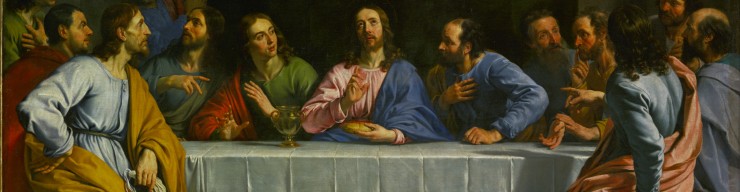
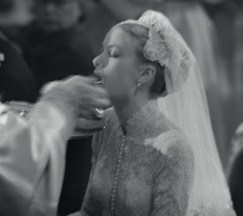 The Church has always proclaimed and worshiped Jesus Christ as truly present, body, blood, soul, and divinity in the Eucharist. This belief has been confirmed for us throughout the centuries. The Holy Spirit, whom Jesus promised would lead us to all truth and remind us of all that he told us, has reaffirmed this teaching in Councils of the Church. Jesus has also allowed Eucharistic miracles to unveil this mystery we cannot normally perceive. For instance, at the Miracle of Lanciano in eighth century AD, a priest who was doubting Jesus’ Real Presence witnessed the bread become flesh and the wine become blood (which coagulated and broke into five globules in the chalice) as he said the words of consecration. In 1971, scientific analysis indicated that, as at similar miracles, the Host was human cardiac muscle. Who would go through such trouble when a fraudster’s more convenient use of pig’s flesh would have been undetectable? The truth is that Jesus gives us his heart in the Eucharist, along with his whole self. You can go to Lanciano, Italy and behold this Host today.




 Perhaps we may find it surprising that Jesus describes these events as a good thing to his disciples. He says:
 In today’s gospel, Jesus talks about the scribes and a poor widow. He praises her, but criticizes them. Jesus saw her at one of the Temple’s thirteen contribution trumpets in the court of the women. These were donation chests topped as with tall road cones, but made of metal, with an opening at the top for dropping in coins. The coins of large contributions would make a large racket, like how a slot machine pays out in a casino. But the poor widow’s two coins fell in with quiet: *click* *click*




 Parishable Items