Archive for the ‘Saintly People’ Category

Pope Francis’ Great Americans

September 25, 2015

Pope Francis, during his visit to our country this week, elevated one figure from American history to sainthood, and spotlighted two other Catholics in his speech to the U.S. Congress. Who are they and what do they have to show and teach us?


St. Juniperro SerraSt. Junípero Serra
 (1713–1784)

This missionary was a Spanish Franciscan friar who founded nine missions for evangelizing the native people from San Diego to San Francisco in what is today California. In his homily for St. Junípero’s canonization on Wednesday, Pope Francis said of him:

“He was the embodiment of ‘a Church which goes forth,’ a Church which sets out to bring everywhere the reconciling tenderness of God. Junípero Serra left his native land and its way of life. He was excited about blazing trails, going forth to meet many people, learning and valuing their particular customs and ways of life. He learned how to bring to birth and nurture God’s life in the faces of everyone he met; he made them his brothers and sisters. Junípero sought to defend the dignity of the native community, to protect it from those who had mistreated and abused it. Mistreatment and wrongs which today still trouble us, especially because of the hurt which they cause in the lives of many people.

Father Serra had a motto which inspired his life and work, a saying he lived his life by: ‘Siempre adelante! Keep moving forward!’ For him, this was the way to continue experiencing the joy of the Gospel, to keep his heart from growing numb, from being anesthetized. He kept moving forward, because the Lord was waiting. He kept going, because his brothers and sisters were waiting. He kept going forward to the end of his life. Today, like him, may we be able to say: Forward! Let’s keep moving forward!”

© Copyright 2010 CorbisCorporationServant of God Dorothy Day
(1897–1980)

This Catholic social activist was an agnostic American journalist who converted and established the Catholic Worker Movement, Houses, and Newspaper. These advanced Catholic social teachings and provided direct aid for the poor and homeless. As a young woman, prior to her conversion, Day had an abortion and later gave birth to her daughter, though she never married. (A patron for repentance from sins like these seems much needed in our time.) The cause for her canonization has been opened by the New York Archdiocese since 2000, bestowing her the title “Servant of God.” In his (first of its kind) speech before Congress on Thursday, Pope Francis said, “Her social activism, her passion for justice and for the cause of the oppressed, were inspired by the Gospel, her faith, and the example of the saints.

Dorothy Day’s own famous quotes include, “The greatest challenge of the day is: how to bring about a revolution of the heart, a revolution which has to start with each one of us?” Of herself, in life she said, “Don’t call me a saint. I don’t want to be dismissed so easily.” And of Catholicism she said, “Our faith is stronger than death, our philosophy is firmer than flesh, and the spread of the Kingdom of God upon the earth is more sublime and more compelling.”

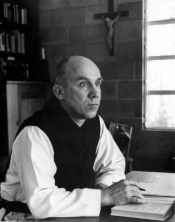
Thomas MertonThomas Merton  (1915–1968)

This monk lived a life as checked as Day’s prior his conversion to Catholicism during college in his mid-twenties. In December 1941, he joined the Trappist monetary in Gethsemani, Kentucky. Seven years later, he published an autobiography about his converion and spiritual journey called “The Seven Storey Mountain.” Though Merton wrote more than 70 books, this work spoke to his generation more than any other, inspiring many monastic vocations.

In his speech before Congress, Pope Francis said of Merton:

“He remains a source of spiritual inspiration and a guide for many people. In his autobiography he wrote: ‘I came into the world. Free by nature, in the image of God, I was nevertheless the prisoner of my own violence and my own selfishness, in the image of the world into which I was born. That world was the picture of Hell, full of men like myself, loving God, and yet hating him; born to love him, living instead in fear of hopeless self-contradictory hungers.’ Merton was above all a man of prayer, a thinker who challenged the certitudes of his time and opened new horizons for souls and for the Church. He was also a man of dialogue, a promoter of peace between peoples and religions.”

Thomas Merton own quotes include: “Pride makes us artificial and humility makes us real.” “We are not at peace with others because we are not at peace with ourselves, and we are not at peace with ourselves because we are not at peace with God.” “The beginning of love is to let those we love be perfectly themselves, and not to twist them to fit our own image.” And, “Faith is the total surrender to Christ, which places all our hope in Him and expects all strength and sanctity from his merciful love.”

Holy Aphorisms — August 4 — St. John Vianney

August 4, 2015

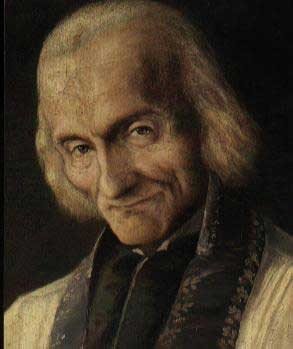
        St. John Vianney, the Curé of Ars and patron saint of priests, is well known as a confessor who could see into peoples’ souls and who took great penances upon himself for the conversion of sinners. Less known, though, is his wisdom. St. John Vianney may have had difficulties learning Latin and passing his seminary exams, but he preached beautiful spiritual insights such as these:

“To approach God you should go straight to Him, like a bullet from a gun.”

“Prayer is the conversation of a child with his Father.  Of a subject with his King.  Of a servant with his Lord.  Of a friend with the Friend to whom he confides all his troubles and difficulties.”

“A pure soul is with God, as a child with its mother.  The child caresses and embraces her, and its mother returns all its endearments.”

“God commands you to pray, but He forbids you to worry.”

“You must accept your cross.  If you bear it courageously it will carry you to heaven.”

However, “Our Lord takes pleasure in doing the will of those who love him.”

“Just as a mother holds her child in her hands to cover it with kisses, so does God hold the devout person.”

“Here is a rule for everyday life: Do not do anything which you cannot offer to God.”

And as we approach the Eucharist, let us recall this final thought: “To content his love, God must give Himself to us separately, one by one.”

(Originally published August 4, 2010;
edited & republished August 4, 2015)

The “Light” of the Holy Spirit

May 21, 2015

        “The Spirit is the source of holiness, a spiritual light, and he offers His own light to every mind to help it in its search for truth. By nature the Spirit is beyond the reach of our mind, but we can know Him by His goodness. The power of the Spirit fills the whole universe, but he gives Himself only to those who are worthy, acting in each according to the measure of his faith.

“I believe in the Holy Spirit, the Lord, the giver of life, who proceeds from the Father and the Son, who with the Father and the Son is adored & glorified, who has spoken through the prophets.”

        Simple in Himself, the Spirit is manifold in His mighty works. The whole of His being is present to each individual; the whole of His being is present everywhere. Though shared in by many, He remains unchanged; His self giving is no loss to Himself. Like the sunshine, which permeates all the atmosphere, spreading over land and sea, and yet is enjoyed by each person as though it were for him alone, so the Spirit pours forth His grace in full measure, sufficient for all, and yet is present as though exclusively to everyone who can receive Him. To all creatures that share in Him he gives a delight limited only by their own nature, not by His ability to give.  …

        As clear, transparent substances become very bright when sunlight falls on them and shine with a new radiance, so also souls in whom the Spirit dwells, and who are enlightened by the Spirit, become spiritual themselves and a source of grace for others. From the Spirit comes foreknowledge of the future, understanding of the mysteries of faith, insight into the hidden meaning of Scripture, and other special gifts. Through the Spirit we become citizens of heaven, we enter into eternal happiness, and abide in God. Through the Spirit we acquire a likeness to God; indeed, we attain what is beyond our most sublime aspirations—we become God.”

— St. Basil the Great (c. 329-379 AD)

Friends of Jesus — 6th Sunday of Easter—Year B

May 13, 2015

Readings: Acts 10:25-26, 1st John 4:7-10, & John 15:9-17

In our first reading, St. Peter is sent by the Holy Spirit to the house of Cornelius, a Gentile and Roman centurion:

When Peter entered, Cornelius met him
and, falling at his feet, paid him homage.
Peter, however, raised him up, saying,
“Get up. I myself am also a human being.”

In other words, Peter says, “Relax, I’m made from the same stuff as you.” This was said for Cornelius’ benefit and for ours.

Icon of the Twelve ApostlesThe Evangelists and the Holy Spirit did us a huge favor by recording the early disciples’ flaws and infidelities. Most of these first followers of Christ went on to live their lives for him, some even dying for him, and so we rightly call them saints. Yet the New Testament reveals that they were far from perfect at the start. It would have been so understandable, so easy, for the Gospel writers to omit the embarrassing, regrettable, and even sinful moments of the Church’s founding figures. The fact these unflattering details were included points to the veracity of the Gospels. Imagine how deprived we would be today if these details had been had whitewashed away.

St. Mary Magdalene Clings to JesusLuke tells us that Jesus cast seven demons from out of Mary Magdalene. We are never told how their evil influence had affected Mary’s life, but it probably was neither subtle or pretty. Without knowing this detail, some might think, “Jesus couldn’t accept someone with an ugly past like mine. I’m no model of perfect devotion, like Mary Magdalene.”

James and John had their mother ask Jesus to seat them upon thrones at his left and right in glory. Without this story, those who struggle with ambition and vainglory might lament, “Why can’t I be content to humbly serve, like the fisherman sons of Zebedee?”

Without the story of Doubting Thomas, times of struggle with questions and doubts might bring the self-reproach, “Why can’t I just trust in Jesus, like Believing Thomas?”

Without the story of Peter’s three denials of Christ, after a great fall we might despair, “How could Jesus forgive me? I was not faithful to him like St. Peter the Rock.”

All this is not to say that our sins and imperfections do not matter. As Jesus says in today’s Gospel, “Remain in my love. If you keep my commandments, you will remain in my love… This I command you: love one another [and (by implication) love me as well.]” Every sin is a failure to love as we ought, so we must do our best to root our the lusts, prides, and infidelities from our lives. Jesus says, “You are my friends if you do what I command you.” Recognizing our own sins and failings, this raises a concern within us: Are we Jesus’ friends?

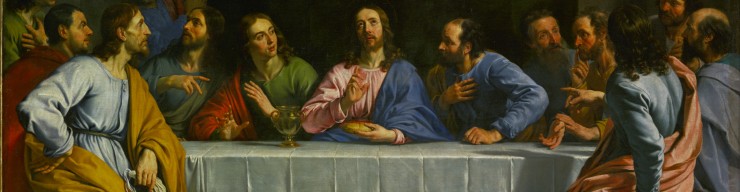
The setting for today’s Gospel is the Last Supper. Jesus, knowing everything the apostles had done wrong in the past, knowing how poorly they would perform in the near future, told them, “I no longer call you slaves… I have called you friends…” Jesus declares them to be his friends, long before they are perfect. Jesus’ plan, for them and us, is to love us into holy righteousness and glory.

From today’s second reading, from John’s first epistle, we learn:

In this is love:
not that we have loved God, but that he loved us
and sent his Son as expiation for our sins.

Jesus died for us as surely as he ‘laid down his life for his friends‘ the apostles, and Jesus loves us in the same way as them. Relationship, Identity, and Mission: Your relationship is a friendship with Christ. Your identity is a friend of Christ. Your mission is to live as a friend of Jesus Christ. And with the friendship of Christ, we can do all things in him who loves us.

A Persistent, Predictable Trend

May 2, 2015

Wedding Cake Man and WifeIn the garden, the first married couple was approached by the tempter. He sowed distrust of God and His teaching within their minds and hearts. He told them to decide for themselves what was good for them. So they ate the fruit that God had warned them about, and they tasted its consequences. Yet God did not abandon them.

The early Church was not unaware of contraceptive means and methods. She insisted that acts of marital union must not be cut off from an openness to life. Before 1930, all Protestant denominations agreed, but one by one their positions changed. By 1968, some were surprised that Pope Paul VI upheld the Church’s teaching in Humanae Vitae. The pope warned that contraception would lead to increased fornication, marital infidelity, disrespect toward women, and government coercion. The world did not listen.

What has come from our culture intentionally severing an openness to life from its lovemaking? It has led to millions of children having single mothers because fathers considered themselves under no obligation. It has led to the death of millions of “mistakes” before they could be born. Contraceptives promised to make families stronger, but broken marriages are widespread.

The contraceptive mentality has progressed so far that many no longer see physical complimentarily as essential to marriage at all. How will children be impacted if new forms of marriage become the law of the land? If marriage is merely an emotional bond between persons, why should it be limited to pairs? Marital union between one man and one wife is a gift from God for love and life. And what God has joined, we human beings separate to our own harm.

We see the Sexual Revolution becoming an open war against the Bride of Christ and her sons and daughters. As Chicago’s Cardinal Francis George, who passed away last month, once said, “I expect to die in bed, my successor will die in prison, and his successor will die a martyr in the public square. His successor will pick up the shards of a ruined society and slowly help rebuild civilization, as the church has done so often in human history.” Trials await us. Yet, anchored in the truth, our hope always remains, for God will not abandon us.

Encountering Jesus at His Ministry’s Beginning & End

January 9, 2015

Comparing John 1:35-43 & 20:11-18

  • John the Baptist is with two of his disciples when he points out Jesus “the Lamb of God” passing by. Jesus turns, sees the two disciples following him, and asks, “What are you looking for?
  • Mary of Magdala is with two angels at the empty tomb when Jesus comes by. She turns around and sees Jesus, but does not know it’s him. He asks her, “Whom are you looking for?
  • John the Baptist’s two disciples answer Jesus, “Rabbi, (that is, Teacher) where are you staying?
  • Mary, recognizing the risen Lord, says to him, “Rabbouni!” (which also means Teacher.)
  • Jesus tells the curious duo, (one of whom we are told is St. Andrew the Apostle) “Come, and you will see.
  • Jesus tells the overjoyed Mary, “Go to my brothers and tell them, ‘I am going to my Father and your Father, to my God and your God.

Points for Reflection:

St. Mary Magdalene Clings to Jesus□ We first come to Jesus looking for something. (“What are you looking for?”) But we are in fact looking for a Someone. (“Whom are you looking for?”)

□ Our search begins with curiosity, but grows finally into love.

□ Jesus is a Teacher to them all, but he more than a teacher to Mary of Magdela. (Similarly, in Matthew’s telling of the Last Supper, all the apostles call Jesus “Lord,” while Judas calls him merely, “Rabbi.”)

□ Jesus makes the first two apostles, but he makes Mary (as the Church Fathers call her) “the Apostle to the Apostles.

□ Jesus draws us near (“Come and see,”) and then he sends us forth on mission (“Go to my brothers and tell them…”)

□ Jesus’ baptism leads to his tomb and resurrection.

□ Jesus, who dwelt on earth, now dwells with His Father in Our Father’s house. Jesus wills that we come to dwell with him, in Heaven, as it is on earth.

Mysteries of the Holy Family

December 26, 2014
  • Mary with Jesus in Swaddling ClothesThe Holy Family’s first Christmas was both stressful and joyful.
  • Jesus the Bread of Life was born in Bethlehem, which means “House of Bread.”
  • Jesus was born and laid to rest in caves. His body was wrapped, in birth and death.
  • Joseph taught carpentry to Him through whom all things were made.
  • Mary taught prayers to God.
  • St. Joseph, protector of the Holy Family, is now universal patron of the Church.
  • St. Mary, the bearer of one child, is now mother of all Christians.

The Biggest Catholic News Stories of 2014

December 17, 2014

January:
Tens of thousands of pro-lifers, mostly young people, ‘March for Life’ in Washington, D.C.

February:
A report by a U.N. committee on children criticizes the Church’s teachings on homosexuality, contraception, and abortion.

March:
Nearly 200 associated Catholic groups file a class-action lawsuit against the HHS contraceptive-abortifacient-sterilization insurance coverage mandate.

Canonization_2014-_The_Canonization_of_Saint_John_XXIII_and_Saint_John_Paul_IIApril:
Pope John XXIII and Pope John Paul the Great are canonized by Pope Francis, with Pope Emeritus Benedict XVI in attendance.


May
:
A planned satanic ‘Black Mass’ at Harvard University is canceled following a strong public outcry.

June:
Vatican theologians approve a miracle for the beatification of Bishop Fulton Sheen (however, the process is indefinitely suspended in September due to an inter-diocesan impasse.)

July:
The U.S. Supreme Court rules 6 to 3 in favor of Hobby Lobby’s religious liberty (boding well for Catholic religious conscience cases.)

August:
After atrocities against Christians and Muslims, the U.S. begins airstrikes on ISIS.

September:
Bishop Blase Cupich of Spokane, WA is named the new archbishop of Chicago, replacing the ailing Cardinal Francis George.
Extraordinary Synod on the Family at the Vatican, October, 2014
October
:
The Extraordinary Synod on the Family meets at the Vatican and reaffirms Catholic teachings.

November:
Cardinal Raymond Burke is appointed the new patron of the Knights of Malta.

December:
Pope Francis announces a consistory to name new cardinals in February of 2015.

“Long Live Christ the King!”

November 22, 2014

     We tend to think of Mexico as one of the most Catholic countries around, but for a time in 1920’s it was illegal to celebrate the Mass there. That did not stop priests like Blessed Miguel Pro, S.J. from ministering to people clandestinely. After many close calls, Fr. Pro was captured by the police and sentenced to death on false charges that he was somehow connected to a bombing assassination plot.

Blessed Miguel Pro before the firing squad, November 23, 1927.

     When he was led out for his execution by firing squad, Fr. Pro blessed the soldiers, knelt and quietly prayed for a time. He declined a blindfold and faced his executioners with a crucifix in one hand and a rosary in the other. He held out his arms in imitation of the crucified Christ and shouted, “May God have mercy on you! May God bless you! Lord, you know that I am innocent! With all my heart I forgive my enemies!” Just before the firing squad was ordered to shoot, he proclaimed, “Viva Cristo Rey!” (“Long live Christ the King!”) When the initial shots failed to kill him, a soldier shot him point-blank. The anti-Catholic government had a photographer on hand to capture these moments for propaganda purposes, but soon after the images were published their possession was made illegal; seeing the Catholic priest, dying bravely and faithfully, was an inspiration to the oppressed people.

The Dying Words of Jesus & His Saints

November 14, 2014

Each November, when the dark nights lengthen and trees become bare skeletons, we especially pray for the souls of those who have gone before us in death. This is also a fitting time of year to remember and consider the certainty of our own mortality. How did Jesus and his holy ones face the end of their lives? Their dying words can both instruct and inspire us:

“Father, into your hands I commend my spirit.”

—Our Lord Jesus Christ, c. 33 AD

“Lord Jesus, receive my spirit. Lord, do not hold this sin against them.”

—St. Stephen, martyr, c. 34 AD

“Glory to God for all things!”

—St. John Chrysostom, 407 AD

“Your will be done. Come, Lord Jesus!”

—St. Augustine, 430 AD

“May God forgive you, brother.”

—St. Wenceslaus, martyr, 935 AD

“I have loved justice and hated iniquity. Therefore I die in exile.”

—Pope St. Gregory VII, 1085 AD

“If all the swords in England were pointed against my head, your threats would not move me. I am ready to die for my Lord, that in my blood the Church may obtain liberty and peace.”

—St. Thomas Becket, martyr, 1170 AD

“When you see that I am brought to my last moments, place me naked upon the ground just as you saw me the day before yesterday; and let me lie there after I am dead for the length of time it takes one to walk a mile unhurriedly.”

—St. Francis of Assisi, 1226 AD

“Be assured that he who shall always walk faithfully in God’s presence, always ready to give him an account of all his actions, shall never be separated from him by consenting to sin.”

—St. Thomas Aquinas, 1274 AD

“Leave the doors open, so that everyone may enter and see how a pope dies.”

—Bl. Pope Urban V, 1370 AD

“Into your hands, O Lord, I commend my spirit.”

—St. Bridget of Sweden, 1373 AD

“Blood! Blood! Father, into your hands I commend my spirit.”

—St. Catherine of Siena, 1380 AD

“Jesus, Jesus, Jesus!”

—St. Joan of Arc, martyr, 1431 AD

“I die the king’s good servant, but God’s first.”

—St. Thomas More, martyr, 1535 AD

“O, my God!”

—St. Ignatius of Loyola, 1556 AD

“After all I die as a child of the Church. My Lord, it is time to move on. Well then, may your will be done. O my Lord and my spouse, the hour that I have longed for has come. It is time for us to meet one another.”

—St. Teresa of Avila, 1582 AD

“Jesus, I love you.”

—St. Kateri Tekakwitha, 1680 AD

“In all things I adore the will of God in my regard.”

—St. Jean Baptiste de la Salle, 1719 AD

“Be children of the Church.”

—St. Elizabeth Ann Seton, 1821 AD

“My immortal life is on the point of beginning. Become Christians if you wish to be happy after death, because God has eternal chastisements in store for those who have refused to know Him.”

—St. Andrew Kim Taegon, martyr, 1846 AD

“Holy Mary, pray for me, a poor sinner.”

—St. Bernadette Soubirous, 1879 AD

“I have reached the point of not being able to suffer any more, because all suffering is sweet to me. My God, I love you.”

—St. Therese of Lisieux, 1897 AD

“To restore all things in Christ.”

—Pope St. Pius X, 1914 AD

“Long live Christ the King!”

—Bl. Miguel Pro, S.J., martyr, 1927 AD

“Jesus. Maria.”

—St. Pio of Pietrelcina, 1968 AD

“Jesus, I love you. Jesus, I love you.”

—Bl. Mother Teresa of Calcutta, 1997 AD

“Let me go to the house of the Father.”

—St. John Paul the Great, 2005 AD

What do you want to be your dying words?

Ghost Stories From Sts. Augustine & Gregory

October 31, 2014

In 398 AD, St. Augustine shared the following story about a probable visitor from beyond the veil in a letter to his friend, Evodius:

“Our brother, Gennadius … told us that he doubted once … whether there was any life after death. As God would not abandon a man of his disposition and works of mercy, there appeared to him in sleep a handsome youth of dignified appearance, who said to him: ‘Follow me.’ He followed and came to a certain city, where he began to hear, on his right, singing of such exquisite sweetness that it surpassed all known and ordinary sweetness. Then, as he listened, he asked what it was and his guide said it was the hymns of the blessed and the saints. I do not clearly remember what he said he saw on his left. When he awoke, the dream vanished and he thought of it only as one does of a dream.

But, on another night, behold, the same youth appeared to him again and asked whether he recognized him; he answered that he did so fully and perfectly. Then the youth asked where he had known him. He remembered what to reply to that, too, and described the whole vision and the hymns of the saints which the other had led him there to hear, recalling them with ease as a recent experience. Thereupon, the youth asked whether he had been asleep or awake when he saw what he had described. He answered: ‘It was in a dream.’ The other said: ‘You remember well, it is true, that you saw all that in a dream, but you must know that even now you see, although you are asleep.’ When he heard that, he believed it was so and expressed it by his answer.

Then the one who was teaching him continued and said: ‘Where is your body now?’ He answered: ‘In my bedroom.’ ‘And do you know,’ said the other, ‘that in that same helpless body, your eyes are fast shut and useless, and that you see nothing with those eyes?’ Gennadius answered: ‘I know it.’ His guide went on: ‘Then, with what kind of eyes do you see me?’ He fell silent at this, finding no reply, and, as he remained in doubt, the youth made known what he was trying to teach by these questions.

He went on: ‘As those eyes of flesh are now inactive and perform no function while your body lies asleep in bed, yet you have eyes with which you behold me and a sight of which you make use, so, when you die and the eyes of your flesh see nothing, there will be in you another life by which you will live and sense by which you will perceive. See to it that henceforth you do not doubt of the life which remains after death.’ Thus this faithful man says that his doubt on this matter was removed, and what was his teacher but the providence and mercy of God?”

In 593 AD, Pope St. Gregory the Great related this story in his Dialogues:

“Bishop Felix…said that he had been told of such a case by a saintly priest who was still living two years ago in the [Italian] diocese of Centum Cellae as pastor of the Church of St. John in Tauriana [on the toe of Italy.] This priest used to bathe in the hot springs of Tauriana whenever his health required. One day, as he entered the baths, he found a stranger there who showed himself most helpful in every way possible, by unlatching his shoes, taking care of his clothes, and furnishing him towels after the hot bath.

After several experiences of this kind, the priest said the himself: ‘It would not do for me to appear ungrateful to this man who is so devoted in his kind services to me. I must reward him in some way.’ So one day he took along two crown-shaped loaves of bread to give him.

When he arrived at the place, the man was already waiting for him and rendered the same services he had before. After the bath, when the priest was again fully dressed and ready to leave, he offered the man the present of bread, asking him kindly to accept it as a blessing, for it was offered a token of charity.

But the man sighed mournfully and said, ‘Why do you give it to me, Father? That bread is holy and I cannot eat it. I who stand before you was once the owner of this place. It is because of my sins that I was sent back here as a servant. If you wish to do something for me, then offer this bread to almighty God, and so make intercession for me, a sinner. When you come back and do not find me here, you will know that your prayers have been heard.

With these words he disappeared, thus showing that he was a spirit disguised as a man. The priest spent the entire week in prayer and tearful supplications, offering Mass for him daily. When he returned to the bath, the man was no longer to be found. This incident points out the great benefits souls derive from the Sacrifice of the Mass. Because of these benefits the dead ask us, the living, to have Masses offered for them, and even show us by signs that it was through the Mass that they were pardoned.”

Popes Are Not Perfect — Wednesday, 27th Week of Ordinary Time—Year II

October 8, 2014

Readings: Galatians 2:1-2,7-14; Luke 11:1-4

[W]hen Cephas came to Antioch, I [Paul] opposed him to his face because he clearly was wrong. For, until some people came from James, he used to eat with the Gentiles; but when they came, he began to draw back and separated himself, because he was afraid of the circumcised. And the rest of the Jews acted hypocritically along with him, with the result that even Barnabas was carried away by their hypocrisy. But when I saw that they were not on the right road in line with the truth of the Gospel, I said to Cephas [Peter] in front of all, “If you, though a Jew, are living like a Gentile and not like a Jew, how can you compel the Gentiles to live like Jews?”

Jesus was praying in a certain place, and when he had finished, one of his disciples said to him, “Lord, teach us to pray just as John taught his disciples.” He said to them, “When you pray, say: Father, …forgive us our sins….”

Christ Handing the Keys to St. Peter by Pietro Perugino (detail)The Church on earth is both human and divine — it is holy, yet made up of and led by sinners. When the apostles asked Jesus how they should pray he told those men who were to become the Church’s first leaders to always ask that God the Father would forgive their sins.

Some bulk at the doctrine of papal infallibility asking, “How can a pope, a sinful man, be infallible?” (One could likewise ask how sinful men could write the Sacred Scriptures.) A pope is infallible when he proclaims a doctrine by a definitive act as supreme pastor and teacher of all the faithful regarding faith or morals, but nothing guarantees that he and the Church’s other leaders will never make sincere yet unwise decisions, or that they will never commit serious sins. Infallibility is not the same as impeccability. Imagine the Church as car on the interstate. The Holy Spirit provides guard rails to prevent us from crashing, but we do not always drive as straightly and speedily as we could.

In today’s reading from Galatians, St. Paul recalls the time he gave some fraternal correction to the first pope. St. Peter had not been teaching error regarding the Gentiles and the Mosaic Law, but his personal example (withdrawing from their company so as not to offend the circumcised) was sending a mixed and wrong signal. Even St. Peter could make a mess of things sometimes. Popes, bishops, and priests need the help of our prayers. Like St. Augustine observed: for you, they are leaders; but with you, they are Christians. They are disciples of Jesus Christ who, like yourself, must strive and follow after Him daily.

Our Lady’s Wisconsin Message: The Meaning of the Two Trees

September 25, 2014

In the Garden of Eden, there were many fruit-bearing trees, but Genesis mentions only two by name: the Tree of Life, and the Tree of the Knowledge of Good and Evil. By partaking of the Tree of Life the human race could keep living forever, but the Lord warned that to eat from the other tree would mean our certain death. On October 9th, 1859, the Blessed Virgin Mary appeared near Green Bay to a 28 year-old Belgian immigrant named Adele Brise while she was walking eleven miles home from Sunday Mass. Interestingly, Our Lady chose to appear to Adele not in a church, or a thousand other places, but between two trees: a Maple and a Hemlock.

Maple LeavesYou’re familiar with the beauty and goodness of the Maple. In the fall, its leaves turn the most striking colors, and in the spring its sap yields sweet syrup. But do you know about the Hemlock tree? The poison that the Greek philosopher Socrates was condemned to drink came from this plant. Ingesting just six or eight fresh Hemlock leaves can kill a healthy adult. [Post-Script: The Hemlock Tree found in Wisconsin is not poisonous, but merely shares the name.]  The Maple is a tree of life while the Hemlock is a tree of death. Mary, the New Eve, stood between the two.

Three Conium Maculatum (or Poison Hemlock), Cedar Bog, Champaign CoMary told Adele, “I am the Queen of Heaven, who prays for the conversion of sinners, and I wish you to do the same. You received Holy Communion this morning, and that is well. But you must do more. Make a general confession, and offer Communion for the conversion of sinners. If they do not convert and do penance, my Son will be obliged to punish them.” Our Lady’s message between the two trees is akin the words of Moses, who told the Israelites: “I have set before you life and death, the blessing and the curse. Choose life, then, that you and your descendants may live, by loving the Lord, your God, heeding his voice, and holding fast to him. For that will mean life for you, a long life for you to live on the land….

Peshtigo Fire MapApparently, Our Lady’s warnings were not sufficiently heeded. In October of 1871, exactly twelve years later, disaster came. Both in terms of size and number of lives lost, the Peshtigo Fire remains the worst recorded forest fire in U.S. history. Between 1,200 and 2,400 lives ended in that firestorm which saw, according to an eyewitness, “large wooden houses torn from their foundations and caught up like straws by two opposing currents of air which raised them till they came in contact with the stream of fire.” This seems to be the punishment due to sin that Mary spoke of, yet this does not mean that everyone who perished in that fire was condemned. We should remember that at harvest time, the wheat and the weeds are pulled up together in a moment, but their future fates are not the same. Once uprooted, the good are gathered and kept in the barn, while the bad are thrown away forever.

The firestorm came and surrounded the shrine of Our Lady, where hundreds had come for refuge with their families and herds, beseeching her intercession before God. As many as fled to her there were saved. The shrine’s consecrated earth was an emerald-green island in an ocean of smoldering ashes as far as eyes could see.

Mary, the Queen of Heaven, prays for the conversion of sinners and she wishes you to do the same. You receive Holy Communion, and that is well. But you must do more. Begin by receiving the sacrament of reconciliation regularly, because it is powerful for growing in holiness. The sinner whose conversion you are most responsible for is your own.

Parallelism & Padre Pio — Monday, 25th Week of Ordinary Time—Year II

September 23, 2014

Readings: Proverbs 21:1-6, 10-13; Psalm 119:1, 27, 30, 34-35, 44

We see within today’s readings a literary structure often found in the Bible: parallelism. A verse states an idea and is immediately followed by a line reexpressing that same truth (or contrasting it.) For example, in our psalm we read:

The way of truth I have chosen;
I have set your ordinances before me.

And in Proverbs:

The soul of the wicked man desires evil;
his neighbor finds no pity in his eyes.

When the arrogant man is punished, the simple are the wiser; when the wise man is instructed, he gains knowledge.

Parallelism is a providential gift to translators and readers of the Bible because it helps them to understand Scripture’s meaning better than they would through a singular statement alone.

St. Padre Pio PortraitSt. Padre Pio (or Pius of Pietrelcina) is among the most famous saints of the past century. Like Jesus, large crowds were drawn to him and religious authorities were cautiously wary of him, but he always remained obedient. Like Jesus, Padre Pio possessed the mystical ability to read peoples’ souls — to know strangers’ stories, sins, and struggles. He spent long hours in the confessional, being firm with the hardened and gentle with the weak, just like Jesus was with the Pharisees and the woman at the well. Also, by God’s gift, Padre Pio bore the stigma, the wounds of Christ, in his hands, feet, and side.

God uses parallelism to help us to fathom His Word better. In both Sacred Scripture and in the saints of Jesus Christ, parallelism helps us to understand the Lord better.

Our Lady’s Message in Wisconsin: Conversion & Catechesis

September 18, 2014

On the Feast of the Immaculate Conception in 2010, at the Shrine of Our Lady of Good Help located about sixteen miles northeast of Green Bay, Bishop David Ricken endorsed our country’s first Church-approved Marian apparition:

“I declare with moral certainty and in accord with the norms of the Church that the events, apparitions and locutions given to Adele Brise in October of 1859 do exhibit the substance of supernatural character, and I do hereby approve these apparitions as worthy of belief (although not obligatory) by the Christian faithful.”

Crowned M - Sacred Heart Catholic Church -  Wauzeka WI155 years ago, a lovely blond-haired lady clothed in dazzling white, with a yellow sash around her waist and a crown of stars around her head, appeared to a 28-year-old lay woman named Adele Brise. Adele asked the lady who she was and what she wanted. She answered, “I am the Queen of Heaven who prays for the conversion of sinners, and I wish you to do the same. You received Holy Communion this morning and that is well. But you must do more. Make a general confession and offer Communion for the conversion of sinners… Gather the children in this wild country and teach them what they should know for salvation…”

This was the core of Mary’s message: for sinners to be converted and for children to be catechised. Yet Adele hesitated and asked how she was to teach the young when she knew so little herself. Mary replied, “Teach them their catechism, how to sign themselves with the sign of the Cross, and how to approach the sacraments; that is what I wish you to do. Go and fear nothing, I will help you.” After Adele’s encounter, her father built a small chapel on the site and Adele went about fulfilling her entrusted mission for the rest of her life. Exactly twelve years after Mary’s message came the terrible Peshtigo Fire which still ranks as the worst fire disaster in U.S. history. By a miracle, all who fled to Mary’s shrine for refuge were saved.

Our Mother, the Church, teaches that parents are the primary educators of their children in the Faith. This means that whether our kids go to CCD or Catholic school, family is the first and foremost teacher of life’s most important lessons. But how often do we talk to our children about Jesus and Mary, or teach them about what they should know for salvation? I suspect that many feel intimidated like Adele Brise was because they think they know too little. Yet Mary reassures us that anyone can begin teaching children the simple, precious lessons that will stay with them and bless them forever. As our children grow, we also must grow in the Faith, exploring the what’s and why’s of the Church’s teachings and living them out in our lives. Catechesis without conversion is in vain.

The Virgin Mary’s message to Adele Brise remains timely for us today: Pray for the conversion of sinners… Offer Communion for the conversion of sinners… Gather the children in this wild country and teach them what they should know for salvation… Go and fear nothing, I will help you.”