Archive for the ‘Salvation History’ Category

Why They Rejected Christ

January 29, 2022

4th Sunday in Ordinary Time

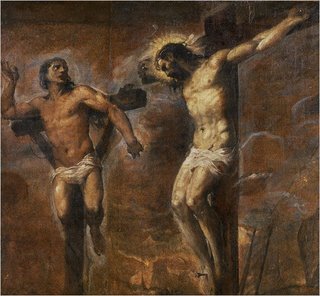
When Jesus preached at Nazareth near the start of his public ministry, his own hometown neighbors rose up, filled with fury against him. They drove him out of their village intending to toss him head first off a cliff. Later, near the end of Jesus’ public ministry, one his own twelve apostles, after spending years in his close company, chose to betray Jesus to his enemies. And sometimes in our present day, lifelong Christians experience painful events and give up on their commitment to Christ. Why did Jesus’ neighbors in Nazareth reject him? Why did his apostle, Judas Iscariot, betray him? And why do Christians sometimes abandon him in hard times? All of these expected our Lord to do certain things for them but were disappointed. In each case, Jesus failed to do for them what they desired.

Part of the problem at Nazareth was that Jesus was too familiar to them. He grew up there as a little kid playing in their streets, he worked locally as a carpenter’s son, and he quietly attended their small-town synagogue for years. So when they heard him preaching they asked, “Where did this man get all this?” How could this guy be someone foretold of in the Scriptures? As Jesus acknowledges, “No prophet is accepted in his own native place.”

They wanted him to prove he was somebody special by working miracles before them. A sick doctor should be able to apply his talents for his own recovery and prove he is a real doctor; so the Nazoreans would say to Jesus, “Physician, cure yourself! Do here in your native place the things that we heard were done in Capernaum.” But God’s prophet does not owe them miracles. Jesus notes that neither Elijah nor Elisha, two of the Old Testament’s greatest prophets, worked miracles for Israel’s individual widows or lepers, respectively. St. Mark’s Gospel reports that Jesus did not perform many mighty deeds in Nazareth, apart from curing a few sick people by laying his hands on them. Their lack of faith and lack of openness seems to have limited the gifts of God they could receive. So Jesus failed to match their expectations, and they took great offense at him.

Why did Judas Iscariot betray our Lord for thirty silver pieces? St. John tells us in his gospel that Judas “was a thief and held [Jesus and the apostles’] moneybag and used to steal the contributions.” Those thirty coins represented thirty days’ wages back then, something akin to $3,000 today. Was Judas so greedy for that relatively-modest amount of money that he couldn’t resist? When Judas saw that Jesus had been condemned to death he felt deep regret at what he had done. He tried to return the money to the high priest and elders saying, “I have sinned in betraying innocent blood.” He wishes to undo his deed, but the Jewish leaders brush him off: “What is that to us? Look to it yourself.” Judas goes away in despair and foolishly kills himself. If Judas did not wish for Jesus to die, then why did he sell him out? It seems that this apostle was disappointed by Jesus’ public ministry.

Most Jews expected the Messiah to come as a warrior-king like David. They imagined the Christ would drive out their pagan overlords, conquer Jerusalem, and lead an earthly kingdom of vast power, prestige, privilege, and wealth. But Jesus was not pursuing that popular dream. He devoted his efforts instead to teaching and healing the lowly and poor. When, after feeding thousands with five loaves and two fish, Jesus perceived “they were going to come and carry him off to make him king,” he firmly sent that crowd away and withdrew up the mountain alone. Judas had run out of patience waiting for Jesus’ Kingdom to come. Maybe Judas had given up on Jesus, and took that money to start a new life without him. Or maybe he hoped that Jesus—with his back to the wall—would finally wield his mighty, miraculous power to claim his royal throne, with Judas at his side. Either way, Judas’ disappointed expectations led this disciple to betray Jesus Christ and lose everything.

In our own day, some Christians leave the Lord Jesus after following him for decades. Oftentimes, this happens after a painful tragedy: a terrible diagnosis, a failed marriage, a Church scandal, a child’s tragic death. It is not the Christian life they had envisioned. They likely asked God for a particular miracle but it was not given. I know a man from a previous parish who attends Mass with his wife every Sunday, but he stopped receiving Holy Communion many years ago after their teenage daughter died in a car crash. I know of another long-time Catholic who reportedly became embittered at losing his good health and refused a Catholic funeral. How should a follower of Jesus Christ respond to life’s profound and painful trials?

On the first Good Friday, when Jesus died on the Cross, the Gospel of St. Luke tells us “all his acquaintances stood at a distance, including the women who had followed him from Galilee and saw these events.” St. John’s Gospel highlights that the Blessed Virgin Mary was there at the Cross of Christ along with his beloved disciple. What did they feel like amid that horror? What miracles did they plead for that day? Their prayers to heaven seemed to go unheard. The next day, in shock and grieving on Holy Saturday, they may have questioned in their hearts, “Where was God? How could he let this happen? Does he not care? Where is his faithfulness to his faithful ones? How could this be part of a loving plan?” But the next day, on Easter Sunday, they witnessed the joyful resurrection Jesus had promised, and God’s loving, mysterious purposes became clearer.

Jesus told his disciples and says to us, “Whoever wishes to come after me must deny himself, take up his cross, and follow me.” Jesus does not promise us a life exactly as we would plan it for ourselves. Not every prayer for a miracle will be granted exactly as we would imagine. But remember, the Kingdom of Jesus Christ will come for his faithful ones.

The Mother of Jesus was There

January 16, 2022

2nd Sunday in Ordinary Time
By Fr. Chinnappan Peleabendran

My dear brothers and sisters in Christ Jesus, today we celebrate the second Sunday of ordinary time. After the Solemnities of Christmas, Epiphany, and Baptism of the Lord, we enter into an ordinary time. In the beginning of Ordinary Time, I invite you to think about Mother Mary’s role in the life of Jesus.

Every child’s vocation is the parents’ constant prayer, not only after the birth of a son or a daughter but as prophet Jeremiah says, “Before I formed you in the womb I knew you; before you were born I dedicated you.” I used to see my father attend Mass every day in my parish. As a family, we prayed the Rosary every evening. My mother used to say three Rosaries each day even though she was illiterate. One day, I asked her, “Do you know the Mysteries of the Rosary?” She replied to me, “No.” I asked her then, what are you saying? She said, “Just an Our Father and Hail Mary.” Her simple prayers helped me to become a priest.

Mothers are timeless teachers in the classroom of life and, alongside fathers, the most influential educators. Mothers teach us to believe in God. Mothers teach us the value of God’s word through their lives. Mothers are one of the first indications of God in our lives.

Moses was one of the major figures in the Old Testament. Although we are not told much about his mother, she played a very important role in his life. The Jews had been in Egypt for 400 years under the rule of the pharaohs. One pharaoh then ordered all male Hebrew babies to be killed. When Moses’ mother gave birth to a healthy son, instead of killing him she took a basket and coated the bottom with tar to make it waterproof. She put her baby in it and set him among the reeds on the bank of the Nile River.

Just imagine the sorrow and agony of that mother, how much she cried when she returned home. Her prayer was answered by God. Pharaoh’ daughter came to bathe in the river and one of her maidservants saw the basket and brought it to her. She adopted the baby as her own (Moses’ mother was even paid to nurse him) and he grew up in the palace. Years later, after many hardships, Moses was used by God as His chosen instrument to free the Hebrew people from slavery and lead them to the edge of the Promised Land. Moses’ mother showed great trust in God’s faithfulness. Her prayers helped Moses to grow in faith and trust and to liberate and lead their people from bondage to the Promised Land.

When we look at today’s Gospel, on the third day, a wedding took place at Cana in Galilee. Jesus’ mother was there Jesus and his disciples had also been invited to the wedding. When the wine was gone, Jesus’ mother said to him, “They have no more wine.” “Dear woman, why do you involve me?” Jesus replied. “My time has not yet come.” His mother said to the servants, “Do whatever he tells you.” Jesus is withdrawing Himself from her authority. Jesus knew what His mission was and whom it was that was leading and guiding Him. The miracle itself served to draw others to follow Jesus.

Mary had the gift of prayer or intercession. She knew that her Son would not refuse her anything good. So, she immediately interceded on behalf of her people. This was Jesus’ first miracle. When Mary and Joseph presented their newborn Son, Jesus, to the priest in the Temple, they consecrated Him to God. Mary acknowledged that God had a plan for her Son and agreed to do everything in her power to cooperate with God’s purpose for him. Likewise, you Christian parents consecrate your children to God in the Sacrament of Baptism and promise to do everything possible to help your children to do what God wants in their lives.

Herod tried to kill Jesus, so Mary and Joseph fled to Egypt to protect their Son. Christian mothers keep your children away from evil forces that could harm them. Mary and Joseph took their Son, Jesus, to the synagogue in Nazareth each week in observance of the Sabbath and took him to the Temple in Jerusalem each year for Passover. Mothers, follow Mary’s example by going to Mass each week and taking your children with you because it is so important to pray with others. When Jesus was crucified, Mary stood at the foot of the Cross and suffered with him. She never abandons her child, particularly when things are at their worst. This sort of enduring love is exemplary for Christian mothers. Children get into trouble; sometimes for the right reasons, sometimes not. Mothers, like Mary, stand with your children throughout life, especially when things go bad.

Yes, my dear parents, be with your children all the time like Mother Mary, so that your children will grow like Jesus: doing good work in society, being faithful to God, and being faithful to you.

He is Baptized for Us

January 8, 2022

Baptism of the Lord
By Fr. Chinnappan Pelavendran

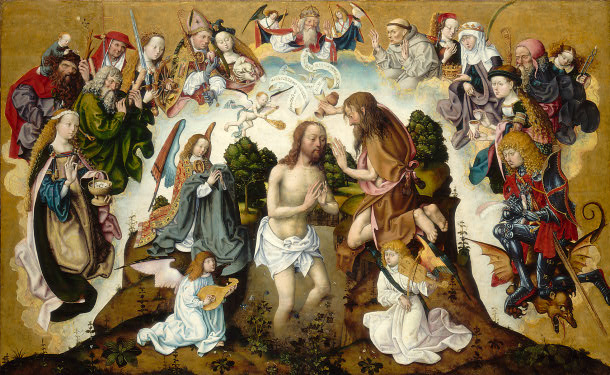
The Baptism of the Lord is a great event in the history of the Church because it is the first public manifestation of our Lord; the official revelation of Jesus as the Son of God to the world in the River Jordan by God the Father. John the Baptist was preaching and preparing in the wilderness and was baptizing all those who responded to his call of repentance. The purpose of his ministry of preaching and baptizing was to direct people towards Jesus who would baptize them with the Holy Spirit. Scripture tells us that Jesus came from Galilee to the River Jordan to be baptized by John the Baptist. Baptism is a call for the purification of sins, but Jesus is the Holy one of Trinity He does not need any purification. Though He is Son of God, He subjects himself to be baptized by another man to teach us the great virtue of humility.

The first reading taken from the Book of Isaiah tells us that the promised Messiah would be God’s chosen Servant in whom the divine soul would delight. The Messiah would have the Spirit of God upon Him bringing forth justice to all the nations, not just God’s chosen people. As the Servant of God, Jesus’ mission is modest and gentle in nature. He operates by His example and works. He brings a message of hope and consolation to all God’s people. Christ, the Anointed One of God is with us to bring us healing. Most importantly, He is here to restore our peace. Isaiah says in this way: “Console my people, console them…here is the Lord coming with power, his arm subduing all things to him, the prize of his victory is here with him…” This is exactly the ministry for which Christ was anointed and he empowered the human race for the entire salvation of God’s plan.

In the second reading, St. Paul invites us to recall our own Baptism — the gift of the Father, Son and the Spirit. He reminds us that the Lord has come to give us salvation and he gives us through the sacrament of baptism: “God saved us by the cleansing water of baptism and by renewing us with the Holy Spirit which he poured over us through Jesus Christ our Savior.” Through His own baptism, Christ sanctified and opened the fountain of baptism for us. He also initiated our redemptive process.

Today, the baptism of Jesus gives us our own identity. It reminds us who we are and to whom we are sent. By Baptism we become sons and daughters of God, brothers and sisters of Jesus, members of his Church, heirs of Heaven, and temples of the Holy Spirit. We are called to live as the children of God in thought, word and action. We are expected to lead a holy and transparent Christian life. The human body is the temple of the Holy Spirit and we belong to God who created us in his own image and likeness. Let us therefore grow and live in intimacy with God by personal and family prayers, by meditatively reading of the Word of God and fervently participating in the Holy Mass. Let us ask God to shower on us the divine graces to live out our baptismal life in a worthy manner. May the name of Jesus be glorified!

Learning from the Angels

December 24, 2021

Christmas, the Nativity of the Lord

It can be an alarming experience to encounter an angel. Their presence is typically veiled to us but once revealed to our human perception angels radiate such mightiness, holiness, and otherworldliness, that often the first thing they say upon appearing is: “Do not be afraid.” So it was on the first Christmas night in the fields outside the little town of Bethlehem where the shepherds kept watch over their flock.

A heavenly angel appeared to them, the Lord’s glory shone around them, and the shepherds were utterly terrified. But the herald angel said, “Do not be afraid… I proclaim to you good news of great joy that will be for all the people. …Today in the city of David a savior has been born for you who is Christ and Lord.” The angel then gave them a sign to look for, to know that they had found the newborn king: “You will find an infant wrapped in swaddling clothes and lying in a manger.” Suddenly, a whole multitude of angels appeared, praising God and saying: “Glory to God in the highest and on earth peace to those on whom his favor rests!” When the angels departed the shepherds were seemingly alone once more in the dark and quiet field.

Like the gospel two weeks ago about St. John the Baptist’s preaching, what strikes me about the angels’ proclamation is what the shepherds are not told to do. The Holy Family was very poor, but the shepherds are not told to bring them coins. The cave-stable in which Jesus laid was probably dirty like a barn, but the shepherds are not told to bring him a broom or clean blankets. Jesus’ parents had had a long day, but the shepherds are not told to bring them a meal. Any of these things would have been good gifts, but none of them were the most important thing. The angels invited the shepherds to bring themselves to Jesus; to approach him, see him, know him, love him, honor him; to come and encounter him, to come and adore him. This is the greatest gift.

Jesus Christ had only just been born on earth but the angels had already met the eternal Son of God in heaven. Through him all things were made, including the angels. The angels knew him from the start of their existence and in highest heaven they adored him constantly beholding his unveiled glory. In this, the angels seem to have an advantage compared to us. We see God’s creations, but they see the Craftsman. We see his effects, but they see the Source. We see his works which reflect his glory, but they see his glory directly. At Jesus’ birth, we see the Godhead veiled in flesh, lying in the manger. At his Holy Mass, we see Jesus Christ in the Eucharist, veiled in the appearances of bread and wine. Every good and beautiful thing you have ever enjoyed has its existence from him who is the most real, the most delightful, the greatest and best of all. And yet, for us human beings, God is easy to overlook.

If an angel had not visited the shepherds they would not have realized that they were within walking distance of their Savior, Messiah, and Lord. But once the angels had proclaimed the message and went away from them to heaven, the shepherds turned and said to one another, “Let us go, then, to Bethlehem to see this thing that has taken place, which the Lord has made known to us!” The shepherds left in haste, but imagine if… they had chosen not to go. The shepherds could have chosen not to go into Bethlehem. Nobody was forcing them to visit the Holy Family. They could have ignored Jesus and stayed away from him. Many people do.

The angels, in their beginning, once faced a choice like this themselves: would they love and adore and serve the Lord or would they disregard him, rejecting him and his reign? Would they love him or not? Would they worship God or themselves? The spirits who chose well are called the angels. The spirits who chose badly are called the demons. Ever since that decisive decision, the angels have loved and worshipped the Lord and been rightly ordered and thriving in his will, while the demons who refused to love and worship him have been disordered and depraved through and through.

Worship and love are linked. We worship what we love most, and that impacts our relationships to other things for good or ill. Imagine a child on Christmas morning who excitedly unwraps a new and coveted toy which, for a while, they love more than anything on earth. Will they remember to thank Mom and Dad who gifted it, or be too distracted to show gratitude? Will they be willing to share the toy with their brothers and sisters, or resent and fight against anyone who wants it? Will they draw closer to their family, or isolate to be alone with their most precious possession? Will they be delighted by that toy forever, or feel disappointment when it does not provide happiness unending? As adults, our coveted toys, our disordered loves, take different forms but lead to similar results. To love God as our greatest good and worship him with thanksgiving, praise, and openness to grace, are essential for us to love him and people and things like we should.

For the first Christmas, the angels’ gift to Jesus Christ was worship: “Glory to God in the highest!” And the angels’ gift to the human race was an invitation for us to do the same. As God’s messenger to you this sacred day, I invite and urge you to return to this church soon to faithfully encounter and adore your Savior, Christ, and Lord.

Squandered Gifts?

December 19, 2021

4th Sunday of Advent
By Deacon Matthew Bowe

This past week was finals week at the seminary. Many of my seminary brothers were busily writing papers and completing oral and written exams. Hours were spent with noses in the books and eyes staring at the screen. Stress and frantic work were abundant. I suffered.

Before you have any pity for me, I should confess the whole truth. After my one class Friday morning, which was only fifty minutes, I was mostly done. I only had a ten-minute oral exam to complete for the Eucharist class. I was on break mode since Friday at ten A.M., yet we were not allowed to depart from the seminary until after our final class on Tuesday. Some of my brothers went to class on Monday and Tuesday. I did not. I have not stressed about schoolwork for over a week, and I had plenty of time to work on my thesis and play fun activities with my friends. How, then, did I suffer?

Well, two of my closest friends, with whom I wanted to spend time, had a ton of work yet to do. They are procrastinators, poor planners, and undisciplined and unmotivated toward academic matters. Having an abundance of work left at the end of the semester is a common occurrence for them. Anyway, I suffered because they did not have time for me. I wanted to give them some of my time to be with them and to partake in shared activities. I understood that they had work to do. However, they mentioned that they were going to work on things sooner, yet they never did. They said that we could not watch a television show together because of the work that they had to do, yet I saw them sleep in, take naps, play video games, and watch television at other times. I was hurt because I felt left out. The message from this story is that our actions and our inactions can affect others in profound ways unbeknownst to us. We can be oblivious and passive to the passing moments in our lives. We can hurt others and not know it.

Please do not be hard on my friends, for I forgive them. Please do not have pity on me, for it was good spiritual growth. I tell this story to set up the message of my homily. In our humanness, we let many gifts and graces pass by in our lives. In our relationship with God, we are like my friends. I am like my friends to others and to God. How often do we squander the gifts that God gives us by casting them aside like pearls before swine? We look at God’s gifts and say, “Thanks, but no.” Then, we do our own thing not realizing that God had just given us the very thing that was necessary. It could have been an invitation to prayer, the grace that we needed to endure a hardship, a kind word to speak to another, or other good things. Why do we forsake heavenly things for the passing things of this world?

Yet, squandering gifts is not even my message, but it serves as a foil, as a contrast, for my main message. I want to talk about someone who never squandered one of God’s gifts. Glory to God that Mary, our Blessed Virgin Mother, never squandered a gift from God. In her immaculate and virginal heart, which magnifies the glory of the Lord, Mary perfectly received the angel Gabriel’s message. Her response and disposition were receptive – “Behold, the handmaid of the Lord, may it be done according to thy word.” Then, she received the Word Himself in her spotless womb. This gift of the Son was not for Mary alone, but the Savior came to redeem all nations back to God. Thanks be to God for Mary’s fiat, her “yes,” for the world gained the Savior of all Mankind.

Besides Mary’s disposition to receiving God and her freedom and openness to say yes to God’s will, Mary also exemplifies the love owed to a neighbor. She went into the hill country, around a ninety-mile journey from Nazareth, to rejoice with her cousin Elizabeth, who was once barren. Mary recognized that she had a duty to care for her cousin as her cousin progressed through her pregnancy. From this humble act of charity, another divine purpose would be served. Mary went to Elizabeth, and Jesus went to John. Jesus went to anoint John so that John would be ready to be the forerunner-prophet for the Christ. Whereas Mary and Elizabeth exchange greetings in a human way, Jesus and John exchange greetings in a spiritual way. Elizabeth heard the greeting first, but John experienced the grace from within Mary’s womb, leapt in Elizabeth’s womb, and filled Elizabeth with the Spirit. This prompts Elizabeth to praise Mary, who is “blessed among women” and is the “mother of my Lord.” Mary is first praised by an angel, and now she is praised by a woman. Even today, Mary is praised by the hosts of angels and by all the faithful in heaven and on earth.

Now, my brothers and sisters in Christ, we must continue to wait to hear more of the story. We must wait a little long to hear how the prophecy of Micah is fulfilled, when the “one who is to be ruler in Israel” comes forth. Mary will give birth to the One who shall stand firm and shepherd his flock, who will shepherd us. The King of Peace will come. Until that time, let us heed the words from the Letter to the Hebrews. The Lord wants us, and He wants the offering of our hearts. Jesus obeyed the Father’s will and offered His body once for all. Christmas does not stand apart from the Passion and Resurrection. Christmas points to Easter. The Son of God came to die for our sins. The old saying goes “from the wood of the manger to the wood of the Cross.” We hear in the opening prayer that we may “by His Passion and Cross be brought to the glory of His Resurrection.” But the Death is still awhile away, so let us prepare for His Birth.

There is one week left until Christmas. Let us intensify our spiritual sacrifices and penances to clear room in our hearts to receive the newborn King. Let us renew our vigilant waiting for the birth of our blessed Lord. Mary is very pregnant now; she is about to pop, as they say. We have seen mothers who are in their final days of pregnancy before the delivery. There is excitement in the eager and anxious anticipation of the newborn babe. St. John the Baptist announced the presence of Jesus by leaping in the womb of Elizabeth. Let us prepare our hearts to leap with joy with the presence of the newborn King on Christmas Day.

Christmas, Unlike We Envisioned It — Funeral Homily for Dr. S. Ann Hartlage-Feltes, 79

December 16, 2021

Ann and Larry realized something was gravely wrong during their recent vacation abroad. She was experiencing persistent and unexplained fatigue and shortness of breath. Just some forty days later, the cancer present and growing within her ended her earthly life. It’s stunning, it’s shocking, that a woman we know as being so energetically alive could pass away from us so quickly. As a good and faithful spouse to Larry after James’ passing, as a loving, caring mother to David, Kristin, and Ken, as a devoted, attentive grandma to her grandkids, as a dedicated psychologist to the clients and couples she served, as someone known and loved by us, her death creates a painful absence. How strange, how jarring, how incongruous it is, to be having her funeral now – so very close to Christmas. At a time for togetherness, we’re separated. In a season celebrating heavenly peace, we’re unsettled here on earth. Christmas joy, veiled by dismay. This is not how we imagine Christmas to be. And yet… the first Christmas was troubled too.

About fifteen months before the first Christmas, when Zachariah exited the temple sanctuary after having encountered an angel, he made excited, mute gestures to the people. Some concluded that he had seen vision but Zachariah was unable to speak or hear for many months. His wife, Elizabeth, may have worried whether her beloved suffered a stroke. Would he ever speak again? Then Elizabeth herself began to be unwell. She felt nauseous every day and noticed her abdomen expanding. Could she “who was called barren” somehow be pregnant, or was something gravely wrong?

Nine months before the first Christmas, the Blessed Virgin Mary gave her “Yes” to God’s plan at the Annunciation in Nazareth. An angel told Mary she would become the mother of the Messiah, but many details about her future remained hidden from her. Would her husband. Joseph, believe her when she told him? Would he become angry or afraid and decide to leave her? Joseph came very close to erroring and divorcing Mary, either because he judged her unworthy of him or because, believing her, he thought himself unworthy of her. After a torturous time of doubt and uncertainty, an angel visited Joseph in a dream and got him back on the right track.

Joseph resolved to be the very best protector and provider to Mary and her Holy Child that he could be. So imagine his great frustration that first Christmas night, consider his distress at being unable to find a proper place for Mary’s labor and Jesus’ birth; only an unclean cave with a feed trough for a crib. The first Christmas and the events leading up to it were not easy for the people who lived them. Their times were troubled, with hardships and fears. But in the end, now looking back, the accomplishment of God’s loving plan for them was more beautiful than any of them would have imagined.

See what God did for these saints of his who suffered: St. Elizabeth was not sick and dying but with child, carrying the forerunner of the Christ. St. Zachariah would regain his voice and rejoice in their firstborn son, St. John the Baptist. St. Mary would never be abandoned, but was lovingly cared for through it all. And St. Joseph succeeded in his mission to be the best father on earth. Jesus Christ’s birth in a stable was not an accident, not a divine oversight, but according to God’s plan. Their stories are a sign for us, a lesson for our lives. The Scriptures repeatedly tell us to hope in God and the good things to come.

The author of today’s first reading laments, “My soul is deprived of peace, I have forgotten what happiness is,” yet the prophet does not despair. “The favors of the Lord are not exhausted, his mercies are not spent. … Good is the Lord to one who waits for him, to the soul that seeks him. It is good to hope in silence for the saving help of the Lord.” St. John tells us in our second reading: “The way we came to know love was that [Jesus] laid down his life for us.” Our Lord faced dying so bravely because he knew not even death would end God the Father’s blessings toward him.

Today we gather in this famous and beautiful cathedral to offer the Church’s greatest prayer, the Holy Mass, for Ann’s soul and our consolation. She and Larry have been parishioners here at Holy Name for years, attending Sunday Mass and sometimes weekday Masses, too. From this altar, Ann received her Lord, his Body and Blood, his Soul and Divinity, his living and entire Self, in the Holy Eucharist. Jesus says in our Gospel, “My Flesh is true food and my Blood is true drink… Whoever eats my Flesh and drinks my Blood has eternal life, and I will raise him on the last day.” Today, we remember and are consoled by Jesus’ promise to Ann and us: “Whoever eats this bread will live forever.

Because of Ann’s parting, this Christmas will not be as we envisioned. But we are consoled by the truth that even amid these trials God is accomplishing his loving plan for us, a plan which is more beautiful than we can now imagine.

Our Shared Roots — Funeral Homily for Maxine Zwiefelhofer, 90

November 12, 2021

In her first ninety years of life, Maxine has been a daughter, a sister, a wife and a mother; an aunt, a grandma, a great grandma, and a great-great grandma; a talented nurse, a good friend, and a devoted Catholic. Among her many traits and experiences, on this day of her funeral I would like to highlight one hobby of hers which has been a blessing to our community and a point of pride for her family.

Maxine has been a hobbyist in history. She wrote “The History of St. John the Baptist Catholic Church” in Cooks Valley, which detailed more than one hundred years of this parish from 1885 to 1995. Maxine spent many days researching genealogy at the Chippewa County Historical Society, and even traveled with family to Scandinavia and Denmark to explore their ancestral roots. She wrote books of family history, recounting the lineages of the Toppers, the Olsons, the Zwiefelhofers, and the Bleskaceks.

Here’s an interesting bit of trivia: the U.S. Census Bureau says there are more than 150,000 different last names in our country today, with some 5,000 last names in common use. Have you ever noticed, that with the whole forest of humanity to choose from, most people prefer to research those family trees which have branches which reach themselves? For instance, Topper was the family name of Maxine’s father, Ernest; Olson was the maiden name of her mother, Elizabeth; and Zwiefelhofer was the last name of her husband, David. Here’s another statistic: there are more than 20,000 Catholic churches in America. Of all the churches in all the towns in all the land, why did she write a history about this one?

You know the answer. Maxine explored the genealogies of those particular families and recounted the history of this particular parish because she belonged to them and they belonged to her. Our past provides us with our identity. If we were to lose all of our memories but could still think and walk and talk, we would wonder about who we are. Our family and community, our origins and past, inform us about who we are. As Christians we know our family, community, origins, and past are more than merely natural.

Who was Jesus describing in the gospel we just heard? Who is merciful and meek? Who are peacemakers, clean of heart? Who hungers and thirsts for righteousness and unjustly suffers for what is right? Who do these Beatitudes refer to? The Beatitudes describe the blessed saints, but first and foremost they describe Jesus Christ himself. You and I as Christians you are their siblings, brothers and sisters within the family, the community, the communion, of God’s Church. Our origin is that we were created by God in love. That is your origin. Our past is that Jesus Christ came and died and rose for us. That is your past. And rooted in this true identity, our future is full of hope.

St. Paul’s Letter to the Romans declares “that we who were baptized into Christ Jesus were baptized into his death,” and if “we have died with Christ… we shall also live with him.” As foretold through the Prophet Daniel, one day, “those who sleep in the dust of the earth shall awake,” some to everlasting disgrace and others to eternal life. Then “the wise shall shine brightly… and those who lead the many to justice shall be like the stars forever.

Let us pray today for Maxine’s soul and renew our true identity in Jesus Christ, so that she and we with him may be one holy family, one holy Church dwelling in the house of the Lord forever.

The Cup Jesus Drank

October 17, 2021

29th Sunday in Ordinary Time

James and John, the sons of Zebedee, approach Jesus asking for a favor: “Grant that in your glory we may sit one at your right and the other at your left.” Jesus says to them, “You do not know what you are asking. Can you drink the cup that I drink…?” They respond, “We can!” Jesus answers them, “The cup that I drink, you will drink… but to sit at my right or at my left is not mine to give but is for those for whom it has been prepared.

Jesus told James and John, “You do not know what you are asking,” but how well do we understand what Jesus is saying here? What was the cup that Jesus would drink? How would Jesus be enthroned in glory? And who got those places at his right and his left? The answers are found in the gospel accounts of the Passion.

Jesus, the night before he died, prayed in the Garden of Gethsemane: “My Father, if it is possible, let this cup pass from me; yet, not as I will, but as you will.” And again, “My Father, if it is not possible that this cup pass without my drinking it, your will be done!” Earlier that same evening, at the Last Supper, Jesus told his disciples, “from this time on I shall not drink of the fruit of the vine until the kingdom of God comes. … Amen, I say to you, I shall not drink again the fruit of the vine until the day when I drink it new in the kingdom of God.” So when is the next time we see Jesus drink “the fruit of the vine”? All four gospels record that Jesus was given wine on his Cross. In his suffering, Jesus said, “I thirst.” Someone soaked a sponge in a vessel filled with sour wine and put it up to his mouth. Once Jesus had taken the wine, he said, “It is finished,” and then he died.

Alongside the cross of Jesus a pair of guilty criminals were also crucified; one on his right and the other on his left. Both of them had mocked Jesus at first, but then one of them repented. Acknowledging Christ’s innocence and lordship, he asked: “Jesus, remember me when you come into your kingdom.” And Jesus replied to him, “Amen, I say to you, today you will be with me in Paradise.

So what is the cup which Jesus drank? His cup is a cup of suffering. When and where was Jesus first enthroned in the kingdom of God? He is enthroned in glory upon his Cross. And who received the places at his right and left? Those places close to Jesus went first to two crucified criminals. Indeed, James and John in today’s gospel did not know what they were asking. Yet these apostles would go on to be glorified through their own shares in Christ’s sufferings: including martyrdom for St. James and exile for St. John “the Beloved Disciple.”

Many people struggle to reconcile the reality of suffering with the power and love of God. Some Christians even mistakenly preach a “Prosperity Gospel,” saying that if you believe in God and love him, he will bless you so that bad things never happen to you. But this view is incomplete. There are true blessings which flow from following Jesus Christ and his Gospel, but the worldview of the “Prosperity Gospel” sets believers up for a fall. When painful hardship or tragedy eventually come, those Christians will either blame themselves for not having had enough faith or blame God for seeming to fail them. This latter group wonders, “If God is not dependable, why should I keep faith in him?” And then, feeling wounded, confused, and abandoned, they abandon God.

We do not completely understand the mystery of evils in our world; why a devastating earthquake happens to some particular city, why a particular healthy adult gets cancer, or why a particular young person perishes in a car wreck. We do know that God’s thoughts are higher than our thoughts, that his plans see farther than our sight. And we know that God, who is the highest good, would not permit evils to exist unless his omnipotence and goodness were such as to bring good even out of evil. In Jesus Christ we see that God intimately knows and deeply cares about all the things we suffer. So what is the Lord up to?

It’s no coincidence that all four gospels mention how Jesus is crucified between two criminals, one on his right and the other on his left, with one who repents and one who appears not to repent. All of humanity is similarly suffering as a result of our original or personal sin. We too begin as guilty rebels condemned. But on the Cross, Jesus Christ the Son of God, though divine and innocent, joins us in our suffering.

The Letter to the Hebrews observes that in him “we do not have a high priest who is unable to sympathize with our weaknesses, but one who has similarly been tested in every way…” This divine plan for Christ to be a suffering servant was foretold through the Prophet Isaiah centuries before: “If he gives his life as an offering for sin… the will of the Lord shall be accomplished through him. …Through his suffering, my servant shall justify many, and their guilt he shall bear.

This Good Shepherd intimately understands the sufferings of the flock. He comes down from his high mountain into our dark valley and calls us to himself. We can respond to him with faith, acknowledging his goodness and lordship as sheep on his right. Or we can remain as faithless goats on his left, unrepentant for our sins and rejecting Christ forever. Realize that Jesus Christ desires not merely to forgive our sins, but that you and I would become children of God the Father just like himself.

Why do evils and sufferings continue to afflict those who follow Christ? As I said before, we do not know the answer to every painful question. (I believe we will understand God’s plan and purposes far better in heaven when he ‘wipes away every tear from our eyes.’) But we do know that Jesus Christ wants us to share in his own greatness and glory.

In today’s gospel, Jesus tries to help his disciples see that the path to true greatness and glory are not what they imagine. “Those who are recognized as rulers over the Gentiles,” Jesus notes, “lord it over them, and their great ones make their authority over them felt. But it shall not be so among you. Rather, whoever wishes to be great among you will be your servant; whoever wishes to be first among you will be the slave of all. For the Son of Man did not come to be served but to serve and to give his life as a ransom for many.

In our loving service and in our faithful suffering, we become more like Jesus. With Jesus, our sacrifices and sufferings are redemptive, helping to make us saints while helping to save the world. This is the precious, challenging, saving cup our Lord offers us. But can we drink it? With the grace and love of Jesus Christ strengthening us, we can!

Mary & the Holy Eucharist

August 14, 2021

Solemnity of the Assumption
(20th Sunday in Ordinary Time – Year B)

The first three evangelists, Saints Matthew, Mark, and Luke, all detail the same event from the Last Supper. In his First Letter to the Corinthians, St. Paul recounts it in these words:

“I received from the Lord what I also handed on to you, that the Lord Jesus, on the night he was handed over, took bread, and, after he had given thanks, broke it and said, ‘This is my body that is for you. Do this in remembrance of me.’ In the same way also the cup, after supper, saying, ‘This cup is the new covenant in my blood. Do this, as often as you drink it, in remembrance of me.’”

At every Mass, we recall how Jesus instituted the Holy Eucharist the night before he died. But the Gospel of John does not feature these words of institution. The Last Supper spans five full chapters in John’s Gospel—spending far more verses detailing Jesus’ words and deeds at table that night than is done by Matthew, Mark, and Luke combined—yet the phrase “This is my Body” is not included there. Why is this?

Both the early Church Fathers and modern scripture scholars agree that John’s was the last canonical gospel to be written. St. John probably thought it was unnecessary to retread again the same familiar ground as his predecessors, so he chose to omit the institution narrative. Instead, St. John shares with us the Bread of Life discourse. We’ve been listening to this chapter from John for the previous two weeks. Next Sunday presents the resolution of this story. And this Sunday, we would ordinarily be hearing the climax of Jesus’ teaching. Rather than being quoted saying “This is my body” at the Last Supper, in this gospel Jesus declares at the synagogue in Capernaum:

“Amen, amen, I say to you, unless you eat the flesh of the Son of Man and drink his blood, you do not have life within you. …For my flesh is true food, and my blood is true drink. Whoever eats my flesh and drinks my blood remains in me and I in him. …The one who feeds on me will have life because of me. …Whoever eats this bread will live forever.”

The other gospels include the eucharistic words of institution, but John particularly emphasizes Jesus’ real eucharistic presence.

As I said, we would ordinarily be hearing this climax to Jesus’ Bread of Life discourse this weekend, but it is preempted this year by the August 15th Solemnity of the Assumption of the Blessed Virgin Mary. Now I’m a very big fan of Mary but I also love that particular gospel reading from John 6, so I was a bit disappointed when I realized the first would be cancelling the second. But then I reflected upon Mary’s profound connections to Jesus’ Real Presence in the Eucharist, and there is actually great beauty in the convergence of these two holy days.

Consider: from where did Jesus receive the flesh he gives us in the Holy Eucharist? God ordained that Jesus Christ receive his human nature from his mother, Mary. At the Annunciation, Mary gave God her pure flesh and pure “yes,” saying “Let it be done to me according to your word,” on behalf of all humanity. That she might respond with a truly free “yes” and be a truly worthy source and vessel for her Son, the most Blessed Virgin Mary was preserved in flawless holiness by the grace of God from the first moment of her life. She lived all her days on earth in sanctity untainted by sin. The 16th psalm proclaims of God: “You will not allow your holy one to see decay.” And so, “the Immaculate Mother of God, the ever Virgin Mary, having completed the course of her earthly life, was assumed body and soul into heavenly glory.” This is the wonderful event which we remember and celebrate with Jesus and Mary today.

The sacred body and precious blood of Jesus we see held aloft at Mass come to us through the Blessed Virgin Mary. She is symbolically present on the altar as well. Consider the chalice. It is made from a precious metal and fashioned for a sacred purpose. It is traditionally veiled, denoting its dignity and sanctity. It is femininely curved, a vessel open to receiving and holding God’s gifts. The chalice is a symbol of the Virgin Mary, who is not to be adored as God and yet who is most profoundly close to him. Like Mary at the visit of the Magi, the chalice holds Jesus for all peoples to adore him.

At the Annunciation, after Mary responded, “Behold, I am the handmaid of the Lord. May it be done to me according to your word,” did she feel anything the instant the Word became flesh within her? Maybe she had the most enrapturing mystical experience ever known. Or maybe, when the angel departed from her, she felt nothing at the moment of the Incarnation. Either extreme seems possible, or it may have been something in between. When you receive the Holy Eucharist, you may or may not be graced to feel any different from the presence of Jesus within you. But consider how Jesus Christ has come to dwell in you at the center of your being as he did first within the Blessed Virgin Mary.

May Blessed Mary, the source of Christ’s flesh; the Lord’s holy chalice; the first Christian to commune with Jesus; intercede for you, helping you to know, love, and follow her Son. May you join them both in heaven one day so that all generations may call you blessed.

Jesus Christ Joined Our Team — Funeral Homily for Russell “Russ” Dachel, 73

August 12, 2021

There are many humorous stories about Russ. He loved to leave you with a smile, a smile on your face and a smile on his. So today, I would like to share with you the funniest story I’ve heard about him, and I believe Russ will be amused at its retelling. It happened over forty years ago. Some of the finer details are uncertain, but an eyewitness who was there confirms that the broad strokes of this story are true.

Once, in the second half of the 1970’s, Russ was officiating at a junior high school basketball game; Eau Claire Memorial versus Eau Claire North. The young men on both sides were giving it their all, and so was Russ. His friend Jim, a former coach who was at the game, tells me that Russ was a good official. Russ had refereed games before, and would go on to ref games after, but this game won him some local fame.

In one telling, Memorial had the ball and dribbled it down court. On this possession, Russ the Ref was the back official, standing nearest to the empty backcourt. Suddenly, a North player stole the ball and made a fast break for the unguarded basket. As the young man went in for what he, both teams, and all the spectators in the bleachers expected to be a routine lay-up, they witnessed something rarely—if ever—seen since James Naismith invented basketball in 1891.

Recall that Russ loves sports. He’s intensely competitive, he hates to lose, and always gives one hundred percent. On this occasion, it seems that Russ got so wrapped-up into the action that he forgot what he was supposed to be doing. As that young man drove to the basket, Russ’ instincts kicked in. Despite not being tall, his feet leaped from the floor to an impressive height, and with his up-raised hand, Russell the Muscle blocked the shot. His friend Jim recalls it was “The Defensive Play of the Game.” Everybody laughed and Russ wanted to disappear, but “change of possession” was signaled and the game went on. A referee becoming a player in the game is against the rules in that setting, but Jesus Christ does something similar to this in our most important story.

Our fallen human race was up against sin and death, the devil and his demons, and we were sure to be beaten. In our wounded condition we could never win on our own. But the Son of God did not wish to merely be our judge, which would guarantee our total defeat. Jesus Christ entered the game on our side, divinity joined humanity. He gave his all, one hundred percent, as someone who hates to lose. And if we die with him who died for us, we shall also live with him. And if we persevere in the struggle before us we shall also reign with him.

Because of the importance of his Catholic Faith, Russ was dedicated to Holy Mass here each Sunday, sitting in his pew near the confessional. He said, “I have to go to church. I feel better when I do.” He felt that way because Jesus Christ is here. As you pray today for Russ’ soul, if you’ve been away from Jesus Christ, I ask you to resolve to get back on his bench and to strive on his side in the contest of life with all your heart, that you may share in his great victory.

Value Your Faithful Offerings

July 24, 2021

17th Sunday in Ordinary Time

I’d like to share with you an unusual thought experiment, then a couple of experiences from the real world, and finally a gospel reflection to encourage you in your life with Jesus Christ. Imagine if you woke up on Monday morning and all of your shoes were missing; your dress shoes, sneakers, sandals, and slippers – all gone. Somehow you understand that you’re not being pranked and you haven’t been robbed; your shoes have simply vanished. And amazingly, the mystery of how or why this has occurred doesn’t bother you. Your concern is how you’re going to get through your day without shoes. So what would you do?

As long as you’re not planning to leave the house, you’re fine. But what about the next day, or the day after that? What would happen if you showed up at your workplace barefoot? You could drive someplace to buy new shoes, but what if the store has a strict “no shoes, no service” policy? Maybe you could borrow someone else’s shoes, or ask somebody to go shopping and pick up a pair in your size on your behalf. If all else failed, you might resort to creatively wrapping your feet using materials at hand, or go online and order shoes to be shipped to you overnight. Whatever steps you would choose to take, your life would be disrupted by the simple disappearance of your humble, ordinary, everyday shoes. Even if you’re a person who loves shoes, you probably don’t think about them all that much. You take this blessing for granted.

A while back, the microwave oven in my rectory stopped working. And when it broke I discovered how much I relied upon it. After my refrigerator and sink, the microwave is the most useful appliance in my kitchen. On more than one occasion, I’d take some food out of the cupboard or the fridge, pour it into a bowl or put it on a plate, turn to use the microwave and remember, “Oh yeah, it’s broken. Now what do I do?” Buying my replacement microwave (for like $15 used) was a purchase whose value far exceeded its price.

Have you ever had a co-worker go on vacation, or take some family or medical leave, or quit to begin another job elsewhere, and then experienced how very essential your missing coworker was? When you have to pick up all the slack of a productive peer, you realize how much they were carrying and the difference that they were making. Shoes, microwave ovens, and the people around us have a greater impact on our world than we may realize.

Five Loaves and Two FishIn today’s gospel, Andrew the brother of Simon Peter sees the hungry crowd of thousands and says to Jesus, “There is a boy here who has five barley loaves and two fish; but what good are these for so many?” Andrew is discouraged and despairing. He has located some food – five loaves and two fish, and if they’re for sale he perhaps has enough coins on his person to purchase them. “But what good are these for so many?” Does what Andrew has to offer really matter? Will it make any real difference?
Jesus takes the loaves he’s offered, praises and thanks his Father, then distributes the loaves and fishes to the crowd as much as they desire. Afterwards, when the leftover bread fragments are collected, they fill twelve wicker baskets full. It wasn’t that Jesus simply inspired the crowds to share with one another – you don’t carry someone off to become your king merely for encouraging sharing. The people recognized a miracle had occurred, like in our first reading’s story about the Prophet Elisha. Andrew presents Jesus what little he has to offer and, with this simple gift, Jesus does something amazing. He can do the same with us.

When a priest causes grave scandal or a family falls apart, we witness the devastating fallout of sin. If such failures cause great harm – and they do – consider how much blessedness comes from our daily faithfulness. It is our five loaves and two fish placed into Jesus’ hands. So do not doubt that your humble, ordinary, everyday faithfulness to Christ is doing more good than you know.

The Master Chef — Funeral Homily for John Kenneavy, 74

July 22, 2021

John KenneavySt. John the Baptist Parish is honored welcome you and to offer our greatest prayer, the Holy Mass, for John’s soul and the consolation of all who know and love him. No short funeral homily can capture the fullness of a person. If I were to preach to you for an hour about his life, afterwards I bet that each of you here could add another unique story. This morning, I’m going to reflect upon just a single aspect of John’s life, one that all of you who are his family and friends are already familiar with: his being a chef.

John opened and operated the Kenneavy’s Kitchen restaurant for seventeen years, preparing homestyle dishes, fresh bakery items, and his famous pizza. After selling that restaurant in 1993, he cheffed at several other Door County restaurants. He went on to be one of the first cooks hired to run the kitchen at a brand new, area nursing facility. And, in his own retirement, he helped to helped cook and serve a weekly lunch for his Florida residential community. In addition to his customers and neighbors, how many countless times did he use his culinary talents to feed his family and friends? Consider how much nourishment and delight John provided for literally thousands through his culinary gifts in life. And John delighted in doing it.

So what is the joy in cooking? Everyone likes to eat good food – chefs included – but the joy from cooking is more than merely eating. There is delight in creating a dish and delight in sharing it. The chef offers up a gift of self to create a great meal and offers this meal to others. A chef’s feast is offered for peoples’ nourishment and joy, that they may have life and have it more abundantly. And a great feast brings people together, connecting the chef with his friends, family, or guests.

At the Last Supper and at the Holy Mass, Jesus gathers his friends for a feast. The Good Shepherd spreads a table before them in the house of the Lord. Christ prepares a meal for his family, makes a gift of himself for us, and offers us this gift. Jesus says: “I am the living bread that came down from heaven; whoever eats this bread will live forever; and the bread that I will give is my Flesh for the life of the world. Whoever eats my Flesh and drinks my Blood has eternal life, and I will raise him on the last day.” This is not mere metaphor, for Jesus insists, “my Flesh is true food, and my Blood is true drink,” and so his Church has always professed and believed. This meal brings us into communion with the Chef who prepares it: “Whoever eats my Flesh and drinks my Blood remains in me and I in him. Just as the living Father sent me and I have life because of the Father, so also the one who feeds on me will have life because of me.” Whoever eats this bread will live forever with the Lord on the holy mountain that the Prophet Isaiah describes, where death will be no more and those who are saved will rejoice in their salvation.

When St. Augustine’s mother, St. Monica, was dying she famously told her son, “Bury my body wherever you will…. Only one thing I ask of you, that you remember me at the altar of the Lord wherever you may be.” St. Monica knew the Holy Mass is our greatest prayer because this feast connects to the Lord and one another, that we might have life and have it more abundantly. Today, let us pray for the peace of John’s soul and receive Christ’s consolation for ourselves. Jesus Christ the Master Chef has prepared his feast for us, and “blessed are those called to the Supper of the Lamb.”

The Day of Calamity

July 17, 2021

16th Sunday in Ordinary Time

Today I will be speaking to you about why the Jewish calendar is different from our own, about why this Sunday is of special significance in Jewish history, and about the enduring faithfulness of our Lord towards his people.

Like many ancient cultures, the Jews kept a lunar calendar, while we, and most of the world today, follow a particular solar calendar. Our modern calendar is called the Gregorian Calendar, instituted by Pope Gregory XII in 1582. For the Gregorian Calendar, one orbit around the Sun makes one year, counted as 365 days (or 366 days in a leap year). The Jewish calendar, instead, is focused on the Moon: one cycle of the Moon through its phases makes one month, counted as 29 or 30 days. Because the cycles of the Sun and Moon do not perfectly match-up, particular dates on solar and lunar calendars do not line-up either. This means the dates of Jewish holidays and observances float around on the Gregorian calendar. Today, for instance, is the ninth day of the Jewish month of Av. The ninth of Av falls on July 18th this year, but next year it will land on August 6th.

Detail of Destruction of the Temple of Jerusalem by Francesco Hayez, 1867The “ninth of Av,” also known as Tisha B’Av, is no ordinary day for observant Jews, but a day of fasting and abstaining, because ninth of Av has seen multiple calamities in Jewish history. First, during the Exodus, when the twelve spies sent by Moses returned from scouting the Land of Canaan, most of them voiced negative reports, saying there was no way The Promised Land could be conquered. The Hebrews despaired and cried and refused to proceed. As a consequence, God made his people spend 40 more years in the desert until almost all the adults of that generation had died without entering The Promised Land. The next calamity came in the days of the Prophet Jeremiah, after the founding of the Kingdom of Israel. In the sixth century B.C., the Jewish Temple built by King Solomon in Jerusalem was destroyed by the conquering Babylonians. With that disaster, the Jews were forced to leave their homeland and resettle in the East, and this Babylonian Exile lasted about seventy years until a significant number of Jews were able to return. A third catastrophe occurred in 70 A.D., when the Second Temple in Jerusalem was destroyed by the Romans in response to a Jewish revolt. Not one stone was left upon another, as Jesus had foretold about 40 years before it came to pass. All of these devastating catastrophes, all three of these traumatic, mournful events (the denial of The Promised Land and the destruction of the first and second Temples) are remembered as occurring over the ninth day of Av.
Each of these disasters flowed from the faithlessness or unfaithfulness of God’s people. All of the Hebrews in the Exodus had witnessed the Lord’s mighty power wielded against Egypt, yet they disbelieved that God would be with them and would enable them to enter the land he had promised to Abraham’s descendants. The Prophet Jeremiah in our first reading decries the shepherds of his day (that is, the leaders of the people) whose wickedness would lead to the fall of the nation and the scattering of the sheep. And before his Passion, Jesus once lamented: “Jerusalem, Jerusalem, you who kill the prophets and stone those sent to you, how many times I yearned to gather your children together, as a hen gathers her young under her wings, but you were unwilling! Behold, your house will be abandoned, desolate.” Jesus foresaw how that generation’s rejection of their Messiah would be followed by disaster.

Yet, in the face of this faithlessness and unfaithfulness among God’s people, God remained faithful to them. The first generation of Hebrews who had left Egypt were too afraid to enter the Promised Land, but God did not void his covenant with them. While denouncing the bad shepherds who led to the Babylonian Exile, God promises to gather his scattered flock again. And even as Jesus Christ was foretelling doom for Jerusalem from rejecting the Messiah, he spoke of his own people’s conversion to faith in him one day: “I tell you, you will not see me again until you say, ‘Blessed is he who comes in the name of the Lord.’

So what does all of this mean for you and me and the Church, the people of God’s New Covenant? Can calamities come to us? Yes – through our own unfaithful foolishness, or through the sins of others impacting our world; grave wrongs, tragic losses, painful sufferings, death. But when these calamities come, will the Lord still be with us? Yes. Through the Prophet Jeremiah he promised: “I myself will gather the remnant of my flock from all the lands.” In today’s Gospel, “When [Jesus] disembarked and saw the vast crowd, his heart was moved with pity for them, for they were like sheep without a shepherd; and he began to teach them many things.” Jesus declares, “I am the good shepherd, and I know mine and mine know me.” The Lord is our shepherd. He refreshes our souls. He guides us in right paths. Even when we walk through the dark valleys we need not fear evils, for he is at our side.

Last Sunday, a young woman named Sarah who graduated college five years ago, posted a beautiful tweet on Twitter that has been liked nearly 2,000 times. She wrote: “I looked at the crucifix at Mass today and saw love rather than death for the first time in my whole [dang] life.” Behold the Lamb of God, who takes away the sins of the world through the Cross. The Good Shepherd knows firsthand what it’s like to be a sheep like us. Jesus reassures us that he is with us and we need not be afraid. For whatever day of calamity may come, it is not the end of our story; the friends of God will rise again in glory.

Crafting Gifts — Barbara “Barb” Ertolacci, 81

June 22, 2021

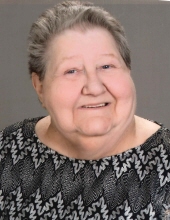
Barbara N. ErtolacciWe extend to you, who mourn Barb’s passing most, our sympathy and condolences. We are honored and grateful to be able to offer today, here inside of Barb’s former parish church, our greatest prayer: the Holy Mass. May its graces help purify Barb’s soul of any imperfection, speed her soul to heaven, console all those who mourn her here below, and strengthen us on all our own lives’ journeys to God. No brief funeral homily can present the fullness of a Christian life, but holy aspects of a Christian’s life will reflect God’s goodness, beauty, and truth.
Earlier this week, Barbie and Jeff shared stories with me about Barbara (or Me-me). They told me of her smiles and laughter, of her generosity, about the Hi Way Café, and other things. One aspect of Barb’s life that stood out to me is her crafting hobby. Barb loved to make crafts; including crosses, coasters, wall decorations for every holiday, homemade cards. After moving into Cottonwood Manor in 2019, Barb made greeting cards and signs for residents; signs for doors to welcome new residents to their rooms and other signs to help residents find their way around. My personal favorite of these: a bathroom sign with the helpful message “4U2P”. Barb just freely did these crafts. It was her pleasure to create and give things as gifts. Her industry seems to have outpaced her recipients. I’m told she leaves behind six big boxes of creations, not for destruction but to be given away.

Our God is into crafts as well. He made this universe and our souls from scratch; not out of any need or obligation, but simply from a desire to create and give gifts as a blessing. Creation is an expression of God’s love. We are his craftsmanship. And even just the delightful, wonderful things we can see (be they animals, plants, landscapes, or galaxies) are far too numerous for us to behold in all of our lifetimes combined. His good gifts surround and overwhelm us. All things came to be from the Father through the Son, and the Father has given you, and Barb, and me as a gift to his Son.

Jesus says in our Gospel, “Everything that the Father gives me will come to me, and I will not reject anyone who comes to me… And this is the will of the one who sent me, that I should not lose anything of what he gave me, but that I should raise it on the last day.” In the view of the foolish, the dead seem to go forth to utter destruction. But those who trust in the Lord understand the truth, that with him is plenteous redemption. God has crafted us with loving care and he does not intend to discard us. One day, the dead will be raised incorruptible, and we shall be changed. That which is corruptible will be clothed with incorruptibility, and that which is mortal with be clothed with immortality. For “this is the will of the Father: that everyone who sees the Son and believes in him may have eternal life.” Barb is God’s beloved craftsmanship, a gift to you, a gift to this world, and a gift to the Son. And this is the will of the one who sent us Jesus Christ, that he should not lose anything of what the Father gave him, but that he should raise us on the last day.

A Blessed Reflection — Funeral Homily for Robert “Bob” Seibel, 91

June 22, 2021

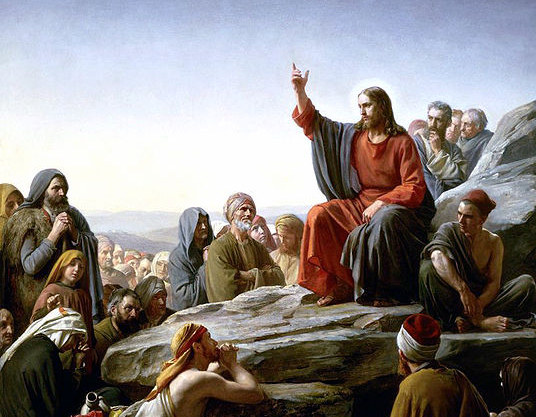
The Sermon on the Mount by Carl Bloch.

“When Jesus saw the crowds, he went up the mountain,
  and after he had sat down, his disciples came to him.”

Jesus climbs up the mountain. He is above and higher than them all. They all look up to him. He invites them to draw closer. And his disciples come closer to Jesus himself. He then begins to preach to them his Sermon on the Mount, beginning with the Beatitudes. Who is bless-ed? Who is blessed? Jesus gives us a description. The blessed one is poor in spirit, is meek and mourns, hungers and thirsts for righteousness, is merciful, pure of heart, a peacemaker, and yet persecuted for the sake of righteousness.

When we hear these Beatitudes we usually think of them as traits we Christians are called to embody, and that’s true. We are called, for instance, to rely on God to fill our humble spirits, to mourn the sin and evil present in this world, to pursue peace and all that is righteous. And the fruit of these attitudes to be is blessedness, holiness, true happiness. Our Christian lives should reflect these blessed traits, but these traits are reflected–first and best–in Jesus Christ himself. Jesus’ Beatitudes are autobiographical. He is above and higher than us all and we rightly look up to him. But Jesus wonderfully calls us higher, to draw nearer to him, for Christians to come closer to Christ. A faithful Christian’s life will come to reflect the person of Jesus Christ.

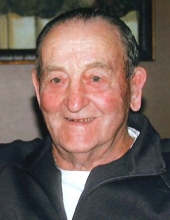
Robert F. SeibelBeatrice, Bob’s wife of sixty-six years, and his children have shared with me many stories about him. For instance, they told me of his precious Catholic faith in Jesus Christ. It was so important to Bob that he sacrificed for all eight of his children to be taught eight years each at St. Paul’s Catholic School. More recently, during the Covid pandemic and his infirmity, he would worship by watching the Holy Mass on TV, and delighted to have Jesus brought to his home in the Holy Eucharist. Through the years, at Bob’s supper table, where everyone had his or her own special spot, Bob would pray before meals, a devotion he always kept to the end of his life.

His family told me of Bob’s incredible work ethic, of his belief in everything being done right, and how he passed this on through his example. They recall how, amidst his hard labors, he might lay down on the floor for a ten-minute midday nap, rise again, and get back to work. Yet he always had time for his loved ones. Very approachable, Bob would talk to anyone about anything. After years of dairy farming, he moved on to gardening in retirement. From his full garden he generously shared, giving food to family and friends, the local food pantry, and whoever drove by. His gifted food went far and wide.

As I said, a faithful Christian’s life will reflect the person of Jesus Christ. In Jesus’ earthly life God came first. Christ seeks to teach us all about God his Father and our saving Faith. Jesus comes far down from heaven to our earthly home to be with us, through his Incarnation and his Church. The Lord gathers his family around his holy table at every Mass to pray to our Father and to feast together. He spreads the table before us, our cup overflows. And someday, if we heed his call, he will have a special spot for each of us around his table in heaven.

Jesus believes in the importance of righteousness, that right be done, and in passing this truth and example on to us. Jesus labored hard on earth, his body laid down briefly in the tomb, but then he rose again, renewed. He lives and still labors now. Yet Jesus always has time for us. He is very approachable, happy to converse with you about anything in prayer. And Jesus Christ, who made the world’s first garden for Adam and Eve and was mistaken for a gardener on Easter Sunday morning, desires to feed you and the whole world far and wide, by generously sharing himself in the gift of his Holy Eucharist.

What do you love and admire about Robert Seibel? Realize that everything which is loveable and admirable in him, is a reflection of these blessed traits’ source. A faithful Christian’s life reflects the person of Jesus Christ. Today, let us pray for Bob’s soul, that he be purified of any flaw, and renew our own faithful Christian devotion and love for Jesus Christ, so that one day we may all be called and gathered together again with God upon his holy mountain.