Archive for the ‘Salvation History’ Category

“Receive the Holy Spirit”

June 5, 2022

Pentecost Sunday
By Fr. Chinnappan Pelavendran

On the day of Pentecost, the Holy Spirit descended with power upon the Apostles in the image of tongues of fire and thus began the mission of the Church in the world. Once they received the Spirit, they went out boldly and preached to all in Jerusalem and elsewhere. Jesus himself prepared the Eleven for this mission, appearing to them on many occasions after his Resurrection.

Jesus asked them to stay together to prepare themselves to receive the gift of the Holy Spirit. The disciples followed the command of Jesus. They as a community gathered together in prayer along with Mary in the Upper Room, awaiting the promised event. It is here they all received the Holy Spirit. This feast of Pentecost is the culmination of the Paschal mystery which tells us of the sending of the Spirit of the Father and the Son on the disciples.

During his apparitions Jesus gives two gifts to his followers, the gift of his abiding peace and the power to forgive sins. He commissions them to carry on his work, empowered by the gift of the Holy Spirit and peace. The Holy Spirit will continue to teach them the message of Jesus. Today is also the birthday of the Church. This Sunday is a commemoration and celebration of the receiving of the Holy Spirit by the early church.

We celebrate this day to recognize the gift of the Holy Spirit, realizing that God’s very life, breath, and energy lives in believers. The celebration reminds us of the reality that we are all having the unifying Spirit that was poured out upon the first disciples. It tells us that the same Spirit is given to each one of us, that we are all baptized by one Spirit into one body, and that the Spirit which raised Jesus from the dead will raise us too. So he said to them, “Receive the Holy Spirit.” With the giving of the Spirit came also the authority to speak and act in the name of Jesus.

If you forgive sins, they are forgiven; if you retain the sins of any, they are retained.” Forgiving sin, reconciling people with God has been the very core of the work of Christ and the Christian mission. The Holy Spirit will teach them the divine knowledge and wisdom of the Father that belongs to Jesus, both the Father and the Son is one in the Blessed Trinity

Being filled with the Holy Spirit, they were given the power of preaching and healing and they spoke in tongues. Thus having received the Holy Spirit, the disciples went out and preached the message of Jesus. Jesus greets his disciples with the gift of peace. “Peace be with you,” he says. Jesus then commissions his disciples to continue the work that he has begun “As the Father has sent me, so I send you.” He breathes the Holy Spirit upon the disciples and sends them to continue his work of reconciliation through the forgiveness of sins.

As we celebrate this great feast of the Church’s fifty days after the resurrection of Jesus, how have we been a sign of reconciliation in our families, in our world, and among people of faith everywhere? Have we been an instrument of God’s peace to everyone we meet? With the faith and trust modeled by Mary, the Mother of God, let us offer our prayers to God this day. Heavenly Father, in your wisdom, please hear and answer our prayers this day. We ask through Jesus Christ, your Son.

Our Upper Room

June 4, 2022

Pentecost Sunday
By Fr. Victor Feltes

Before his Passion in Jerusalem, Jesus desired a gathering place for him and his disciples. He sent Peter and John into the city, telling them to find a certain house and ask the owner of the home to use its guestroom. They did as Jesus asked and found “a large upper room, furnished and ready.”

This famous room, known as “the Cenacle,” was the site of the Last Supper, the First Holy Eucharist or Mass. Here the Risen Lord appeared to his Apostles after his Resurrection. This is where Mary, the Apostles, and other disciples (“a group of about one hundred and twenty persons in the one place”) “devoted themselves with one accord to prayer.” And here on Pentecost, following the Church’s first novena, the Holy Spirit descended upon the disciples in the likeness of separating flames. Then they went forth from there into the world, joyfully proclaiming Jesus to the nations with confidence and power.

Jesus desired his disciples to gather together in the Upper Room. There they meet with him, heard his teaching, and came to know that he is risen. They ate with him and worshiped him. And there his followers socialized, prayed as one, and received the Holy Spirit.

Sometimes people ask, “If God is everywhere, why do I have to go to church?” Yes, there is no place where God is not, but this excuse misses something important. Water is likewise everywhere around us—in clouds, in blades of grass, as vapor in the air—but if you do not wish to die of thirst you are well-advised to drink water from a well or a faucet. Jesus tells us, “If anyone is thirsty, let him come to me and drink.

In the words of the Letter to the Hebrews, “We should not stay away from our assembly, as is the custom of some.” This church, St. John the Baptist’s, is our Upper Room. Here we gather together and encounter Jesus Christ in his sacraments, Here we listen, and worship, and receive his gifts, blessings meant for us and for others in this world. Like the Apostles in the Upper Room, we did not build this room or parish. This holy place has been lent to us by those who were before us, and the Holy Spirit inspires us to care for and sustain it.

This weekend at St. John’s is Commitment Weekend for our Inspired by the Spirit” Capital Campaign. You have probably heard me speak about this campaign before, either at receptions or back on Announcement Weekend. 35% of our $80,000 goal funds our 2022-2023 Annual Appeal and other worthy diocesan initiatives, while 65% the goal returns to us to replenish our greatly diminished building maintenance fund.

Now the maintenance of parish facilities is not a flashy thing. Patching cracks in our parking lot or replacing our furnaces as they fail from old age are less exciting endeavors than when we renovated this church of ours into one of the most beautiful in our area. But without funding for the care and maintenance of the mundane things this parish and its mission will fail. That is why I ask you to join me in making a pledge to this five-year capital campaign.

Our pledging phase ends on June 17th, less than two weeks away. So far our recorded pledges total $60,000, so we have $20,000 in pledges to go. If we happen to raise more than our $80,000 goal, know that 80% of that surplus comes back to our parish. I’ll give you an opportunity to fill out a pledge card today during announcement time before the final blessing. I ask you to prayerfully consider pledging a $3,000 gift spread-out over five years, which (after a 10% initial down payment) works out to $45 monthly (above your usual tithing) for 60 months. If you are blessed to be able to pledge more generously than this, please do. If you can only pledge less, that’s ok too. And if you pledge a certain amount now and three of four years from now your financial circumstances change, you can just let us know and we’ll modify your pledge.

On the first Pentecost, the Holy Spirit inspired Christ’s disciples to go out into the world, sharing Jesus Christ and his salvation with all nations. But realize this mission began in their Upper Room. Please pledge generously to support our Upper Room: St. John the Baptist Parish.

Why Did Jesus Go?

May 29, 2022

The Ascension
By Fr. Victor Feltes

This week, our Catholic school celebrated our eighth graders’ graduation with a Mass and an awards ceremony. Afterwards, while the graduates were having their pictures taken, a teacher and I stood off to the side, looking on. He remarked, “It’s sad to see them go.” I replied, “Yeah, but it would be even sadder if they stayed.

Just whimsically imagine remaining an eighth grader well into your twenties. You don’t have a full-time job because you’re a full-time student without a high school degree. Of course you’re unmarried and have no kids—you’re still in middle school! And sure, after a decade of eighth grade, having had the same lessons over and over, you could ace all of your homework and tests (if you still had any motivation left to do so) but you would not be learning very much. It is bittersweet to see our graduates go forth from us, but it is better that they go. Though in one sense they are leaving us, they are not really gone. Yet this departure is necessary for them to reach their full human maturity and to fulfill God’s plans for their glory.

Today we celebrate Jesus’ bodily ascension into Heaven. The traditional day for celebrating the Ascension is forty days after Easter, which was last Thursday, or “Ascension Thursday.” Our diocese, like most dioceses in our country, transfers this celebration to this Sunday. I guess we like keeping Jesus around longer. But seriously, the ascension of Jesus into heaven raises this question: “Why did he go? Why didn’t Jesus stay?

Now Jesus does tell us, “Wherever two or three are gathered in my name I am there in their midst.” He says, “Behold, I am with you always until the end of the age.” And he is truly present for us in the Holy Eucharist. But Jesus’ presence now remains invisible or veiled to our eyes. By bodily ascending and disappearing into the clouds Jesus is visibly departing from us until he comes again with a glory manifested to all. “But I tell you the truth,” he says, “it is better for you that I go.” Why is this better? What would it be like if Jesus dwelt among us throughout the centuries like he did with his disciples those forty days, walking with them and talking with them, following his Resurrection?

There is no physical reason why Jesus could not have done this. His risen body is a glorified body no longer subject to injury or death, so that’s not the reason he did not remain. Did he go because on earth he’s reduced to being in one particular place, or limited in how much he can see, know, or do? Remember, Jesus is not merely human but divine, all-knowing and all-powerful, and his bi-locating saints (such as Venerable Mary of Ágreda or St. Padre Pio) who have manifested the miracle of being more than one place at once surely do not possess any supernatural ability which Jesus lacks.

So God the Father could have chosen “by his own authority” for his Son to remain visibly active here with us, in one, or thousands, or millions of locations at once, throughout the centuries up to our day. Jesus could be the pastor in every parish, the teacher in every classroom, the doctor in every hospital, and the leader in every country. He is the perfect priest, the best teacher, the greatest healer, and the rightful ruler of all. Who is better-qualified than Jesus to do any of these things? Nobody. People would demand this of him and resent him for not doing it. But if Jesus were visibly present and doing everything, then we would be left doing very little.

Would it be a better world if Jesus personally did everything? In some ways, yes. Earth would be closer to paradise in many respects. But would this lead to more souls being saved? I’m not so sure. Adam and Eve lived in an earthly paradise, too, before they fell. And the glory of Christ being manifested to the world in an undeniable way might gain peoples’ submission, but not necessarily their conversion or love. The demons who fell had no doubts about God’s existence and yet they chose to disobey him as far as they were able.

If Jesus did everything of importance on earth without us, one result which seems evident to me is that we would remain in an unending adolescence, like someone attending the eighth grade well into their adulthood. This is why it was better for us that Jesus ascended. We are children of God called to what St. Paul calls “the stature of the fullness of Christ.” If everything which matters were just Jesus’ job to handle, how would we grow from our immaturity into the full maturity of Christ?

Jesus says, “I tell you the truth, it is better for you that I go. For if I do not go, the (Holy Spirit) will not come to you. But if I go, I will send him to you.” By the Holy Spirit, the Church (which is Christ’s Body) is animated in this world. As members of his body we are moved by the Holy Spirit to love and to work united with Christ, growing more into his likeness and glory along the way. Would Jesus not ascending into heaven, remaining constantly here on earth and doing everything without us, have been easier than this present Christian life of ours? Perhaps, but Jesus desires that we would graduate with him to higher things and ascend to a greater glory with himself.

Resolving Christian Controversy

May 22, 2022

6th Sunday of Easter
By Fr. Victor Feltes
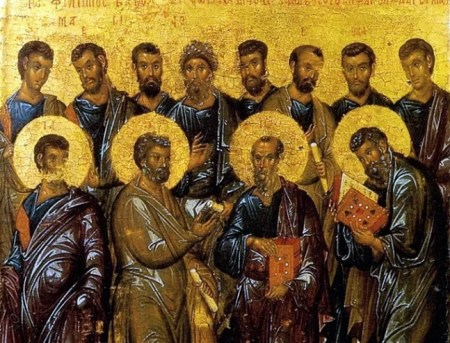
There was a serious religious controversy in the very early Church. The Acts of the Apostles records this story which contains important lessons for you and me and Christ’s one, holy, catholic, and apostolic Church in every age. In the first century A.D., some Jewish Christians came down to Antioch and were telling the Christians there: “Unless you are circumcised according to the Mosaic practice, you cannot be saved.” Many of the Christians in Antioch were Gentile converts. As Gentiles they had not followed the many Jewish religious laws, including circumcision. Now they were being told they had no share in Jesus Christ’s New Covenant unless they kept the entire Mosaic Covenant.

This was a crucial matter: either these Gentiles were not yet experiencing Christ’s salvation, or else the Law of Moses was being needlessly placed as a barrier between Gentiles and Jesus Christ. St. Paul and St. Barnabas strenuously opposed this alternate interpretation of the Gospel which was disturbing and dividing their community, but how could this important issue be decisively and infallibly settled? Everyone forming their own interpretations obviously would not resolve it. How could the Christian community be sure of the truth?

The Acts of the Apostles details how “it was decided that Paul, Barnabas, and some of the others should go up to Jerusalem to the apostles and presbyters about this question.” A Church council was held in Jerusalem and after they had discussed and discerned the matter, “the apostles and presbyters, in agreement with the whole church, decided to choose (a pair of) representatives and to send them to Antioch with Paul and Barnabas. (They selected) Judas, who was called Barsabbas, and Silas, (two) leaders among the brethren.

And they did not send Barsabbas and Silas empty-handed. The pair carried a letter from the council, which read in part: “It is the decision of the Holy Spirit and of us not to place on you any burden beyond these necessities.” It then listed a handful of culturally offensive and/or sinful acts to abstain from before concluding, “If you keep free of these, you will be doing what is right. Farewell.” In other words, the Gentile Christians would not be required to follow the full Mosaic Law.

Notice how the Church’s leaders, the apostles and presbyters in Jerusalem, pronounce their teaching with authority: “It is the decision of the Holy Spirit and of us…” As Jesus had promised at the Last Supper, “The Holy Spirit…will teach you everything and remind you of all that I told you.” The Church’s leaders teach in union with and in cooperation with the Holy Spirit.

Note as well how they do not send this letter by itself, but along with Barsabbas and Silas. This is partly to attest to the genuineness of the message—it’s not something Paul and Barnabas simply made up themselves. The accompanying witnesses are also sent to clarify any ambiguities and answer what remaining questions the Christians at Antioch might have. For instance, the Council of Jerusalem’s short letter bids the Christians to abstain from “porniea,” which various Christian Bibles translate as “sexual immorality,” or “fornication,” or “unlawful marriage.” But what was the precise meaning they intended here? One of these things or all of them together? Barsabbas and Silas could answer. We see that even a text inspired by the Holy Spirit (as this one was) can require an authoritative interpreter to be properly understood.

When the delegation from Jerusalem arrived at Antioch, the letter was read to the Christian community and the people were delighted. Barsabbas and Silas preached to them, encouraging them, and remained with them for some time. The controversy was resolved, and the community’s unity and peace of mind were restored; for the Bride of Christ, Mother Church, had spoken, removing all doubt about what Jesus wanted them to do.

This, of course, would not be the last controversy in Church history. Every century since has seen its heresies, and every error gains some followers because it is so easy to be mistaken. Clever minds and willful hearts in a fallen world can go down many false paths, and when lambs or sheep choose their own ways to go they scatter from Christ’s flock. Thankfully, God has given us his Holy Word in Sacred Scripture to help us to know him and his saving, loving will for our lives.

However, the Scriptures do not automatically interpret themselves. Even self-proclaimed “Bible Only” Christian denominations disagree with one another over important questions. The Protestant principle of Sola Scriptura (that “Scripture Alone” is the sole authority for Christian faith and life) is a self-refuting concept because the Bible does not teach it. How can someone even be sure which books are supposed to be in our Bible without there being an infallible Church to recognize them and place them into the canon of biblical books? Without a Spirit-guarded, infallibly-teaching Magisterium neither the Christians at Antioch nor Christians today could be sure about what we are to believe.

The Church of Jesus Christ is not meant to be many separate denomination, but one. Christ’s Church is not meant to bring salvation only to some, but to all. And the one, holy, catholic, and apostolic Church of Christ shares a continuity in her structure and in her teaching throughout the centuries from St. Peter and the apostles to Pope Francis and the bishops today.

In 1926, when G.K. Chesterton wrote his essay “Why I am a Catholic,” he presented a number of reasons, but the answer of his which has always stood out to me is this one: “(I am a Catholic because it) is the only thing that frees a man from the degrading slavery of being a child of his age.” Some secular people imagine our present generation is the first one to get everything right, but in one hundred years another secular generation will mock and cringe at this one while embracing another set of fashionable errors of their own. However, in one hundred years the Catholic Church will remain, built solidly upon rock, and united to the Person and teachings of Jesus Christ our Lord.

Here is a final reflection from the controversy at Antioch. The teaching of Paul and Barnabas was right, and Barsabbas and Silas carried authority from the apostles. They were important witnesses to the Faith. But their message would have been undermined in the minds of others if St. Paul, St. Barnabas, St. Barsabbas, or St. Silas had not lived as saints. Our fellow Christians, even popes or bishops, may disappoint or cause scandal by their poor personal example, harming souls. But let us, you and I, rededicate ourselves to Christ, loving him and serving him, remaining close to him in the Sacraments, allowing ourselves to be more fully converted to him, so that others may know, love, and faithfully follow Jesus alongside us in his Holy Catholic Church.
“Do You Love Me?”

April 30, 2022

3rd Sunday of Easter
By Fr. Victor Feltes

At the Last Supper, Simon Peter assures Jesus, “Lord, I am prepared to go to prison and to die with you.” But Jesus replies, “Peter, before the rooster crows this day, you will deny three times that you know me.” Later that night, during Jesus’ trial before the Jewish high priest, Peter stands with the servants and soldiers outside. It’s a cold night, so they warm themselves around a charcoal fire in the middle of the courtyard. This is where Peter denies three times that he is in any way connected to Jesus. A rooster crows, Jesus turns and makes eye-contact with Peter, and Peter breaks down and weeps.

In our gospel, the risen Jesus appears to seven of his disciples at the Sea of Galilee (also known as the Sea of Tiberius). He invites them to breakfast with him around another charcoal fire. This is the context for the conversation between Jesus and Peter today. After Peter’s three denials, Jesus provides him an opportunity to thrice-reaffirm his love. Jesus meets Peter by that charcoal fire like he mercifully encounters you and me in the confessional.

Now there is more going on in the original Greek of this gospel text than can be seen in our English translation. In English, the word “love” does a lot of heavy lifting. We say: “I love my family,” “I love my car,” “I love my country,” “I love pizza,” and “I love God.” But in Greek, there are multiple words for “love.” For example, “Phileo” refers to friendship or brotherly love, “Eros” refers to romantic love, and “Agape” refers to self-sacrificial, unconditional love. Agape is the way God actively loves us and how we are called to love too. “This is my commandment,” says the Lord, “that you (apage) one another, just as I have (agaped) you.

In today’s gospel, Jesus first asks: “Simon, son of John, do you love me (do you agape me) more than these?” And Simon Peter answers, “Yes, Lord, you know that I (phileo) you.” Simon loves Jesus as a dear brother and friend, but Peter, now humbled, recognizes that he does not love Jesus perfectly. Then Jesus asks again, “Simon, son of John, do you (agape) me?” Simon Peter answers, “Yes, Lord, you know that I (phileo) you.” But the third and final time, Jesus asks, “Simon, son of John, do you (phileo) me?

Peter is distressed that Jesus switches this time to asking, “Do you (phileo) me?” Peter may be wondering, “Is Jesus questioning whether I even love him that much?” He says, “Lord, you know everything; you know that I (phileo) you.” Jesus is not doubting Peter’s phileo love for him, but rather meeting him where he’s at, allowing him to answer with an unqualified “yes.” Peter’s love is not yet perfect, they both recognize that, but Jesus tells him to feed his lambs, tend his sheep, and feed his sheep as the chief shepherd of Christ’s flock on earth as the first pope. Jesus reveals to Peter that his faithful service will lead him to the perfection of self-sacrificial, agape love in end.

Amen, amen,” Jesus tells him, “when you were younger, you used to dress yourself and go where you wanted; but when you grow old, you will stretch out your hands, and someone else will dress you and lead you where you do not want to go.” Jesus said this signifying by what kind of death Peter would glorify God; that is, a martyr’s death. Peter would go on to be crucified upside-down and buried on Vatican Hill. Our gospel concludes with Jesus telling St. Peter and us: “Follow me.”

Like Peter there on the seashore, we probably realize that our love for God is real though imperfect. Jesus knows this too, of course, but he still loves us here and now. He meets us where we’re at, he loves us as we are, but he will not settle for that. He intends to call us, lead us, press us forward to more perfect love. His providence will lead us to places we may not want to go, to experience trials we would not choose for ourselves. But his purpose is to make us into a person, a person who loves, like Jesus Christ himself.

A final story…
In C.S. Lewis’ Christian fantasy novel, “The Lion, The Witch, and The Wardrobe,” a little girl named Lucy is told about a great lion named Aslan. Aslan is the Christ figure in the world of Narnia. Mr. Tumnus tells Lucy, “He’s wild, you know. Not like a tame lion.” Lucy asks, “Is he—quite safe?” And Mr. Beaver replies, “Who said anything about safe? [Of] course he isn’t safe. But he’s good.”

Running to the Empty Tomb

April 17, 2022

Easter Sunday
By Fr. Victor Feltes

There is a joke about how John ran faster than Peter on Easter. John wins the footrace to the tomb and shouts, “I won, I won!” But Peter taunts him, “Who will ever know?” And John says under his breath: “Everyone will know.

St. John’s Gospel records how when Mary Magdalene told them about the empty tomb, “Peter and [John] went out and came to the tomb. They both ran, but [John] ran faster than Peter and arrived at the tomb first.” When Peter arrives, they both enter in to experience signs and results of Jesus’ Resurrection. If St. John is not highlighting his faster foot speed in order to brag, if his purpose is not to rub it in “Slow-Poke Peter’s” face, why include the detail about arriving before Peter?

Part of this is due to St. John accurately describing his firsthand experience of the empty Easter tomb of Christ. Who did what, when and with whom, are important facts when providing eyewitness testimony. Documenting that the tomb was empty before his disciples saw him alive again clarifies that Jesus’ Resurrection is a physical, historical event. The Risen Jesus is not a ghost, he’s not a vision, he’s not a fantasy. His body is not in the tomb. Christ has died, Christ is risen, and Christ will come again.

Like other verses in Sacred Scripture, the detail about John running faster and Peter arriving after contains a spiritual meaning for us. One disciple arrives earlier, another disciple comes later, but they both meet together at the same holy place on Easter morning. They enter in together and see signs and results of Christ’s Resurrection inviting them to believe and accept that the world has changed. Sin and death do not have the last word. Jesus Christ is Lord.

Today, those of us here are like those two disciples. Maybe you’re a disciple who ran here faster. Or maybe you’re one who has arrived more slowly. Maybe you’ve been waiting here, preparing to enter into Easter, since the beginning of Lent. Or maybe you have not come to this holy place for months or years, until today. Either way, whether you came here first or last, all of us are called and blessed to be here together now.

How shall we respond to Easter? With faith or faithlessness? On the first Easter morning, St. Peter could have chosen to leave the tomb and return to his former life of commercial fishing. St. John, the newly-entrusted guardian of Jesus’ Mother Mary, could have abandoned her and fled far away, never to return. But both men chose to remain with the other disciples and soon experienced Christ alive among them.

I hope we all, from this day forward, will be here together each Sunday. Prioritize your faith above the world, like St. Peter did. Draw nearer to Mary and the saints, like St. John did. Remain with us here at St. Paul’s, as fellow disciples of Christ, to experience Jesus Christ alive among us. Christ is risen. He is risen indeed. So believe in him, accepting how he has changed our world.

Because He Loves You

April 17, 2022

Easter Vigil
By Fr. Victor Feltes

Our human knowledge and human awareness are limited and finite. Jesus Christ, however, is both fully human and fully divine. As the eternal, Second Person of the Trinity, his understanding and consciousness are unlimited. And so, amazingly and truly, he knew us and loved us even before time began.

At the beginning of creation, he foreknew you and loved you. He called Father Abraham in ancient times, in part, because he loves you. He freed the Hebrews from slavery in Egypt because he loves you. He settled his people in the Promised Land because he loves you. He established King David’s dynasty because he loves you. He commissioned all the prophets because he loves you. He brought his people back from exile because he loves you.

In the fullness of time, he became man because he loves you. He preached and ministered on earth because he loves you. He tolerated rejection and betrayal because he loves you. He endured whipping and mockery because he loves you. He accepted the Holy Cross because he loves you. He suffered and died because he loves you. But during this night upon the third day, he conquered death and rose again because he loves you.

In more recent days, he gave you life in your mother’s womb because he loves you. He encounters you in his Catholic Church because he loves you. He baptizes you to be his Father’s child because he loves you. He confirms you as the Holy Spirit’s temple and instrument because he loves you. He incorporates you into being a member of his mystical Body and Bride because he loves you. And he fills your life with more blessings than you can count because he loves you.

Each of us rightly celebrates this night because of Jesus Christ. You are here at Easter Vigil because you love him. But more importantly, you are here tonight because he loves you.

What Makes Good Friday Good?

April 14, 2022

Good Friday
By Deacon Dick Kostner

I have always been puzzled with the question of why an all loving God would ever will or direct that his Son be required to die in order for the door to heaven be unlocked so that we might enter into eternal life. I thought this would be an excellent reflection for us to enter into for this Good Friday Service. My research disclosed an informed reflection that was given by a Fr. Terrance Klein, a priest in the Diocese of Dodge City, last year on Good Friday as a homily he presented to his parish.

He indicated we must go back to our creation story in the Bible to find the answer to this question and it all goes back to the fact that the Father desires his children to love him and the fact that one can never order someone to love them. Love can only be obtained if someone has the free will to decide for themselves if someone deserves their love. Free will is a requirement for real love to exist.

God created humans in his image and likeness, but he also created them with a free will to accept or refuse his fatherly teachings and laws which was gifted to us to help us find happiness and yes eternal life with him in heaven. As Fr. Chinnappan told us at our Parish Mission, God does not send us to heaven or hell at the end of our earthly lives, we send ourselves to that place by and through our free will decision to live out our lives either believing and following the advice of our heavenly mentor Jesus, or by refusing that advice.

God sent his son to us in human form so that we might better understand his words and teachings. He sent Jesus with the mission to share salvation instructions so that we might not only be happy in this life but also join God in heaven after this life for all eternity. He did not send Jesus as death sacrifice for our salvation rather he sent Jesus to us with a mission to bring us into the heavenly family by and through use of the key to salvation which is love of God and neighbor. It was the tremendous love that Jesus has for each and everyone of us that he gave his life so that we could witness the fact that death does not trump God’s love for us, his children. The question for us to ponder is do we desire to love God and neighbor and accept his love for us, or not?

On behalf of our Parish I would like to thank Fr. Chinnappan for an insight on the last words of Jesus on the Cross which revealed to this Deacon as to why today is called “Good Friday.” So why is this day “Good?” Maybe it is because it was through Jesus’ Passion and Death that human death came to an end for all of us who have listened to the Word and obeyed His directives for happiness not only in this life but the life to come.

“Do This in Memory of Me”

April 14, 2022

Holy Thursday
By Fr. Victor Feltes

Did you know that a homily is different from a sermon? A sermon may be about whatever topic the preacher chooses, but a homily must be based upon the liturgy’s readings or prayers, or the particular feast celebrated that day. Rather than a sermon, the Catholic Church directs the preacher to give a homily at Mass, though she usually leaves it up to him to decide which specific theme or themes to highlight from the day’s readings, prayers, or celebration. The Mass of Holy Thursday is one rare exception.

For this evening, the Church requires in the current Third Edition of the Roman Missal: “after the proclamation of the Gospel, the priest gives a homily in which light is shed on the principal mysteries that are commemorated in this Mass, namely, the institution of the Holy Eucharist and the priestly Order, and the commandment of the Lord concerning fraternal charity.” In other words, tonight’s homily must be about Jesus beginning our celebration of the Holy Eucharist, his founding of the New Testament priesthood, and his commandment that we love one another. All three of these themes are reflected in Jesus’ words, “Do this in remembrance (or do this in memory) of me.

On the first Holy Thursday, the night before he died for us, Jesus gathered his disciples for a meal, the Last Supper. While at table, he “took bread, and, after he had given thanks, broke it and said, ‘This is my body that is for you.’” After that, he took a chalice and said, “This cup is the new covenant in my blood.” Before being betrayed in the Garden of Gethsemane, Jesus hands himself over to his disciples. Before suffering his Passion, Jesus’ Body is broken and his Blood is poured. Before his death on the Cross, Jesus offers a sharing in his self-sacrifice. And Jesus says, “Do this in remembrance of me.

Ever since, this “Breaking of the Bread,” this consecrating of the Holy Eucharist, this celebration of the Sacrifice of the Mass, has continued to our day. Read St. Justin Martyr’s Apology, an account from the 150’s A.D. describing how Christians worshipped together on Sundays. You will clearly recognize the elements and structure of the Mass. We have done this ‘in memory of him‘ from the era of the Acts of the Apostles to this very evening.

In commissioning his apostles to “do this in memory of me,” Jesus was ordaining them ministers of this new, Christian Sacrifice. He made them priests of the New Covenant, to lead, and teach, and sanctify his people. Without appointing clear shepherds for his Church on earth, Jesus knew his flock would inevitably scatter. Without priests, there would be no Eucharist to make us one in Christ. Please pray for your priests, please pray for more priests, and if Jesus may be calling you to ordination please do not ignore his call. The priesthood is that important for the salvation of souls.

Finally, in saying “do this in remembrance of me,” Jesus was not only telling his Church “do this sacrament until I come again.” And Jesus was not just telling his apostles “do this as my priests.” In saying “do this in remembrance of me,” Jesus was telling each of us to love like he does.

Did you know there are no words of consecration to be found in St. John’s Gospel? Jesus saying, ‘This is my body‘ and ‘This is my Blood‘ at the Last Supper is recounted by the other three gospel writers and by St. Paul in his 1st Letter to the Corinthians (as we heard tonight). So why does St. John leave this out? Perhaps, being the last gospel writer, he saw no need to repeat details others had already made well-known. Instead, John’s is the only gospel book which features the story of Jesus washing his disciples’ feet.

This humble, beautiful act of Jesus helps reveal more fully the meaning of his Eucharist Sacrifice. He, the Master and Teacher, washes feet. He, our God and Creator, gives himself as food. He, the King and Holy One, dies on a cross. Jesus does these things for us because he loves us. He says, “I have given you a model to follow, so that as I have done for you, you should also do… Love one another as I have loved you… Do this… do this… in memory of me.

God’s Love Among Us — Funeral Homily for Cecilia Jenneman, 100

April 11, 2022

By Fr. Victor Feltes

When Cecilia was born one hundred years ago the First World War had only recently ended. Some had hoped it would be ‘a war to end all wars,’ but this would not be so. There were millions more horrors, murders, and atrocities to follow. Religious demographers find there were more Christians martyrs in the 20th century than in all previous centuries combined. The news reports from the Russian war in Ukraine show us that innocents are still suffering and being murdered in our time. Seeing such grave evils in the present and the past, even the faithful may understandably question, “Where is God?

Last week, a Dominican Catholic priest in Ukraine was asked about this in light of the wicked war crimes revealed in the town of Bucha near Kiev. Fr. Petro Balog replied, “Today we must recall the words of Christ from the 25th chapter of Matthew, where he says that ‘whatever you did for one of the least of these brothers and sisters of mine, you did for me.’ When we talk about Bucha… Christ was killed, Christ was deprived of his home, his hands were tied, and he was shot. All this was done to those with whom Christ identifies himself. …God is being crucified again, tortured again.” Fr. Balog emphasizes that God is not above it all. God is in the midst of the suffering and on the side of those suffering.

During Holy Week we remember how Christ’s love led him to offer his painful and sorrowful Passion to save us. Jesus’ innocent suffering, his death and resurrection, changes Christians’ view of this life, death, and the life to come. Though we naturally mourn the passing of Cecilia, we need “not grieve like [others] who have no hope,” for “the Lord God will wipe away the tears from all faces.” On the Last Day, his faithful will say, “let us rejoice and be glad that he has saved us!

Jesus teaches us at the Last Supper and today, “Do not let your hearts be troubled… In my Father’s house there are many dwelling places. I am going to prepare a place for you… I will come back again and take you to myself, so that where I am you also may be.” Christ declares to us, “As the Father loves me, so I also love you. … Love one another as I love you. This is how all will know that you are my disciples, if you have love for one another.” And the lives of his present-day disciples, at our best, help others to believe in Jesus too. A faithful Christian life reflects the faithful love of Christ for his Spouse, the Church, and for each of us individually.

Like Jesus, Cecilia taught many gathered around her. Like Christ, she could “be kind, but be firm.” Some called her, “The best teacher I ever had.” Like our heavenly Father, there were many dwelling places in Cecilia’s house. In addition to family she excellently fed farm hands and friends, and opened her doors to host relatives in need (including her own aged mother, two aunts, and two nephews who had lost their own mother). And after her beloved husband, Bill, became severely debilitated, her faithful love cared for him too through their last two decades together. When asked to imagine living her life over again, she answered, “I would walk the aisle at St. Paul’s with the same man, welcome the birth of each child, grandchild, and greatgrand.” Like God loves each of his children, Cecilia wrote, “I loved each child dearly – perhaps in a different way as each is an individual, but 100% love for each one. …Remember my love for children; my seven, all grandchildren, and the great grands also.

And throughout her life, Cecilia’s Catholic Faith came first. She was known to say, “Without faith in God you have nothing.” She recalled her 1st (“Solemn”) Communion, receiving Jesus Christ in the Holy Eucharist in 8th grade, as a highlight moment of her life, and pointed to the nuns and priests at St. Paul’s as one of her life’s greatest inspirations. Cecilia wrote in her funeral preparation notes: “I hope I instilled a strong faith in God in my own seven children, grandchildren, and every child I was close to in my life. [I want my family to remember me for] whatever I did to help them to be better Christians.

In St. Augustine’s book The Confessions, the oldest autobiography in Western history, he writes about the death of his mother, St. Monica, whose prayers and lived example were so important for his conversion and salvation. As she was dying, St. Monica told her children “Bury my body wherever you will…. Only one thing I ask of you, that you remember me at the altar of the Lord wherever you may be.” Monica was a saint, but she was not presumptuous. She desired the help of her loved ones’ prayers, just like we should pray for Cecilia. But Monica desired something more; not only for her dearest ones to pray for her soul but to draw near to the altar of the Lord Jesus themselves. God, like water, is all around us; but to drink we come to the font of Christ.

Human events are often gravely wrong and death is a heartbreaking scandal. But knowing Jesus Christ and his saints reveals the reality and strength of God’s love. The Easter resurrection of our Lord Jesus Christ remains our hope and consolation, for Cecilia, ourselves, and all the world.

Entering Holy Week

April 9, 2022

Palm Sunday
By Fr. Chinnappan Pelavendran

Today the Church is celebrating Palm Sunday, Palm Sunday reminds us of the glorious and triumphal entry of Jesus into Jerusalem. As Jesus entered Jerusalem the crowds greeted him with shouts of joy and proclaimed him as the messianic king. They spread their cloaks on the ground and placed the palm branches on the street and shouted “Hosanna to the Son of David” and “Blessed is he who comes in the name of the Lord.” The donkey was a symbol of peace and those who rode upon them proclaimed peaceful intentions. The laying of palm branches indicated that the king or dignitary was arriving at victory or triumph.

In the second reading of today. The hymn tells us that even though he was divine, he took willingly the human form for our sake. He is the new Adam who became obedient and did not cling to his divinity and, He is the servant of God who accepted sufferings for the sake of humanity. Finally, he died on the cross a death of shame and humiliation. That death became the sign of triumph and glory and the means of salvation for the world.

The Gospel tells us of his victory and reveals in painful detail the physical sufferings of Jesus. There is rejection, pain, misunderstanding, and Humiliation and yet through it, all Jesus stands firm, faithful to God till the end. In the process, there is a transformation. The leader becomes a servant, shame turns to honor, mockery becomes praise, fear turns to trust, abandonment becomes love, despair turns into hope, and above all death blossoms into new life.

In today’s Passion narrative, Luke builds up to five basic events that take place during the last few days of the earthly life of Jesus. The first is that Jesus shares his final meal with the disciples. Second, Jesus is arrested by his enemies. Third, Jesus is subjected to the so-called Jewish trial. Fourth, Jesus is subjected to the Roman trial and is condemned to death. Fifth, Jesus is crucified on the Cross. He dies on the Cross and is buried soon after.

We must be ready to surrender our lives to Jesus during this Holy Week and welcome Him into all areas of our life as our Lord and Savior, singing “Hosanna.” Today, we receive palm branches at the Divine Liturgy. Let us take them to our homes and put them in a place where we can always see them. Let the palms remind us that Christ is the King of our families, which Christ is the King of our hearts, and that Christ is the only true answer to our quest for happiness and meaning in our lives. And if we do proclaim Christ as our King, let us try to make time for Him in our daily life. Let us remember that He is the One with whom we will be spending eternity. Let us be reminded further that our careers, our education, our finances, our homes, and all of the basic material needs in our lives are only temporary. Let us prioritize and place Christ the King as the primary concern in our lives. It is only when we have done this that we will find true peace and happiness in our confused and complex world.

This week, let us reflect upon the mystery of the Passion of Jesus, our King, as we prepare ourselves to commemorate His glorious Resurrection. Let us remember that Jesus died for our sins, your sins, my sins. Let us be most thankful to the Lord Jesus in thoughts, words, and in actions. And may the Spirit of Jesus be with us during the coming week as we relive the last few days in the life of Jesus on earth. This is a perfect opportunity for us to learn about Divine love so we too may grow in the love of Jesus by the grace of the Heavenly Father.

Holy Week Gifts to Jesus

April 9, 2022

Palm Sunday
By Fr. Victor Feltes

Today, Jesus sends two of his disciples on a special mission. He tells them, “Go into the village opposite you, and as you enter it you will find a colt tethered [a young donkey] on which no one has ever sat. Untie it and bring it here.” Jesus rides that animal into Jerusalem in fulfillment of Zechariah’s ancient prophesy: “Shout for joy, O daughter Jerusalem! Behold: your king is coming to you, a just savior is he. Humble, and riding on a donkey, on a colt, the foal of a donkey.” Jesus does not approach with force upon a warhorse, but peaceably, humbly, a savior riding on a donkey.

Today, on Palm Sunday, his followers celebrate while his enemies complain. Later, on Good Friday, Jesus’ foes accomplish his murder while his friends mourn. A secret disciple of Jesus, St. Joseph of Arimathea, helps take the body of Jesus down from the Cross and wraps it in a linen cloth, laying him in a new tomb which Joseph had hewn from rock and “in which no one had yet been buried.” St. Luke notes how Jesus rides an animal “on which no one has ever sat” and is placed in a tomb “in which no one had yet been buried.” What is the significance of highlighting these details?

Both objects being never used before suggests them being set apart, consecrated for specific use by the Lord. In the Old Testament, God’s law sometimes required the sacrifice of heifers who had never worn a yoke. At times, the Ark of the Covenant was moved using brand new carts. And a Jewish tradition held that no one else could ride the animal upon which the king of Israel rode.

Providence had prepared that colt and that cave for Jesus Christ himself. Notice how neither the animal nor the grave was stolen; both of them were freely given to Jesus during Holy Week. And both these gifts were returned to their owners with added glory because of Christ. These things are symbols for us.

What does Jesus desire this Holy Week? He desires something made and meant for him, but which he will not steal. The gift can only be freely given, and the giver will share in his glory. What Jesus desires this Holy Week is you. Before you celebrate his Resurrection with him at Easter, join him at his table for Holy Thursday, and accompany him through his Passion on Good Friday. Jesus rode another’s colt, and he wishes to journey with you. Jesus laid in another’s cave, and he wishes to rest and live again in you. Gift yourself to Jesus Christ this Holy Week and he will share with you his glory.

Who is the Fig Tree? Three Interpretations

March 19, 2022

3rd Sunday of Lent
By Fr. Victor Feltes

“There once was a person who had a fig tree planted in his vineyard, and when he came in search of fruit on it but found none, he said to the gardener, ‘For three years now I have come in search of fruit on this fig tree but have found none. So cut it down. Why should it exhaust the soil?’ He said to him in reply, ‘Sir, leave it for this year also, and I shall dig around around it and fertilize it; it may bear fruit in the future. If not you can cut it down.’”

The fig tree in Jesus’ parable was fruitless for three years and in danger of being chopped down. Who does this fig tree represent? The prophets Jeremiah and Hosea likened Old Covenant Israel to a fig tree, and the early Church Fathers commonly identified the barrenness of the parable’s fig tree with Israel’s refusal to accept their Messiah. Israel experienced three years of Christ’s public ministry and had still another season of opportunity to become fruitful by embracing Christ’s Church thereafter. But Jerusalem, its Temple, and all its towers were cut down, put to the sword and destroyed by the Romans in 70 A.D.. Parables, however, can have more than one valid and inspired interpretation. Beyond symbolizing an era of history now passed, what meaning does the barren fig tree hold for us today?

In today’s second reading, St. Paul warns the Christians at Corinth against presumption. The Hebrews during the Exodus all shared in a baptism with Moses when they passed through the Red Sea. In the desert, they all ate bread from heaven and drank a miraculously-given drink on their journey. “Yet God was not pleased with most of them, for they were struck down in the desert.” St. Paul says “these things happened as examples for us… as a warning to us,” lest we who are baptized into Christ and regularly consuming his Holy Eucharist think we do not need to reject all grave sins. Do not grumble or rebel like the Hebrews in the desert. Stop following your desires for evil things, or you will perish as they did. Instead, repent and follow our good and loving Lord. He will help and guide you to his Promised Land.

A fig tree may be lush with leaves, giving off a splendid appearance, and yet be barren within. A Christian may appear complete to others, and yet have a sickly soul. To help the barren fig tree, the gardener in our parable pleads to dig around it and add fertilizer. This describes root pruning and the application of manure. Root pruning as a method to make fig trees more fruitful is still recommended today. One article suggests this technique: at the end of winter before new growth begins, go about two feet away from the tree trunk and plunge a spade or shovel down, severing the roots. Skip over one shovel’s-width to the side and then repeat this pattern in a circle once around the tree. Cutting off some of its roots spurs the fig tree to divert its energies from growing foliage to creating fruit. The manure, for its part, provides nutrients (especially nitrogen) which plants require and benefit from. So, if you are a barren fig tree, Jesus the Gardener wishes to radically sever your connections to vices and distractions, in order to productively redirect your energies. He wants to introduce you to stuff which you may now find repellant (including regular confession and daily prayer) but which you need and will benefit from. You do not know how many seasons you have left. Jesus offers you this opportunity to change and become fruitful. Please let Christ the Gardener work with you.

But what if you already follow Christ closely and are aware of no grave sins? What if you have mature self-knowledge, a well-formed conscience, and cannot detect any mortal sins in yourself? Then praise God for that, and consider how our Lord wishes to glorify you through still greater fruitfulness. In the Old Testament Book of Leviticus, God commanded his people not to eat from any tree they planted in Israel throughout its first three growing years. In the fourth year, all of the tree’s fruit was to be dedicated to God as an offering of praise to the Lord. Only in the fifth year, and any years after that, could they eat its fruit. (Leviticus 19:23-25) So how would God dedicate your fruit as an offering to himself and grant you a greater enjoyment of his blessings ever after? A third interpretation of today’s parable suggests how.

Jesus’ parable begins: “A man had a fig tree planted in his vineyard…” (Our New American Bible translates that line’s last word as “orchard” but the Greek word St. Luke uses means “vineyard.”) A vineyard is for growing grapevines. This raises a question I found answered online: why would someone plant a fig tree in a vineyard? A “consulting viticulturist” from New Zealand who has worked fifty years in the vineyard and wine industry says some vineyards plant fig trees because “in some regions figs ripen at about the same time as grapes – birds seem to prefer pecking figs [and] so leave the grapes alone (more-or-less).” Another online commenter, a “cook for over sixty years,” adds that “some vineyards have a problem with small birds who peck at the grapes looking for the seeds and causing the grapes to rot. One solution is to plant fig trees around the vineyard. The birds prefer the figs because they have more seeds and the seeds are more accessible, they then leave the grapes alone.”

The reason a fig tree is planted by a vineyard is to offer up its fruits as a sacrifice for the good of the vineyard, to the delight of the vineyard owner. Who or what is this vineyard in the parable? Jesus teaches, “I am the true vine, and my Father is the vine grower,” and tells his Church, “I am the vine, you are the branches.” (In another parable, The Parable of the Wicked Tenants, Jesus identifies a vineyard as “the Kingdom of God.”) So the fig tree is called to self-sacrifice for the good of God’s vineyard, which is the Church, the Body of Christ, the Kingdom of God. But what does this look like?

In the midst of the French Revolution, a community of Carmelite nuns in Compiègne felt moved to make an offering themselves to God as a sacrifice for their troubled nation and the Catholic Church in France. Almost two years later, after the state had closed and seized all the convents and outlawed the wearing of habits, the sisters were found, arrested, and condemned to death. On July 17th, 1794, sixteen chanting nuns ascended the scaffold one-by-one and were guillotined before a silenced crowd. Ten days after the Blessed Martyrs of Compiègne’s sacrifice the evil “Reign of Terror” ended.

More recently, Fr. John Hollowell, a diocesan priest about my age of the Archdiocese of Indianapolis, was diagnosed in February of 2020 as having a brain tumor. Though grave news, Fr. John saw in his illness an answer to his own prayer. He wrote on his blog at the time, “When the scandals of 2018 broke out, most of you know that they [] affected me deeply, as they have most of the Church. I prayed in 2018 that if there was some suffering I could undertake on behalf of all the victims, some cross I could carry, I would welcome that. I feel like this is that cross, and I embrace it willingly.” Following surgery and treatment, he continues serving today as a pastor in Indiana.

Now it’s natural to hesitate at making such a self-offering. Who wants to suffer – to have our roots cut or be surrounded by dung? Even Jesus prayed before his own self-sacrifice, “My Father, if it is possible, let this cup pass from me; yet, not as I will, but as you will.” Yet Jesus loved his Father and loved us, trusting that whatever his Father willed would be best for us all. The hour had come for the Son of Man to be glorified. Was not this most-difficult thing the greatest thing that Jesus did? Jesus tells us, “Whoever serves me must follow me, and where I am, there also will my servant be. The Father will honor whoever serves me.”

In its first years, a fig tree grows only for itself. A fig tree typically begins bearing fruit when it is three to five years old. So after three years of barrenness, it remains unknown whether the fourth year will witness the tree producing pleasing fruits. Jesus now offers you an opportunity to be fruitful and be glorified like himself. Please love and trust him enough to offer him your fruitful sacrifice.

Our God of Second Chances

March 19, 2022

3rd Sunday of Lent
By Fr. Chinnappan Pelavendran 

On this third Sunday of Lent, the Church provides us with another moment of grace to straighten us on our journey. Today, we celebrate the Lord who frees us from our slavery to sin, if only we listen to His warning to repent. Repentance is, feeling sorry for the sin we committed and a firm resolve not to deliberately commit it again. Sincere repentance provokes God’s compassion, mercy, and love.

The first reading taken from the Book of Exodus, tells us about the deep concern of God towards his people suffering in Egypt. He sees the hardships experienced by his chosen people and observes their misery. God had heard their cries of misery and takes initiative to liberate them from the Egyptian masters. God shows His mercy to His chosen people by giving them Moses as their leader and liberator. The God of Abraham, Isaac, and Jacob reveals Himself to Moses from the burning bush and assures Moses of His Divine presence with His people and of His awareness of their sufferings in Egypt. He declares His intention to choose Moses as the leader who will rescue His enslaved people. Then God reveals to Moses His name as Yahweh (“I AM Who AM”) and renews the promise He made to the patriarchs to give them a “land flowing with milk and honey.

In the second reading, St. Paul warns us that our merciful God is also a disciplining God. Paul reminds the Christians of Corinth that they must learn from the sad experience of the Israelites who were punished for their sins by a merciful but just God. The merciful and gracious God is also just and demanding.

In today’s Gospel, Jesus informs us that those who do not repent will perish. On the other hand, Jesus tells us a parable about the patience of God. As the fig tree is given one last chance to produce fruit before it is cut down, so Jesus is giving His people one final opportunity to bear good fruits as evidence of its repentance. Through this parable, we are reminded of the patience of a God who is willing to give sinners a chance to reform their lives and to seek reconciliation. Just as the farmer tended the barren fig tree with special care, so God affords sinners whatever graces they need to leave their sinful ways behind and return to God’s love and embrace.

Divine grace is expressed as justice with compassion and judgment with mercy. However, we cannot draw strength and sustenance from God without producing fruit. Our fruit should consist of repentance, confession, and firm commitment to change our lives. Let us produce good fruit when we can, Let us repent while we have the chance. Let us turn to Christ, acknowledge our faults and failings, and receive from his mercy, forgiveness, and the promise of eternal life. There is no better way to take these words of Jesus to heart than to go to sacramental confession. There is no better time to go to confession than during Lent. Repentance helps us in life and in death. It helps us to live as forgiven people and helps us to face death without fear.

Our merciful Father always gives us a second chance. The prodigal sons returning to the father was welcomed as a son, not treated as a slave. The repentant Peter was made the head of the Church. The persecutor Saul was made Paul, the apostle to the Gentiles. During Lent, we, too, are given another chance to repent and return to our Heavenly Father’s love.

The Seven Last Words of Christ

March 19, 2022

The seven last words (or statements) Jesus said from his Cross are a classic reflection for Lent. This year, Fr. Chinnappan Pelavendran preached on this theme throughout a four evening parish mission retreat at held St. Paul’s, March 14-17. His four talks are below.

Monday’s Talk
“Father, forgive them, for they don’t know what they’re doing”
“Truly, I say to you, today you will be with me in paradise.”

Tuesday’s Talk
“Jesus said to his mother: ‘Woman, this is your son.’ Then he said to the disciple: “This is your mother.”
“My God, my God, why have you forsaken me?”

Wednesday’s Talk
“I thirst.”
“It is finished.”

Thursday’s Talk
“Jesus cried out in a loud voice, ‘Father, into your hands I commend my spirit!’”