Archive for the ‘Salvation History’ Category

Mary’s Advice — 2nd Sunday in Ordinary Time—Year C

March 3, 2013

The Blessed Virgin Mary is the greatest woman who has ever lived. She is the mother of God, but also our mother, our sister, and our friend. Mary is so easy for us to love because she is so lovable and she loves us a lot. God loves Mary even more than we do and, like a man in love, he speaks about her throughout the Bible, from the beginning to the end.

In Genesis, God speaks of Mary when he says to the serpent-devil, “I will put enmity between you and the woman, and between your offspring and hers.” And in the book of Revelation, ‘A great sign appears in the sky, a woman clothed with the sun, with the moon under her feet, and on her head a crown of twelve stars. She gives birth to a son, a male child, destined to rule all the nations….’

In our first reading today, when the Lord professes his love for Mount Zion and the city of Jerusalem, he is speaking about the people symbolized by these places.  First among these is Mary, the virgin and bride, in whom God, the builder and bridegroom, rejoices.

Maybe you will be surprised to learn that, despite her great importance, Mary speaks on only four occasions in all the Scriptures. (Her husband, St. Joseph, utters no words at all, and so we imagine him as being a quiet man.) Mary speaks at the Annunciation, at the Visitation, upon the Finding of the Boy Jesus in the Temple, and at today’s Wedding Feast of Cana.

Mary’s words are few, but powerful. For instance, today we hear the profound last words that Mary speaks in the Bible. Mary says to the servants, “Do whatever he tells you.” That’s good advice for Christians in every age. “Do whatever Jesus tells you.” This has essentially been Our Lady’s message to us at every Marian apparition throughout the centuries since then. Mary never tells us anything different from the Gospel’s message, but encourages, or gravely reminds us: “Do whatever he tells you.”

This is not only Mary’s message, but also the way she lived and lives her life. At the Annunciation, when Mary said, “I am the handmaid of the Lord; let it be done unto me according to your word,” she was essentially saying, ‘Lord, I want to do whatever you say.’ When Mary gave the servants her instruction she did not know what Jesus was going to do, it seemed like he might do nothing, but she trusted in him. She trusted that whatever the Lord wished would truly be best.

Mary wants us to have this attitude our lives too; to trust in his care when unexpected problems arise; to trust him when we are burdened by carrying the heavy waters of our duty. Jesus’ plans may not be what we would prefer but they will always be the best. Jesus transformed Cana’s water into wine. Mary says, “Do whatever he tells you.” Listen to Mary and see what he transforms in your life.

La Santísima Virgen María es la mujer más grande que jamás haya vivido. Ella es la madre de Dios, sino también nuestra madre, nuestra hermana y nuestra amiga. María es tan fácil que nos encanta, porque es digno de ser amado y nos ama mucho. Dios ama a María incluso más que nosotros y, como un hombre enamorado, habla de ella a través de la Biblia, desde el principio hasta el final.

En el Génesis, Dios habla de María cuando le dice a la serpiente-demonio, “Y pondré enemistad entre ti y la mujer, y entre tu descendencia y la suya.” Y en el libro de Apocalipsis, ‘aparecia entonces en el cielo una figura prodigiosa: una mujer envuelta por el sol, con la luna bajo sus pies y con una corona de doce estrellas en la cabeza…. La mujer da a luz un hijo varón, destinado a gobernar todas las naciones….’

En nuestra primera lectura de hoy, cuando el Señor le declara su amor por el monte de Sión y la ciudad de Jerusalén, está hablando acerca de la gente simbolizados por estos lugares. La primera de ellas es María, la doncella y la esposa, en quien Dios se alegra.

Tal vez usted se sorprenderá al saber que, a pesar de su gran importancia, Mary habla en sólo cuatro ocasiones en todas las Escrituras. (Su esposo, San José, pronuncia ninguna palabra en absolute, y así nos imaginamos a José como un hombre tranquilo.) Ella habla en la Anunciación, en la Visitación, en el hallazgo del Niño Jesús en el Templo, y en la banquete de la boda de Caná de hoy.

Las palabras de María son pocas, pero poderosas. Por ejemplo, hoy oímos las palabras últimas María habla en la Biblia. María dice a los servían: “Hagan lo que Él les diga.” Es un buen consejo para los cristianos de todas las épocas. “Hagan lo que Jesús les diga.” Esto ha sido esencialmente el mensaje de Nuestra Señora a nosotros en cada aparición mariana a través de los siglos desde entonces. Ella nunca nos dice nada diferente que el mensaje del Evangelio, sino que alienta o gravemente nos recuerda: “Haced lo que Él os diga.”

Esto no es sólo María mensaje, sino también la forma en que vivió y vive su vida. En la Anunciación, cuando María dijo: ” Yo soy esclava del Señor, que Dios haga conmigo cono me has dicho,” fue básicamente diciendo: “Señor, quiero hacer lo que dice.” Cuando María dio a los criados su instrucción, María no sabía que Jesús iba a hacer, parecía como si fuera a hacer nada, pero ella confiaba en él. Confía en que cualquier cosa que el Señor ha querido realmente sería lo mejor.

María quiere que tengamos esta actitud en nuestra vida también, a confiar en el cuidado de Jesús cuando se producen problemas, confiar en Jesús cuando estamos agobiados por llevar las aguas pesadas de nuestros deberes. Los planes de Jesús no puede ser lo que nosotros preferiríamos, pero siempre será mejor. Jesús transformó el agua en vino de Caná. María dice, “Haced lo que Él os diga.” Escuche a María y ver lo que se transforma en su vida.

Baptize Him? — Baptism of the Lord—Year C

March 3, 2013

We can understand why God chose water as his sacramental instrument. Water is a rich symbol. Water cleans things. Baptism, likewise, cleanses from sin. Water is essential to life, all living creatures depend upon it. Baptism, likewise, gives us divine life. Water is ordinary but precious, like Jesus Christ incarnate. But why is Jesus baptized today? He has no sins and he already has divine life, so why does he seek baptism?

From ancient times, water has also been a symbol of death. Deep waters, such as the temperamental sea, can be dangerous. Going underwater is a symbol of death. Baptism, likewise, immerses us in Jesus’ death and his resurrection. Jesus was not born, baptized, nor sacrificed for his own sake, but for ours. He becomes one of us in life and death so that we may be united to him through these things.

When Jesus comes out of the water, God the Holy Spirit descends and rests upon him. God the Father speaks and declares from heaven, “You are my beloved Son, with whom I am well pleased.” When you were baptized, you came out of the water with Jesus. The Holy Spirit came to rest upon you, and the Father has considered you his child ever since. Now, when the Father gazes on you, he sees his beloved Son. Therefore, call on the power of the Holy Spirit in your needs, and always find peaceful rest in the reality of your sonship.

Podemos entender por qué Dios escogió agua como su instrumento sacramental. El agua es un símbolo rico. El agua limpia las cosas. Bautismo, del mismo modo, limpia de pecado. El agua es esencial para la vida, todos los seres vivos dependen de ella. Bautismo, del mismo modo, nos da la vida divina. El agua es normal, pero precioso, del mismo modo Jesús Cristo encarnado. Pero ¿por qué es bautizado Jesús hoy? Él no tiene pecados y ya tiene la vida divina, así que ¿por qué busca el bautismo?

Desde la antigüedad, el agua ha sido también un símbolo de la muerte. Las aguas profundas, tales como el mar tempermental, pueden ser peligroso. El ir bajo el agua es un símbolo de la muerte. Bautismo, del mismo modo, nos sumerge en la muerte de Jesús y su resurrección. Jesús no nació, bautizado, ni sacrificado por su propio bien, sino para el nuestro. Se convierte en uno de nosotros en la vida y la muerte, para que podamos estar unidos a él a través de estas cosas.

Cuando Jesús sale del agua, Dios el Espíritu Santo desciende y se posa sobre él. Dios el Padre habla y declara desde el cielo: “Tú eres mi hijo, el predilecto; en ti me complazco.” Cuando usted fue bautizado, usted salió de la agua con Jesús. El Espíritu Santo se posó sobre ti, y el Padre ha considerado que su hijo desde entonces. Ahora, cuando el Padre mira en usted, ve a su amado Hijo en usted. Por lo tanto, llamamiento a las potencias del Espíritu Santo en sus necesidades, y siempre encontrar descanso tranquilo en la realidad de su filiación.

Great Gifts — Epiphany of the Lord

March 3, 2013

Today we celebrate the Epiphany. Today the magi from the East arrive in Bethlehem. They do not come on Christmas day, but much later, months or perhaps a year later. The Holy Family has moved from the stable into a house. The magi enter the house and find the child with his mother, Mary. (This is still true today, for we will find Jesus wherever Mary is.) The magi bow down before the little one and give him gifts of gold, frankincense, and myrrh. These are strange gifts for an ordinary child, but they are poetically appropriate for Jesus.

Still today, gold symbolizes wealth and power. They give Jesus gold because he is a king, the newborn king of the Jews. Since ancient times, incense has been used in temples and chapels for the worship of God. Jesus should be offered incense because he is not only our great high priest but he is also God. Myrrh is a fragrant spice which people formerly used to prepare dead bodies for burial. Jesus shall be the divine and human sacrifice who will die for us.

The gospel tells us that the magi went back home by another way. Our ways should change after encountering the Christ child. He is our king. He comes not to dominate, but to liberate, yet he demands our obedience. We need to read the gospels and adopt the habits he teaches. Imagine how the world would be different if everyone did this. At first, we can be converted ourselves, but this by itself is enough to make our lives, our families, and our community noticeably better.

The baby Jesus comes to us in the least intimidating way conceivable. Do not fear the infant Jesus, like King Herod did. Do not fear his kingship over you. Let Jesus be the Lord of your life.

Hoy celebramos la Epifanía. Hoy los magos de Oriente llegan a Belén. Los magos no vienen en el día de Navidad, pero más tarde, tal vez meses o un año más tarde. La Sagrada Familia se ha movido desde el establo en una casa. Los magos entran en la casa y encontrar al niño con su madre, María. (Esto es aún cierto hoy, vamos a encontrar a Jesús donde María está.) Los magos se postran ante del pequeño y le dan regalos de oro, incienso y mirra. Estos son regalos extraños para un niño ordinario, sino les son apropiados para Jesús.

Aún hoy, el oro simboliza la riqueza y el poder. Los magos dan a Jesús oro, porque él es un rey, el rey recién nacido.  Desde tiempos antiguos, el incienso se ha utilizado en los templos y capillas para la adoración de Dios. Jesús se debe ofrecer incienso, porque no es sólo nuestro gran sumo sacerdote, sino que también es Dios. Mirra es una especia aromática que la gente antiguamente utiliza para preparar los cadáveres para el entierro. Jesús será el sacrificio divino y humano que va a morir por nosotros.

El Evangelio nos dice que los magos regresaron a a su tierra por otro camino. Nuestros caminos se debe cambiar después de encontrarse con el niño Jesús. Él es nuestro rey. Él no viene a dominar sino para liberar, sin embargo, demanda nuestra obediencia. Debemos leer los evangelios y adoptar los hábitos de que enseña. Imagínese cómo el mundo sería diferente si todo el mundo lo hizo. Al principio, puede ser convertido a nosotros mismos, pero esto, por sí misma, es suficiente para hacer que nuestras vidas, nuestras familias y nuestra comunidad notablemente mejores.

El niño Jesús viene a nosotros en la forma menos intimidante concebible.  No temas al niño Jesús, como el rey Herodes hizo.  No tengas miedo de su reinado sobre ti.  Permita que Jesús sea el Señor de tu vida.

Lost Children — Feast of the Holy Family—Year C

March 3, 2013

Joseph and Mary loved their faith. Every year they journeyed with family and friends to celebrate the Passover in Jerusalem. But one year, when the festivities had ended and they were heading for home, Jesus stayed behind.

It takes a day for them to realize He’s even missing, and then his parents hastily retrace their steps, with impassioned prayers on their lips for the safety of their Son. (Perhaps Mary wondered if these days would bring the sword that was to pierce her soul.) But then, on the third day, they find Jesus safe and sound, dialoguing ably with the religious teachers in the temple.

He seems surprised that his parents would be searching for Him, “Why were you looking for me?” Jesus still has some “advancing” to do in both wisdom and in the experience that comes with age. Not telling His parents where He was going to be was perhaps the boy Jesus’ honest mistake, and when Mom and Dad tell Him it’s time to come home He leaves with them and is obedient to them.

Today, on the Feast of the Holy Family, we recall Saints Mary and Joseph, the ideal parents, who lost track of their only Son in the big city; and we recall Jesus, the holy Child, the sinless Lamb, who wandered off from them. This episode goes to show that even perfect people sometimes make mistakes. Remember: not every personal failure is a personal sin.

Sometimes parents come to me with great sadness because their children have wandered from the Catholic Faith. They often blame themselves. Now it is possible to be negligent in not handing on the Faith, but the kind of parents who grieve over their children leaving the Church are probably ones who raised their children in the best way they knew how. These parents should not be so hard on themselves. Even Mary and Joseph had a child who wandered off on His own.

In this Year of Faith, who are the ones who have wandered from the Church that we should be seeking out? Pray for them and invite them back. Tell them, “It’s time to come home.”

Lingering Before The Lord — Tuesday, 17th Week in Ordinary Time—Year I

July 26, 2011


During the Exodus, the Lord’s presence would descend in a cloud upon the desert tabernacle called the tent of meeting. All the children of Israel would worship at the mouth of their own tents while Moses and his young assistant Joshua went in before the Lord. After speaking with the Lord, Moses had to leave to tend to the responsibilities involved in leading God’s people. Joshua, however, remained behind to pray, give thanks, and intercede for others.

God was pleased with Moses for the time he could spend with Him, blessing Him with a radiant light. He was also pleased with Joshua for lingering after. He would later select Joshua to lead the people after Moses’ passing because he was a man like David, “a man after God’s own heart.” Sometimes we can’t come to Mass early or linger after because of the demands of home and work and that’s ok. But if you can and do spend extra time with the Lord, know that this pleases Him greatly and helps you yield a greater harvest for Him.

The Desert Problem—Thursday, 16th Week in Ordinary Time—Year I

July 21, 2011

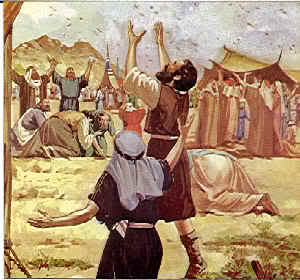
This morning I would like to talk with you about something I call “the Desert Problem.” We see it with the children of Israel during the Exodus. They had seen the ten plagues that were afflicted on their Egyptian oppressors. They had seen the Red Sea split before them. They heard God speak so powerfully and intensely with Moses at the mountain that they trembled. They accepted God’s covenant. They saw, they heard, but then they forgot. The Israelites seem to always be sinning in the desert and we can feel annoyance at them. However, we should not judge them harshly, for their story is our own. We also struggle with the desert problem.

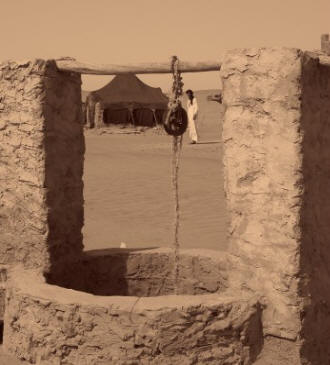
We come to dry and difficult places in our own lives, too. When we face difficulties we too often forget what we have seen and heard and give in to depression, despair, and sin. The solution to the desert problem is the refreshing water of memory. When you are in a desert you need water, but you don’t need to dig a new well every time you need refreshment; you can go back to an old and reliable well. Before you come to your next desert, think of times in the past when you knew God was close, perhaps an intense consolation experienced in prayer, or a providential miracle you’ve witnessed in life. And when you enter your next desert (or if you find yourself in one now) recall these memories to mind and be refreshed in faith. ‘Blessed are your eyes, because they have seen, and your ears, because they have heard,’ but to remain faithful to God in the desert you must remember the great things of God you have seen and heard.

Bread of Angels — Wednesday, 16th Week in Ordinary Time—Year I

July 21, 2011

Here at St. John’s, on the wall behind me, there is painted an angel holding a banner which says, “Ecce Panis Angelorum.” This is a Latin phrase. “Ecce” means “behold,” “panis” means “the bread,” and “angelorum” translates to “of the angels.” And thus the phrase goes, “Ecce Panis Angelorum; Behold the bread of angels.” This idea comes from Psalm 78, the psalm we heard today, which says of the Manna and the Israelites in the desert, “Man ate the bread of angels, food he sent them in abundance.” 

Why was the Manna in the desert was called the bread of angels? Extra-Biblical Jewish tradition suggested that the Manna bread actually nourished the angels. The Manna also came down from Heaven for the benefit of men and came through the mediation of angels. Of course, the Manna prefigures the Eucharist, which nourishes us through the deserts of this life toward the Promised Land. The Eucharist is really Jesus Christ who came down from Heaven for mankind. The angels are indeed nourished by this bread, Jesus Christ, for their lives are sustained thorough Him. We also receive the New Testament Manna with the help of the angels. As we say in Eucharistic Prayer I: “Almighty God, we pray that your angel may take this sacrifice to your altar in heaven. Then, as we receive from this altar the sacred body and blood of your Son, let us be filled with every grace and blessing.” It has been said that if angels could envy us, it would be for our reception of Jesus in the Eucharist.

The angels do more for us than we realize. We should remember to thank them; for getting us out of bed to come to Mass this morning, for assisting us here in our prayers, and for assisting us in our daily lives. Lovingly invite them, give them the permission, to do more in your lives. (They’re probably just waiting for you to ask.) Let us ask their intercession and at this Mass, together with the angels who surround us, let us delight in the bread of angels.

Sending Another Advocate — 6th Sunday in Easter—Year A

May 29, 2011

At the Last Supper, Jesus told His apostles that He would soon be departing from them. His disciples found this news distressful. Jesus had been their spiritual leader and intimate friend. For the better of three years, they spent almost all day, every day, with Him; sharing breakfasts in the morning, walking down the roads and conversing with Him, watching Him preach and heal n villages, spending evenings with Him around the fire. Not only had he taught them about God, he had also made them more godly men. And so, understandably, word of their Good Shepherd’s departure saddened them.

But Jesus told them, “Do not let your hearts be troubled. You have faith in God, have faith also in me.” In obedience to His Father, Jesus was going away, but He told the disciples that they would not be left orphans. God would send them another person to lead and sanctify them. Jesus told them God the Father would send them another Advocate, another Helper, another Guide, to be with them always. Jesus spoke of the Holy Spirit, who would continue the same work which Jesus had begun in them. The Father had blessed them before by sending them Jesus. Now, at Jesus’ departure, the Lord wanted them to trust and remember this: that they would be blessed again.

Today, this Gospel is fulfilled in our hearing. Father Stoetzel has asked me to read you this letter from him:

Dear parishioners,

Bishop Callahan has asked me to take a new parish assignment beginning July 1st. I will be the next rector of St. Joseph the Workman Cathedral in La Crosse. Also, I am very happy to announce your new pastor here and St. John the Baptist in Marshfield. He is Fr. Samuel Martin who is presently the director of the Holy Cross House of Formation and teacher at Aquinas High School in La Crosse. Please welcome him graciously as he is being sent by the bishop to be your pastor.

I want to thank you very much for the privilege of being your pastor for the past 15 years. My gratitude goes to you for the prayers and many acts of kindness you have shown. Let us continue to pray for one another. Be assured that you will be in my fondest thoughts.

Sincerely,
Fr. Stoetzel

The fact that our bishop has appointed Fr. Stoetzel to be the rector of the cathedral (the bishop’s own parish) says much about Father’s quality as a pastor. We will miss him in many ways. I don’t know Fr. Martin too well, but every encounter I have had with Him has been a positive one. I predict that we will all be very pleased with him when he comes in July and will be blessed by getting to know him better. In the meantime, let’s remember pray for Fr. Stoetzel, as he prepares for his new assignment in La Crosse. Let us also pray for our pastor-to-be, Fr. Sam Martin, as he prepares for us.

Jesus says, “Do not let your hearts be troubled. You have faith in God, have faith also in me.” The Lord wants us to trust and remember this: that He has blessed us before and that He we will be blessed again.

The Way, Truth, & Life — 5th Sunday in Easter—Year A

May 22, 2011

Jesus said, “I am the way and the truth and the life. No one comes to the Father except through me.”

The Mass is an encounter with Jesus Christ, leading us to God the Father. Like Jesus Himself, the Mass contains the Way, the Truth, and the Life of Jesus. First, we journey on the Way to Jesus, then we come to the Truth of Jesus, finally we join in the Life of Jesus.

The Mass begins with the sign of the cross, for God is the beginning and end of everything. Next, we confess our unworthiness to approach the Lord, asking mercy for our sins, so that we may dare to take this journey to God. The, from the Holy Scriptures, we hear of God’s words and deeds among the Old Testament peoples and within the New Testament Church. In this, we learn of the providential way that God has prepared throughout time for us to encounter Jesus Christ today. Just as the journey on this Way through history leads to Jesus Christ, so the liturgy of the Word leads to the Gospel. Certainly, Jesus Christ the Word of God is present throughout the entire Word of God which is Sacred Scripture, but for the reading of the Gospel, we all stand up for Him and sing “Alleluia,” “Praise the Lord,” because we have come to Jesus Christ and He is more fully present among us in the proclamation of the Gospel.

The Gospel reading proclaims Jesus, who is the Truth. The homily that follows proclaims that the Truth matters for us here and now and demands our personal response. To this call, we answer with the Creed, proclaiming our faith in who God is and what He has done for us. In the Creed, we proclaim our acceptance of Jesus, the Truth. In the prayers of the faithful, we petition the Lord for our needs and concerns, saying in so many words, “Lord, let your kingdom come, on earth as it is in Heaven! Let us share you life! Give us your life!” At Mass, the Way leads to the Truth, and from the Truth we long for God’s Life. At Mass, the Liturgy of the Word leads to the Liturgy of the Eucharist.

The presentation of the gifts is not merely about moving around cash and bread and water and wine. The presentation of the gifts is about the presentation of everything that we have, and everything that we are, to God. We lift up our hearts to be one with our sacrifice. Amidst praises to the Father, the one life-giving sacrifice of the Last Supper, of the cross, and of Heaven becomes present here to us. We join in offering this sacrifice through Jesus, with Jesus, and in Jesus, in union with the Holy Spirit, to God the Father in Heaven.

Through this offered sacrifice, we join in God’s Life. We pray “Our Father,” because uniting with the paschal mystery, the great Easter deeds of Jesus, gives us life as the Father’s sons and daughters. Then we share with one another the sign of peace, the loving peace that is possessed by God’s holy ones. Finally, at the climax, we partake of Jesus Christ, Life Himself, most truly present in the Holy Eucharist.

Sometimes people say, “I just don’t get anything out of going to Mass. Father, I know that you say all this important and wonderful stuff is going on, but I don’t see it and I don’t feel it. The Mass is boring for me.” I understand. When I was a boy, I made a point of going to the bathroom (sometimes twice) during every Mass, just to break up the monotony. When I would see the priest cleaning the dishes at the altar—that was a good sign, because it meant that the Mass was almost done. I didn’t really know what was happening at Mass, so I really didn’t believe in what was happening at Mass. But as I grew older I began to learn what was happening, and as I grew in faith I began to believe in what was happening, and my experience of the Mass was transformed.

People who say that the Mass is boring resemble St. Phillip in something he said to Jesus at the first Eucharist, the Last Supper: “Master, (we don’t see or feel the presence of God the Father,) show us the Father, and that will be enough for us.” And Jesus said to him, “Have I been with you for so long a time and you still do not know me, Philip? Whoever has seen me has seen the Father. (Whoever has been to Mass has encountered my mysteries.) How can you say, ‘Show us the Father’? (How can you say, ‘The Mass is boring?’)” The awesome mystical realities of the Mass are true, and real, and present and active at every Mass we attend, whether we see them, or feel them, or believe in them, or not.

Jesus Christ and the Holy Mass contain the Way, the Truth, and the Life, and we shall receive from them according to our faith. Let us pray, that at this Mass and every Mass, we may be as fully present to Jesus Christ and His mysteries as they are to us at every Mass.

“Are You Saved?”

May 13, 2011

Catholics take a modest approach to the question, “Are you saved?” We hope to be saved in Jesus Christ, and we can have some measure of confidence that we will be, but Catholics consider it presumptuous to say that our salvation is assured. The Catholic attitude is like that expressed by Paul:

“It does not concern me in the least that I be judged by you or any human tribunal; I do not even pass judgment on myself; I am not conscious of anything against me, but I do not thereby stand acquitted; the one who judges me is the Lord. Therefore, do not make any judgment before the appointed time, until the Lord comes, for he will bring to light what is hidden in darkness and will manifest the motives of our hearts, and then everyone will receive praise from God.” (1st Corinthians 4:3-5)

After seeing the light on the road to Damascus, if anyone could be certain of their salvation one would imagine it would be Paul. However, in 1st Corinthians 9, Paul doesn’t speak as if he had Heaven already in the bag. He says:

“All this (becoming all things for all people) I do for the sake of the gospel, so that I too may have a share in it. … I drive my body and train it, for fear that, after having preached to others, I myself should be disqualified.” (1 Cor 9:23, 27)

Immediately following this, Paul warns the Corinthians about the necessity of remaining faithful lest they be condemned like God’s people during the Exodus:

“They were all under the cloud (like the Holy Spirit) and all passed through the sea (like baptism) and all of them were baptized into Moses (who imaged Christ) in the cloud and in the sea. All ate the same spiritual food, and all drank the same spiritual drink (like the Eucharist)… Yet God was not pleased with most of them, for they were struck down in the desert. These things happened as examples for us, so that we might not desire evil things, as they did. … Therefore, whoever thinks he is standing secure should take care not to fall.” (1 Cor 10:1-6, 12)

In Matthew’s Gospel, Jesus warns us that if we are to be saved, we must not be among those who acknowledge Him as “Lord, Lord” but fail to do God’s will:

“Not everyone who says to me, ‘Lord, Lord,’ will enter the kingdom of heaven, but only the one who does the will of my Father in heaven. Many will say to me on that day, ‘Lord, Lord, did we not prophesy in your name? Did we not drive out demons in your name? Did we not do mighty deeds in your name?’ Then I will declare to them solemnly, ‘I never knew you. Depart from me, you evildoers.'” (Matthew 7:21-23)

Those condemned seemed surprised that they are refused entry into Heaven. This is why Catholics do not rest in a self-assurance of Heaven (that judgment belongs to the Lord.) Our part is to ceaselessly strive to cooperate with the saving grace of Jesus Christ as we “work out [our] salvation with fear and trembling” as God does His work in us. (Philippians 2:12)

The Significance of Standing — Tuesday, 3rd Week of Easter

May 10, 2011

There’s a curious detail about Stephen’s vision of Heaven in our first reading today:

“Stephen, filled with the Holy Spirit, looked up intently to heaven and saw the glory of God and Jesus standing at the right hand of God, and Stephen said, ‘Behold, I see the heavens opened and the Son of Man standing at the right hand of God.’”

Stephen looks up to Heaven and sees Jesus standing at the Father’s right hand, but both the Apostles’ Creed and Nicene Creed (which we say each Sunday) describe Jesus as “seated at the right hand of the Father.” What are we to make of this?

In the ancient world, to be seated at someone’s right hand gave you the place of higher honor. At a meal, this favored seat granted a special closeness to the host. In a kingdom, the one seated at the right hand of the throne would share in the king’s authority and rule. Of course, describing Jesus as “seated at the right hand of the Father” is only an image (God the Father is unlimited, pure spirit and doesn’t have a right hand.) But this phrase from our creeds does describe a reality: that Jesus is now in the intimate presence of God the Father, sharing supremely in His glory and rule. In his vision, Stephen beholds Jesus in the place of honor, at the Father’s “right hand,” but Stephen sees Jesus standing. So why is Jesus standing?

Did you know that whenever the President of the United States enters a room, everybody stands up? It doesn’t matter if it is a room full of Democrats or Republicans, members of the press, or ordinary citizens, everyone stands up for the President. The same goes for a judge in his courtroom: “All rise, the Honorable Judge So-and-so presiding.” And a gentleman knows that he ought to stand up whenever he greets a lady. Why do they stand? Because it is a sign of respect. If you think about it, whenever we’re offering prayers in the Mass, provided we’re not kneeling, we’re standing up to pray. We stand to pray as a sign of respect to God.

Sometimes, people stand as a sign of respect not so much for the individual but for the greatness of the office they possess. Even a U.S. President’s most hostile critics in Congress, political opponents who couldn’t say one good thing about him, will stand up when he arrives to give his State of the Union address out of respect for the office he holds. It wasn’t for this reason that Jesus stood. No one on earth could have demanded Jesus’ respect by holding an office higher than his.

Jesus stood up because he wanted to show Stephen a sign of His respect. Jesus stood up because he was proud of Stephen. I think that we forget that Jesus is a real human being, with human feelings and emotions about the human events he sees. At the same time, He is also God; and therefore, He sees us all.

When you’re alone, and overcome temptation to do what you know is good, Jesus sees you and He’s proud of you. When you give an anonymous contribution or do a secret kindness, Jesus sees it and He’s proud of you. When you are opposed like Stephen, by people who hate you, or that just don’t understand you, when all the while you’re trying act with love, you do not stand alone. Remember that when you do what’s hard for Jesus, He sees it, and He sees you and He’s proud of you for it.

The Emmaus Travelers — 3rd Sunday in Easter—Year A

May 7, 2011

Let’s start off with a riddle… Once, a father and his son were driving along in the country together when they got into a terrible car crash. They were both seriously injured and ambulances rushed them to two different hospitals. But when the boy was brought into the Emergency Room, the surgeon on duty saw him and declared, “I can’t operate on him. He’s my son.” How can this be…? The trick of the riddle is that we tend to assume that surgeons will be male. The answer is that the surgeon is the boy’s mother.

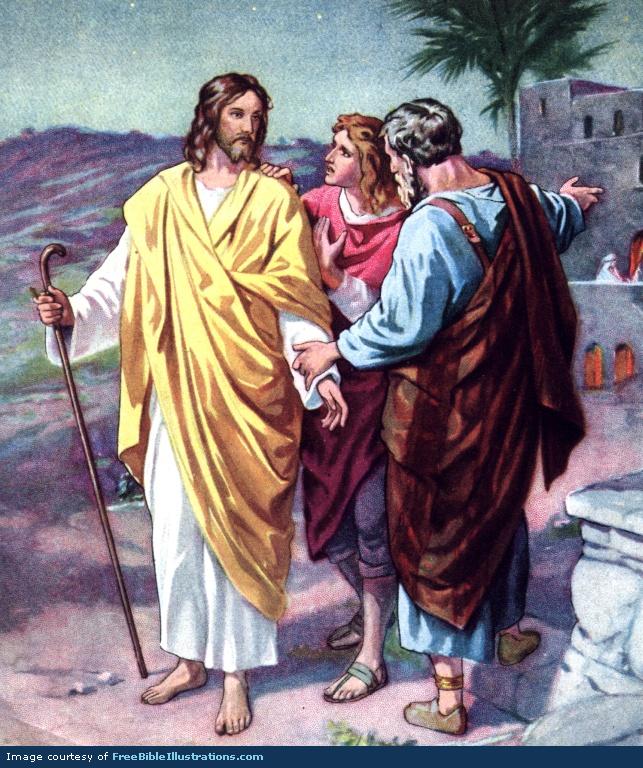
There is a similar trick of the mind at work when we hear the story of the two travelers on the road to Emmaus; we always assume that they were two men. It’s not wonder, since virtually every painting of the encounter on the road to Emmaus will show Jesus with two men. For example, look at the relief on the front of our altar. Many people assume that this is a depiction of the Last Supper (but that there are only two apostles shown because we had to crop it down to size.) Actually, this scene is from after His Passion—you can see crosses on the hill in the distance and there are wound marks in Jesus’ hands. What we have here is to two men at the house in Emmaus, shocked to recognize Jesus in the breaking of the bread.

The artistic depictions always show two men [the picture on the right being the only possible exception I could find], however the original Greek does not call them “two men,” or even “two disciples.” It only says there were “two of them” and that one of them was a man named Cleopas. As to the name and gender of the other traveler, the gospel text is silent. Perhaps the second person’s identity is left as a mystery so as to invite any of us to imagine ourselves in their place in this story. This may be the extent of what we can know for certain, but there is an interesting clue from another Gospel that suggests more detail.

In Gospel of John, it says that “standing by the cross of Jesus were his mother and his mother’s sister, Mary the wife of Clopas….” (John 19:25) So we have a Clopas and Cleopas both associated with Jesus. Perhaps these similar names are merely a coincidence, but perhaps Clopas and Cleopas are variations of the same person’s name. If Clopas and Cleopas are one in the same person, then the other traveler on the road was probably his wife, Mary. This Mary was most likely either Jesus’ aunt and the sister of St. Joseph, or one of the cousins of the Blessed Virgin Mary. What we do know for certain is that this Mary stood with Jesus’ mother at the foot of the cross.

Admittedly, it is speculation to say the other traveler was Cleopas’ wife, but if it was, then this Resurrection episode has a much greater poetry. In the Garden of Eden, a husband and wife ate from a tree. “Then the eyes of both of them were opened, and they realized that they were naked.” They felt ashamed and afraid. But in the house at Emmaus, a husband and wife ate the Eucharist, the fruit of the tree of the cross. “With that their eyes were opened and they recognized Him.” They felt joyful and unafraid. In Eden, God moved about the garden with the man and the woman. After the resurrection, Jesus walks with us, both men and women, along our road.

But whether that second traveler on the road was a woman or not, it would be a remain mistake to think that only men were important in the early Church. That would be at least as mistaken as thinking that every surgeon is a male. Jesus Christ chose some men to be the Church’s leaders, and much is said about them in the Scriptures, but He chose to spread the good news about Himself through the witness of women as well.

Though we sing of the “Faith of Our Fathers,” the faith of our mothers has been just as important, if not more, through time. Today,  it is oftentimes mom who takes the forefront in fostering faith in the family, in leading her children to Christ and His Church; through bedtime prayers and Bible stories, by bringing them to Mass and to CCD, in seeing to it that they receive the graces of the sacraments. If you feel like you’re alone in witnessing to the faith in your family, I commend you, and Jesus is proud of you.

There is another trick of the mind when it comes to celebrating Mother’s Day. On Mother’s Day we remember our mothers, who gave us birth and nurtured us, who raised us and put up with us, but we tend to forget about the greatest gift, the gift of our faith. At the Easter vigil the Exultet asks: “What good would life have been to us, had Christ not come as our redeemer?” Indeed, what good would life be to us if after our births we had not also been brought to Christ through the witness of holy women. Who were these holy women in your life? At this Mother’s Day Mass, let us remember and pray not only for our mothers in the natural order, but for each of our spiritual mothers as well.

They Ran For Him — Easter Morning

April 24, 2011

When Mary Magdalene came to the tomb early Easter morning, she found the stone removed and the body of Jesus gone. She ran to Peter and John, because her love demanded that something must be done. “They have taken the Lord from the tomb,” she said, “and we don’t know where they put him!” So Peter and John went out and ran to the tomb. They both ran, but John ran faster and arrived at the tomb first; not because he loved Jesus more, but because he was younger than Peter.

Some adults run for exercise, but they are the odd exception. Generally, grown-ups just don’t run; except under special circumstances. For instance, my mother doesn’t jog, but she’ll sprint to answer a ringing phone. She loves her friends and doesn’t want to leave them hanging on the line. So, love can make a grown person run.

One time, when I was a boy, I saw my mother run outside in her nightgown and dive into our swimming pool. My mother saved the life of my younger sister, who was floating there facedown.

In all my life, I can only remember ever seeing my father run once. A few years later, during a family walk around a camping resort in my hometown, where we had never walked before, we came upon a tragic emergency. While Mom did CPR, Dad and I ran for the phone at the front office to call for an ambulance. I ran as hard as I could, but Dad was much faster than my ten-year-old legs. I remember seeing his back, his arms rapidly pumping, and thinking to myself, ‘I had no idea he could move that fast.’ And so, from my youth, I’ve known that for the love of another, or in matters of life and death, adults will run. If something is important to them, they’ll run for it.

Mary Magdalene, Peter and John ran to and from an empty tomb out of concern for a dead man’s corpse. So great was their love for Jesus, so great was their admiration for Him, that they ran for Him, even though they thought He had nothing more to offer them. But we are here this morning because Jesus wasn’t dead. He is risen and still active in peoples’ lives today. (To the latter, I am an eyewitness.) He has much to offer to us, our families, our children. But do we run to Him? Do we run to His Church, His sacraments, worship and teachings; or do we run from them? Whether we run is a question of love, and in a world subverted by sin and temptation in so many ways, it’s a matter of life and death. Jesus is risen. So let’s run to Him.

“He Is Not Here” — Easter Vigil

April 23, 2011

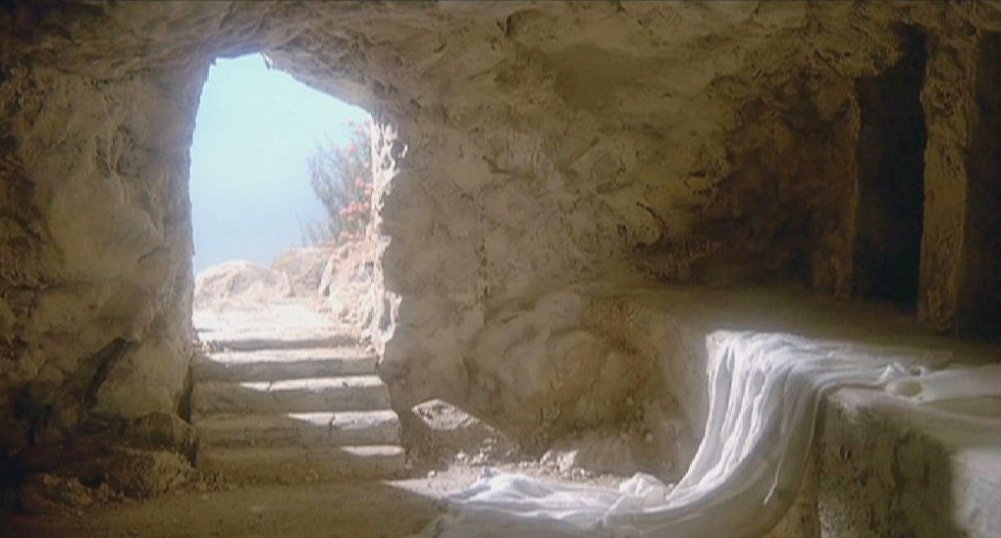
When the women came to the tomb they did not find Jesus, but a radiant messenger. He told them, “Do not be afraid! I know that you are seeking Jesus the crucified. He is not here.…” The tomb was empty, Jesus was not there.

Jesus was present at the beginning of creation, for through Him all things were made. Going forth from the Father’s mouth, He was at hand on earth throughout the ages, achieving His purposes.

He was mystically with Noah, who saved his family from death by building a ship, just as Jesus built the Church to save us.

He was mystically with Isaac, who, though bound and led to sacrifice, was not to be lost forever.

He was mystically with Moses, who freed God’s people from Pharaoh’s demonic slavery by leading them through miraculous waters.

He was mystically with all the prophets, in proclaiming a law to be written on hearts instead of stones, in promising the gift of a Holy Spirit from Heaven, in suffering at the hands of those who refused to hear wisdom.

He has been in His saints, from the least to the greatest, throughout the centuries to this very night. He is present here in all of us who are ‘living for God in Christ Jesus.’

By the all foreshadowings that proceeded His coming, and by the fruitful witness of all His saints ever since, we can confirm the angel’s words, “he has been raised just as he said.”

Jesus is not there in the empty tomb. He is here,  tonight, with us.

“I Thirst” — Good Friday

April 22, 2011

Shortly before He died on the cross, Jesus said, “I thirst.” Why did He say, “I thirst”? He was certainly physically dehydrated. As Psalm 22 foretells, His throat was as dry as broken pottery and His tongue stuck to His palate, but there was more reason for His words than just this.

Last night, at the Last Supper, Jesus had postponed drinking the traditional fourth and final cup of Passover. He said “I thirst” so that they would bring Him wine, so that He could drink, and unite the Last Supper and His Passion as one event. However, there is even more reason for His words than this.

Beside the crucifixes, in all of the chapels, in all of her religious houses around the world, Blessed Mother Teresa had written the words, “I thirst.” She understood that what Jesus thirsts for on the cross is us. Mother Teresa wrote, “Jesus is God, therefore His love, His Thirst, is infinite. He the Creator of the universe, asked for the love of His creatures. He thirsts for our love…” 

As we come to Him on the cross today, let us satisfy His thirst with the refreshment we can give to Him.