Preserved for Life — Funeral for Mark Schoonover, 65

November 6, 2019

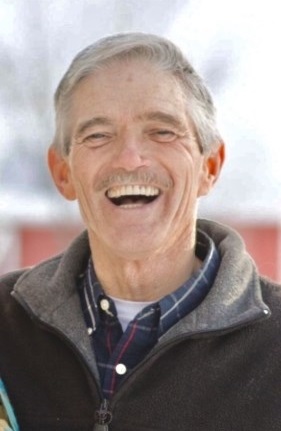
Mark is loved and mourned by many in our community and in this parish. That’s seen in the many people here today. And we will miss him. Dying at age 65, Mark is one of the youngest people I have had a funeral for in my time here at St. Paul’s. And Mark will also be the closest parishioner, the closest friend, that I have buried here thus far. I often say that no mere homily can capture the fullness of the mystery of a Christian life well-lived. But I offer this brief reflection to reveal a truth about Mark’s life and the mystery of Jesus working in it. Mark’s family told me a number of great stories about his life that I hadn’t heard before, and I noticed a theme. Mark has faced death several times before.

In 1969, his family was driving in a car together when a drunk driver ran through a stop sign in front of them. His father, Tom, saw the crash coming and warned everyone to brace. There were no car seats, no seat belts in the car. Mark, just 15 years old, reached over and grabbed his 11-month-old sister, Wendy. He suffered a broken rib, broken collarbone, 30 stitches and a concussion, but he saved his sister’s life.

Later, as an A-6 Intruder Bombardier-Navigator in the Navy, I suspect there were a number anxious brushes with death he might not have ever mentioned. Flying hundreds of miles-per-hour in a complex military machine, in all sorts of weather, catapulting-off and landing upon aircraft carriers in the Pacific Ocean surely has its dicey, dangerous moments.

I’m told that one time, on the ground near his airbase in Washington State, Mark went sheep hunting alone in the mountains. He got his big sheep, and the family still has the picture of it, but he realized he would not make it out of the wilderness by nightfall. Something told him, to sit, to stay there. He sensed he should just stay there. So Mark sat vigil with the sheep. In the morning, when the sun rose and brought more light to his situation, he realized that he had been sitting just feet from the edge of the mountain. If he had tried to walk by himself in the darkness of that night, he may well have gone over the edge.

When Mark was diagnosed with brain cancer, there was great concern that he would die then. He told Traci, “God will get us through this.” And they were granted a gracious respite. Mark’s health recovered almost fully-back to normal for some blessed, precious months. However, his cancer treatments did a number on his liver, the organ in the body charged with expelling toxins. I was recently able to see Mark with Traci and Abby in the hospital. I was honored to anoint him and give him the Apostolic Pardon. Soon after, when his death was imminent, they brought him home, to the cabin on the lake up north. On the morning he died, Traci tells me that they watched the sun rise over the lake together. That is a beautiful death.

Sometimes older people in nursing homes, up in years and burdened with weakness and pains, ask me, not without faith but actually with a great deal of faith, “Why am I still here?” Their children are grown, most of their friends have passed away, they have grown tired of life and they wonder why the Lord has not taken them already. I always tell them the same thing, “If you are still alive on this earth, either God is doing something in you, or through you, or both.

Why did God preserve Mark throughout his years up till now? Because the Lord was working in him, and through him, both. Did God fail Mark in this last illness? Did God the Father fail his Son on the Cross? No. He who pleased God was loved, glorified through his passion, and brought to God by God himself.

The Book of Wisdom says of the just man who dies young:
Having become perfect in a short while,
he reached the fullness of a long career;
for his soul was pleasing to the Lord,
therefore he sped him out of the midst of wickedness.

And St. Paul reminds us:
If we live, we live for the Lord,
and if we die, we die for the Lord;
so then, whether we live or die, we are the Lord’s.

A day like this is challenging, and it is sad. Pray for Mark, but do not fear for him. You know of his life and of his faith in Christ. Talk to him. I ask him to pray for me. We are not abandoned, not without the helping graces we need. So cooperate with that grace, that grace of God working in you and through you, so that one day all of us may be reunited in Christ, rejoicing with Mark, forever.

Humility, Truth, & Love — 30th Sunday of Ordinary Time—Year C

October 28, 2019

Today’s second reading from the Second Letter to Timothy has St. Paul declaring near the end of his earthly life: “I have competed well, I have finished the race, I have kept the faith. From now on the crown of righteousness awaits me, which the Lord, the just judge, will award to me…” Recall how at the Visitation, after encountering her cousin Elizabeth, St. Mary declares about herself: “[God] has looked with favor on his lowly servant; from this day all generations will call me blessed.” Are these humble things for Mary and Paul to say about themselves?

Well, they’re both true statements, inspired by the Holy Spirit. Paul, having finished his race, is now a triumphant saint in Heaven, and the Church calls Mary the Blessed Virgin in every generation even to our day. True humility is not thinking that you’re dirt, it is being down-to-earth, well-grounded, and rooted in reality. Jesus says, “Let your light shine before others,” and the Blessed Virgin Mary pleases and honors God when she states, “The Almighty has done great things for me and holy is his name.” God has done good things for you as well, so thank and praise and glorify him for it!

But wait a minute, someone might object, wasn’t the Pharisee who went up to pray at the Temple in Jesus’ parable today also thanking God and declaring true statements about himself? What if this Pharisee did fast twice a week; what if he did pay tithes on his entire income; and was neither greedy, dishonest, nor adulterous? That is what’s implied by the parable, and those are all very good things! So why then does he incur our Lord and God’s displeasure?

Today’s gospel says “Jesus addressed this parable to those who were convinced of their own righteousness and despised everyone else.” Jesus says the Pharisee took up his position at the Temple and spoke this prayer to himself, “O God, I thank you that I am not like the rest of humanity – greedy, dishonest, adulterous – or even like this tax collector.” Imagine the Pharisee praying these words out loud, within earshot of this tax collector in front of everybody. Yet, even if the Pharisee prayed silently, or quietly to himself, and his neighbor did not hear him; the Pharisee despised the tax collector and the rest of humanity, and did not gain God’s pleasure. Like St. Paul once wrote, “If I give away everything I own, and if I hand over my body so that I may boast but do not have love, I gain nothing.” In order to gain Heaven; truth, love, and sacrifice all need to go together within us.

We see the truth, authentic love, and self-sacrifice combined in the inspiring life of the twentieth century saint, Edith Stein. She was born into a Orthodox Jewish family but renounced her faith by the age of thirteen and embraced atheism. She went on to become a respected PhD in philosophy. Then, one night while staying with friends on a vacation, she read the entire autobiography of St. Teresa of Avila. The following morning she put the book down and declared, “That is the truth,” and responded accordingly. She was baptized a Catholic at the age of thirty, became a Carmelite nun and took the name Teresa Benedicta of the Cross, like the Carmelite St. Teresa of Avila before her. During World War II, because of her Jewish ancestry, the Nazis came to arrest her along with her biological sister Rosa, who worked at the convent. Teresa Benedicta reportedly said to Rosa, “Come. Let us go and die for our people.” They were taken to Auschwitz where survivors of the death camp testified that the nun helped other sufferers with great compassion. A week after their arrest, she and her sister were killed in the gas chamber. St. Teresa Benedicta comes to my mind this Sunday because of one of her most famous quotes: “Do not accept anything as truth that lacks love and do not accept anything as love that lacks truth. One without the other is a destructive lie.

It could be said that the proud Pharisee in our parable had the truth without love, while our culture today has many (so called) loves apart from the truth. Through our friendship, our prayers, and our perseverance, the tax collectors we know today need to encounter love and the truth, that they might turn to Jesus and say “O God, be merciful to me a sinner,” and be saved. If you think you see someone seriously sinning; perhaps in your circles or our community, on TV or in the news; be sure—at very least—to pray for them. Maybe you’re right, which means that they are greatly in need of your prayer. Or perhaps you’re judging rashly or too harshly, in which case you are in need more prayer. In any case, you cannot both hate someone and pray for someone at the same time, because praying for someone is an act of love.

As Jesus tells us, “the one who humbles himself will be exalted.” Praying for and loving sinners makes you their servant in the likeness of Christ. Jesus came to us, he told us the truth, he prayed and interceded for us, and he even died for us – you and me and everyone. Jesus wants all of us to be like him, loving in truth and sharing the truth in love.

Jesus and His Wounded Church

October 27, 2019

On October 15th, her feast day, I heard a story told of St. Teresa of Avila I had never heard before. It may be a pious legend (as I have not found any primary sources for the tale) but it contains a truth all the same. The story goes that Satan once appeared to the 16th century Spanish nun in the glorious guise of Jesus. Satan intended to lead Teresa astray, but she quickly saw he was not Christ. Before departing from her the Devil asked how she was so certain. She replied, “Because you have no wounds.”

In the Book of Acts we read that on the road to Damascus Saul heard a voice say, “Saul, Saul, why are you persecuting me?” “Who are you, sir,” asked the afflictor of the Early Church. “I am Jesus, whom you are persecuting.” Jesus had already, some months or years before, bodily ascended into Heaven, but Our Lord felt all the afflictions of the Church on earth as his own. Saul repented, converted, and became St. Paul.

Jesus hates the grave mistreatment and harming of his members but his Body suffers and bears wounds still; wounds inflicted both from outside and within his Church. Jesus told his disciples, “Things that cause sin [literally “skandala,” scandals or stumbling-blocks] will inevitably occur, but woe to the person through whom they occur.” Yet even as Jesus heals and avenges his innocent, injured sheep he desires the salvation of wrongdoers too – that, justly-chastised, the sinner would ultimately appear before God as a saint.

Pray for our whole Church without despairing, for the victory of our Faithful Bridegroom is assured. St. Teresa of Avila said, “I do not fear Satan half so much as I fear those who fear him,” and she urged her sisters to unshakable confidence in Jesus Christ:

“Let nothing disturb thee; Let nothing dismay thee:
All thing pass; God never changes.
Patience attains all that it strives for.
He who has God finds he lacks nothing:
God alone suffices.”

Examination of Conscience (for Grades 6, 7, & 8)

October 18, 2019


Jesus preached, “What man among you having 100 sheep and losing one of them would not leave the 99 in the desert and go after the lost one until he finds it? And when he does find it, he sets it on his shoulders with great joy and, upon his arrival home, he calls together his friends and neighbors and says to them, ‘Rejoice with me because I have found my lost sheep.’ I tell you, in just the same way there will be more joy in Heaven over one sinner who repents than over 99 righteous people who have no need of repentance.And Jesus also said, “I am the good shepherd… Do not be afraid any longer, little flock…
(See Luke 15:4-5, John 10:11, & Luke 12:32)

Downloadable Booklet Version

Sins against our God
Jesus said, “You shall love the Lord, your God, with all your heart, with all your soul, and with all your mind. This is the greatest and the first commandment.” (Matthew 22:37-38)

  • Since my last, good confession, did I neglect daily prayer?
  • Did I reject God, the Lord Jesus Christ, or my Catholic Faith?
  • Did I receive the Holy Eucharist in a state of mortal sin?
  • Did I break the one-hour Eucharist fast and still receive Him?
  • Did I intentionally hold back from confessing my serious sins?
  • Did I put faith in magic, astrology, horoscopes, or superstitions?
  • Did I use the Lord’s name like a curse word?
  • Did I “swear to God” about something unimportant or untrue?
  • Did I ignore Friday as a special day for penance?
  • Did I ignore Sunday as a special day for worship and rest?
  • Did I act irreverently toward the Eucharist, holy persons or things?
  • Did I come late, leave early, or skip Sunday Mass by my own fault?
  • Did I attend Holy Mass irreverently or inattentively?
  • Did I make false gods (or idols) of delightful persons or things?
  • Did I stubbornly doubt God’s existence, goodness, or love for me?

Sins against our Parents & Teachers
Honor your father and your mother, as the Lord, your God, has commanded you, that you may have a long life and that you may prosper…” (Deuteronomy 5:16)

  • Did I neglect to show my parents love and gratitude?
  • Did I disobey my parents or neglect my household chores?
  • Did I lie to my parents or hide things from them?
  • Did I manipulate my parents to get what I wanted?
  • Did I disrespect a parent, through sarcasm or back-talking?
  • Did I disobey or disrespect a teacher?
  • Did I cheat on tests, plagiarize for papers, or copy homework?
  • Did I choose not give my best effort at school, work, or home?
  • Did I purposely break any rules or laws?

Sins against Others
Jesus said, “I give you a new commandment: love one another. As I have loved you, so you also should love one another.” (John 13:34)

  • Did I hate someone? (Is there anyone I am unwilling to pray for?)
  • Did I fight or quarrel with anyone?
  • Did I intentionally physically harm or kill someone?
  • Did I wish harm or revenge on someone?
  • Did I slander someone by spreading falsehoods about them?
  • Did I tell negative facts about someone for no good reason?
  • Did I judge others uncharitably or rashly?
  • Did I act as an unfaithful friend?
  • Did I tell any lies?
  • Did I steal or damage someone’s property on purpose?
  • Did I lead another person to sin by something I said or did?
  • Did I just stand by while another person did wrong?
  • Did I tell impure, mean, or offensive jokes?
  • Did I hurt someone by my teasing or prank?
  • Did I dress, speak, or behave immodestly?
  • Did I do sexual acts with another person?
  • Did I act selfish or phony in my relationships?
  • Did I manipulate someone to get want I wanted?
  • Did I act impatient, rude, envious, jealous, or indifferent toward others?

Sins misusing God’s Creation
God looked at everything He had made, and found it very good.” (Genesis 1:31)

  • Did I get intoxicated with alcohol or use illegal drugs?
  • Did I smoke or vape?
  • Did I use steroids or misuse medications?
  • Did I overeat, starve myself, or “binge and purge”?
  • Did I intentionally do harm to my own body?
  • Did I plan or attempt suicide?
  • Did I mistreat animals or the environment?
  • Did I watch, read, or listen to something I shouldn’t?
  • Did I lust using media?
  • Did I use technology to send or receive bad images?
  • Did I disrespect someone by viewing them as an object?
  • Did I do sexually-immoral acts by myself or in fantasy?
  • Did I use any form of technology addictively?
  • Did I use entertainments or media in isolating ways?
  • Did I act greedy or ungenerous?
  • Did I act as if God would not take care of me?

Examination of Conscience (for 2nd-5th Grade)

October 18, 2019

Christ with the Twelve Apostles by Tissot

On Easter evening, Jesus appeared to the Apostles in the upper room and said, “Peace be with you. As the Father has sent me, so I send you.” Then He breathed on them and said, “Receive the Holy Spirit. Whose sins you forgive are forgiven them, and whose sins you retain are retained.”  (See John 20:19-23)

Downloadable Booklet Version

Sins against our God
Jesus said, “You shall love the Lord, your God, with all your heart, with all your soul, and with all your mind. This is the greatest and the first commandment.” (Matthew 22:37-38)

  • Since my last, good confession, did I not pray daily?
  • Did I reject God, the Lord Jesus Christ, or my Catholic Faith?
  • Did I receive the Holy Eucharist in a state of mortal sin?
  • Did I break the one-hour Eucharist fast and still receive Him?
  • Did I hold back from confessing my serious sins on purpose?
  • Did I put faith in magic or superstitions?
  • Did I use the Lord’s name like a curse word?
  • Did I “swear to God” about something unimportant or untrue?
  • Did I ignore Friday as a special day for penance?
  • Did I ignore Sunday as a special day for worship and rest?
  • Did I act disrespectfully toward the Eucharist, holy persons or things?
  • Did I come late, leave early, or skip Sunday Mass by my own fault?
  • Did I behave disrespectfully or inattentively at Holy Mass?
  • Did I make false gods (or idols) of delightful persons or things?
  • Did I stubbornly doubt God’s existence, goodness, or love for me?

Sins against our Parents & Teachers
Honor your father and your mother, as the Lord, your God, has commanded you, that you may have a long life and that you may prosper…” (Deuteronomy 5:16)

  • Did I fail to show my parents love and thankfulness?
  • Did I disobey my parents or skip my household chores?
  • Did I lie to my parents or hide things from them?
  • Did I push or nag my parents to do what I wanted?
  • Did I disrespect a parent by being sassy or back-talking?
  • Did I disobey or disrespect a teacher?
  • Did I cheat on tests or copy homework?
  • Did I choose not to give my best effort at school or at home?
  • Did I purposely break any rules or laws?

Sins against Others
Jesus said, “I give you a new commandment: love one another. As I have loved you, so you also should love one another.” (John 13:34)

  • Did I hate someone? (Is there anyone I am unwilling to pray for?)
  • Did I wish harm or revenge on anyone?
  • Did I fight with anyone?
  • Did I physically harm someone on purpose?
  • Did I touch anyone in a bad or inappropriate way?
  • Did I use technology to hurt someone?
  • Did I spread untruths about someone on purpose?
  • Did I tell negative stories about someone for no good reason?
  • Did I judge others unfairly?
  • Did I act as an unfaithful friend?
  • Did I tell any lies?
  • Did I steal or damage someone’s property on purpose?
  • Did I try to get someone to do something wrong?
  • Did I lead another person to sin by something I said or did?
  • Did I just stand by while another person did wrong?
  • Did I tell mean or inappropriate jokes?
  • Did I hurt someone by my teasing or pranks?
  • Did I dress, speak, or behave inappropriately?
  • Did I act selfish or phony in my relationships?
  • Did I push or nag someone to get want I wanted?
  • Did I act unkind, impatient, rude, or jealous toward others?
  • Did I exclude other people?

Sins misusing God’s Creation
God looked at everything He had made, and found it very good.” (Genesis 1:31)

  • Did I abuse alcohol or use illegal drugs?
  • Did I smoke or vape?
  • Did I overeat, starve myself, or “binge and purge”?
  • Did I intentionally do harm to my own body?
  • Did I mistreat animals or the environment?
  • Did I watch, read, or listen to something I shouldn’t?
  • Did I use any form of technology addictively?
  • Did I use entertainments of media in isolating ways?
  • Did I act greedy or ungenerous?
  • Did I act as if God would not take care of me?

Catholic Twitter

October 16, 2019

Twitter.com is a social media website where both famous figures and less famous folks share their free thoughts of 280 characters or less. Pope Francis posts there daily (@Pontifex) alongside many other Catholics as well. There is a good deal of Catholic community, evangelization, and defenses of the Faith to be found on Twitter, depending on whom you follow. I recently came across a wonderful reflection by Fr. Dylan Schrader, a Catholic pastor in Missouri with a Ph.D. in systematic theology. @FrDylanSchrader wrote:

If the Catholic Church fulfills the figure of Noah’s Ark, then of course the Church is ridiculed and seems stupid, crazy, or like a waste of time to the world until all of a sudden we realize that it’s our only hope.” Like Jesus says in the Gospels, in the days before the Great Flood people were eating and drinking, marrying and given in marriage, up until the day that Noah entered the ark. They had disbelieved until the flood waters came, and it carried them all away. So it will be with the Second Coming of Christ.

Twitter allows threads of conversation and Fr. Schrader’s tweet was apparently replied to by a Protestant Christian who wrote: “CHRIST JESUS, alone, is the hope of a [C]hristian… if your hope is in a church, then your hope is misplaced.” Does the Church displace or minimize the Lord? To this, Fr. Schrader answered, “That’s like saying that it’s Noah who saves from the flood, not the Ark.” Indeed, Noah built his Ark and Jesus builds his Church. The Ark was God’s means to save a portion of humanity through Noah. Likewise, the Catholic Church is God’s means for saving the human race through Christ.

Lepers’ Lessons — 28th Sunday of Ordinary Time—Year C

October 14, 2019

Naaman, an army commander from Syria, suffered from some kind of skin disease. He came to Israel seeking a miraculous cure. And, at the direction of the prophet Elisha, Naaman washed seven times in the Jordan River. Perhaps Naaman plunged those seven times all at once, or maybe he bathed across a longer span of time, bathing at morning, midday, and evening, such that he was cured on the third day. But regardless, after Naaman’s washing in the Jordan River, “his flesh became again like the flesh of a little child, and he was clean of his leprosy.” After his baptism, it was like Naaman had been born again. And Naaman was, understandably, extremely grateful.

Now I know that there is no God in all the earth except in Israel,” he said, “Please accept a gift from your servant.” But Elisha replied, “As the Lord lives whom I serve, I will not take it,” and despite Naaman’s urging, he still refused. Why did the prophet refuse him? Perhaps Elisha sensed that to receive any gifts from him would make Naaman feel like his debt of gratitude to God was paid. But God desired Naaman to be in ongoing relationship with him. Unable to give any gift in Israel, Naaman took two mule-loads of earth back home with him to Syria so that he might always worship and offer sacrifice to the God of Israel on holy ground. Naaman was returning to a pagan land, but he intentionally created space for the true God in his life.

Today’s Gospel features another man from a foreign land with a skin disease who comes to seek healing from the Lord. As Jesus was entering a village, a Samaritan and nine other skin-diseased people stood at a distance from him and raised their voices, saying, “Jesus, Master! Have pity on us!” Jesus tells them to present themselves to the priests. he Old Covenant directed the Jewish priests to administer examinations and rituals regarding people with various skin diseases which our translations somewhat inaccurately call “leprosy.” What we think of as leprosy, Hansen’s Disease (the victims of which St. Damien of Moloka’i and St. Marianne Cope cared for in Hawaii in the late 1800’s) reportedly did not exist in the ancient world. In any case, as Jesus’ ten petitioners were going, their skin was cleansed. And one of them, a Samaritan, realizing he had been healed, returned glorifying God in a loud voice, fell at the feet of Jesus, and thanked him. Jesus says in reply, “Ten were cleansed, were they not? Where are the other nine? Has none but this foreigner returned to give thanks to God?” Apparently, there were some non-foreigners, some Jewish persons, among the other nine. Jesus says to the healed Samaritan: “Stand up and go; your faith has saved you.

These stories from God’s Word present multiple lessons for us today. Listen and consider, with the help of the Holy Spirit how these lessons apply to your life.

  • Like in the case of Naaman with the prophet Elisha, God can’t be bought off with just a few of our gifts. And God does not desire to be honored just one day, but every day of our lives. God wants you, and he wants all of you. That might sound like an unwelcome burden, but it is in the friendship and service of Jesus that we live a worthwhile life. Sure, I can cling to sin, like tolerating a leprosy corrupting my flesh, but how much better off will my life be if I acknowledge God as my master and ask him to heal me?
  • As I noted before, there were apparently Jewish persons among the other nine lepers who didn’t come back to Jesus. Sometimes cradle Catholics can take the gracious gifts we receive for granted. The fervent enthusiasm often seen in converts into the Church reminds us how precious our Catholic Faith is.
  • Among the ten healed lepers, only one showed gratitude. How much do we complain compared to compliment? How often are we criticizing compared to celebrating? The Samaritan made a choice to thank and give praise, and so should we. “Sing joyfully to the Lord, all you lands,” says our psalm, “break into song; sing praise.” And today’s Gospel antiphon quotes the New Testament, “In all circumstances, give thanks, for this is the will of God for you in Christ Jesus.
  • When the lepers saw Jesus they cried out saying: “Jesus, Master! Have pity on us!” And after his healing, the Samaritan returned glorifying God in a loud voice, fell at the feet of Jesus in front of everybody, and thanked him. The Samaritan raised his voice for both occasions and purposes. How much do we pray to God to ask for things, and how much do we pray to God to thank and praise him? God commands us to offer prayers of petition: “Ask and you will receive,” but we also need raise prayers of praise and thanksgiving to him. And we shouldn’t care too much what others think about us doing so.
  • As I said before, Naaman the Syrian knew the pagan land he was returning to, and he intentionally created a holy space in his home within that pagan culture. As today’s modern culture, its entertainments, its schools, its modes of thought, and laws become less and less Christian, we too must be intentional about preserving pure and holy spaces for ourselves and our households. Always going with the flow of this world will lead you down the drain. Instead, build your house on the rock of our Faith.

This saying is trustworthy: If we die with Jesus, we shall also live with him; if we persevere with Christ, we shall also reign with him. But if we deny him, he will deny us. If we are unfaithful, he remains faithful, and merciful, and just, for he cannot and will not deny himself. Learn from the examples of Naaman the Syrian and the Samaritan Leper. Approach the loving and powerful Lord. Ask him to cleanse you of your impurities and heal you. And live a better life which will be happily remembered and celebrated forever.

Close Companions of a Third Kind

October 9, 2019

Our Creator God has created living creatures in a vast variety. Some are as big as redwoods or blue whales and some are as small as amoebas or plankton. Many living things ordinarily cannot be seen with our naked eyes. Some creatures have intelligence (like monkeys, dogs, or octopuses) while some show little or none (like goldfish, slugs, and houseplants.) God has given earthly creatures material bodies and to the human race he gives rational, immortal souls as well, but third kind of his living beings are pure spirits without physical bodies. They are called the angels.

“Annunciatory Angel” by Fra Angelico, circa 1450.

As for intellect, every angel is likely infused by God with more knowledge than any human being on earth. The angels who did not rebel and become demons are entirely sinless. Angels are not all-powerful (for they are merely God’s creations) but they are mighty, as when St. Michael the Archangel led the battle expelling Satan and the demons from Heaven. Being without a body, angels can give their immediate attention to various places at the same time; beholding God in Heaven while attending to matters on earth. And angels are loving, even desiring that our holiness and glory would surpass their own.

You have an accompanying angel whose mission is to help you to both greater holiness and Heaven. We know this because Jesus tells us. “See that you do not despise one of these little ones, for I say to you that their angels in Heaven always look upon the face of my heavenly Father.” (Matthew 18:10) From the first moment of his or her existence, a child is entrusted to an angel’s care. This Guardian Angel is tasked by God “to light and guard, to rule and guide,” as the famous prayer says. “For he commands his angels with regard to you, to guard you wherever you go.” (Psalm 91:11)

As the old saying says, “Out of sight, out of mind.” We tend to forget about these close companions that humans only rarely see on earth. But we should remember to frequently thank our personal angels for their faithful support and to call upon their help. Ask your sinless, holy angel to pray for you. Your angel is incredibly brilliant and can see the bigger picture, so also ask for ingenious inspirations and astute guidance. Your angel can attend to many matters, so ask for helpful reminders and nudges. (For example, if you want to pray more often, give your angel permission to remind you to pray every morning and night, so that when you first open your eyes and before you drift off to sleep your thoughts will be to pray.) And our angels are fiercely powerful, so call upon their strength to fight off tempters or to dispel needless fears. These angels of God, our dear guardians, will be daily at our sides, so let us commit ourselves to their wise and loving care.


Generous Stewards — 25th Sunday of Ordinary Time—Year C

September 21, 2019

Of all of Jesus’ parables, today’s is among the most peculiar: “Hey disciples, listen to my story about a dishonest steward who successfully swindles his boss. You can learn from him!” Elsewhere in the Gospels, Jesus says, “You shall not steal; you shall not bear false witness; you shall not defraud… Let your ‘Yes’ mean ‘Yes,’ and your ‘No’ mean ‘No.’ Anything more is from the evil one.” So what lesson does Jesus want us to learn from this antihero?

Well, we have a lot in common with that fellow. We are in a similar situation. Our Creator God, the sustainer of the universe, is like the rich man, to whom by right belongs everything in the heavens and the earth. We are his stewards, the managers of his possessions, who each must present an account of our stewardship once our positions here on earth are taken away from us. Knowing this day of reckoning approaches, what shall we do? We have often squandered what has been entrusted to us. We are too weak to dig ourselves from the grave of death. And we are too proud, for if we lived fully in the truth, about who God is and who we are, we would not sin. Jesus urges us to follow the dishonest steward’s example, to be very generous, so that after this life, when we are removed from our present stewardship, we may live happily together with friends forever.

The dishonest steward calls in his master’s debtors individually. To the first he says, “How much do you owe my master?” That man replies, “100 measures (that is, 800 or 900 gallons) of olive oil.” He says to him, “Here’s your bill. Sit down and quickly write one for 50 (measures.)” Then the steward says to another, “And you, how much do you owe?” He replies, “100 kors (that is, 10 or 12 hundred bushels) of wheat.” The steward says to him, “Here’s your debt note; write one for 80 (kors.)”

Elsewhere in Luke’s Gospel, the forgiving of sins is likened to the forgiving of debts. Every sin creates a debt because it is depriving another of what is rightfully owed to them. Stealing deprives others of property, lying deprives them of the truth, and rudeness deprives them of the respect and kindness they deserve. Sin forms a debt, first and foremost with God, but also towards the people we trespass against. Luke’s version of the Our Father says, “Give us each day our daily bread, and forgive us our sins, for we ourselves forgive everyone in debt to us.”

Some have suggested that the steward in today’s parable was simply forgiving the portion of his master’s accounts which was his own rightful commission as steward. If we are prudent, we will quickly take the present opportunity to forgive our debtors the share of debts they owe us by forgiving the sins they have sinned against us. For we have it on Jesus’ word, “If you forgive others their transgressions, your heavenly Father will forgive you. But if you do not forgive others, neither will your Father forgive your transgressions.” Forgiveness means loving those who have wronged you, it means, at the very least, praying for them. The person you have a hard time praying for is who you need to pray for.

This lesson about forgiveness is true, but I am not convinced that the steward here was an upright servant merely forgoing his fair share. His urging that the debtors “quickly” write new invoices suggests that he and they are doing something that they don’t want to be discovered. Jesus himself called him dishonest, and the varied commissions of 50% off of the olive oil while getting a 20% commission from the wheat are strange. More likely, this steward is covering the tracks of his embezzlement. If the steward had given every debtor the same write-off, say, a 50% markdown for everyone, the master could have easily undone the scheme by doubling all the figures back. But because of these varying percentages (20% here, 50% there) the deed cannot be reversed, and even the master cannot help but to admire the steward’s cunning craftiness.

Forgiveness is always timely, but this parable is really about being generous with the material possessions God has entrusted to your care. Jesus ends today’s gospel declaring, “You cannot serve both God and mammon.” That is to say, you cannot love God and riches. Like a servant with two masters, or an employee with two bosses, you will either hate one and love the other, or be devoted to one and despise the other. A person who is trustworthy in small things will be trustworthy in great ones; and a person who is dishonest in small things will be dishonest in great ones. If we are not trustworthy with dishonest wealth, with these passing things on earth, how can we be entrusted with the true wealth of Heaven where everyone loves their neighbor as themselves?

When I consider that we’re arguably living in the all-time wealthiest country in the world, living in the greatest technological comfort of any stage of human history, I wonder if I am being generous enough with the possessions given to me. This question concerns me. I think about these powerful words of St. Basil the Great, from a 4th century homily he preached:

When someone steals another’s clothes, we call them a thief. Should we not give the same name to one who could clothe the naked and does not? The bread in your cupboard belongs to the hungry; the coat unused in your closet belongs to the one who needs it; the shoes rotting in your closet belong to the one who has no shoes; the money which you hoard up belongs to the poor. Thus, the more there are whom you could help, the more there are whom you are wronging.” St. Basil delivers this gut punch to his hearers who always say, “I have nothing to give. I am only a poor man”: “A poor man you certainly are, and destitute of all real riches; you are poor in love, generosity, faith in God and hope for eternal happiness. Give to a hungry man,” St. Basil urges, “and what you give becomes yours, and indeed it returns to you with interest. As the sower profits from wheat that falls onto the ground, so will you profit greatly in the world to come from the bread that you place before a hungry man.” St. Basil notes, “You are going to leave your money behind you here whether you wish to or not. On the other hand, you will take with you to the Lord the honor that you have won through good works. In the presence of the universal judge, all the people will surround you, acclaim you as a public benefactor, and tell of your generosity and kindness.”

This Sunday is our parish Fall Festival. I invite you to come, to enjoy it, and to generously support it. I am not ashamed to ask you to give generously to our parish because I believe in the great importance and the great goodness of what we do here. But supporting the work of Christ in our parish is not the end of our calling to generous stewardship in this wide world of needs, both spiritual and material. Give like a saint so that someday you may hear the Lord declare to you, “Well done, my good and faithful servant. Since you were faithful in small matters, I will give you great responsibilities. Come share your master’s joy.”

Three Parables for Us — 24th Sunday of Ordinary Time—Year C

September 14, 2019

It was not without design that Jesus, St. Luke, and the Holy Spirit place before us today a trio of Gospel parables: that of a sheep that strayed and was found, that of a coin that was lost and then recovered, and that of a son dead through sin but then returned to life. The lost sheep is joyfully brought back by the Shepherd. The missing coin (specifically a Greek silver drachma worth one day’s wage) is joyfully found by the woman. And the son, repenting of his sinful wandering, retraces his footsteps to his father and is joyfully embraced.

The Pharisees and scribes had complained about Jesus: “This man welcomes sinners and eats with them.” So Jesus replies with these three parables, three allegorical stories teaching spiritual truths about God, the Church, and us. So where are we symbolically in these parables? We are that sheep, we are that coin, and we are that prodigal son.

Who is the good shepherd in today’s parable? This Good Shepherd is Jesus Christ, who took upon Himself your sins and bears you upon His own Body because he treasures you. And who is the woman who has lost her silver coin, a coin perhaps from an ornamental belt which held her sentimentally-valuable marriage dowry? This woman, this bride, is the Church, who searches and longs for you, because you are precious to her. And who is the merciful father? The merciful father is God the Father, the Father who receives you back.

Consider how, amongst our Good Shepherd’s riches, we are but one one-hundredth portion. Besides us he has vast, sprawling flocks: the angels and archangels, thrones and dominions, and possesses in himself every divine attribute and glory. But he stepped away from these in a mysterious way to save us. In the words of St. Paul, ‘though was in the form of God, Jesus emptied himself, coming in human likeness; he humbled himself for us, even facing death.’ “I am the good shepherd,” Jesus says. “A good shepherd lays down his life for the sheep.”

Consider how that ancient drachma coin would bear an image, perhaps the likeness of a god or of the king who had minted it. In whose image are we minted?

God created mankind in his image;
in the image of God he created them;
male and female he created them.”

The Bride of Christ rejoices in every coin she picks up and holds, because each one bears an image of her beloved, uniquely shows his face, and enriches her all the more with him.

And consider how living in our Father’s house is better than life in a country distant from him. The word “prodigal” means to spend wastefully, and the son’s time spent away was truly wasted. After paying to enjoy sinful pleasures in the dark of night what did he have left to show for it in the new day’s light? But living in the Father’s household bears good fruit, “fruit that will remain.” And there is more than enough food to eat. “Whoever comes to me will never hunger,” Jesus says, “and whoever believes in me will never thirst.” And the joyful celebrations his Father’s house are not regretted after.

These three parables today are about us. We are the sheep; let us heed our Good Shepherd’s voice. We are precious coins; let us believe our great worth. And we are beloved children; let us live in our Father’s house.

Loving & Serving Jesus Foremost — 23rd Sunday of Ordinary Time—Year C

September 11, 2019

Jesus says, “If anyone comes to me without hating his father and mother, wife and children, brothers and sisters, and even his own life, he cannot be my disciple.” That teaching certainly demands one’s attention. But how does it mesh with our Lord saying: “I give you a new commandment: love one another”? This teaching, like Jesus’ parables, invites us to question and wrestle a little for our Lord’s meaning, so that, through the struggle, we will understand him more deeply and his words will go more deeply in us.

Loving our family members is not the problem that Jesus is warning us against—the problem comes from loving someone or something more than him. We are called to universal Christian love. We are commanded to love our neighbors as ourselves, and therefore, by extension, commanded to love ourselves as well. (Because if I did not love myself, then what good would it be to love my neighbor as myself?) We should love our neighbors and love ourselves. However, if I am seeking to always please myself or seeking to please everyone around me, that will not lead me to Heaven.

Whatever Jesus asks of me, ultimately will, sooner or later, yield happiness for me. Jesus says, “Seek first the Kingdom of God and his righteousness, and all these (good) things will be given you besides,” and “I came so that they might have life and have it more abundantly.” Doing what Jesus asks us leads to happiness, but that doesn’t mean that I, or the people around me, will always be thrilled about what we’re called to do.

Suppose someone is called to be more healthy (which is a good goal) and begins to eat better, exercise more, drink less, and/or quit smoking. This person is loving their body by acting in healthy ways, but at the same time their flesh may, at first, hate these changes. In time, these healthy habits will bear happy fruits, but at the beginning you may have to love your body while displeasing your flesh. Healthy choices can face resistance from other people as well. Family members might object when there’s less junk food snacks in the kitchen cabinets, or when you don’t go out so often for fast food. Drinking or smoking-break buddies may complain that you’re never around, or somehow no fun, anymore. Ultimately, you have to decide whom you are going to serve, listen to, and follow. Jesus Christ insists that we serve him first.

My dad told me that when he was a kid he thought bad people did bad things because they wanted to be bad, like dastardly villains in cartoons and comic books. But in reality, nobody does evil solely for evil’s sake. Every single person, every angel and demon, acts in pursuit some real or perceived good. Sinners are simply pursuing happiness in wrong ways. The unrepentant usually feel justified in what sins they commit; and human beings can create justifications for anything they want.

In the Genesis story of the Tower of Babel, the people said, “Let us build ourselves a city and a tower with its top in the sky…” They sought, in other words, to build a city and a tower into Heaven. But they attempted to do this without God, and they never got close. Genesis says ‘the Lord had to come down to see the city and the tower that the people had built.’ They fell far short. Today Jesus asks, “Which of you wishing to construct a tower does not first sit down and calculate the cost to see if there is enough for its completion? Otherwise, after laying the foundation and finding himself unable to finish the work the onlookers should laugh at him and say, ‘This one began to build but did not have the resources to finish.’”

Who, of themselves, has the knowledge or resources to construct paradise, to build an earthly tower into Heaven? No one. We see many people try to build their own foundations for their lives and fail in every sort of sinful way. ‘For human beings this is impossible, but with God all things are possible.’ If we follow Jesus he leads us into the City of God and his Heavenly Kingdom, the Church, the Church here below and above in glory. Following Jesus means being his disciple, and to be a good disciple is to listen, to learn, and to apply the teachings you are taught.

On earth, Jesus never penned a book, but he did establish a Church, a Church with a Great Commission to “make disciples of all nations”. Make disciples how? Through the sacraments, beginning with baptism, and by “teaching them to observe all that I have commanded you.” In this, the inspired, Sacred Scriptures of the Church play an important part. “And behold,” Jesus says “I am with you always, until the end of the age.” Jesus is present in our Church today. Jesus still teaches through his Holy Catholic Church throughout the world.

Is there a part of your life where you’re not listening to Jesus? Perhaps you’re not listening as he speaks in your conscience, in your prayer, or through his Bride, our Mother, the Church? It could be about money, or sexuality, or your life’s vocation, about something you’re doing, or something you’re refusing or afraid to do. Whatever it is, the Lord knows what it is, and you probably do, too.

I’d like to share with you a technique or approach I’ve used to help me take the next step when the Lord was calling me somewhere I wasn’t eager to go; like when I was in middle school and the Lord was calling me to take my faith more seriously, when it would have been easier to ignore him. Or later, when I was called to be more generous with my wealth, but I was frightened of risk. Or when he started calling me to become a priest, and that wasn’t necessarily what I wanted to do with my life. Picture yourself on your death bed someday, having not taken the Lord’s path now. Imagine looking back and having to wonder, “What would my life have looked like if I had trusted and dared more for the Gospel? How much better, how much more fruitful, would my life have been?” Or think of yourself standing before God’s judgment seat and him asking you, “Why didn’t you live your life like I wanted you to live it? I desired so much more for you.” Avoid having to look back someday with regret, at the end of this life or in the next. Bravely take the path that God is calling you to choose. Jesus desires abundant life for you, so carry your cross and follow him.

Christ and the Rich Young Ruler” by Heinrich Hofmann, 1888

“Hi. I’m Jesus. This is my Apostle, Simon, and this is my other Apostle, Simon.”

September 11, 2019

St. Luke’s Gospel tells us,

“Jesus departed to the mountain to pray, and he spent the night in prayer to God. When day came, he called his disciples to himself, and from them he chose Twelve, whom he also named Apostles:
Simon, whom he named Peter, and his brother Andrew,
James, John, Philip, Bartholomew, Matthew, Thomas,
James the son of Alphaeus, Simon who was called a Zealot,
and Judas the son of James, and Judas Iscariot, who became a traitor.”

Ever notice how many of the Apostles have the same names? With two Simons, two Jameses, and two Judases, half of the Apostles share a first name. Something like this naturally occurring is actually not that unusual; for instance, nearly 48% of U.S. Presidents share a first name with at least one other President, and about 68% of the signers of the Declaration of Independence had the same first name as one or more of the other signers.

But how often have you come across a novel, movie, or TV show with two characters bearing the same first name? (The only example that comes to my mind is from the 1980’s sitcom Newhart: “Hi. I’m Larry, this is my brother, Darryl, and this is my other brother, Darryl,” but this was just for laughs—the two Darryls didn’t even have any spoken lines.) Duplicate naming is avoided by the authors of fictional works because this complicates the story, potentially confusing the reader. The fact that we see duplicate names among the Apostles (not to mention the many, many Marys) is just more evidence that the Gospels are not made up texts but a record of history as it happened.

Larry (right) with Darryl and Darryl on Newhart

Chihuahuas & Heavenly Glory — 22nd Sunday of Ordinary Time—Year C

September 1, 2019


Saturday Night Live used to have a running bit called “Deep Thoughts, by Jack Handy,” and this was my all-time favorite Deep Thought:

I hope if dogs ever take over the world, and they choose a king, I hope they don’t just go by size, because I bet there are some Chihuahuas with some good ideas.

Imagine if our human social standing in the world were based upon size. What if we were looked up to, or looked down upon, because of our height? I imagine that more men would wear big boots and more women would wear high heels. Guys would don tall hats and gals would keep their hair up. Basketball would be the sport of kings. And some unfriendly folk would say, “I don’t want no short people round here.”

Or, what if our worldly status were based upon the alphabetical order of our last names? A, B, and C families would have every honor and advantage, and the middle letter households would be considered middle class. I suspect there would be more romantic stories and fairy tales about Andersons marrying Zwiefelhofers. And I can picture lots of people legally changing their last names, until perhaps this practice got outlawed by a new law signed by President Aaaaaaaaaaaaaaaaah.

These are silly and unjust ways to structure a society. But what is the basis for social standing and status in our real world? Money comes to mind. Now people usually work for their pay or profits, so personal wealth is a personal trait that – to some degree – is earned. But how much have we really merited all the wealth that we possess? Compared to international averages, all of us here are very rich. I try to do my best in ministry, but do I really work five times harder than a priest in Bolivia? Am I actually twelve times more productive than a priest in The Philippines? Am I truly twenty-five times more fruitful than a parish priest in Nigeria? I doubt it. So how proud can I be of my being rich? How much should I be enamored by, or how much should I look up to, people wealthier than me? And how much should I look down on people with less than me? Other sources of status and standing in our society include political power or physical attractiveness. But history teaches us that people in positions of power are often not admirable. And sometimes the wicked in this world can be very attractive, while the good can look quite plain or even ugly.

Our second reading today speaks of a society quite different and far better than this broken world we live in. The Letter to the Hebrews tells us we approach ‘the heavenly Jerusalem, the city of the living God.’ Who lives there? God the judge of all, and countless angels in festal gathering, and the spirits of the just made perfect, and Jesus, the mediator of a new covenant. All are happy who live in Heaven, happy to their fullest, but their individual weights of glory are not the same. It is like how thimbles and small cups can be as completely full as buckets and tubs while holding different amounts of water. We know that glory differs in Heaven because, for starters, who among us could possess as much glory as our Lord? Within the hierarchy of the angels some have more glory than others. And glory varies amongst the human saints in Heaven as well.

The salvation of every saint is only possible through Jesus’ precious blood—the blood of his sacrifice we could not and did not deserve; sprinkled blood which speaks more eloquently than that of Abel, because Abel’s blood cried out from the earth for punishment on his murderer, while Jesus’ blood cries out to God for mercy on us all. Yet, once redeemed by Christ’s blood, we can merit, because God promises to reward our good deeds done in Christ. Jesus promises that he, “the Son of Man will come with his angels in his Father’s glory, and then he will repay everyone according to his conduct.” He tells us today, “When you hold a banquet, invite the poor, the crippled, the lame, the blind… for you will be repaid at the resurrection of the righteous.” St. Paul speaks to this in various places in the New Testament. He says, “…A person will reap only what he sows… Let us not grow tired of doing good, for in due time we shall reap our harvest, if we do not give up.” And St. Paul says elsewhere, “Consider this: whoever sows sparingly will also reap sparingly, and whoever sows bountifully will also reap bountifully.

Our gracious good deeds transform us more and more into God’s likeness, allowing us to receive more and reflect more of his glory, both now in this life and forever in Heaven. So what is the best way to sow bountifully in this life for the greatest possible reward in the next? We can look to and imitate the lives of the saints. We can learn from them and we are wise to befriend them. Yet the saints were first and foremost imitators and friends of Christ; who, though he was in the form of God, emptied himself to became human like us. Jesus deserved to be our king on earth, but he took the form of a servant. He humbled himself, even to the point of death on a cross. And because of this, God greatly exalted him and bestowed upon him the name and honor and glory that is above and before all.

Like in today’s parable, Jesus took the lowest place, and the Father called him up to a higher place, to be seated at his right hand in Heaven. Jesus calls us to be like him, in what we respect and in who we honor, in what we value and in who we treasure, in how we live and in how we treat others. You may or may be considered a big dog in this world, but you must follow our good Master, loyally heed his commands, and show kindness to all the Chihuahuas.

How Many Will Be Saved? — 21st Sunday of Ordinary Time—Year C

August 25, 2019

Someone asks Jesus from the crowd, “Lord, will only a few people be saved?” And Jesus replies, “Strive to enter through the narrow gate, for many, I tell you, will attempt to enter but will not be strong enough.” Instead of quoting some particular figure, like ten thousand or ten billion souls, Jesus says, “Strive to enter through the narrow gate…” Jesus dodges the question. So we are left wondering: in the end, will the number of people saved be small or large?

In the Book of Revelation, St. John witnesses a vast number of saints worshiping God in heaven. He beholds “a vision of a great multitude, which no one could count, from every nation, race, people, and tongue.” Note that this ‘countless multitude’ is different and much larger than the “144,000 marked from every tribe of the Israelites” that John observes several verses before. Jesus came to save people not only from the twelve tribes of Israel, but from the whole world. As the Lord declares through the Prophet Isaiah in our first reading, “I come to gather nations of every language; they shall come and see my glory.” Based on this, we can confidently say that a very large number will be saved.

On the other hand, in our gospel’s parallel passage from St. Matthew’s Gospel, Jesus says, “Enter through the narrow gate; for the gate is wide and the road broad that leads to destruction, and those who enter through it are many. How narrow the gate and constricted the road that leads to life. And those who find it are few.” The ‘few’ who enter the narrow gate to life sounds like less than the ‘many’ who do not. From this, it would seem that the number saved will be comparatively small.

However, the words “few” and “many” are relative terms which depend upon the context. For example, nearly 19,000 medals have been awarded in the modern Summer and Winter Olympic Games, and that is indeed many. But how many Olympic gold, silver, or bronze medalists have you personally met? If any at all, probably only a few. In a more tragic example, around 130,000 Americans die each year in accidents, and that’s awfully many. But at the same time, roughly 99.96% of Americans do not die in accidents each year, making the 0.04% who do relatively few. The word “many” sometimes refers to a majority of people, but not always.

Jesus suffered, died, and rose to redeem all of mankind. Even if there had been only one sinner on earth in all of human history, it seems that Jesus would have become man in order to offer himself to save him or her, me or you. Suppose that the number of human souls condemned to Hell on Judgment Day turns out to be only a dozen. Knowing how much our Lord loves each and every person, will not those lost twelve feel like many in the heart of Jesus and those saved billions feel like few? In any case, Jesus never tells us whether the majority of the human race will be saved or lost. Either outcome is possible.

Why isn’t Jesus more clear about exactly how many people will be saved? Because Jesus knows how such knowledge would be harmful for us. If we were told that most people will be saved in the end, we would fall into dangerous presumption. We’d say to ourselves, “I haven’t robbed any banks or murdered anybody; I sure I’m good enough.” And if we were told that most people will be lost in the end, we would fall into poisonous despair. We’d say to ourselves, “With my sins, what’s the use in me even trying?” St. John’s Gospel tells us that Jesus “did not need anyone to testify to him about human nature. He himself understood it well.” So, instead of giving us some precise statistic, some number or percentage about how many will be saved, Jesus gives us this much more beneficial advice: ‘Strive to enter through the narrow gate (for whether you are saved or not depends, in part, on you.)’

Almighty God “wills everyone to be saved and to come to knowledge of the truth,” in the words of St. Paul, but upon coming to know that truth, the Lord requires our personal response. He respects our freedom, and we are free to ignore him, to our own harm. As Jesus tells us, after the master of the house has arisen and locked the door, you may stand outside knocking and saying, “Lord, open the door for us.” He will say to you in reply, “I do not know where you are from.” (In other words, “You’re a stranger to me.”) And you will say, “We ate and drank in your company and you taught in our streets” (as happens at every Holy Mass.) Then he will say to you, “I do not know where you are from. Depart from me, all you evildoers!” In Matthew’s Gospel, Jesus declares, “Not everyone who says to me, ‘Lord, Lord,’ will enter the Kingdom of Heaven, but only the one who does the will of my Father in Heaven.

For adults like you and me, entering through Jesus’ narrow door requires more than merely wishing or have vague aspirations about going to Heaven someday. Striving to enter through the narrow gate entails sacrifices and discipline. As our second reading tells us, to those who are trained by it, discipline brings the peaceful fruit of righteousness. “So strengthen your drooping hands and your weak knees. Make straight paths for your feet.” Consider:

What sacrifice does Jesus ask of you?
What is Jesus asking you to remove from your life?
What is Jesus asking you to add to your life?
What sin does he want you to cease?
What gift does he want you to give?
Think about it. Pray about it.
Jesus has answers for you.

Let us intentionally cooperate with God and his grace. Let us accept the Lordship of Jesus Christ in our lives, so that we may be numbered among ‘the few‘ who are saved in the end.

Your Special Day: August 24th — The Aaron & Ciera Logslett Wedding

August 24, 2019

Aaron and Ciera, this date, August 24th, August 24th 2019, is a date you will remember (or else you will be reminded of) every year for the rest of your lives together. Today marks the beginning of your marriage covenant. This will henceforth be your special day. But are you aware of the past history of this date? Momentous things have occurred on August 24th.

1,940 years ago today, on August 24th, 79 A.D., an Italian volcano, Mount Vesuvius, famously erupted, killing thousands of people in the Roman city of Pompeii a moment. That’s why you picked today for your wedding date, right?

On August 24th, 1814, 205 years ago today, during the War of 1812, the British army invaded Washington D.C. and set fire to the White House. The President and First Lady, James and Dolly Madison escaped, but they lost their home and many personal possessions. But, it’s not only unfortunate historical events that mark this day. Positive things have happened as well.

110 years ago today, In 1909, the first of some 2 million cubic yards of concrete began to pour to create the Panama Canal. This project, connecting two oceans through Central America, is one of our country’s greatest engineering feats.

And 70 years ago today, on August 24th, 1949, the North Atlantic Treaty Organization went into effect. The United States led Western nations in forming this mutual defense pact (called NATO) against the evil and hostile Soviet Union. Through this alliance, the U.S. and her allies would go on to win the Cold War.

Besides being interesting trivia, I mention these events from the past because they carry lessons for your future together.

This is a happy day, a day for great joy, but it is my duty to tell you, and my desire to help you, to enter the years ahead with open eyes. There will be enemies to your marriage. Hostile forces will attack your house that would burn it down. I speak of temptations and dangers from this broken world around us, your own weak flesh, and the very real devil. All of us must fight these battles. And there will be days in your marriage when unexpected disasters fall from the sky, crises and trials will erupt in your lives in ways you cannot now predict. I know this because the Cross comes to every person’s life.

But today, the two of you are entering into a new alliance, to stand and endure against these evils. It’s an alliance sealed with God and with each other; to be a good wife and mother like Sirach praises in our first reading, and a kind and merciful husband and father like our Psalm celebrates. Together, you can and will prevail. Today the cement of your marriage covenant will be poured and hardened. Today you have found your life’s calling, your vocation. Rather than taking a longer way around to this world to Heaven, your marriage is to be your straight path to holiness. Your marriage is to be your channel of God’s grace.

As St. Paul’s prayed for the Romans in our second reading, so we pray for you:

“May the God of endurance and encouragement
grant you to think in harmony with one another,
in keeping with Christ Jesus,
that with one accord you may with one voice
glorify the God and Father of our Lord Jesus Christ.”

Today, Jesus preaches his Gospel message to you

“As the Father loves me, so I also love you.
Remain in my love.
If you keep my commandments,
you will remain in my love…
I have told you this so that my joy may be in you
and your joy may be complete.
This is my commandment:
love one another as I love you.”

Aaron and Ciera, remember these things in the marriage you are about to enter so that you may be blessed in this life and forever. Now, let’s make history.