A Litany for the Souls in Purgatory

November 2, 2016

O Jesus, Thou suffered and died that all mankind might be saved and brought to eternal happiness. Hear our pleas for further mercy on the souls of:

My dear parents & grandparents,

            [Response: “My Jesus, Have Mercy”]

My brothers & sisters & other near relatives,

My godparents & sponsors of Confirmation,

My spiritual & temporal benefactors,

My friends & neighbors,

All for whom love or duty bids me pray,

Those who have suffered disadvantage or harm through me,

Those who have offended me,

Those whose release is near at hand,

Those who desire most to be united to Thee,

Those who endure the greatest sufferings,

Those whose release is most remote,

Those who are least remembered.

Those who are most deserving on account of their services to the Church,

The rich, who are now the most destitute,

The mighty, who are now powerless,

The once spiritually blind, who now see their folly,

The frivolous, who spent their time in idleness,

The poor who did not seek the treasures of heaven,

The tepid who devoted little time to prayer,

The indolent who neglected to perform good works,

Those of little faith, who neglected the frequent reception of the Sacraments,

The habitual sinners, who owe their salvation to a miracle of grace,

Parents who failed to watch over their children,

Superiors who were not solicitous for the salvation of those entrusted to them,

Those who strove for worldly riches & pleasures,

The worldly minded, who failed to use their wealth & talent for the service of God,

Those who witnessed the death of others, but would not think of their own,

Those who did not provide for the life hereafter,

Those whose sentence is severe because of the great things entrusted to them,

The popes, kings, & rulers,

The bishops & their counselors,

My teachers & spiritual advisors,

The priests & religious of the Catholic Church,

The defenders of the Holy Faith,

Those who died on the battlefield,

Those who fought for their country,

Those who were buried in the sea,

Those who died of stokes,

Those who died of heart attacks,

Those who suffered & died of cancer,

Those who died suddenly in accidents,

Those who died without the last rites of the Church,

Those who shall die within the next twenty-four hours,

My own poor soul when I shall have to appear before Thy judgment seat,

        Eternal rest grant unto them, O Lord, and let perpetual light shine upon them: For evermore with Thy Saints, because Thou art gracious. May the prayer of Thy suppliant people, we beseech Thee, O Lord, benefit the souls of Thy departed servants and handmaids: that Thou mayest both deliver them from all their sins, and make them to be partakers of Thy redemption. Amen. Eternal rest grant unto them, O Lord. And let perpetual light shine on them. Amen. May their souls & the souls of all the faithful departed through the mercy of God, rest in peace. Amen.

On Our Separated Brethren

October 30, 2016

At the end of this month, four hundred ninety-nine years ago, a German Augustinian Catholic priest and theology professor sent the archbishop of Mainz a letter and a list of ninety-five statements disputing the Church’s teachings on indulgences. The friar later may have also posted his “ninety-five theses” as an invitation for debate on his university’s chapel door in Wittenberg. Events would snowball from there, with examinations and public debate, and ultimately an excommunication. That monk’s name was Martin Luther.

martin-luther-portriat-by-lucas-cranach-the-elder-1528

Martin Luther (1483-1546)

Luther rebelled in the belief that he was calling the Church to holy reform, back to its original purity, freed from all false additions. But unlike St. Francis, whose radical devotion to the Gospel and the Church strengthened Christendom, Luther’s efforts brought about division which remains to our day. The “Protestant Reformation” gave rise to Lutheranism, Calvinism, Anglicanism, and their many denominational breakoffs, including Baptists, Presbyterians, Methodists,  Evangelicals, Pentecostals, and others.

What do we as Catholics believe about the Christians in these non-Catholic communities and what does the Catholic Church believe about herself? The following excerpts on this subject are drawn from The Catechism of the Catholic Church (paragraphs #816-822):

The sole Church of Christ is that which our Savior, after his Resurrection, entrusted to Peter’s pastoral care, commissioning him and the other apostles to extend and rule it…. This Church, constituted and organized as a society in the present world, subsists in the Catholic Church, which is governed by the successor of Peter and by the bishops in communion with him.

The Second Vatican Council’s Decree on Ecumenism explains: “For it is through Christ’s Catholic Church alone, which is the universal help toward salvation, that the fullness of the means of salvation can be obtained. It was to the apostolic college alone, of which Peter is the head, that we believe that our Lord entrusted all the blessings of the New Covenant, in order to establish on earth the one Body of Christ into which all those should be fully incorporated who belong in any way to the People of God.”

In fact, in this one and only Church of God from its very beginnings there arose certain rifts, which the Apostle strongly censures as damnable. But in subsequent centuries much more serious dissensions appeared and large communities became separated from full communion with the Catholic Church – for which, often enough, men of both sides were to blame. The ruptures that wound the unity of Christ’s Body – here we must distinguish heresy, apostasy, and schism – do not occur without human sin: As Origen wrote, “Where there are sins, there are also divisions, schisms, heresies, and disputes. Where there is virtue, however, there also are harmony and unity, from which arise the one heart and one soul of all believers.”

However, one cannot charge with the sin of the separation those who at present are born into these communities that resulted from such separation and in them are brought up in the faith of Christ, and the Catholic Church accepts them with respect and affection as brothers…. All who have been justified by faith in Baptism are incorporated into Christ; they therefore have a right to be called Christians, and with good reason are accepted as brothers in the Lord by the children of the Catholic Church.

Furthermore, many elements of sanctification and of truth are found outside the visible confines of the Catholic Church: the written Word of God; the life of grace; faith, hope, and charity, with the other interior gifts of the Holy Spirit, as well as visible elements. Christ’s Spirit uses these Churches and ecclesial communities as means of salvation, whose power derives from the fullness of grace and truth that Christ has entrusted to the Catholic Church. All these blessings come from Christ and lead to him, and are in themselves calls to “Catholic unity.”

Christ bestowed unity on his Church from the beginning. This unity, we believe, subsists in the Catholic Church as something she can never lose, and we hope that it will continue to increase until the end of time. Christ always gives his Church the gift of unity, but the Church must always pray and work to maintain, reinforce, and perfect the unity that Christ wills for her. This is why Jesus himself prayed at the hour of his Passion, and does not cease praying to his Father, for the unity of his disciples: “That they may all be one. As you, Father, are in me and I am in you, may they also be one in us, … so that the world may know that you have sent me.” (John 17:21) The desire to recover the unity of all Christians is a gift of Christ and a call of the Holy Spirit.

Certain things are required in order to respond adequately to this call:

– a permanent renewal of the Church in greater fidelity to her vocation; such renewal is the driving-force of the movement toward unity;

– conversion of heart as the faithful try to live holier lives according to the Gospel; for it is the unfaithfulness of the members to Christ’s gift which causes divisions;

– prayer in common, because change of heart and holiness of life, along with public and private prayer for the unity of Christians, should be regarded as the soul of the whole ecumenical movement, and merits the name “spiritual ecumenism”

– fraternal knowledge of each other;

– ecumenical formation of the faithful and especially of priests;

– dialogue among theologians and meetings among Christians of the different churches and communities;

– collaboration among Christians in various areas of service to mankind. “Human service” is the idiomatic phrase.

Concern for achieving unity involves the whole Church, faithful and clergy alike. But we must realize that this holy objective – the reconciliation of all Christians in the unity of the one and only Church of Christ – transcends human powers and gifts. That is why we place all our hope in the prayer of Christ for the Church, in the love of the Father for us, and in the power of the Holy Spirit.

Prayers of the Faithful / Petitions / Intercessions (Year C)

October 29, 2016

1st Sunday of Advent, Year C (November 29, 2015)
2nd Sunday of Advent, Year C (December 6, 2015)
Immaculate Conception (December 8, 2015)
3rd Sunday of Advent, Year C (December 13, 2015)
4th Sunday of Advent, Year C (December 20, 2015)
Christmas (December 25, 2015)
Holy Family (December 27, 2015)
Mary, Mother of God (January 1, 2016)
Epiphany (January 3, 2016)
Baptism of the Lord (January 10, 2016)
2nd Sunday in Ordinary Time, Year C (January 17, 2016)
3rd Sunday in Ordinary Time, Year C (January 24, 2016)
4th Sunday in Ordinary Time, Year C (January 31, 2016)
5th Sunday in Ordinary Time, Year C (February 7, 2016)
Ash Wednesday (February 10, 2016)
1st Sunday of Lent, Year C (February 14, 2016)
2nd Sunday of Lent, Year C (February 21, 2016)
3rd Sunday of Lent, Year C (February 28, 2016)
4th Sunday of Lent, Year C (March 6, 2016)
5th Sunday of Lent, Year C (March 13, 2016)
Palm Sunday of Lent, Year C (March 20, 2016)
Holy Thursday (March 24, 2016)
Easter (March 26-27, 2016)
Divine Mercy Sunday (April 3, 2016)
3rd Sunday of Easter (April 10, 2016)
4th Sunday of Easter (April 17, 2016)
5th Sunday of Easter (April 24, 2016)
6th Sunday of Easter (May 1, 2016)
Ascension / 7th Sunday of Easter (May 8, 2016)
Pentecost Sunday (May 15, 2016)
Holy Trinity Sunday (May 22, 2016)
Corpus Christi Sunday (May 29, 2016)
10th Sunday in Ordinary Time, Year C (June 5, 2016)
11th Sunday in Ordinary Time, Year C (June 12, 2016)
12th Sunday in Ordinary Time, Year C (June 19, 2016)
13th Sunday in Ordinary Time, Year C (June 26, 2016)
14th Sunday in Ordinary Time, Year C (July 3, 2016)
15th Sunday in Ordinary Time, Year C (July 10, 2016)
16th Sunday in Ordinary Time, Year C (July 17, 2016)
17th Sunday in Ordinary Time, Year C (July 24, 2016)
18th Sunday in Ordinary Time, Year C (July 31, 2016)
19th Sunday in Ordinary Time, Year C (August 7, 2016)
20th Sunday in Ordinary Time, Year C (August 14, 2016)
Assumption of Mary (August 15, 2016)
21st Sunday in Ordinary Time, Year C (August 21, 2016)
22nd Sunday in Ordinary Time, Year C (August 28, 2016)
23rd Sunday in Ordinary Time, Year C (September 4, 2016)
24th Sunday in Ordinary Time, Year C (September 11, 2016)
25th Sunday in Ordinary Time, Year C (September 18, 2016)
26th Sunday in Ordinary Time, Year C (September 25, 2016)
27th Sunday in Ordinary Time, Year C (October 2, 2016)
28th Sunday in Ordinary Time, Year C (October 9, 2016)
29th Sunday in Ordinary Time, Year C (October 16, 2016)
30th Sunday in Ordinary Time, Year C (October 23, 2016)
31st Sunday in Ordinary Time, Year C (October 30, 2016)
All Saints (November 1, 2016)


Click to view additional Year C petitions (from 2013)

October 30th Parish Bulletin

October 28, 2016

The St. Wenceslaus parish bulletin (PDF) for the 31st Sunday in Ordinary Time on October 30th, 2016.

The Battle of Lepanto

October 21, 2016

One of the most important sea battles in world history was fought on October 7th, 1571. From the East sailed a great superpower, the Muslim Ottoman Empire, intent on extending their territories across the Mediterranean. From the West responded an alliance of Christian states named the Holy League. These two great armadas, totaling at least 484 row-powered vessels and around 150,000 men, clashed off the southwestern coast of Greece.

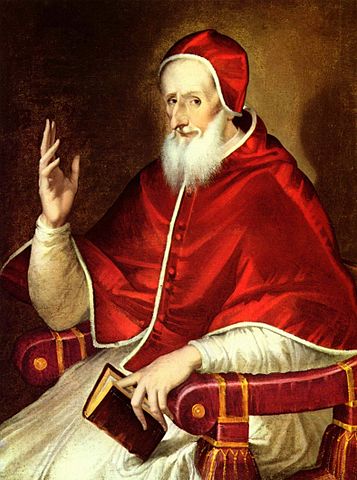
pope-st-pius-v-1504-1572The Holy League was called and assembled through the leadership of Pope St. Pius V, who clearly perceived the Turkish threat. Pope Pius  rallied not only material might but also spiritual strength to oppose the aggressors, ordering the Rome’s churches to remain open day and night for prayer and urging the faithful to ask the intercession of the Blessed Virgin Mary through the recitation of the Rosary.

In the afternoon of October 7th, Pope Pius was walking about his room, being briefed on various matters by his treasurer, Msgr. Busotti de Bibiana. The pope suddenly stopped in the middle of the room and, making a sign for Busotti to be silent, put out his head as one listening. He then threw open the window and leaned out, in the same silent and listening posture. On seeing the pope’s face suddenly transfigured, his tearful blue eyes turned up to heaven with an ineffable expression, and his raised,  joined, and trembling hands, Busotti’s hair stood on end as he realized that something supernatural was occurring. The pope thus remained for more than three minutes, and then said to Busotti with a joyful, radiant face, “This is not the time for business. Let us return thanks to God for victory over the Turks.” The pope withdrew stumbling into his chapel with beautiful lights coming from his forehead.

The treasurer hastened to report what had happened to the Vatican Cardinals and bishops, and these ordered that a record should be made at once, noting all the circumstances of time and place, and that it should be sealed and deposited at a notary’s office. (This account, affirmed by Busotti under oath, would be later presented as part of Pius V’s canonization process.) Weeks later, the news finally reached Rome by human means making known the victory at Lepanto. Though the numbers and winds had favored the Turks the morning of the conflict, first-hand witnesses write that the winds shifted to the Christians forces’ favor at the hour of battle.

St. Pope Pius V, recognizing and celebrating this providential deliverance, added a new feast day to the Roman Liturgical Calendar. October 7th was made the Feast of Our Lady of Victory. Pope Pius’ successor, Gregory XIII (after whom our Gregorian Calendar is named) would change the name of this day to the Feast of the Holy Rosary, as it is known and celebrated in the Church today.

the-1571-battle-of-lepanto

“The Rosary Is…”

October 21, 2016

    “My favorite prayer.” ~ Pope St. John Paul II

     “The Bible on a string.” ~ Fr. Ronan Murphy

     “A school for learning true Christian perfection.” ~ Pope St. John XXIII

     “A prayer both so humble and simple and theologically rich in Biblical content.” ~ Pope St. John Paul II

     “A treasure of graces.” ~ Pope Paul V

     “A priceless treasure inspired by God.” ~ St. Louis De Monfort

     “A powerful weapon.” ~ St. Josemaria Escriva

     “The weapon for these times.” ~ St. Padre Pio

     “The scourge [against] the devil.” ~ Pope Adrian VI

     “A powerful weapon to put the demons to flight and to keep oneself from sin.” ~ Pope Pius XI

     “The most excellent form of prayer and the most efficacious means of attaining eternal life.” ~ Pope St. Leo XIII

     “A magnificent and universal prayer for the needs of the Church, the nations and the entire world.” ~ Pope St. John XXIII

     “The most beautiful and the most rich in graces of all prayers; it is the prayer that touches most the Heart of the Mother of God.” ~ Pope St. Saint Pius X

    “Of the greatest value, not only according to the words of Our Lady of Fatima, but according to the effects of the Rosary one sees throughout history.” ~ Sister Lucia, one of the seers of Fatima

     “The book of the blind, where souls see and there enact the greatest drama of love the world has ever known; it is the book of the simple, which initiates them into mysteries and knowledge more satisfying than the education of other men; it is the book of the aged, whose eyes close upon the shadow of this world, and open on the substance of the next.” ~ Venerable Fulton Sheen

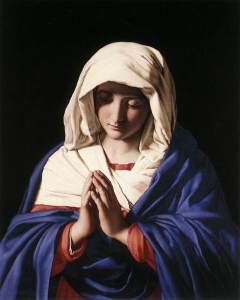
The Blessed Virgin Mary at Prayer

October 23rd Parish Bulletin

October 21, 2016

The St. Wenceslaus parish bulletin (PDF) for the 30th Sunday in Ordinary Time on October 23rd, 2016.

October 16th Parish Bulletin

October 14, 2016

The St. Wenceslaus parish bulletin (PDF) for the 29th Sunday in Ordinary Time on October 16th, 2016.

October 9th Parish Bulletin

October 6, 2016

The St. Wenceslaus parish bulletin (PDF) for the 28th Sunday in Ordinary Time on October 9th, 2016.

Catholics Who Moved Mountains

September 29, 2016

        Jesus said his apostles, “If you have faith the size of a mustard seed, you would say to this mulberry tree, ‘Be uprooted and planted in the sea,’ and it would obey you.” On another occasion, he told his disciples, “Amen, I say to you, if you have faith the size of a mustard seed, you will say to this mountain, ‘Move from here to there,’ and it will move. Nothing will be impossible for you.”

        Though I have yet to come across any historical accounts of saints transplanting foliage or excavating stones by faith-powered miracles, there are many historically-documented incidents of Catholics achieving the seemingly-impossible on earth through their faith.

St. John Paul II and the Soviet Union’s Fall

        Karol Wojtyła barely survived the Nazi’s occupation of Poland, but once that evil was defeated the Soviet Union replaced them. As parish priest and later as an archbishop, Wojtyła championed the Catholic Faith against the atheistic communists’ religious persecution. Upon his election as pope in 1978, John Paul II’s first papal journey abroad was to go back to his homeland.

        While there, he celebrated an outdoor Mass before millions, proclaiming Jesus’ words, “Be not afraid!” The crowd shouted in reply, “We want God! We want God! We want God!” Speaking in defense of human dignity, he encouraged all people to peacefully pursue true freedom. The threat posed by this Polish pope (armed merely with his words, example, and prayers) was so potent that the Soviets may have ordered his nearly successful assassination in 1981.

        On the 1984 Feast of the Annunciation, Pope John Paul consecrated Russia (along with the whole world) to the Immaculate Heart of Mary, just as she had requested in her appearances at Fatima, Portugal in 1917. On Christmas Day, seven years later, a miracle was realized. Mikhail Gorbachev peacefully resigned as the President of the Soviet Union and from atop the Kremlin, the Soviet flag was lowered forever. The ‘Evil Empire‘ ended not by a thousand Sun-bright nuclear blasts, but through the peaceful power of God and the faithfulness of his holy, humble servant.

St. Joan of Arc’s Liberation of France

 joan-of-arc-at-the-coronation-of-charles-vii       In the 15th century, France was delivered from English domination by history’s most-unlikely military commander; a teenage peasant girl. Joan had no military training, but she was compelled by visions and the voices of Sts. Michael, Catherine, and Margaret to lead the French forces, drive out the English, and see prince Charles VII crowned king at Reims. With divine help, she achieved all these feats before her martyrdom at the hand of the English at the age of nineteen. Mark Twain (though not generally a fan of historic Christianity) wrote of her:

Whatever thing men call great, look for it in Joan of Arc, and there you will find it. …It took six thousand years to produce her; her like will not be seen in the earth again in fifty thousand. …  She is easily and by far the most extraordinary person the human race has ever produced.

        St. Joan of Arc was indeed great, but her glory was but the mere reflection of God’s infinite splendor.

Fleming’s Discovery of Penicillin

        History has seen many great Catholic scientists, including Copernicus (Sun-centrism), Bacon (the scientific method), Descartes (modern geometry), Mendel (genetics), Pasteur (microbiology), and Lemaître (the Big Bang Theory) just to name a handful. But one Catholic scientist’s search for effective antibiotics in the early 20th century saved an estimated two hundred million lives. Through insights occasioned by providential occurrences, Alexander Fleming discovered penicillin. In this, he saw himself employed as an instrument by God:

I can only suppose that God wanted penicillin, and that this was his reason for creating Alexander Fleming.”

St. Patrick’s Conversion of Ireland

        In the 5th century, a 16-year-old boy was kidnapped from Britain and sold into slavery on a distant, pagan isle. There he experienced a spiritual awakening. He tells us:

I used to stay out in the forests and on the mountain and I would wake up before daylight to pray in the snow, in icy coldness, in rain, and I used to feel neither ill nor any slothfulness, because, as I now see, the Spirit was burning in me at that time. And it was there of course that one night in my sleep I heard a voice saying to me: ‘You do well to fast: soon you will depart for your home country.’ And again, a very short time later, there was a voice prophesying: ‘Behold, your ship is ready.’ And it was not close by, but, as it happened, two hundred miles away, where I had never been nor knew any person. And shortly thereafter I turned about and fled from the man with whom I had been for six years, and I came, by the power of God who directed my route to advantage (and I was afraid of nothing), until I reached that ship.”

        Lead on by this faith, he went on to become a priest, a bishop, and a missionary to the land of his former bondage. Today we think of Ireland as a very Catholic country, but it only became so through the courageous faith of St. Patrick.

Our Lord’s Redemption of the World

        In the 1st century, by his short three-year ministry in a backwater of the Roman Empire, this poor man from Nazareth transformed the world forever. Jesus Christ is the pattern for all fruitful disciples who have followed him since, achieving the impossible through faith and the power of God. One anonymous author describes Christ in these words:

Greatest man in history, named Jesus.
Had no servants, yet they called Him Master.
Had no degree, yet they called Him Teacher.
Had no medicines, yet they called Him Healer.
He had no army, yet kings feared Him.
He won no military battles, yet He conquered the world.
He committed no crime, yet they crucified Him.
He was buried in a tomb, yet He lives today.


Jesus on the Cross

October 2nd Parish Bulletin

September 29, 2016

The St. Wenceslaus parish bulletin (PDF) for the 27th Sunday in Ordinary Time on October 2nd, 2016.

The Lazarus You Know — 26th Sunday of Ordinary Time—Year C

September 25, 2016

Sunday Readings

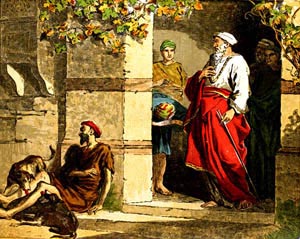
Lazarus at the Rich Man's Door

The Lord says though the prophet Amos, “Woe to the complacent,” to those warm and well-fed, comfortable on their couches without concern for others. Indeed, Scripture says, “whoever does not love a brother whom he has seen cannot love God whom he has not seen.” (1st John 4:20) You know of Jesus’ concern for the needy. Though he was rich, dwelling in the comfort of the Trinity, our Lord came to earth and became poor for your sake, so that by his poverty you might become rich. (2nd Corinthians 8:9) The rich man in Jesus’ parable could not have been unaware of the man lying at his door. Apparently, the rich man even knew his name: “Father Abraham…  Send Lazarus…” But the rich man came to deeply regret his indifference toward this neighbor.

You know a Lazarus as well. He’s not sleeping on your doorstep, but you probably know his name. He (or she) may be well-known to you or only an acquaintance. Maybe Lazarus goes to your church, or hasn’t come for years. Maybe Lazarus lives just down the street or in a nursing home far away. Your Lazarus is in great need, but probably not for food or shelter.

St. Teresa of Calcutta, who cared for many Lazaruses in India’s slums, said, “The spiritual poverty of the Western World is much greater than the physical poverty of our people.” The poorest of the poor are in our midst. Knowing this, I ask that you to earnestly pray to the Holy Spirit, that He may reveal your personal Lazarus to you, so that you may lovingly attend to that person as Jesus would have you do.

September 25th Parish Bulletin

September 21, 2016

The St. Wenceslaus parish bulletin (PDF) for the Patronal Feast of St. Wenceslaus observed on September 25th, 2016.

The Little, Great Saint

September 21, 2016

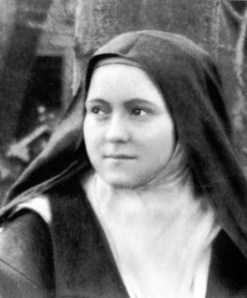
st-therese-of-lisieuxSt. Thérèse Martin  (1873–1897 AD) was born in France into a devout, Catholic family. All five daughters entered religious life and both parents (Louis & Zélie) went on to be canonized in 2015. Thérèse received special permission to join the Carmelite convent in her hometown of Lisieux at the young age of 15. She would live and pray and work there in obscurity until her death from tuberculosis at the age of 24.

After her passing, the publishing of her spiritual autobiography, “The Story of a Soul,” was phenomenally successful and there were widespread reports of prayers being answered through her intercession. St. Pope Pius X (1903-1914) privately described her as “the greatest saint of modern times” and she was canonized in 1925. Her feast day is October 1st.

Despite her greatness, Thérèse experienced everyday difficulties like our own. Amidst these she sought to do small things with great love; calling this her “Little Way” to holiness and Heaven. This is one episode St. Thérèse relates in her (highly-recommended) autobiography:

The practice of charity, as I have said, dear Mother [Mother Agnes, that is, her biological sister, Pauline, who was prioress at the time,] was not always so sweet for me, and to prove it to you I am going to recount certain little struggles which will certainly make you smile. For a long time at evening meditation, I was placed in front of a sister who had a strange habit and I think many lights [spiritual insights] because she rarely used a book during meditation. This is what I noticed: as soon as this sister arrived, she began making a strange little noise which resembled the noise one would make when rubbing two shells, one against the other. I was the only one to notice it because I had extremely sensitive hearing (too much so at times.) Mother, it would be impossible for me to tell you how much this little noise wearied me. I had a great desire to turn my head and stare at the culprit who was very certainly unaware of her ‘click.’ This would be the only way of enlightening her. However, in the bottom of my heart I felt it was much better to suffer this out of love for God and not to cause the sister any pain. I remained calm, therefore, and tried to unite myself to God and to forget the little noise. Everything was useless. I felt the perspiration inundate me, and I was obliged simply to make a prayer of doing it without annoyance and with peace and joy, at least in the interior of my soul. I tried to love the little noise which was so displeasing; instead of trying not to hear it (impossible), I paid close attention so as to hear it well, as though it were a delightful concert, and my prayer (which was not the Prayer of Quiet) was spent in offering this concert to Jesus.”

St. Thérèse Rose Novena

September 21, 2016

September 22nd is the day for beginning a nine-day novena to St. Thérèse of Lisieux, also known as “the Little Flower,” leading up to her October 1st feast day. Below is a novena prayer that you may use:


St. ThereseO Little Thérèse of the Child Jesus, please pick for me a rose from the heavenly gardens and send it to me as a message of love. O Little Flower of Jesus, ask God today to grant the favors I now place with confidence in your hands…

(Express your personal prayer intentions.)

St. Thérèse, help me to always believe as you did in God’s great love for me, so that I might imitate your “Little Way” each day. Amen.

Our Father…
Hail Mary…
Glory Be…


After completing this novena, do not be surprised if you find a rose.