The St. Wenceslaus parish bulletin (PDF) for the 13th Sunday in Ordinary Time on June 26th, 2016.
June 26th Parish Bulletin
June 22, 2016Sacred Heart Milestones
June 19, 2016The Year in Review: January 2015—June 2016
New Christians — Baptisms
Isabel Buck Peyton McCullick
New Tabernacles — First Communions
Trisha Gillitzer Zoey Jelinek
Brooke Mitchell Samantha Nagel
Savannah Swatek Brett Wagner
Elizabeth Wright Natalie Wright
Greater Temples — Confirmations
Jacob Bird Erica Boylen
Isaac Byrne Katie Friar
Tanner Gillitzer Tyler Gillitzer
Siena Krachey Adam Martin
Trent McCullick
Passings — Funerals
Virginia Fillbach Marian Frey
Florence Olson Virginia Romanek
Georgeine McCloskey
St. Wenceslaus Milestones
June 19, 2016The Year in Review: May 2015—June 2016
New Christians — Baptisms
Brynlee Becwar Addison Simmons
Hayden Stuckey Andrew Steiner
Brennen Schramm Maverick Hird
Bridget Kansier RaeLi Cullen
Roawynn Cullen Rhett Cullen
Charles Walz Arie Molini
Oliver Polodna Theodore Millin
Charlotte Millin Kassie Hamilton
Macie Slama Gwen Martin
Finnley Corlett
New Tabernacles — First Communions
2015:
Rita Achenbach Tatiana Dodge
Tucker DuCharme Owen Oppriecht
Thomas Sprosty Sophia Walz
2016:
Kari Oppriecht Lonnie Achenbach
Kassie Hamilton Tegan DuCharme
Hunter Hagensick Benjamin Kramer
Nicholas Liedtke Emma Udelhoven
Claudia Walz Elisia Wynos
Greater Temples — Confirmations
Kari Oppriecht Lonnie Achenbach
Kassie Hamilton Matthew Kramer
Stephen Ronnfeldt Timothy Sprosty Jr.
Andrew Wall Hannah Whiteaker
Brooke Wright Isaiah Teynor
New Catholics — Full Communions
Kari Oppriecht Lonnie Achenbach
Kassie Hamilton
Holy Unions — Marriages
Brandon & Jaymee Jerrett
Shawn & Audrie Schlee
Michael & Amanda Cullen
Passings — Funerals
Walter Pauer Bridget Achenbach
Kristina Colson Mae Sprosty
Charles Shinko Dale Duha
Merrill McMillin John F. Walz
Lola Mae Shinko Bernard Boylen
Lawrence Pelock
The Catechism on Current Events
June 19, 2016On June 12, 2016, a gunman murdered 49 persons at a gay nightclub in Orlando. Discussions of terrorism and new gun control laws have followed. Below are teachings from The Catechism of the Catholic Church:
On Murder & Terrorism (CCC 2268, 2297)
The fifth commandment forbids direct and intentional killing as gravely sinful. The murderer and those who cooperate voluntarily in murder commit a sin that cries out to heaven for vengeance.
Terrorism threatens, wounds, and kills indiscriminately; it is gravely against justice and charity.
On Persons with Same-Sex Attractions (CCC 2357-2359)
Homosexuality refers to relations between men or between women who experience an exclusive or predominant sexual attraction toward persons of the same sex. It has taken a great variety of forms through the centuries and in different cultures. Its psychological genesis remains largely unexplained. Basing itself on Sacred Scripture, which presents homosexual acts as acts of grave depravity, tradition has always declared that “homosexual acts are intrinsically disordered.” They are contrary to the natural law. They close the sexual act to the gift of life. They do not proceed from a genuine affective and sexual complementarity. Under no circumstances can they be approved.
The number of men and women who have deep-seated homosexual tendencies is not negligible. This inclination, which is objectively disordered, constitutes for most of them a trial. They must be accepted with respect, compassion, and sensitivity. Every sign of unjust discrimination in their regard should be avoided. These persons are called to fulfill God’s will in their lives and, if they are Christians, to unite to the sacrifice of the Lord’s Cross the difficulties they may encounter from their condition.
Homosexual persons are called to chastity. By the virtues of self-mastery that teach them inner freedom, at times by the support of disinterested friendship, by prayer and sacramental grace, they can and should gradually and resolutely approach Christian perfection.
On Government Authority (See CCC 1897-1927)
Every human community needs an authority to govern it. … Its role is to ensure as far as possible the Common Good of the society. The authority required by the moral order derives from God… (see Romans 13:1-2.) [Authority] must not behave in a despotic manner, but must act for the Common Good as a moral force based on freedom and a sense of responsibility. A human law has the character of law to the extent that it accords with right reason, and thus derives from the eternal law. … If rulers were to enact unjust laws or take measures contrary to the moral order, such arrangements would not be binding in conscience. In such a case, “authority breaks down completely and results in shameful abuse.” (Pope St. John XXIII) The Common Good consists of three essential elements: respect and promotion of the fundamental rights of the person; development of the spiritual & temporal goods of society; and the peace & security of society and its members.
On Legitimate Self-Defense (CCC 2263-2264)
The legitimate defense of persons and societies is not an exception to the prohibition against the murder of the innocent that constitutes intentional killing. “The act of self-defense can have a double effect: the preservation of one’s own life; and the killing of the aggressor. … The one is intended, the other is not.” (St. Thomas Aquinas)
Love toward oneself remains a fundamental principle of morality. Therefore it is legitimate to insist on respect for one’s own right to life. Someone who defends his life is not guilty of murder even if he is forced to deal his aggressor a lethal blow: “If a man in self-defense uses more than necessary violence, it will be unlawful: whereas if he repels force with moderation, his defense will be lawful. … Nor is it necessary for salvation that a man omit the act of moderate self-defense to avoid killing the other man, since one is bound to take more care of one’s own life than of another’s.” (St. Thomas Aquinas)
June 19th Parish Bulletin
June 18, 2016The St. Wenceslaus parish bulletin for the 12th Sunday in Ordinary Time on June 19th, 2016.
June 12th Parish Bulletin
June 8, 2016The St. Wenceslaus parish bulletin for the 11th Sunday in Ordinary Time on June 12th, 2016.
Aphantasia — A Corpus Christi Homily
June 5, 2016Aphantasia (Greek for “without fantasy”) has been written about since 1880 but it has recently gained increased attention. To understand what I am talking about, picture a red triangle, a horse running, or the house where you grew up. With a moment’s attention you can see them in your mind. However, people with Aphantasia are incapable of voluntarily forming images in their mind’s-eye.
Blake, a successful 30-year-old software engineer only recently learned he experienced the world differently from others. He relates a conversation similar to this with a Facebook friend:
—If I ask you to imagine a beach, how would you describe what happens in your mind?
—Uhh, I imagine a beach. What?
—Like, the idea of a beach. Right?
—Well, there are waves, sand. Umbrellas. It’s a relaxing picture. Are you okay?
— But it’s not actually a picture? There’s no visual component, right?
—Yes, there is, in my mind. What are you talking about?
—Is it in color?
—Yes…
—How often do your thoughts have a visual element?
—A thousand times a day?
—Oh, my goodness…
 If someone were to ask Blake to “imagine a beach,” he could ruminate on the concept of a beach: it has sand, waves, heat, sun. He could recognize a beach when he saw one, but even if he were standing on a beach he could not recreate or remember the image with his eyes closed.
Philip is a 42-year old photographer from Toronto. He is happily married, but he cannot conjure up his wife’s face (or any other image) in his mind’s eye. He was recently listening to a podcast presenter describing aphantasia. He says it came as a complete surprise, “I was like ‘what do you mean? People do that?’” He thought it was a joke so he checked with his four-year old daughter. “I asked her whether she could picture an apple in her mind, she said ‘yeah, it’s green’. I was shocked.”
A 2009 survey of 2,500 people suggests that aphantasia is the experience of about 2% of people. So far, I have found it in two of my friends, including a fellow priest. He tells me that when our spiritual director in seminary would tells us to prayerfully picture ourselves, say, at the table of the Last Supper he thought it was just a metaphor. He was surprised to learn that when people “counted sheep” to fall asleep that was more than just a figure of speech.
Disbelief is a common response when people on either side of this phenomena hear that other people do no experience the world like themselves. (“That’s impossible. You’re lying. You’re pulling my leg.”) However, unless we happen to carry around an MRI machine, we have to take our friend at his or her word in order to know the truth. And here we come to the connection with this Feast of Corpus Christi.
An extraordinary experience at the center of our Faith is founded upon a trust in our friend Jesus Christ’s testimony. At the Last Supper, Jesus does not say, “This is like my body,” or “This symbolizes or represents my body.” He says, “This is my body.” Around the year 150 AD, St. Justin Martyr described what early Christians everywhere believed about these words:
“The apostles, in the memoirs composed by them, which are called Gospels, have thus delivered unto us what was enjoined upon them; that Jesus took bread, and when He had given thanks, said, “Do this in remembrance of Me, this is My body;” and that, after the same manner, having taken the cup and given thanks, He said, “This is My blood” … “This food is called among us the Eucharist… For not as common bread and common drink do we receive these; but in like manner as Jesus Christ our Savior, having been made flesh by the Word of God, had both flesh and blood for our salvation, so likewise have we been taught that the food which is blessed by the prayer of His word, and from which our blood and flesh by transmutation are nourished, is the flesh and blood of that Jesus who was made flesh.”
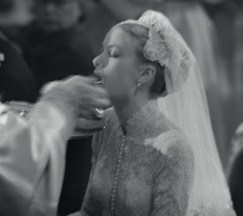 The Church has always proclaimed and worshiped Jesus Christ as truly present, body, blood, soul, and divinity in the Eucharist. This belief has been confirmed for us throughout the centuries. The Holy Spirit, whom Jesus promised would lead us to all truth and remind us of all that he told us, has reaffirmed this teaching in Councils of the Church. Jesus has also allowed Eucharistic miracles to unveil this mystery we cannot normally perceive. For instance, at the Miracle of Lanciano in eighth century AD, a priest who was doubting Jesus’ Real Presence witnessed the bread become flesh and the wine become blood (which coagulated and broke into five globules in the chalice) as he said the words of consecration. In 1971, scientific analysis indicated that, as at similar miracles, the Host was human cardiac muscle. Who would go through such trouble when a fraudster’s more convenient use of pig’s flesh would have been undetectable? The truth is that Jesus gives us his heart in the Eucharist, along with his whole self. You can go to Lanciano, Italy and behold this Host today.
For many Christians, the Lord’s Supper is merely a symbolic commemoration, a ritual that remembers him. But if Jesus is everywhere, then he is nowhere. It then impossible to physically draw near to him any place on earth. Unless you are blessed with a vision of Jesus, you can never see him with your eyes or touch him in your flesh until after your death and resurrection. But with the Real Presence of Jesus in the Eucharist, “Behold, I am with you always…”
If you have always enjoyed mental images, or if you have received the Real Presence of Jesus in Holy Communion since you were a child, then you may not appreciate the gift you have. If you experience aphantasia, or if you have never believed in the Real Presence of Jesus in the Eucharist, then you may not even know what you are missing. So for our non-Catholic family and friends, tell them about this treasure—Jesus wants them to receive him, too. And for ourselves, let us truly appreciate the incredible gift that we are blessed to receive.
June 5th Parish Bulletin
June 3, 2016The St. Wenceslaus parish bulletin for the 10th Sunday in Ordinary Time on June 5th, 2016.
9th Week in Ordinary Time—Year II Meditations & Homily Builder
May 29, 2016Monday, 9th Week in Ordinary Time—Year II
- Evil desire causes the world’s corruption; the injustice, theft, and murder in the vineyard.
- The tenants were unfaithful, vicious, ignorant, rash, fickle, disloyal, and cold, for they lacked love.
- Though the prophets and God’s son were slain, they now dwell and abide with the Most High,
Petitions: Loving Stewardship, Renters, Justice
Tuesday, 9th Week in Ordinary Time—Year II
- Like Jesus’ either/or-defying answer, we’re to “wait for and hasten the coming of the day of God.”
- As gold is perishable even though tested by fire, money will not outlive this creation. (1 Peter 1:7)
- Jesus’ patience gave the Pharisees, the Herodians, and Caesar a chance for salvation.
Petitions: Active Contempatives, Corrupted Leaders, Generosity
Wednesday, 9th Week in Ordinary Time—Year II
- Timothy had greater knowledge of the Scriptures and of God’s miracles than the Sadducees.
- We are confident that the God of the living is able to guard the life entrusted to us forever.
- Jesus was unashamed to testify to the resurrection, for there was nothing to be ashamed of.
Petitions: Young Priests, Courageous Testimony, Beloved Dead
Thursday, 9th Week in Ordinary Time—Year II
- Notwithstanding history’s “first” commandment, Jesus was a celibate workman for God.
- Faithfulness to him requires not only external sacrifice, but love for God and neighbor.
- Jesus was not “disputing about words,” but answering questions that mattered.
Petitions: Catholic Apologists, The Falsely Accused, Civility
Friday, 9th Week in Ordinary Time—Year II
- “All Scripture is inspired by God and is useful,” but the Word Incarnate is richer.
- Remaining “faithful to what you have learned” allows mysteries to be unveiled to us.
- All religious Christians will be persecuted, but all enemies shall be placed under his feet.
Petitions: Scripture Study, Our Persecutors, Patient Endurance
May 29th Parish Bulletin
May 24, 2016The St. Wenceslaus parish bulletin for the Feast of Corpus Christi on May 29th, 2016.
Rules for Spiritual Discernment
May 23, 2016By St. Ignatius of Loyola (1491-1556)
Rules for becoming aware and understanding to some extent the different movements which are caused in the soul, the good, to receive them, and the bad to reject them…
First Rule. In persons who are going from mortal sin to mortal sin, the enemy is ordinarily accustomed to propose apparent pleasures to them, leading them to imagine sensual delights and pleasures in order to hold them more and make them grow in their vices and sins. In these persons the good spirit uses a contrary method, stinging and biting their consciences through their rational power of moral judgment.
Second Rule. In persons who are going on intensely purifying their sins and rising from good to better in the service of God our Lord, the method is contrary to that in the first rule. For then it is proper to the evil spirit to bite, sadden, and place obstacles, disquieting with false reasons, so that the person may not go forward. And it is proper to the good spirit to give courage and strength, consolations, tears, inspirations and quiet, easing and taking away all obstacles, so that the person may go forward in doing good.
Third Rule. The third is of spiritual consolation. I call it consolation when some interior movement is caused in the soul, through which the soul comes to be inflamed with love of its Creator and Lord, and, consequently when it can love no created thing on the face of the earth itself, but only in the Creator of them all. Likewise when it sheds tears that move to love of its Lord, whether out of sorrow for one’s sins or for the passion of Christ our Lord, or because of other things directly ordered to His service and praise. Finally, I call consolation every increase of hope, faith and charity, and all interior joy that calls and attracts to heavenly things and to the salvation of one’s soul, quieting it and giving it peace in its Creator and Lord.
Fourth Rule. The fourth is of spiritual desolation. I call desolation all the contrary of the third rule, such as darkness of soul, disturbance in it, movement to low and earthly things, disquiet from various agitations and temptations, moving to lack of confidence, without hope, without love, finding oneself totally slothful, tepid, sad and as if separated from one’s Creator and Lord. For just as consolation is contrary to desolation, in the same way the thoughts that come from consolation are contrary to the thoughts that come from desolation.
Fifth rule. The fifth is in time of desolation never make a change, but be firm and constant in the proposals and determination in which one was the day preceding such desolation, or in the determination in which one was in the preceding consolation. Because as in consolation the Good Spirit guides and counsels us more, so in desolation the bad spirit, with whose counsels we cannot find the way to a right decision.
Sixth rule. Although in desolation we should not change our first proposals, it is very advantageous to change ourselves intensely against the desolation itself, as by insisting more upon prayer, meditation, upon much examination, and upon extending ourselves in some suitable way of doing penance.
Seventh Rule. Let one who is in desolation consider how the Lord has left him in trial in his natural powers, so that he may resist the various agitations and temptations of the enemy; since he can resist with divine help, which always remains with him, though he does not clearly feel it; for the Lord has taken away from him His great fervor, abundant love and intense grace, leaving him, however sufficient grace for eternal salvation.
Eighth Rule. Let one who is in desolation work to be in patience, which is contrary to the vexations which come to him, and let him think that he will soon be consoled, diligently using the means against such desolation, as is said in the sixth rule.
Ninth Rule. There are three principal causes for which we find ourselves desolate. The first is because we are tepid, slothful or negligent in our spiritual exercises, and so through our faults spiritual consolation withdraws from us. The second, to try us and see how much we are and how much we extend ourselves in His service and praise without so much payment of consolation and increased graces. The third, to give us true recognition and understanding so that we may interiorly feel that it is not ours to attain or maintain increased devotion, intense love, tears or any spiritual consolation, but that all is the gift and grace of God our Lord, and so that we may not build a nest in something belonging to another, raising our mind in some pride or vainglory, attributing to ourselves the devotion or the other parts of the spiritual consolation.
Tenth Rule. Let the one who is in consolation think how he will conduct himself in the desolation which will come after, taking new strength for that time.
Eleventh Rule. Let one who is consoled seek to humble himself and lower himself as much as he can, thinking of how little he is capable in the time of desolation without such grace or consolation. On the contrary, let one who is in desolation think that he can do much with God’s sufficient grace to resist all his enemies, taking strength in his Creator and Lord.
Twelfth Rule. The enemy acts like [an unvirtuous] woman in being weak when faced with strength and strong when faced with weakness. For as it is proper to a woman, when she is fighting with some man, to lose heart and to flee when the man confronts her firmly, and, on the contrary, if the man begins to flee, losing heart, the anger vengeance and ferocity of the woman grow greatly and know no bounds. In the same way, it is proper to the enemy to weaken and lose heart, fleeing and ceasing his temptations when the person who is exercising himself in spiritual things confronts the temptations of the enemy firmly, doing what is diametrically opposed to them; and, on the contrary, if the person who is exercising himself begins to be afraid and lose heart in suffering the temptations, there is no beast so fierce on the face of the earth as the enemy of human nature in following out his damnable intention with such growing malice.
Thirteenth Rule. Likewise he conducts himself as a false lover in wishing to remain secret and not be revealed. For a dissolute man who, speaking with evil intention, makes dishonorable advances to a daughter of a good father or a wife of a good husband, wishes his words and persuasions to be secret, and the contrary displeases him very much, when the daughter reveals to her father, or the wife to her husband his false words and depraved intention, because he easily perceives that he will not be able to succeed with the undertaking begun. In the same way, when the enemy of human nature brings his wiles and persuasions to the just soul, he wishes and desires that they be received and kept in secret; but when one reveals them to one’s good confessor or to another spiritual person, who knows his deceits and malicious designs, it weighs on him very much, because he perceives that he will not be able to succeed with the malicious undertaking he has begun, since his manifest deceits have been revealed.
Fourteenth Rule. Likewise he conducts himself as a leader, intent upon conquering and robbing what he desires. For, just as a captain and leader of an army in the field, pitching his camp and exploring the fortifications and defenses of a stronghold, attacks it at the weakest point, in the same way the enemy of human nature, roving about, looks in turn at all our theological, cardinal and moral virtues; and where he finds us weakest and most in need for our eternal salvation, there he attacks us and attempts to take us.
8th Week in Ordinary Time—Year II Meditations & Homily Builder
May 22, 2016Monday, 8th Week in Ordinary Time—Year II
- Only through God’s mercy do we have ‘a new birth, an inheritance, and a waiting salvation.’
- Like our faith, water is more precious than gold, for our future life would be lost without it.
- Peter and the rich man saw Jesus, but we today are not deprived of his teaching, trials, or presence.
Petitions: Vocations, Teachers, The Heavily Burdened
Tuesday, 8th Week in Ordinary Time—Year II
- Israel’s prophets were writing “all the ends of the earth” destined for “salvation by our God.”
- The Spirit of Christ, who inspired the prophets, also foresaw the Gospel’s promises fulfilled.
- A child’s obedience and holiness, brought to maturity, is one hundred times rewarded.
Petitions: Reluctant Converts, All Lands, Family Members
Wednesday, 8th Week in Ordinary Time—Year II
- As “a spotless unblemished Lamb,” Jesus is led to the temple to offer his “precious Blood.”
- Like Pharaoh Ozymandias’ glory, “flesh is like grass,” but what is the Lord’s remains imperishable.
- God reigns as king, blessing with food and teachings, without lording his authority over us.
Petitions: Bishops, Builders, True Perspective
Thursday, 8th Week in Ordinary Time—Year II
- As “aliens and sojourners” in this world, Christians will face rebukes like Bartimaeus.
- But like a mother to a newborn’s cry, Jesus responds to the blind man’s great thirsting desire.
- Unlike others, Jesus has mercy on his neighbor as he walks the Good Samaritan’s road. (Luke 10:30)
Petitions: Universal Priesthood, Against Scandal, For Infants
Friday, 8th Week in Ordinary Time—Year II
- “[T]he judgment [begins] with the household of God…” (1 Peter 4:17)
- By setting up shop in the Court of the Gentiles, they made the temple inhospitable for the nations.
- As each Christian has received the gifts of faith and mercy, use them to serve one another.
Petitions: Effective Preaching, Crop-Friendly Weather, Effortless Prayer
7th Week in Ordinary Time—Year II Meditations & Homily Builder
May 16, 2016Monday, 7th Week in Ordinary Time—Year II
- Jesus comes down the mountain with mighty wisdom from above.
- The Lord’s ‘perfect, trustworthy, right, clear, pure, and true’ words prevail over evil.
- Prayer will drive out spirits of jealousy and selfish ambition among us.
Petitions: Faith, Special Needs Families, Prayer
Tuesday, 7th Week in Ordinary Time—Year II
- His disciples argued who was greatest because they coveted, envied, and did not understand.
- As resisting the Devil causes him to flee, so the Lord’s timely question silenced their feud.
- “Humble yourselves before the Lord,” like a child, in Christ’s likeness, “and he will exalt you.”
Petitions: Church Unity, World Peace, Openness to Life
Wednesday, 7th Week in Ordinary Time—Year II
- Mighty deeds may be accomplished in the name of the Lord, if he wills it.
- The actions of a Christian arrogantly disregarding God’s will, speak ill of him.
- Instead of complaining, the one who does not follow ought be told the right thing to do.
Petitions: Separated Brethren, Entrepreneurs, Discernment
Thursday, 7th Week in Ordinary Time—Year II
- Better to hand over what is not yours than to be thrown into fiery Gehenna or the deadly sea.
- “These little ones” are children, but also laborers; the poor, the voiceless, and the vulnerable.
- The millstones of “God grind slowly; yet they grind exceeding small.” (Longfellow’s “Retribution”)
Petitions: God’s Little Ones, Just Wages, Manual Laborers
Friday, 7th Week in Ordinary Time—Year II
- Wedding vows are solemn promises, so let your “I do” mean “I do.”
- “Do not complain, [husbands and wives,] about one another,” for “the Lord is kind and merciful.”
- The Lord became one flesh with us, “because the Lord is compassionate and merciful.”
Petitions: Eucharistic Devotion, The Seemingly Abandoned, Sanctified Speech
6th Week in Ordinary Time—Year II Homily Builder
May 15, 2016Monday, 6th Week in Ordinary Time—Year II
- Some doubt against their will, but others doubt willfully to reject the Lord.
- God gives “generously and ungrudgingly” to all who are willing to receive.
- Jesus’ boat was not adrift, but harnessed the wind to go where his Father willed.
Petitions: Greater Gifts, Atheists and Agnostics, This Generation
Tuesday, 6th Week in Ordinary Time—Year II
- Jesus’ veiled language was not to mislead the disciples, for “he himself tempts no one.”
- Like with temptation, one who strives to understand Jesus “will receive the crown of life.”
- Recalling God’s previous mighty works helps us to endure temptation.
Petitions: Understanding Divine Revelation, The Hungry, Enduring Temptation
Wednesday, 6th Week in Ordinary Time—Year II
- Be “quick to hear, slow to speak, slow to anger,” for we are slow to see things as they truly are.
- Jesus practiced pure religion, working great goods not to be showy, but for goodness’ sake.
- When beholding others, do not forget that Jesus died on a tree for each one of them.
Petitions: Charitable Apostolates, True Sight, The Disabled
Thursday, 6th Week in Ordinary Time—Year II
- Since Jesus is our Christ, he rightly to makes the distinction: “Get behind me,” i.e., follow me.
- Jesus models how the “poor” in spirit, wealth, and power become “heirs of the Kingdom.”
- If we “look to” Jesus in our lives and neighbor our “faces may not blush with shame.”
Petitions: Christian Discipleship, Inequality, Fraternal Correction
Friday, 6th Week in Ordinary Time—Year II
- Jesus and Abraham’s sacrifices were works of faith for new covenants in power. (Genesis 22)
- Even the demons believe “Jesus is Lord,” but they do not serve or follow him and are condemned.
- Works without faith end in death: what does it profit to gain the whole world and lose one’s life?
Petitions: Vocations, Non-Catholic Christians, Refugees and Homeless
Captain America, St. Thomas More, & the Spirit of Truth
May 14, 2016In the new blockbuster movie Captain America: Civil War the titular hero is discerning an important decision when he hears this message in a church:
“Compromise where you can. And where you can’t, don’t. Even if everyone is telling you that something wrong is something right, even if the whole world is telling you to move. It is your duty to plant yourself like a tree, look them in the eye and say, no. You move.”
 As I watched in the movie theater, that bit about the tree struck me as odd. Trees bend and can be cut down, but pillars of iron or stone mountains don’t budge. I later discovered that these movie lines were adapted from a famous comic book speech Captain America once addressed to Spider-Man:
“When the mob and the press and the whole world tell you to move, your job is to plant yourself like a tree beside the river of truth, and tell the whole world — ‘No, you move.’”
Did you spot the difference? “Plant yourself like a tree beside the river of truth.” That’s not only more beautiful, it’s also an allusion to Old Testament imagery. Psalm 1:3 says:
“[The Just Man] is like a tree planted near streams of water that yields its fruit in due season, whose leaves do not wither, and whatever he does prospers.”
And Jeremiah 17:8 says:
“[Those who trust in the Lord] are like a tree planted beside the waters that stretches out its roots to the stream: It does not fear heat when it comes, its leaves stay green; In the year of drought it shows no distress, but still produces fruit.”
These verses teach that the just man who is rooted in the Law (or the Truth) of God prospers, and that those who trust in the Lord prevail against adversity.
I wish that Hollywood had included the fuller quote in the new Captain America movie—not only because it’s better writing, not only because it echoes Sacred Scripture, but because it better reflects the truth about where Truth comes from. My all-time favorite film disappoints me in a similar way.
 A Man for All Season won the 1966 Academy Award for Best Picture, but its depiction of its hero, St. Thomas More, falls short of perfection. In the movie, as in real life, Thomas More suffers unjust imprisonment for refusing to swear an oath recognizing King Henry VIII as the supreme head of the Catholic Church in England. The movie’s screenwriter, the agnostic Robert Bolt, drew on More’s own writings to craft some fantastic dialogues, but Bolt somewhat misrepresents the saint’s true motivations.
In one scene, Thomas More’s friend, the Duke of Norfolk, asks why he won’t just “give in.” Thomas answers, “I will not give in because I oppose it — I do — not my pride, not my spleen, nor any of my appetites, but I do — I!” The real St. Thomas More’s motivations are portrayed more accurately in the scene at his trial. He tells the court:
“The indictment [against me] is grounded in an act of Parliament which is directly repugnant to the law of God, and his Holy Church, the Supreme Government of which no temporal person may by any law presume to take upon [himself.] This was granted by the mouth of our Savior, Christ himself, to Saint Peter and the Bishops of Rome whilst He lived and was personally present here on earth. It is, therefore, insufficient in law to charge any Christian to obey it.”
The real St. Thomas More refused to sign the King’s oath because he saw in it a denial of Christ. He preferred to die rather than lose Heaven; and he did go on to die, thereby gaining Heaven. But Robert Bolt has his Thomas More conclude his courtroom speech like this:
“Nevertheless, it is not for [refusing the King’s] Supremacy that you have sought my blood, but because I would not bend to the [King’s re-marriage]!” (In other words, “No one is going to make me act contrary to my own self-will!”)
The real St. Thomas More was not standing up against the world for individually-chosen truth. (More opposed heretics when he served as King Henry’s High Chancellor.) He knew that Truth and right and wrong are not things we create for ourselves. We receive them, as water from a river. They do not flow from us as their source. The real St. Thomas More was a champion for the Truth which comes from God.
So how can we be faithful to the Truth which comes from God? How can we be planted like trees beside the River of Truth that flows from God? By prayerfully welcoming the Holy Spirit.
At his interrogation before the Roman Governor Pontius Pilate, Jesus says: “Everyone who belongs to the truth listens to my voice.” (In the Holy Trinity, the Father is the Speaker, Jesus is the Word, and the Holy Spirit is the Voice) But Pilate refuses to listen. He retorts to Jesus, “What is truth?” He rejects the Spirit of Truth and walks away.
Later, at his Ascension, Jesus instructs his disciples to remain in Jerusalem until they are clothed with power from on high with the Spirit of Truth who will teach them everything and remind them of all he has told them. Unlike Pilate, the disciples listen to Jesus and obey him. Some 120 persons (including the apostles, the Virgin Mary, some women, and some male relatives of Jesus) gather together and all devote themselves to prayer. They pray for nine days—the Church’s first novena, and on the tenth day, on the Jewish feast of first fruits called Pentecost, the Holy Spirit, the Spirit of Truth, comes and fills them.
 Once the Spirit’s fire touches their heads, the disciples know what to say and they are unafraid to say it. Previously they had been hiding behind locked doors, but now they go out into Jerusalem’s crowded streets praising and preaching Jesus. This new-found wisdom and courage are gifts from the Holy Spirit, who empowers them to begin reaping the Church’s first fruits from the world. Observe well what the disciples do, for we are called to do the same: they listen to Jesus and obey him, they gather together and pray, they receive the Holy Spirit’s inspiration and gifts, and then they go forth to speak and act powerfully in the world.
In the Gospel of John, on the last and greatest day of one of the Jewish feasts, Jesus stands up in the temple area and exclaims, “Let anyone who thirsts come to me and drink. Whoever believes in me, as scripture says: ‘Rivers of living water will flow from within him.’” Here the Gospel writer adds: “He said this in reference to the Spirit that those who came to believe in him were to receive.”
The Holy Spirit is our River of Living Water. As trees planted beside him we will prosper, and by being rooted in him we will prevail against adversity. In Holy Mass let us pray to receive the Spirit wholeheartedly and to be clothed with his power. And then, filled with the Spirit of Truth, even if the whole world tells us to move, we will have the words and courage to stand our ground. By the Holy Spirit, we can be heroes for this world in desperate need of heroes, in the likeness of Captain America, St. Thomas More, and the apostles after Pentecost.

