The St. Wenceslaus parish bulletin for Holy Trinity Sunday on May 22nd, 2016.
May 22nd Parish Bulletin
May 10, 2016May 15th Parish Bulletin
May 10, 2016The St. Wenceslaus parish bulletin for Pentecost Sunday on May 15th, 2016.
An Ascension & Mother’s Day Homily
May 8, 2016
Today, two great celebrations providentially align: the Feast of the Ascension of Jesus Christ into Heaven and Mother’s Day. After his resurrection, Jesus spent 40 days teaching, instructing, and preparing his disciples for their new life ahead. The number 40 often appears in the Bible in relation to times of preparation. Noah spent 40 days and nights on the ark as the waters of the flood were renewing the world. Moses and the Hebrews spent 40 years wandering in the desert before God’s people entered the Promised Land. Before beginning his public ministry, Jesus spent 40 days and 40 nights praying and fasting in the desert. And after his death on the cross, Jesus’ body spent (by tradition) 40 hours in the tomb awaiting the resurrection. The number 40 also has a place in your life story as well. Each of you remained 40 weeks, more or less, within your mother’s womb being prepared for a new life. I ask you to reflect on that time.
Attached to your mother’s vine you grew into the mature fruit of her womb. You were nourished and grew within her. You were never far from her heart or mind. You existed within her, connected to her at the center of your being. (Your belly button marks the spot where you were once attached to her.) She fed you with her very self. She provided for all your needs. Apart from her you could do nothing. You remained in her and you found your rest within her.
In the womb, at those earliest stages of life, our minds did not comprehend very much, but what if you could have understood then everything that your mother was doing for you? Surely you would have directed your thoughts to her often. And, from time to time, you would have turned to her with the eyes of your heart to bask in her love for you.
What if, imagining further, that you could have spoken with your mom when you were in her womb? Wouldn’t you have taken the opportunity to speak with her every day? Wouldn’t you have thanked her with a deep gratitude and let her know how much you love her? I suppose a baby could ignore its mother in such as situation and continue to live on, at least biologically, but the child would be deprived without this first and special relationship with mom.
As you and your mother would continue to talk throughout the days and months of pregnancy she would eventually present you with a most-frightening prospect. She might put it this way, “My child, soon, in a little while, you are going to begin a new stage of your life. You will be departing from the life you know, and then you’ll experience a whole world of people and things you have never known before. Once you are born, you will meet me in a new way.”
You might say, “I’m scared! I don’t want to go—not now, not ever!” But she would reassure you, “I realize this concept is scary for you, but trust me when I say that it is better that you go. In fact, someday soon you’ll look back and think it a silly thought to be back again where you are now. This transition is going to hurt a little bit… trust me, I know… but when the appointed time comes, I’ll be right here with you. So don’t be afraid, it’s going to be O.K.”
Our life in our mother’s womb is like our life in Jesus Christ. You are attached to Him as to a vine. You are nourished and grow within Him. You are never far from His heart or mind. You exist within Him; you live and move and have your being in Him, connected to Him at the center of your being. He feeds you with His very self in the Eucharist. He provides for all your needs. Apart from Him, you can do nothing. You remain in Him and can find your rest in Him.
Knowing and believing this, shouldn’t we direct our thoughts to Him often? Shouldn’t we, from time to time, turn to Him with the eyes of our hearts to bask in His love for us. We have the ability to talk with Jesus Christ whenever we want in prayer. We should take the opportunity to speak with Him every day, thanking Him out of deep gratitude and telling Him how much we love Him. A person who ignores Him will still continue to live, at biologically, but they will not be fully alive without this primary and special relationship with Christ. We must to pray every day if we want to remain in Him and bear much fruit.
We don’t want to die and that’s perfectly natural. But Jesus says to us, “Soon, in a little while, you are going to begin a new stage of your life. You will be departing from the life you know, and then you’ll experience a whole world of people and things you have never known before. Once you die, you will meet me in a new way. I realize this concept is scary for you, but trust me when I say that it is better that you go. In fact, someday soon you’ll look back and think it a silly thought to be back again where you are now. This transition is going to hurt a little bit… trust me, I know… but when the appointed time comes, I’ll be right there with you. So don’t be afraid, it’s going to be O.K.”
Was Jesus afraid when he ascended into heaven? In the Garden of Gethsemane the night before his died Jesus was anxious and distressed at the sufferings before Him. But at the Ascension, as he rose high above the ground, I do not think He was afraid at all. He was beyond all fear and He was going home. The anecdotal evidence of near death experiences indicates that for friends of God the journey beyond this life is peaceful and joyful. A friend of mine once went into cardiac arrest and had a vision like that of going home. When they defibrillated her heart in the Emergency Room and brought her back to into this world she felt quite angry and tore off the wires they had stuck on her skin because she so much wanted to go back to where she had just been.
As our mothers would have told us before we were born from womb into world, and as Jesus tells us before our birth from this life to next, we do not need to be afraid. Instead let us live in gratitude and peace. Today, let us thank God for the life, love, and tender care we have received from our mothers and through Jesus Christ. May God bless our mothers and may Jesus Christ be praised.
The Old Covenant’s (Surprising) Last Seven Prophets
May 6, 2016A prophet is someone enlightened by God to reveal his message. Each Sunday, we familiarly proclaim that the Holy Spirit has “spoken through the prophets,” but the identities of the seven last Old Covenant prophets (as seen in the Bible) may well surprise you.
#7 : The Author of 2nd Maccabees
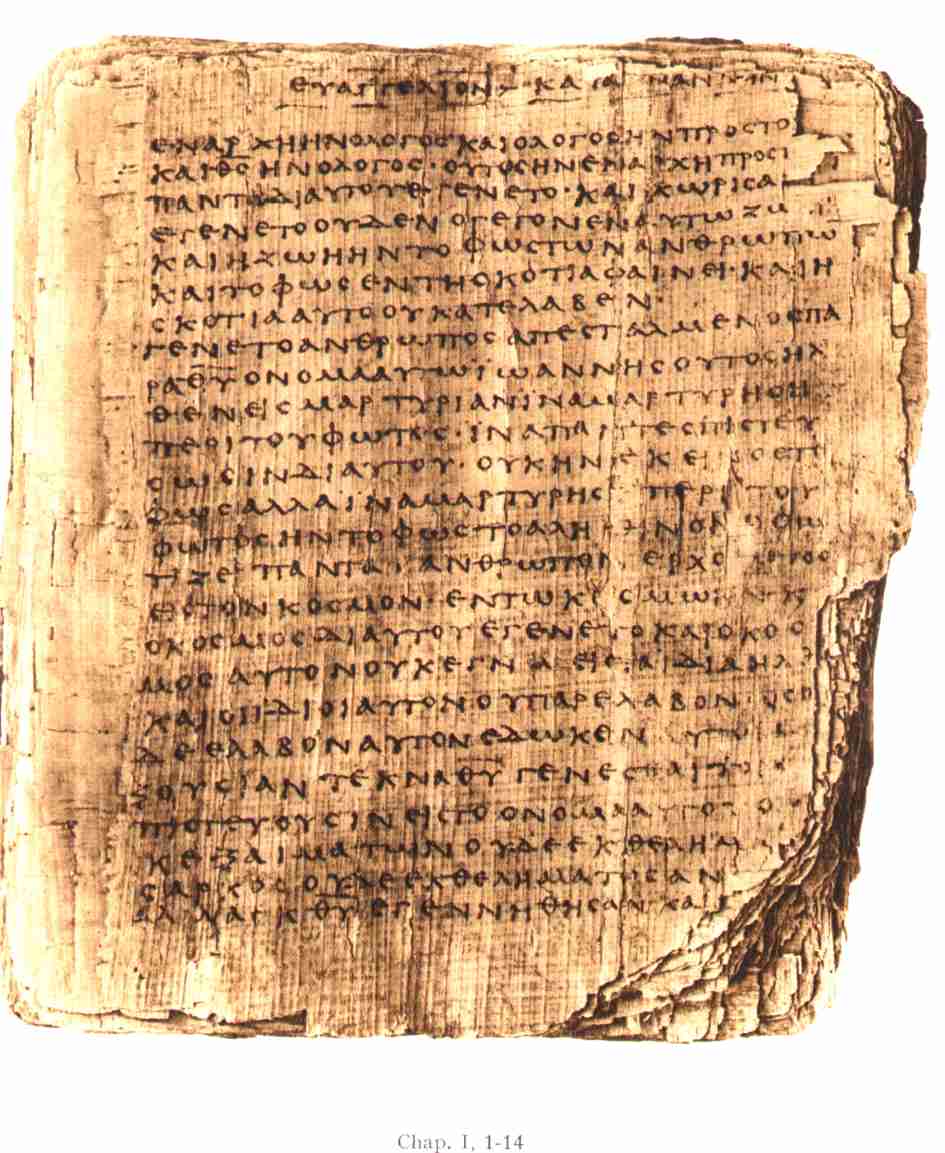
Malachi is the last book in the Old Testament, yet the Bible’s books do not always appear in chronological order. Our separated Protestant brethren would identify Malachi as the last prophetic book in the Old Testament, but the Church’s Bible includes seven books which they exclude. The last of these is 2nd Maccabees, written during the 1st century BC.
The author of 2nd Maccabees, who chronicles the Jews’ successful rebellion against their Greek persecutors, does not seem to know he writes by divine inspiration. In his closing remarks he adds, “If [this story] is well written and to the point, that is what I wanted; if it is poorly done and mediocre, that is the best I could do.” (15:38) However, neither does St. Paul appear to grasp that his letters to the churches would be revered on the level of Genesis, Joshua, or Daniel. This shows that God can use us in amazing ways, in perfect accord with his will, even if we fail to recognize it at the time.
#6 & #5 : St. Zachariah & St. Elizabeth
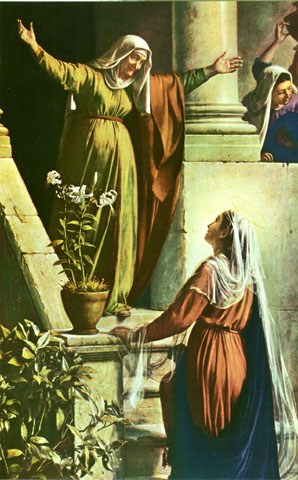 Zachariah and his wife, Elizabeth, are old and childless. But the Archangel Gabriel appears to Zachariah in the Temple and says that they shall have a son. Although he knows that God has blessed with children elderly and barren couples of old, Zachariah disbelieves the message. In response, he is put on a forty-week silent retreat. Zachariah becomes mute and apparently deaf as well (since his neighbors and relatives will later resort to making gestures to ask him the name of his newborn son.) Though he cannot tell his pregnant wife of their unborn son’s great mission, Elizabeth receives insights from the Holy Spirit.
When she hears the greeting of her visiting relative, Elizabeth is “filled with the holy Spirit” and cries out in a loud voice, “Most blessed are you among women, and blessed is the fruit of your womb!” The Blessed Virgin’s belly has not yet begun to grow, but Elizabeth prophesies and confirms to Mary that she is indeed pregnant with a boy who is “the Lord.” (Luke 1)
The Holy Spirit also seems to reveal to Elizabeth the name of her child: “John,” a name unfamiliar to her family. At the naming ceremony, Zechariah regains his voice, confirms her word, and “filled with the holy Spirit, prophesie[s]” through the canticle which bears his name. This holy, prophetic couple would ready their son for the great mission prepared for him by God.
#4 : The Blessed Virgin Mary
 The Archangel Gabriel declared unto Mary that she would conceive the Son of God by the Holy Spirit. But is Mary a prophetess? Unlike Elizabeth and Zachariah, Luke’s Gospel does not say Mary, “filled with the Holy Spirit, prophesied,” or “filled with the Holy Spirit, cried out in a loud voice.” However, as Fr. Raymond Brown observed, the Annunciation to Mary shares the biblical form of a prophetic calling (like those of Moses, Gideon, Isaiah, Jeremiah, and Ezekiel before her):
(1) An Encounter with God or His Angel
(2) An Introductory Word
(3) A Call or Commission
(4) Objection(s) to the Message
(5) Reassurance by God or His Angel
(6) A Sign is Given
In her later canticle, Blessed Mary speaks a prophesy which remains fulfilled in our midst: “Behold, from now on all generations will call me blessed.” Mary is a prophetess, filled with the Holy Spirit, who bears God’s Word.
 #3 & #2 : St. Simeon & St. Anna
When the baby Jesus’ parents brought him to the Temple for the first time, they were met by Simeon and Anna; she was “a prophetess” and “[t]he holy Spirit was upon him.” Simeon “came in the Spirit into the temple,” took Jesus in his arms, and declared him “a light for revelation to the Gentiles, and glory for your people Israel.” Anna likewise came forward at that very time and “gave thanks to God and spoke about the child to all who were awaiting the redemption of Jerusalem.” (Luke 2)
Simeon may have been advanced in years, but “it had been revealed to him by the holy Spirit that he should not see death before he had seen the Messiah of the Lord.” Anna, for her part, was an eighty-four-year-old widow who “never left the temple, but worshiped night and day with fasting and prayer.” Anna and Simeon show us how the old can bless the young through sharing the word of the Lord they have personally come to know.
#1 : St. John the Baptist
 We do not know exactly how many Old Covenant prophets God inspired after the author of 2nd Maccabees. (A case might be made for the Bethlehem shepherds and the Magi as well.) But we do know that John the Baptist represents the last Old Covenant prophet, the forerunner to the New Covenant Christ. He is “more than a prophet,” Jesus says. “All the prophets and the law prophesied up to the time of John. … Amen, I say to you, among those born of women there has been none greater than John the Baptist; yet the least in the kingdom of heaven is greater than he.” (Matthew 11)
At baptism, each Christian is entrusted with a prophetic mission. As those enlightened with God’s ultimate revelation, we are to share this Word. As great as it is to proclaim Christ’s coming, to proclaim his triumph is still greater.
May 8th Parish Bulletin
May 4, 2016The St. Wenceslaus parish bulletin for the Ascension / 7th Sunday of Easter on May 8th, 2016.
May 1st Parish Bulletin
May 4, 2016The St. Wenceslaus parish bulletin for the 6th Sunday of Easter, May 1st, 2016.
The Eight Beatitudes at the Movies
May 2, 2016At the start of his Sermon on the Mount (in Matthew 5) Jesus lists qualities which describe the blessed in his Kingdom. These eight Beatitudes are models for living our lives. On the silver screen, the fictional characters in these eight classic films manifest the Beatitudes:
Phil Connors in Groundhog Day: “Blessed are the poor in spirit, for theirs is the kingdom of heaven.” The arrogant self-sufficiency of Bill Murray’s character must be humbled before he can turn the corner towards living the perfect life by loving truly.
+ + + + + + + +
Most characters in The Sixth Sense: “Blessed are they who mourn, for they will be comforted.” In this film, both the living and the dead suffer great losses, but they ultimately receive their peace.
+ + + + + + + +
George Bailey in It’s a Wonderful Life: “Blessed are the meek, for they will inherit the land.” Jimmy Stewart’s character repeatedly sacrifices his big dreams (of college, of riches & fame, of an around-the-world honeymoon) to save the little Building & Loan of Bedford Falls. By the end of the story, George realizes that he is truly “the richest man in town.”
+ + + + + + + +
“Juror 8” in 12 Angry Men: “Blessed are those who hunger and thirst for righteousness: for they will be filled.” The eighth juror (played by Henry Fonda) shows how a principled advocacy for the truth can change minds and bring about true justice.
+ + + + + + + +
Jean Valjean in Les Misérables: “Blessed are the merciful, for they will be shown mercy.” Having received mercy, the former criminal Jean Valjean practices mercy, and so is saved.
+ + + + + + + +
Forrest in Forrest Gump: “Blessed are the clean of heart, for they will see God.” Forrest is “not a smart man, but [he] knows what love is.” His simple virtue and true devotion toward his friends blesses their lives together.
+ + + + + + + +
Mary & Bert in Mary Poppins: “Blessed are the peacemakers, for they will be called children of God.” Julie Andrews’ Mary (with assistance from Dick Van Dyke’s Bert) delights in serious play to help heal the Banks Family.
+ + + + + + + +
Terry Malloy & Fr. Barry in On the Waterfront: “Blessed are they who hunger and thirst for righteousness, for they will be satisfied.” The courageous actions of Marlon Brando and Karl Malden’s characters prevail against the mob and manifest that ‘Jesus Christ is here on this waterfront.’
+ + + + + + + +
Quiz: Scripture or Shakespeare?
April 29, 2016 This year marks the 400th anniversary of the death of William Shakespeare. Arguably, behind the King James Bible, no English literature has been as celebrated as Shakespeare’s works. But can you tell the two apart? Which of these passages are verses from the Bible and which are quotes drawn from Shakespeare’s plays? (Highlight to reveal the answers.)
- “Lord, what fools these mortals be!”
● Archangel Raphael in Tobit 5:23
● Puck in A Midsummer Night’s Dream ◄◄◄ - “For he to-day that sheds his blood with me shall be my brother; be he ne’er so vile, this day shall gentle his condition…”
● Judas Maccabeus in 1st Maccabees 4:19
● King Henry in King Henry V ◄◄◄ - “How sweet are thy words unto my taste! Yea, sweeter than honey to my mouth!”
● Psalm 119:103 ◄◄◄
● Juliet in Romeo and Juliet - “Pride goeth before destruction, and an haughty spirit before a fall.”
● King Solomon in Proverbs 16:18 ◄◄◄
● Brutus in Julius Caesar - “Train up a child in the way he should go: and when he is old, he will not depart from it.”
● King Solomon in Proverbs 22:6 ◄◄◄
● Lady Macbeth in Macbeth - “Neither a borrower nor a lender be; for loan oft loses both itself and friend…”
● King Solomon in Ecclesiastes 6:13
● Lord Polonius in Hamlet ◄◄◄ - “…Well done, good and faithful servant; thou hast been faithful over a few things, I will make thee ruler over many things…”
● Jesus Christ in Matthew 25:23 ◄◄◄
● King Lear in King Lear - “For what shall it profit a man, if he shall gain the whole world, and lose his own soul?”
● Jesus Christ in Mark 8:36 ◄◄◄
● Antonio in The Merchant of Venice - “There are more things in heaven and earth, Horatio, than are dreamt of in your philosophy.”
● St. Stephen in Acts of the Apostles 6:16
● Prince Hamlet in Hamlet ◄◄◄ - “Charity suffereth long, and is kind; charity envieth not; charity vaunteth not itself, is not puffed up…”
● St. Paul in 1st Corinthians 13:4 ◄◄◄
● Beatrice in Much Ado About Nothing - “Thy husband is thy lord, thy life, thy keeper, thy head, thy sovereign; one that cares for thee, and for thy maintenance commits his body…”
● St. Paul in Ephesians 5:34
● Katharina in The Taming of the Shrew ◄◄◄
So how did you do? Leave a comment and, as it is written somewhere, “Do the part of an honest man in it.”
Islam Cross Examined
April 26, 2016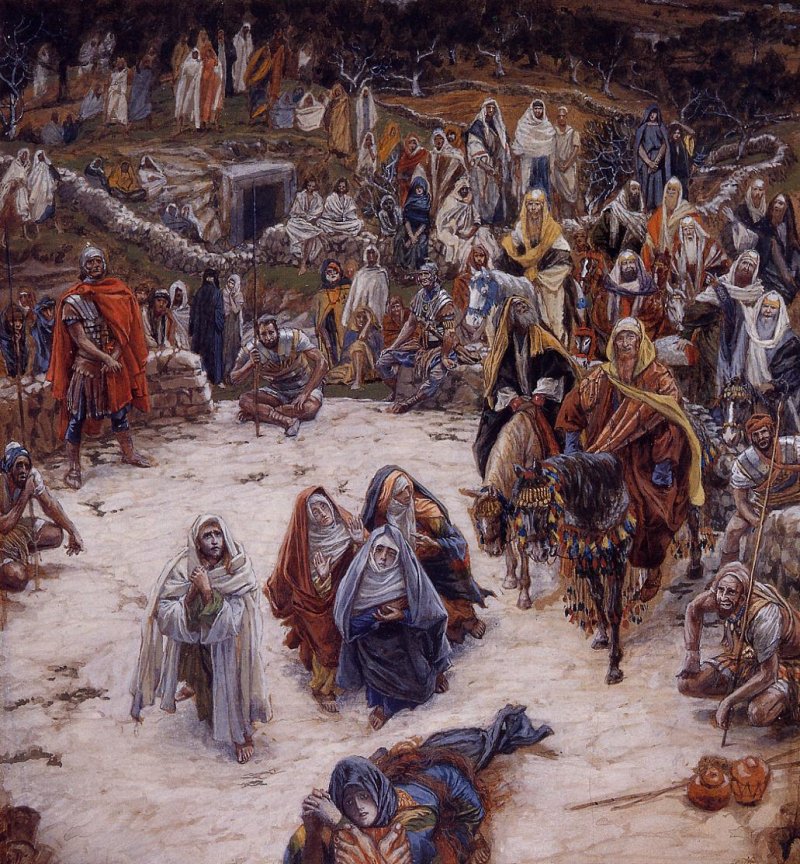 Once, at a picnic in college, I learned from a Muslim professor about what Islam teaches regarding Jesus — that he is not the divine Son of God but a prophet of Allah. Of course, my own Christian beliefs differed but I sat patiently listening — until he told me something about ‘Jesus (peace be upon him)’ which left me manifestly incredulous. He said Jesus was never crucified; Allah only made it appear as if he suffered and died. Reportedly, most Muslims (like this professor) believe that Allah gave someone else Jesus’ physical appearance to die on the Cross instead.
The relevant portion of the Quran [4:157] says:
“That they said (in boast), ‘We killed Christ Jesus the son of Mary, the Messenger of Allah’; but they killed him not, nor crucified him, but so it was made to appear to them, and those who differ therein are full of doubts, with no (certain) knowledge, but only conjecture to follow, for of a surety they killed him not…”
I began asking the professor clarifying questions on this point to make sure that I understood and after a while he asked me why. I replied that if the eyewitnesses to the Crucifixion were not merely mistaken but actively deceived by Allah, then Allah is the author of a lie. God is Truth and “can neither deceive nor be deceived.” (CCC #156-157) So how could Islam’s doppelganger explanation for denying the Crucifixion of Jesus be true? (Similarly, creationists may argue that evolutionists are misinterpreting the ancient fossil record, but they may not say that God has planted false evidence to test our faith.) The now-ruffled Muslim professor retorted that Christianity’s belief in ‘the three gods of the Trinity’ did not make any sense, and we let our interfaith picnic dialogue end there.
But what if Allah can lie? If Allah acts against Truth then his omnipotence would be unlimited in every sense, transcending beyond both logic and goodness. But if Allah transcends good and evil, if God is not absolute goodness in a way that human beings can recognize, then what is our motive to worship him besides submission before his power? C.S. Lewis wrote in opposition to Calvinism’s doctrine of mankind’s “Total Depravity” with words which are just as applicable here:
“[I]f God’s moral judgment differs from ours so that our ‘black’ may be His ‘white,’ we can mean nothing by calling Him good; for to say ‘God is good,’ while asserting that His goodness is wholly other than ours, is really only to say ‘God is we know not what.’ … If He is not (in our sense) ‘good’ we shall obey, if at all, only through fear – and should be equally ready to obey an omnipotent Fiend.”
In Plato’s Euthyphro, Socrates asks the title character, “Is the pious loved by the gods because it is pious, or is it pious because it is loved by the gods?” Or, put another way: “Is morality right simply because God declares it so, or does God acknowledge it as right because it is right independently of Himself?” Christianity answers that Euthyphro’s dilemma is a false choice. Goodness comes from God’s eternal nature; nothing could exist without Him. God’s word calls forth the good from Himself. He creates good things, sustains them, and sees that they are good. This is the good God we know; the true God “who does not lie” (Titus 1:2); the God who is supremely revealed by the death on the Cross of our Lord Jesus Christ for all people.
Pro-Life Women to be Honored on New $10 Bill
April 22, 2016
The U.S. Capitol sculpture of Elizabeth Cady Stanton,
Susan B. Anthony, and Lucretia Mott
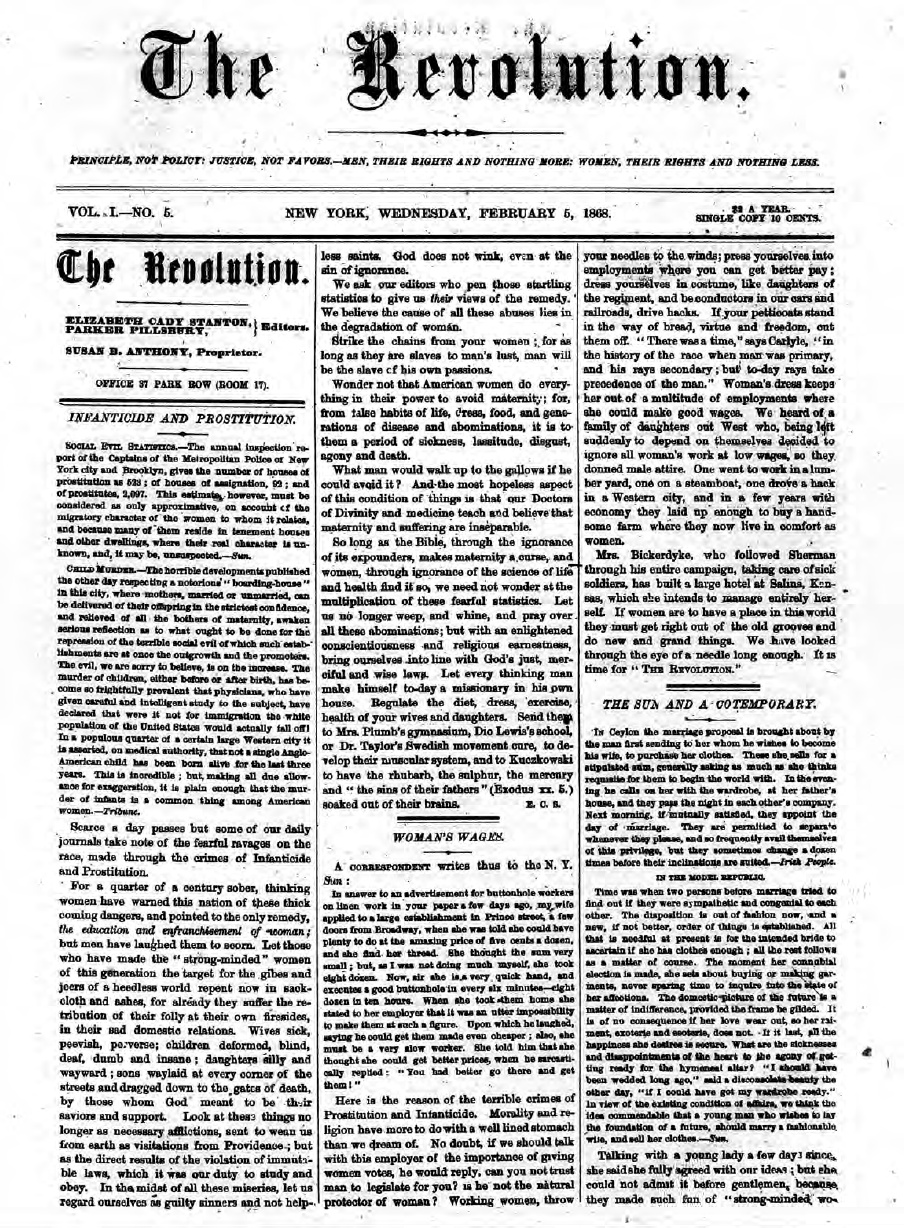
The U.S. Treasury recently announced plans to redesign the $5, $10, and $20 bills. The new ten-dollar bill will retain the portrait of Alexander Hamilton but its reverse side will feature Susan B. Anthony, Elizabeth Cady Stanton, Sojourner Truth, Alice Paul, and Lucretia Mott alongside the Treasury building. These five famous suffragists advocated for women’s right to vote, but lesser known are the pro-life convictions found among them and other feminists of their era.
Susan B. Anthony and Elizabeth Cady Stanton co-founded a weekly women’s rights newspaper called The Revolution. From its beginning the paper had a policy against accepting ads for abortifacients: “Quack medicine vendors, …Foeticides and Infanticides, should be classed together and regarded with shuddering horror by the whole human race.” Their rejection of such revenue was a principled sacrifice for their struggling publication, since “child murder both before and after birth [was] a regular and, terrible to tell, a vastly extensive business.” In an 1868 editorial, Stanton called abortion “Infanticide,” declaring, “We believe the cause of all these abuses lies in the degradation of women.” (As honored suffragist Alice Paul, author of the first Equal Rights Amendment, wrote, “Abortion is the ultimate exploitation of women.”)
An 1869 Revolution piece denouncing abortion is frequently attributed to Susan B. Anthony, though its signature (“A.” rather than “S.B.A.”) may well stand for some “Anonymous” author. However, there is no doubt that in an 1875 speech about “the evil of intemperance” Anthony listed abortion among the society’s worst evils: “The prosecutions on our courts for breach of promise, divorce, adultery, bigamy, seduction, rape; the newspaper reports every day of every year of scandals and outrages, of wife murders and paramour shooting, of abortions and infanticides, are perpetual reminders of men’s incapacity to cope successfully with this monster evil of society.”
These five suffragists devoted many words and efforts to women’s equality at the voting booth and throughout society. By comparison, they said relatively little about abortion. Yet this is not because early feminists accepted the killing of the unborn as normal but because they acknowledged its great evil as a given. In the 1880’s, all U.S. states had laws against abortion and for early feminists opposition to abortion was a commonly held conviction.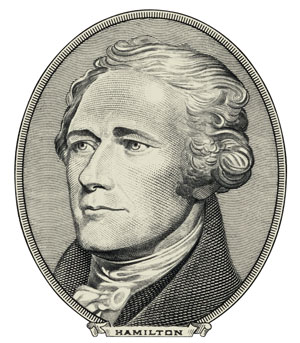
It is especially fitting that the women to be honored on the ten-dollar bill will be sharing the company of Alexander Hamilton. As the sensational, new musical about him dramatically recalls, by Providence, Alexander Hamilton, the out-of-wedlock son of a prostitute, was born impoverished and in squalor yet grew up to be a hero and a scholar. In our day, baby Alexander quite likely would have been aborted but his remarkable life demonstrates how even an unwanted child can bless an entire nation.
In this conviction, as on the new ten-dollar bill,
the pro-life suffragists have Hamilton’s back.
April 24th Parish Bulletin
April 20, 2016The St. Wenceslaus parish bulletin for the 5th Sunday of Easter, April 24th, 2016.
The Centrality of Jesus — Monday, 4th Week of Easter—Year II
April 18, 2016Readings: Acts 11:1-18, John 10:1-10
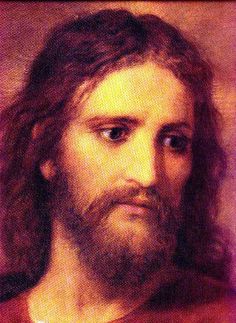 In St. John’s Gospel, Jesus is the Good Shepherd, the Lamb of God, and the Gate for the flock.
Our Easter preface (V) for the Mass calls him “the priest, the altar, and the lamb of sacrifice.”
Jesus declares, “I am the way and the truth and the life. No one comes to the Father except through me.”
One may say Jesus is the road we travel, the vehicle we take, and the destination we long for.
The centrality and importance of Jesus Christ cannot be overstated.
Like Cornelius’ household at Caesarea, the God-fearing and truth-loving people amongst the nations need him, seek him, and perhaps (even if unknowingly) have a nascent love for him. As Jesus says, “I have other sheep that do not belong to this fold. These also I must lead, and they will hear my voice, and there will be one flock, one shepherd.” Jesus says to Pilate, “Everyone who belongs to the truth listens to my voice.”
Let us grow in our knowledge, relationship, and love of the Lord Jesus Christ at this Mass and every day, and labor to help others come to know and love him more deeply as well.
April 17th Parish Bulletin
April 13, 2016The St. Wenceslaus parish bulletin for the 4th Sunday of Easter, April 17th, 2016.
Tips for Raising Faith-Filled Children
April 13, 2016- Tell your children every day that you love them and that God loves them too.
- Listen attentively and respectfully to what your child says.
- Forgive frequently. Ask forgiveness when you have done wrong. Look for the humor in stressful situations and hug often.
- Ask children to consider “what if…” when dealing with challenging situations. Help them find creative, peaceful, and moral responses.
- Tell your child that you pray for them every day and DO it. Thank God for the gifts they are.
- Share your faith beliefs so your child can understand your hopes. Also share your doubts so they understand that doubts do not overwhelm faith.
- Bless your child before bedtime by tracing the Sign of the Cross on their foreheads and saying: “God love you and keep you safe” or some other blessing. Teach your child to respond. “Amen.”
- Encourage your child to value others for who they are – not what they have. Help them to develop Christian virtues and to treat others kindly and with respect.
- Once a week, have a family night when you “unplug” to play board games, do crafts, read stories, or take time to talk together.
- Honor family dinner. The benefits are amazing and establish a sacred time to share the joys and trials of life with each other.
- Pray before meals, before bed, during holidays and family celebrations, and any time when one needs guidance or comfort.
- Have a family Bible and read the Gospel passages before Church.
- Decorate your house for the liturgical seasons with an Advent wreath, purple during Lent, and a prominently placed crucifix.
- Take time to ponder the beauty of creation with your child. Easter is a wonderful time to appreciate the new life of springtime.
- During the fall and spring, help your child sort through their clothes and toys to donate to a shelter. Bring the child with you when you drop off your donations.
- Select a patron saint to watch over your children when they become involved in a sporting activity. Pray to that saint every time they are at a practice or event.
- Participate in the Catholic Relief Services Rice Bowl program: read the prayers during Lent, look up the featured countries, and donate coins in the box provided.
- Introduce your child to older people or those with disabilities in your neighborhood. Find out if they need assistance with chores or shopping.
- When you can’t physically help someone, pray for them.
- Choose sporting events that do not conflict with your Sunday Mass attendance.
- Encourage “secret” good deeds.
- Contribute to a food bank. Ask your child to help you with the collection and delivery.
- Watch TV with your child and explain during commercials or afterward what you found to be good, wholesome, and valuable. If you find a program objectionable explain why when changing the channel.
- Encourage your child to use their God-given talents to serve others.
- Help your child find ways to participate in the of the parish, such as being an altar server, choir member, greeter, or reader.
- Invite your parish priest over for dinner.
- Volunteer in your child’s religious education program or Catholic school.
- Have the sporting equipment your child uses get blessed.
- Read stories from the Bible and biographies of saints to your child. Several great videos can also be found online.
- Ask grandparents, godparents, and extended family to share stories about the family their faith lives.
- On the anniversaries of your children’s Baptism, light their Baptismal candles and tell stories about that special day.
- Display religious items in your home, such as a cross, artwork, or a picture of your child’s patron saint. Talk to your child about them.
- By the way you live, let your child know that life is good, that your values and faith guide your decisions and how you interact with others, and that the happiness you experience is a direct result of your personal relationship with God.
Adapted from the pamphlet “Raising Your Child With Faith” by Cecilia P. Regan.
The Heights of Holiness
April 12, 2016
Servant of God G.K. Chesterton
How tall have the famous Catholic men and women of past and present been? Precise figures can be hard to find, but here is a sampling:
6’ 4” — Servant of God G.K. Chesterton †
6’ 0” — Venerable Pope Pius XII †
5’ 10” — Our Lord Jesus Christ (based upon the Shroud of Turin) †, Pope St. John Paul II †
5’ 9” — Pope Francis †
5’ 8½” — Servant of God Bishop Fulton Sheen † (or 5’ 7” according to his niece †)
5’ 8” — Blessed Pope Paul VI †
5’ 7” — St. Peter the Apostle (based on the bones found beneath St. Peter’s Basilica’s high altar) †, Pope Emeritus Benedict XVI †
5’ 6” — Pope St. John XXIII †
5’ 5” — Servant of God Pope John Paul I †
5’ 4” — St. Therese of Lisieux †
5’ 2½”— St. John Neumann †
5’ 2” — St. Joan of Arc †, St. Junipero Serra †
5’ 1½”— St. Ignatius Loyola †
5’ 0” — Blessed Mother Teresa of Calcutta †