The Significance of Anna’s Age and Lifestyle — Sixth Day in the Christmas Octave

December 31, 2015

Readings: 1st John 2:12-17, Luke 2:36-40

Whenever we read the Bible, it is profitable for us to remember that every detail is there for a reason. The sacred authors and the Holy Spirit chose to omit so many minor facts that “I do not think the whole world would contain the books that would be written” if they had described everything. (John 21:25) Instead, all that we find in Scripture has been purposely included for our benefit. (John 20:30-31) Consider the details mentioned in this encounter from the Presentation, when Joseph and Mary brought the baby Jesus to the temple in Jerusalem for the first time:

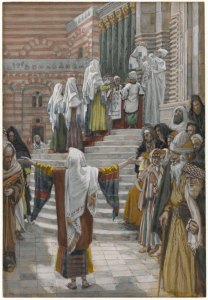
The Presentation of Jesus in the Temple by James Tissot

There was a prophetess, Anna, the daughter of Phanuel, of the tribe of Asher. She was advanced in years, having lived seven years with her husband after her marriage, and then as a widow until she was eighty-four. She never left the temple, but worshiped night and day with fasting and prayer. And coming forward at that very time, she gave thanks to God and spoke about the child to all who were awaiting the redemption of Jerusalem.
This is the only episode in the New Testament where the prophetess Anna appears. Why does St. Luke include Anna’s age and the length of her marriage? Let’s explore this obscure detail. The 84-year-old widow was married for seven years, and thus was unmarried for 77 years of her life. She is 7 x 12: the Jewish number symbolizing completeness and perfection times the number of the tribes of Israel. Anna personifies Old Testament Israel at her best. But of the twelve tribes, which tribe would correspond with Anna’s seven years of marriage?

After the death of Saul, all the tribes of Israel came to David (of the tribe of Judah) seeking to make him their king. They said: “Look! We are your bone and your flesh,” echoing the words of Adam towards Eve at the beginning of their marriage covenant, “This one, at last, is bone of my bones and flesh of my flesh.” (2nd Samuel 5:1, Genesis 2:23) Old Testament Israel had been wedded for a time to David, but now she awaited the kingship of a Son of David from the tribe of Judah. While David had once conquered Jerusalem from the Jebusites, Anna and others in her day were “awaiting the redemption of Jerusalem” by the Messiah/Christ. (1st Chronicles 11:4-5)

Living like a Christian nun veiled in anticipation of her bridegroom’s arrival, Anna “never left the temple, but worshiped night and day with fasting and prayer.” Why would Anna, or any woman, choose to live in this way? St. John’s first epistle offers this admonition:

Do not love the world or the things of the world. If anyone loves the world, the love of the Father is not in him. For all that is in the world, sensual lust, enticement for the eyes, and a pretentious life, is not from the Father but is from the world. Yet the world and its enticement are passing away. But whoever does the will of God remains forever.

Alexandrian World Chronicle (5th century) featuring Anna the ProphetessThough Anna understood the evil corruptions of “the world,” she was also well aware of the goodness of creation. She had known the blessings of marriage and the (at least occasional) pleasures of feasting, but Anna knew that these passing things could not fully satisfy her. Her deepest longings could only be met by the One to come, not only for her but for all Jews and Gentiles. When Jesus Christ came to the temple, Anna rejoiced, gave thanks, and “spoke about the child to all who were awaiting the redemption of Jerusalem.” Because she devoted herself to “the will of God,” Anna’s scriptural legacy and joy before the Lord ‘remain forever.’

Dec 25/27th Parish Bulletin

December 24, 2015

The St. Wenceslaus parish bulletin for December 25th & 27th, 2015.

The Temptations of the First Christmas

December 22, 2015

If I were a demon prowling about the world for the discouragement, confusion, and ruin of souls, how might I have tried to tempt God’s beloved ones in the year leading up to the first Christmas?

If I were a demon, I would say to St. Elizabeth, “Did people imagine that Zechariah had a vision while he was serving in the temple? He simply had a stroke and he will never speak again. You’re feeling sick every day and your abdomen is expanding. You clearly have a cancer. You will soon be dead. There is no hope.

If I were a demon, I would say to St. Mary, “You think you saw an angel? That’s crazy! You’re imagining things. Who are you to be the mother of God’s son? Who do you think you are! Don’t even bother going to visit Elizabeth. You’ll feel foolish when you arrive and see that nothing has changed. None of your family, friends, or neighbors will believe you. Joseph will divorce you and you will be all alone.

And if I were a demon, I would say to St. Joseph, “Do you really believe Mary conceived by God’s Spirit? She’s obviously lying. Even if it’s true, who are you to be a father to the Messiah? Either way, it is best for you to just get a divorce. Whatever you imagined when you married her, now you can see that you were so very wrong.

Mary & Joseph

Even with the coming of Christmas, my diabolical efforts would not cease. I would advise Bethlehem’s shepherds to steer safely-clear of the holy child and to keep to watching their flocks. I would urge the Magi to dismiss the starry signs as meaningless coincidences and not to risk a long journey. I would encourage Joseph to ignore the warning dream to take his family into Egypt and I would encourage Mary not to trust in her loving husband’s lead: “Surely, God would have told you this before telling Joseph.” Thankfully for us, none of them were prevented from doing God’s will through being tripped-up by such traps.

Some people think of temptation strictly as a prompting toward pleasurable, immoral action. But temptation can come in other forms. It can also pull us toward inaction and negative experiences like fear, doubt, sadness, and despair.

Some people assume that the saints do not know temptation like the rest of us. But did Mary, Joseph, and Elizabeth live oblivious to the thoughts and unassailed by the feelings realistically described above? In truth, the saints come to understand temptation well as they discern and persevere through the trials of life.

Some people believe that God loves and watches over a few favored saints while having less concern for the rest of us. But this is also a temptation. Even if our life takes a shocking turn and we don’t know what to do, even if we have a stroke, or cancer, or our mind begins to fail, even if we seem betrayed or abandoned by everyone, each and all of us are his dearly beloved ones. (And we shouldn’t listen to anyone telling us otherwise, even if they speak to us in our own voice.)

Dec 20th Parish Bulletin

December 18, 2015

The St. Wenceslaus parish bulletin for Sunday, December 20th, 2015.

The Two (Old & New) Arks of God

December 17, 2015

Remember Raiders of the Lost Ark? The Ark that Indiana Jones and the Nazis were pursued in that entertaining film was the most precious object in the entire Old Testament. But what is lost on many is how that holy artifact is related to the most important woman in the New Testament and its New Covenant.

The Old Testament Ark of the Covenant was a box built in the days of Moses according to God’s instructions at Mount Sinai. It was made of wood overlaid with pure gold, inside and out. No man was allowed to touch God’s Holy Ark—lest they die—so it was designed to be carried about using a pair of poles. The Ark was the throne for God’s presence on earth. The wings of two, golden Cherubim angel statues atop the Ark’s lid served as his “mercy-seat.” The Ark itself contained within several interesting items from the time of the Exodus: the two stone tablets of the 10 Commandments, the wooden staff of Aaron (which miraculously blossomed to confirm his divinely-ordained priesthood), and a gold container holding some of the Manna from heaven which God provided to feed his people on their desert pilgrimage.

Ark

About 450 years after its construction, around 1000 BC, King David reigned over all of Israel. He tried to bring the Ark up to his royal city, Jerusalem, until one of the priests (who should have known better) touched the Ark and fell down dead. David exclaimed, “How can the Ark of the Lord come to me?” He arranged for it to be kept at the house of Obed-edom in the Judean countryside. The Ark remained there for three months and manifestly blessed the whole household. When it was reported to the king how richly Obed-edom was being graced, King David decided to try transporting the Ark into Jerusalem once more. David himself led that procession, dancing and leaping before the Lord with joyful abandon.

The Ark would eventually reside in the Jerusalem Temple built by David’s son, King Solomon. It is written that before that Temple was destroyed by the Babylonians in 587 BC, Jeremiah the Prophet took the Ark and hid it in a secret cave, saying, “No one must know about this place until God gathers his people together again and shows them mercy.”Unlike in the 1981 film, the Lost Ark has never been found, but a new Ark of God did appear.

The Blessed Virgin Mary is the New Ark of the Covenant because she bears Jesus Christ, God’s fullest presence on earth. By God’s design, the first Ark was made of wood and covered with gold; Mary is a human being full with grace. The former Ark carried the word of God in stone; Mary’s womb carries the Word become flesh. Aaron’s dead staff miraculously flowered; Mary’s virgin womb blossomed with a bud from the stump of Jesse. The Ark held Manna from heaven; Mary bore the true bread from heaven. Mary’s womb holds Jesus Christ, our Prophet, Priest, and King.

The Visitation by Albertinelli, 1503.As the Gospel of Luke tells us, after she was visited by St. Gabriel the Archangel at the Annunciation, “Mary set out and traveled to the hill country in haste to a town of Judah, where she entered the house of Zechariah and greeted Elizabeth. When Elizabeth heard Mary’s greeting, the infant leaped in her womb, and Elizabeth, filled with the holy Spirit, cried out in a loud voice and said, ‘Most blessed are you among women, and blessed is the fruit of your womb. And how does this happen to me, that the mother of my Lord should come to me?’” And Mary would bless them with her help and companionship, staying at their house in the Judean hill country about three months.
Like King David, St. Elizabeth questions and St. John the Baptist leaps for joy before the Ark of the Lord. St. Joseph, regarding the inviolable sanctity of his wife with reverent fear, never touched her virginity. Mary would also go on to literally serve as God’s throne, his mercy-seat; “On entering the house [the Magi] saw the child with Mary his mother.”

In the Book of Revelation, St. John’s vision of heaven includes a sighting of the Lost Ark: “Then God’s temple in heaven was opened, and the Ark of his Covenant could be seen in the temple.” Then John beholds “in the sky, a woman clothed with the sun, with the moon under her feet, and on her head a crown of twelve stars.” We soon discover that this  glorious woman is pregnant with “a son, a male child, destined to rule all the nations….” This is the Christ, and she is his Holy Ark.

Now the Lord’s Ark is not meant to be worshiped. (Though among God’s most holy creations, an Ark of God is not divine.) Yet, as one draws nearer to the Holy Ark, one inevitably draws nearer to God’s presence. Just as the old Ark of the Covenant was of central (though secondary) importance in the Old Covenant, so God gives the Blessed Virgin Mary an essential role in his New Covenant. All who come to her are drawn nearer to her Son.

Imagine daring to enter the old Jewish Temple’s the Holy of Holies where the Ark of God was kept. What awe and reverence would you feel before the all-holy presence of God? Now consider drawing near to the even greater Ark, Mary the Mother of all Christians, who reaches out to each of us with love and takes away our fear. And now reflect upon the great privilege we have in approaching and even touching the Christmas Gift of God she bore, Jesus Christ himself. Mary is blessed among women and blessed is the fruit of her womb, Jesus. But blessed are we who would believe in all that the Lord has revealed to us.

The Value of Humility: Living in the Truth Before God

December 14, 2015

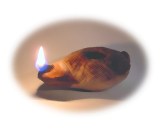
“Some [spiritual beginners] make little of their faults, and at other times become over-sad when they see themselves fall into them, thinking themselves to have been saints already; and thus they become angry and impatient with themselves, which is another imperfection. Often they beseech God, with great yearnings, that He will take from them their imperfections and faults, but they do this that they may find themselves at peace, and may not be troubled by them, rather than for God’s sake; not realizing that, if He should take their imperfections from them, they would probably become prouder An Ancient-Style Oil Lampand more presumptuous still. They dislike praising others and love to be praised themselves; sometimes they seek out such praise. Herein they are like the foolish virgins, who, when their lamps could not be lit, sought oil from others.”

—St. John of the Cross in The Dark Night of the Soul

How to Go to Confession in 9 Easy Steps!

December 12, 2015

1. Prepare for Confession by Examining Your Conscience

Consider the question, “Since my last confession, what did I chose to do even though I knew that it was wrong?” To help you know your sins, ask the Holy Spirit to give you insight. Then, perhaps review your personal relationships (God, family, etc.), the Ten Commandments, or the Seven Deadly Sins. You may want to write a list for yourself to bring into the confessional, if that would make you feel more comfortable.

2. Begin Confession with a Sign of the Cross, saying, “Bless me, Father, for I have sinned

Don’t worry. If you forget what to do, the priest will walk you through it.

3. Give the Priest Some Idea of how Long Ago Your Last Confession Was

Exact precision is not important here; it simply gives the priest some context.

The Confession by Giuseppe Molteni, 18384. Tell the Priest Your Sins

Confess what sins you committed and how many times (or with what frequency) you committed them. The most important thing is that you not intentionally withhold any serious sins. Avoid doing this and you’ll make a good confession. Let the priest know when you are finished.

5. Listen to the Priest’s Advice

Father will probably have some encouragement and advice to help you sin no more.

6. Make Note of Your Penance

The priest will give you a task (usually prayers) to perform to help repair the harms and brokenness that your sins have caused in yourself and the world. Though you can do your penance anytime after confession, sooner is probably better, so that you don’t forget.

7. Pray Your Act of Contrition

In essence, an Act of Contrition simply says, “Lord, I’m sorry for my sins. Please help me to sin no more.” You can pray this in your own words, or use a traditional Act of Contrition prayer like this one:

“O my God, I am heartily sorry for having offended you. I detest all my sins because of your just punishment, but most of all because they offend you, my God, who are all-good and deserving of all my love. I firmly resolve, with the help of Your grace, to sin no more and to avoid the near occasion of sin.”

8. Stay for Absolution

Listen to the priest’s Absolution prayer, which forgives your sins by the power of God through Jesus Christ.

9. Leave in Joy, with Your Sins Forgiven

How wonderful is that?!

Dec 13th Parish Bulletin

December 10, 2015

The St. Wenceslaus parish bulletin for Sunday, December 13th, 2015.

The Real St. Nicholas

December 6, 2015

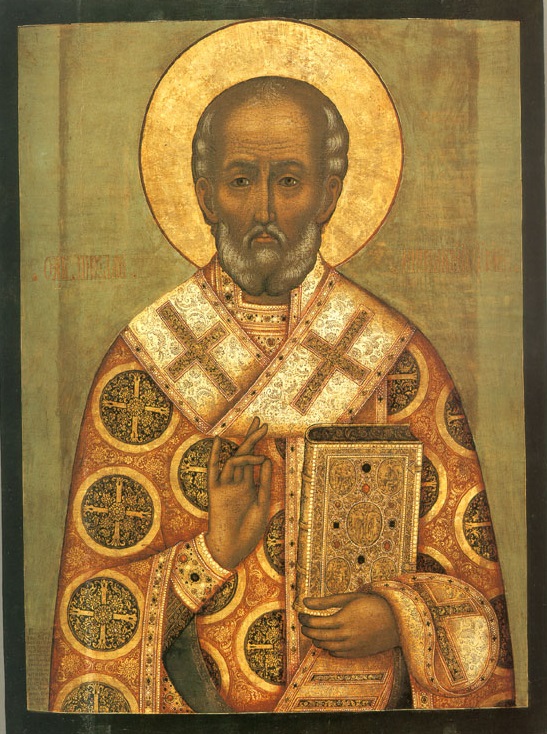
St. Nicholas by Fyodor ZubovSt. Nicholas (270-343 A.D.) was the bishop of Myra, a city on the southwestern corner of Turkey along the Mediterranean coast. He attended the Council of Nicaea in 325 A.D., opposed the Arian heresy, and signed the Nicene Creed (an early version of the creed that we profess at every Sunday Mass.) However, St. Nicholas is most well-remembered for his generous, secret alms-giving.

In one window in the back of St. Wenceslaus Church, St. Nicholas is depicted holding three sacks. This recalls how he once helped a family in serious need. There was a poor man who could not afford dowries for his three daughters to get married. (In those days, being without husbands would doom the women to lives of destitution, or worse.) Under the cover of night, St. Nicholas tossed three bags of gold coins through their window. (Alternate-tellings of the story have St. Nicholas dropping them down their chimney or leaving them in the daughters’ drying stockings.) We can imagine the family awaking the next morning, finding the gifts he had left, and celebrating the arrival of their salvation.

St. Nicholas’ feast day is celebrated December 6th

Related Link: How St. Nicholas of Myra became associated with Santa Claus

Consoling Words

December 4, 2015

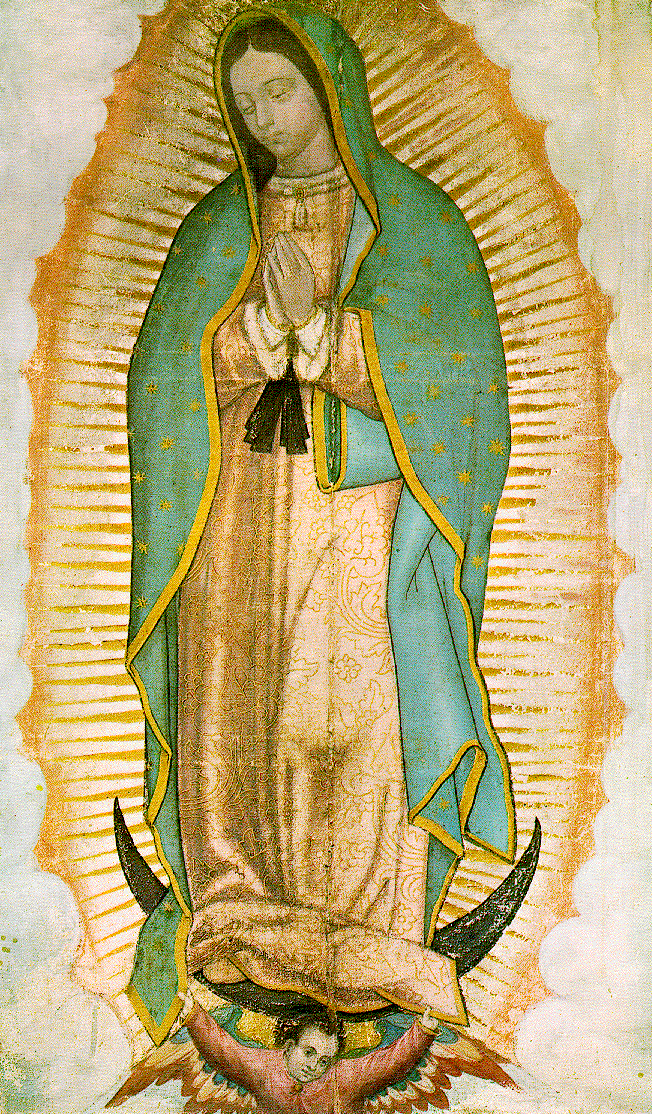
Our Lady of Guadalupe Tilma“Listen, put it into your heart, my youngest and dearest son, that the thing that disturbs you, the thing that afflicts you, is nothing. Do not let your countenance, your heart be disturbed. Do not fear this sickness of your uncle or any other sickness, nor anything that is sharp or hurtful. Am I not here, I, who am your Mother? Are you not under my shadow and protection? Am I not the source of your joy? Are you not in the hollow of my mantle, in the crossing of my arms? Do you need anything more? Let nothing else worry you, disturb you. Do not let your uncle’s illness worry you, because he will not die now. You may be certain that he is already well.”

Words of Mary, Our Lady of Guadalupe, to St. Juan Diego in 1531

Advent Questions & Answers

December 4, 2015

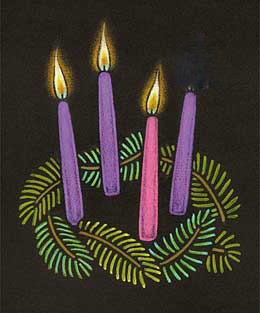
Gaudete Sunday Advent CandlesWhat is an “advent?”

An “advent” is the coming of something extremely important. The word “advent” is from the Latin word for “arrival.”

What is the Advent season for?

We are preparing for Jesus Christ’s coming at Christmas and at this world’s end.

How many years ago was Jesus born?

The first Christmas was about 2,015 years ago. It is fitting that his birth is the basis for our calendar because Jesus Christ is the center of human history.

When will Jesus come again in glory?

We do not know precisely, so we are to be always ready and prepared for Him.

Why are Isaiah and John the Baptist so prominent in Advent’s Sunday readings?

These two prophets preached about the Jewish Messiah’s coming and about the Kingdom of God He would establish.

What does purple symbolize for Advent?

Purple was associated with royalty in the ancient world. It is a color for Advent since Jesus is coming to us as the King of Kings.

Why does Advent have a wreath with four candles?

The circle of evergreen branches symbolizes the eternal, everlasting life which Jesus comes to bring to all four-corners of the earth. The candles are lit to mark the four Sundays of Advent preceding Christmas.

Why is one of the candles different?

One candle is rose-colored to mark the 3rd  Sunday of Advent, which we call “Gaudete Sunday.”

What’s special about Gaudete Sunday?

Reaching this Sunday means that we have passed the halfway-point on our Advent journey to Christmas. “Gaudete” means “rejoice” in Latin.

Dec 6th Parish Bulletin

December 3, 2015

The St. Wenceslaus parish bulletin for Sunday, December 6th, 2015.

10 Ideas for Advent

November 29, 2015
  • Read & pray with the Book of Lamentations.
  • Meditate on the Gospel passages preceding the Nativity.
  • Learn about St. Nicholas and celebrate his day, December 6th.
  • Keep Jesus from your manger scene until Christmas comes.
  • Box Baby Jesus under the tree as the first gift you will open.
  • Have Joseph & Mary journey across your home to the manger.
  • Abstain from Christmas songs until Advent season ends.
  • Wait to light your tree and house until the light of Christ arrives.
  • Meditate upon what your life would be like without Jesus Christ.
  • Go to confession so that Christ may reign in your heart.

Nov 29th Parish Bulletin

November 25, 2015

The St. Wenceslaus parish bulletin for Sunday, November 29th, 2015.

“For God And Country”

November 21, 2015

A 32-year-old Ronald Reagan plays a (fictional) Catholic priest army chaplain in this 1943 short film. “Chaplain Michael O’Keefe” is depicted celebrating Mass, working alongside his Protestant and Jewish chaplain friends, visiting a prisoner, and being mourned among the fallen in New Guinea.

The film was made to give army personnel “a better understanding of the chaplain’s place, work, and accomplishments in the army.” It was produced by the U.S. Signal Corps and filmed at MGM Studios. [source]

Contemporary politics make a brief appearance in the dialogue: Vermont is referenced as being a Republican state and Georgia as a Democratic one. (Today, those political alignments are reversed, though Ronald Reagan did win Vermont while losing Georgia in 1980.)