Thus begins my new blog presenting the day-to-day happenings in the papacy of His Holiness, Pope John Paul I.
Pope Paul VI Has Died
August 6, 2014The First Principle and Foundation
July 31, 2014Man is created to praise, reverence, and serve God our Lord, and by this means to save his soul.
And the other things on the face of the earth are created for man and that they may help him in prosecuting the end for which he is created.
From this it follows that man is to use them as much as they help him on to his end, and ought to rid himself of them so far as they hinder him as to it.
For this it is necessary to make ourselves indifferent to all created things in all that is allowed to the choice of our free will and is not prohibited to it; so that, on our part, we want not health rather than sickness, riches rather than poverty, honor rather than dishonor, long rather than short life, and so in all the rest; desiring and choosing only what is most conducive for us to the end for which we are created.
-St. Ignatius of Loyola, Spiritual Exercises #23
Travelers & Merchants — 17th Sunday in Ordinary Time—Year A
July 30, 2014Readings: 1st Kings 3:5, 7-12; Romans 8:28-30; Matthew 13:44-46
The kingdom of heaven is like a treasure buried in a field, which a person finds and hides again, and out of joy goes and sells all that he has and buys that field. Again, the kingdom of heaven is like a merchant searching for fine pearls. When he finds a pearl of great price, he goes and sells all that he has and buys it.
What do these two analogies or parables of Jesus about the Kingdom of Heaven (or Kingdom of God) have in common? Both tell about men who find something precious and sell everything they have to possess it. These short stories are quite similar, but how do they differ? (There must be some significance to these differences otherwise Jesus would not have given us both images.)
Jesus does not give us many details, but in my imagining the first story goes like this: A traveler is walking a dusty road that he has walked many times before, but this time, as he is looking to one side at nothing in particular, a golden glint catches his eye from the adjacent field. Out of curiosity, he investigates and discovers a wooden crate full of gold coins which has been uncovered by recent plowing. Putting the coins back inside and fixing the lid, he reburies the treasure and joyfully goes to sell all that he has in order to buy that field. “Why doesn’t he simply carry the crate away?” Because that would be stealing and true happiness cannot be obtained through wickedness. One does not come to possess the treasure of the Kingdom of God through evil means.
 In the second story, a pearl merchant comes upon a high-priced specimen in a marketplace. Its price is, let’s say, one hundred thousand dollars. Many people have admired it before, but the merchant has an expert and discerning eye. He sees that this pearl is worth ten times more and he shrewdly sells everything he owns to possess it. To onlookers, he looks crazy (“Selling everything for just one pearl?”) but he knows what he is about. Those who forsake all else to possess the Kingdom of Heaven may likewise be thought foolish by some, but the wise one recognizes the pearl’s true value.
Both the traveler and the merchant find precious treasure, but one difference between them is that the merchant knew what he was looking for and actively sought it, while the country traveler did not. Some people seek out the true, the good, the beautiful, the eternal things. They seek God himself, and those who seek, find. Others do not seek the higher things of God, yet our humble Lord has been known to blindside them with the truth of his reality and love. So what do these parables mean for us here, who have already come to know Jesus Christ and his Church?
An important aspect to finding and possessing your treasure in the Kingdom of God is knowing and embracing your vocation. The word “vocation” comes from the Latin word “vocare,” which means “to call.” Your vocation is your life’s calling from God. Your vocation is the means by which God intends for you to become holy and a blessing to all.
Some people find their vocation like the traveler on the road—stumbling upon it without having sought it. I think this is true for many marriages. A man and woman can be drawn to each other, fall in love and delight in each other, and decide to spend their lives together without discerning God’s purpose for their lives. Yet, since “we know that all things work for good for those who love God,” (as St. Paul says in our second reading) the Lord still guides them according to his purposes. If you are in the sacrament of marriage your vocation is clear: your mission in life is to become the best spouse and parent you can be and to help lead them to heaven. You need not travel to a mountaintop monastery in a distant land to find your vocation and become a saint. Your vocation, your means to holiness, is as ordinary and close as a field or marketplace, yet your treasure is found there. Your vocation is sitting beside you.
Other vocations are usually discovered only with discernment, by searching like the merchant. One does not become a priest, a religious, or a dedicated single person without a firm decision to offer one’s life entirely to God. These people also find sanctity and bless others in the greatest way through their God-given callings. If you have not yet discovered your vocation, remain close to God in prayer and faithfulness, and he will reveal his will to you.
In our first reading, the Lord appears to Solomon in a dream and says, “Ask something of me and I will give it to you.” Solomon, the new, young king, feels overwhelmed by his office. “I am a mere youth, not knowing at all how to act. I serve you in the midst of the people whom you have chosen, a people so vast that it cannot be numbered or counted. Give your servant, therefore, an understanding heart to judge your people and to distinguish right from wrong.” Solomon’s request for wisdom to benefit the kingdom pleased the Lord, so God granted him great wisdom and all the gifts he had not asked for as well. As Jesus says, “Seek first the Kingdom of God and his righteousness, and all these things will be given you besides.” Pray to God for the wisdom to know your vocation and to embrace it (like the traveler and the merchant) with the investment of everything you are. In this way, you will come to possess the Kingdom’s precious treasure.
Theological Gifts & Obligations — Tuesday, 15th Week of Ordinary Time
July 15, 2014Gospel: Matthew 11:20-24
Jesus began to reproach the towns where most of his mighty deeds had been done, since they had not repented. “Woe to you, Chorazin! Woe to you, Bethsaida! … For if the mighty deeds done in your midst had been done in Sodom, it would have remained until this day. But I tell you, it will be more tolerable for the land of Sodom on the day of judgment than for you.”
In the visitation of Jesus Christ, Chorazin and Bethsaida had advantages that no people before them had ever enjoyed. The Word of God was before them, but they did not accept him. Incarnate love was among them, but they did not embrace him. The hope of the world was in their midst, but they did not change their ways.
Consider how much more understanding we have of Christ and his teachings than they, how much we have experienced the love of Christ and his people, how many prophesies of Christ we have seen fulfilled. How much more cause do we have to respond to him with faith, hope, and love; how much more of an obligation. As St. Bonaventure said:
“Three things are necessary to everyone regardless of status, sex, or age, i.e., truth of faith which brings understanding; love of Christ which brings compassion; endurance of hope which brings perseverance. No adult is in the state of salvation unless he has faithful understanding in his mind, loving compassion in his heart, and enduring perseverance in his actions.”
As Seen in St. Kateri — Monday, 15th Week of Ordinary Time—Year II
July 14, 2014Readings: Isaiah 1:10-17, Matthew 10:34-11:1
Today’s readings reflect three truths of Christian discipleship:
The first reading from Isaiah shows us that we must do good if we are going to worship of God:
Though you pray the more, I will not listen. Your hands are full of blood! Wash yourselves clean! Put away your misdeeds from before my eyes; cease doing evil; learn to do good.
The first half of the Gospel shows us that we will sometimes need to leave good things behind in order to follow Christ:
Whoever loves father or mother more than me is not worthy of me… and whoever does not take up his cross and follow after me is not worthy of me.
The second half of the Gospel encourages us that no good thing that we do or sacrifice will go unrewarded by the Lord:
And whoever gives only a cup of cold water to one of these little ones to drink because he is a disciple–amen, I say to you, he will surely not lose his reward.
These three truths of Christian discipleship are reflected in the life of St. Kateri Tekakwitha. She practiced penances to root out her sins and train herself in goodness. After her Catholic baptism, she was rejected by her own kin. And when she died, it is reported that the small pox scars she bore from childhood faded away, pointing to her spiritual beauty and her heavenly rewards hereafter.
Well-Equipped Missionaries — Thursday, 14th Week of Ordinary Time
July 11, 2014Gospel: Matthew 10:7-15
Jesus said to his Apostles: “As you go, make this proclamation: ‘The Kingdom of heaven is at hand.’ … Do not take gold or silver or copper for your belts; no sack for the journey, or a second tunic, or sandals, or walking stick.”
Why were the Apostles sent without second tunics? Because they were not supposed to sleep outside, but to dwell with the people they met. Why no sandals or walking sticks? Because there was no need to travel far to find people who needed their message. Why no bags or money for their belts? Because they were to trust in God to provide.
Perhaps we imagine a missionary as a priest who works in a far away jungle evangelizing people of a different language and culture than our own. However, we are all called to be missionaries; to proclaim that the Kingdom of heaven is at hand by our words and deeds. There is no need to travel to distant lands. Your mission field is the people in your midst. Do not be afraid, but trust in God to show you these opportunities and to help you to take them.
Peter & Judas — Wednesday, 14th Week of Ordinary Time—Year II
July 11, 2014 Readings: Hosea 10, Matthew 10:1-7
The names of the Twelve Apostles are these: first, Simon called Peter, … and Judas Iscariot who betrayed Jesus.
What was the difference between Peter and Judas? Both were full-fledged apostles (although the Gospels always list the twelve apostles with Peter first and Judas last, much like how the Lord’s Prayer begins with “our Father” and ends with “the Evil One/evil.”) Was the difference that Peter believed Jesus was a good man and Judas did not? No, for Judas said after betraying Jesus, “I have sinned in betraying innocent blood.” Was the difference that Judas was a sinner and Peter was not? No, for at one of their first encounters, Peter “fell at the knees of Jesus and said, ‘Depart from me, Lord, for I am a sinful man.'” In the Passion, Judas betrayed Jesus and while Peter denied him three times beside the charcoal fire in the high priest’s courtyard. The vital difference between Peter and Judas was in their ultimate responses to their sins.
Judas fled and fell into utter despair. Like those in our first reading who “cry out to the mountains, ‘Cover us!’ and to the hills, ‘Fall upon us,’ Judas welcomed dark oblivion. After the resurrection, when Peter was fishing in his boat, Jesus appeared on the shore. Though Peter was lightly clad, he did not run and hide like Adam and Eve in shame, but swam to Jesus enthusiastically. At that second charcoal fire, Peter professed three times that he loved Jesus.
Let us follow Peter’s example rather than that of Judas and encounter Jesus in the confessional. For those who love Christ, hope in Christ, seek Christ, and run to Christ, will find his mercy.
Glossary for the Mass
July 8, 2014“Alleluia”
Alleluia = Hebrew for “Praise (all of you) Yahweh!”
“Begotten, not made, consubstantial with the Father” (Nicene Creed)
Beget = To procreate or generate offspring, typically said of a male parent.
Consubstantial = Of one and the same substance, essence, or nature.
“Holy, holy, holy Lord God of Hosts”
Host = An army, or a multitude or great number of persons or things.
“Hosanna in the highest”
Hosanna = Hebrew for “Please (God) Save!”
“Be pleased to look upon these offerings with a serene and kindly countenance…” (Eucharistic Prayer #1)
Countenance = A person’s facial expression; or support or approval.
“Therefore, Lord, we pray: graciously accept this oblation of our service, that of your whole family…” (Eucharistic Prayer #1)
Oblation = An act of making a religious offering, or the thing being offered.
Resting at the Well — Monday, 14th Week of Ordinary Time—Year II
July 7, 2014Readings: Hosea 2:16-22, Matthew 9:18-26
In today’s first reading from the Book of Hosea, God uses one of his favorite images: Himself as the spouse of his people.
Thus says the LORD:
I will allure her; I will lead her into the desert and speak to her heart.
She shall respond there as in the days of her youth, when she came up from the land of Egypt.
On that day, says the LORD, she shall call me “My husband…”
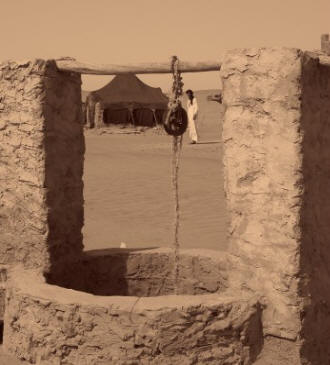 God takes Israel back into the desert so that she will remember the first love they shared.
If we are going to live in the desert, we must have water to survive. Prayer is our water in the desert of this life. When you go to pray, you may feel as if you need to dig a new well every time, but the truth is that you can return to previous wells for water. As long as these provide, why busy yourself with digging? Simply rest beside them. When the Lord wants you to move along to another mode of prayer, he will let these wells dry up for a while.
How do you think the healed hemorrhaging woman or the resurrected little girl felt when they would remember their encounters with Jesus? These memories were refreshing wells for them, strengthening their faith and consoling their hearts. Likewise, by praying with our memories of when the Lord has manifested his closeness and power to us, we can nurture our intimacy with Jesus.
Heeding Our Earthly Mother & Heavenly Father — 14th Sunday in Ordinary Time—Year A
July 5, 2014Readings: Zechariah 9:9-10; Romans 8:9,11-13; Matthew 11:25-30

Imagine an wall built across a road which has stood for as long as anyone can remember. The Catholic writer G.K. Chesterton suggested that when confronted by such a peculiar sight:
The more modern type of reformer goes gaily up to it and says, “I don’t see the use of this; let us clear it away.” To which the more intelligent type of reformer will do well to answer: “If you don’t see the use of it, I certainly won’t let you clear it away. Go away and think. Then, when you can come back and tell me that you do see the use of it, I may allow you to destroy it.”
It is said that human history has been constantly repeating two phases, summed up in two concise phrases:
First, “What could it hurt?”
And second, “How were we supposed to know?”
All of us are children of the same holy Mother, the Church. And she is united with God, our loving Father. Moms and dads sometimes tell us, “Don’t touch that–it will hurt. I know it glows enticingly, but it will burn you. We’re not saying this in order to control you or to make you miserable, but because we love you. We want you to be safe and happy.”
 We then have three options in how we respond: Either we can touch the forbidden thing for ourselves and experience the pain firsthand. Or we can observe others who have touched the thing and learn from them (though they sometimes hide their pain and tears, even from themselves.) Or, and this is the best response, we can trust in the words of our Mother and Father and never get burned.
Sometimes the wise and the learned of this world refuse to see the truth, but to the little ones, to the childlike, the truth is revealed and they welcome it. In our first reading from Zechariah we find a prophesy about the Messiah. The Savior is not coming on a warhorse, but on a donkey—not as a conqueror imposing his will upon the earth by force, but meekly, inviting us to trust in him and freely embrace his will.
“Come to me, all you who labor and are burdened, and I will give you rest. Take my yoke upon you and learn from me, for I am meek and humble of heart; and you will find rest for yourselves. For my yoke is easy, and my burden light.”
This week’s Supreme Court’s verdict in the Hobby Lobby case comes as good news for religious liberty. However, we must keep praying. Though the five-to-four decision is a positive sign, religiously affiliated non-profit groups are not safely out of the legal woods yet. Many people of goodwill support Catholic institutions in their conscientious refusal to facilitate things they consider gravely immoral, but I wonder how many observers understand why Catholics have any objection to contraception and sterilization to begin with?
People fail to realize that contraception is not something new. For thousands of years, people have used various barriers, chemicals, and techniques to prevent the marital embrace from being fruitful. And most have never heard that before 1930 all Protestant denominations agreed with the Catholic Church’s teaching in condemning contraception as sinful. Most people have not realized what could be wrong with putting asunder what God has joined in the marital act; separating love-making from an openness to life. And though few recognize the harmful impact that contraception has on families and society, its consequences were not entirely unforeseen.

In 1968, in the midst of a sexual revolution made possible by the birth control pill, some believed the Catholic Church would “update” its consistent teaching on contraception. (“What could it hurt?”) Instead, Pope Paul VI shocked the world with orthodoxy. His encyclical, Humanae Vitae or “Of Human Life,” was one of the most controversial documents of the twentieth century, yet the pope’s four predictions of what would happen if contraceptives gained widespread use have proven true:
- A general lowering of moral standards throughout society.
- A rise in infidelity.
- A lessening of respect for women by men.
- The coercive use of reproductive technologies by governments.
What is more, a contraceptive mentality has so pervaded our culture that healthy fertility is treated like a disease and conceived children are treated like a cancer. Because of procured abortion, in any room of people under 40 years old, there is on average one person missing for every three people you see. This is the fruit of a contraceptive mentality. (“How were we supposed to know?”)
Whether the Catholic Church teaches on indecent images, fornication, cohabitation, same-sex relations, divorce and remarriage without annulment, in-vitro fertilization, abortion, drug use and drunkenness, euthanasia or suicide; for every “no” in her teachings the Church proclaims a greater, more foundational “Yes” to love and life and true happiness. As St. Paul tells us:
“Brothers and sisters, we are not debtors to the flesh, to live according to the flesh. For if you live according to the flesh, you will die, but if by the Spirit you put to death the deeds of the body, you will live.”
Will we be childlike enough to listen to our Father in heaven and our Mother on earth? Learn from Christ and take his yoke upon you, for according to his promise you will receive rest. His ways require sacrifice, yet compared to the yoke of sin and death which comes with the ways of the world, Jesus’ yoke is easy and his burden is light.
Caring for the Sick & Yourself
July 2, 2014
St. Therese of Lisieux on her sickbed
What do Casey Kasem, Terri Schiavo, and an increasing number of recently deceased elderly or disabled people have in common? They have all been killed by being deprived of hydration and nutrition, rather than dying naturally because of some underlying illness. Sometimes such “treatment” is chosen by the families and encouraged by the doctors, but starving the hungry, parching the thirsty, and killing the innocent is not the will of Jesus.
Christ’s bride, the Church, teaches that the sick and those who care for them may forgo extraordinary treatments in support of health or life, but she insists that providing food and drink belong to basic care. Therefore, except in cases where someone’s condition is both imminently terminal and irreversible, we are morally obliged to provide the sick or disabled with nutrition and hydration, even if artificially.
It is prudent to fill-out a “Living Will” or an “Advance Medical Directive” to declare your treatment wishes and whom you want to make your healthcare decisions if you become incapacitated. However, sometimes such documents suggest check-boxes for immoral or unwise medical options. I recommend (and have prepared for myself) Pro-Life Wisconsin’s Advance Directive to ensure that your medical treatment will accord with Catholic teaching.
The Untamed Christ — Wednesday, 13th Week of Ordinary Time
July 2, 2014Gospel: Matthew 8:28-34
When Jesus came to the territory of the Gadarenes, two demoniacs who were coming from the tombs met him. They were so savage that no one could travel by that road. They cried out, “What have you to do with us, Son of God? Have you come here to torment us before the appointed time?” Some distance away a herd of many swine was feeding. The demons pleaded with him, “If you drive us out, send us into the herd of swine.” And he said to them, “Go then!” They came out and entered the swine, and the whole herd rushed down the steep bank into the sea where they drowned.
Though pigs were ritually-unclean to the Jews, these Gentiles raised them to eat and trade in order to secure a comfortable life. Once Jesus casts the demons into the swine the herd runs into the sea and drowns. (Perhaps the demons drove them, predicting the discord that would result, or perhaps the animals simply could not bear the demons’ terrible presence.)
The swineherds ran away, and when they came to the town they reported everything, including what had happened to the demoniacs. Thereupon the whole town came out to meet Jesus, and when they saw him they begged him to leave their district.
Rather than rejoicing at the restoration of their brothers, the townspeople grieve over the loss of their herds. They would wish for the demons to return to the men if that meant their pigs would be restored to their pastures. These people do not want to see any more mighty deeds from this clearly holy man, but instead beg Jesus to leave. Like the demons, they perceive Jesus as a threat to their lifestyle. The townspeople desired comfort more than righteousness. They loved bacon more than their brothers. They preferred being left alone to having Jesus.
Domesticating the person of Jesus Christ and his revolutionary gospel, so that he neither challenges nor demands anything from us, is a danger in the Christian life. The real, undomesticated Christ calls us to constant growth and sacrifice for the love of God and neighbor. As C.S. Lewis puts it, Aslan is not a tame lion, but he is good.
How God The Father Loves His Son
June 16, 2014How does the Eternal Father love Jesus Christ his Son?
The Scriptures provide us insights into their relationship.
The Father gives his Son instruction and example
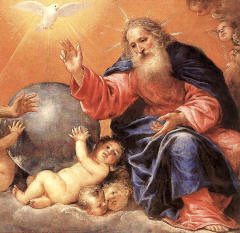 As Jesus once said, “Amen, amen, I say to you, a son cannot do anything on his own, but only what he sees his father doing; for what he does, his son will also do,” adding, “I cannot do anything on my own.” The Father loves his Son and shows him everything that he does. Sometimes believers find it harder to relate to God the Father than Christ the Son. But what is the Father really like? He is just like his Son. Jesus “is the image of the invisible God.” As Jesus said, “Whoever has seen me has seen the Father.” The Father offers his Son the perfect example, and his Son perfectly follows him.
The Father listens to his Son
Outside the tomb of Lazarus, Jesus said, “Father, I thank you for hearing me. I know that you always hear me…” Jesus shares his own attitude toward prayer when he tells us, “In praying, do not babble like the pagans, who think that they will be heard because of their many words. Do not be like them. Your Father knows what you need before you ask him. This is how you are to pray: Our Father…” Jesus knows that wordy, poetic prayers are not necessary because his Father is always listening.
The Father encourages his Son
At Jesus’ baptism in the Jordan River, the Father declared from heaven, “You are my beloved Son, in whom I am well pleased.” And on the summit of Mt. Tabor, at Jesus’ Transfiguration, the Father spoke from the cloud, “This is my beloved Son, listen to him.” The Father encourages his Son with reminders of his love.
The Father provides for his Son
Jesus said, “Everything that the Father has is mine.” Jesus’ Father is like the father in the parable of the Prodigal Son who told his first-born, “My son, you are here with me always; everything I have is yours.” Confident in his Father’s providence, Jesus tells us to be likewise unafraid concerning our basic needs, what we are to eat and drink, or what we are to wear: “Seek first the kingdom of God and his righteousness, and all these things will be given you besides.” The Father also provides his Son with gifts greater than material things. At the Last Supper, Jesus said of disciples, “Father, they are your gift to me.”
The Father welcomes closeness with his Son
It was a big deal when Jesus prayed, “Abba, Father.” As St. John Paul the Great observed, “An Israelite would not have used [“Abba” to address God] even in prayer. Only one who regarded himself as Son of God in the proper sense of the word could have spoken thus of him and to him as Father–Abba, or my Father, Daddy, Papa!” Because the Father welcomes intimate closeness with his Son, Jesus can say, “I and the Father are one.”
The Father loves his Son’s mother
At the Visitation, filled with the Holy Spirit, Elizabeth declared to Mary, “Most blessed are you among women,” and Mary rejoiced, “From this day all generations will call me blessed. The Almighty has done great things for me, and holy is his name.” By pouring his love and blessings into Mary, God the Father gave his Son a loving mother full of grace.
The Father fosters growth in his Son and sends him on mission
The Letter to the Hebrews says, “Son though he was, [Jesus] learned obedience from what he suffered; and when he was made perfect, he became the source of eternal salvation for all who obey him, declared by God high priest according to the order of Melchizedek.” But this raises a question: how can the divine Son grow in any way? Though perfect in heaven, the Son of God had no firsthand experience of weakness, suffering, or the trials of obedience, until his Incarnation. Through these things he was made complete so that he could be the savior of humanity. The Father prepares his Son and sends him on a mission to transform the world. “God did not send his Son into the world to condemn the world, but that the world might be saved through him.”
The Father as our model for Fatherhood
Whether we are biological or spiritual fathers, Jesus’ heavenly Father gives men a model for our fatherhood. We are to give our children instruction and good example. We should listen to them and encourage them, letting them know that they are well-beloved. We should provide for our children, according to our abilities, supplying their basic needs without neglecting the greater gifts. We are to welcome closeness with our children. We are to love our children by loving their mother, whether she be our spouse or the Church. We are to foster maturity and virtue in them so that they may go forth in mission to transform the world. Which aspect of your fatherhood are you resolved to grow in with God the Father?
 Our Perfect Father
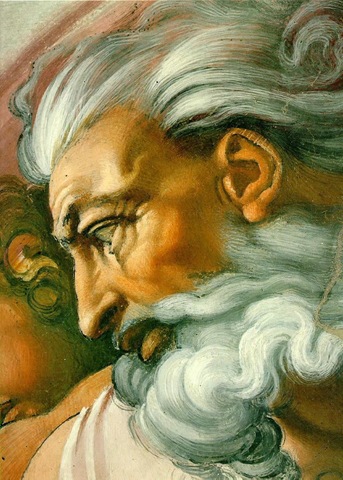
Some of us have had very good fathers, while some of our fathers were very far from perfect. But regardless of the quality of our earthly fathers, we all have a heavenly Father who loves us perfectly. As Jesus tells us, “the Father himself loves you, because you have loved me…” Our Father instructs us and shows us his example through his Word. He always listens, and we should not be surprised when he encourages us, speaking to us, in prayer. Our Father provides for our material needs and gives us the greater gifts. “For everyone who asks, receives…” Our Father welcomes intimacy with us, giving his children the spirit of his Son so that we too may cry, “Abba, Father!” And he gives us Mary, the same perfectly loving mother he provided for his Son. Our Father would grow and mature us into greatness, into saints, into the likeness of his Son, and send us on mission for the transformation of the world.
Ten Things Catholics Don’t Believe
June 15, 2014The Venerable Bishop Fulton J. Sheen once wrote, “There are not a hundred people in America who hate the Catholic Church. There are millions of people who hate what they wrongly believe to be the Catholic Church — which is, of course, quite a different thing.”
Mending the mistaken notions of our non-Catholic friends and relatives about what we actually believe is both a spiritual work of mercy and an important step in the reunion of all Christians. Below is a list of ten common misconceptions paired with what the Catholic Church really teaches:
1. Catholics don’t believe that Mary is a goddess, but that she is the holy mother of God and of all Christians.
2. Catholics don’t worship statues, but images help us connect with our friends in Heaven.
3. Catholics don’t believe that the pope is sinless or inerrant about everything, but that he is the successor to St. Peter and can teach infallibly on faith and morals.
4. Catholics don’t believe that people shouldn’t read Sacred Scripture, but that we won’t interpret it well apart from Sacred Tradition.
5. Catholics don’t believe that we are “saved by works,” but that we must cooperate with God’s saving graces.
6. Catholics don’t believe that Jesus is re-sacrificed every Mass, but that the Mass re-presents (makes present) his one sacrifice and applies its power here and now.
7. Catholics don’t believe in cannibalism, but that the Eucharist truly is the real, living person of Jesus Christ.
8. Catholics don’t believe that married couples must have as many children as humanly possible, but that it is harmful to separate what God has joined in the marital embrace.
9. Catholics don’t believe that purgatory is a second chance or “temporary hell,” but that God perfects us to be in his holy presence in Heaven.
10. Catholics don’t believe that all non-Catholics will go to hell, but we want everyone to come into full communion with us in Christ’s one Church.
3 Questions About the Holy Trinity
June 14, 2014If the Trinity is a “mystery,” can we know anything about it with certainty?
Certainly, there is much that we know about the Holy Trinity. In Catholicism, a “mystery” is not something utterly inaccessible to us, something about which we can say nothing, but a reality so profound that we will never reach the end of its depths.
Imagine yourself blindfolded in a helicopter. When the blindfold was removed, could you discover with certainty that you were flying over your hometown? Certainly. But would you know where each car was going or how many blades of grass grew in each lawn? We can know many things about God with certainty, but we will never exhaust his mystery. His glories shall fascinate us forever.
How are human beings made in the image and likeness of God?
Like the three divine persons, humans have intellects for knowing, free wills for choosing, and the capacity for loving. We also have preeminence over the earth like God has universal dominion. Yet our humanity also reflects the Holy Trinity’s communion of persons. From the eternal self-gifting between the Father and Son, the Holy Spirit proceeds. Likewise, the self-giving love of a husband and wife can bring forth a third person.
Are there any indications of the Trinity in the Old Testament?
Though the mystery of the Trinity was not fully revealed until Christ’s, there were hints of it throughout the Old Testament. In the beginning, God said, “Let us make man in our image, after our likeness.” (Genesis 1:26) Likewise, Isaiah the prophet heard the voice of the Lord say, “Whom shall I send, and who will go for us?” (Isaiah 6:8)
The Hebrew word translated “God” in the Old Testament is El or Elohim. (Elohim is the plural form of El, though both take on singular verbs.) It is the plural form, Elohim, that is used in 2,607 of the 2,845 instances where “God” appears in the Old Testament.
Deuteronomy 6:4 declares that “God is one,” but instead of the Hebrew word for solitary, absolute oneness (yachid) this passage employs the word for unified oneness (echad.) The word yachid is never used in reference to God (Elohim) in the Old Testament. What is the earthly likeness for such unified oneness? “For this reason a man will leave his father and mother and be united to his wife, and they will become one (echad) flesh.” (Genesis 2:24)

