Jesus Christ is really and truly present in the Eucharist Host and chalice, yet the Host and chalice are symbolic as well. At the Last Supper, Jesus took bread, broke it, and said, “This is my body, which will be given up for you.” Then he took a chalice of wine and said, “This is the chalice of my blood… which will be poured out for you…” When a living creature’s blood is separated from its broken body, death naturally follows. Though Christ’s Body, Blood, Soul, and Divinity are fully present in every fragment of the Host and in every drop of the chalice, the symbolic separation of Jesus’ body and blood points to his sacrificial death.
Stained Glass Symbols — The Host & Chalice
February 8, 2014Stained Glass Symbols — The Ten Commandments
February 7, 2014The two stone tablets Moses brought down from Mount Sinai were not inscribed with Roman numerals, but this is how God’s Ten Commandments, the Decalogue, are often symbolized. Why are #1 through #3 (I, II, III) on one tablet, while #4 through #10 are depicted on the other? This is because the first three commandments relate primarily to God, while the latter seven relate to our neighbors.
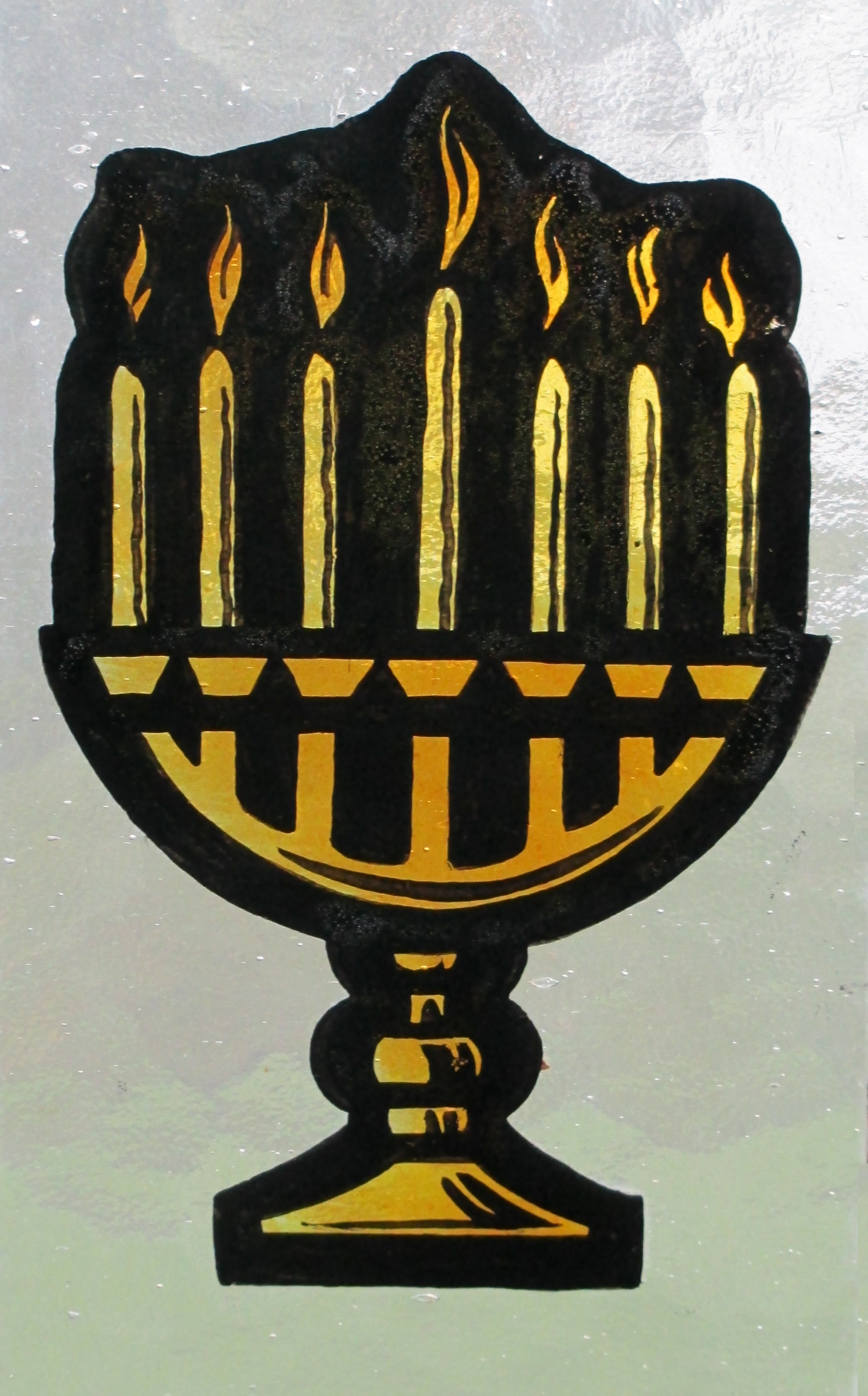
Stained Glass Symbols — The Temple Menorah
February 6, 2014Menorah is the Hebrew word for “Candlestick.” You may be familiar with the nine-branched menorahs Jews employ to celebrate Hanukah, the “Festival of Lights,” however the menorah above features seven branches. This is the design God gave to Moses when commanding him to have a lampstand fashioned to stand within His tabernacle in the desert. (Exodus 25) Later, this pure gold lampstand lit the sanctuary of the Jewish Temple in Jerusalem. Christians see in the temple menorah a sign of Christ, the Light of the World, who is always in the Father’s presence.
It is from a story about the temple menorah that the feast of Hanukah comes. In the second century BC, the Greeks profaned the temple with pagan sacrifices and tried to force the Jews to abandon their faith. One family, called the Maccabees, rose up against their Greeks oppressors, defeated them, and rededicated the Jerusalem Temple in 165 BC. When those Jews relit the temple’s sanctuary lamp they could supply it with only one-day’s worth of olive oil and it would take a week to prepare more. Yet, the temple menorah kept miraculously burning for eight days until the new oil was ready. Rather than olive oil, Hanukah menorahs burn nine candles: one for each of the eight nights and one central candle from which the others are lit.
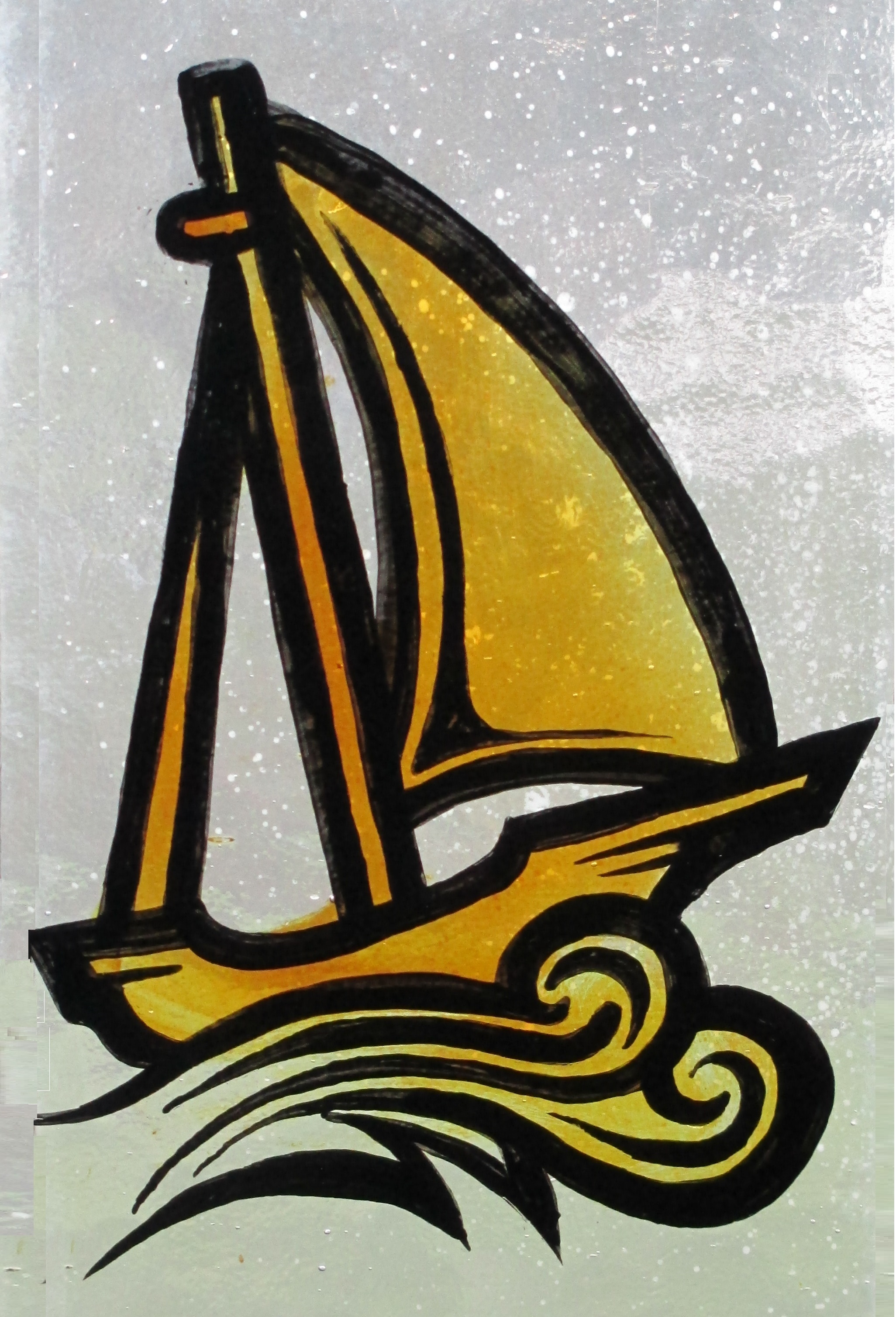
Stained Glass Symbols — The Sailboat
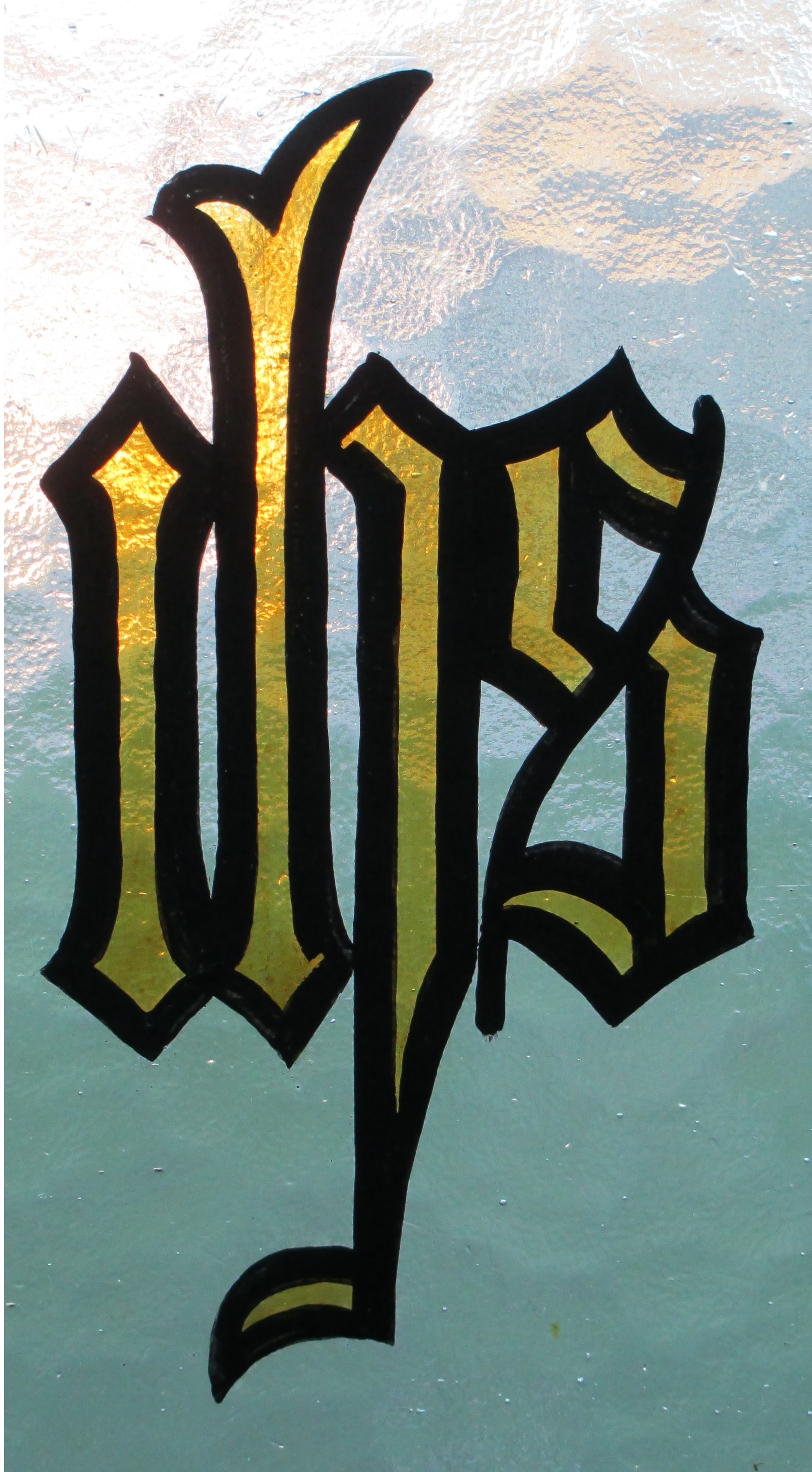
February 5, 2014Stained Glass Symbols — “IHS”
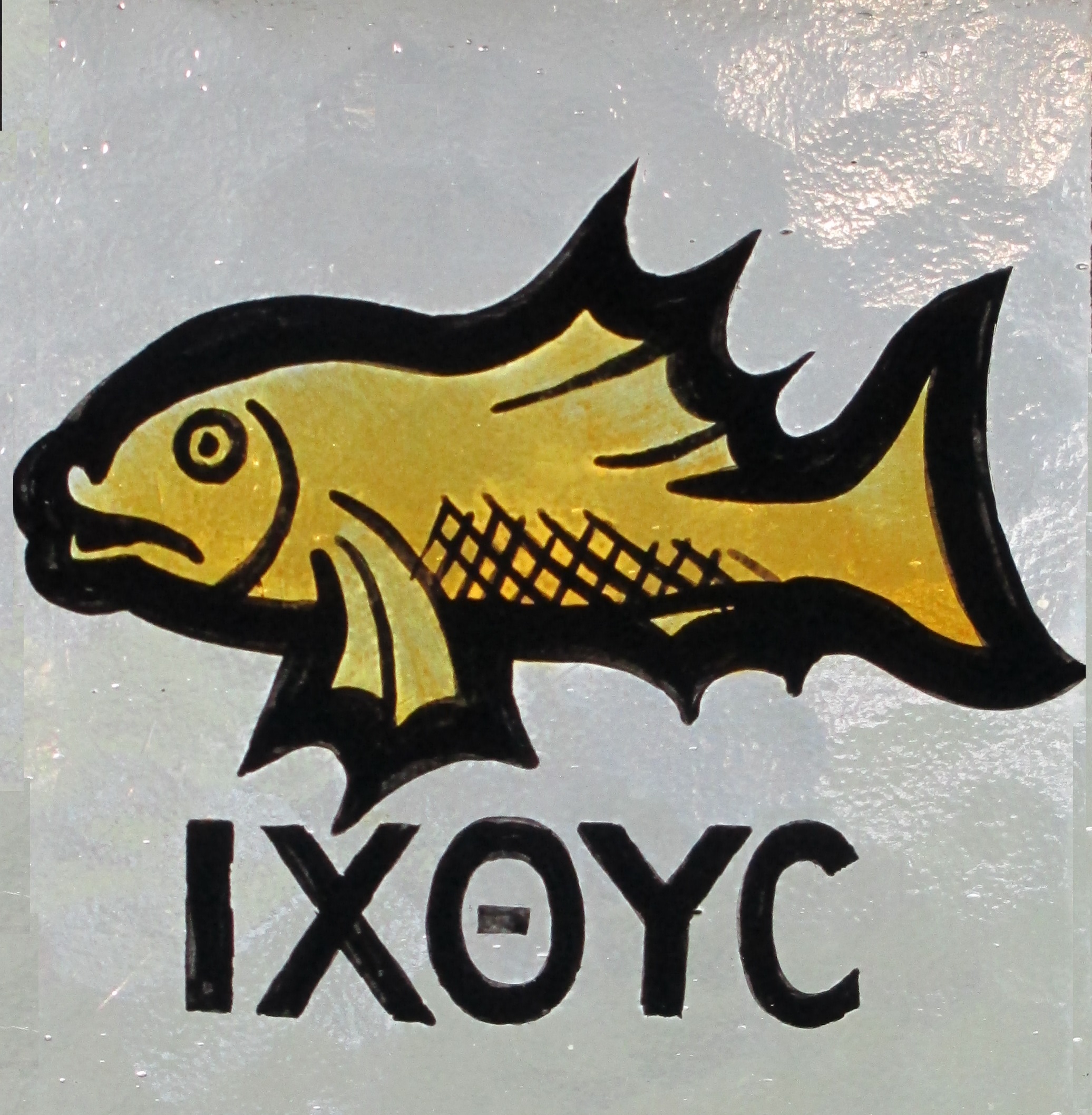
February 4, 2014Stained Glass Symbols — The Ichthys Fish
February 3, 2014The early Christians used the fish as a symbol for Christianity. The Greek word for fish is “Ichthys,” or using the Greek letters: “ΙΧΘΥΣ.” The letters of this word were an acronym for a phrase summarizing some of our core Christian beliefs: “Jesus Christ, [is] God’s Son, [and our] Savior.”
Stained Glass Symbols — The Lily
February 2, 2014
The Fleur-de-Lis (“Flur-d-lee”)
The Fleur-de-lis (French for “Flower of the Lily”) has had many Christian meanings. This image was adopted as a royal symbol by the kings of France, and thus it symbolizes royalty. The lily is also an ancient symbol for purity, and so the Fleur-de-lis represents our most-pure queen, the Blessed Virgin Mary. Finally, the three petals of this single flower symbolize the Holy Trinity: three divine Persons united in one God.
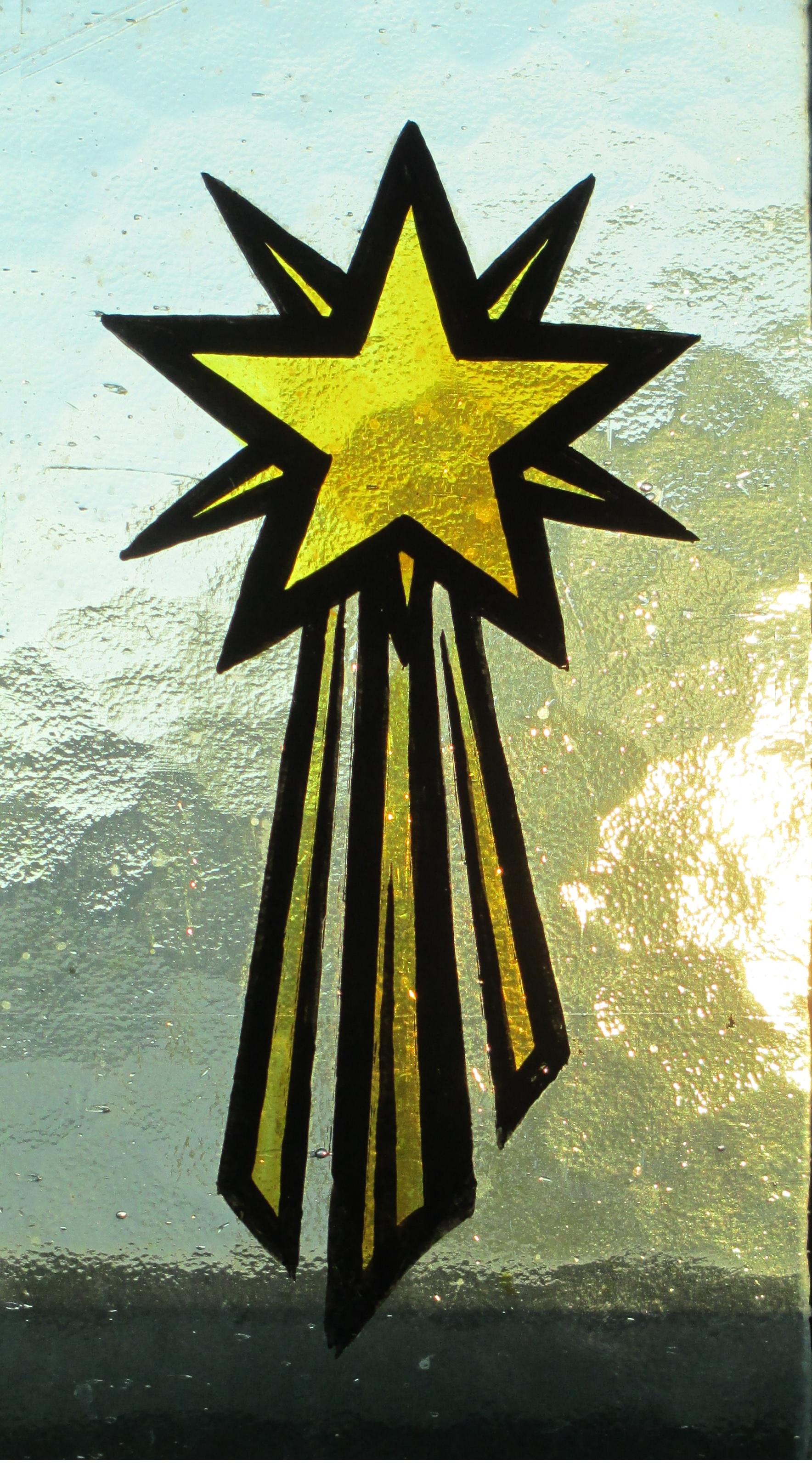
Stained Glass Symbols — The Star
February 1, 2014In ancient Old Testament times, a prophet declared, “I see him, though not now; I observe him, though not near: A star shall advance from Jacob, and a scepter shall rise from Israel…” (Numbers 24:17) Later, a psalmist mused to the Lord, “When I see your heavens, the work of your fingers, the moon and stars that you set in place—What is man that you are mindful of him, and a son of man that you care for him?” (Psalm 8:4-5) Then in the fullness of time, the God who cares for man and who set the stars according to His plan, gave a Savior to the world and announced Him by a star: “Behold, magi from the east arrived in Jerusalem, saying, ‘Where is the newborn king of the Jews? We saw his star at its rising and have come to do him homage.'” (Matthew 2:2)
Stained Glass Symbols — The Crowned “M”
January 31, 2014
A Symbol of the Queenship of Mary
In the Old Testament, the kings descending from David had multiple wives. Who then was regarded as queen? The king’s mother had this honor. (See 1 Kings 2:17-20) The Blessed Virgin Mary is the mother of Jesus Christ, the everlasting Davidic king, whose reign extends over all. And thus, in the Kingdom of God, Mary is the queen of heaven and earth symbolized by the Crowned “M.” (See Revelation 12:1)
Baskets & Beds — Thursday, 3rd Week of Ordinary Time—Year II
January 30, 2014Gospel Reading: Mark 4:21-25
Is a lamp “placed under a bushel basket or under a bed?” Of course not, for the open flame of an ancient lamp would risk the fiery destruction of these tools of work and rest. We must allow God’s Word to enlighten our toil and leisure, rather than try to suppress the Light in pursuits of profit and pleasure. Otherwise, “from the one who has not, even what he has will be taken away.”
Stained Glass Symbols — The Chi-Rho
January 30, 2014The Jewish people awaited God’s anointed one (or in Hebrew, “Messiah,”) a priest, prophet, and king who would lead and save them. Jesus, anointed by the Holy Spirit and God the Father’s favor, was that promised Messiah. In Greek, the word for “anointed one” is “Christos,” spelled “ΧΡΙΣΤΟΣ.” (Thus, “Christ” is not Jesus’ last name, but rather his title.) The Chi-Rho symbol merges the first two letters of this Greek word as a symbol for “Christ.”
Stained Glass Symbols — The Burning Incense
January 29, 2014The ancient Jews saw the burning of incense at the temple as a symbol of their prayer rising up to God. “Let my prayer be incense before you.” (Psalm 141:2) In Heaven, saints are seen in offering burning incense to the Lord. “Each of the elders held a harp and gold bowls filled with incense, which are the prayers of the holy ones.” (Revelation 5:8) In our churches, the temples of the New Covenant, where Earth joins Heaven in the Mass, we offer incense with our prayers before the Lord.
Stained Glass Symbols — The Anchor
January 28, 2014An anchor keeps a ship safely in its proper place, despite powerful waves and winds. The author of the Letter to the Hebrews says of hope: “This we have as an anchor of the soul, sure and firm” (Hebrews 6:19). If we have hope in Christ, hope in the good things he has promised, then we will be anchored securely against currents and storms in our lives.
The Blind & Lame — Monday, 3rd Week of Ordinary Time—Year II
January 27, 2014Readings: 2nd Samuel 5:1-7, 10; Mark 3:22-30
The Jebusites of Jerusalem told King David, “You cannot enter here: the blind and the lame will drive you away!” Jesus, the Son of David, was warmly received by the blind and lame because he cured them. Instead, it was the intellectually blinded and emotionally lamed, such as the scribes who had come from Jerusalem, who rejected Jesus and crucified him outside the city.
A Hidden Parable — 3rd Sunday in Ordinary Time—Year A
January 26, 2014Gospel Reading: Matthew 4:12-23
Simon Peter and Andrew were casting a net into the sea. Jesus said to them, “Come after me, and I will make you fishers of men.” James and John were mending their nets when Jesus called them.
Fish = Scattered Humanity
Sea = The chaotic, deadly, fish-eat-fish World
Boat = The Church (like Noah’s Ark)
Fishermen = Christ’s Disciples
Nets = The Good News, the Content of the Faith
Casting Nets = Evangelizing Others
Mending Nets = Repairing Gaps in our Understanding
Fishermen draw fish from the sea into their boat using nets which must be both cast and mended. Christian disciples likewise draw men from the world into the Church by both sharing the Good News and ever more deeply grasping its saving content.