Archive for June, 2026

Loving Jesus Is Rewarded

June 27, 2026

13th Sunday in Ordinary Time
By Fr. Victor Feltes
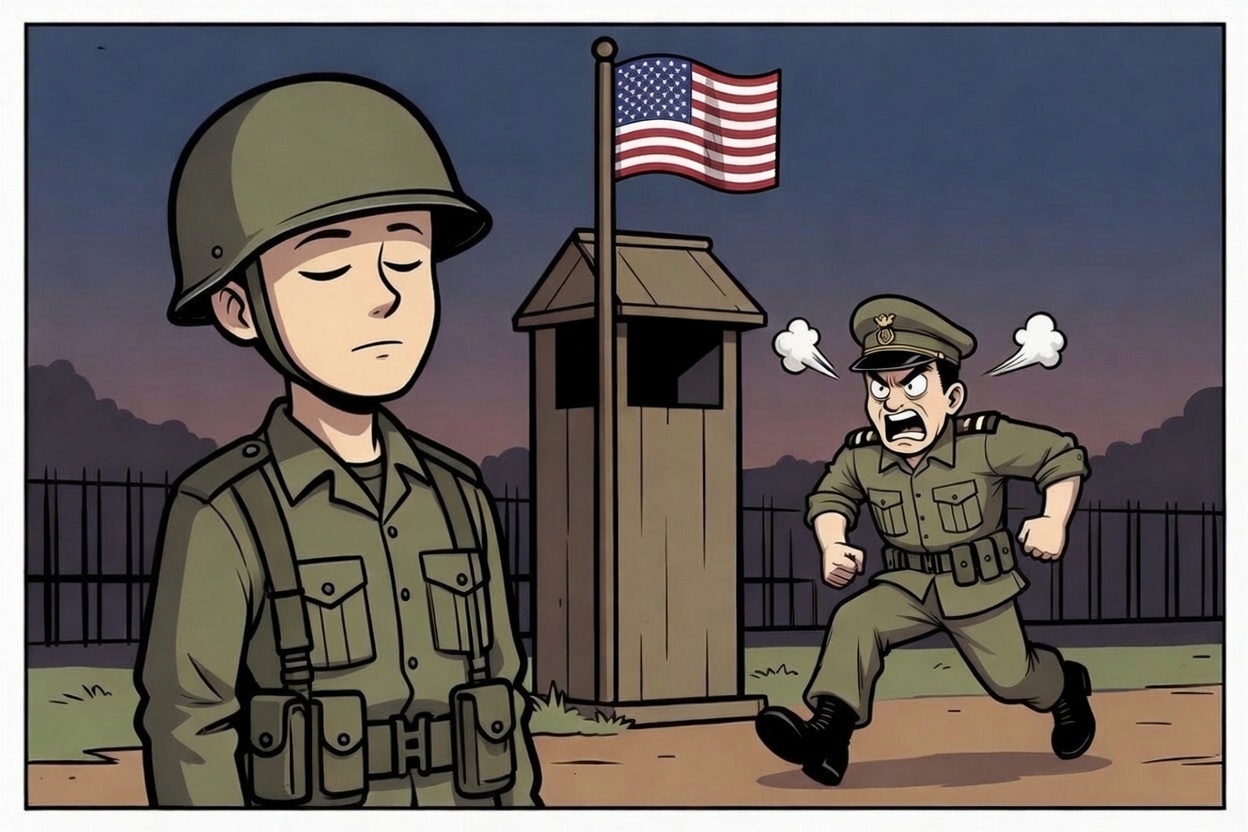
An Army private gets called in by his commanding officer for reportedly sleeping while on duty at his guard post:
But sir, I wasn’t sleeping, honest—I was just keeping my eyes closed!
Private, it’s your solemn duty not to let anyone to get past you!
Yes sir, I keep my eyes closed so that nobody can bribe me!

In today’s Gospel, Jesus presents two lessons back-to-back; lest, understanding only half of his message, we would reach a dangerous conclusion like that Army private. First, Jesus insists that we must keep him as our top priority. We must be even more devoted to Jesus Christ than to our parents, or to our children, or to our own personal comfort.

Jesus tells his apostles: “Whoever loves father or mother more than me is not worthy of me, and whoever loves son or daughter more than me is not worthy of me; and whoever does not take up his cross and follow after me is not worthy of me.” In fact, it is only by first and foremost loving our Lord that we can have the wisdom and grace to love our family, our friends, and ourselves as each deserves. Whoever seeks goals apart from the Lord will lose them along with this life, but whoever seeks the Lord’s goals will gain from them along with eternal life. As Jesus says, “Whoever finds his life will lose it, and whoever loses his life for my sake will find it.” This passage marks Jesus’ transition to his second major lesson in this Gospel: that deeds done in his service will be richly rewarded.

Jesus says, “Whoever receives you receives me, and whoever receives me receives the one who sent me. Whoever receives a prophet because he is a prophet will receive a prophet’s reward, and whoever receives a righteous man because he is a righteous man will receive a righteous man’s reward. And whoever gives only a cup of cold water to one of these little ones to drink because the little one is a disciple amen, I say to you, he will surely not lose his reward.” The things we do for Jesus, especially for him veiled within our neighbor, will surely be rewarded.

So Jesus presents to us with two important lessons, side-by-side. If we only heard that Jesus expects be our top priority, we might despair, thinking he is practically impossible to please. And if we only heard that Jesus rewards good deeds, we might become presumptuous, thinking God can be bribed or bought off by occasional gestures without true devotion. Rather, we should hold Jesus as our dear Lord while remembering that he will richly reward even the smallest things we do for him.

The young St. Therese of Lisieux, “The Little Flower,” dedicated herself to doing even little things for Jesus with great love. She called this her “Little Way” to holiness. In her highly-recommended autobiography “Story of a Soul” she writes: “Miss no single opportunity of making some small sacrifice, here by a smiling look, there by a kindly word; always doing the smallest right and doing it all for love.” “You know well enough that our Lord does not look so much at the greatness of our actions, nor even at their difficulty, but at the love with which we do them.” “Without love, deeds, even the most brilliant, count as nothing.” “To pick up a pin for love can convert a soul.” So we should not close our eyes to our solemn duty to Jesus, for if we love and serve him even in small ways we shall see his great rewards.

Fear Not

June 21, 2026

12th Sunday of Ordinary Time
By Fr. Victor Feltes

A string walks into a bar and the bartender says to the string, “Hey buddy, look at the sign!” The sign says: “NO STRINGS.” So the string steps outside, loops itself around, tightens itself up, messes up its hair, and goes back inside the bar. The bartender says, “Hey, aren’t you that string?” It replies, “No, I’m a frayed knot.” That was a joke referencing persecution, hair, and fearing not. My philosophy on homily jokes is that they should always tie in.

Jesus tells us three times in today’s Gospel to not be afraid. He says, “Fear no one. … Do not be afraid of those who kill the body but cannot kill the soul. … Do not be afraid.” Jesus insists we need not fear because God knows and loves and cares about us. Jesus notes: “Even all the hairs of your head are counted.” Why does he cite hair as an example? Perhaps it is because your hairs are the most numerous, the most replaceable, and the most painlessly disposable parts of you. Yet God keeps tabs even on that about you. Nothing about you is being overlooked.

In today’s Gospel, Jesus also notes God’s attentive care for birds. Earlier Jesus had said: “Look at the birds in the sky; they do not sow or reap, they gather nothing into barns, yet your heavenly Father feeds them. Are not you more important than they?” As the inspired 84th Psalm observes: “The sparrow herself finds a home and the swallow a nest for her brood; she lays her young by your (temple) altars, Lord of hosts, my king and my God. They are happy who dwell in your house, forever singing your praise.” So God feeds and shelters the birds and offered them the opportunity to live in his presence and praise him. He offers the same to us.

Jesus asks, “Are not two sparrows sold for a small coin? Yet not one of them falls to the ground without your Father’s knowledge.” What is this about sparrows “falling” to the ground? By “fall” Jesus may be referring in the Greek to birds “landing” or “descending,” but I have also seen dead birds fallen on the ground. Last week for the first time, on the shoulder of the highway, I saw a black crow standing beside a dead crow on the ground, presumably where it had fallen after being hit by a passing vehicle. About the sparrows Jesus says, “Not one of them falls to the ground without your Father’s knowledge.” But how can I be consoled by this when I see dead birds on the ground?

Yes, like Jesus and Job, Christians may suffer through no fault of their own. Like Jesus with his kinsman St. John the Baptist and the Virgin Mary with her Son, Christians may experience the tragic loss of a dear one. Like Jesus and his Apostles, we may suffer and be put to death for our faithfulness to God. But Jesus repeatedly urges us to not be afraid since our deliverance and glory shall be like his. “So do not be afraid,” Jesus encourages us, “you are worth more than many sparrows.”

Jesus also wants us to be open and bold about our Catholic Faith: “What I say to you in the darkness, speak in the light; what you hear whispered, proclaim on the housetops. And do not be afraid of those who kill the body but cannot kill the soul…” In America today, you and I are not even facing deadly persecution, so what is our excuse for timidity? Like I said last Sunday, be an unashamed and faithful Catholic in everyday life. Answer people’s questions and invite them to explore our Faith. Be bold, for their souls may depend upon it.

Instead of fearing the judgment of peers, Jesus wants our concern to be what God thinks of us. “Be afraid, rather, of the one who can destroy both soul and body in Gehenna,” that is, our Divine Judge. Jesus assures us, “Everyone who acknowledges me before others, I will acknowledge before my heavenly Father. But whoever denies me before others, I will deny before my heavenly Father.” So if we have been cowardly Christians in the past, repent and resolve like St. Peter to bear better witness to your relationship with Jesus Christ our Lord and Savior in the future.

St. Paul teaches, “Have no anxiety at all.” Worry is worthless, concern is enough. If I were not concerned about this homily, I would have had nothing prepared. If I were not concerned about this Mass, I would not have shown up to celebrate it. But feeding worries about these things would have been for me a waste of time and energy. As St. Padre Pio often said, “Pray, hope, and don’t worry!” It comes down to this: will you trust Jesus Christ? Remember his words and his rewards and fear not.

Christ Connectors

June 13, 2026

11th Sunday in Ordinary Time
By Fr. Victor Feltes

In a room of 23 randomly-selected people, what are the odds of any two of them sharing a birthday? In other words, what are the odds of at least two of those 23 people not necessarily being the same age but having their birthday on the same day of the calendar? Amazingly, the odds of this happening are a little more than 50-50. This is known as “The Birthday Paradox.” It only takes 23 random people to have 50-50 odds at least two folks match a birthday. And in a room of 75 random people there’s a 99.9% chance of at least two people matching. In America’s 250-year history, 45 different men have been U.S. President and 22 of them (48%) share first names with another U.S President. I mention these surprising stats because of the names of Jesus’ chosen apostles in today’s Gospel.

The names of the twelve apostles are these: first, Simon [whom Jesus renamed Peter] and his brother Andrew; James the son of Zebedee and his brother John; Philip and Bartholomew, Thomas and Matthew the tax collector; James the son of Alphaeus, and Thaddeus [also known as Judas or Jude]; Simon from Cana, and Judas Iscariot who betrayed him.

So among these twelve men we find two Simons, two Jameses, and two Judases. But from what I said before, we should not be too surprised something like this would happen. Look at how many women in the Gospels are named Mary: there’s Mary the mother of Jesus, there’s Mary Magdalene from the town of Magdala, there’s Mary the sister of Martha and Lazarus from Bethany, and there’s Mary the wife of Clopas, the mother of James the Less and Joses. The name “Mary” was actually the most common name among the region’s Jewish females at that time, belonging to about 1-in-4 women. Now imagine if you were going to lie and simply invent the story of a fictional guy and his closest followers. Would you give them duplicate names or call about half of all the female-named characters Mary? No — Jesus’ disciples have these names because these were their names. These were the historical people closely-involved in Jesus’ public ministry.

In today’s Gospel, we see imagery drawn from the agriculture of that rural historical setting. Jesus’ heart is moved with pity for the crowd, for they are “like sheep without a shepherd.” Jesus tells his disciples: “The harvest is abundant but the laborers are few; so ask the master of the harvest to send out laborers for his harvest.” And when Jesus chooses the Twelve and sends them on mission, he says: “Go… to the lost sheep of the house of Israel.” In his preaching and parables, Jesus commonly mentions plants and fields, sheep and shepherds. Earlier, when Jesus was recruiting fishermen to be his disciples, he told them, “Come after me, and I will make you fishers of men.” (I suspect if Jesus’ public ministry had happened in Wisconsin, he would have made references to dairy cows and snow.) Jesus used examples close at hand to connect with the rest of humanity. Jesus uses the people he finds close at hand to connect him with others, too.

The harvest is still abundant and the laborers are still too few. Many people are away from Christ’s Church and few work to bring them back. So pray, asking the master of the harvest to send out laborers for his harvest, and consider how he is calling you to help. Our Church and world needs priestly vocations and religious vocations. And if that is your calling, then that is the best thing you can do in your life. But realize you do not need to be ordained or take religious vows to help bring people to Jesus Christ and his Church. Intercede for the conversion of souls in daily prayer. Be unashamed and faithfully Catholic in everyday life. Answer peoples’ questions. Invite them to explore our Faith. Be bold — their souls may depend upon it. Jesus called the Simons, Jameses, Judases, and Marys of his day to play important parts in his salvific plan. Jesus would do the same with us today. Like we see in the “Birthday Paradox,” more new connections are possible for the Kingdom than you might at first imagine, both through Divine Providence and by simply showing up for Jesus.

“This is the Bread that Came Down from Heaven”

June 6, 2026

Solemnity of Corpus Christi
By Fr. Victor Feltes

Scripture scholars agree that St. John’s Gospel was the last of the four Gospels to be written. Saints Matthew, Mark, and Luke had already shared their often-overlapping accounts, so the Gospel of John supplements their stories with his own. John often omits events which the other Gospel writers include, while he mentions events and details they do not. For instance, Matthew, Mark, and Luke all quote Jesus saying at the Last Supper “This is my Body…This is the chalice of my Blood,” but John does not. Instead, John shares unique details from the Last Supper, like his memory of Christ washing his disciples’ feet. Upon washing their feet, Jesus says, “What I am doing, you do not understand now, but you will understand later. … I have given you a model to follow, so that as I have done for you, you should also do.” Jesus washes their feet and John recounts this so that Christians will better understand Christ’s self-sacrificial offering. Another thing Jesus does which only John recounts to teach us more about Christ’s self-sacrificial offering is today’s Gospel: Jesus’ discourse at Capernaum’s synagogue about the Bread of Life.

All four Gospels record the miracle of Jesus multiplying five loaves and two fish to feed a crowd of about five thousand people. But only St. John tells how afterwards folks in that crowd follow Jesus to Capernaum — primarily interested in getting more free bread. In his conversation with them, Jesus says: “I am the bread that came down from heaven.” But people object: “Isn’t this Jesus, the son of Joseph? Don’t we know his father and mother? Then how can he say, ‘I have come down from heaven’?” Jesus replies, “Stop murmuring among yourselves.” What Jesus has told them is literally true. Jesus has come down from heaven. Eternally the Son of God, he has become man born of the Virgin Mary, but they do not yet understand how.

Jesus goes on to tell them: “I am the living bread that came down from heaven; whoever eats this bread will live forever; and the bread that I will give is my flesh for the life of the world.” So the Jews quarrel amongst themselves again, complaining: “How can this man give us his flesh to eat?” Jesus replies emphatically: “Amen, amen, I say to you, unless you eat the flesh of the Son of Man and drink his blood, you do not have life within you.” Now is Jesus here speaking literally or symbolically about giving his flesh as bread for us to eat and live? Well, a very revealing change occurs here in the original Greek text.

For the remainder of his response in John’s Gospel, the word Jesus uses for “eat” changes from the ordinary word, phago, to trogo, which means “to gnaw, chew, crunch, or munch” in eating. St. John presents Jesus repeatedly using the word trogo to affirm: “Whoever (gnaws) my flesh and drinks my blood has eternal life, and I will raise him on the last day. For my flesh is true food, and my blood is true drink. Whoever (chews) my flesh and drinks my blood remains in me and I in him. Just as the living Father sent me and I have life because of the Father, so also the one who (crunches) me will have life because of me. This is the bread that came down from heaven. Unlike your ancestors who (ate/phago) and still died, whoever (trogo/munches) this bread will live forever.”

Then many of his disciples who are listening say, “This saying is hard; who can accept it?” “As a result of this,” John 6:66 says, “many of his disciples returned to their former way of life and no longer accompanied him.” That verse is the only occasion in the Gospels where many of Jesus’ disciples stop following him because of one of his teachings. But like his previous claim about having come from heaven, what Jesus has told them is literally true. Though they do not yet understand how, Jesus will give his flesh as bread to eat for eternal life — in his Holy Eucharist. Jesus turns to his twelve apostles and asks, “Do you also want to leave?” Simon Peter answers him, “Master, to whom shall we go? You have the words of eternal life. We have come to believe and are convinced that you are the Holy One of God.” Those who rallied around Peter and his trusting faith would go on to understand the Last Supper’s self-sacrificial offering, where Jesus says, “This is my Body… Do this in memory of me.”

That is why we are here today, continuing an unbroken line of Catholics rallied around the successor of St. Peter, the pope, believing as the Church has always believed about the Eucharist. The Eucharist is Jesus Christ, truly present, living and entire — Body and Blood, Soul and Divinity — veiled in the appearances of bread and wine, so that we may adore him and receive him, becoming more perfectly one in him, with him and with one another. The Letter to the Hebrews rightly says, “We should not stay away from our assembly, as is the custom of some.” That is why, despite the inconveniences of our church renovation now underway, we will continue celebrating Sunday Masses at St. Paul’s.

We will hold weekend Masses here in the gym as the summer heat permits. This gym has fans and ventilation, but it is not air-conditioned and, having investigated the matter, there are no clear good ways to air-condition it. We can cool this room down overnight, but once our summer nights become as hot as our summer days, moving air may not be enough to keep our Masses comfortable. At that point, we will likely transition to holding Mass in St. Paul’s air-conditioned church undercroft, the basement lunchroom, until the temperature decline or our church renovation is finished.

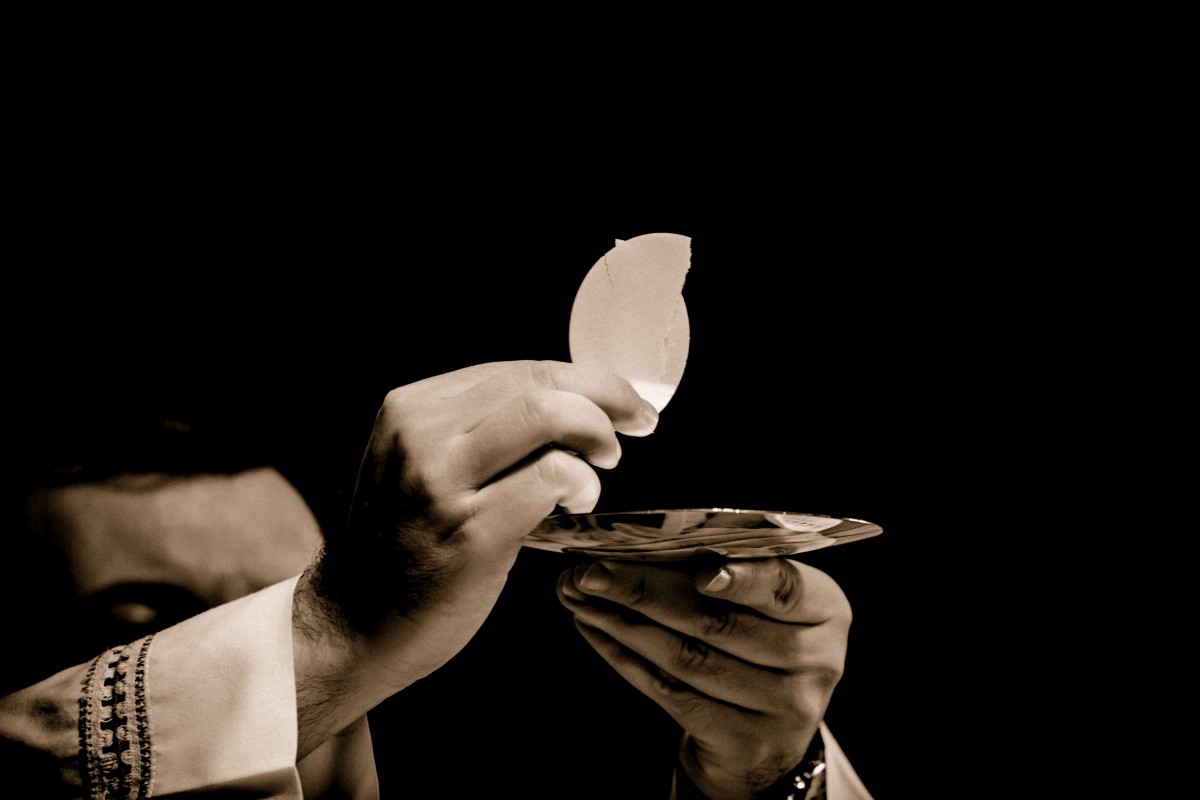
But whether we celebrate here or there, or even if you visit another parish for Mass, recognize, appreciate, and love our Lord whom we adore and receive in the Holy Eucharist. Jesus says, “My flesh is true food and my blood is true drink… This is my Body which is given for you; do this in remembrance of me.

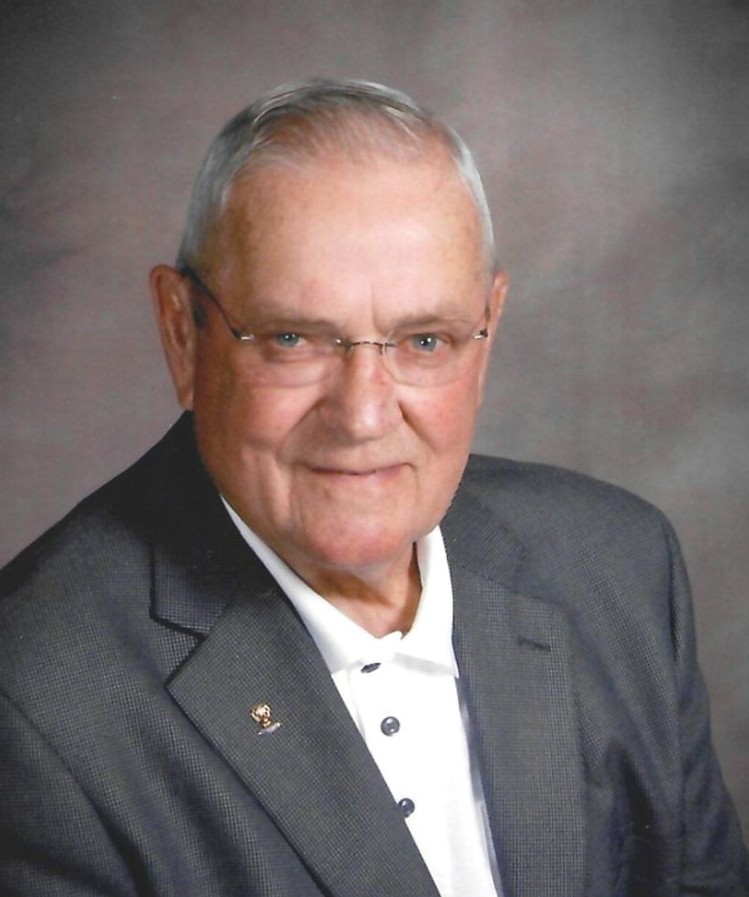
A Mentor of Love — Funeral Homily for Donald Nielsen, 93

June 1, 2026

By Deacon Dick Kostner

This afternoon, we celebrate the life of a true mentor of the power of love. Our Gospel tells all of the disciples of Jesus that there are rooms that have been reserved for those who have lived out their lives obeying the 11th Commandment that Jesus gave us before he returned to heaven, and that is to love God and our neighbor as Jesus has loved and instructed us. If done, he promises to return to those who have obeyed and take us to our reserved room at the Father’s house.

At one of the TMIY (“That Man Is You”) classes I attended this last year, one of the speakers quoted a homily that Pope John Paul gave to us Christians and within that homily the pope stated that there is only one key that will allow us entry into heaven and that is the key of love. Only those who love God and neighbor will gain entry. During my seventy-plus years on earth, I have been blessed with a list of mentors that have displayed to me the power and happiness that becomes those who have loved as Jesus has loved us. My mom and dad, my wife and son, my priest friends and instructors, and the people of this city and faith community called “The Body of Christ.” Two of them who were instrumental in gifting our community with a hospital we could be proud of and whom I served with as a member of the Board of Directors for some twenty-three years. Those individuals were John Eberle, and the person we honor today, Don Nielsen.

I first came onboard on the hospital board a couple of years after I got out of law school. These two mentors helped me to mature in my youth to recognize the importance of sharing our gift of time to help bring about and keep available for our people a facility that really cared about healing and providing a comfort zone for those of us that needed repair services for our sick and sometimes broken bodies. Don was always one of the first to offer his advice and wisdom to keep our hospital available to our friends and families. There were some tough times we had to make difficult decisions in order to have a medical team supplied to our hospital when the demand for them exceeded the supply. It was out of love that we needed to team up with Luther Hospital and thereafter with Mayo in order to have doctors for our hospital. One of Don’s favorite sayings was that “When life serves us a lemon, we need to use it to make lemonade.” It was through these disciples of love that we still have our hospital. Don’s love for people did not stop with the local hospital but was present when dealing with his car dealership and support for the Bloomer Chamber events and sharing his knowledge and active involvement with financial support for the community business activities and church faith activities.

About a year ago, Don cornered me and said he was concerned that Mayo was helping other hospitals stay up to date but that Bloomer was being forgotten. He questioned our local doctors for their help. It was just last week that I was told that there are plans being made by Mayo to renovate our Hospital and even build some more beds to accommodate more people at our hospital. The demand is great for our hospital to grow and provide more beds and services for neighbors, friends, and families. Before I heard this news Barb and I stopped to visit Don and Phyllis asked Don if he had any words of wisdom to share with us. His response was “Don’t put off until tomorrow what needs to be done now in our life because you never know when you won’t be able to help or enjoy life anymore.” Don died before I could share with him the good news about our hospital, but I bet he and Doctor Eberle are having a cold one together now with Jesus with grins on their face for having loved as Jesus has loved and served us.

Thanks guys for your love, help, and community service. Hope to see you soon! Signed: The Community of Bloomer.