33rd Sunday in Ordinary Time
By Deacon Dick Kostner

As we wind down on Cycle B our readings talk about the end of time. Our Gospel tells us that only the Father knows the exact date and time of this event but there will be warnings sent to help us prepare for the end. We know it will happen eventually but not the exact time. The point is we must prepare for the end of our earthly life.
Last month I left you with the mission to seek out wise mentors to keep you on the correct road to eternal life. I used one example I had received from one of my mentors who was preparing for his departure from this life, his name was Gabby Hassemer. I will use him again to steer us into planning for our own departure from this world. A couple of years before Gabby died he was given warnings that the end was coming. His feet and legs could not take much walking anymore, and his lungs were failing because of age. He continued to deer hunt with us but we kept an eye on him and we appointed him to stand close to our warming shack and keep the fire burning.
Deer hunting is just around the corner so I will share with you a true Gabby Hunting story. I remember one day while we were on the road to go hunting he blurted out that he was planning for his departure. Then he said: “ If I should go down while hunting promise me that you guys won’t stop hunting for the day. Just throw me in the box of your pickup until you are done for the day and then deliver me back home. I don’t want to ruin every ones day of hunting.” I started to laugh at his remark until I saw on his face that he was serious. I got rid of the smile and told him I would share his instructions with the other hunters. Gabby was planning his departure. Getting his bags packed so to speak.
As we get older we receive signs from above for us to start making travel plans. Age creeps up on us and then one day we realize that our bodies are breaking down and a red flag should go up that we need to start planning so as to have an easy transition to the next life. Let’s look also at our master mentor, Jesus. Look what he did before his death. He sat down with his friends, shared a meal and then gifted them and us with the gift of himself when he instituted the Sacraments which allow us to receive support and comfort from him as we prepare for our departure on the trip to eternity.
Several years ago our Parish was gifted to hear from a speaker from Lacrosse who talked to us about Stewardship. He told the story of how one evening he and his family went out for supper only to return to a yard full of firetrucks and people trying to put out a fire that destroyed his home and all contents including the family dog. He said it made him think about what is important in ones life which he concluded was God, family, and friends. If you think about it this is very true. Material objects we get to use during our lives and then they go to someone else to use and ultimately to help build the kingdom of God. As I reflected upon his observation I went on to conclude that God, family and friends are really talking about one entity and that is Members of the Holy Family of God. The Speaker went on to say that we need to include in our list of beneficiaries of our estate not only our blood or adopted children but also the people we have been celebrating with us and supporting us during our lifetime. We need to include those Holy Family Members who have supported us and been with us through all the struggles of life including illness and death, and who have been with us celebrating our Sunday Masses, marriages, birthday’s, and anniversaries.
It was because of two of our parishioners who died this year, that St. Paul’s is now debt free. It is because of gifts from parishioners that our Church is kept up. It is because of the wisdom and gifts of parishioners that we have a Pavilion which has been generating enough income so that our Parish Budget can stay in the Black. This folks is the Stewardship our visiting speaker was talking about.
What are ways this can happen. During your lives gifts can be given in kind or money to the Holy Family. In kind I would suggest treasures that have appreciated in value can be gifted and then sold by the Church. The result is that gross return equals net return because if you sell the asset 20%to 40% gets surrendered to pay the taxes, while if the Church sells the asset no taxes need be paid because its a charity, plus you get to deduct a charitable contribution equal to its present selling price not your cost. I did this with a collectors gun I owned. The Church acquired title and sold it and kept the proceeds with no expenses or taxes due. I received a personal deduction resulting in a savings of $9,000.00 as a reduction on my taxes by virtue of my gift.
Most of you who are 70 or older and have qualified retirement plans know that the tax laws require you to take a minimum withdrawal each year based on your life expectancy. Many don’t need the money to live on but are still required to take some out and pay taxes on it. What many do not know is that you can make your Parish contribution directly to the Parish if you are at least 70.5 years of age and not pay taxes on that contribution. The transfer must go directly from where you have the retirement account to the Church. I do this quarterly and am allowed to not pay taxes on that contribution. There is a limit of $100,000. per year that can be done but most don’t and won’t exceed that limitation. If you do this you need to let your tax person know as the 1099 that is sent to you and given to your tax person does not disclose it went directly to the Church or charity so it can be adjusted and bingo no tax due on that direct transfer. As to death transfers be sure that you give the Church assets from retirement accounts because they too will escape being taxed as the Church is exempt from paying taxes. It you give those accounts to your children they must pay tax on them.
There are many ways to make death transfers which you can discuss in detail with your lawyer or tax planner. Don’t kick the can down the road. Do as Gabby did and make financial and other plans for when you make that final trip back home. Bottom line is that you will be remembered as a quality member of the Holy Family who left the items they could not take with them to God, family and friends to use and benefit from.






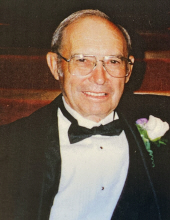 He is known and loved by many. A man others are drawn to because they feel welcome and loved around him. He is wise and witty, joyful and just, honest and unpretentious; a strong, steady, peaceful presence. A great storyteller and a great listener. A hardworking craftsman who both builds and repairs. He’s faithful and devout, hating no one, a lover of God’s word and a believer in the Resurrection. He is the reason that we are all gathered here today. The man I speak of is Jesus Christ.
 Today St. Paul’s Parish is pleased to open our church and offer our prayers at this wake service for Len, whom you know and love so well. No brief homily can capture the fullness of someone’s life. But I believe that aspects of a Christian’s life will contain images of Christian mysteries. Jesus preached about the Kingdom of God using images like captured fish, sprouting seeds, precious pearls, and other things as illustrations. Similarly, a particular part I learned about Len’s life—though surely not the most important aspect of his life—especially strikes me as an icon of important Christian truths.
