Archive for the ‘Jesus Christ’ Category

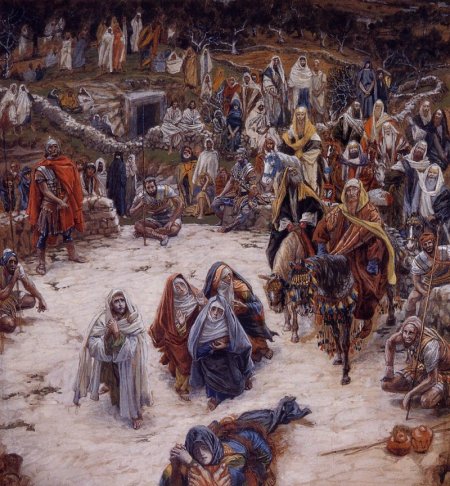
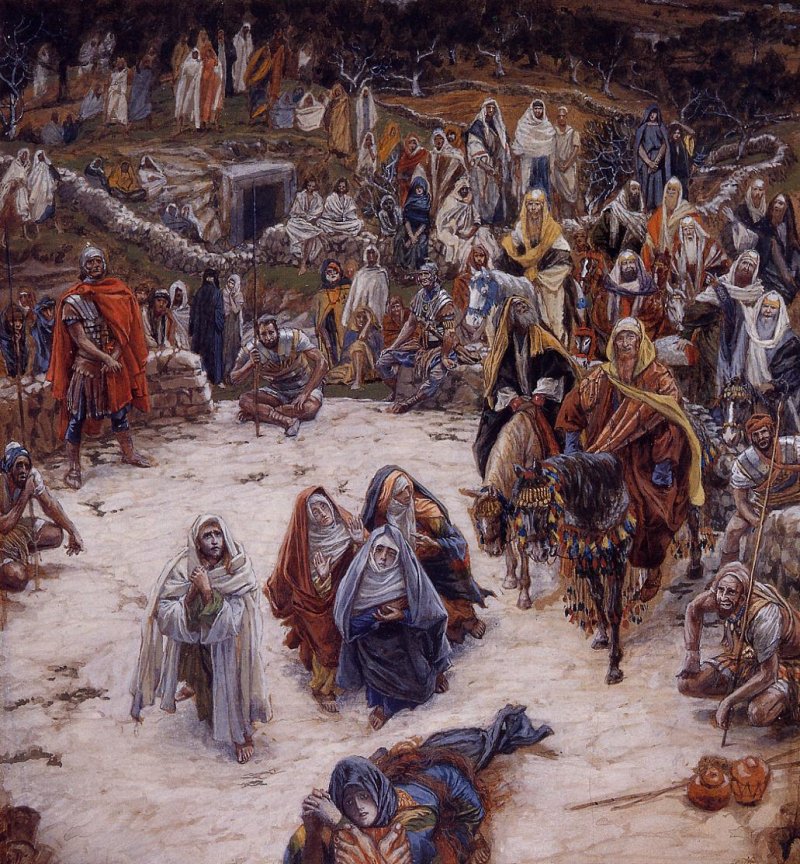
He Proved Faithful — Good Friday Homily

March 25, 2016

Few proved faithful to Jesus on Good Friday, but on Good Friday Jesus proved himself faithful to us.

The political leaders were supposed to serve justice, but Pilate and Herod failed to protect Jesus as an innocent man. Jesus protected us when we were guilty.

The religious leaders were supposed to serve holiness, but the High Priests and the Sanhedrin failed to accept Jesus as their Messiah. Jesus accepted us so that we might become holy.

The disciples were supposed to serve their teacher and lord, but Judas betrayed him, Peter denied him, and the others abandoned him. By enduring his suffering and death, Jesus proved himself faithful to us.

Jesus’ mother Mary was faithful. She stood with him at the foot of the cross. It was a consolation for Jesus to have her there. Two of his beloved disciples were also there: Mary Magdalene and the apostle John. Jesus was grateful to have them close by.

Today, on this Good Friday, by the grace of God, we are at the foot of the cross. Let us pray for mercy, for ourselves and for others. Despite our past unfaithfulness, let us honor his faithfulness to us. Jesus is pleased that we are here with him, and he is grateful for our gratitude.

View From the Cross by Tissot

Jesus is Risen, Not Undead

February 26, 2016

All the classics of horror are Catholicism twisted. Vampires are the shadow opposite of Jesus in the Eucharist; they prey on the blood of others to possess eternal life apart from God. Depictions of Frankenstein are distortions of the Mystical Body of Christ, with the dead parts of many monstrously combined as one. And what are zombie stories but corruptions of the Resurrection? A new friend of mine teaches a faith formation class with a 5th grader who periodically pipes up saying, “Jesus was a zombie.” So, this week, she taught them about how Jesus is different from zombies.

Zombies are typically said to be created by a virus or a magic spell, but Jesus lives by the power of God. Zombies lose their memory and intellects, but the risen Jesus knows his friends and converses with them. The bodies of zombies decay and they can be “killed,” but the risen Jesus is free from corruption and can die no more. Zombies “desire” to kill people, but Jesus would give them life. (What other differences can you find with your family?)

After seeing The Passion of the Christ in 2004, I heard a fellow seminarian say that the movie ending with Jesus walking from the tomb on Easter morning frustrated him—he want to see what happened next, he wanted the story to continue. Last Friday, I had the great pleasure of seeing a new film which tells that story: Risen. In it, a Roman soldier named Clavius is tasked by Governor Pontius Pilate to find the body of Jesus the Nazarene and end rumors of his resurrection. Only about a dozen people were in the theater on opening night, so if you want to enjoy this highly-recommended film on the big screen you should make a point to see it soon.


Our Lord as Love

January 27, 2016

Thomas answered and said to [Jesus], ‘My Lord and my God!’”

—Gospel of John 20:28

Whoever is without love does not know God, for God is love.”

—1st Letter of John 4:8

“Brothers and sisters: Strive eagerly for the greatest spiritual gifts. But I shall show you a still more excellent way.

If I speak in human and angelic tongues, but do not have [Jesus], I am a resounding gong or a clashing cymbal. And if I have the gift of prophecy, and comprehend all mysteries and all knowledge; if I have all faith so as to move mountains, but do not have [Jesus], I am nothing. If I give away everything I own, and if I hand my body over so that I may boast, but do not have [Jesus], I gain nothing.

[Jesus] is patient, [Jesus] is kind. [He] is not jealous, [he] is not pompous, [he] is not inflated, [he] is not rude, [he] does not seek [his] own interests, [he] is not quick-tempered, [he] does not brood over injury, [he] does not rejoice over wrongdoing but rejoices with the truth. [He] bears all things, believes all things, hopes all things, endures all things. [Jesus] never fails.”

—1st Letter of Paul to the Corinthians 12:31-13:8

Taking Jesus Too Literally

September 30, 2015

Jesus Facepalm

We do well to closely heed all that our Lord Jesus says, but we must also carefully understand what the Word of God Incarnate is really telling us. Using Scripture to interpret Scripture, let us consider two examples where some modern-day Christians misinterpret Jesus’ teaching by taking him too literally.


“Do not swear at all”

Jesus declares, “You have heard that it was said to your ancestors, ‘Do not take a false oath, but make good to the Lord all that you vow.’ But I say to you, do not swear at all; not by heaven, for it is God’s throne; nor by the earth, for it is his footstool; nor by Jerusalem, for it is the city of the great King. Do not swear by your head, for you cannot make a single hair white or black. Let your ‘Yes’ mean ‘Yes,’ and your ‘No’ mean ‘No.’ Anything more is from the evil one.” (Matthew 5:33-37)

Swearing an oath or vow invokes God as one’s witness to a claim or a promise and invites God’s just punishments if his name is taken in vain. It seems that people in Jesus’ day were trying to steal credibility without fearing divine retribution by swearing by lesser holy things. But Jesus warns that all good things belong to God, and condemns clever manipulations of the truth as coming from the devil. Instead, Jesus says, “do not swear at all,” but “let your ‘Yes’ mean ‘Yes.’”

So do any appropriate times and places remain for swearing oaths or vows in the New Covenant? God reveals that such exist through St. Paul. In Galatians 1:20 and 2nd Corinthians 1:23, God himself inspires St. Paul to swear oaths (for example, “I call upon God as witness, on my life, that it is to spare you that I have not yet gone to Corinth.“) And in Acts 18:18, we read that St. Paul “had taken a vow.” Thus, in rare, righteous, and serious situations a Christian may solemnly swear to things before God.


“Call no one on earth your father”

Jesus tells us, “Call no one on earth your father; you have but one Father in heaven.” (Matthew 23:9) Does this mean that we should not call priests (or our even own dads) “Father?” This is not how the first Christians understood Jesus’ words.

St. Stephen calls the Jewish leaders “fathers” in Acts 7:2, and St. Paul does similarly in Acts 22:1. God prompted St. John to address Christian community elders as “fathers.” (1st John 2:13-14) God also willed St. Paul to write of “our father Isaac” and to call Abraham “the father of us all.” (Romans 9:10, 4:16-17) God inspired St. Paul to regard and describe himself as a father to his spiritual children. (1st Corinthians 4:14-15, 1st Timothy 1:2, Titus 1:4, Philemon 10) Therefore, the true concern of our Lord is not with the label of “father,” but that our greatest devotion and love always be directed toward “our Father who art in Heaven.”

Friends of Jesus — 6th Sunday of Easter—Year B

May 13, 2015

Readings: Acts 10:25-26, 1st John 4:7-10, & John 15:9-17

In our first reading, St. Peter is sent by the Holy Spirit to the house of Cornelius, a Gentile and Roman centurion:

When Peter entered, Cornelius met him
and, falling at his feet, paid him homage.
Peter, however, raised him up, saying,
“Get up. I myself am also a human being.”

In other words, Peter says, “Relax, I’m made from the same stuff as you.” This was said for Cornelius’ benefit and for ours.

Icon of the Twelve ApostlesThe Evangelists and the Holy Spirit did us a huge favor by recording the early disciples’ flaws and infidelities. Most of these first followers of Christ went on to live their lives for him, some even dying for him, and so we rightly call them saints. Yet the New Testament reveals that they were far from perfect at the start. It would have been so understandable, so easy, for the Gospel writers to omit the embarrassing, regrettable, and even sinful moments of the Church’s founding figures. The fact these unflattering details were included points to the veracity of the Gospels. Imagine how deprived we would be today if these details had been had whitewashed away.

St. Mary Magdalene Clings to JesusLuke tells us that Jesus cast seven demons from out of Mary Magdalene. We are never told how their evil influence had affected Mary’s life, but it probably was neither subtle or pretty. Without knowing this detail, some might think, “Jesus couldn’t accept someone with an ugly past like mine. I’m no model of perfect devotion, like Mary Magdalene.”

James and John had their mother ask Jesus to seat them upon thrones at his left and right in glory. Without this story, those who struggle with ambition and vainglory might lament, “Why can’t I be content to humbly serve, like the fisherman sons of Zebedee?”

Without the story of Doubting Thomas, times of struggle with questions and doubts might bring the self-reproach, “Why can’t I just trust in Jesus, like Believing Thomas?”

Without the story of Peter’s three denials of Christ, after a great fall we might despair, “How could Jesus forgive me? I was not faithful to him like St. Peter the Rock.”

All this is not to say that our sins and imperfections do not matter. As Jesus says in today’s Gospel, “Remain in my love. If you keep my commandments, you will remain in my love… This I command you: love one another [and (by implication) love me as well.]” Every sin is a failure to love as we ought, so we must do our best to root our the lusts, prides, and infidelities from our lives. Jesus says, “You are my friends if you do what I command you.” Recognizing our own sins and failings, this raises a concern within us: Are we Jesus’ friends?

The setting for today’s Gospel is the Last Supper. Jesus, knowing everything the apostles had done wrong in the past, knowing how poorly they would perform in the near future, told them, “I no longer call you slaves… I have called you friends…” Jesus declares them to be his friends, long before they are perfect. Jesus’ plan, for them and us, is to love us into holy righteousness and glory.

From today’s second reading, from John’s first epistle, we learn:

In this is love:
not that we have loved God, but that he loved us
and sent his Son as expiation for our sins.

Jesus died for us as surely as he ‘laid down his life for his friends‘ the apostles, and Jesus loves us in the same way as them. Relationship, Identity, and Mission: Your relationship is a friendship with Christ. Your identity is a friend of Christ. Your mission is to live as a friend of Jesus Christ. And with the friendship of Christ, we can do all things in him who loves us.

Our Glorified Bodies Shall Be Like His

April 18, 2015

In inspired Scripture, St. Paul tells us:

“[The Lord Jesus Christ] will change our lowly body to conform with his glorified body by the power that enables him also to bring all things into subjection to himself.” 1

This means that we can glimpse what our own resurrected bodies will be like someday by studying the resurrected body of Jesus Christ.

The Resurrection by El Greco, Madrid, 1596-1600.•  Jesus’ Resurrected Body is the Same Body He Died In

        The tomb is empty on Easter morning because Jesus’ body is raised.2 On Easter evening, Jesus shows his disciples the wounds of his hands, feet, and side, which he received on the cross.3 His body retains its “flesh and bones” and can be touched and held.4 Our own dead bodies will similarly be reclaimed and resurrected, from the tomb, the sea, or the dust of the earth.5 St. Paul is so insistent on our own future resurrection he says, “If there is no resurrection of the dead, then neither has Christ been raised.” 6

•  Jesus Resurrected can do the Ordinary Things He did Before

        On Easter Sunday, Jesus walks and talks.7 He can breathe and eat.8 He knows who he is and he remembers his friends.9 (There is no reason to think that the dead will forget the lives they lived or their loved ones.)

•  Jesus’ Resurrected Body can also do Extraordinary Things

        Though he is no ghost, Jesus can appear suddenly within a locked room or vanish from another.10 He can make himself unrecognizable to those who know him.11 His body can ascend into heaven.12 And now, resurrected to life, he dies no more, for “death no longer has power over him.” 13

        The spiritual gifts granted to some saints on earth (such as bi-location, levitation, incorruptibility, etc.) suggest powers belonging to our future glorified bodies. For her various apparitions, the Blessed Virgin Mary may be modifying her glorified body’s physical appearance (for example, to be as a dark-haired native at Guadalupe in Mexico, but fair and blond-haired at Champion, Wisconsin.)

•  Our Conclusion

        The bodies in which we live and die will be same ones in which we rise. Our glorified bodies will be able to do the familiar things we know, yet we shall also possess new abilities which seem extraordinary to us now. St. Paul describes our future glorified bodies in this way:

“Someone may say, ‘How are the dead raised? With what kind of body will they come back?’

It is sown corruptible; it is raised incorruptible. It is sown dishonorable; it is raised glorious. It is sown weak; it is raised powerful. It is sown a natural body; it is raised a spiritual body.

That which is corruptible must clothe itself with incorruptibility, and that which is mortal must clothe itself with immortality.” 14

Endnotes:

  1. Philippians 3:21
  2. Matthew 28:6
  3. Luke 24:40, John 20:20
  4. Luke 24:39, John 20:17, Matthew 28:9
  5. John 5:28-29, Revelation 20:13
  6. 1 Corinthians 15:13
  7. Luke 24:15
  8. John 20:22, Luke 24:42-43
  9. Luke 24:39, John 20:16-17
  10. John 20:19 & 26, Luke 24:31
  11. Luke 24:16, John 21:12
  12. Acts 1:9, Mark 16:19; Luke 24:51
  13. Romans 6:9
  14. 1 Corinthians 15:35, 42-44 & 53

Encountering Jesus at His Ministry’s Beginning & End

January 9, 2015

Comparing John 1:35-43 & 20:11-18

  • John the Baptist is with two of his disciples when he points out Jesus “the Lamb of God” passing by. Jesus turns, sees the two disciples following him, and asks, “What are you looking for?
  • Mary of Magdala is with two angels at the empty tomb when Jesus comes by. She turns around and sees Jesus, but does not know it’s him. He asks her, “Whom are you looking for?
  • John the Baptist’s two disciples answer Jesus, “Rabbi, (that is, Teacher) where are you staying?
  • Mary, recognizing the risen Lord, says to him, “Rabbouni!” (which also means Teacher.)
  • Jesus tells the curious duo, (one of whom we are told is St. Andrew the Apostle) “Come, and you will see.
  • Jesus tells the overjoyed Mary, “Go to my brothers and tell them, ‘I am going to my Father and your Father, to my God and your God.

Points for Reflection:

St. Mary Magdalene Clings to Jesus□ We first come to Jesus looking for something. (“What are you looking for?”) But we are in fact looking for a Someone. (“Whom are you looking for?”)

□ Our search begins with curiosity, but grows finally into love.

□ Jesus is a Teacher to them all, but he more than a teacher to Mary of Magdela. (Similarly, in Matthew’s telling of the Last Supper, all the apostles call Jesus “Lord,” while Judas calls him merely, “Rabbi.”)

□ Jesus makes the first two apostles, but he makes Mary (as the Church Fathers call her) “the Apostle to the Apostles.

□ Jesus draws us near (“Come and see,”) and then he sends us forth on mission (“Go to my brothers and tell them…”)

□ Jesus’ baptism leads to his tomb and resurrection.

□ Jesus, who dwelt on earth, now dwells with His Father in Our Father’s house. Jesus wills that we come to dwell with him, in Heaven, as it is on earth.

Mysteries of the Holy Family

December 26, 2014
  • Mary with Jesus in Swaddling ClothesThe Holy Family’s first Christmas was both stressful and joyful.
  • Jesus the Bread of Life was born in Bethlehem, which means “House of Bread.”
  • Jesus was born and laid to rest in caves. His body was wrapped, in birth and death.
  • Joseph taught carpentry to Him through whom all things were made.
  • Mary taught prayers to God.
  • St. Joseph, protector of the Holy Family, is now universal patron of the Church.
  • St. Mary, the bearer of one child, is now mother of all Christians.

By Satan’s Power — Friday, 27th Week in Ordinary Time—Year II

October 10, 2014

Readings: Galatians 3:7-14; Luke 11:15-26

Some in the crowd said of Jesus, “By the power of Beelzebul, the prince of demons, he drives out demons.” In a certain sense, those people would be right.

Satan’s power in the world led to Jesus’ Passion. The devil probably thought he was winning by getting Jesus crucified, for ‘cursed is everyone who hangs on a tree.’ Yet Jesus surprised him by turning this curse into ‘a blessing for all nations.’ Jesus suffered Satan’s power, but brought good out of the evil. In this way, by the power of Beelzebul, the prince of demons, Jesus drove out demons from the world.

Originally posted on October 8, 2010

Ezekiel’s Consolation — Tuesday, 19th Week of Ordinary Time—Year II

August 12, 2014

Readings: Ezekiel 2:8-3:4; Matthew 18:1-5, 10, 12-14

The Lord GOD said to me: “As for you, son of man, obey me when I speak to you: be not rebellious like this house of rebellion, but open your mouth and eat what I shall give you.” It was then I saw a hand stretched out to me, in which was a written scroll which he unrolled before me. It was covered with writing front and back, and written on it was: “Lamentation and wailing and woe!”

He said to me: “Son of man, eat what is before you; eat this scroll, then go, speak to the house of Israel.” So I opened my mouth and he gave me the scroll to eat. “Son of man,” he then said to me, “feed your belly and fill your stomach with this scroll I am giving you.” I ate it, and it was as sweet as honey in my mouth. He said: “Son of man, go now to the house of Israel, and speak my words to them.”

How can a message of “lamentation and wailing and woe” taste sweet in the prophet’s mouth? Ezekiel found the message sweet because it meant God was neither blind nor indifferent to the evils in his midst and that these evils, one way or another, would not continue forever. Either sincere conversion or painful events would soon check his people’s wickedness. This was the prophet’s consolation. Jesus says:

If a man has a hundred sheep and one of them goes astray, will he not leave the ninety-nine in the hills and go in search of the stray?

Guardian Angels by JHS MannIn the parable of the Lost Sheep, we focus on the lost sheep’s consolation while forgetting the ninety-nine’s desolation. The flock may fare just fine, but they will find the experience quite unsettling. Jesus tells us:

Whoever receives one child such as this in my name receives me.

It is not the will of your heavenly Father that one of these little ones be lost.

For forty years, the people of our land have intentionally and legally ended the lives of roughly one million unborn children annually. What would the opposite of receiving Jesus look like, if not this? Jesus warns us:

See that you do not despise one of these little ones, for I say to you that their angels in heaven always look upon the face of my heavenly Father.

This represents a warning, because God’s angels are fearsome and righteous creatures. Let us earnestly pray for our country’s conversion to a culture of life. Yet we too share Ezekiel’s consolation, for one way or another, this evil in our midst will not go on forever.

The Untamed Christ — Wednesday, 13th Week of Ordinary Time

July 2, 2014

Gospel: Matthew 8:28-34

When Jesus came to the territory of the Gadarenes, two demoniacs who were coming from the tombs met him. They were so savage that no one could travel by that road. They cried out, “What have you to do with us, Son of God? Have you come here to torment us before the appointed time?” Some distance away a herd of many swine was feeding. The demons pleaded with him, “If you drive us out, send us into the herd of swine.” And he said to them, “Go then!” They came out and entered the swine, and the whole herd rushed down the steep bank into the sea where they drowned.

Though pigs were ritually-unclean to the Jews, these Gentiles raised them to eat and trade in order to secure a comfortable life. Once Jesus casts the demons into the swine the herd runs into the sea and drowns. (Perhaps the demons drove them, predicting the discord that would result, or perhaps the animals simply could not bear the demons’ terrible presence.)

The swineherds ran away, and when they came to the town they reported everything, including what had happened to the demoniacs. Thereupon the whole town came out to meet Jesus, and when they saw him they begged him to leave their district.

Rather than rejoicing at the restoration of their brothers, the townspeople grieve over the loss of their herds. They would wish for the demons to return to the men if that meant their pigs would be restored to their pastures. These people do not want to see any more mighty deeds from this clearly holy man, but instead beg Jesus to leave. Like the demons, they perceive Jesus as a threat to their lifestyle. The townspeople desired comfort more than righteousness. They loved bacon more than their brothers. They preferred being left alone to having Jesus.

Domesticating the person of Jesus Christ and his revolutionary gospel, so that he neither challenges nor demands anything from us, is a danger in the Christian life. The real, undomesticated Christ calls us to constant growth and sacrifice for the love of God and neighbor. As C.S. Lewis puts it, Aslan is not a tame lion, but he is good.

How God The Father Loves His Son

June 16, 2014

How does the Eternal Father love Jesus Christ his Son?
The Scriptures provide us insights into their relationship.


The Father gives his Son instruction and example

God the Father BlessingAs Jesus once said, “Amen, amen, I say to you, a son cannot do anything on his own, but only what he sees his father doing; for what he does, his son will also do,” adding, “I cannot do anything on my own.” The Father loves his Son and shows him everything that he does. Sometimes believers find it harder to relate to God the Father than Christ the Son. But what is the Father really like? He is just like his Son. Jesus “is the image of the invisible God.” As Jesus said, “Whoever has seen me has seen the Father.”  The Father offers his Son the perfect example, and his Son perfectly follows him.

The Father listens to his Son

Outside the tomb of Lazarus, Jesus said, “Father, I thank you for hearing me. I know that you always hear me…” Jesus shares his own attitude toward prayer when he tells us, “In praying, do not babble like the pagans, who think that they will be heard because of their many words. Do not be like them. Your Father knows what you need before you ask him. This is how you are to pray: Our Father…” Jesus knows that wordy, poetic prayers are not necessary because his Father is always listening.

The Father encourages his Son

At Jesus’ baptism in the Jordan River, the Father declared from heaven, “You are my beloved Son, in whom I am well pleased.” And on the summit of Mt. Tabor, at Jesus’ Transfiguration, the Father spoke from the cloud, “This is my beloved Son, listen to him.” The Father encourages his Son with reminders of his love.

The Father provides for his Son

Jesus said, “Everything that the Father has is mine.” Jesus’ Father is like the father in the parable of the Prodigal Son who told his first-born, “My son, you are here with me always; everything I have is yours.” Confident in his Father’s providence, Jesus tells us to be likewise unafraid concerning our basic needs, what we are to eat and drink, or what we are to wear: “Seek first the kingdom of God and his righteousness, and all these things will be given you besides.” The Father also provides his Son with gifts greater than material things. At the Last Supper, Jesus said of disciples, “Father, they are your gift to me.”

The Father welcomes closeness with his Son

It was a big deal when Jesus prayed, “Abba, Father.” As St. John Paul the Great observed, “An Israelite would not have used [“Abba” to address God] even in prayer. Only one who regarded himself as Son of God in the proper sense of the word could have spoken thus of him and to him as Father–Abba, or my Father, Daddy, Papa!” Because the Father welcomes intimate closeness with his Son, Jesus can say, “I and the Father are one.”

The Father loves his Son’s mother

At the Visitation, filled with the Holy Spirit, Elizabeth declared to Mary, “Most blessed are you among women,” and Mary rejoiced, “From this day all generations will call me blessed. The Almighty has done great things for me, and holy is his name.” By pouring his love and blessings into Mary, God the Father gave his Son a loving mother full of grace.

The Father fosters growth in his Son and sends him on mission

The Letter to the Hebrews says, “Son though he was, [Jesus] learned obedience from what he suffered; and when he was made perfect, he became the source of eternal salvation for all who obey him, declared by God high priest according to the order of Melchizedek.” But this raises a question: how can the divine Son grow in any way? Though perfect in heaven, the Son of God had no firsthand experience of weakness, suffering, or the trials of obedience, until his Incarnation. Through these things he was made complete so that he could be the savior of humanity. The Father prepares his Son and sends him on a mission to transform the world. “God did not send his Son into the world to condemn the world, but that the world might be saved through him.”

The Father as our model for Fatherhood

Whether we are biological or spiritual fathers, Jesus’ heavenly Father gives men a model for our fatherhood. We are to give our children instruction and good example. We should listen to them and encourage them, letting them know that they are well-beloved. We should provide for our children, according to our abilities, supplying their basic needs without neglecting the greater gifts. We are to welcome closeness with our children. We are to love our children by loving their mother, whether she be our spouse or the Church. We are to foster maturity and virtue in them so that they may go forth in mission to transform the world.  Which aspect of your fatherhood are you resolved to grow in with God the Father?

God the Father in the Creation of Man by Michelangelo, Sistine Chapel Ceiling, Vatican.Our Perfect Father

Some of us have had very good fathers, while some of our fathers were very far from perfect. But regardless of the quality of our earthly fathers, we all have a heavenly Father who loves us perfectly. As Jesus tells us, “the Father himself loves you, because you have loved me…” Our Father instructs us and shows us his example through his Word. He always listens, and we should not be surprised when he encourages us, speaking to us, in prayer. Our Father provides for our material needs and gives us the greater gifts. “For everyone who asks, receives…” Our Father welcomes intimacy with us, giving his children the spirit of his Son so that we too may cry, “Abba, Father!”  And he gives us Mary, the same perfectly loving mother he provided for his Son. Our Father would grow and mature us into greatness, into saints, into the likeness of his Son, and send us on mission for the transformation of the world.

The Seven Last “Words” of Christ

March 21, 2014

“Father, forgive them for they know not what they do.”  (Luke 23:34)

To the good thief:  “Amen, I say to you: this day you will be with me in paradise.”  (Luke 23:43)

To Mary:  “Woman, behold your son.” And to his beloved disciple:  “Behold your mother.”  (Luke 19:26-27)

“My God, my God, why have you forsaken me?”  (Mark 15:34)

“I thirst.”  (John 19:28)

“It is consummated.”  (John 19:30)

“Father, into your hands I commend my spirit.”  (Luke 23:46)

Servants, Students, & Sons — Tuesday, 2nd Week of Lent

March 19, 2014

Gospel: Matthew 23:1-12

As for you, do not be called ‘Rabbi.’ You have but one teacher, and you are all brothers.
Call no one on earth your father; you have but one Father in heaven.
Do not be called ‘Master’; you have but one master, the Christ.

Christ is our master and we must conform our lives to his will. Our flesh resists as if it were slavery, but in God’s will we find our greatest freedom and fulfillment.

The Lord is our teacher and we must learn from him. Unlike the scribes and the Pharisees, whose words we should heed but whose example we should ignore, all of Jesus Christ’s words and deeds are fit for our emulation.

Many people interpret “call no man on earth your father” as if it were about not addressing clergy as “Father.” Yet these persons call their dads their fathers, their teachers “teacher,” and forget that St. Paul wrote “I became your father in Christ Jesus through the gospel,” and “I urge you on behalf of my child Onesimus, whose father I have become in my imprisonment,” and often referred to “Father Abraham” (1 Corinthians 4:15, Philemon 10, Romans 4:16-17) However, Jesus is actually pointing to the importance of loving God as our good and loving Father. It is good for us to love the pope, but if we feel more fondness for our Holy Father than for God the Father then we very much need to develop and deepen our devotion to our Father in Heaven.

Tempting the Messiah — 1st Sunday in Lent—Year A

March 7, 2014

Gospel: Matthew 4:1-11

Jesus Tempted in the Wilderness by James Tissot 1886-1894.The devil suggests Jesus should change stones into bread. He wants Jesus to be a materialistic Messiah who will focus on nourishing bodies to the neglect saving souls. Jesus replies that “one does not live on bread alone, but on every word that comes forth from the mouth of God.” Christ shall change bread into himself at the Last Supper “for the life of the world.” (John 6:51)

A depiction of Jesus being tempted at the temple by James Tissot, 1895The devil takes Jesus to a precipice atop the temple in Jerusalem and challenges him to throw himself down. He wants Jesus to be a Messiah who will hope to never suffer. Jesus responds that “you shall not put the Lord, your God, to the test” by trying to force him into doing our will. Christ shall be tested and condemned by the Sanhedrin in Jerusalem and be made a suffering Savior according to God’s plan. (Isaiah 53)

The devil takes Jesus up to a very high mountain, shows him all the kingdoms of the world, and promises to bestow them all if Jesus would simply prostrate himself and worship him. He wants Jesus to be a compromised Messiah who will pursue good by doing (or serving) evil. Jesus replies that “Lord, your God, shall you worship and him alone shall you serve.” By unwavering obedience to his heavenly Father, Christ shall become the king of all nations, enthroned high upon a cross on Mount Calvary. (Matthew 20:21)