Once word got around how Jesus had raised Lazarus from the dead,
[T]he chief priests and the Pharisees convened the Sanhedrin and said, “What are we going to do? This man is performing many signs. If we leave him alone, all will believe in him, and the Romans will come and take away both our land and our nation.” But one of them, Caiaphas, who was high priest that year, said to them, “You know nothing, nor do you consider that it is better for you that one man should die instead of the people, so that the whole nation may not perish.” He did not say this on his own, but since he was high priest for that year, he prophesied that Jesus was going to die for the nation, and not only for the nation, but also to gather into one the dispersed children of God. So from that day on they planned to kill him. (John 11:47-53)
Caiaphas speaks the wisdom of this world, recommending evil means in hopes of a desired social end. Yet St. John notes that this earthly-minded high priest prophetically reveals the plan of heaven without knowing it — Jesus has come “to give his life as a ransom for many.” (Matthew 20:28) Like Balaam in the Book of Numbers, Caiaphas prophesies despite himself.
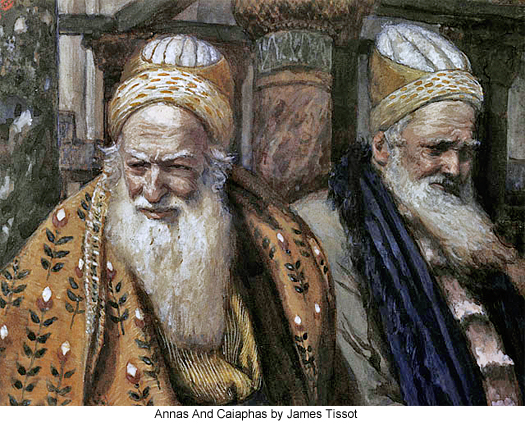
After Jesus’ Passion, death, and resurrection, the Sanhedrin convenes anew — this time to address the issue of the Apostles’ continued ministry in His name:
When the court officers had brought the Apostles in and made them stand before the Sanhedrin, the high priest questioned them, “We gave you strict orders did we not, to stop teaching in that name. Yet you have filled Jerusalem with your teaching and want to bring this man’s blood upon us.”
Caiaphas is threatened by the vitality of this Messianic movement that won’t die and stay dead. He fears the social rebellion and personal vengeance that its followers may seek out. Once again, the high priest’s misplaced concerns unknowingly speak spiritual truths.
The Apostles indeed wish to bring the Savior’s blood upon the Jewish leaders and everyone. When the Old Covenant was inaugurated, “[Moses] took the blood and splashed it on the people, saying, ‘This is the blood of the covenant which the LORD has made with you according to all these words.’” (Exodus 24:8) Likewise, in instituting his New Covenant, Jesus “took a cup, gave thanks, and gave it to them, saying, ‘Drink from it, all of you, for this is my blood of the covenant, which will be shed on behalf of many for the forgiveness of sins.’” (Matthew 26:27-28)
And the Apostles’ teaching is not merely filling the ancient Jerusalem found in the earthly Promised Land. In his visions, St. John beholds “the holy city, a new Jerusalem, coming down out of heaven from God” and he notes that God’s people “have washed their robes and made them white in the blood of the Lamb.” (Revelation 21:2 & 7:14)
Recall what Joseph told to his brothers who had sold him away as a slave: “Even though you meant harm to me, God meant it for good, to achieve this present end, the survival of many people.” (Genesis 50:20) Remember what St. Paul writes to the Christians in Rome: “We know that God works all things for good for those who love Him…” (Romans 8:28) The case of Caiaphas reminds us that even those who make themselves the enemies of God will be used as instruments to accomplish His ultimate will. At times this truth can be painfully inscrutable to us, but we trust that every evil, even the murdering of God, shall be turned to the good of those who love Him.


 Highlight to Reveal the Answers
 On one occasion, turning to the disciples in private, Jesus said, “Blessed are the eyes that see what you see. For I say to you, many prophets and kings desired to see what you see, but did not see it, and to hear what you hear, but did not hear it.” (Luke 10:23-24) Many great Old Testament figures longed for the promised Messiah but died before his coming. We are blessed to live in an age which has seen his arrival and blessed to have heard his message. Yet further blessed are we if we pray and prepare the path for the New Creation Christ promises to bring.
 Capernaum was a home base for Jesus Christ during his ministry in Galilee. Josephus, the 1st century A.D. Roman-Jewish historian, wrote that 30,000 people lived in Capernaum. Josephus has a bad reputation for exaggerating his figures but even if the true number were one-third that, Capernaum would still be a major city on the ancient trade route. But today, if you visit Capernaum (or Kfar Nahum “Nahum’s village” in Hebrew), you will find very little standing there. There are the ancient ruins St. Peter the Apostle’s home and of a fourth-century synagogue, a couple of Catholic and Greek Orthodox churches and monasteries, but not much else. The nearby surroundings are dry orchard fields and rocky barrenness. Capernaum is no longer a great, impressive city. Jesus had once foretold of its desolation:

 Following in the steps of the prophets and John the Baptist, Jesus announced the judgment of the Last Day in his preaching. Then will the conduct of each one and the secrets of hearts be brought to light. Then will the culpable unbelief that counted the offer of God’s grace as nothing be condemned. Our attitude about our neighbor will disclose acceptance or refusal of grace and divine love. On the last day Jesus will say: “Truly I say to you, as you did it to one of the least of these my brethren, you did it to me.”



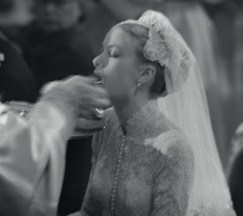 The Church has always proclaimed and worshiped Jesus Christ as truly present, body, blood, soul, and divinity in the Eucharist. This belief has been confirmed for us throughout the centuries. The Holy Spirit, whom Jesus promised would lead us to all truth and remind us of all that he told us, has reaffirmed this teaching in Councils of the Church. Jesus has also allowed Eucharistic miracles to unveil this mystery we cannot normally perceive. For instance, at the Miracle of Lanciano in eighth century AD, a priest who was doubting Jesus’ Real Presence witnessed the bread become flesh and the wine become blood (which coagulated and broke into five globules in the chalice) as he said the words of consecration. In 1971, scientific analysis indicated that, as at similar miracles, the Host was human cardiac muscle. Who would go through such trouble when a fraudster’s more convenient use of pig’s flesh would have been undetectable? The truth is that Jesus gives us his heart in the Eucharist, along with his whole self. You can go to Lanciano, Italy and behold this Host today.





 Parishable Items