The St. Wenceslaus parish bulletin (PDF) for the 29th Sunday in Ordinary Time on October 16th, 2016.
October 16th Parish Bulletin
October 14, 2016October 9th Parish Bulletin
October 6, 2016The St. Wenceslaus parish bulletin (PDF) for the 28th Sunday in Ordinary Time on October 9th, 2016.
Catholics Who Moved Mountains
September 29, 2016Jesus said his apostles, “If you have faith the size of a mustard seed, you would say to this mulberry tree, ‘Be uprooted and planted in the sea,’ and it would obey you.” On another occasion, he told his disciples, “Amen, I say to you, if you have faith the size of a mustard seed, you will say to this mountain, ‘Move from here to there,’ and it will move. Nothing will be impossible for you.”
Though I have yet to come across any historical accounts of saints transplanting foliage or excavating stones by faith-powered miracles, there are many historically-documented incidents of Catholics achieving the seemingly-impossible on earth through their faith.
St. John Paul II and the Soviet Union’s Fall
Karol Wojtyła barely survived the Nazi’s occupation of Poland, but once that evil was defeated the Soviet Union replaced them. As parish priest and later as an archbishop, Wojtyła championed the Catholic Faith against the atheistic communists’ religious persecution. Upon his election as pope in 1978, John Paul II’s first papal journey abroad was to go back to his homeland.
While there, he celebrated an outdoor Mass before millions, proclaiming Jesus’ words, “Be not afraid!” The crowd shouted in reply, “We want God! We want God! We want God!” Speaking in defense of human dignity, he encouraged all people to peacefully pursue true freedom. The threat posed by this Polish pope (armed merely with his words, example, and prayers) was so potent that the Soviets may have ordered his nearly successful assassination in 1981.
On the 1984 Feast of the Annunciation, Pope John Paul consecrated Russia (along with the whole world) to the Immaculate Heart of Mary, just as she had requested in her appearances at Fatima, Portugal in 1917. On Christmas Day, seven years later, a miracle was realized. Mikhail Gorbachev peacefully resigned as the President of the Soviet Union and from atop the Kremlin, the Soviet flag was lowered forever. The ‘Evil Empire‘ ended not by a thousand Sun-bright nuclear blasts, but through the peaceful power of God and the faithfulness of his holy, humble servant.
St. Joan of Arc’s Liberation of France
 In the 15th century, France was delivered from English domination by history’s most-unlikely military commander; a teenage peasant girl. Joan had no military training, but she was compelled by visions and the voices of Sts. Michael, Catherine, and Margaret to lead the French forces, drive out the English, and see prince Charles VII crowned king at Reims. With divine help, she achieved all these feats before her martyrdom at the hand of the English at the age of nineteen. Mark Twain (though not generally a fan of historic Christianity) wrote of her:
“Whatever thing men call great, look for it in Joan of Arc, and there you will find it. …It took six thousand years to produce her; her like will not be seen in the earth again in fifty thousand. … She is easily and by far the most extraordinary person the human race has ever produced.”
St. Joan of Arc was indeed great, but her glory was but the mere reflection of God’s infinite splendor.
Fleming’s Discovery of Penicillin
History has seen many great Catholic scientists, including Copernicus (Sun-centrism), Bacon (the scientific method), Descartes (modern geometry), Mendel (genetics), Pasteur (microbiology), and Lemaître (the Big Bang Theory) just to name a handful. But one Catholic scientist’s search for effective antibiotics in the early 20th century saved an estimated two hundred million lives. Through insights occasioned by providential occurrences, Alexander Fleming discovered penicillin. In this, he saw himself employed as an instrument by God:
“I can only suppose that God wanted penicillin, and that this was his reason for creating Alexander Fleming.”
St. Patrick’s Conversion of Ireland
In the 5th century, a 16-year-old boy was kidnapped from Britain and sold into slavery on a distant, pagan isle. There he experienced a spiritual awakening. He tells us:
“I used to stay out in the forests and on the mountain and I would wake up before daylight to pray in the snow, in icy coldness, in rain, and I used to feel neither ill nor any slothfulness, because, as I now see, the Spirit was burning in me at that time. And it was there of course that one night in my sleep I heard a voice saying to me: ‘You do well to fast: soon you will depart for your home country.’ And again, a very short time later, there was a voice prophesying: ‘Behold, your ship is ready.’ And it was not close by, but, as it happened, two hundred miles away, where I had never been nor knew any person. And shortly thereafter I turned about and fled from the man with whom I had been for six years, and I came, by the power of God who directed my route to advantage (and I was afraid of nothing), until I reached that ship.”
Lead on by this faith, he went on to become a priest, a bishop, and a missionary to the land of his former bondage. Today we think of Ireland as a very Catholic country, but it only became so through the courageous faith of St. Patrick.
Our Lord’s Redemption of the World
In the 1st century, by his short three-year ministry in a backwater of the Roman Empire, this poor man from Nazareth transformed the world forever. Jesus Christ is the pattern for all fruitful disciples who have followed him since, achieving the impossible through faith and the power of God. One anonymous author describes Christ in these words:
Greatest man in history, named Jesus.
Had no servants, yet they called Him Master.
Had no degree, yet they called Him Teacher.
Had no medicines, yet they called Him Healer.
He had no army, yet kings feared Him.
He won no military battles, yet He conquered the world.
He committed no crime, yet they crucified Him.
He was buried in a tomb, yet He lives today.

October 2nd Parish Bulletin
September 29, 2016The St. Wenceslaus parish bulletin (PDF) for the 27th Sunday in Ordinary Time on October 2nd, 2016.
The Lazarus You Know — 26th Sunday of Ordinary Time—Year C
September 25, 2016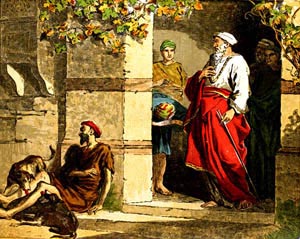
The Lord says though the prophet Amos, “Woe to the complacent,” to those warm and well-fed, comfortable on their couches without concern for others. Indeed, Scripture says, “whoever does not love a brother whom he has seen cannot love God whom he has not seen.” (1st John 4:20) You know of Jesus’ concern for the needy. Though he was rich, dwelling in the comfort of the Trinity, our Lord came to earth and became poor for your sake, so that by his poverty you might become rich. (2nd Corinthians 8:9) The rich man in Jesus’ parable could not have been unaware of the man lying at his door. Apparently, the rich man even knew his name: “Father Abraham… Send Lazarus…” But the rich man came to deeply regret his indifference toward this neighbor.
You know a Lazarus as well. He’s not sleeping on your doorstep, but you probably know his name. He (or she) may be well-known to you or only an acquaintance. Maybe Lazarus goes to your church, or hasn’t come for years. Maybe Lazarus lives just down the street or in a nursing home far away. Your Lazarus is in great need, but probably not for food or shelter.
St. Teresa of Calcutta, who cared for many Lazaruses in India’s slums, said, “The spiritual poverty of the Western World is much greater than the physical poverty of our people.” The poorest of the poor are in our midst. Knowing this, I ask that you to earnestly pray to the Holy Spirit, that He may reveal your personal Lazarus to you, so that you may lovingly attend to that person as Jesus would have you do.
September 25th Parish Bulletin
September 21, 2016The St. Wenceslaus parish bulletin (PDF) for the Patronal Feast of St. Wenceslaus observed on September 25th, 2016.
The Little, Great Saint
September 21, 2016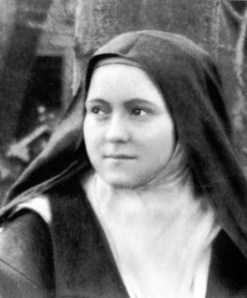 St. Thérèse Martin (1873–1897 AD) was born in France into a devout, Catholic family. All five daughters entered religious life and both parents (Louis & Zélie) went on to be canonized in 2015. Thérèse received special permission to join the Carmelite convent in her hometown of Lisieux at the young age of 15. She would live and pray and work there in obscurity until her death from tuberculosis at the age of 24.
After her passing, the publishing of her spiritual autobiography, “The Story of a Soul,” was phenomenally successful and there were widespread reports of prayers being answered through her intercession. St. Pope Pius X (1903-1914) privately described her as “the greatest saint of modern times” and she was canonized in 1925. Her feast day is October 1st.
Despite her greatness, Thérèse experienced everyday difficulties like our own. Amidst these she sought to do small things with great love; calling this her “Little Way” to holiness and Heaven. This is one episode St. Thérèse relates in her (highly-recommended) autobiography:
“The practice of charity, as I have said, dear Mother [Mother Agnes, that is, her biological sister, Pauline, who was prioress at the time,] was not always so sweet for me, and to prove it to you I am going to recount certain little struggles which will certainly make you smile. For a long time at evening meditation, I was placed in front of a sister who had a strange habit and I think many lights [spiritual insights] because she rarely used a book during meditation. This is what I noticed: as soon as this sister arrived, she began making a strange little noise which resembled the noise one would make when rubbing two shells, one against the other. I was the only one to notice it because I had extremely sensitive hearing (too much so at times.) Mother, it would be impossible for me to tell you how much this little noise wearied me. I had a great desire to turn my head and stare at the culprit who was very certainly unaware of her ‘click.’ This would be the only way of enlightening her. However, in the bottom of my heart I felt it was much better to suffer this out of love for God and not to cause the sister any pain. I remained calm, therefore, and tried to unite myself to God and to forget the little noise. Everything was useless. I felt the perspiration inundate me, and I was obliged simply to make a prayer of doing it without annoyance and with peace and joy, at least in the interior of my soul. I tried to love the little noise which was so displeasing; instead of trying not to hear it (impossible), I paid close attention so as to hear it well, as though it were a delightful concert, and my prayer (which was not the Prayer of Quiet) was spent in offering this concert to Jesus.”
St. Thérèse Rose Novena
September 21, 2016September 22nd is the day for beginning a nine-day novena to St. Thérèse of Lisieux, also known as “the Little Flower,” leading up to her October 1st feast day. Below is a novena prayer that you may use:
O Little Thérèse of the Child Jesus, please pick for me a rose from the heavenly gardens and send it to me as a message of love. O Little Flower of Jesus, ask God today to grant the favors I now place with confidence in your hands…
(Express your personal prayer intentions.)
St. Thérèse, help me to always believe as you did in God’s great love for me, so that I might imitate your “Little Way” each day. Amen.
Our Father…
Hail Mary…
Glory Be…

After completing this novena, do not be surprised if you find a rose.
3 Interpretations of the Parable of the Dishonest Steward
September 17, 2016 #1: The previously-dishonest steward is merely writing-off his own commissions. Likewise, we must forgive our debtors’ debts (or sins) so that we may be shown mercy. (Matthew 6:12) But why would his commissions be 20% for one debt and 50% on another? Perhaps the dishonest steward is actually covering his thievery’s tracks. Which brings us to…
#2: The steward is giving away what belongs to the rich man, his boss. Likewise, everything that we possess belongs to God, but we win favor though sharing these blessings with others. Both Mercy and Generosity win welcome into eternal dwellings, for Jesus says ‘whatever you do for the least of these you do it for me’ and ‘the measure with which you measure will be measured out to you.’
#3: What would have become of the dishonest steward without his decisive plan and action? Disaster. Likewise, we must be intentional about our own religious/spiritual growth. “The children of this world are more prudent in dealing with their own generation than are the children of light.” What excuse do we have? More importantly, what is our plan?
September 18th Parish Bulletin
September 15, 2016The St. Wenceslaus parish bulletin (PDF) for the 25th Sunday in Ordinary Time on September 18th, 2016.
The Virgin Mary was a Martyr
September 15, 2016St.
The martyrdom of the Virgin is set forth both in the prophecy of Simeon and in the actual story of our Lord’s passion. The holy old man said of the infant Jesus: “He has been established as a sign which will be contradicted.” He went on to say to Mary: “And your own heart will be pierced by a sword.”
Truly, O blessed Mother, a sword has pierced your heart. For only by passing through your heart could the sword enter the flesh of your Son. Indeed, after your Jesus – who belongs to everyone, but is especially yours – gave up his life, the cruel spear, which was not withheld from his lifeless body, tore open his side. Clearly it did not touch his soul and could not harm him, but it did pierce your heart. For surely his soul was no longer there, but yours could not be torn away. Thus the violence of sorrow has cut through your heart, and we rightly call you more than martyr, since the effect of compassion in you has gone beyond the endurance of physical suffering.
Or were those words, “Woman, behold your Son,” not more than a word to you, truly piercing your heart, cutting through to the division between soul and spirit? What an exchange! John is given to you in place of Jesus, the servant in place of the Lord, the disciple in place of the master; the son of Zebedee replaces the Son of God, a mere man replaces God himself. How could these words not pierce your most loving heart, when the mere remembrance of them breaks ours, hearts of iron and stone though they are!
Do not be surprised, brothers, that Mary is said to be a martyr in spirit. Let him be surprised who does not remember the words of Paul, that one of the greatest crimes of the Gentiles was that they were without love. That was far from the heart of Mary; let it be far from her servants.
Perhaps someone will say: “Had she not known before that he would not die?” Undoubtedly. “Did she not expect him to rise again at once?” Surely. “And still she grieved over her crucified Son?” Intensely. Who are you and what is the source of your wisdom that you are more surprised at the compassion of Mary than at the passion of Mary’s Son? For if he could die in body, could she not die with him in spirit? He died in body through a love greater than anyone had known. She died in spirit through a love unlike any other since his.

The Prodigal Us — 24th Sunday of Ordinary Time—Year C
September 11, 2016It has been said that there are two kinds of people in this world: sinners who think they’re saints, and saints who know they’re sinners. Every saint has a past, and every sinner can have a future. We all have been the Prodigal (or wasteful) Son at various times in our lives. Whether for years, for days or hours, or just for moments, we have each strayed from and returned to our Father-God who delights to have us back. When we are being tempted to sin, we are being tempted to leave our Father’s house and no longer keep his company. In sinning we say, even if in a small way, “You may not be dead, but I want it to be as if you were. Give me an inheritance now. I can have an easier time, or a more enjoyable time, misusing your stuff than I can have by remaining with you.”
The Prodigal Son took his father’s things and went off to a distant country. The Kingdom of God and the Kingdom of this World are countries distant from each other, and yet they exist side-by-side. Sinners and saints live side-by-side together here below, but the difference between them is vast. A life of sin may be easier for awhile. The Prodigal Son enjoyed sensual pleasures and was free of his duties, like working in the fields with his older brother. But sin soon leaves us spent and depleted, as in drought and famine. If honest with ourselves, we sense our dire need.
At first, the Prodigal Son attempted his own coping-mechanisms short of repentance. He hired himself out to one of the local citizens who sent him to his farm to tend the pigs. (For Jews, tending ritually-unclean pigs would be one of the most degrading things a person could do.) The Prodigal Son longed to eat his fill of the pods on which the swine fed, but nobody gave him any. (His boss provided for the swine better than for him.) A sinner’s life is slavery. It’s unsatisfying, it’s unhappy, and they feel unloved. This does not excuse away the bad and harmful things they do, but hurting people hurt people. And knowing this, we can feel compassion for sinners.
 Coming to his senses, realizing how much he has lost, the Prodigal Son decided to go back home. He knew his unworthiness, so he prepared a speech to persuade his father to show mercy. But his Father needs no persuasion. While his son was still a long way off, the father caught sight of him, and was filled with compassion. He ran to his son, embraced him and kissed him. I imagine the father saw him from a long way off because he often looked to that road hoping his son would return. This day, he did. The father ran to his son—even though in that culture a dignified men would not run. Men might walk or let others come to them, but this father ran to his son. Then the father restores his son, with robe, sandals and ring, and declares a feast.
The son had decided to leave and decided to return home. The decision to dwell in the Kingdom of God or the Kingdom of this world is our choice. We are free, to wander or return, because God’s offer of grace (including his invitation to the sacrament of reconciliation) is always there. Though we wander in sin, averting our eyes from God, we can never escape his sight. Psalm 139 says, “Where can I go from your Spirit? Where can I flee from your presence? If I ascend to the heavens, you are there; if I lie down in the underworld, there you are.” And when we turn back to him, he runs to us, as the same humility we saw in the Incarnation. And then the celebration begins. As Jesus says, “There will be more joy in heaven [and among the angels of God] over one sinner who repents than over ninety-nine righteous people who have no need of repentance.”
As St. Paul declares in our second reading, “This saying is trustworthy and deserves full acceptance: Christ Jesus came into the world to save sinners.” Every saint has a past, and every sinner can have a future. In this Year of Mercy, let us each trust in God’s mercy, respond to his mercy, and practice mercy as Jesus would have us do.
September 11th Parish Bulletin
September 8, 2016The St. Wenceslaus parish bulletin (PDF) for the 24th Sunday in Ordinary Time on September 11th, 2016.
“Who is Jesus to Me?”
September 7, 2016By St. Mother Teresa, in 1983

Jesus is the Word made Flesh.
Jesus is the Bread of Life.
Jesus is the Victim offered for our sins on the Cross.
Jesus is the Sacrifice offered at the Holy Mass for the sins of the world and mine.
Jesus is the Word – to be spoken.
Jesus is the Truth – to be told.
Jesus is the Way – to be walked.
Jesus is the Light – to be lit.
Jesus is the Life – to be lived.
Jesus is the Love – to be loved.
Jesus is the Joy – to be shared.
Jesus is the Sacrifice – to be offered.
Jesus is the Peace – to be given.
Jesus is the Bread of Life – to be eaten.
Jesus is the Hungry – to be fed.
Jesus is the Thirsty – to be satiated.
Jesus is the Naked – to be clothed.
Jesus is the Homeless – to be taken in.
Jesus is the Sick – to be healed.
Jesus is the Lonely – to be loved.
Jesus is the Unwanted – to be wanted.
Jesus is the Leper – to wash his wounds.
Jesus is the Beggar – to give him a smile.
Jesus is the Drunkard – to listen to him.
Jesus is the Retarded – to protect him.
Jesus is the Little One – to embrace him.
Jesus is the Blind – to lead him.
Jesus is the Dumb – to speak for him.
Jesus is the Crippled – to walk with him.
Jesus is the Drug Addict – to befriend him.
Jesus is the Prostitute – to remove from danger and befriend.
Jesus is the Prisoner – to be visited.
Jesus is the Old – to be served.
To me – Jesus is my God.
Jesus is my Spouse.
Jesus is my Life.
Jesus is my only Love.
Jesus is my All in All.
Jesus is my Everything.Jesus, I love with my whole heart, with my whole being.
I have given Him all, even my sins, and He has espoused me to Himself in tenderness and love.
Now and for life I am the spouse of my Crucified Spouse.
Amen

The fruit of Silence is Prayer.
The fruit of Prayer is Faith.
The fruit of Faith is Love.
The fruit of Love is Service.
The fruit of Service is Peace.
—St. Mother Teresa
September 4th Parish Bulletin
August 31, 2016The St. Wenceslaus parish bulletin (PDF) for the 23rd Sunday in Ordinary Time on September 4th, 2016.
 Parishable Items