22nd Sunday in Ordinary Time
By Fr. Victor Feltes
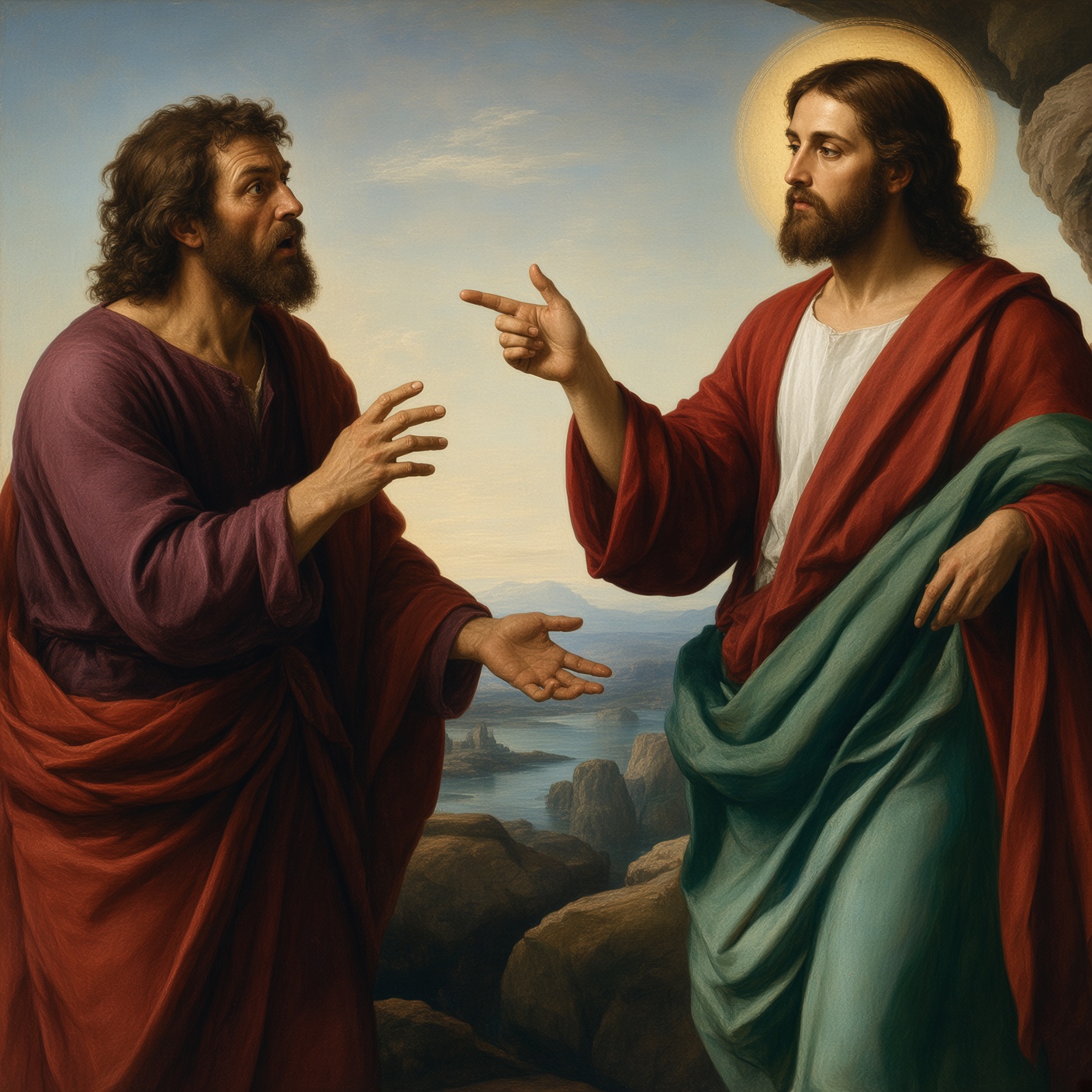
In this Sunday’s Gospel from St. Matthew, Jesus begins telling his disciples that he must go to Jerusalem, endure great suffering from its religious leaders, be killed, and on the third day be raised. But this does not make sense to Simon Peter. In secret, Jesus had recently confirmed to the apostles his identity as the Christ, the Messiah, the Anointed One. And in the Jewish expectation, the Messiah was supposed to gloriously restore the Davidic kingdom to Israel, gather God’s people to faithfully keep God’s covenant, and usher in a new era of peace and justice in the world. The idea that the Messiah would be rejected, suffer, die, and rise again was not on their radar. (In fact, more than one gospel notes how the disciples had even wondered what Jesus’ talk about “rising from the dead” might mean.) What Jesus was saying didn’t make sense to the apostles.
So Peter takes Jesus aside and tries to correct him: “God forbid, Lord! No such thing shall ever happen to you!” But Jesus turns and says to him: “Get behind me, Satan! (Literally, “Get behind me, Adversary!”) You are an obstacle to me. You are thinking not as God does, but as human beings do.” That’s quite a swing for Simon Peter within just one chapter of Matthew’s Gospel; from being renamed the Rock to being called an Adversary. But here is my favorite reflection from this gospel story.
Earlier, when the Devil had presented Jesus with temptations in the desert attempting to undermine his public ministry before it had even begun, Jesus ultimately rebuked and commanded him: “Get away, Satan!” But in this encounter with Simon Peter, Jesus rebukes and commands him: “Get behind me, Satan!” Not “Get away,” but “Get behind me.” Simon Peter is acting like an obstacle, but Jesus does not want him to leave. Jesus wants his disciples and friends not to stand in his way but to follow after him. Jesus says, “Whoever wishes to come after me must deny himself, take up his cross, and follow me.”
Christ’s Passion was not understood by the apostles when they witnessed it on Good Friday. Even Jesus was reluctant to endure it, praying in the Garden of Gethsemane the night before that this cup of suffering would pass without him having to drink it. But Jesus fully embraced doing the Father’s will because he trusted his Father was accomplishing good and great things through these trials for Jesus himself and all the world. We will pick up our challenging crosses and follow after Jesus when we trust that God is doing the same with and for us.
We are called to entrust ourselves to God’s Providence, trusting that as St. Paul writes, “God works all things for the good of those who love him.” Now trusting God’s Divine Providence is not the same as inactive passivity. When your house catches fire, you should not say, “Well, I guess God wills this house to burn down,” and neglect to use your fire extinguisher or call the fire department. God calls and expects each of us to do our duties and do our parts. Trusting in Divine Providence means trusting that the all-powerful God, who knows us and loves us, permits what happens in our lives ultimately for our greater good.
The Devil’s first temptation in the Garden of Eden boiled down to this suggestion: ‘You should not trust God.’ Satan says, ‘Grasp at this forbidden fruit and eat it because God is holding out on you! He doesn’t want you to become like gods!’ When people confess to not trusting God, I try to encourage folks that this is humanity’s primordial problem. If we trusted God perfectly, we could be perfect people. People who faithfully trust in God can still express their laments to him, or pray to ask him for his help or to take their cups of suffering away. But grumblers who grumble, doubting God’s goodness like the Hebrews in the Sinai Desert, are failing to trust in him.
So trust in him, and pray for grace to trust him fully. For even if we could gain the whole world living apart from him, what will we have once we must forfeit our lives to him? Whoever lives for himself will still eventually lose his life and this world, but whoever lives with and for Jesus Christ will save his life. For one day, “the Son of Man will come with his angels in his Father’s glory, and then he will repay all according to his conduct.”

