Archive for the ‘Salvation History’ Category

The New Eve

December 8, 2020

Solemnity of the Immaculate Conception

Eve was the first woman. God created her like Adam, a finite but flawless and sinless creature, destined to become the biological mother of the entire human race. But then an angel, a fallen angel, Satan in the form of a snake, visited her to suggest that she should disobey God’s will. Eve said yes to sin, and then Adam joined her, and through them the whole human race fell.

Their grave sin caused Adam and Eve to lose paradise, but their futures were not without hope, for God spoke in their hearing a prophesy toward that wicked, deceiving serpent, the devil. God declared, “I will put enmity (that is, I will put hostility) between you and the woman, and between your offspring and hers; he will strike at your head, while you strike at his heel.” Who is this offspring, this descendant, this son, who strikes back at the devil? It’s Jesus Christ who defeats the devil by dying on the Cross. Adam sinned, causing us to die. But St. Paul calls Jesus the second Adam, the new Adam, who obeys God and does not sin so that we may live forever.

If Jesus is the new and second Adam, then who is the new and second Eve? Who is the woman whom the devil hates most; the mother whose offspring crushes the serpent’s head; a woman created by God as a flawless, sinless creature? This New Eve was visited by angel too, a holy archangel named Gabriel, to ask that she would accept God’s will. And the Blessed Virgin Mary answered, “Behold, I am the handmaid of the Lord. May it be done to me according to your word.” The New Eve’s obedience was later echoed by the New Adam. In the Garden of Gethsemane, in his garden of temptation the night before he died, Jesus said, “Father… not my will but yours be done.” Eve said yes to sin, Adam joined her, and through them the whole human race fell. Mary and Jesus say yes to God, and through them the whole human race is redeemed.

Imagine if you could design, could create, your own mother. Wouldn’t you make her the sweetest, kindest, most lovely, and most loving woman that you could? Well, Jesus is God and he did create his own mother for himself, and Jesus shares his mom with us as well. Eve became the biological mother of all the living, but Mary is the spiritual mother of all who live in Christ. Through her sinless soul, completely filled with God’s grace, Mary knows and loves each one of us as her own children. So today, we her children rejoice and celebrate with holy Mary, that God chose her to be our New Eve, the Immaculate Conception.

The Fire of God

December 6, 2020


2nd Sunday of Advent

Eighteen years ago, when I applied to become a seminarian for our diocese, one part of the process was taking the MMPI, the Minnesota Multiphasic Personality Inventory Test — 567 True-False questions that help to detect psychological disorders. Of all of those written questions this one is for me the most memorable: “True or False: I am fascinated by fire.” How would you answer that question on a psych exam? I recall thinking at the time, “Yes, yes I am fascinated by fire, but I don’t want them to think I’m a pyromaniac. And I’m not a pyromaniac so maybe I should answer ‘False.’” But then I considered that wouldn’t be honest, so I reluctantly filled in the bubble for “True.” In the end, the diocesan psychologist did not diagnose me as crazy, so they sent me to seminary, eventually ordained me, and here I am today. But upon later reflection, I think this question is something of a trick.

Why do people pay more to have a fireplace in their home when a central heating system is sufficient to keep everyone comfortable? When people sit around a campfire, what does everybody look at for hours into the night? I strongly suspect this question (are you fascinated by fire) isn’t looking for pyromania so much as it is checking to see whether people will lie, because everyone is fascinated by fire. Fire is beautiful, it’s mesmerizing, dynamic and powerful; it’s well-known to us and yet surprising, an incredible blessing yet dangerous to the unwary.

The Sacred Scriptures often speak about fire. In today’s in gospel, we hear the preaching of St. John the Baptist. In the parallel passages of Matthew and Luke, St. John similarly cries out:

I am baptizing you with water… but the one who is coming after me is mightier than I… He will baptize you with the Holy Spirit and fire. His winnowing fan is in his hand. He will clear his threshing floor and gather his wheat into his barn, but the chaff he will burn with unquenchable fire.

Fire is also mentioned in today’s second reading. The Second Letter of St. Peter tells us:

The day of the Lord will come like a thief,
and then the heavens will pass away with a mighty roar
and the elements will be dissolved by fire…
the heavens will be dissolved in flames
and the elements melted by fire.”

The coming and presence of the Lord is associated with fire in the Old Testament as well. God first spoke to Moses through a burning bush. And during the Exodus the Lord went before his people, leading them in a pillar of cloud and fire. The appearance of God’s glory was like a devouring fire atop Mt. Sinai. The mountain was wrapped in smoke because the Lord had descended upon it in fire. Smoke rose up from it into the sky and the whole mountain greatly trembled. The Lord commanded Moses to warn the people not to approach, not to climb up the mountain, lest they be struck down in their unholiness. Listen to this vision of God the Prophet Daniel had in a dream one night:

As I looked, thrones were placed, and the Ancient of Days took his seat; his clothing was white as snow, and the hair of his head like pure wool; his throne was fiery flames; its wheels were burning fire. A stream of fire issued and came out from before him; a thousand thousands served him, and ten thousand times ten thousand stood before him; the court sat in judgment, and the books were opened.

Is the fire of God of which John the Baptist, Peter, Moses, and Daniel speak something for us to fear? Scripture says the punishment of God’s judgment is fire, but it also speaks of fire as God’s means of purifying his own. In regards to judgment, the Prophet Isaiah writes, “the Lord will come in fire, and his chariots like the whirlwind, to render his anger in fury, and his rebuke with flames of fire.” At the Last Judgment, Jesus Christ the King will turn to the goats on his left and say “Depart from me, you accursed, into the eternal fire prepared for the devil and his angels.” And the Book of Revelation says anyone whose name is not found written in the book of life will be thrown into a lake of fire: “[A]s for the cowardly, the faithless, the detestable, as for murderers, the sexually immoral, sorcerers, idolaters, & all liars, their portion will be in the lake that burns with fire and sulfur, which is the second death.” This is a fire to dread and to earnestly avoid.

Yet God’s prophets also speak of God’s purifying fire which perfects his people. Psalm 66 says “you, O God, have tested us; you have tried us as silver is tried;” and a verse from the Book of Proverbs says, “The crucible is for silver, and the furnace is for gold, and the Lord tests hearts.” Ancient gold and silversmiths would melt their precious metals with fire to separate out and burn away any impurities which they contained. Likewise, through the Prophet Zechariah, God says, “[I will put my people] into the fire, and refine them as one refines silver, and test them as gold is tested. They will call upon my name, and I will answer them. I will say, ‘They are my people’; and they will say, ‘The Lord is my God.’” This is why Jesus exclaims, “I have come to set the earth on fire, and how I wish it were already blazing!

Jesus would separate and burn away in us everything impure, false, and worthless. This purification can happen for God’s faithful friends in this life on earth or afterwards in Purgatory. St. Peter writes to the Church in his First Letter, “Now for a little while you may have to suffer through various trials, so that the genuineness of your faith, more precious than gold that is perishable even though tested by fire, may prove to be for praise, glory, and honor at the revelation of Jesus Christ.” And St. Paul tells the Corinthians, “If anyone builds on the foundation with gold, silver, precious stones, wood, hay, straw — each one’s work will become manifest, for the Day [of the Lord] will disclose it, because it will be revealed by fire, and the fire will test what sort of work each one has done.” Is this a fire we should fear and dread? No, as illustrated by this story from the Book of Daniel:

In the days of the Babylonian Empire, King Nebuchadnezzar had three servants named Shadrach, Meshach, and Abednego. When the king set up a tall, golden statue and commanded that all bow down and worship it, these three faithful Jewish men refused. Enraged, the king commanded that they be bound with rope and cast into a white-hot furnace. Once this had been done, the king looked inside the furnace. He became startled and rose in haste, asking his counselors, “Did we not cast three men bound into the fire?” “Certainly, O king,” they answered. “But, I see four men unbound and unhurt, walking in the fire, and the fourth looks like a son of God.” Then Nebuchadnezzar came to the opening of the furnace and called: “Shadrach, Meshach, and Abednego, servants of the Most High God, come out,” and the trio came out of the fire.

The fire had had no power over their bodies; not a hair of their heads had been singed, nor were their garments altered; there was not even a smell of fire about them. Yet notice, all of the ropes which had bound them were burned away and gone. Recall that the burning bush at Mt. Sinai was not destroyed by God’s fire. And when the Holy Spirit came down as tongues of fire at Pentecost, the disciples touched by the Holy Flame were not tormented by pain but rather filled with rejoicing. The process of conversion may entail some pains because change is often hard, whether on earth or in Purgatory, but I urge you not to fear it. God’s purifying fire would take away what binds you, it will not destroy what is good in you, and its fruit will be joy.

The Book of Wisdom tells us:

Chastised a little, [the souls of the just] shall be greatly blessed, because God tried them and found them worthy of himself.
As gold in the furnace, he proved them, and as sacrificial offerings he took them to himself.
In the time of their visitation they shall shine, and shall dart about as sparks through stubble;”
They shall judge nations and rule over peoples, and the Lord shall be their King forever.

So just souls become as sparks of fire and rule over the nations. They will rule like God their King and they will share in God’s fire. The New and Old Testaments agree, as the Books of Hebrews and Deuteronomy say, that “our God is a consuming fire.” The Lord your God is a consuming fire – beautiful, dynamic and powerful; well-known to us and yet surprising, an incredible blessing yet dangerous to the unwary. There is no approaching God without encountering his fire. Perhaps the delights of the saints and pains of damned have the same source – the unveiled presence of God. In this life, many people dismiss God while others long to see Him. But beyond the veil of this life the Holy One can no longer be ignored. Either we will eagerly run toward him or desperately desire to flee. The same Holy Fire is loved or despised according to our openness to love and honor and serve like him.

The call of Prophets Isaiah and John the Baptist to prepare the way of the Lord is addressed to us this Advent. In the wasteland of your imperfect soul prepare a straight and smooth highway for our God. Repent and confess your sins for forgiveness. When St. John the Baptist appeared in the desert, people from the whole Judean countryside and the city of Jerusalem were going out to him and being baptized by him in the Jordan River as they acknowledged their sins aloud. They would devote an entire day to walk or ride an animal out to where John was baptizing; wait in a single, very long line; and then confess their sinfulness in front of everybody in the mere hope of being forgiven by God. Jesus Christ makes it so much easier for us in the Sacrament of Confession. His minsters are not just one, but many, and his churches are not far away. We get to confess our sins privately in the quiet of the confessional, and with every good confession our forgiveness is assured.

St. Peter tells us “the day of the Lord will come like a thief,” that is, by surprise; we know not when. “(Then) the elements will be dissolved by fire, and the earth and everything done on it will be found out.” Since this is the case, St. Peter asks, “what sort of persons ought you to be?” Conduct yourselves in holiness and devotion. Do not delay your repentance and conversion. Jesus says, “If your hand or your foot causes you to sin, cut it off and throw it away. It is better for you to enter life crippled or lame than with two hands or two feet to be thrown into the eternal fire.” If this would be the case with precious limbs, how much more surely should we now cast off our worthless sins?

To give you that opportunity, for the forgiveness of your sins and a new infusion of God’s graces, I will be hearing confessions all day this Wednesday, December 9th at St. Paul’s. This Wednesday, from 10 AM to 8 PM, at the top of every hour, I will come to St. Paul’s main sacristy to hear the confessions of all penitents, either face-to-face or anonymously, masked and socially-distanced until all are heard. I sincerely hope you will come, and bring your family too, for the purifying fire of God is far sweeter than his fire which will punish unrepentance.

Revealers of God — Funeral Homily for Kevin Lenfant, 70

December 3, 2020

In the beginning, when God created the heavens and the earth,” God said: “Let there be light, and there was light.” By God’s Word all things were made and his divine attributes are reflected in this universe he’s created. In the inspired word of God, the Holy Scriptures, we read about how he reveals himself to humanity throughout salvation history, through powerful deeds, prophetic words, and poetic images that reveal what he is really like. But ultimately and greatest of all, God reveals himself to us through the Son. “In the beginning was the Word, and the Word was with God, and the Word was God.“In times past, God spoke in partial and various ways to our ancestors through the prophets; (but) in these last days, he (speaks) to us through a Son, …through whom he created the universe,” the Word of God. Jesus Christ, the Bible, and God’s creation make use of familiar things to help reveal God to us. There’s warriors battling, couples marrying, fathers fathering, shepherds shepherding, and plants producing new life. A faithful Christian’s life will reveal God too, as his mysteries are reflected in the features of our lives.

There is a great deal of war and conflict in the Scriptures. This should not be surprising, since this world is broken and often evil. Wickedness is at war with goodness, so good men are called upon to defend the defenseless, to shield the innocent from evil assault. No nation is without flaws, but we should love and defend the goodness of our own. In the Old Testament, armed conflicts abound, but in the New Testament the martial imagery is turned to focus upon the spiritual battle which is being fought around us and within us. St. Paul tells us, “put on the armor of God, that you may be able to resist on the evil day,” for our greatest struggle is not with flesh and blood but with spiritual evils in this world. Our calling is to Semper Fi, being “always faithful”, but we know how difficult this is, “for a righteous man may fall seven times.” So when a brother dies we pray for him, like the Maccabean army prayed for their fallen in today’s first reading from the Old Testament, that whatever flaws or attachments to sin remain in them may be purged away, that those who die as friends of God may experience his full and splendid rewards in Heaven.

Another very plentiful thing found in the Bible is shepherds. Among the Old Testament patriarchs there is Abraham, Jacob-Israel, and his twelve sons – shepherds all. Later, there’s the prophet Moses, King David, and Amos the prophet, each of whom tended flocks for some time before receiving a higher calling from God. The first to hear the happy news of Christmas night were shepherds. The bond between a shepherd and his flock can be a very close one. So close that David, in writing today’s psalm, the most famous of all the psalms, depicts God as his shepherd and David himself as his well-cared-for sheep. The sheep of a good shepherd are like his children to him. He is as a father to his flock. “The sheep hear his voice, as he calls his own sheep by name… and they recognize his voice.” He knows his own and they know him. The good shepherd devotes his life to his sheep and little lambs. He delights in his flock and his presence comforts them. Rita tells me that family came first for Kevin. She tells me how he loves his children and grandchildren, that he loved to watch them grow, and how extremely proud he is of them. Such is his fatherhood.

A third common theme we encounter is married love. The saints see an allegory in the romantic Old Testament book The Song of Songs: God’s pursuit and love of his people Israel. In the Gospels, Jesus Christ calls himself the Bridegroom, and New Testament passages call the relationship of Jesus Christ with his Church a marriage. As Book of Revelation declares, “The marriage of the Lamb has come and His bride has made herself ready. … Blessed are those who are invited to the marriage supper of the Lamb.” This leads us to a mystery: did God use our familiar and intimate knowledge of human marriage, the covenantal love of a man and woman, to describe the union of Christ and his Church because this was the best available image for him to borrow, or rather did he create and establish marriage from the beginning to reveal and foreshadow the fulfillment with him that was always meant to be?

Rita told me the delightful story of how she and Kevin met. It was another Normal day at Illinois State University where they were both college students. Rita was having a hard time in a political science class, while political science was Kevin’s major, so he came over and tutored her. Apparently Rita was very impressed by many things about him because once he had left she turned to her friend and said, “Don’t let me marry him.” But she did. And it’s a good thing she did. Why was Rita afraid? ‘Well,’ she thought, ‘I’m so young, we’re both in college, he’s planning to be in the Marines, and how would all that work?’ But thankfully these doubts did not prevail. Imagine how much would have been lost if they had! When our Lord Jesus Christ proposes to be a greater part of our lives, we can similarly balk, all sorts of doubts and fears arise, but I urge you, I plead with you, to say “Yes” to him all the same. In this life, opportunities for some relationships pass by without another chance for something more. But with God, no matter where we’ve been or what we’ve done, all long as we still live, we can start more devotedly following him today.

Jesus often preached to the crowds using familiar things. For example, Jesus spoke about fish around fishermen, of bread and salt to bakers and cooks, and of plants to farmers in the countryside. He says, “Learn from the way the wild flowers grow. They do not work or spin. But I tell you that not even Solomon in all his splendor was clothed like one of them. If God so clothes the grass of the field, which grows today and is thrown into the oven tomorrow, will he not much more provide for you, O you of little faith?” At one point Kevin and Rita owned three flower shops. Now there is just the one they started in Bloomer more than forty years ago. Rita tells me that Kevin, between the two of them, probably likes flowers more. The flowers they sold would sprout and grow, beautifully blossom, and then fade and wither. This is a sad reality, but we are consoled by the knowledge that there are more flowers for us to enjoy. Similarly, in this world we are born and grow, we blossom and die, but we are consoled by the knowledge in Christ that this is not our end.

In today’s Gospel Jesus says, “unless a grain of wheat falls to the ground and dies, it remains just a grain of wheat; but if it dies, it produces much fruit.” Jesus was not eager to suffer, he asked his Father in the Garden if it were possible that this cup of suffering might pass him, but he was not unwilling to die because he knew that would not be the end of good things for him. It’s O.K. to want to live, to fight against illness and death, for life is a great good. But it is also O.K. to die. “For if we live,” as St. Paul says, “we live for the Lord, and if we die, we die for the Lord; …whether we live or die, we are the Lord’s.” It’s O.K. to mourn. It’s O.K. to cry. But God’s Word reveals to us that we should not despair. Heed God’s word, in creation, on the Sacred Page, and in the person of our Savior, so that you and I and Kevin may all be happily reunited in God story one day.

Jesus or Barabbas?

November 23, 2020

The Solemnity of Our Lord Jesus Christ, King of the Universe

For the feast of Passover, the Governor Pontius Pilate observed a tradition of releasing to the crowds any one prisoner they wished. On Good Friday, in addition to holding Jesus of Nazareth, the Romans in Jerusalem had a notorious prisoner named Barabbas. When the crowd came forward and began to ask Pilate to do for them as he was accustomed the governor dryly asked, “Do you want me to release to you the king of the Jews?” The chief priests stirred up the crowd to have him release Barabbas for them instead.

Pilate asked, “Which of the two do you want me to release to you? Barabbas, or Jesus who is called Christ?” They answered, “Barabbas!” Pilate said to them in reply, “Then what do you want me to do with the man you call the king of the Jews?” They shouted again, “Crucify him!” Pilate said to them, “Why? What evil has he done?” But they only shouted the louder, “Crucify him!” So Pilate, wishing to satisfy the crowd lest they riot, released Barabbas to them and, after he had Jesus scourged, handed him over to be crucified.

This episode with Jesus and Barabbas is recounted each Palm Sunday and Good Friday when the Passion narratives are read at church. However, the Gospels’ Passion accounts are so lengthy and rich with themes to consider that the crowds’ choice between these two figures is rarely ever preached on. Today, I would like to show you the deeper significance in this rejection of Christ the King.

The first interesting detail is in the meaning of these two men’s names. “Jesus” was the name given through angelic messages to Mary and Joseph, a name chosen in Heaven for the Son of God on earth. “Jesus” or “Yeshuah” in Hebrew means “God saves.” The name Barabbas breaks down into the Aramaic words “Bar” and “Abba”; “Bar” means “the son of,” while “Abba” means “father.” And thus, the name Barabbas means “the son of the father.” So Pilate is proposing a question to the crowd more profound than they realize: “Which son of the father do you choose? Do you desire God’s salvation?

The New Testament tells us that Barabbas was a Jewish revolutionary who, along with other captured rebels, had committed murder in a rebellion against Roman rule. The Jews commonly hated the Romans and resented the occupation of their Promised Land by a foreign, Gentile power. Jews expected that the Christ, the Messiah, if he were to come in Jesus’ day, would drive out the Romans and their puppets using the force of arms. Then they imagined that this man, God’s Anointed One, would take his seat upon his ancestor King David’s throne, establishing a renewed Israeli kingdom of worldly glory, with international power, military strength, and overflowing wealth. So when Jesus came among them they failed to recognize him as the Christ.

Unlike Barabbas, Jesus did not promote hatred for the Romans but a love for enemies. Jesus did not raise an army nor a sword, but preached “blessed are the peacemakers.” On Palm Sunday, Jesus does not enter Jerusalem riding on a warhorse, but on a donkey, as the Old Testament prophet Zechariah had foretold: “Shout for joy, O daughter Jerusalem! See, your king shall come to you; a just savior is he, meek, and riding on a donkey.” But when presented with Jesus and Barabbas, the people rejected their true King and Savior, the Christ. St. Peter would go on to preach to the people of Jerusalem on Pentecost, “You denied the Holy and Righteous One and asked that a murderer be released to you.” The choice between Barabbas and Jesus is a choice between two sorts of saviors, two very different kinds of revolutionaries and kings; one whom the earth thinks would be most effective and the one whom Heaven has sent us. The Christ and an anti-Christ.

It was within Jesus’ power to have forcibly imposed his rule over the whole world. At Jesus’ arrest in the Garden of Gethsemane, Peter is ready to fight—he draws a sword and cuts off the ear of the high priest’s servant. But Jesus intervenes, “Put your sword back into its sheath, for all who take the sword will perish by the sword. Do you think that I cannot call upon my Father and he will not provide me at this moment with more than twelve legions of angels? But then how would the scriptures be fulfilled which say that it must come to pass in this way? Put your sword into its scabbard. Shall I not drink the cup that the Father gave me?” Jesus then heals to slave’s ear before he is led away by the guards.

Like a gentle lamb silently led to slaughter, Jesus endures his Passion and death. And who would have thought any more of him? But God raised him from the dead and he appeared to his disciples, who then courageously proclaimed to everyone that Jesus is the Christ. The Jews and Romans persecuted the early Christians. Though peaceful and innocent, Christians suffered indignities, imprisonments, and martyrdoms, yet the number of those saved by the Church continued to grow. Then, in 313 A.D. the Emperor Constantine legalized Christianity and ten years later gave it the most favored religious status throughout the Roman Empire. “Blessed are the meek, for they will inherit the land … Blessed are those who are persecuted for the sake of righteousness, for they will be satisfied.” Indeed, Jesus Christ and his Church succeeded where Barabbas failed: they conquered the Roman Empire not by destroying it but by converting it.

Today we celebrate Jesus Christ, the King of the Universe. Jesus the Almighty now reigns over us and over the whole world. But this knowledge, upon reflection, can raise troubling questions in our hearts. When we see the horrors of this world, grave evils throughout history and evil happening in our time, we may ask, “Lord, why aren’t you doing more?” Every year in our country, hundreds of thousands of unborn children are being legally murdered. Right now, millions of people in Asia are being held in concentration camps. How many billions of grave sins are being committed every day which cause innocents to suffer? Lord, why don’t you end this evil? Why don’t you force the world to bow down to your will?

We may wish Jesus and others to go violently into full Barabbas-mode against all the world’s evil, but this is not his way. Christ’s goal is the salvation of souls, as many souls as possible. Jesus the Good Shepherd shepherds the world subtly but in every place, speaking to the souls of both his friends and sinners, drawing them freely toward his salvation. But what about the grievous sufferings and injustices along the way? Jesus is not at all indifferent to these. Our loving shepherd is the best of shepherds because he has been a sheep like us, a lamb who was slain. He endured such sufferings and injustices personally as the lamb of God, and he still mystically suffers in and with the innocent. “Amen, I say to you, what you did [or did] not do for one of these least ones, you did [or did] not do for me.

The evil of this world is a heart-breaking scandal. But sin and death do not have the final word. The last word will belong to Jesus Christ. Trust in the crucified One, our suffering God who died and rose for us, the Shepherd of souls, the victorious Lamb, Christ our King. May his Kingdom come and his will be more fully done, on earth as it is in Heaven, in each and every soul.

The Spring After Fall & Winter — Funeral Homily for Raymond “Ray” Burgess, 84

November 20, 2020

The signs of the fall are all around us. The farmers’ fields are cut down to stubble. The weather is growing cold and frosty. Our days are getting shorter and shorter. A winter approaches, and soon all will be buried under snow. And on this fall day, we gather to pray for and bury Ray.

I hear the farmers report that their fields have produced a fruitful yield. They raised a bunker crop this year which will go forth to feed and help thousands of people. This is like the fruitfulness of Ray’s life, seven living-children, nineteen grandchildren, and seven great-grandchildren, who live on as a blessing to the world. But we know that after the time of harvest comes the sharp and penetrating cold.

Ray’s children tell me about his dedicated love for them and their children, how he has put family first and devoted his time to them. So tomorrow’s first day of the deer hunt will be lonelier without him, and Ray will be missed at the family Christmas this year. That is something to mourn. It is sad to be parted from one another in this way. Tears are natural and wholesome at times like this. Yet, we need not grieve like those who have no hope.

Imagine if our world somehow forgot about the cycle of the seasons. What if everyone misplaced the valuable knowledge that fall and winter lead to spring? How would people react to this end of the world around us? Covid-19 would quickly become a secondary news story, and grocery stores would sell out of lots more than toilet paper. We would look at all of the discolored fallen leaves, the skeletal trees, and the dwindling of the light each day with great alarm. People would hopelessly ask, “Everything is dying — what will we do — what will happen to us?” But of course, this is not the first fall or winter in our lives, and we have seen before what happens next, so we need not be afraid.

Today we gather here to pray for and bury a man who died two days short of his eighty-fifth year. But we gather in this place, within this church, because of a man who died almost two thousand years ago and who two days later rose again. This sad season of dying is not the end of the world. As winter is conquered by the spring, death is conquered by Christ. This fact of Jesus’ resurrection has changed this world and, if God’s will be done, it would transform our lives. Jesus Christ is the way, the only way, for our salvation, and so we entrust Ray’s soul into the Lord’s merciful hands, with love for Ray and hope that we all shall enjoy Ray’s company again in the coming springtime of this world.

Saving Dates & Saving Souls

September 5, 2020

23rd Sunday in Ordinary Time

The just shall flourish like the palm tree… They shall bear fruit even in old age, they will stay fresh and green…” (Psalm 92)

In the time of Jesus, forests of Judean date palms covered the whole region from the Sea of Galilee to the Dead Sea. This plant, the date palm, symbolized ancient Israel. When the scriptures call Israel “the land of milk and honey” we today think of cow’s milk and the honey of bees. But milk in the Old Testament is just as likely to be goat’s milk and the honey it refers to is usually the sweet honey of dates. By the 1500’s, human activity or changes in the climate had caused the Judean date palm to disappear. Because of that species’ extinction, the date palm plants grown across Israel today were brought over from California in the 1950’s and 60’s; they’re different in species and originally native to elsewhere in the Middle East. However, the Judean date palm was not to be lost forever.

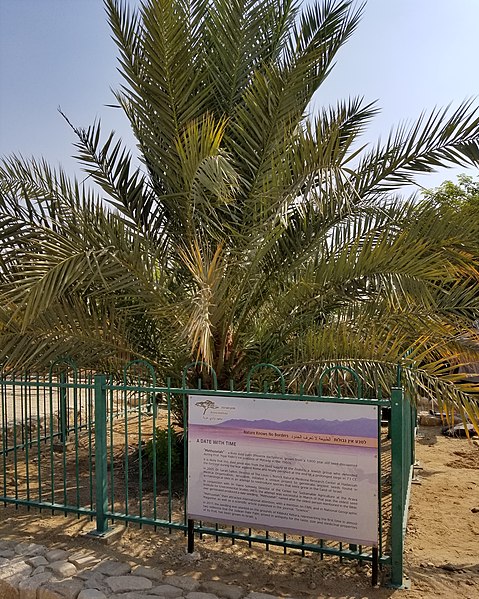
The Judean Date Palm Tree Methuselah in 2018

During the 1960’s, archaeologists excavated the mountaintop palace fortress of Masasda built by King Herod the Great near the Dead Sea. There they found, preserved dry and sheltered in an ancient jar, a cache of date seeds which carbon testing indicates are 2,000 years old. These seeds were kept in storage at an Israeli university in Tel Aviv for forty years. Then, in 2006, an American-educated horticulturalist in Israel planted several of those seeds. To her and her colleagues’ delighted surprise, one sprouted. They named that plant after the oldest person in the Old Testament, Methuselah. Today it’s over eleven feet tall. After their success with Methuselah, they planted more ancient date seeds from Masada and the caves in which the Dead Sea Scrolls were found, and six new samplings have grown. They hope to pollinate one or more of the new female palms with pollen from Methuselah, which is male palm, eventually yielding the famous delicious dates of ancient times.

While the fruit of Judean date palms was celebrated for its sweet flavor and medicinal uses, its palm branches are also noteworthy. They were probably the kind of palm branches that the crowds waved and laid before Jesus as he entered Jerusalem on the Sunday before he was killed, the day we call Palm Sunday. Jesus once lamented: “Jerusalem, Jerusalem, you who kill the prophets and stone those sent to you, how many times I yearned to gather your children together, as a hen gathers her young under her wings, but you were unwilling! Behold, your house will be abandoned, desolate. I tell you, you will not see me again until you say, ‘Blessed is he who comes in the name of the Lord.’”

Jesus knew the history of the prophets as he entered Jerusalem – how God would send them to proclaim the right path to his people, usually urging conversion from their sins. Heeding the truth will set you free; but first, it may make you uncomfortable, defensive, and angry. God’s people typically resisted the saving message and derided, denounced, attacked, imprisoned, and killed the prophets. And then, the unhappy consequences the prophets had foretold would follow naturally and unchecked. Knowing how reluctant sinners are to listen and change, why did the prophets bother? And what was the point of it all when people so rarely listened? I suggest God’s prophets had three motivations.

One was to personally avoid God’s judgment themselves. In our first reading, the Lord warns the prophet Ezekiel: “You, son of man, I have appointed watchman for the house of Israel; when you hear me say anything, you shall warn them for me. If I tell the wicked, “O wicked one, you shall surely die,” and you do not speak out to dissuade the wicked from his way, the wicked shall die for his guilt, but I will hold you responsible for his death. But if you warn the wicked, trying to turn him from his way, and he refuses to turn from his way, he shall die for his guilt, but you shall save yourself.” The prophets did not want to be condemned for failing to do their holy duty.

A second motivation of the prophets was love, love for God and love for their neighbors. As St. Paul told the Romans in our second reading: “the one who loves another has fulfilled the law… whatever other commandment there may be, [is] summed up in this saying, namely, “You shall love your neighbor as yourself.” If you were in danger, recklessly or unknowingly headed towards some serious physical or spiritual harm, don’t you wish someone would warn you? The prophets loved enough to try.

And a third motivation of the prophets was hope, hope that one day, perhaps many years later, the people they spoke to would be saved. The previously rebellious people, seeing their city ruined and their kingdom conquered as the prophets had foretold, would know that God had warned them and know that their next step should be to return to the Lord and walk in his ways. What motivated the prophets of old should motivate us as well, for many people go astray today.

Brothers… if a person is caught in some transgression,” St. Paul tells the Galatians, “you who are spiritual should correct that one in a gentle spirit…” Jesus teaches us in today’s gospel, “If your brother sins against you, go and tell him his fault (privately,) between you and him alone. If he listens to you, you have (successfully) won over your brother.” And as St. James writes in his New Testament letter, “My brothers, if anyone among you should stray from the truth and someone bring him back, he should know that whoever brings back a sinner from the error of his way will save his soul from death and will cover a multitude of sins.

Fraternal correction isn’t fun, I know, but “admonishing the sinner” is a spiritual work of mercy you and I as Christians are called to do. Like the prophets, we are to place seeds, seeds containing the power and potential to yield sweet and healing fruit. Sometimes these seeds produce an immediate holy harvest through conversion. Yet we know our seeds will often be set aside, discarded, and forgotten; until, perhaps many years later after much desolation, these dormant seeds’ true and precious value is recognized, they’re allowed to sprout with deep new roots, and life that was once lost and dead is fully restored, producing good fruits again, to the joy of all God’s people.

The Disciples’ Burdens

August 2, 2020

18th Sunday in Ordinary Time

Only one miracle (besides the Resurrection) appears in all four Gospels: that’s today miracle – Jesus’ multiplication of five loaves of bread and two fish into enough food to feed more than five thousand people. Bringing all four of these Gospel accounts together provides us with a detailed picture of that day, one of the most amazing days in Jesus’ ministry. However, for the apostles, much of that day probably felt far from awesome.

First, the terrible news had recently arrived that John the Baptist had been murdered by the government, his neck severed by a soldier at Herod’s command. John the Baptist was Jesus’ beloved relative. At least two of the apostles had once been John’s own disciples. They all held the Baptizer in high esteem. So the unjust killing of this righteous man was shocking, and the senseless death of their friend was sorrowful.

Another strain on them that day was their shared fatigue. The apostles had just come back from the villages Jesus had sent them out to in missionary pairs to preach, and heal, and cast out evil spirits. Upon their return to Jesus, Mark’s Gospel tells us that “people were coming and going in such great numbers that they had no opportunity even to eat.” So Jesus says to his apostles, “Come away by yourselves to a deserted place and rest a while.” The apostles might have thought to themselves, “Finally, a break.

Jesus and his apostles embark in the boat by themselves toward a deserted place called Bethsaida on the other side of the Sea of Galilee. But other people see them leaving, word gets around, and many come to know about it. They hasten there on foot from all the towns and arrive at the place even before the boat did. So when Jesus and the apostles disembarked, a vast crowd of thousands was already there waiting for them. Imagine the apostles’ mixed emotions; “Great, another massive crowd. I guess our retreat is over.” But Jesus beholds the crowd and his heart is moved with pity for them, for they are like sheep without a shepherd, unsettled and unled. Jesus cures their sick and proceeds to teach them many things. So maybe the apostles got a little break that afternoon after all.

When evening came, the apostles approached Jesus to say, “This is a deserted place and it is already late; dismiss the crowds so that they can go to the villages and buy food for themselves.” Jesus says to them, “There is no need for them to go away; give them some food yourselves.” They respond, “Five loaves and two fish are all we have here.” They’re already mourning an unexpected, painful loss. They’re burnt-out from their recent labors. And now, Jesus seems to expect the impossible from them. Can you relate to that today?

Of course, we’ve heard the gospel story and know how it ends. You and I now already know what happens next. Taking the five loaves and two two fish, and looking up to his Father in Heaven, Jesus says the blessing, breaks the loaves, and gives them to the disciples, who in turn (at Jesus’ command) give them to the crowds. They all eat an are satisfied and finish with more than they began. Jesus takes what his disciples offer him (as meager as it is), gives each of them an important role to lay, and works something amazing through them.

Brothers and sisters, what will separate us from the love of Christ? Will anguish, or distress, or persecution, or famine, or nakedness, or peril, or the sword? Do these things separate us from the love of Christ? What of pandemics, or quarantines, or closures, or face coverings, or financial troubles, or personal failures? Will these things separate us from the love of Christ? No, in all these things we can conquer overwhelmingly through him who loves us. For neither death, nor life, nor spirits, nor politicians, nor time, nor space, nor any other created thing will be able to separate us from the love of God in Christ Jesus our Lord. These are hard days, and we might be tired and discouraged. But do not doubt the good you are doing, nor the good that you will do, because Jesus Christ is with you.

Jesus’ Longing for You

June 14, 2020

Corpus Christi Sunday—Year A

After the suspension in March, our parish went eleven weekends without the public celebration of Sunday Masses. Throughout Salvation History, the number forty symbolizes times of purification, preparation, and longing. For most people, being away meant about eighty days (forty twice over) without physically receiving our Eucharistic Lord. For many, their yearning for Jesus in the Eucharist has never been greater. Feast of Corpus Christi homily usually focus (quite fittingly) upon the Real Presence, the beautiful truth that Jesus Christ is truly present, body and blood, soul and divinity, alive in the Holy Eucharist. As St. Paul says in our second reading, “The cup of blessing that we bless, is it not a participation in the Blood of Christ? The bread that we break, is it not a participation in the Body of Christ?” You are probably well-informed about this already; that’s why you have been longing for Him in the Eucharist. Today I feel moved to speak about Jesus Christ’s Eucharistic longing for you.

Jesus Christ’s desire for us is foreshadowed in the Old Testament; for instance, in The Song of Songs. There the beloved says of her spouse: “My lover speaks and says to me, ‘Arise, my friend, my beautiful one, and come! Let me see your face, let me hear your voice, for your voice is sweet, and your face is lovely.’” Later this same man, prefiguring Christ, declares: “I have come to my garden, my sister, my bride; … I eat my honeycomb with my honey, I drink my wine with my milk. Eat, friends; [and] drink!

In the Book of Proverbs, God’s personified wisdom speaks: “Let whoever is naive turn in here; to any who lack sense I say, Come, eat of my food, and drink of the wine I have mixed! Forsake foolishness that you may live; advance in the way of understanding.” The foolishness we must forsake is our sins, for what is freely-chosen sin if not harmful foolishness? Jesus seeks to bring about sinners’ salvation, in part, through drawing them to his meal, to share his presence, his food and drink. Jesus once responded to criticisms of his ministry saying: “The Son of Man came eating and drinking, and they say, `Behold, a glutton and a drunkard, a friend of tax collectors and sinners!’ Yet wisdom is vindicated by her deeds.

A Samaritan woman with many sins once asked Jesus, “How can you, a Jew, ask me, a Samaritan woman, for a drink?” He answered her, “If you knew the gift of God and who is saying to you, ‘Give me a drink,’ you would have asked him and he would have given you living water.” Later, on the last and greatest day of a Jewish feast, Jesus stood up in the temple area and exclaimed: “Let anyone who thirsts come to me and drink.” Before his miraculous multiplication of loaves of bread, Jesus called his disciples to himself and said, “I feel compassion for the people, because they have remained with me now three days and have nothing to eat; and I do not want to send them away hungry, for they might faint on the way.” Jesus wants to feed us (we who have remained with him) as well, to strengthen us on our way. The food and drink Jesus desires you and I to receive are not mere objects for bodily sustenance — it is his very self. “I am the living bread that came down from Heaven; whoever eats this bread will live forever… For my flesh is true food, and my blood is true drink. Whoever eats my flesh and drinks my blood remains in me and I in him.

At the Last Supper, which was the first Mass, Jesus told his disciples, “I have earnestly desired to eat this Passover with you… Take this, all of you, and eat of it, for this is my body, which will be given up for you.” Jesus earnestly desires to share his feast, this Mass, to unite with us today. “Behold, I stand at the door and knock. If anyone hears my voice and opens the door, I will enter his house and dine with him and he with me.” Jesus is divine, but he’s also human. He dwells in Heaven, but he has human desires for you and me and our world. If you have yearned for Jesus in the Eucharist, if you have desired to receive him these past months, consider how much more Jesus Christ longs and desires for you.

Watch “The Chosen”

June 8, 2020

The Chosen” is a truly excellent dramatized series about Jesus’ early ministry. I highly recommend it. They flesh-out characters and scenes from the Gospel texts in creative but faithful ways. The depiction of Jesus is particularly compelling. You can see the first season’s episodes on YouTube or through this free app.


Uniting All Peoples

May 30, 2020

Pentecost Sunday—Year A

Did you know that the Feast of Pentecost actually predates Christianity? This solemn Jewish feast (called Shavuot in Hebrew and Pentecost in Greek) was established by God to celebrate and give God thanks for Israel’s wheat harvest. On this day, seven weeks after Passover, the Jews were to bring the first fruits of their harvests and present these in a basket at the Lord’s Temple. This is why “there were devout Jews from every nation under heaven” present in Jerusalem when the Holy Spirit descended on Pentecost. The Christians, who had been praying the first nine-day novena for His coming, were transformed by the Holy Spirit’s power and began proclaiming Jesus Christ in the streets. At the sound of it, a large crowd of these visiting Jews gathered, astonished and confused, because each one heard them speaking in his own language. In amazement they asked:

“Are not all these people who are speaking Galileans? Then how does each of us hear them in his native language? We are Parthians, Medes, and Elamites, inhabitants of Mesopotamia, Judea and Cappadocia, Pontus and Asia, Phrygia and Pamphylia, Egypt and the districts of Libya near Cyrene, as well as travelers from Rome, both Jews and converts to Judaism, Cretans and Arabs, yet we hear them speaking in our own tongues of the mighty acts of God.”

At this, St. Peter (suddenly emboldened by the Holy Spirit) proclaims the Good News about Jesus being the Resurrected Messiah that is the Christian Gospel. He urges the crowd: “Repent and be baptized, every one of you, in the name of Jesus Christ for the forgiveness of your sins; and you will receive the gift of the Holy Spirit. … Save yourselves from this corrupt generation.” Those who accepted his message were baptized and about three thousand persons were added that day.

Today, the solemn Christian feast of Pentecost celebrates the blessed gift of the Holy Spirit upon the earth and the harvest of the first fruits; men and women gathered from the nations and presented to God’s Church. As Jews and converts to Judaism, they were of many races and languages, they were of many cultures and countries of origin, but they were all called to be one in Christ. In time, the Holy Spirit led the apostles to see that this call to salvation was immediately accessible to non-Jews, to Gentile people, as well. Every person is created by God, loved by God, and called to close relationship with God through Jesus and his Church. In the words of St. Paul, “Through faith you are all children of God in Christ Jesus. For all of you who were baptized into Christ have clothed yourselves with Christ. There is neither Jew nor Greek, there is neither slave nor free person, there is not male and female; for you are all one in Christ Jesus.

Individuals are unique, one from another, so each person must be taken as they come. While we have differing backgrounds and talents, different material resources and gifts of the Spirit with which to serve, each person has equal worth before God. Yet a society apart from God will never fully honor that dignity. The people of Babel sought to build a great city reaching up to heaven. While working together apart from God’s truth and grace, however, they could bring about great evils in this world. (History is littered with such cultures and subcultures; you can know them by their fruits.) At Pentecost, the Lord undoes Babel. The peoples of many languages are reunited, becoming citizens and co-builders of the City of God. From where comes peace and true unity on this earth? Let us be led by the Holy Spirit and one with Jesus Christ that all peoples may be united in the one Kingdom of God.

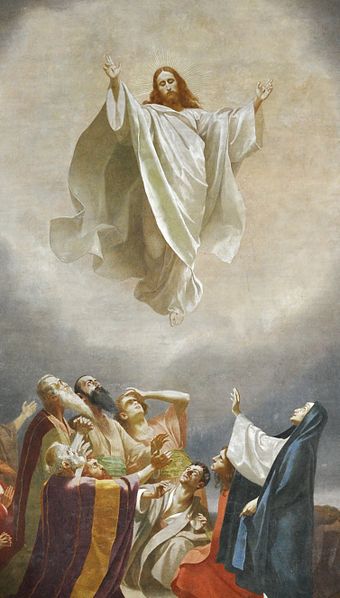
My Ascension

May 23, 2020

Ascension of the Lord—Year A
By Deacon Dick Kostner

Today we celebrate the Solemnity of the Ascension of the Lord. We also need to celebrate the the fact that Jesus remains with us for all eternity individually for all to rejoice by and through the Sacraments gifted to us by Jesus and the vocation directed to all who have received the Sacrament of Baptism by being called to be the body, hands, mind, heart, and feet of Jesus here on Earth by and through his marriage with us as members of the Church of Christ. Wow, what a privilege, but what a responsibility.

Our readings tell us that we have been chosen to respond to the call to be the Body of Christ here on earth as we continue our journey, our “Ascension” to Jesus who resides with the Father and the Holy Spirit. It is through the Sacraments that we receive a helper to guide us on our mission. The Paraclete joins to our body and spirit whenever we celebrate the gift of Sacraments given us by Jesus when he walked in body here on earth. Through the gift of Sacrament we become one in Spirit with God who helps guide us on missions he has requested of us.

As told us in our second reading from the Letter of St. Paul to the Ephesians: “May the eyes of your hearts be enlightened that you may know what is the hope that belongs to his call, what are the riches of glory in his inheritance among the holy ones, and what is the surpassing greatness of his power for us who believe…

How do we know that Jesus is still with us. Good question, but all we need to do is watch and listen for he will speak to us and help us discern the will and hopes he has for us. I will share with you a personal example of knowing God is still here with us. Everyone knows the struggle and fear that exists about re-opening with the virus still spreading. It has not been easy for your clergy to celebrate private Masses without you, the larger Body of Christ, being present. How do we as clergy know what to do or how to continue ministry during these trying times? The answer lies in prayer. Personal prayer to the one who promised to be with us always on our journey to the Father’s house. Prayer need not be formal or fancy for prayer is nothing more than talking with God about problems or challenges we are experiencing. It is through communication, it is through prayer, that relationships are formed.

Recently I have been asking God for direction on knowing what God would like me to do during these challenging times when we are asked to curb our direct contacts with others. I have also asked for some communication from Jesus as to my personal mission he desires me to embark upon. A couple of weeks ago just before celebrating Mass with Father Victor, he requested that I pick out a couple of names for our parish calendar raffle. I reached in, stirred the tickets, and grabbed two raffle tickets which were sitting next to each other. The first name I picked was Steve Turner. Steve was one of the people who joined St. Paul’s Catholic Church a year ago and had attended our Parish RCIA classes. I remarked to Father that Steve is one of those guys that has always been lucky; whether in love in finding his gifted spouse, or in fishing at the right spot. The second name I picked was, guess who? Deacon Dick. What a coincidence!

It was during the Mass that I realized the event that had just happened. I had received an answer to what God wished me to continue to do. He told me that I was important in helping others find their way to the Church of Christ and to the vocation of being the Body of Christ. And how has this affected Steve’s life? He is now an adult server in our parish and he and his wife help out with our RCIA program, with him heralding the fact that since his marriage to Elaine he has been in Church more than all of his previous years of his life. What a coincidence!

Guess what? Jesus is not up in the clouds, He is still with us through the Body of Christ and his Sacraments. Thank you Jesus for being our supernatural friend. Wishing to all of you as the Body of Christ, a blessed Ascension!

Joyful Gifts — The Reception of Lane Severson into Full Communion

May 17, 2020

6th Sunday of Easter—Year A

Today we have special cause for joy. This Sunday, Lane Severson formally joins the Catholic Church and will receive the Sacraments of Confirmation and First Holy Communion. His story bears a likeness to today’s first reading from the Book of Acts, in which the people of Samaria heard the preaching of the Gospel:

“Philip went down to the city of Samaria and proclaimed the Christ to them. … Once they began to believe Philip as he preached the good news about the kingdom of God and the name of Jesus Christ, men and women alike were baptized.”

Lane became a Christian thirteen years ago when, professing faith in our Lord and Savior Jesus Christ, he was baptized in a Washington State pond. This was God’s greatest gift to him since the day of his birth. Today, he comes to Jesus Christ’s Church because, as it was for the people of Samaria, God has additional great gifts he delights to give him and calls him to receive.

“[W]hen the apostles in Jerusalem heard that Samaria had accepted the word of God, they sent them Peter and John, who went down and prayed for them, that they might receive the Holy Spirit, for it had not yet fallen upon any of them; they had only been baptized in the name of the Lord Jesus. Then they laid hands on them and they received the Holy Spirit.”

Those Samaritans had each been baptized, but there was still more for them to receive, still more for each to experience. God does not merely seek to cleanse us of former sins and fill us with new grace — as wonderful as that is — the Most Holy Trinity desires personal and profound relationship with each of us, desires that we would become intimately united to each Divine Person. God calls us to be more deeply united to the Spirit through Confirmation, to be more deeply united to the Son through the Eucharist, and to be led to the Father and the eternal life of Heaven beginning in his Church here on earth.

The Sacrament of Confirmation is a special outpouring of the Holy Spirit as once granted to the apostles on the day of Pentecost. It increases the gifts and fruits of the Holy Spirit within us. It roots us more deeply as prayerful children of God, moving us to cry out, “Abba! Father!” And it provides the Spirit’s strength to spread and defend the faith by word and deed as true witnesses of Christ; to confess the name of Christ boldly, unashamed of the Cross; to “always be ready,” as St. Peter says in our second reading, “to give an explanation to anyone who asks you for a reason for your hope.

The Holy Eucharist is also an incredible gift of God. This sacrament is a partaking in the same holy meal and offering Jesus gave his apostles at the Last Supper. It increases and deepens our union with Christ. As Jesus says, “Whoever eats my flesh and drinks my blood remains in me and I in him. Just as the living Father sent me and I have life because of the Father, so also the one who feeds on me will have life because of me.” The Holy Eucharist separates us from sin, wiping away venial sins when we receive the Lord worthily and strengthening us against future temptation. And it unites us as one with each other in the Mystical Body of Christ, his Church. As St. Paul writes, “The cup of blessing which we bless, is it not a participation in the blood of Christ? The bread which we break, is it not a participation in the body of Christ? Because there is one bread, we who are many are one body, for we all partake of the one bread.

We are all excited for Lane joining the Catholic Church and receiving her great God-given gifts this day. And we Catholics who have already received these precious sacraments will profit to remember their powerful effects which, in the state of grace, endure within each of us. In Samaria, at the preaching of the Gospel and the mighty signs of God, “There was great joy in that city.” We, like they, have cause for joy today. So in the words of today’s psalm:

“Shout joyfully to God, all the earth,
sing praise to the glory of his name;
proclaim his glorious praise.
Say to God, ‘How tremendous are your deeds!’”


New Catholic Lane Severson & Carol Kaszubowski, his Confirmation Sponsor, on May 17, 2020.

The Face of a Friend

April 25, 2020

3rd Sunday of Easter—Year A
By Deacon Dick Kostner

Our world tells us that death is the end of life. Jesus has parabled us into a new direction. Death is but the birth of a new and perfected life. I believe that our readings this Third Sunday of Easter tell us two important lessons to be learned. The first is that we are living at this moment in trying times, and that is anxiety, fear and confusion not only causes us to be disoriented but it also distracts us from seeing the cure for our affliction. The second lesson is that Jesus has, through our baptism, commissioned us to be the body of Christ in this very confused world. We no longer bear the face we were born with, but rather we are no longer recognized by our face but rather we are recognized by our heart and our actions.

We learn through our scripture readings that because of earthly death and the anxiety that follows we all will be confused and disoriented. This anxiety blinds us to the reality of the Easter Proclamation: “The light of Christ!” The disciples who knew Jesus well were so filled with the emotion of death that they failed to recognize their friend as they walked the road to Emmaus. This friend of theirs who could walk on water and still storms died and was buried. The fact that Jesus had taught them that death was not the end and that he would rise, blew right over the top of their heads because of their fear of death.

Isn’t it a “coincidence” that our whole world is experiencing, firsthand, the fear of death and the confusion that developed during this Holy Season? The same confusion that disciples of Jesus felt two thousand years ago is still with us on this Third Sunday of Easter. Like the disciples in our readings we are so filled with anxiety that we fail to recognize Jesus walking with us on that road to Emmaus. We fail to see his face in the nurses and doctors who treat us, and the clerks and people who serve us. We fail to hear his voice and feel his presence in the waive we see from our family and friends we no longer can touch. We fail to hear his wisdom and words proclaimed by His ordained ministers every day through cyberspace.

Jesus has many faces and I believe his disciples were unable to recognize him because Jesus wants to be recognized not by his facial features or color of skin but rather by and through his actions and words. It was not until he preached to his disciples and broke bread with them making them a part of him, that their eyes moved from his face to his heart and they could see their friend as the risen Christ.

We are commissioned to be the body of Christ. It is through our behavior driven by the heart not the brain that the face of Jesus will be recognized as we walk the road to Emmaus with Jesus at our side. May the peace of the risen Lord and the grace he gifts us with, be always with you!

Divinely Merciful

April 18, 2020

Divine Mercy Sunday

The Cenacle, the Upper Room in Jerusalem,
site of the Last Supper and Pentecost

Imagine an event as it did not happen…

On Easter evening, when the disciples were gathered behind locked doors in the Upper Room, Jesus came and appeared in their midst and said to them, “I condemn you. Each of you. All of you abandoned me.” And when he had said this, he showed the wounds in his hands and feet and side and said, “I suffered these because of your sins.”

If Jesus would have declared such things to his apostles his charges would not have been untrue. But this is thankfully not what Jesus did. Instead, he came and stood in their midst and said to them, “Peace be with you,” a phrase he says three times in this Sunday’s gospel. Christ’s Passion, death, and Resurrection are not for our condemnation. Jesus comes in mercy for his apostles and for us. “Blessed be the God and Father of our Lord Jesus Christ,” St. Peter writes, “who in his great mercy gave us a new birth to a living hope through the resurrection of Jesus Christ from the dead.”

After assuring them of his friendship and the reality of his Resurrection, the next most important item on Jesus’ Easter list is to entrust his Church with his mission of mercy: “As the Father has sent me, so I send you.” And when he had said this, he breathed on them and said to them, “Receive the Holy Spirit. Whose sins you forgive are forgiven them, and whose sins you retain are retained.”

In this season of pandemic, public Masses are suspended; first Communions, Confirmations, and weddings are being postponed; but the Sacrament of Reconciliation continues to be offered. Did you get to Confession this Lent? Jesus has peace to give you in this great sacrament. So, where and when you can, make it a top item on your list to experience his Divine Mercy there.

The Questions & Answers of Easter Vigil

April 11, 2020

Easter Vigil

Tonight’s Easter Vigil Mass features many readings and accompanying psalms. The Church says the celebrant may chose to skip some of these readings, but tonight we are doing them all; seven from the Old Testament and two from the New, a journey from Genesis to the Gospel. But how does one preach about nine readings in one homily? As I pondered that question, I wondered, “What questions are asked in the readings themselves?

In the beginning in Genesis, when God created the heavens and the earth, there are no questions, only God’s declaring word. Thus the heavens and the earth and all their array were completed. God looked at everything he had made and they were very good. From the beginning, God knows his plan.

By the time of our next reading from Genesis, sin has entered our history. Humanity’s rejection of God, reflected in every sin, not only leads to death but creates injustices which must be rectified, hearts which must be converted, relationships which must be reconciled, and evils which must be undone, through sacrifice. “Father!” Isaac says, “Here are the fire and the wood, but where is the sheep for the holocaust?” “Son,” Abraham answers, “God himself will provide the sheep for the holocaust.

Isaac was spared but would God always provide? Generations later, Moses and the Hebrews are alarmed on the shores of the Red Sea when Pharaoh’s army threatens them. The Lord says to Moses, “Why are you crying out to me? Tell the Israelites to go forward. And you, lift up your staff and, with hand outstretched over the sea, split the sea in two, that the Israelites may pass through it on dry land.” God delivers his people, destroys their enemy, and leads them to his Promised Land.

How great is God’s love for his people? Isaiah proclaims that the Lord loves and desires Israel as a man does his bride: “The One who has become your husband is your Maker; his name is the Lord of hosts.” Yet Israel would often stray from him. Elsewhere Isaiah asks her, “Why spend your money for what is not bread, your wages for what fails to satisfy?” Later the Prophet Baruch asks, “How is it, Israel, that you are in the land of your foes, grown old in a foreign land, defiled with the dead, accounted with those destined for the netherworld? You have forsaken the fountain of wisdom!” Baruch asks “who has found the place of wisdom, who has entered into her treasuries? The One who knows all things knows her; he has probed her by his knowledge—the One who established the earth….

Through the Prophet Ezekiel, the Lord promises to bring his people to their true home, to wisdom, to holiness, to communion with himself: “I will take you away from among the nations, gather you from all the foreign lands, and bring you back to your own land. I will sprinkle clean water upon you to cleanse you from all your impurities, and from all your idols I will cleanse you. I will give you a new heart and place a new spirit within you, taking from your bodies your stony hearts and giving you natural hearts. I will put my spirit within you and make you live by my statutes, careful to observe my decrees. You shall live in the land I gave your fathers; you shall be my people, and I will be your God.”

How is all this to come about? Through Jesus Christ. St. Paul asks the Romans, “Are you unaware that we who were baptized into Christ Jesus were baptized into his death? We were indeed buried with him through baptism into death, so that, just as Christ was raised from the dead by the glory of the Father, we too might live in newness of life.

When Jesus Christ was so shockingly, so horrifically, so unjustly murdered, his heartbroken disciples were full of questions. Is there no reward for the just man? Is there no victory for righteousness? Is evil more powerful than goodness? Is God indifferent to our suffering? Does he not care? Is there no deliverance from sin? Do we have any reason to hope? God answers with Christ’s empty tomb.

Do not be afraid,” the angel says. “I know that you are seeking Jesus the crucified. He is not here, for he has been raised just as he said.” The women, fearful yet overjoyed, run to share this good news when they encounter Jesus on the way. They approach, embrace his feet, and do him homage. Then Jesus says to them, “Do not be afraid. Go tell my brothers to go to Galilee, and there they will see me.”

This was God’s plan from the beginning. That sin would be conquered through self-offering. That all would trust in God’s providence and love the perfect Bridegroom. Why spend yourself on what does not satisfy? Why live any longer away from the Lord in foolishness? You have access to a new and transforming Holy Spirit through your baptism, a baptism which has its power from the death and resurrection of Jesus. Jesus is God’s answer to our greatest questions. How will you respond to him? Answer with your faith and love.